

What do you think?

Life Together in Christ: Experiencing Transformation in Community
Best Book of Spiritual Formation, from Byron Borger, Hearts and Minds Bookstore Have you joined a church or small group in hopes of experiencing real life change, only to be disappointed? Have you sat through inspiring sermons about what is possible when Christians gather together in mutually edifying relationships, only to recognize how cynical you have become after many failed attempts? Community may be one of the most over-promised, under-delivered aspects of the Christian life today. Individuals remain selfish and stuck in their ways. Communities become spiritually lifeless or even fall apart because we don't know how to experience transformation together. Transforming community does not come primarily from listening to inspiring preaching or adding another church program. It emerges as we embrace a shared commitment to the attitudes, practices and behaviors that open us to Christ in our midst. And that's where Life Together in Christ comes in. Reflecting on the story of the two disciples who meet Christ on the Emmaus Road, Ruth Haley Barton offers this interactive guide for small groups of spiritual companions who are ready to encounter Christ in transforming ways―right where they are on the road of real life.
192 pages, Hardcover
First published April 1, 2010
About the author
Ruth Haley Barton
53 books302 followersRuth Haley Barton (Doctor of Divinity, Northern Seminary) is founding president/CEO of the Transforming Center, a ministry dedicated to strengthening the souls of pastors and Christian leaders, and the congregations and organizations they serve. For over twenty years, she has ministered to the soul care needs of pastors and leaders based upon her conviction that the best thing we bring to leadership is our own transforming selves. Trained at the Shalem Institute for Spiritual Formation and the Institute for Pastoral Studies Loyola University Chicago, Ruth is a seasoned retreat leader and spiritual director. A sought-after speaker and preacher, she has served on the pastoral staff of several churches and teaches frequently at seminaries and graduate schools. Ruth is the author of numerous books and resources on the spiritual life, including Invitation to Solitude and Silence, Sacred Rhythms, Longing for More, Pursuing God's Will Together, and Life Together in Christ. She continues to share her thoughts and perspectives on soulful leadership through an online resource called eReflections as well as a podcast entitled Strengthening the Soul of Your Leadership.
Ratings & Reviews
Friends & Following
Create a free account to discover what your friends think of this book!
Community Reviews
Displaying 1 - 27 of 27 reviews

March 1, 2016
Summary: Using the account of the two disciples' encounter with Jesus on the Emmaus road, Barton explores how we may experience life transformation through our encounter with Christ in the presence of others in Christian community.
I thought this was an exquisitely wonderful book! Barton honestly explores how our dreams of community and life transformation often fall far short of reality, a refreshing acknowledgement in itself. Then she goes on to talk about the Emmaus road account in Luke 24:13-35 as a model for how communities might, in their encounter with Christ and each other, become spiritually transforming places.
It all begins with two disciples who choose to walk the road together and honestly acknowledge the realities of their lives. Barton writes:
The disciples’ choice to walk together and to talk about all the things that had happened to them was, in some ways, fairly radical. They could have decided that what they had been through was so personal, so traumatic and so confounding that they didn’t want to talk about it until they had gotten a handle on it. Or they could have chosen to walk together but avoid talking about what was really going on, chatting away about anything else but that. But no. While the experiences of the weekend were still fresh and raw, unvarnished and unresolved, they chose to walk together and talk with each other about all these things that had happened (p. 26).
She describes their situation as a liminal place where their "wish dreams" had died, but they did not yet understand what would take their place.
Then the stranger comes along and they do something uncharacteristic. They welcome him, and in so doing, welcome Jesus, who often comes in the strange, and as a stranger. Jesus listens to them as they describe the events of that fateful weekend and is simply present, not trying to fix them but giving them the freedom to speak. Haley writes:
Even though he certainly had his perspective on the situation (which he shared fruitfully later on), his initial invitation to them was the complete freedom to tell it like it was for them. The goal of such listening is to lovingly and humbly evoke the freedom of others, to invite them into the fresh air and light of unjudged and unafraid expressions of who they are in God (p. 62).
He lets them voice their hopes and desires for the one who they saw as "the hope of Israel." She talks about communities where we voice our hopes and desires in the light of scripture to be discerned and affirmed or directed in community.
One of the most compelling chapters centers around the astounding report of "some women in our group." Barton writes refreshingly and realistically about partnership between men and women in the body of Christ in the way I found a breath of fresh air amidst the church's discussions of gender roles and the culture's discussions of gender politics.
She then turns to how Jesus speaks of the Messiah's suffering and entry into glory and the progression of death into life that is part of spiritual transformation as why die to false selves and come alive to our true self in Christ. In the narrative of Jesus explaining the scriptures to them, she talks about how we find ourselves in the story of scripture, even as we meet Christ. She introduces the shared practice of reading the lectionary and lectio divina as aids to that discovery.
In the concluding chapters she reflects on the burning hearts of the disciples as Jesus spoke to them and the role of communities in discerning the work of Christ in each other's lives. And she writes of how this inward experience leads to outward witness--indeed the necessity of such encounter for any life-giving witness.
Each chapter includes an "On the Road" section to be used in small group or spiritual formation group discussions. Indeed, this book can serve as a guided experience in spiritual formation in a group setting. The book concludes with biblical verses supporting the idea of spiritual transformation in community, and a discussion of stability, a commitment to not leave community without group discernment, and an example covenant for such a group.
In reading this book, I had the sense of listening to a spiritual director or coach as she reflected on Luke 24. Her reflections both painted a vision and fostered the hope of fresh, life-changing encounters in community, with the quiet invitation to take to the road together in the company of Jesus and his friends.
I thought this was an exquisitely wonderful book! Barton honestly explores how our dreams of community and life transformation often fall far short of reality, a refreshing acknowledgement in itself. Then she goes on to talk about the Emmaus road account in Luke 24:13-35 as a model for how communities might, in their encounter with Christ and each other, become spiritually transforming places.
It all begins with two disciples who choose to walk the road together and honestly acknowledge the realities of their lives. Barton writes:
The disciples’ choice to walk together and to talk about all the things that had happened to them was, in some ways, fairly radical. They could have decided that what they had been through was so personal, so traumatic and so confounding that they didn’t want to talk about it until they had gotten a handle on it. Or they could have chosen to walk together but avoid talking about what was really going on, chatting away about anything else but that. But no. While the experiences of the weekend were still fresh and raw, unvarnished and unresolved, they chose to walk together and talk with each other about all these things that had happened (p. 26).
She describes their situation as a liminal place where their "wish dreams" had died, but they did not yet understand what would take their place.
Then the stranger comes along and they do something uncharacteristic. They welcome him, and in so doing, welcome Jesus, who often comes in the strange, and as a stranger. Jesus listens to them as they describe the events of that fateful weekend and is simply present, not trying to fix them but giving them the freedom to speak. Haley writes:
Even though he certainly had his perspective on the situation (which he shared fruitfully later on), his initial invitation to them was the complete freedom to tell it like it was for them. The goal of such listening is to lovingly and humbly evoke the freedom of others, to invite them into the fresh air and light of unjudged and unafraid expressions of who they are in God (p. 62).
He lets them voice their hopes and desires for the one who they saw as "the hope of Israel." She talks about communities where we voice our hopes and desires in the light of scripture to be discerned and affirmed or directed in community.
One of the most compelling chapters centers around the astounding report of "some women in our group." Barton writes refreshingly and realistically about partnership between men and women in the body of Christ in the way I found a breath of fresh air amidst the church's discussions of gender roles and the culture's discussions of gender politics.
She then turns to how Jesus speaks of the Messiah's suffering and entry into glory and the progression of death into life that is part of spiritual transformation as why die to false selves and come alive to our true self in Christ. In the narrative of Jesus explaining the scriptures to them, she talks about how we find ourselves in the story of scripture, even as we meet Christ. She introduces the shared practice of reading the lectionary and lectio divina as aids to that discovery.
In the concluding chapters she reflects on the burning hearts of the disciples as Jesus spoke to them and the role of communities in discerning the work of Christ in each other's lives. And she writes of how this inward experience leads to outward witness--indeed the necessity of such encounter for any life-giving witness.
Each chapter includes an "On the Road" section to be used in small group or spiritual formation group discussions. Indeed, this book can serve as a guided experience in spiritual formation in a group setting. The book concludes with biblical verses supporting the idea of spiritual transformation in community, and a discussion of stability, a commitment to not leave community without group discernment, and an example covenant for such a group.
In reading this book, I had the sense of listening to a spiritual director or coach as she reflected on Luke 24. Her reflections both painted a vision and fostered the hope of fresh, life-changing encounters in community, with the quiet invitation to take to the road together in the company of Jesus and his friends.

December 26, 2014
Ruth Haley Barton is well established as an author of Christian spirituality. I have read and found beneficial her Invitation to Solitude and Silence and Sacred Rhythms: Arranging our Lives for Spiritual Transformation. The former, explores the importance of practicing silence as a spiritual discipline while the latter examines eight spiritual practices that help people press deeper into faith in God. Barton draws on the insights of the broad Christian tradition, but her writings is palatable for an evangelical audience.
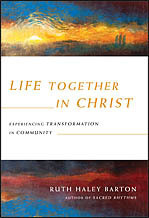 Though I had read and enjoyed Barton before, I wasn't prepared to like Life Together in Christ: Experiencing Transformation in Community as much as much as I did. My standing critique of many books on spiritual disciplines is how they appeal to an individualistic, consumer mindset and apply it to the realm of spirituality (if this doesn't work, try another discipline. . .). Barton made strides in Sacred Rhythms to address this attitude, but Life Together in Christ is a more developed, mature reflection on the nature of Spiritual practice.
Barton frames her exploration of communal spiritual transformation through one of the Jesus' most evocative post-resurrection appearances. In Luke 24: 13-35 we hear the story of Cleopas and his companion, despondent on their trek home from Jerusalem after Jesus was crucified. They are met on their way by a stranger who listens to them and explains to them, from the scriptures, why the Son of Man would suffer. When they reach the end of their journey, they invite him home for dinner and discover in the dinner grace that Jesus himself was their travelling companion.
Barton turns over the words of this story and reflects on nine communal practices and characteristics which enable and encourage spiritual transformation. These are:
Choosing to walk together
Welcoming the stranger
Choosing to listen and not fix
Gathering on the basis of shared desire
The place of men and women in community
The cruciform nature of the spiritual journey
Locating our own stories in Jesus' story
Discerning the presence of Christ in our midst
Bearing witness to what we have seen and heard
Barton is an astute reader of the text, but this isn't a purely exegetical treatment (more of a sustained Lectio Divina). She finds in this story some great segues to the nature of the spiritual life in community. I appreciate her insights into spirituality. I also like that they way these chapters are crafted and set up, to sit down and read it cover to cover by yourself (as I did) is the absolutely wrong way of doing it. Barton is not naive about the difficulties, letdowns, betrayals and disappointments that happen in real-life Christian communities, but she is cognizant that to live the Christian faith we are a part of the church--God's kingdom people. Her words hone in on how to be God's people (and God's presence) for one another.
My favorite part of the book was her explanation of the nature of the spiritual journey, or in her words, "the paschal rhythm of death, burial and resurrection as the essential rhythm of the spiritual life, and of suffering as a necessary part of it" (102). These poignant words helped me see how Christ's cross and resurrection not only explain the journey the Son of God took, but all of us who are in Him. Often I hear this said theologically (we have been crucified with Christ and our lives are buried with him) but Barton helped me connect the dots a little bit on how this is a lived reality.
I highly recommend this book. It is the best book on community I read in 2014 and it would be a great resource for small groups or to read with a spiritual friend (Barton herself is a spiritual director and leads a ministry dedicated to strengthening the souls of and training pastors and ministry leaders). Because it reflects on Christ's resurrection, my lectionary-loving friends may appreciate reading through this in Easter as they seek to deepen their resurrection practice. However the principles and practices are applicable anytime. I give this book a hearty high five (stars): ★★★★★
Thank you to InterVarsity Press for providing me with a copy of this book in exchange for my honest review.
Though I had read and enjoyed Barton before, I wasn't prepared to like Life Together in Christ: Experiencing Transformation in Community as much as much as I did. My standing critique of many books on spiritual disciplines is how they appeal to an individualistic, consumer mindset and apply it to the realm of spirituality (if this doesn't work, try another discipline. . .). Barton made strides in Sacred Rhythms to address this attitude, but Life Together in Christ is a more developed, mature reflection on the nature of Spiritual practice.Barton frames her exploration of communal spiritual transformation through one of the Jesus' most evocative post-resurrection appearances. In Luke 24: 13-35 we hear the story of Cleopas and his companion, despondent on their trek home from Jerusalem after Jesus was crucified. They are met on their way by a stranger who listens to them and explains to them, from the scriptures, why the Son of Man would suffer. When they reach the end of their journey, they invite him home for dinner and discover in the dinner grace that Jesus himself was their travelling companion.
Barton turns over the words of this story and reflects on nine communal practices and characteristics which enable and encourage spiritual transformation. These are:
Choosing to walk together
Welcoming the stranger
Choosing to listen and not fix
Gathering on the basis of shared desire
The place of men and women in community
The cruciform nature of the spiritual journey
Locating our own stories in Jesus' story
Discerning the presence of Christ in our midst
Bearing witness to what we have seen and heard
Barton is an astute reader of the text, but this isn't a purely exegetical treatment (more of a sustained Lectio Divina). She finds in this story some great segues to the nature of the spiritual life in community. I appreciate her insights into spirituality. I also like that they way these chapters are crafted and set up, to sit down and read it cover to cover by yourself (as I did) is the absolutely wrong way of doing it. Barton is not naive about the difficulties, letdowns, betrayals and disappointments that happen in real-life Christian communities, but she is cognizant that to live the Christian faith we are a part of the church--God's kingdom people. Her words hone in on how to be God's people (and God's presence) for one another.
My favorite part of the book was her explanation of the nature of the spiritual journey, or in her words, "the paschal rhythm of death, burial and resurrection as the essential rhythm of the spiritual life, and of suffering as a necessary part of it" (102). These poignant words helped me see how Christ's cross and resurrection not only explain the journey the Son of God took, but all of us who are in Him. Often I hear this said theologically (we have been crucified with Christ and our lives are buried with him) but Barton helped me connect the dots a little bit on how this is a lived reality.
I highly recommend this book. It is the best book on community I read in 2014 and it would be a great resource for small groups or to read with a spiritual friend (Barton herself is a spiritual director and leads a ministry dedicated to strengthening the souls of and training pastors and ministry leaders). Because it reflects on Christ's resurrection, my lectionary-loving friends may appreciate reading through this in Easter as they seek to deepen their resurrection practice. However the principles and practices are applicable anytime. I give this book a hearty high five (stars): ★★★★★
Thank you to InterVarsity Press for providing me with a copy of this book in exchange for my honest review.

November 15, 2014
This book is a fantastic introduction to Ruth Haley Barton and the Transforming Center. Life Together in Christ, intended as much for groups as for individuals, walks one through the basics of a community committed to experiencing Christ. This book reflects the wisdom of Barton, who has been practicing this way of life as well as leading others to do so for well over a decade, as well as exemplifying her wonderful communication skills as she easily walks one through these abstract ideas in clear and tangible steps. I found this book helpful as it helped me to better understand and appreciate Barton's connection with this process. I am thankful for this guide, as well as the Transforming Center. If one is interested in the process of spiritual transformation to which Barton ascribes, this would be a fantastic first step in that direction.

March 12, 2015
An accessible overview of some practices and understandings that can help Christians to experience spiritual transformation in the context of committed, authentic small groups. While I don't fully buy into all of the spiritual formation lingo or practices ("spiritual direction," lectio divina), and the book's Emmaus Road framework felt forced to me, there's plenty of good wisdom in here.

September 12, 2019
Ruth Haley Barton - Life Together in Christ
It is possible to hang around other Christians a lot meet regularly for worship study our Bibles join a church and even call ourselves a community but not change at all in ways that count.
Salvation is not about knowing where we go when we die, but also about the possibility of kingdom living here and now, about being fundamentally changed in the depths of our being so that the will of God can be done in our lives on earth as it is in heaven.
Spiritual transformation is the process by which Christ is formed in us - for the glory of God for the abundance of our own lives and for the sake of others resulting in increased capacity to discern and do the will of God.
it is natural for Christ followers to grow and change. (Is is unnatural for them not to? What led to the stunting of their growth? Hurt/Trauma? Selfishness? )
Christian community is not and never can be about us.
Christian community (and transformation) begins with Jesus and his invitation to be with him. (Reflect on Road to Emmaus passage)
Transforming communities are men & women gathered around the presence of Christ for the purpose of being transformed in Christ’s Presence so they can discern and do the will of God.
It seems obvious (Judas Iscariot) but it is possible to hang around Jesus a lot and still not change.
What was that like for you? How did you experience God in the midst of that? What happens when you pray about that? What questions does that raise for you? Encourage the person towards mature faith.
Desire deepens into intentionality, which can be lived out in the decisions we make every day.
We work out our own salvation by doing our part on the journey of transformation (with God doing His part).
Most often in our journey, what needs to die in us are the sins, negative patterns, and the false-self attachments that limit the freedom of our true-self-in-God. This letting go feels like suffering and death because on some level it is; but what we need to know is that it is death unto life.
Suffering leads to awakening as we see our reliance on/attachment to that which is not God. Awakening leads to purgation, where God strips us of whatever is preventing us relying solely on him and moves to relinquishment of whatever we’ve been clinging to.
We can resit, fight or give in to cynicism, or surrender and cooperate with God’s work in us (This is the part that feels most like death).
What does the text say? What does it mean? How do I apply it to my life?
Crazy idea that Jesus’ drinking fruit of the vine (Luke 22:15-18) at Emmaus is that the kingdom of God had come in Christ!
John 9 - Jesus’ response is that they were missing the point entirely. The real issue is when we are with Jesus, being able to recognize what God is up to in any given moment so that we can join God in it.
Our transformation in Christ is also for the sake of others who do not yet know him.
Evangelism is simply about telling others what happened to us on the road and how Jesus has been making the ordinary extraordinary through his presence in our lives.
Dallas Willard: When the identified people of Christ reach a certain level of growth and don’t go on, they limit their evangelistic potential. Why? Because the witness of [Christians/disciples] to the reality of God in their own lives is weak and becomes a testimony to the contrary. To have earthshaking evangelism, you have to have a different quality of persons, and that is what spiritual transformation is all about!
It is possible to hang around other Christians a lot meet regularly for worship study our Bibles join a church and even call ourselves a community but not change at all in ways that count.
Salvation is not about knowing where we go when we die, but also about the possibility of kingdom living here and now, about being fundamentally changed in the depths of our being so that the will of God can be done in our lives on earth as it is in heaven.
Spiritual transformation is the process by which Christ is formed in us - for the glory of God for the abundance of our own lives and for the sake of others resulting in increased capacity to discern and do the will of God.
it is natural for Christ followers to grow and change. (Is is unnatural for them not to? What led to the stunting of their growth? Hurt/Trauma? Selfishness? )
Christian community is not and never can be about us.
Christian community (and transformation) begins with Jesus and his invitation to be with him. (Reflect on Road to Emmaus passage)
Transforming communities are men & women gathered around the presence of Christ for the purpose of being transformed in Christ’s Presence so they can discern and do the will of God.
It seems obvious (Judas Iscariot) but it is possible to hang around Jesus a lot and still not change.
What was that like for you? How did you experience God in the midst of that? What happens when you pray about that? What questions does that raise for you? Encourage the person towards mature faith.
Desire deepens into intentionality, which can be lived out in the decisions we make every day.
We work out our own salvation by doing our part on the journey of transformation (with God doing His part).
Most often in our journey, what needs to die in us are the sins, negative patterns, and the false-self attachments that limit the freedom of our true-self-in-God. This letting go feels like suffering and death because on some level it is; but what we need to know is that it is death unto life.
Suffering leads to awakening as we see our reliance on/attachment to that which is not God. Awakening leads to purgation, where God strips us of whatever is preventing us relying solely on him and moves to relinquishment of whatever we’ve been clinging to.
We can resit, fight or give in to cynicism, or surrender and cooperate with God’s work in us (This is the part that feels most like death).
What does the text say? What does it mean? How do I apply it to my life?
Crazy idea that Jesus’ drinking fruit of the vine (Luke 22:15-18) at Emmaus is that the kingdom of God had come in Christ!
John 9 - Jesus’ response is that they were missing the point entirely. The real issue is when we are with Jesus, being able to recognize what God is up to in any given moment so that we can join God in it.
Our transformation in Christ is also for the sake of others who do not yet know him.
Evangelism is simply about telling others what happened to us on the road and how Jesus has been making the ordinary extraordinary through his presence in our lives.
Dallas Willard: When the identified people of Christ reach a certain level of growth and don’t go on, they limit their evangelistic potential. Why? Because the witness of [Christians/disciples] to the reality of God in their own lives is weak and becomes a testimony to the contrary. To have earthshaking evangelism, you have to have a different quality of persons, and that is what spiritual transformation is all about!

May 13, 2019
I love Ruth Haley Barton's words and this book is a little gem. I read it as part of a Spiritual Formation course I've been undertaking and this was a core text in the 'Community Transformation' unit.
Using the story of the road to Emmaus when the two disciples meet Jesus after his resurrection but do not recognise him until Jesus allows them to see, Barton provides a wonderful perspective on the importance of community in one's spiritual formation. We simply can't do it on our own as God has made us to be communal creatures. Yes, it's messy but unfortunately essential to going deeper with God.
It's a relatively short book with only 9 chapters but each chapter is full of great content. It is a book designed to read together, of course it is it's on community, and therefore at the end of each chapter is a series of reflection questions for the group to discuss. As I used it as a textbook I had to respond to some of Barton's insights in a couple of assignments I had to complete and would love to walk through it with some other individuals to gain its full benefit. In saying that, there is so much to gain by reading it on your own.
If you're desiring to go deeper with Christ and are questioning the role of community I'd encourage you to grab a copy of this book. You won't be disappointed.
Using the story of the road to Emmaus when the two disciples meet Jesus after his resurrection but do not recognise him until Jesus allows them to see, Barton provides a wonderful perspective on the importance of community in one's spiritual formation. We simply can't do it on our own as God has made us to be communal creatures. Yes, it's messy but unfortunately essential to going deeper with God.
It's a relatively short book with only 9 chapters but each chapter is full of great content. It is a book designed to read together, of course it is it's on community, and therefore at the end of each chapter is a series of reflection questions for the group to discuss. As I used it as a textbook I had to respond to some of Barton's insights in a couple of assignments I had to complete and would love to walk through it with some other individuals to gain its full benefit. In saying that, there is so much to gain by reading it on your own.
If you're desiring to go deeper with Christ and are questioning the role of community I'd encourage you to grab a copy of this book. You won't be disappointed.

January 28, 2021
I honestly have never thought I would rate a Christian book less than 3 stars... But this didn't do it for me.
It's not necessarily for the content but this is all biblical based so like I'm not giving 2 stars to the bible cause that's obviously 5 stars..
I think it was the presentation that I wasn't necessarily a fan of. I read this with my bible study over the course of a few weeks, and I found myself not really wanting to read it. This book covers the story from Luke 24: 13-35 about the two people on the Emmaus road who encountered Jesus after He had risen from the dead. I think writing an entire book about a few verses can be considered a little excessive, but that's just my thoughts. Again, the writing wasn't doing it for me. I just wasn't really intrigued about her interpretation of the story and maybe that's because I think the verses in itself is pretty self-explanatory.
I'm not mad or annoyed that I read it. Like this is about Jesus, so obviously that's plus. But would I recommend it for other bible studies to read? Not really. I've read way better Christian books out there.
It's not necessarily for the content but this is all biblical based so like I'm not giving 2 stars to the bible cause that's obviously 5 stars..
I think it was the presentation that I wasn't necessarily a fan of. I read this with my bible study over the course of a few weeks, and I found myself not really wanting to read it. This book covers the story from Luke 24: 13-35 about the two people on the Emmaus road who encountered Jesus after He had risen from the dead. I think writing an entire book about a few verses can be considered a little excessive, but that's just my thoughts. Again, the writing wasn't doing it for me. I just wasn't really intrigued about her interpretation of the story and maybe that's because I think the verses in itself is pretty self-explanatory.
I'm not mad or annoyed that I read it. Like this is about Jesus, so obviously that's plus. But would I recommend it for other bible studies to read? Not really. I've read way better Christian books out there.

November 8, 2024
I very much appreciated the points made in the first couple chapters about living in community with people for the sake of multiplication and welcoming strangers. The further I read, though, I noticed that feelings and self were focused on more than pointing oneself and others to Christ. We should be looking for Jesus in scripture and let that direct our thoughts and actions. I also don’t believe the corporate preaching ministry is for women (teaching in small groups, praying, ministry leadership in other roles, etc, yes, but biblically the role of elder is solely for men).

October 16, 2018
A disappointingly unchallenging and shallow reexamination of community. The author seems to have been both very privileged and while she presents her own journey from a meritless inherited view to a better one, her final destination wasn't inspiring or challenging to me. This book might help people who have no sense of Christian community develop something resembling it, but it doesn't begin to resemble to ideal model of community that was modeled by Christ.

August 10, 2019
Solid read. Not my favorite book from Ruth Haley Barton, but some nice thoughts. Her books typically make me desire the presence of God, and I have read them as a type of devotional. This book is very different from that. There are some great thoughts however on what transformational community should look like.
April 20, 2021
Parts of this book were exceptionally helpful (the chapter on listening versus fixing was fantastic) and then there were chapters (the one on gender) that included much more of the author’s personal experience and opinion, so it didn’t read like the other chapters (which used Scripture as its basis).
February 17, 2021
3.5. Overall good content, but more of a surface overview. However, a few passages are quite good and worth revisiting. The structure around the emmaus road narrative is a helpful framework and didactic tool.

September 3, 2023
Author gave practical ways to engage in community and do it healthily! It was a little odd to read it by myself since there were many opportunities for group discussion at the end of each chapter. But still, very helpful info to learn!!

August 6, 2026
First book finished in years 😭 I enjoyed this and think it gave a good outline of community - line that stuck with me was the Church is the place that most overpromises and underdelivers on transformative community

November 14, 2019
Any book by Ruth Haley Barton is rich! I like the focus in this book on transformation toward Christlikeness that can occur in our lives within a community context. A balanced Scriptural approach.

April 15, 2021
A must read for anyone seeking true biblical community.
February 19, 2025
Such an interesting take on Luke's story of the disciples on the road to Emmaus! Important principles for developing community that leads to a transformed life of faith.

May 29, 2015
Amazing book. This is what community should be in the church. There are excellent exercises in here to engage in to help develop a prayer life. There is a chapter on women and men that is definitely a conversation starter. One of the greatest things in here is the section on stability. Barton covers how there is a definite power in staying at the church. The grass is obviously not always greener, as people are the same everywhere you go. Real growth happens when you stick it through the tough times. She cites Taylor saying how true freedom begins where we accept life where we are at. I think people today are slaves to fleeing when something isn't 100%. I should know, I am one of them.
February 7, 2016
I highlighted the mess out of this one. Great work on fostering true community in the body of Christ. This work is intentionally narrow in its' focus; no discussion of conflict resolution or addressing sin, etc. The focus is on taking intentional and healthy steps towards a level of intimacy that sets a community up well to do those other things. I appreciated the balance of conceptual discussion and pragmatic how-to's. There were a few things I disagreed with, but nothing connected to Barton's thesis. I strongly encourage anyone interested in fostering healthy community to give this a read!

December 13, 2014
Hands down, one of the best spiritual formation (or transformation) books I've ever read. Each chapter made me grateful for the ways God has already allowed me to experience the truths it described and long for more. This may very well shape the way that I cast vision for our church's small group ministry; it has already cast a vision for my own life. I give this book the *highest* recommendation.

June 15, 2015
An examination of the spiritual life together structured around the Emmaus road encounter in Luke 24. It is not an ecclesiology, but a little guidebook for groups interested in formation together. It focuses on listening, shared desire, hospitality, suffering, and discernment, ending with mission. The chapters are short but the questions included (for individual or group) are penetrating and expect spiritual transformation as part of Christian's walk together.

November 22, 2014
This is one I'm going to have to return to with a group. Hopefully sooner than later. Life Together in Christ focuses on the essence of what transforming life together can be - centered on Christ. Throughout the book, Ruth provides practical practices to use within a group to reflect on community as she uses Luke 24:15-35 as the narrative scaffolding bringing readers along the road to Emmaus.

January 1, 2020
More sentiments to add on how to live according to Christ in us within a community. Similar to her book on disciplines, I just wonder why it needs to be out here? The title is pretty close to "Life Together" by Dietrich Bonhoeffer after all... I received more insight in this book than the other, but still it weaves in and out of Bonhoeffer's book which I would point people to that instead.

May 25, 2015
I've consistently appreciation Barton's thoughtful and practical approach to spiritual disciplines. This book is refreshingly insightful in envisioning spiritual community as a journey together and offering themes to engage yourself and others.

June 14, 2015
I really like Ruth Hayley-Barton's writing, theology and authenticity. this is another excellent resource for ministry leaders and anyone wanting to develop.

September 26, 2015
Outstanding and perceptive portrayal of group spiritual formation- inspiring as Ruth Haley Barton so often is.


October 29, 2015
Barton's thoughtful book led to great discussion among our Spiritual Growth group. Lots of great questions for digging deeper into our own practices.
Displaying 1 - 27 of 27 reviews