Jump to ratings and reviews
Rate this book

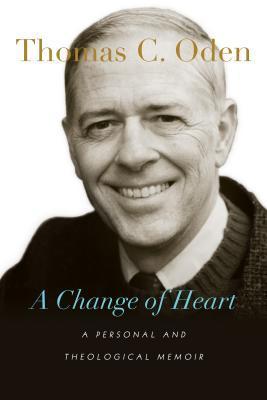
A Change of Heart: A Personal and Theological Memoir

Rate this book
Preaching 's Best Books for Preachers Best Theological Memoir from Byron Borger, Hearts and Minds Bookstore How did one of the twentieth century's most celebrated liberals have such a dramatic change of heart? After growing up in the heart of rural Methodism in Oklahoma, Thomas Oden found Marx, Nietzsche and Freud storming into his imagination. He joined the post-World War II pacifist movement and became enamored with every aspect of the 1950s' ecumenical Student Christian Movement. Ten years before America's entry into the Vietnam war he admired Ho Chi Min as an agrarian patriot. For Oden, every turn was a left turn. At Yale he earned his PhD under H. Richard Niebuhr and later met with some of the most formidable minds of the era―enjoying conversations with Gadamer, Bultmann and Pannenberg as well as a lengthy discussion with Karl Barth at a makeshift office in his hospital room. While traveling with his family through Turkey, Syria and Israel, he attended Vatican II as an observer and got his first taste of ancient Christianity. And slowly, he stopped making left turns. Oden's enthusiasms for pacifism, ecumenism and the interface between theology and psychotherapy were ambushed by varied shapes of reality. Yet it was a challenge from a Jewish scholar, his friend and mentor Will Herberg, that precipitated his most dramatic turn―back to the great minds of ancient Christianity. Later a meeting with then Cardinal Joseph Ratzinger (later Benedict XVI) planted the seeds for what became Oden's highly influential Ancient Christian Commentary on Scripture. This fascinating memoir walks us through not only his personal history but some of the most memorable chapters in twentieth-century theology.

384 pages, Hardcover

First published November 6, 2014

22 people are currently reading
427 people want to read

About the author

Thomas C. Oden

158 books76 followers
Thomas C. Oden was Henry Anson Buttz Professor of Theology and Ethics at Drew University in New Jersey from 1980 until his retirement in 2004. He remained faculty emeritus until his death. He was the general editor of the Ancient Christian Commentary on Scripture and the Ancient Christian Doctrine series as well as the author of Classic Christianity, a revision of his three-volume systematic theology.

Ratings & Reviews

What do you think?
Rate this book

Friends & Following

Create a free account to discover what your friends think of this book!

Community Reviews

5 stars
75 (43%)
4 stars
67 (38%)
3 stars
23 (13%)
2 stars
7 (4%)
1 star
2 (1%)
Displaying 1 - 30 of 37 reviews
Profile Image for Bob.
2,444 reviews724 followers
January 21, 2016
Summary: Thomas Oden narrates his personal and theological journey through social leftist thought, neo-orthodox and process theology, and trends of ecumenism, feminism, and small group psychotherapy until a personal conversation led to repentance and an embrace of classical, patristic Christianity (paleo-orthodoxy) and landmark works in patristic scholarship and the North African origins of Christianity.

Thomas Oden no doubt would go down as one of the most significant theological scholars of the late twentieth century. Authoring numerous books on pastoral and systematic theology, late in life he led a monumental publishing project, the Ancient Christian Commentary Series and a three-volume series on the influence of early North African theologians on European Christianity. In this volume, he narrates the course of his life, which hinged on a pivotal conversation and changes of heart and scholarship.

The first part of the book (roughly the first 130 pages) reflects the course of his life up through the 1960s. From his birth and boyhood in rural Oklahoma, we see the rich fabric of family life and faith, challenged for the first time with the ordeals of Depression and World War 2, with older friends who did not return. We see Oden's turn in college to pacifism and the leftist ideologies favored by mainline youth ministries. He speaks at several points of the common journeys as Methodist youth he and Hillary Rodham Clinton traveled and the common influences of people like Saul Alinsky and Joe Matthews. He eventually pursues doctoral work at Yale and later travels to Europe, intersecting with Karl Barth, Rudolf Bultmann, Gunther Bornkamm, and Wolfhart Pannenberg. This section of the book reveals an Oden imbibing successive "movement" theologians and immersing himself deeply in World Council of Churches ecumenism. All of this led to his appointment at Drew, and to a life-changing friendship with Jewish scholar Will Herberg. He describes a meeting with Herberg to receive Herberg's critique of his latest book, Beyond Revolution:

"Holding one finger up, looking straight at me with fury in his eyes, he said, 'You will remain theologically uneducated until you study carefully Athanasius, Augustine and Aquinas.'. . .

"Herberg reminded me that I would stand under divine judgment on the last day. He said, 'If you are ever going to become a credible theologian instead of a know-it-all pundit, you had best restart your life on firmer ground. You are not a theologian except in name only, even if you are paid to be one.' "
(pp. 136-137).

This led to the "change of heart" referred to in the title, beginning with repentance from the obsession with originality to a dreamed epitaph saying "He made no new contribution to theology." He moved from the contentious theologies of his peers to the consensual approach to theology of the early fathers. In the circle of New York intellectuals gathered around Richard John Neuhaus bringing together thoughtful evangelicals, Catholics (including then Cardinal Ratzinger) and Orthodox, Oden discovered a different ecumenism energized not by the latest radical theology but rather the classical Christianity articulated in creeds and councils.

This turn to the church fathers and away from the latest progressive causes led to painful breaks with some of his Drew colleagues, but also to the landmark publication project of The Ancient Christian Commentary Series, a commentary series based on the idea of a catena of citations of the church fathers on the biblical text. In the midst of this project, he describes his loss of Edrita, his college sweetheart with whom he was married for 46 years. We see the deep grief of one parted from his beloved only by death, the comfort of the birth of a granddaughter two weeks later and the healing that came in praying the hours, believing that somehow he was communing with both the Lord and Edrita.

The book concludes with the development of a finding implicit in his study of the fathers--the critical role African theologians played in the first five centuries of Christianity, a heritage that has implications for the West, profoundly for Africans and for Christian engagement with the Islam that supplanted it in North Africa. In addition to his writing, Oden founded the Center for Early African Christianity.

I found this to be a powerful narrative of Oden's life but also the follies of many of the successive theologies of the twentieth century, theologies that distanced Oden from the centrality of the crucified and risen Lord for an empty and unsatisfying activism. His turning makes me examine how deeply I am listening to Christians across the centuries, and not just the "latest thing." I found myself warned of the danger of being the "know-it-all pundit". And it left me with a profound sense of thankfulness for Oden's Jewish friend who risked affection to tell the truth. What a gift this resulted in not only for Oden but for the church.
Profile Image for Matt.
Author 8 books1,587 followers
November 19, 2020
I’m so glad I read this memoir. Except for a few lulls, it’s a remarkably absorbing and edifying story. Oden was a theologically liberal professor—frankly, a heretic—who in midlife came to discover, especially through patristic writings, the beauty of orthodoxy and the wonder of gospel grace. A lifelong Methodist, he went on to become one of the 20th (and early 21st) century’s most prolific and influential theologians. While I differ with Oden on some significant second-order issues, I eagerly await meeting him in glory.

What a life. And what a stirring and refreshing read.
Profile Image for Mark Jr..
Author 6 books451 followers
November 9, 2016
What strongly conservative Christian doesn't thrill to hear a conversion story from theological liberalism—and from an elite academic within that crowd, no less? Thomas Oden, who studied under H. Richard Niebuhr at Yale, most definitely rejects the liberalism he so ardently pursued during his formative educational years, up till age 40. Oden, a constitutionally nice man, reserves the most (the only?) intense criticisms in his autobiography for theological and other liberals (and, in this case, a few evangelical enablers):
The evangelicals had been promised a seat at the table [at the World Council of Churches meeting] in Canberra, but then were ignored and represented only by the evangelical house pets of Genevan ecumenism.

Ouch. The gentle Oden is not against a tiny bit of name-calling when the situation warrants:
The New Age movement of the late 1960s was for me exhilarating. It came as swiftly as it disappeared. The Green Revolution and the heyday of the Human Potential movement moved at top speed. Everyone was talking about peak experiencing and self-actualization. The air was fueled by the revolutionary passions of the sixties, Vietnam, situational ethics, the new morality, sexual experimentation and anti-parent spleen.

But I've begun this little review with two exceptions in order to highlight the rule. Mostly, Oden is straightforward and, I come back to that word, gentle.

His chapter on his move from that liberal world to a theologically conservative one gives honor where it's due, is appropriately self-deprecating, and it straightforwardly critiques theological liberalism. It was the best part of the book—though the entire thing was surely readable and interesting. The pith of his story is that a Jewish scholar who'd gone through his own liberal, Marxist, Freudian rumpsringa as a youth, challenged 40-year-old Oden around 1970: "You don't know your own tradition well enough to reject it until you read the fathers." He did, and the "consensual Christian tradition" he discovered there changed his theology, his life, and his heart. I rejoice.

But I'm puzzled.

Alex Storshine's review on Goodreads is quite good, but I want to quote it (and use a portion in a way he likely didn't intend) to explain my puzzlement:
I see a lot of merit to the classic Christian consensus and Oden has ably demonstrated how the churches emerging out of the Reformation are in line with this consensus despite assertions to the contrary by some. But I wish I could find some greater clarification on theological specifics and Oden's methodology for dealing with them. Oden is a supporter of women's ordination (as am I!) and while there is solid evidence that women DID have leadership roles (Phoebe was the first exegete of the Epistle to the Romans and there is evidence of female deacons) how does classic Christianity deal with disputes such as women's ordination? Also, while the conciliar process seeks orthodoxy through agreement by both laity and clergy, what happens when the LAITY (unlike the liberal clergy that plague the mainline) err, as in the laity's excessive veneration of the Virgin Mary?

Indeed. It's a good thing that Oden recovered the fathers, and given the popularity of the Ancient Christian Commentary Series (and its publication by an evangelical house after others passed it up) evangelicals appear to have been as excited than anyone that Oden did the following:
I began searching for a more reliable grounding for the study of sacred texts. That grounding came only when I recognized the reasonableness of the ancient consensual Christian tradition. It had a more reliable critical method based on historic consensus, which implies centuries of human experience. It had remained surprisingly stable while passing through innumerable cultures for two millennia.

This is characteristic Oden. Throughout the book he asserts, with little apparent concern over the Sic et Non among the fathers, that there is a consensual Christian tradition. He reminds me of a Catholic priest I heard many years ago at Furman University. Weaving the fingers of his two hands together over and over, he kept asserting, as if his hand motions could make it so, that "scripture and tradition cohere."

And I'm puzzled how such a smart man as Oden could perpetuate such a notion. He does, helpfully, point to "Ambrose, Augustine, Jerome and Gregory the Great" as the fathers "most consensually remembered, who most accurately gave expression to the faith that was already well understood by the apostles and celebrated by the worshiping community under the guidance of the written Word." But even that phrase—"most accurately gave expression"—begs the question. Who says? Oden does acknowledge that the fathers didn't always agree:
Whenever I came upon those points where it seemed that the apostolic consensus had lost its way or broken up irretrievably, I discovered that by looking more deeply into the most consensual interpreters of the sacred text, the truth proved itself to be self-correcting under the guidance of the Spirit. That premise, that the Holy Spirit sustained the right memory of the truth revealed in history, was to me counterintuitive at every step. Yet the constant course correction of the community was the most remarkable aspect of the history of ecumenical consent.

Personally, whenever I've dipped into the Ancient Christian Commentary Series, I find some stimulating stuff, yes, but also odd stuff. It's a mix. Some of what I read is unbelievably fresh, and a lot of it causes headscratching. Here's what I saw on the comments on Genesis 4, for example:

• Ephrem the Syrian makes up several details that aren't in the text of Scripture: he says God sent fire from heaven to consume Abel's offering, but not Cain's; he says, too, that Cain didn't give of the best of his grain and fruit.
• Origen offers an interpretation people still generally take today, that Cain's sin began before the offering.
• Chrysostom makes an insightful point linking God's curse of the serpent in Genesis 3 and His curse of Cain in Genesis 4.
• Chrysostom says there was no sexual intercourse before the fall (!).

I just don't see any good reason to invest special authority in these men. Some of their opinions are well-founded, and surely some of the fathers are astoundingly brilliant. Augustine is a world-historical figure for good reason. I also believe that C.S. Lewis is right when he suggests that modern readers should let the breeze of another century blow through their minds on a regular basis. But that point from Chrysostom is greatly significant: if God didn't create sex; if even monogamous heterosexual unions are a result of the fall, then we're in a mess. Where's our consensus? Is Chrysostom right or wrong, and how do we know?

If Catholicism and Reformation Protestantism are both heirs of a largely healthy Christian tradition, and I think we are, there's only one way to find out for sure which groups (and which subgroups) are more faithful heirs—go to the Bible. And that's what this biography lacked. I read it mostly on long flights, so I may have zoned out, but I recall almost no Bible quotations, and certainly no careful discussions of biblical teaching. Out of the abundance of the heart the mouth speaks, and Oden's partly justified excitement about the tradition manages to obscure rather than cohere with Scripture.

At key points, I was practically begging for Bible:
When some in these groups wanted to leave these [hyper-liberal mainline] denominations, I tried to provide plausible reasons for why they would do better to stay and fight for their reform. To flee a church is not to discipline it. Discipline is fostered by patient trust, corrective love and the willingness to live with incremental change insofar as conscience allows. An exit strategy is tempting but self-defeating, since it forgets about the faithful generations who have given sacrificially to build those churches. It would be a dishonor to them to abandon the church to those with aberrant faith.

God has some things to say about this in Scripture. "Strengthen what remains," yes. But also "Mark them which cause division and strifes among you contrary to the doctrine which we have preached." The job of a theologian should first be to find a way to faithfully use the Bible to answer our questions. If the tradition helps, that's wonderful. If it muddies the waters or positively contradicts the Bible, then the Bible must remain our norming norm. That's what sola scriptura means.

I first heard of Oden in the 1990s when he was a signatory of the Evangelicals and Catholics Together documents. Oden's book amply demonstrates that there are things to be learned from Roman Catholics and Eastern Orthodox, but I'm with R.C. Sproul and the Reformers in seeing a fundamental disjunction between formal Catholic (and Orthodox) teaching and the gospel of Jesus Christ.

Oden does define what a Christian is:
I have discovered that I belong to a vast family of orthodox Christian believers of all times and places, which includes historic Eastern Orthodoxy, Roman Catholicism and Protestantism. The Christian family is far wider, broader and deeper than most of us have commonly thought of it as being. Those who can recite the Apostles’ Creed with full integrity of conviction and live out Christian moral norms, as well as worship in spirit and truth, are all part of a classic consensual family of faith.

Both belief and practice are included in his definition, and biblically speaking I think that's good. My own evangelical tradition isn't free of people whose orthodoxy and orthopraxy are questionable (sometimes my own is!). But after hundreds of conversations with Roman Catholics over the years, some of them in places around the world; and after a number of visits to Catholic churches and Catholic blogs and magazines (the stimulating First Things preeminent among them), I'm puzzled. There's a lot of disagreement there. No, formal Catholic doctrine does not teach pure Pelagianism, but they do a pretty terrible job of informing the laity of that fact, as I'm sure many Catholics will agree. What does that fact say?

In order for Oden to see evangelicals, Eastern Orthodox, and Roman Catholics as part of a “vast family,” he has to be skilled in (gently) papering over deep differences. My going hypothesis after reading this biography is that this papering has been his modus operandi in his academic work and professional life for decades.
Profile Image for Alex Strohschein.
821 reviews150 followers
May 1, 2015
"A Change of Heart: A Personal and Theological Memoir" by Thomas C. Oden is an enthralling account of the life of one of the most influential theologians of the 20th and 21st centuries.

The memoir chronicles Oden's journey, illuminating his childhood and charting his spectrum-shift from liberal radical enamoured by Freud, Marx and Bultmann to one of the premier champions of "paleo-orthodoxy" and chief architect of the magisterial Ancient Christian Commentary Series (ACCS) as well as an advocate for Africa's early Christian heritage.

Following his childhood, Oden studied theology. He became a disciple of liberal theology, with particular interest in Rudolf Bultmann. He also dabbled in the relationship between theology and psychology, evidenced by his early books such as "Kerygama and Counselling." He also writes of his involvement in the ecumenical movement of the mainline - an ecumenical movement he later repudiated because of its shallow doctrine, radical-liberal bent (including its politics) and poor financial management and of travelling to Europe where he met Bultmann, Karl Barth, Wolfhart Pannenberg and where he was admitted as a guest observer to Vatican II.

Oden's "change of heart" began when his Drew colleague, Will Herberg (author of "Protestant, Catholic, Jew") challenged him to return to the early sources of Christianity in the early 1970s. This spawned Oden's continued interest in recovering and proclaiming "classic Christianity" for believers today (the ACCS being a landmark contribution). Oden became more informed of the resources that classic Christianity can offer Christians today and how these teachings have outlasted the fads and fashions that Oden himself was doubting and then abandoning. Now instead of Rogerian therapeutic methods, Oden was discovering the pastoral wisdom of the church fathers.

Though not without opposition from ideological and theological adversaries, Oden began advocating "paleo-orthodoxy" beginning in the late 1970s. He became conversant and friends with many of the leading theologians and thinkers of our time, including Roman Catholics such as Avery Dulles, George Weigel and especially Richard John Neuhaus (Oden attributes the inspiration for the ACCS to his dialogue with Joseph Ratzinger; along with meeting the future Benedict XVI Oden also participated in an early morning mass with Pope John Paul II at the outbreak of the first Gulf War), Protestant evangelicals such as J.I. Packer, Timothy George, Charles Colson, and Christopher Hall as well as Orthodox and Jewish thinkers. The two projects Oden spends most time discussing are the ACCS and later his work in recovering the roots of African Christianity. He writes about the background to a lot of his books but one significant book absent from this memoir is the story behind (my favourite Oden book) "The Transforming Power of Grace." He also writes of his family life.

Several things shine forth especially brightly to me from Oden's memoir:

1) He is immensely gracious. Even when writing about those with whom he strongly disagrees he praises their intellect and talent.
2) Thomas Oden is passionate about the "classic Christian consensus."* He sees this as a richer, deeper form of ecumenism than that offered by the World Council of Churches and other liberal ecclesiastical organizations. He writes glowingly of the "conciliar" process for understanding doctrine.
3) He has steadfastly stuck with the United Methodist Church of his upbringing, despite his immersion in the early Church and the theological liberalism of many of the leaders in the UMC. In an age when many serious Christians are converting to other denominations or worse, Christians act non-nonchalantly about their denominational affiliation, it is admirable to see someone remain loyal to the church that baptized and instructed them in the faith. The UMC is also unique in that it has thus far avoided significant schism, unlike other mainline churches where the conservatives have departed (e.g. the PCA and ACNA).
4) A deep awareness of the Holy Spirit's work through the course of his life is acknowledged. Oden points to providential meetings and opportunities and reminds us that God is very much alive and working in the world today!

Throughout his long career he has been present at key moments and collaborated with an impressive array of believers. Readers will enjoy the anecdotes. This is indeed a personal AS WELL AS a theological memoir. Thomas Oden charts how the utopian idealism of radical Christianity ultimately withered, both in his own life and in the greater Christian Church and how he emerged from this committed to "classic Christianity."

* I see a lot of merit to the classic Christian consensus and Oden has ably demonstrated how the churches emerging out of the Reformation are in line with this consensus despite assertions to the contrary by some. But I wish I could find some greater clarification on theological specifics and Oden's methodology for dealing with them. Oden is a supporter of women's ordination (as am I!) and while there is solid evidence that women DID have leadership roles (Phoebe was the first exegete of the Epistle to the Romans and there is evidence of female deacons) how does classic Christianity deal with disputes such as women's ordination? Also, while the conciliar process seeks orthodoxy through agreement by both laity and clergy, what happens when the LAITY (unlike the liberal clergy that plague the mainline) err, as in the laity's excessive veneration of the Virgin Mary?
Profile Image for Jacob Aitken.
1,684 reviews419 followers
August 4, 2019
Autobiographies written by those who lived through the Great Depression have a certain feel to them. Extra points if you were in the Dust Bowl. Methodist theologian and patristics scholar Thomas Oden describes his life growing up in a poor farming community in Oklahoma to become a radical activist towards ending up as a respected Patristics scholar.

As a liberal professor he read the New Testament not around the central themes of Incarnation and Resurrection, but around man’s guilt, anxiety, and freedom. He was a Bultmannian. Fun fact: In the 60s Oden was a devotee of Saul Alinsky, who influenced Obama and Hillary Clinton.

I was surprised at how much psychotherapy dominated liberal Protestant thought. Carl Roger’s “unconditional acceptance” became God’s “unconditional love” with Tillich’s “accepting our acceptance.”

His chapter on the 60s made it seem like he personally knew every major American existentialist theologian. And then there were the hippies. And Oden was always writing about the “next big movement,” all the while slowly abandoning liberalism.

The 1970s were a U-Turn. It was when Oden met the Jewish conservative Will Herberg that he became a true theologian. Herberg told him he was a fake because he was a know-it-all pundit who had never read the real Tradition.

Nemesius of Emesa corrected Oden’s psychology as he described the body-soul interface.

The 1980s. He had open-heart surgery and nearly died on the table. He describes his soul feeling peace and light. He describes “being bathed in a world of glorious light--stunning, radiant light of a different source than I had ever seen. The light seemed to be not the light from the operation room ceiling, but from somewhere far beyond.”

Classic pastoral care: meant caring for the health of the inner life of the person.


He tells how he visited Cuba and the poverty there. American democrats today would be shocked to learn “that wasn’t real socialism.”

Oden has a thrilling section on Early African Christianity. He tells of his travels in Africa, meeting with Coptic and Ethiopian leaders, sub-Saharan leaders struggling with Mugabe, how the World Council of Churches loved Mugabe, and such.

Odens ends the book with a reflection on his own spiritual formation, the Office of the Hours, etc.

Conclusion

Oden knew all of the mainstream figures in mainline Protestantism. His book reads as a “Who’s Who?”

He tells the neat story of how the Ancient Christian Commentary series (ACCS) came about. As someone who has been reading the church fathers on a weekly, if not daily basis for the past 12 years, my own experience with this series is mixed. I get the idea that we need to move beyond the extreme criticism. Yeah, that’s useless to the life of the church. Yet on the other hand, the Spirit has continued to work in lexical studies. Our knowledge of Hebrew is so much better. That’s not arrogant. We know more about the Hebrew language now than we did 1500 years ago.

Where the ACCS is valuable, though, is in spiritual formation. That’s probably closer to what the Fathers intended, anyway.


Profile Image for Christian Barrett.
570 reviews60 followers
July 4, 2021
Thomas Oden provides a fascinating tale as he recounts his life’s legacy as a husband, academic, and fighter for unity in Christendom. Oden provides details accounts of how he went from radical leftist in the Methodist church to a conservative champion of orthodoxy as he learned it from the patristics. This book is a perfect example as to why Christians should study the history of the church, and know the depth of historic thought that has taken place in the past 2,000 years. There are some dull spots in this book, but Oden tells a good story as he walks through his personal life.
Profile Image for Paul Dubuc.
294 reviews9 followers
February 2, 2019
My interest and enjoyment in reading this book seemed to grow the further I got into it. This is a first half/second half of life story that is likely to be unique and fascinating for anyone who is familiar with the history of Christian churches in the USA in the 20th century, particularly since 1950. I've come to see the author as a modern hero of the faith and a model of Christian spiritual maturity that seems quite rare.

During his first 40 years of life, Thomas Oden devoted his professional activity as a writer and teacher to promoting the theological and political agenda of the leadership of mainline denominations and seminaries which came to be known as the "social gospel." His early writing and teaching has been a significant influence for a current candidate for President of the USA.

During midlife, Oden experienced a change of heart inspired by the excesses of the ecumenical movement and friendships formed with more conservative theologians and religious leaders; one Jewish rabbi in particular. His journey from that point on is characterized by a return to what he calls "Classic Christianity," the consensual teaching, practice and spirituality of the Christian Church in its first eight centuries. Classic Christianity, having stood the test of 20 centuries, has more unifying potential among Christians than the modern ecumenism of the last 100 years. Oden's second half of life work has been devoted to helping contemporary Christian students, teachers and leaders become more familiar with the writing and teaching of ancient Christian Church. He has also also devoted much time and energy more recently to helping African Christians discover appreciate their ancient heritage. The oldest and most influential Christian churches were in northern and eastern Africa.

Thomas Oden will leave a tremendous legacy of hope for ancient-future Christianity. His prolific work of writing and editing in the last 40 years are a great gift to all who would gain a deeper understanding of the historic Christian faith. He not only has a great mind but also has a great heart. Though his change of heart at midlife caused many problems for him among those who did not understand it, there isn't a hint of bitterness, condescension, or anger directed at anyone in this book. Unlike many who have experienced a radical change of heart in life, Oden hasn't made this memoir into a repudiating attack on his former views and those who still hold them. He shows nothing but appreciation and respect for everyone he has worked with during his whole life. He sees his first 40 years as valuable experience that prepared him for all he has come to do and love since. May the seeds he has sown grow far and wide.
Profile Image for Ivan.
754 reviews116 followers
May 29, 2015
I honestly thought this book would be a bore—some garden-variety, poorly written, and sentimental autobiography—but it instead captivated me and I read it in two days. Aside from a certain ecumenical flair (he was one of the original signatories of ECT), I love everything about this book and this man's heart. It's not uncommon, but I finished it with tears in my eyes. A moving and beautiful book.
Profile Image for Scott.
517 reviews80 followers
June 29, 2015
A monumental story about a remarkable man who basically lived through every major event, and met every major figure, in 20th century theology. Going from deeply modern assumptions to residing comfortably within classical Christianity, Oden's story is good for all aspiring theologians to read and think upon.
Profile Image for Ciara Anderson.
25 reviews1 follower
July 17, 2017
Amazing journey of a liberal Yale theologian who propagated much of what still stands at the forefront of liberal Christianity back to the church fathers and the orthodox faith. He meets a diverse set of characters along his journey and tells the story of his change of heart with grace, conviction, and compassion.
Profile Image for Tom.
185 reviews58 followers
December 19, 2016
I've enjoyed a few theological memoirs in recent years, but few that represent what the title of this book describes: a change of heart. Most tell a somewhat unbroken tale of a calling or academic career of upward mobility and influence. Oden's life, of which I was largely unfamiliar, he describes as 40 years of prodigal wandering and 40 years of coming home. He died earlier this month at the age of 85.

Oden was a student of Richard Niebuhr (one of the most esteemed American theologians of the 20th c.) and wrote his dissertation on Rudolph Bultmann (one of the most influential biblical scholars of the 20th c.). He was "left of left" politically throughout the '50s and '60s. He developed a promising career breaking new ground (he thought) in the conjunction of theology and psychology / psycho-therapy.

Somewhere in the late 60's, a colleague at Drew University, Will Herberg, challenged Oden to study the church fathers, along with Aquinas and major medieval theologians. In his caring-but-direct manner, Herberg poked holes in Oden's academic, ascendant pursuit of novelty and acclaim while leaving behind twenty centuries of classic Christian consensus. Oden points out the irony that it took a Jew (Herberg) to finally make him a believing Christian. It had also previously taken a Christian to finally make Herberg a believing Jew.

The study of patristics - along with his strong souring on Marxist and other ideologies of the far left - began a process of change for Oden, personally and professionally. Eventually this would lead to editing the astounding Ancient Christian Commentary series, 29 volumes pulling together the wisdom of early church fathers and mothers on each book of the Bible. Oden found in classic, patristic Christianity a common ground for Catholic, Protestant, and Eastern Orthodox Christians. He found these brilliant early thinkers of the faith to have already addressed all of the major issues of Christian belief and practice in relationship to an unbelieving world, issues which modernists smugly believe are only modern insights. Oden makes the astounding confession that he resolved to offer nothing original as a theologian for the rest of his career!

These passions led in later years to a trilogy on the critical African roots of Christian theology, beginning with "How Africa Shaped the Christian Mind: Rediscovering the African Seedbed of Western Christianity." He argues the theology which would shape the Western tradition was not Eurocentric, but moved from South to North.

Oden's life encourages one to trust the Scriptures, not only as they have been given to us, but also as they have been understood by the consensus of the church through the guidance of the Spirit. Over centuries and across continents, classic "consensual Christianity" has been sustained. This heritage is not to be taken lightly today, even as we are enculturated to assume newer is better, taking the names "enlightened" or "modern" for ourselves and labeling the days of our ancestors as "ancient, dark, pre-modern, etc."
Profile Image for Mrs. Angie Vogt.
11 reviews7 followers
January 31, 2020
Thomas Oden reflects on the evolution of his own theology and how it impacted his ministry and hermeneutical approach to Scripture and early Christian writings. As a young Methodist, his political idealism and naivete led him into the popular psychoanalytical approach to faith. As he matured and advanced in his academic pursuits, his Christian anthropological views began to shape his appreciation for natural law and the orthodox tenets of what he called "consensus Christianity." This is not a theological treatise, though, but a beautiful and reflective memoir. I encountered many of my own unspoken wonderings, questions, and past misunderstandings in Oden's work. Deeply moving.
Profile Image for Kyle Grindberg.
378 reviews29 followers
March 19, 2019
Enjoyable and encouraging, he's still squishy after his conversion, but God takes you from where you are, not where you should've been, and he had come such a long way from his past in Leftist Christianity.
Profile Image for Steve Irby.
319 reviews8 followers
June 2, 2022
I just finished "A Change of Heart: A Personal and Theological Memoir," by Thomas C. Oden, 2014.

I'll be blunt: I've been wanting to get the life story of Oden for a while now because I see going from theologically conservative perspective to a more progressive one but it absolutely boggles my mind that one could go the other direction. God impacts us in different ways maybe to get us out of our highly populated extremes and into the radical center, and maybe that's what happened with Oden. Also for what it matters terms like progressive and conservative are based on the position of the one using the term: I am one persons theological liberal ("tar and feather him!") while at the same time I am another persons theological conservative ("tar and feather him!"). Perspective matters. Show grace; ask questions; no assumptions.

Oden was born in 1931 in Altus, OK. His early years sound similar to many small town stories one hears with a possible exception to his early love of classical composers (Chopin) and poetry. His father was a lawyer which may or may not have contributed to the intellectual rigor needed for systematic theology. Moving into college at OkU he found himself going down a humanities path but with some Niebuhr-ian influence. During this time he was impacted by Nietzsche, Kierkegaard, and Freud. But his 10 yr love affair with Marx had the longest lasting impact on him. (The labor theory of value is insane since value is subjective regardless of the amount of value poured into it. If a diamond is found in the wild it has little labor and tons of value due to demand.)

In the 50's, in college, Oden speaks of how attracted he was to the abolishing of all private property and pacifism. He notes that these two don't dwell together easily: how does a movement eliminate (steal) private property nonviolently? But this shows the road he was on: state socialism is starting to be the Gosple. This is no different than Constantine using the state controlled power of the sword to implement his goals. Hearts won?--irrelevant. It is interesting to note that during this stage Oden often referenced Saul Alinsk's works on radical socialism.

After Seminary Odens wife, as head of a theater, needed a janitor to clean up the place, Oden accepted this position to ground himself. I have often heard that it takes a person five years to regain their faith after Seminary. This seems to be the way Oden went about it.

At Yale for his PhD Oden was challenged on many fronts. One that would have a lasting impact was reading "The Road To Serfdom," by F A Hayek. This is 200 pp of "your socialism doesnt work and never did" would have been a Crack in Odens philosophical armor; under this his theological armor would have felt the strike. This long period of pursuing "social justice" Oden refers to as his "secularized wondering." At this point he says that he could still confess the Apostles Creed but had to demythologize "He arose from the dead." He was teaching theology but couldn't explain how Christianity could be predicated on a groups remembrance of an event that didn't occur.

Oden spent a years sabbatical in Germany at the Universirt in Heidelberg. This led him all over Europe for family fun and professional dialogue. He met and talked to Bultmann who was 81 at this point and was confused as why the elderly gentleman wasnt very talkative about existential psychology and theology. He then met Barth in the hospital. And he was an observer of Vatican II. It was during this year that he met John Cobb. Oden and his family traveled to Jerusalem during '66 and he states that the Bible was coming alive as it had been when he was a child and not like the academically cold, historical critical, scriptural investigation it had become.

This is more my noting influences in and around Oden which drove him to leave his theologically liberal position for a more orthodox/centrist/conservative one.

Working with the WCC Oden saw that leftist, collectivist politics were being pressed forward, and totalitarian regimes and violent revolution were baptized; the call to repentance and faith were reduced to political action. Capitalism was bad and wealth redistribution was loving one's neighbor. (One can't help but wonder at the violence involved on acquiring the wealth so that it could be redistributed.) The confessional glue which was in the Ecumenical movement became leftist politics and at the realization of this, during a March against capitalism in Geneva, Oden knew he was in the wrong place. Later in '66 when attending a Ecumenical confront in Detroit clarified even more how wrong the progressive politics had invaded Christian social movements. This was because Oden saw clearly how Saul Alinsk's work influenced what was being taught and done there.

By the late 60's, back in OK teaching at a Seminary, Oden was asked to serve at a couple of local parishes. This was part of a spiritual revitalization for him because it removed him from the comfortable and often agnostic world of the speculative and into the real day to day joy and pain of real life as a pastor.

Line in the sand was Odens time at Drew University in NJ from 1970 on. The cracks were already showing; he felt pity for the left labor movement and was glad he was out of it. Academically he was still seen as a Bultmanian centrist. There at Drew Oden met Will Herberg, a Russian Jew who came to the U.S. early in life. He was a philosopher who began as a social organizer around the NY circuit. When Russia made a pact with Germany (Hitler) he had to rethink life. There is no way he can be a Russian Jew and this pact happen, something had to be rotten. His further investigation of Marxism made him critical of it and he spent the rest of his career as a philosopher critiquing communism. When Oden met him, over 30 years after Herberg's break with communism, what little left leaning was left was dashed up against the intellectual rocks of this philosopher who could not accept an ideology that was tied to a people who massacred Jews. This Jewish philosopher told Oden that Oden would remain theologically ignorant until he studied Athanasius, Aquinas and Augustine. And he, Herberg, didn't want Oden to throw his life away. Oden had ignored his roots in an attempt to be original. It took a Jew to turn Oden to Christianity.

His emphasis on reading the Father's really got me interested in doing the same. His reasoning became: of it stands the test of time in the whole Christian community then that is the Spirit at work.

Oden began reading that which college had never required. He recognized that economic freedom and property rights are what keeps us from statist totalitarianism. This was happening while he was second guessing a Bultmanian form of higher criticism for a patristic hermeneutic. This was both edges of the sword which walked him from politically and theologically left to right. I will wait to elaborate on specific theological ideas until I get into his ST.

Politically:
There's so much of Odens transformation that I appreciate and some that seems predictable. Party positions are sack lunches which one cant drop and pick another, you kinda get the whole lunch not a buffet: the ham and cheese fits but you hate Fritos?--that kinda sucks because you are hungry and you get Fritos. Also, it seems cultural issues end up fitting in this sack lunch and it is expected you eat all the lunch and consume all the cultural fights without thought. Maybe--and I have to believe--he really bought the whole sack lunch. Personally I don't dig sack lunches.

There are also logical conclusions that one often doesn't think of, and the implications of being for free economies and property rights usually aren't thought through or one agrees to be inconsistent. I agree about free economies and property rights, I'd just like to have had a chance to take Oden down that road and see how far he would go before he admits to being inconsistent. (Free Ebook: https://mises.org/library/anatomy-state )

The other curiosity that I see often is that left theology fits in the left politics (or right) sack lunch. Why is it that all these sack lunches look alike? Or a better way to say this, ones approach should be to be guided by the Spirit, establish your theological framework as best you can (it will change as you grow) and then find which, if any, political affiliation best represents your interpretation of where Jesus would have you. He, no one else, is the Followers model for all, including ethics and economics. We will end up disagreeing about the above "interpretation" part but we will be looking in the same direction.

Absolutely fantastic book. This is a must read. The above doesn't come close to discussing all of Oden's life.

I am blessed.
I am thankful.
I am grateful.

#ReadEndnotes
#ThomasOden #ThomasCOden #Oden #Theology #LiberalTheology #OrthodoxTheology #Orthodox #Evangelical #Evangelicalism #Methodist #UMC
Profile Image for Sarah.
285 reviews2 followers
December 15, 2015
It's hard for me to resist a theological memoir, and Oden had an impact on me during the heady days of 2006-2007 when I read The Rebirth of Orthodoxy and felt that my world had been rocked. This is the story of how he got there from campus radicalism and liberation theologies in the '50s and '60s. It's worth a read for anyone wanting to understand the trajectories of the theological academy in the U.S. through the better part of the past century--Oden's been at the center of much of the action. He's impressively gracious to his younger self and to old colleagues.

I am no longer where I was in my earlier 20s, either, and I'm not a great fan of terms like paleo-orthodoxy and "consensual Christianity." It may suffice to say that if I still thought about catholicity in the way he does, I would likely have been Catholic by now. However, I appreciate him, perhaps especially for his more recent work on early African Christianity.

This book was difficult for me to read; but that might have more to do with the way I currently relate to ambitious, prolific academic males in general. Perhaps the less said about that the better. What I can say about Oden, though, is that his ambition seems to have been fueled by love for the Church, from one end of his career to the other. It's refreshing to see that.
Profile Image for Russell Frazier.
31 reviews3 followers
November 3, 2018
I have written a book review which has been published:

• book review, Oden, Thomas C. A Change of Heart: A Personal and Theological Memoir. Downers Grove, IL: InterVarsity Press, 2014. 384 pages. ISBN: 978-0-8308-4035-9. Wesleyan Theological Journal, vol. 52, no. 2 (Fall 2017): 207-10.
Profile Image for Joseph.
Author 2 books18 followers
July 5, 2020
"I did not think of myself as an effective writer of personal narration." page 315

He was, and is, right. This book is a slog, which is a shame, because the wider church can learn much from his truly interesting story of an uncommon theological journey.

Coming out of the liberal mainline Methodist tradition, Oden was predictably formed in the modern & postmodern progressive tradition, becoming a progressive Christian activist and seminary professor. A conversation with a Jewish professor was used by the Holy Spirit to generate a feeling of discomfort with his ignorance of and dismissive attitude toward "conservative" theological beliefs. This generated a desire to dig into the historical record of the church, particularly in the first few centuries, which completely transformed his understanding of the gospel. Oden firmly entrenched himself in the study and promotion of classic Christianity, established and maintained in ecumenical conciliarism. This led him further to discover the somewhat hidden African roots of Western Christian theology, a sorely needed area of study in our times.

Sadly, Oden's writing style is far better suited to research and academic journals. His life reads largely as an almost disconnected string of names, dates, and places. It's tedious as he goes through laundry list after laundry list of life facts, with the occasional gem of his thought processes and deliberations. This 350 page tome would be better served with 150 pages, because his journey is well worth the time to understand, and more people would consume a shorter book with less minutae of little, if any, value to the reader.
Profile Image for Matthew McConnell.
93 reviews4 followers
December 24, 2023
This book was a delight to read. Thomas Oden was a prominent theologian who lived in the twentieth century. He wrote and taught in liberal theological circles until God called him back to orthodox Christianity by means of engaging with classical Christian consensus. His story is beautiful and highlights how crucial classical Christian teaching throughout history is to the continuing intellectual and spiritual life of the church today.

Oden’s story is encouraging, convicting, and it serves as a warning for a young theologian-in-training like myself to stay close to classic Christian teaching rather than getting caught up in modern fads. That teaching has been consensual for centuries upon centuries for a reason. Despite a few lulls in Oden’s narrative and spots where skimming was the default, I highly recommend all students of Scripture of any kind read this book and learn from Dr. Oden. What a gift to the church he was and is.
Profile Image for Katherine Szerdy.
159 reviews4 followers
October 28, 2022
For the last few years, this man, this book, has come to my attention
…in books I’ve read
…in podcasts I’ve listened to
…from the pulpit
…in conversation
So I finally bought it, and could not put it down!
If you have not heard of Dr. Oden or his memoir, well, you’re welcome! Now you have! 😉 It is a most remarkable conversion story from extreme liberalism to conservative Christianity—an inspiration! I highly commend this book to you❣️. It is the most inspiring and intelligent book I have read this year! I would categorize it as important a biography as that of Eugene Peterson: A Burning in my Bones by Winn Collier and Becoming Dallas Willard: The Formation of a Philosopher, Teacher, and Christ Follower by Gary W. Moon.

Profile Image for Steve.
311 reviews
January 9, 2025
A Long and Winding Story Back to the Truth

Keen recalls his story from left wing activist to traditional theologian.He recounts his early days growing up in Oklahoma. And he tells the reader of his early influences.
Gradually Oden began to embrace traditional Christianity. He saw the bankruptcy of liberal thought, and socialism.
Throughout his life Often rubbed shoulders with the elite of the Christian faith.
The book does bounce from subject to subject, and that hurts the flow of the book. But overall this was an interesting book to read
Profile Image for Scott Wilson.
86 reviews
October 4, 2017
This was a (mostly) interesting book, although parts of it were a serious slog to get through. When he's talking about the things he's passionate about, Oden is a fine writer; when he's simply telling ALL OF THE EVENTS of his life, he either goes into name-dropping or digressions of the "I had an onion tied to my belt, which was the style at the time." school. However, parts of the book are extremely interesting and worthwhile.
14 reviews
May 21, 2025
This was a refreshing read that gave the perspective of Oden transitioning from theological liberalism to a more traditional or orthodox view. He describes in detail his transition, critiquing the theologically liberal transition he found himself in, yet without this being a conservative hit piece.

Some of the details and stories got a little monotonous, though I imagine they may have been interested for some.
45 reviews
July 5, 2025
Worth your time to read. His transformation from a liberal to classic Christianity is a fascinating journey. His work towards the end of his life to recognize the contributions African Christians made in the early centuries after Christ opened new information to me. The only reason I did not give this 5 stars is the fact his recounting of his various travels and discussions with influential Christian leaders can get a bit tedious. I plan to read this again.
Profile Image for Joey Tomlinson.
Author 3 books2 followers
March 19, 2023
Excellent biography — a story of how a man moved away from liberalism to orthodoxy through the “Christian consensus”of how to interpret the Bible. Oden’s contribution to patristic exegesis/theological retrieval is remarkable as well as his shaping influence on the universal church. A must read.
328 reviews1 follower
February 11, 2019
Fascinating life, inspiring story of the author's coming to true Christian faith, intensely personal account, but a bit too much detail. I liked this book.
Profile Image for Adam Shields.
1,853 reviews120 followers
September 9, 2015
Short Review: I really liked this, although it occasionally was a bit repetitive and some of the structure could have make things clearer with better formatting (but that might have been the Kindle edition.)

Oden was a classic liberal theologian coming into his own in the 1950s and 60s. But when he was about 40 years old he started to realize that his marxist rhetoric and liberal theology was missing the truth. Over about a 10 year period he confronted he presuppositions and moved to promote 'paleo-orthodoxy' (a return to the primacy of the patristic authors.) He pledged to write nothing new or innovative, only communicating the ancient truths of Christianity to a new generation.

He was the driving force behind the Ancient Christian Commentary series and a new ecumenicism that was not based around social action or liberalism but classic orthodoxy (Evangelicals and Catholics Together and other movements.)

Oden is not a household name, but the circles he ran in were full of people that are. He attributed the support of Joseph Ratzinger (later Pope Benedict) for given him confidence to pursue the Ancient Christian Commentary series when many said it was an impossible task. He was close friends with John Richard Neuhaus and was a protestant observer at Vatican II.

This is a bit of an inside baseball story for theology nerds. But I thought it was well worth reading. (I do think the price is a bit ridiculously high right now, but that has nothing to do with the content.)

My full review is on my blog at http://bookwi.se/change-of-heart/
Displaying 1 - 30 of 37 reviews

Can't find what you're looking for?

Get help and learn more about the design.