Design a life bursting with purpose, clarity, and genuine fulfillment by uncovering the secrets to living your good lifeDesign Your Good Life by Charles Lee empowers readers to take control of their lives and proactively transform their dreams into reality. This book addresses the common issue of settling for less, guiding individuals to create a fulfilling life through life-shaping frameworks and actionable insights. Lee, the CEO and Founder of Ideation, shares his expertise in idea execution to help readers build a life that aligns with their deepest values and boldest aspirations. This transformative guide offers a step-by-step approach to designing and achieving your personal version of a good life. Through a rich blend of practical advice and inspirational stories, Charles Lee provides tools and frameworks to help Spark Your Uncover what truly drives you and articulate a personal vision that provides direction and meaning. Actualize Your Move from idea to reality with actionable strategies that build confidence, develop essential skills, and create tangible results. Influence Your Learn to steward your resources—time, energy, and relationships—to create a lasting, positive impact and build a meaningful legacy. Design Your Good Life is a must-read for anyone looking for a more purposeful existence. Whether you're a professional seeking balance, an innovator aiming for impact, or an individual craving meaningful change, this book is your guide to achieving the life you've always dreamed of.
The Framework Works Best When Life Refuses to Behave Like a Framework “Design Your Good Life” offers a useful system for purpose and impact, but its deepest authority comes from the messy, inherited, and unplanned material beneath the model. By Demetris Papadimitropoulos | April 14th, 2026
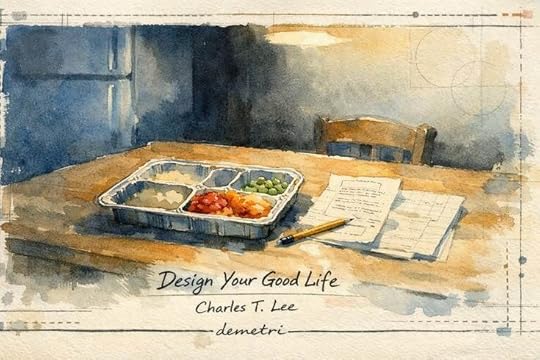
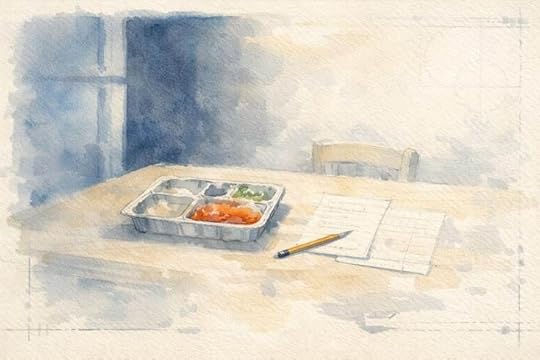
For “Design Your Good Life,” the good life begins not as a perfect design, but as a foil tray altered after hours by hunger, inheritance, family labor, and imagination.
A frozen TV dinner is not the sort of artifact life-design manuals usually let near their metaphysics. Too small, too foil-wrapped, too close to the sad little democracy of peas, gravy, and apple cobbler. But Charles T. Lee’s “Design Your Good Life” finds its truest emblem there, in the tray. As a child in an immigrant household, alone in the evenings while his parents work punishing restaurant hours, Lee heats the packaged meal and follows its instructions. Then he begins to doctor it. Kimchee goes in. Korean chili peppers appear. The factory-scripted American dinner becomes something improvised, hybrid, and his. Before the diagrams arrive, before the phases line up in their tidy formation, the book has already made its strongest argument: a life is rarely designed from clean materials. More often, it is cobbled from leftovers, constraints, inherited instructions, hunger, and a private refusal to eat exactly what one has been handed.
That tray is the book in miniature. It exposes the live wire running through the whole project. “Design Your Good Life” presents itself as a working kit for moving conviction from underlined sentence to Tuesday morning. It wants to help readers turn yearning into practice, practice into proof, and proof into contribution. But it is most revealing when it becomes less brochure-smooth: an immigrant household record visible through life-design scaffolding, a son’s attempt to understand how his parents’ labor, his mother’s ventures, his daughter’s inherited mantras, and his wife’s final witness taught him lessons he now tries to pass along without bleaching their origin.
Lee’s DYGL Framework moves in three stages: Spark, Actualize, Influence. Spark gathers curiosity, ideation, clarity, and purpose. Actualize turns to action, implementation, proof, and confidence. Influence moves outward through contribution, curation, impact, and legacy. Before the machinery clicks into place, Lee opens with the ancient, irritatingly durable question of a life one can answer for, touching on Aristotle, Confucian thought, religious traditions, cultural difference, and the American Dream. Philosophy gives him a doorway, not a dwelling place. He is less interested in winning the seminar than in getting the reader to the next honest action.
The model’s plainest virtue is stickiness. Spark, Actualize, Influence can stay in the head when life is not feeling especially diagram-friendly. Its incline is ethical as much as practical: name what matters without mistaking naming for the work, build it, then put it in service. The phases do more than decorate chapter headings. Spark begins in restlessness, with Lee in a therapist’s office, unable to answer what he wants to do until the question shifts from desire to gift: what is he best “in his world” at? The answer, eventually, is helping people clarify and scale complex ideas. Actualize begins with his daughter Alexis repeating a family saying at her elementary school graduation: “Dream big. Start small. Keep moving.” Influence begins at a Newport Beach gathering hosted by his friend Dave Gibbons, where people from wildly different fields have come not because of a formal agenda but because Dave’s relational credibility has gathered them. The sequence keeps nudging desire out of the head and into work, relationship, and consequence.
Here Lee escapes the softer end of the purpose shelf. He does not allow purpose to remain a mood, a scented candle in the mind. An insight cannot just sit there looking luminous. Dreams must become behavior. Confidence must show receipts. Influence must become more than being looked at. What remains must be more than whatever résumé residue clings to a name after the calendar runs out. “Design Your Good Life” sits somewhere between Bill Burnett and Dave Evans’s “Designing Your Life” and Simon Sinek’s “Start with Why,” but it is warmer and more family-saturated than either. Lee borrows some of the design-thinking apparatus of the former and the why-first premise of the latter, but his most persuasive proof is not methodological. It is kitchen-tested.
The Actualize section is where the book earns most of its keep. Lee turns from inspiration toward proof. His stated aim is to reduce the number of people who take their ideas to the grave, a line that could have become merely motivational if the book did not keep returning it to work. The chapter on proof is the sharpest of these returns. Lee recalls sitting across from a potential client who asks whether his team has done similar work in their industry. He could borrow the costume of expertise. He could bluff with polish. Instead, when asked for samples, he admits his team has not done that exact work before but believes they can figure it out. The client appreciates the honesty, and the project succeeds. A little hinge, but a hinge. Confidence without proof is costume. Proof without humility is sales theater with better shoes.
Lee writes best when he enters a room before extracting its lesson. He has a sharp instinct for sensory thresholds: New York lights flickering across a car window after his family’s arrival from Korea; the hum of an old refrigerator; the smell of garlic, sesame oil, and grilling meat in his mother’s restaurant; the cool air of a museum warehouse; a conference stage waiting behind a curtain; the desert heat in the epilogue as he asks his wife, Tina, whether they have built a good life together. The ideas breathe better in rooms with smells, bills, weather, and witnesses.
The diction goes pale when it leaves those rooms for lanyard vocabulary. Purpose, clarity, impact, alignment, intentionality, contribution, legacy, authenticity, potential: the book’s key terms are accurate, but they are also shelf-worn goods. They have been handled by many airport-hardback fingers. Lee’s stories have more flavor than the captions he attaches to them. The kimchee is better than the caption, as it were – though to be fair, many books in this category forget the kimchee entirely and serve the reader the tray.
The architecture makes the same bargain throughout: order gives the book its usefulness and its drag. Each chapter tends to open with a personal anecdote, draw out a principle, define a category, offer practices or steps, and close with reflection questions. Readers who want a workbook, not a wilderness, will appreciate the reliability. They can mark pages, answer prompts, return to a phase, and use the system when they feel stuck, underbuilt, overextended, or ready to think beyond the shiny little terrarium of self-improvement.
Still, the scaffolding occasionally waves at us. Every memory is asked to put on a lanyard. A conference becomes action. A restaurant becomes implementation. A museum warehouse becomes curation. A former student becomes impact. Many of these transformations work; some feel a shade too efficient. Life, in Lee’s telling, is richly felt, but it is also always on its way to becoming a lesson. The reader may occasionally want him to let a room stay a room for another paragraph before the clipboard arrives.
The person who gives the book its deepest human authority is not Lee, but his mother. She first appears through the family’s immigrant restaurant life: a woman of ferocious implementation, managing costs, menus, staff, customer experience, and the choreography of an all-you-can-eat Korean BBQ restaurant in Los Angeles. Later, she startles Lee by announcing that she plans to build an orphanage in China. He doubts her at first, not because he doubts her capacity, but because he has not known her as outwardly maternal. Then he visits and sees children running to her, sees her laughing, hugging, providing, praying, and refusing to compromise the work’s integrity. If the book has a quiet enshrinement, it is here. Lee’s mother becomes the fullest embodiment of the sequence: spark, actualization, influence, the afterlife of conduct.
She also complicates it. Her life does not feel designed in the clean contemporary sense. It feels summoned, improvised, bruised, faithful, stubborn, and poured out. That complication matters because the book’s kindest promise is also its central strain: it makes life feel more designable than life may be. Lee is not naïve. He acknowledges socioeconomic realities, fear, burnout, debt, injustice, family history, illness, and constraint. But the framework’s default motion is toward clarity, choice, action, measurement, refinement, and contribution. For many readers, that will be heartening. For others, especially those whose lives are shaped by illness, caregiving, unstable work, grief, discrimination, or financial precarity, the hope remains kind, but not always equal to the bruise. Some problems are not unclear. Some lives do not lack a framework; they lack margin. Some cannot be solved by better reflection, cleaner calendars, sharper prototypes, or values alignment. Some are endured, negotiated, survived, or shared in ways that resist the neatness of design.
That strain does not ruin the book; it marks the tool’s edge. “Design Your Good Life” wants to be useful, and useful tools simplify reality so we can act on it. A hammer is not wrong because it does not understand architecture, but one should not ask it to review the zoning laws. Lee’s book is best when it gives readers a way to move: ask better questions, identify what is yours to build, stop confusing busyness with progress, test value, build confidence through proof, curate your resources, and consider the afterlife your daily conduct is already creating. It is weaker when its encouragement glides past the stubborn fact that some lives come with fewer available materials, fewer safe rooms, and fewer forgiving margins.
The book sounds contemporary because it hears the tired hum beneath our public language of purpose. People are urged to be meaningful, visible, resilient, productive, differentiated, authentic, and somehow well-rested by Thursday. The personal brand has become a small anxious weather system hovering over the self. Lee’s best answer is not to abandon ambition, but to deepen its accountability. Do not merely announce your direction. Build something. Do not merely project confidence. Accumulate proof. Do not confuse influence with being looked at. Make yourself useful. This is old counsel wearing a clean blazer, but the blazer is not pretending to be armor.
The ending knows exactly what to do. After all the frameworks, diagrams, exercises, and professional phrasing, Lee does not prove the life well lived through a company milestone, client transformation, public platform, or reader testimonial. He asks Tina, his wife, as they drive through the desert: have we built a good life together? Her answer is not a fireworks display. “Yes, I think so,” she says, and then explains why: commitments kept, children loved, family presence protected, work made flexible enough to serve life rather than consume it. Tina is the one witness Lee cannot pitch. She knows the private version of the public philosophy. Her measured affirmation gives the book something better than triumph: witness from inside the life itself.
That moment pulls the book out of the conference room and back into the passenger seat. The life well lived is not finally proven by the elegance of a framework, the success of a company, the reach of one’s influence, or the nobility of one’s stated values. It is proven in the rooms where one’s theories have consequences. In the kitchen. In the business ledger. In the child’s speech. In the orphanage hallway. In the conversation after decades of marriage. In the person who can say, without being dazzled, yes, this life has been good to live inside.
I land at 78/100, or 3/5 stars. That feels right: the structure is usable, the sincerity real, and the life beneath the labels more persuasive than the labels. “Design Your Good Life” is not a great book because its tools are new. They mostly are not. It is useful, sincere, and occasionally more moving than its own captions because its best scenes remember that every tool must eventually answer to the stubborn materials: a foil tray, a family business, a promise kept, a child listening, a parent’s unfinished work, and a long drive through heat where the question is no longer whether the life looks designed, but whether someone beloved can recognize it as good.
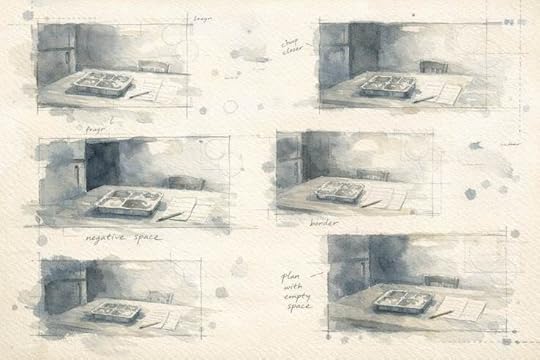
Early thumbnail studies testing how a foil tray, empty kitchen, ledger marks, and cover-inspired geometry could become one quiet visual thesis.
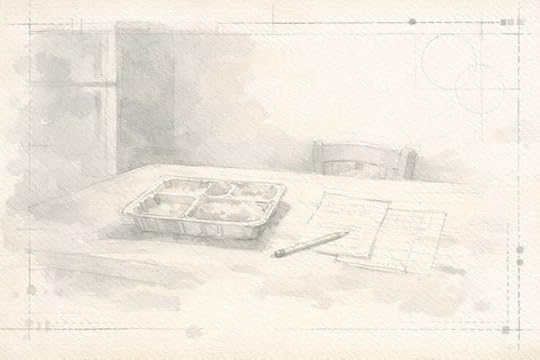
The first pencil structure establishes the table, tray compartments, receipt fragments, and negative space before color gives the room its loneliness.
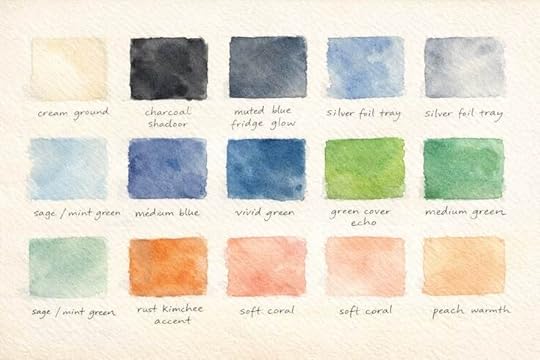
Cover-palette tests in cream, charcoal, silver, muted blue, green, and rust-red, refining the restrained color logic before the final wash.
The first wash begins to merge structure with atmosphere, letting refrigerator blue, table warmth, and watercolor paper texture soften the draft.
All watercolor illustrations by Demetris Papadimitropoulos.
Book Review: "Design Your Good Life" by Charles T. Lee
Published: 2026 | Publisher: John Wiley & Sons
---
# A Life Built on Purpose, Not Accident
There's a particular kind of book that doesn't just sit on your nightstand — it follows you into your morning coffee, into the drive to work, into the quiet moments when you wonder whether you're living the life you actually want. *Design Your Good Life* by Charles T. Lee is that kind of book. It's warm without being saccharine, practical without being cold, and personal in a way that feels like a gift rather than an imposition.
Lee, the founder of Ideation Consultancy and a seasoned strategist, advisor, and entrepreneur, brings something to this book that many self-help authors lack: a genuinely lived story. He doesn't ask you to trust an abstraction. He writes as someone who has navigated real uncertainty — as a child of immigrants, as a professional who once felt deeply stuck, and as an entrepreneur who has made costly mistakes and kept going anyway. That honesty runs through every chapter and gives the book its unusual credibility.
---
#The Framework: Flexible, Not Formulaic
The book is built around the DYGL (Design Your Good Life) Framework, structured across three sequential phases — 'Spark', 'Actualize', and 'Influence' — with each phase containing four elements: mindset, skill set, drive, and outcome.
One of the first things Lee establishes is the difference between a 'formula' and a 'framework'. A formula breaks down when your circumstances don't match the instructions. A framework gives you the principles to adapt, improvise, and keep going regardless. This distinction matters because the book is never prescriptive about what your good life should look like — only about giving you the tools to figure that out for yourself.
---
# The Spark Phase: For Those Who Feel Stuck
The first section is written for anyone who senses that something needs to change but can't quite name what. Lee understands this feeling from the inside, and the Spark phase is designed to move you from vague restlessness to genuine clarity and purpose.
The chapters here move through curiosity as a mindset, ideation as a skill, clarity as a driving force, and purpose as the ultimate outcome. Lee draws on philosophical traditions — Aristotle's eudaimonia, Confucian ideas about relational fulfilment, and more — alongside accessible frameworks like Simon Sinek's Golden Circle and the Japanese concept of Ikigai to help readers understand what purpose might look like for them specifically.
The practical exercises are thoughtful and specific. Rather than vague prompts to "reflect on your values," Lee guides you through structured processes for identifying flow states, challenging limiting beliefs, and finding the intersection between what you love, what you're good at, and what the world actually needs.
---
# The Actualize Phase: From Intention to Action
If Spark is about finding direction, Actualize is about moving. This section addresses one of the most common traps in personal development: knowing what you want to do but never quite doing it.
Lee is candid about the psychology of inaction, including research showing that 'announcing' your goals can actually reduce the motivation to pursue them. He's equally direct about the difference between being productive and merely being busy — a distinction that feels particularly relevant in a culture that treats busyness as a badge of honour.
The chapters here cover implementation skills, the importance of building tangible proof that your ideas have real-world value, and the kind of earned confidence that comes not from self-affirmation but from actually doing the work. The writing has a grounded, honest quality — Lee isn't selling you a fantasy of frictionless success. He's telling you what action in the dark, without certainty, actually feels like.
---
#The Influence Phase: Building Something That Lasts
The final section turns outward. Where Spark asks 'who am I?' and Actualize asks 'what am I building?', Influence asks the harder question: 'who am I building it for?'
Lee's treatment of contribution, curation, and legacy here is broader than you might expect. Curation, in his framing, is not just about content — it's about intentionally connecting people, creating spaces where ideas can flourish, and being a good steward of your time, relationships, and resources. Legacy is not about fame or financial success but about character, consistency, and the ripple effects of a life lived with intention.
This section is the most philosophical of the three, and it's where Lee's warmth as a writer comes through most clearly. He's genuinely interested in the idea that your life, lived well, can influence people you'll never meet — and he makes that feel like a responsibility worth rising to rather than a burden.
---
# What Makes This Book Worth Reading
The self-help landscape is crowded with books that promise transformation but deliver checklists. *Design Your Good Life* is something rarer: it takes the big questions seriously while never forgetting that readers have mortgages, children, doubts, and finite time.
Lee writes not as a guru who has it all figured out, but as someone who is still working on it — still asking the questions, still refining the answers. That posture of ongoing inquiry, more than any single insight in the book, is what makes it trustworthy.
The reflection prompts at the end of each chapter reward genuine engagement. They're designed to be returned to over time, as your answers evolve.
---
# A Few Honest Caveats
The opening survey of philosophical and religious traditions covers an enormous amount of ground quickly — readers hoping for deeper dives into Aristotle or Confucian ethics may find it too brief. Those already well-versed in design thinking or positive psychology will recognise some familiar territory, though Lee synthesises it well and always brings it back to the personal.
Occasionally the tone tips into motivational-poster territory, though Lee earns enough goodwill through vulnerability that it rarely feels hollow.
---
# Final Verdict
*Design Your Good Life* is a thoughtful, honest, and genuinely practical book for anyone who wants to live with more intention. It won't tell you what your good life should look like — but it will give you a real framework for figuring that out yourself.
Recommended for anyone navigating a transition, starting something new, or simply wondering whether there's a more purposeful way to spend the years ahead
This book found me at exactly the right moment. I was ready to approach the next chapter of my life with intention—to shape it, rather than simply let it unfold.
The framework it offers—discovering purpose, actualizing vision, and amplifying impact—has given me a clear and thoughtful path forward. What I especially appreciate is that it doesn’t attempt to define what a “good” life should look like. Instead, it provides the structure to help you uncover that for yourself—a good life that is deeply personal and uniquely your own.
I would recommend this book to anyone who wants to live more intentionally, at any stage of life.
When I first started this book I realised it felt more geared up towards someone deciding they wanted to start a business and how to go about executing it. But actually, upon reading more I realised it was more about achieving your life’s purpose and this felt very relevant to me. It sparked thoughts in me and inspiration. One thing I found particularly interesting was that discussing your ideas can diminish them. More of a focus needed on doing than saying I guess. The other was the profound impact of autonomy. All in all very interesting.
Design Your Good Life is all about figuring out what you actually want out of life and then showing you how to go after it in a real way. It walks through finding your purpose, building a vision, and actually taking steps to make it happen instead of just thinking about it. I really enjoyed how practical it felt because it did not just talk about big ideas, it gave a clear path forward that made everything feel doable.
Design Your Good Life delivers a powerful and structured approach to creating a life of purpose and impact. Through clear frameworks and actionable guidance, it empowers readers to move beyond uncertainty and take ownership of their future. This is an inspiring and practical guide for anyone ready to transform vision into reality.
Design Your Good Life helped me name what was missing and then pursue it.
After studying purpose and vision for decades, Charles T. Lee breaks down complex topics to their most basic and natural forms. His treatment of these issues makes big questions and concepts feel reachable and practical. His lens on the subject matter is balanced, relatable, and truly helpful.
I've already recommended this to 1 of my friends. For anyone in their 30s considering a pivot, this book will hit you right where you're at when you start to build and ask harder questions as to why your building what you are building.