Jump to ratings and reviews
Rate this book

Counterfactuals

Rate this book
Counterfactuals is David Lewis' forceful presentation of and sustained argument for a particular view about propositions which express contrary to fact conditionals, including his famous defense of realism about possible worlds.

156 pages, Paperback

First published January 1, 1973

22 people are currently reading
672 people want to read

About the author

David Kellogg Lewis

17 books92 followers
David Kellogg Lewis was a 20th century philosopher. Lewis taught briefly at UCLA and then at Princeton from 1970 until his death. He is also closely associated with Australia, whose philosophical community he visited almost annually for more than thirty years. He has made ground-breaking contributions in philosophy of language, philosophy of mind, metaphysics, epistemology, and philosophical logic. He is probably best known for his controversial modal realist stance: that there exist infinitely many concretely existing and causally isolated parallel universes, of which ours is just one, and which play the role of possible worlds in the analysis of necessity and possibility.

-wikipedia


Ratings & Reviews

What do you think?
Rate this book

Friends & Following

Create a free account to discover what your friends think of this book!

Community Reviews

5 stars
47 (35%)
4 stars
57 (42%)
3 stars
23 (17%)
2 stars
5 (3%)
1 star
2 (1%)
Displaying 1 - 13 of 13 reviews
Profile Image for 0:50.
105 reviews
October 29, 2023
Showcases the strangest traits of analytic philosophy in full force, with its sense of logical rigour co-existing in a chaotically peaceful manner with admissions to the effect of: this was all just my opinion, and the job of metaphysics is just to systematize it. Like, what? I have to say, after drudging through his painstaking modal logic for 88 pages and reading this, I felt cheated, even if I don't think I had anything particularly better to do with time, nonsensical as that may seem. This is doubly confusing because in other parts of this book Lewis actually seems to hold a stance that respects some kind of sense of "reality" more than a lot of the philosophy that tries to only think in terms of propositional logic: namely, Lewis thinks that there are some truths that cannot be described within a Quinean framework of analytic truths, namely counterfactuals: for counterfactuals to be true, they need to refer to a concretely existing possible world. His view is nicely summarized by:
...The truth value of the sentence is the truth value of the proposition assigned as value to the variable. For every proposition, as for every sentence, there is a set of worlds where it is true
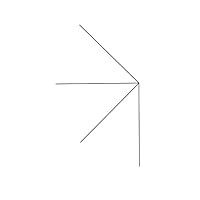
That makes counterfactual propositions synthetic statements, by the way, at least as far as I can see. Ouch! But this is at least an interesting aspect of this theory.

Lewis constructs a sort of Ptolemaic system of rings to depict these worlds, to illustrate his idea of counterfactual statements as variably strict conditionals. The idea is that counterfactual sentences can be chained so that their truth values change with each link in the chain, and each of those links is depicted as one circle in the Ptolemaic model. As an example: "If I crossed the red lights, it wouldn't be a big deal; but if everyone did that, it would be a big deal". That would be a two circled Ptolemaic model. This serves as a justification for Lewis to group counterfactual statements and their worlds together based on degrees of similarity, though he refuses to make the worlds enumerable.

This is a dense work, but I think there's also some clear objections I can try to make. Firstly, I don't buy the counterpart theory that Lewis propounds in this book. For Lewis, essence of a thing is defined in terms of counterfactual statements or possible worlds, as something which a thing's counterpart at the closest possible world does not lack. This ties into the more general objection there is to be made about the similarities and differences of possible worlds, but more simply you can just point out: in virtue of what does the counterpart not lack some things so that it is interpretable as counterpart? It just begs the question: Kripke's rigid designator idea seems far stronger of these particular two competitors. Secondly, his use of degrees and denial of enumerability in dealing with differences and similarities between possible worlds hides a serious problem for this whole project. If the meaning of counterfactuals is determined through the closest similarity, it begs the question, how do you have anything that's the closest? Lewis' idea seems to be to try to solve this by referring us to multiple possible worlds that are equally more possible than some other alternate possible world, in virtue of one particular similarity with the actual similarity, while the other properties of the world stay the same. The problem with this, however, is that the world which is similar in respect to the particular property in question and hence closer to our world must differ from our world in some other respect. Who is then to count which of the worlds differs more? And, less importantly, who can say there are no substantial differences, as Lewis holds, between differing with regards to laws, states, arrangements, things etc.? And finally: there's clearly a problem of infinite divisibility in comparing these worlds, when they would "both" (I mean two worlds where the difference is only in some one separate thing included in them, and split into new worlds alongside the deconstruction of that thing) approach the actual world infinitely, and any new approach could be enumerated. Given this, it also seems that there wouldn't be two worlds which would be equally similar, making the idea of multiple equally distant AND one definitely closest possible world senseless.

Anyway, if you like some pretty strange style of thinking it is maybe worth reading. Maybe I should've read "On the plurality of worlds" instead of this, to be honest.
Profile Image for John.
36 reviews1 follower
April 15, 2011
Along side (and opposed to) Kripke, David Lewis helped bring the idea of possible worlds into reality. "Mad Dog" Lewis inadvertently brings Philosophy and Physics closer together.
7 reviews
September 27, 2008
Simply breathtaking in thoroughness and clarity on this subject.
Profile Image for Kramer Thompson.
306 reviews31 followers
April 24, 2019
Going into this book my grasp of logic was fairly rudimentary (and, really, still is) but thanks to Lewis's clear presentation I managed to understand all the most significant bits. I didn't bother with the proofs at the end, but I understood pretty much all the rest. Because of that, I learned a lot about the logic of counterfactuals, and logic more generally.

Overall, I find counterfactuals fun to think about, and Lewis's clear writing made an extremely difficult topic more manageable. That's not to say that it was an easy book - it certainly was not. But the clarity of Lewis's writing and the topic of the book made this one certainly worth reading.
42 reviews1 follower
March 15, 2025
When I first learned that there are philosophers whose job it is to figure out the meaning of 'If ..., then ...' statements, I thought that sounded dull and ridiculous. I was wrong.

Skipped some chapters here (the math in the end, for example). The first few chapters are extremely insightful and has influenced my thinking tremendously.

Profile Image for Adam Nightingale.
3 reviews
Read
November 12, 2023
'if kangaroos had no tails they'd fall over' is true if and only if 'there exists at least one possible world at which kangaroos have no tails and some or all of those worlds are worlds at which the kangaroos fall over.' Praise be to David Lewis.
8 reviews3 followers
January 1, 2015
Made it through the first 4 chapters (with considerable effort) while researching for a paper in scientific explanation. While not an easy read it was definitely enjoyable with well written sections and really helped illuminate David Lewis's thoughts on counterfactuals and made it all seem a little less mysterious to me.
Profile Image for Sharad Pandian.
439 reviews175 followers
Read
February 5, 2017
Sections 1, 3, and 4 are a pretty good introduction to counterfactuals, and the issues raised are still discussed in some form today. Section 2 is about alternative formulations, and section 5 involves mathematical logic for those interested.
Profile Image for Jacob Aitken.
1,689 reviews420 followers
April 27, 2017
A nightmarishly difficult account of modal logic. The general idea is simple, though. What is a counterfactual? Df. = strict conditionals corresponding to an accessibility assignment determined by similarity of worlds--overall similarity, with respects of difference balanced off somehow against respects of similarity (Lewis 9). Lewis argues that the following modal operators obtain:

⃣ → means “if it were the case that x, then it would be the case…”
◇→ means “if it were the case that x, then it might be the case…”

The following two counterfactuals are interdefinable

Ф ◇→ ⃣ =

1.2 Strict Conditionals
⃣ (Ф ⊃ψ)

Accessible worlds:

⃣ (Ф ⊃ψ) is true at i iff ψ is true at every accessible phi world.

Propositions

Entities that can be true or false at worlds, and (2) there are enough of them (46).

Sets of worlds are propositions. Lewis: A proposition P is true at a world i iff i belongs to the proposition--the set--P. (What if a person can also be defined as a possible world? In which case we have the following: A proposition (or maybe its set) = a Possible World = a person. Thus, a proposition (or its set) = a person. Gordon Clark?)

An impossible proposition is an empty set (47).

Section 4 is his famous chapter on Possible Worlds. The gist of it is quite similar (even if the particulars are not!). A possible world is simply the way things could have been. Lewis, however, seems committed to the idea that there are things that exist which aren’t actual, but he tries to shore up this problem by saying that actual worlds are indexical (here, now, I). See his discussion on realism on p. 87.

All maximal consistent sets are indices (125)
Displaying 1 - 13 of 13 reviews

Can't find what you're looking for?

Get help and learn more about the design.