A moving memoir of a young woman's reckoning with her parents' absence, the virus that took them, and what it means to search for meaning in a hyper-connected world
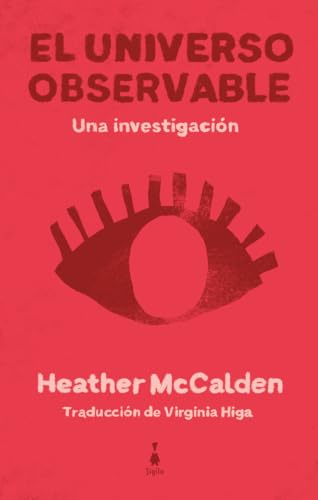
In the early 1990s, Heather McCalden lost her parents to AIDS. Orphaned by age ten, she was raised by her grandmother in Los Angeles, a fragmented city, also known as ground zero for the virus and its destruction. Years later, unmoored by grief, she begins exploring the history of HIV as a way to deal with her loss. This leads her to discover that AIDS and the internet developed along parallel timelines, lending truth to the saying "going viral." Chasing this idea through anecdotes, TV shows, scientific papers, Wikipedia entries, and internet history, McCalden forms a synaptic experience of what happened to her family, one that leads to an unexpected discovery about who her parents might have been.
The Observable Universe is a melancholic and poignant memoir that explores the evolution of the AIDS virus and the internet in parallel timelines. In the early 1990s, the author suffered the loss of her parents to AIDS and became an orphan at the age of ten. Her grandmother in Los Angeles then took care of her.
The connection between HIV and the internet is interestingly made through the use of multiple mediums, like scientific studies, TV shows, Wikipedia, and other studies. Along with all this, the author put a lot of her own experiences into this to make it more personal.
I believe that the most appealing aspect of this book is the author's willingness to expose her unfiltered vulnerability, which allows readers to be drawn into her world. Her examination of how she deals with grief comes across as genuine and sympathetic. The use of parallel narratives is another one of the book’s strengths in this situation. It is something so unique that I have not read anything like that before.
However, where this memoir suffers is in its pacing. There are times when the story wanders off course and loses its concentration. There are some sections that could be improved by more stringent editing. In addition, it took me some time to start putting things together and getting used to the flow of the narrative in this instance. A few more narrowly focused topics would have been of great assistance. Regardless of the cons, this is still a fascinating memoir.
Thanks to NetGalley and the publisher for the ARC of this book.
In the early 1990's, Heather McCalden lost her Irish father and her Puerto Rican mother to AIDS-related complications, the ten-year-old orphan grew up with her grandmother. This memoir deals with the grief that has stayed with her, and it does so in a fragmentary, no, a FRAGMENTARY manner: The author is a multidisciplinary artist working with text, image and movement, and "The Observable Universe" reads like a collage that refuses to form a coherent picture. Sure, you could now argue that because of this aesthetic set-up, it mirrors life, as the coherent tales of what we experience are nothing more than made-up narratives we form to ascribe sense and order to a confusing, disorienting world. But isn't the that the beauty of art, the power of telling our stories, that they are more than random bits and pieces scattered over days and years without direction, that we gain agency by framing them, by deciding what's important to us and what is not, by declaring who we are on our own terms?
McCalden works with association, adding info dumps about the discovery and research of HIV/AIDS as well as the rise of the internet, because, you know: virus, viral, etc. And these bits suffocate the story I came for, the personal story of a child losing her parents to a then even more dangerous and stigmatized illness, the story of two young people having to leave their kid behind.
There are some books that one really enjoys without a clear reason. Some books we enjoy because we read them at the proper moment, which could find us completely different from what we could be some months later. And even though the structure gave me initially the feeling that I would struggle a bit with this book (it was one in a row of other ones that I’ve read this year built on short broken fragments of text), it turned out to be a reading pleasure, in my case. First, I’ve read it due to my Fitzcarraldo Editions subscription and even though I have not been so enthusiastic about most of the books from this year, fiction or essays, I really enjoyed this one. And it’s hard to tell why. It is not a fundamental book in any way, nor one that I couldn’t have lived without, it doesn’t tell a clear story, it’s not linear (partially because it’s not really a story), but nevertheless it kept my interest for reading about 100p pages per day and I finished the book feeling happy that I read it. There are some recurring themes dropped in small fragments, sometimes one phrase long, sometimes a couple of pages, that intertwine and gradually refer to one another: viruses, metaphors, internet, connectivity, investigative processes, detectives, and above all: missing and grief. Sometimes there are fragments containing memories about the dead grandmother, sometimes reconstructed information about the dead parents, sometimes facts about the history of the internet and other times facts about the history of virus transmission and investigation. Everything written in a very elegant, light and alert style that makes reading a pleasure. So far the first great discovery from the Fitzcarraldo list from this year and for sure I’ll be looking forward to reading anything else that Heather McCalden would write in the future.
4.5 stars. This was a truly amazing book and I loved every second of it. McCalden’s parents died of AIDS when she was very young - her father when she was seven and her mother when she was ten. This book is the product of wanting to know who her parents were, what the virus is that caused her so much pain at a young age, and also exploring the idea of ‘virality’ and how it has passed from something physical to digital.
A lot of this book reminded me of Jeannette Winterson’s ‘12 Bytes’ which was equally as fascinating. McCalden notices how the spread of HIV and the knowledge of it coincides with the spread and growth of the internet and digital world, and conflates both ideas of transmission, codes, ‘going viral’, and archival history with each other. It was brilliantly researched but also had a distinctly personal touch to what McCalden felt relevant to include in the book at that specific time. Some parts of the science in it I found truly fascinating as I am interested in the social aspect of the HIV/AIDS crisis so learning about the virus from both a scientific point of view and in regards to technology was really eye-opening.
Ultimately the book is one huge metaphor, the virus as a computer virus and the internet as the DNA which contains everything we have ever thought, seen and lived. It’s a really powerful way of exploring something so personal to her whilst also providing a huge insight into the links between technology and disease. The book is a personal album and a piece of scientific research at the same time. It is one of the most captivating non-fiction books I have ever read and urge everyone to read it if they can.
I liked the writing here but am not sure I was ever able to click into the book. It’s sorta a strange memoir (on purpose) and is mostly just musings on viruses and death. It is a very good book for a certain type of reader but I’m not sure it got there for me — I think print might be better than audio for this one.
3.5⭐️ thank you to hogarth for an advanced copy of this!
a fragmentary exploration of grief and the concept of the virus, both online and in the body. it follows a lot of different threads (many of the sections being only a paragraph or a few pages long), discussing virology, the history of the internet, her own memories, and detective tv shows. and the book is her own foray into detective work in a way - both of heather mccalden’s passed away from HIV/AIDS when she was incredibly young, shattering her life. the observable universe is her attempt to put the pieces back together and figure out who her parents were, how the disease that took them came to be, and how to cope with the reality of what she finds.
i got along really well with the longer pieces in the book and will keep an eye out for mccalden’s future work, but i did struggle to get into it at first because of how much it jumps around. i would recommend this if any of the themes sound interesting - the medical/technological themes feel unique for this kind of creative nonfiction. lots of beautiful sentences and thought provoking ideas in here.
Heather McCalden is a writer and artist. Her 2024 book The Observable Universe is a mix of bite-sized and surprisingly detached memoir pieces and bite-sized Wikipedia-style data dumps and factoids that came across to me as pretentious and exhausting. This is a shame, as her story is certainly compelling (as she explains at the beginning of the book, she wrote this work to help process her grief from losing both of her parents to AIDS when she was a kid, and later losing the grandmother who raised her). I DNFed at around 40% after several days of repeated restarts and stops.
My statistics: Book 161 for 2025 Book 2087 cumulatively
The Observable Universe by Heather McCalden is unlike anything I've ever read before, even when I have experience reading fragmentary memoirs, because the scope of McCalden's recall and writing is vast and unique.
Through an exploration of childhood, present day, memory, the advent of the World Wide Web, and researching the AIDs crisis in the 80s and early 90s, McCalden recreates a world in which she has grown up and lived. A world that in many ways has been unforgiving. In building this universe for us, McCalden transitions between academic writing and personal essays, quotations, and short statements. For many, this style will be too fragmentary or disjointed, but for me it was the perfect reflection of how we consume, understand and attempt to process our experiences, both those in and out of our control.
Most importantly, McCalden's work is a work about grief, as she mentions herself in the book. All of the above interweaves to leave a person at the centre who wishes she knew her parents better before they died, who wishes she cherished her maternal grandmother more than perhaps she did, and who wishes all of the advancements in our society meant growing up and living with grief was easier.
And so, if you enjoy memoirs that are more abstract/fragmentary, you'll love The Observable Universe. It truly is one of a kind.
we enter a story made up of vignettes about the author's life, the research she's done, memories, facts & figures about AIDS, silly thoughts, and a lot more. all of this makes up Heather McCalden's memoir of what it was like to lose both parents to AIDS in the 90s.
this book is a spider's web, a patchwork that lets us discover her story as if we were leafing through a family album or scrapbook journal (if that's still a thing?), the narrative is in bits and pieces, fragmented. it's a story about grief, and the aftermath of what it's like to be an orphan.
It talks a lot about the Internet, the meaning of words, but also about the AIDS epidemic vs. the growing omnipresence of the Internet, and how the advent of the world wide web has redefined the concept of "going viral" in the face of disease.
the form will definitely not appeal to everyone. it's a memorable and touching tale that, if you connect with it, won't leave you untouched. it can seem very abstract at times, then very invoicel the next page. for me, it was a successful balance.
ps: if you're curious, here's a poetic fun fact worth checking out that i discovered in this book: just google "wind phone Ōtsuchi"
📚 The Observable Universe 🧬 🦠 Heather McCalden @hogarthbooks, out 3/19
This is a seriously, truly interesting book. Tackled in short, almost scattered sections, it’s a memoir that delves into viruses, both the encapsulated genetic material kind and the computer kind, the Internet and social media, and in true Susan Sontag fashion explores metaphor as a means for understanding. More than all that, though, I think it’s about grief and grieving.
I wondered a few times if, had TOU been written as a more traditional memoir with a natural flow of succinct, organized chapters, if it would have had a little more heat behind some of its punches. But, the experience of reading this mirrors what it feels like to get lost in a TikTok scrolling binge, topics changing frequently but, somehow miraculously circling back and filling in new information on what it had you wondering about, too. (Memoir: purposeful. TikTok: idk, algorithms I guess.) I think this structure is what made this work so fresh and alive in the end, so I wouldn’t change it for a thing.
As a discussion of viruses, just personally I didn’t take much new information away here, but I literally deal in viruses every day. I think some of the delving into HIV/AIDS history, viral epidemiology, genetics, CRISPR, etc will be very interesting to the broadly reading population who may not come across this information more regularly.
As a discussion of metaphor, I appreciated what TOU adds to what I’ve read already. But where I really think this work shines brightest is in its handling of grief. When you approach this memoir as a Sontagian meditation on loss in the setting of a deep dive into how life and disease on this weird wild planet works, it is brand new, fresh, heartbreaking and incredible.
Recommended reading from me!
Thank you so much to @hogarthbooks for sharing this, in the end, somber but joyful, lovely work with me. I worry I’d have not come across it had it not been for your generosity. Again, thank you!
“Estructura viral . La eficiencia simple de la estructura viral es asombrosa.Quien hubiese dicho que solo hacía falta una hebra del código inserta en una membrana de proteínas para cambiar vidas enteras. para borrar civilizaciones. Para romper corazones”.
El universo observable son las memorias sobre la pérdida de Heather Mccalden. Una especie de álbum o collage , un libro fragmentario que transita en torno a tres ideas. La historia del VIH y del Sida , internet y lo viral y cómo nos comportamos o nos desarrollamos en esta era
Los padres de Mccalden mueren ambos de sida entre sus 7-10 años y ella se queda con Nivia , su abuela materna, con la muerte de esta es cuando Mccalden asume que lo que lleva tanto tiempo escribiendo va más allá de la metáfora, de internet, lo viral o como lo observa ella misma sino sobre la pérdida y el dolor. Detrás de cada fragmento, en el que ella investiga acerca de estos temas está la pérdida que la acompaña desde pequeña esa que no te va a dejar nunca , esa que hace que un virus se lleve algo y contagie el resto de tu vida
“¿metas de vida? que una vida se convierta en una foto, vista en una app y que luego esa nueva realidad sea fotografiada convertida en una nueva imagen y cargada otra vez en la misma app…¿que nombre tiene esa condición contemporánea ?”
El universo observable de Mccalden es un lugar en el que todos tenemos cabida y en el que todos estamos inmersos. Me ha gustado mucho porque ella va soltando toda esta información pero no viene a rebatir ni a opinar de nada , ella simplemente va dejando todos estos cachitos para que al final te armes la experiencia completa Todos estos fragmentos tienen una conexión y en una lectura como esta es importante. Ha hecho un currazo bastante singular mccalden
This isn’t really a book in the traditional sense. It’s a “Collection of short writings”. The writings have many different subjects, ranging from the viral phenomena of the internet to discussions about her grandma, but as a whole this is about grief. It’s a woman processing death and pain in her life, and she’s written it down.
Giving it a rating would feel a bit bizarre, but it’s absolutely worth a read. Very moving, very unique, and sometimes uncomfortable.
Not related but I found it in a second hand bookshop incorrectly placed in the science section with the label “not for resale” which I thought was pretty cool.
"I didn't have much in me. I spent it all thinking about blood and what's in it that makes us prioritize certain people over others. Blood, after all, is the source and also price of every conflict, but it is only code. It shows lineage but it doesn't show relation. Blood is information without the story. I drove around and thought about this because resonance on the genetic level doesn't always translate into responsibility, love, or respect, which makes me believe that family bonds are just as invented as all our other bonds. We make such a dramatic fuss over blood ties and yet people are just people. It's all artifice. The truth is, you're dead lucky if your mother actually loves you as a person, and not just because you came out of her body."
My enduring impression of this book, unfortunately, is one of disappointment: while McCalden is clearly a strong writer, one who is attuned to both the tiny and the sublime, shattering wonders of life and loss, capable of describing almost anything in a way which is affecting, and perceptive, and often quite ingenious, reading it felt like less of an experience and more of a thought experiment - an unstructured, unsatisfying attempt at showing off. For, while some of her metaphors and turns of phrase really were excellent, striking enough to stop a reader in their tracks, in their abundance the overall effect was dulled - towards the end, my eyes began to skim through sentences, searching for something with a little more heft.
As is obvious from the book's blurb, and from the extensive range of subjects explored across its slim, fragmentary chapters - the loss of both her parents to AIDs, the inception and virality of the internet, pop culture and photography and private detectives - there is a rich array of potential material (autobiographical or otherwise) to draw upon here...I just wish that McCalden had chosen just one, or two, instead of packing them all into 400-odd pages (and seemingly in the order they first came to mind). Structure or coherence is, of course, not necessary to produce a good book, but without it, a weaker one tends to flounder; its flaws are made more painfully evident. Faced with large swathes of white space, as the vast majority of its chapters were comprised of a single paragraph, I couldn't help but wonder if the text would have benefited from some tightening up - instead of her ideas, what I took away from this book just that: empty, formless, and largely void of meaning.
Despite this critical review, I do admire McCalden's narrative voice and strong sense of style - thank you to NetGalley and Fitzcarraldo Editions for the ARC ebook!
A memoir of the AIDS epidemic, the birth of the internet, and personal grief told like a scrapbook - and somehow it really worked? It was cool to work out how these things came together as the book went on, and as McCalden worked through her grief. I dipped a bit in the middle but it reminded me a bit of Question 7 which I also was surprised to enjoy as much as I did.
I particularly liked the reflections on how the internet/digital age has changed how we look at memory and grief - things aren't truly lost now they are just buried until you go searching for them, which forces people to confront uncomfortable truths they wouldn't have had to otherwise. And that now even our concept of making memories is different; focusing on what something will look like in the future rather than the now. Which also explains why there is such a disconnect between our youngest and oldest generations - so much has changed so quickly, creating a gap that's very hard to bridge in terms of how we relate to and understand each other. And even how technology has given us new ways to understand ourselves - and how we have modelled it from biological processes.
I also thought it was interesting how McCalden's grief was for something she never had, so doesn't have any positive memories of her parents as people to reflect on in the wake of the loss, which made the experience more isolating. Also how both birth and death are experiences no one can ever explain to you, and grief is so subjective it sits close to these and we often rely on fictional depictions to give us an idea of how we should grieve. And that often gives us false expectations of it being this transformative process you suffer through for a defined amount of time and then it's done - so when that's not your experience you feel like you're 'failing' at grieving.
McCalden also makes an interesting parallel about virality - of diseases and infections of systems but also in terms of culture, and how social media has shifted from being about connecting with people you know in real life to being a tool for power and influence on a scale previously impossible for the average person. And similarly to how disease was previously seen as a moral failing when the science behind it wasn't understood, and now is conceived as a war to be fought where the patient's body is a battleground and also a 'necessary' casualty.
Just a lot to think about and I think on reread you could pick up even more - such an interesting concept and a way to use writing small vignettes to still create when a longer project seems insurmountable.
Don’t really think I could put a star rating on this book. It’s one of the most unique and personal memoirs I’ve ever read. It’s like meeting someone in a bar and them pouring their heart out to you, their past, their fears, their whole stream of consciousness. Occasionally I didn’t always understand her point or the links she was making but for me this wasn’t a book making a specific point. It’s a deeply personal meditation on grief. Now I’m no longer reading it I feel like I miss McCalden’s voice, I feel like I’ve made a friend.
Did not finish. No structure, mixed up stream of consciousness type style. Not for me. I have read a lot about HIV & AIDS over the years so was looking forward to this having read the synopsis. Alas, I was very disappointed. It was as if the author wrote a section as it came to her. A paragraph of information followed by a paragraph on emotions and memories with no apparent link. Thank you to NetGalley and the publisher for a prepublication ebook.
Enjoyed the vignettes and anecdotes on life in LA because lost lonely woman in California is a fav trope of mine. Could’ve done without the internet / tech parts
'The observable universe' van de kunstenares Heather McCalden wordt op de achterflap omschreven als 'a genre-defying memoir of a woman reckoning with the loss of her parents, the virus that took them, and what it means to search for meaning in a hyperconnected world'. En hoewel dit allemaal klopt, is het - wat mij betreft - vooral een boek over verlies en rouw. Dat is trouwens ook het openingsstatement: 'This book is an album about grief'.
Eerst iets over de vorm. 'The observable universe' bestaat uit korte fragmenten die in lengte variëren van 1 regel tot maximum een vijftal pagina's. De inhoud van deze korte stukjes varieert van de opkomst van het internet, het HIV-virus, herinneringen aan haar ouders en grootmoeder, toevallige ontmoetingen met vreemden, filosofische mijmeringen, Los Angeles... Soms spitsvondig, vaak ontroerend, dikwijls informatief, en slechts heel af en toe overbodig...
Doorheen deze fragmenten wordt het verhaal en opzet van het boek duidelijk. Beide ouders van McCalden overleden in de jaren 90 aan AIDS. McCalden heeft bijzonder weinig herinneringen aan haar ouders. De weinige herinneringen zijn gebaseerd op oude foto's en op de laatste levensmomenten van haar ouders. De schrijfster bouwt - wanneer ook haar grootmoeder Nivia overlijdt - doorheen het boek haar verleden op met het weinige dat ze ter beschikking heeft: het verpleegsterhoedje van haar moeder, de make-updoos van haar oma, foto's van haar ouders. Deze zoektocht wordt telkens afgewisseld met twee andere verhaallijnen. De opkomst van het internet en van het HIV-virus, die beiden een parallelle groei kenden. Deze stylistische opbouw van 'The observable universe' versterkt de inhoud. McCalden bouwt beetje bij beetje, laag per laag, haar herinneringen op. Als een fotoalbum dat langzaam een volledig verhaal vertelt. Knap detail: de vele haarfijne herinneringen aan haar geboorteplaats Los Angeles staan in schril contrast met de vage, diffuse herinneringen aan haar ouders.
McCalden verwijst zelf ook naar het boek als een album en wijst er op dat de eventuele plaats waar informatie terecht komt in het album een bewuste keuze is. En dat is ook te merken. Hoewel je eerst het gevoel hebt losse stukken tekst te lezen, valt je na een tijdje op hoe goed het boek in elkaar zit. Een stuk informatie dat heel kort aan bod komt, blijkt tientallen pagina's later een thema te vormen dat nog verschillende keren terugkomt en uiteindelijk leidt tot een - vaak ontroerende - herinnering aan de ouders of grootmoeder van McCalden. Droge feiten leiden tot diepe gevoelens. En hoewel de - feitelijke - gegevens over het internet (en computervirussen) en het HIV-virus een rode draad vormen doorheen het boek, zijn het vooral de stukken waarin McCalden de eigen gevoelens deelt die het sterkst zijn. Deze persoonlijke mijmeringen zorgen dat het hele boek baadt in een sfeer van ontheemdheid, rouw en verdriet. Zonder dat dit vaak expliciet uitgesproken wordt, behalve een enkele keer ("I miss my mom").
Nog enkele zaken die het boek voor mij bijzonder maken...
De opkomst van het internet is niet enkel een centraal thema in het boek: het lezen voelt ook aan als een zoektocht op het net. Associaties en linken naar geliëerde info zijn legio. Je gaat van de opkomst van het net, over de start van ebay, naar het ebolavirus in enkele bladzijden tijd.
En daarnaast zijn er uiteraard de heel knappe zinnen die regelmatig opduiken en de even knappe observaties ("Well, when you think you love somebody, you love them. That's wat love is. Thoughts.").
'The observable universe' is uitgegeven als essay door Fitzcarraldo Editions, maar laat zich niet vangen in één genre. Met zijn unieke opbouw en fragmentarische aanpak neemt McCalden de lezer mee op haar zoektocht naar betekenis en herinneringen. McCalden’s vermogen om thema's als rouw, verlies en verbondenheid te verweven met een breder cultureel en technologisch landschap zorgt voor een boek dat blijft plakken.