On January 20, 2003, at 10:45 a.m., a massive avalanche released from Tumbledown Mountain in the Selkirk Range of British Columbia. Tonnes of snow carried 13 members of two guided backcountry skiing groups down the 37-degree incline of a run called La Traviata and buried them. After a frantic hour of digging by remaining group members, an unthinkable outcome became reality. Seven people were dead.The tragedy made international news, splashing photos of the seven dead Canadian and US skiers on television screens and the pages of newspapers. The official analysis did not specifically note guide error as a contributing factor in the accident. This interpretation has been insufficient for some of the victims' families, the public and some members of the guiding community.Why did the guiding team seemingly ignore a particularly troublesome snowpack? Why were two groups travelling so close together? Were the guides adhering to best practices for terrain selection and snow stability evaluation? What motivated them to go there?"Buried" is the assistant guide's story. It renders an answerable truth about what happened by delving deep into the human factors that played into putting people in harm's way. The story begins buried metres deep in snow, and through care-filled reflection emerges slowly like spring after a long winter, nurturing a hopeful, courageous dialogue for all who make journeys through the mountains of their life. The story illustrates the peace that comes from accountability and the growth that results from understanding.
Didn’t finish as it didn’t line up with expectations. First 1/3 of book is about the avalanche, mostly him griping, blaming others, being passively unhappy, and wallowing in self-pity (all traits he confesses to). But instead of a exploration of the outcomes of the avalanche, both on a micro level and a societal level, the books complete changes gears and becomes the 9 (or however many) things he learned about himself while traveling the globe seeking insightful spiritual experiences (both before and after avalanche), with no returning to the original plot line. After a few character lessons, I stopped reading as it was irrelevant.
This is the male version of Wild. Self-redemption through self awareness in the hallowed temple of Nature, and while I appreciate that this man fought so hard to be true to himself, I concluded he was not a man I would like to meet. I did however, appreciate that he correctly used the verb 'comprise' and the verbal phrase 'enamored of.'
Would I Recommend It? Yes, to those who enjoy motivational books while mixing in lots of cool outdoors adventures in mountaineering, rock climbing, ice climbing, and skiing.
Thoughts? I wholeheartedly enjoy books written by those who do extreme outdoors activities like mountaineering and rock climbing. I've always enjoyed reading about what drives these individuals to push themselves into extreme situations both physically and mentally. And I've definitely been curious to know how they react and what they do post tragedy. How so many are able to get right back into doing what they were doing before. Thus the reason I was interested to read this book after finding it at the 2020 Banff Film & Book Festival (obviously, it was a virtual event).
This book is definitely different from many others I've read about Mount Everest and K2 climbs and disasters, the book Minus 148 Degrees (fantastic!), and one I'm currently reading, Into Thin Hair (amazing!). Ken Wylie's book definitely has the elements I enjoy reading, the technical part of climbing/mountaineering. But you also have to prepare yourself that it's a book intended to motivate us to be our better selves. Our authentic selves. (The latter phrase makes me cringe, soooo much.) So, if you can't deal with that, then you'll want to skip this book.
I didn't realize that this book would be more of a motivational type-style book. Generally, not my forte. Last one of record that I read was Braving the Wilderness which Ken Wylie did actually quote in his book. What made me like this book is that each chapter (or lesson, as you may) ties in with one of Ken's past adventures in mountain climbing, rock climbing, or skiing -- most stories are prior to the avalanche tragedy. I liked how he looked back on his past and highlighted his weaknesses that he felt at the time. Then addresses the positives and take aways that he neglected to see back then. But now, looking back, he tries to learn and grow from those "mistakes."
Some people commented here on Goodreads that they were disappointed that Ken didn't write about the rescue efforts post avalanche. How can Ken write about that if he was buried beneath the avalanche, himself, for 30 minutes? That is not his story to write. His book is about his own experiences, his own thoughts, his own errors, his own road to self-improvement. I didn't at all feel let down that details were not given -- after all, what is there to say? That the rescuers, no, didn't get to all those who were buried and many, as a result, died? I don't see how going into more detail will help bring back the dead. They found Ken's body and rescued him after 30 minutes being trapped -- think that about sums it up that the rescuers did all that they possibly could.
The questions, however, that this book did raise for me is in what ways have mountaineering schools for guides and avalanches courses been affected? Were they? Have they changed their ways? In reading an article by Power Canada (https://powdercanada.com/2014/09/buri...) it does sound that the backcountry community has changed. That the guides no longer follow a hierarchy, but instead there is now open communication between main guide and assistant guides. There is also a documentary film on Ruedi B., A Life Ascending, which I may venture and watch.
What happened was a tragedy and this book will provide you with the details of what led to the tragedy from Ken's perspective and what he looks back on as his own failures. His failure to have the courage to speak up. The book, however, is not just about that avalanche. That event played a turning point for Ken that led to more bad mistakes in his life, but it is the event that he kept going back to in his thoughts. And ultimately it was that event that forced him to reflect on his past and learn from it.
Least favorite part: The last chapter should be rewritten. I definitely didn't like the writing style Ken switched to. It's not his forte to write a long conversational story. It turned into a very preachy-presentation style of writing which made me cringe and bored and nearly started skim reading. The chapter introduced another character's self struggles. While her story fit in with Ken's struggles it didn't flow in style along with the rest of book. Introducing her was fine, but then making the chapter into a conversation (that was more like an interview) made for an awkward and forced read.
What saved it in the end and put it back in 4 stars status: The Epilogue.
You may want to watch his brief Ted Talk - Lions Are not Courageous. https://youtu.be/xZkkpkzQJ30 (I won't go into great detail on how I don't like his analogy about the lion and the mouse. Obviously, makes for a catchy title. But if we delve into the science of it, it doesn't compute -- the comparison between human and animal actions. But the Ted Talk will give you an idea of what Ken post tragedy is all about and his focus.)
Honestly, kinda bad. The narrator is deeply whinny, unlikable, and vaguely misogynistic. It was honestly just painful to read. If you want an outdoor adventure book, look elsewhere.
Mr. Wylie, a mountain guide, is bold in the honesty of his account of an avalanche disaster that killed several of his clients.
He recounts the events leading to the avalanche with clarity and startling exactitude.
He is not afraid to inculpate anyone...least of all himself.
Having read a million accounts of mountain disasters in which the author breaks an arm and a leg trying to eschew any responsibility, I am humbled by Mr. Wylie’s candor.
The outdoor adventure sections were great. They should have been longer, as they painted vivid pictures.
The self-reflection came across as way too petulant.
I couldn't get over how bad the dialogue was! I get that you're not going to perfectly re-create conversations that took place 20 years earlier, but there was so much exposition to begin every dialogue sequence - nobody talks like that!
an interesting read but disappointing if you want to learn about the avalanche. Wylie does a good job of explaining his perspective on what lead up to the avalanche, but beyond that very little is shared. Most of the book is about his life. You are left to do your own research on what happened during the search and rescue.
One of the worst books I’ve read lately due to terrible descriptions and aimless boring material. Only 1/3 was about the actual avalanche as Ken tried to prove that it wasn’t his fault. This was recommended after a 3 part story about this was published in the newspaper. What a let down.
I met Ken at the Banff Centre and started reading the book. It's a harrowing, brutally honest account of an avalanche, but also a searching and frank moral inventory. Compelling.
I would give this book 3.5 stars. I think a deep look into how the human factor and the inability to admit discomfort/fear is important in the outdoor adventure community. Throughout the majority of the book Ken comes across as a deeply unsympathetic character, which made it hard to keep reading at times. But, that being said, I do appreciate the way he owned the unsympathetic ways in which he thought/acted.
A gripping story of disaster in the mountains and the personal and organizational flaws that preceded it. A very raw and honest self-examination by someone who was deeply traumatized by deaths of those under his supervision. It has lessons for anyone in the outdoor professions.
I found the introspective nature of the book to be inspiring to look inside my own self for growth. While at times I disagree with some of Ken’s approach to life… its life. Its messy. Really enjoyed the audiobook format of this book.
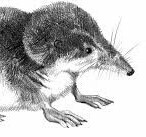
Heard from this author first on The Sharp End outdoor recreation accident analysis podcast. Wylie's emphasis on the importance of social courage in overcoming heuristic traps was impactful enough that it shifted how I orient my entire life. He shared a simple but potent bit concerning what has more courage between a lion or a mouse--it's the mouse, because the lion has nothing to be afraid of. This and other notions concerning courage, action, & perseverance lead to me choosing the equally small critter behind this online handle & mascot of sorts for my IRL life.
The descriptions of the outdoor objectives were immersive and well-suited for these world-class landscapes. Peppered throughout the author's introspection too were many valuable nuggets illuminating the complex matrix of shame:
"Pain dissipates if I blame others: it is comforting to think none of it is my fault."
"afraid to admit my problem ... I felt as if I had gotten away with something."
"I tell myself that I have no choice."
Ultimately, though, unfortunately the podcast felt more influential and useful than the book. I was expecting more discussion of social/contextual pitfalls in outdoors activities but ended up witnessing self-flagellation. The foibles highlighted in later chapters appeared fairly commonplace yet were treated gravely. It was painful to see the author set a magnifying glass to his past self not to ponder his humanity in his shortcomings but to burn it as if torturing an ant.
I understand the intent of pointing out the threads of inaction leading up to the original avalanche catastrophe. After spending a lot of formative years in high-control environments, though, I do not believe such punishing self-scrutiny is a sustainable method for personal development. There are a lot of authors and texts across disciplines that address courage and shame such as psychotherapists Hillary McBride & Brene Brown, public theologian Paul Tillich, and many, many more. I would have liked to see deeper interaction with voices like these to produce a more robust toolset for building safe communication in the outdoors & beyond.
In the world of mountain sports, first-hand detailing of incidents like these are hard to come by; fear of judgment from peers often prevents those involved in such incidents from openly communicating their experiences. And with good reason: that judgement is very real. It's unfortunate because those that play in the mountains can benefit from hearing the lessons learned, and help cultivate a culture of open communication.
While I commend Wylie for his willingness to be open, and recognizes his own mistakes, the book falls short for me. First off, I couldn't get into the writing. But more importantly, the recounting of the avalanche and events leading up to it comprise some 2 or 3 chapters, while the rest of the book details his life afterwards, without circling back to the avalanche, or making connections to it. It feels like what he really wanted to talk about was his personal journey, and the incident itself was more of an afterthought. It felt misleading in the way it was presented which maybe bothered me more than it should.
Halfway through this book as the author is coming to the library in Revelstoke tomorrow to promote it. Reading the first half of the book in the lead up to the avalanche is a little stressful. You know it's going to happen, but you don't want it to.
The first-person account from the author gives the reader an insight into his deep, conflicting feelings. He was weak and didn't to himself. And that's a consequence he will live with for the rest of his life.
How he deals with this tragedy I'm only starting to find out. He's not a likeable character. Many deficits in his personality and a tendency to blame others, which admittedly he declares himself.
This book is an emotional account of one man's journey of self discovery and acceptance through adventure.
Any adventure seeking person would enjoy this story with its detailed accounts of backcountry skiing, climbing, and overcoming disasters. It will have you captivated with suspense and overwhelmed by grief.
Ken Wylie gives a voice to doubt and uncovers the importance of following our instincts. When living on the edge it is sometimes better to turn back and try again tomorrow rather than push through and find disaster at the next turn.
Just good. Parts of it were difficult to understand, because I'm not a skier or climber. But I do appreciate that Mr. Wylie had some feelings to work through and did so in this book. His lessons learned we can all learn from. I also felt parts of his story were other peoples stories and the writing felt forced. I would recommend for anyone questioning their strength in challenging times.