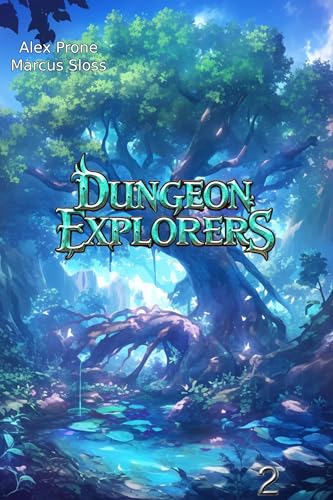
Final Rating: 2.93/5.00
Starting score: 2.50
+0.26 for the opening's effective connection between the relic, John's trade, and his new class
+0.16 for the loyalty and affection established through Max
+0.24 for adaptable runesmith abilities with useful applications beyond John's own attacks
+0.32 for cooperative combat, escalating threats, and effective dungeon horror
+0.15 for the guild setting and the dungeon's wider importance to the world
+0.25 for the later romantic development and character-focused explicit intimacy
+0.13 for Nilea and Raven's distinctive relationship
+0.18 for resolving this volume's immediate conflicts while opening the larger story
-0.23 for John's repeated confusion of responsibility with refusing to back down
-0.21 for the rushed early attachment and repetitive possessiveness
-0.15 for the guild's weakly justified training safeguards and collective punishments
-0.10 for Leo's thin characterisation
-0.20 for repetitive gestures, emotional explanations, and descriptive padding
-0.15 for grammatical errors and inconsistent character details
-0.16 for contradictory system information and incomplete reward accounting
-0.06 for doing too little with John's practical smithing after the opening
Calculated final score: 2.93/5.00
The party adventure carried this audiobook for me. I liked watching a blacksmith become useful in situations that demanded far more than a strong arm, and the dungeon encounters gave his companions jobs that mattered. There is movement, danger, explicit sex, and a developing sense of belonging here. The trouble is that the storytelling keeps making things easier for John emotionally while making them harder physically. He can struggle through a fight, take a serious wound, and need help, yet his impulsiveness repeatedly earns admiration where I wanted a harder conversation about his judgment. The romance improves as the story continues, but its opening rush asks for a level of attachment the characters have barely had time to build. Add repetitive prose and mistakes in details the book itself tells me to follow, and I get an entertaining foundation that needs considerably more care.
The opening does a good job of giving John something worth leaving behind. Max has trained him, trusted him, and helped make a life possible for him. When Sophia brings a corrupted family weapon into the shop, the resulting trouble grows directly out of the work John knows. That gives the discovery of his unusual class a satisfying point of entry. More importantly, he insists that Max's shop and livelihood be taken care of before he accepts the opportunity to leave. That matters to me. Loyalty becomes a practical obligation: repair the damage, arrange help, and make sure the person who supported you can continue. Max's affection also feels comfortable enough to survive teasing and a proper goodbye. His pride in John gives the departure warmth without needing a tragedy to force the young man onto the road. From my den in HowlStrom, that is the part of John's character I recognise most readily. You make sure the old wolf is looked after before you chase your own horizon. Those early decisions establish a decent man more effectively than his later declarations about honour.
The runesmith concept has real appeal. John can alter the possibilities of somebody else's magic, which gives his class a reason to exist within a party. An ice attack can become a different tactical tool; another ally's fire can become the answer to a problem ordinary attacks cannot contain. The connection between understanding a person, accessing their magic, and changing what that magic can do gives relationships a mechanical consequence. The smaller group also makes it easy to understand who provides ranged damage, close combat, healing, or an opening for somebody else. My disappointment concerns the smithing itself. John's years at the forge provide strength, habits, memories, and a useful starting identity, but practical crafting largely disappears once he becomes an adventurer. Relics arrive as rewards while he develops mainly as a fighter and magical enhancer. I wanted more occasions when his knowledge of making and repairing things changed the solution to a problem. The class has room for that, and this first volume leaves much of it unused.
The combat is at its strongest when the group has to create opportunities for one another. Healing keeps somebody in the fight, a distraction changes a monster's target, and controlling movement makes a dangerous enemy vulnerable. John takes damage and depends on people who can do things he cannot. That gives the action more substance than a procession of enemies waiting to demonstrate his superiority. The Nether corruption also supplies the book's most effective atmosphere. Watching familiar dungeon creatures behave with terrified desperation tells me something has gone badly wrong before the full threat is revealed. That change in behaviour does more for the tension than another description of enormous muscles or sharp teeth. Later encounters add pursuit, confinement, swarms, and problems that require the party to change its approach. The first proper dungeon expedition arrives around the middle of the story, but there has already been road combat and dangerous training. Its best fights give the party's preparation a purpose and make survival feel like something they achieve together.
I also like the idea that dungeon exploration supports an entire society. Discoveries affect medicine, wealth, technology, and political power. Sophia's family circumstances make the value of healing resources concrete, while the guild's headquarters suggests a history older than the institution occupying it. The magical space behind an ordinary-looking entrance creates a pleasant sense of discovery, and the guild feels like somewhere people eat, train, work, and build lives between expeditions. The human claim over dungeon access, alongside other peoples entering and contesting it, leaves room for conflicts beyond clearing another floor. Most of that larger world is still outlined through lessons and explanations. I am interested in what those foundations could support, particularly the tension between an independent guild and powerful families. The book gives that tension enough presence to influence events. It has yet to make every part of the institution equally convincing.
John's leadership is where my approval starts getting its claws caught. Protecting a companion from an immediate attack is easy to understand. Repeatedly treating withdrawal or caution as cowardice is much harder to respect. Raven can be irritating, but some of the bird's questions deserve answers, especially when the danger has exceeded what the party expected. John often answers with certainty about keeping everyone safe, even when he has very little information to support that certainty. The duel makes the problem sharper because he knows defeat would cost his companions their place at the guild too. He receives a clear warning about the unequal stakes, then allows his anger and desire to humiliate Leo to drive the decision. His friends support him, and the story does give him injuries and future complications. What I miss is sustained accountability for placing their futures inside his personal confrontation. An Alpha's pride is a poor reason to gamble with the pack's home. I wanted his protective instincts to grow into better judgment, with caution becoming part of his strength.
The guild makes that weakness harder to ignore. Stormbreaker's combat exercise strips away important advantages, permits serious injuries, and relies on the recruits' healers helping one another afterward. Her explanation is clear: they need to learn what danger feels like and trust people outside their own party. I understand the lesson. I remain unconvinced by the safeguards as they are presented, particularly when a badly wounded recruit initially meets hesitation from the people expected to help. The story moves very quickly from that situation to reassurance that the exercise was justified. Mahogany's enjoyment of hurting students adds another layer of institutional cruelty, while the collective exile attached to a personal duel risks throwing away useful recruits over one quarrel. These policies could support a much sharper examination of the guild's priorities. Here, they mostly intensify individual confrontations. Stormbreaker becomes more convincing when her losses, concern, practical preparations, and relief show through. Those moments give her authority an emotional basis. They do not resolve the weaknesses in the institution's decisions.
Leo is an effective person to want out of the way, but a limited antagonist to spend this much time with. His entitlement, abuse of status, resentment, and determination to hurt people all point in the same direction. The history behind Mel's hostility gives the conflict a personal reason to matter. Leo himself remains predictable, repeatedly confirming that he is exactly as unpleasant as he first appears. The duel can still generate tension through his abilities and the consequences of losing, but there is little uncertainty about the man underneath them. I wanted the pressure from his family and position to produce a more interesting opponent, or at least a less repetitive sequence of sneering provocations. His cruelty works as fuel for the confrontation. It rarely develops into much beyond that.
Sophia's early attachment is the relationship problem that most needs time it does not receive. The attraction starts immediately, then jealousy and expectations of exclusivity follow almost on its heels. Her demand to be consulted before somebody joins their party is reasonable. The possessive reactions surrounding it are repeated so often that they begin to crowd out her other qualities. Another woman looks at John, Sophia reacts, and the narration tells me again how intimidating or jealous she is. Calling the attachment love at first sight does not supply the missing knowledge of one another. The early intimate scene following danger also turns reconciliation into a physical demonstration before the disagreement has been explored very far. For me, that makes the relationship feel hurried and emotionally uneven. Sophia has more to offer than guarding access to John, and the opening leans too heavily on that single behaviour before letting her become a fuller companion.
The later development earns genuine credit. Sophia organises practical help for the party, contributes in combat, and shows concern for Mel that exists beyond rivalry over John. Her family history and her own perspective give her fear of loss a context. During the date, John pays attention to what she enjoys, and their conversation reaches beyond attraction into the life each wants to build. I find those ordinary acts of attention much more convincing than declarations about how perfect somebody is. Sophia's changing relationship with Mel also receives groundwork through shared danger, growing respect, and direct conversations. There is still an uncomfortable pressure in her belief that refusing to share could mean being replaced. That fear gives her agreement a less secure foundation than I would like. Even so, the book does let her recognise her possessiveness and begin making different choices.
Mel's later intimacy works better for me because it includes trust she has reasons to find difficult. Her account of betrayal gives the encounter a personal context, and her choices matter. Earlier, her own perspective also acknowledges the frustration of having somebody else intervene in a fight she wanted to win herself. That is a useful complication for a character who could easily have become another grateful rescue. The sexual content is explicit, with physical description and sustained encounters, rather than fading away once attraction becomes action. Sexualised observations and teasing occur much more often than complete sex scenes; the full encounters are occasional, with an early scene and further development later. I want desire, detail, affection, and character to work together, and the later scenes come closer to that through anticipation, attention, vulnerability, and tenderness afterward. Some of the intimate dialogue still falls into familiar praise and breathless responses, but Sophia's confidence and Mel's uncertainty give their encounters different emotional textures.
Nilea and Raven gave me a different kind of interest. The contrast between her guarded expression and the bird's endless commentary is funny, especially when Raven's courageous self-description collapses under the next sign of danger. The joke repeats more than it needs to, but the bird keeps helping when help is required. I respect that more than the bragging. Nilea's perspective also reveals that the quiet exterior conceals far more than indifference, and the connection between the two becomes more interesting than their initial explanation suggests. Lina, meanwhile, has useful abilities and enough pride to make cooperation awkward, even as her attitude begins to shift. I appreciate that these women contribute to survival before their romantic possibilities are fully settled. What limits the character work is how often their thoughts eventually return to John's exceptional appeal. I want the pack to have lives, ambitions, and tensions that continue to matter when he leaves the room.
The prose repeatedly slows material that already has enough meaning. A look reveals tension, then the narration explains the tension, interprets the look, and tells me what that interpretation means for the relationship. Smiles, raised eyebrows, tightening jaws, unreadable expressions, and feelings described as an unnamed something recur across very different scenes. Familiar women also receive fresh descriptions of their attractiveness when the story could simply continue the interaction. The sentence "She smiled as she scanned the place, a smile on her face" is a compact example of redundant wording, but the larger problem is the habit of explaining an emotional beat after it has already landed. Those repeated habits give passages a manufactured, AI-like cadence to my ears. The characters begin to sound as though their reactions are being annotated. Meals, walks through corridors, and repeated reassurance then take longer than the new information warrants. My ears have caught the feeling. Let the scene move. I enjoy time spent living alongside a party; I need that time to deepen the experience instead of circling the same observation.
There are also specific editing problems. "No matter how they clothes were" contains an incorrect pronoun, and "I thought about not give" uses the wrong verb form. These are broken constructions, and examples occur well apart in the story. Character details also slip: Mel is introduced with green eyes and later described with blue eyes, while the established group suddenly includes the name Melina in a scene where Lina is present. That last mistake is particularly distracting because an unfamiliar name briefly appears inside an already established cast. The issue is care over the language and the people the story expects me to follow. These errors weaken confidence in the finished storytelling, especially alongside the repeated descriptions that should have made those same details easy to keep consistent.
The system has its own accounting problems. The early kill notification identifies a level-two Spectral Spider, while John's explanation of the resulting progress calls the spider level five. War Cry initially grants ten Strength and five Speed, but its benefits are subsequently described as ten points of mana and five Speed. These are concrete pieces of information changing without an explanation. Later, a quest explicitly promises a magical relic for each party member, yet the reward scene identifies John's relic and has the others agree that he should keep it. The promised individual relics for the others are left unaccounted for. I do need the rewards and rules the story deliberately introduces to remain dependable. The flexible magic is one of the attractions here, which makes careless handling of its stated details more frustrating. Mystery about the origin of a power invites curiosity. A stat changing its name makes me question the bookkeeping.
The ending gives this volume an actual payoff. Its immediate challenges reach conclusions, earlier training matters, and the final confrontation requires John to apply something he has learned. The aftermath allows his companions to support him, and his injuries have a visible consequence beyond the fight itself. The larger danger remains open, with the closing setup connecting future trouble to threads already introduced. That is enough resolution to make the first volume feel like a completed stage of the adventure. My final judgment stays at 2.93 because the cooperative action, useful magic, and later warmth have to carry hurried attachment, uneven responsibility, and writing that repeatedly needs tightening. Back in HowlStrom, the part I would keep closest is the promise established with Max: care means taking responsibility for the people who trust you. I want John to carry that lesson into every dangerous decision. The pack is worth following. I want its leader to watch where he puts his paws.