Winner of the Prime Minister's Literary Award for Fiction, 2011. A friendship forged across the battlelines of Gallipoli leads a young soldier to question all he knows about loyalty, and about faith. It will lead him to court martial; sustain him through the horrors of the Western Front. And it will see him home again, a changed man.
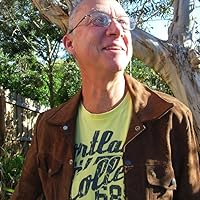
Stephen Daisley was born in New Zealand in 1955. He has served in the New Zealand Army and worked at a variety of jobs in New Zealand and Australia including on sheep and cattle stations, cutting bush and scrub, driving trucks, doing road works and bar work, and on oil and gas construction sites. He now lives in Perth.
Stephen's first novel, Traitor, won the 2011 Prime Minister's Literary Award for Fiction. He lives in Western Australia with his wife and five children.
His novel, Coming Rain won the the 2016 Ockham Awards in the fiction category.
Traitor is a view of the Great War from another perspective, that of David Monroe, a soldier from New Zealand who is involved in the horrible battle at Gallipoli. What happens there will reshape his view of himself, the war, the world, and will alter his future. Gallipoli is where he meets Mahmoud, a Turkish doctor trying to save a wounded Australian soldier. He asks for David's help but then an artillery shell bursts over them, leaving them both wounded. Mahmoud was a Sufi, a dervish.
Have you ever been in love David? Truly in love so that the mountains become rivers? Rivers mountains? Woodgrain water, fire becoming water falling up and every individual thing become as one thing?
No David had not.
Mahmoud looked at him. He had tears in his eyes. I am a Djiin, a demon from the mountains of Kaf, of the desert.
And he taught David ways of wisdom and peace amidst the war. Ways that initially seemed so strange but ultimately caused David to want to protect Mahmoud and ultimately to earn the title "Traitor".
But, interestingly, this traitor is respected by so many because he is now a man of peace. Daisley provides a beautiful back story in addition to moving up to the 1960s. We learn of David's mother.
Mary Monroe nee O'Connell was lost in a green sea off a black sand beach known as Pungarehu. On the beach there were great piles of tangled driftwood driven high up on the upper tide mark. The air hazy white with fine salt spray. She had loved the shapes the storm-driven and sea- smooth wood had been sculpted into. She would collect the wood and gather shells and stones and make them into what she called My Arrangements.... As a young boy David would often come upon these small shrines to place. The sea and wind. We live on an island, his mother said, at the bottom of the world. The Arrangements tell us where we are.
And then there are moments of battle, moments when Mahmoud teaches David of the whirling, quiet moments back on the sheep station after the war.
This is a story of profound love, of terrible loss, of true friendships, of war and personal peace--for some. Be forewarned that the chronology shifts back and forth throughout the novel but it really isn't difficult to follow once you learn of David and of Mahmoud.
4.5 rounded to 5 for the honest emotion earned and elicited by the prose and subject.
A copy of this book was provided by the publisher through NetGalley for the purpose of an honest review.
Traitor is a very confronting novel. It reminds me of Pat Barker’s Regeneration* trilogy in its treatment of shell-shocked soldiers though the writing style couldn’t be more different. There are brutal descriptions of World War I battlefields and the wounded, and the scenes of punishment meted out to the soldier David Monroe will appal even the stony-hearted. The novel shows the power of fiction to create an impact even in a society like ours that has a surfeit of popular histories about its military past.
Daisley has constructed his novel in fragments, some of which are clear and easy to understand, and some which are the muddled memories of a man whose mind was shattered by his experiences. The story shifts back-and-forth across the 20th century from David’s wartime experiences to his postwar return to New Zealand and his old age as a shepherd in the mountains. What makes for even greater confusion is that the event which forever labels David as a traitor, is his friendship with a Turkish mystic.
Traitor is a wonderful debut novel from New Zealand writer Stephen Daisley. In a story told in an understated, almost poetic mode Daisley conveys a depth of meaning far beyond the words themselves. If aspiring writers are looking for a perfect model of the 'show, don't tell' style of storytelling, look no further than Traitor.
The heart of the story is the friendship, during World War I, between a naive New Zealand soldier and a Turkish doctor, who are taken to the same military hospital. David is a sheep farmer, a simple, compassionate soul who has seen very little of the world outside his rural home. Mahmoud is a Sufi, highly educated, a poet and mystic. The bond between the two is forged immediately, despite their surface differences, and it eventually leads David to betray his country in order to save his friend.
The novel dovetails short episodes from different times in David's life: we see him in wartime as a young man, including the life-changing friendship with Mahmoud; we see him as a returned combatant whose relationship with the land-owning McKenzie family is another influence on his life; we see him as an old man still working on the land.
The book is profoundly sad, but in a good way. It is a lesson in compassionate love, a love that fills the soul and must spill over. This is not a novel you will soon forget. Highly recommended for those who love great writing, and a very good book club choice. The novel is currently short-listed for various literary awards.
First of all I must say this is NOT a war novel. I HATE war novels . I suppose that is reflective of my view of war in general. This novel is not about a so called hero of war, but of a hero of humanity and humility. David is a young New Zealand soldier in Gallipoli. He ends up wounded and strikes up a friendship with a Turkish prisoner that affects him deeply and changes his life forever. Mahmoud is a Sufi, whose life philosophy transforms David’s worldview. His language and his views on life are expressed poetically and with such honesty, I felt drawn into his words like you do to a religious figure or spiritual teacher. David ends up becoming a deserter and endears humiliation and isolation for the rest of his life because of his choices. Although David’s desertion leads to brutal punishment and humiliation, the lessons he learns from Mahmoud sustain David for the rest of his life. Daisley is a brilliant story teller. Once again I have discovered an author who, in his debut novel, has blown me away with his style, character development and talent in story telling. He managed to make the reader aware of the atocities of war, without the gratuitous violence while developing an unlikely friendship that will be memorable for me for a long long time.
This is a very personal, courageous tale of a young New Zealander who had distinguished himself at war and then punished for trying to help a good doctor - the enemy - escape. At the centre of the novel us the idea of love and spirituality. Told in flashbacks interspersed with the present, the reader understands how this now old man's life has developed from his past. Gentle and kind with animals and people, the people think David mad. But he is not mad; he lives a reclusive life, conscious of how people perceive him as a traitor. During the war, he ought to have been shot for his actions but his punishment is to bear stretchers. Through his actions, David lives the essence if being human and the soldiers come to understand this. The style of the narration is realistic, with a gentleness that mimics David!s nature.
I admired Daisley's second novel, Coming Rain, and am pleased to have read this now - his first. This story moves between the island of Lemnos (where wounded ANZ soldiers and Turkish POWs from Gallipoli are dying or recovering), the trenches of the Somme and a sheep property in an isolated New Zealand valley where David Monroe grows up and to where he returns to see out the rest of his life. He is forever influenced by the mystical Sufi beliefs of Mahmoud, the Turkish POW he helps escape (and thereby becomes the ‘traitor’ of the title.) Mahmoud enables David to see beyond his suffering to an understanding of a godliness within us all.
As in Coming Rain, Daisley is able to write equally effectively about brutality (in this case the brutality of World War One) and tenderness (love of different kinds - between men, between men and women, between parents and children and between men and their natural environment).
The writing is wonderful and especially impressive for a debut novel. My only trouble with the novel was the constant shifts across time - in a way this reflects an old man’s way of remembering but it confused me. But it will stay with me, I think.
Hard to review as I didn't enjoy the writing, the story was good in parts and lacking in others. His experiences during the war and his friendship with Mahmoud was fine but his life back home in the 1960's lacked depth. While many thought this was a good book it simply wasn't for me. I want to feel like I learnt something or gained something from the experience and I didn't with Traitor.
I found the main character of David original and endearing. While I felt that I should have been most deeply affected by David's bond with Mahmoud and the lessons imparted, I found the most compelling relationships those of David and his mother, Sarah and Sarah's daughter Catherine. Added to those, the bond between David and his horse and his dog evokes great tenderness. A story of fragments piecing together a life full and hollow in its contrasts of love and loneliness. A powerful story, never sentimental, that stayed with me.
Sorry just couldn't get into this at all. The idea that the plot was based on was good - the author just couldn't pull it off for me. It went back and forth in time, the choice of minimum punctuation meant it took me a while to figure out what time frame I was in. Things happened without explanation.
The book won a swathe of literary awards so must be a good read for some people - but was not for me.
I'm always suspicious of authors who are too lazy to include quotation marks in their punctuation. It tends makes the text confusing and hard going. It was a literary trendy idea which started about twenty years ago, but fortunately has died out now. Stephen Daisley's novel employs this technique, which didn't help because the story was confusing enough as it jumped about over half a century. From the cover I thought I was in for a decent read, but the writing was just too dense for me. I trudged through the book, but finally gave up. 'Traitor' won the few awards, but that can be the kiss-of-death for a novel like the Oscars can spell doom for a movie. Judging by other reviews 'Traitor' has experienced a mixed reception.
Perhaps better to read the book than listen to the audiobook as I did. I would have liked to have skipped back and review earlier sections but maybe if I had read the printed book I wouldn’t have needed to do that. However from reading other reviews I have discovered that there were no quotation marks used to indicate speech so much better that I listened to it. I probably wouldn’t have given it such a high star rating if I had read it.
This is an amazing book from Stephen Daisley and I am so glad that Lesley from my favourite bookshop 'Paige's Book Gallery' recommended it to me.
While, on one level, this is a story of a young farmer going to WW1, being confronted with some of the deep injustices and betrayals of war, making a personal decision to fight for friend over country and living with the consequences of that decision, it is also the story of a deeply moral young man who prefers to see things simply and finds that there is just so much more to it.
This book is poetic, deeply thought provoking and incredibly layered. And yet, Daisley does this with a language that is laconic and antipodean - when there is voice. When there is thought, then the language becomes more sophisticated, spiritual and perhaps elusive - I liked that. Some of the ideas, in fact most of the ideas, that David is working through are quite esoteric. Contrast the laconic voice when David is carrying Mahmoud and they are speaking:
David you are bleeding. I can see blodd on the stones behind us. You are bleeding too Mahmoud. There is a lot of blood. Don't look at it mate. Close your eyes. (p.104)
Note the imagery that is almost sacrificial/spiritual, and yet that it is so tightly connected to war - and the simplicity and profoundness of the comment - there is a lot of blood.
And then when David is thinking, later, as an old man:
The government men walking here into me and my world then, he thought, and now. Asking such questions. The memories have no sequence to them. No path or footsteps to follow. They are like the moving picture shows but somehow played backwards and out of order. Am I the only one to make sense of it? Of course Mahmoud would say, you are. Who else? (p.117)
This is a beautiful illustration of how David has lived his life making sense of the time that he spent with Mahmoud, but in his own particular life and circumstance. His time with Mahmoud is brief, and yet as an old man David still reflects with Mahmoud.
He struggles with the spirituality and there are many versions of trying to make sense of 'it all' in the book. In crossing the water, 'Even Charon required only a coin under the tongue and no explanation' p.126. Or when his mother tells him, remembered on p.199, that her father would greet her with, 'it's you yourself' in Gaelic, what it meant was that you belonged to something greater than the just you. Then there is the chaplain and padre at the funeral p.107 with Latin and English and hymms no one quite knows the words to. Then on p.228 'who, answer me this, are you? We are here. This is what we are. Look at us as we do this.' as a chant outside the hospital.
One of my favourite images in the book is quite a gentle one, but I think very powerful: 'The old man dressed slowly and stepped to the window. Pulled back the curtain. There was no light from outside, the morning was still dark. Rain beaded the window. He noticed his half-reflection slide across the glass, turned and rubbed his hand across his face. Stood for a moment with his fingers in his white beard, a prophet figure. Smiled to himself.' (p.105)
I think that there is something in the inclusion of the 'Ode: Intimations of Immortality from Recollections of Early Childhood' as David's mother's favourite poem. This is a poem about growing up, about painful loss and hard fought gain. Wordsworth lost his parents early (mother at 8 and father at 13) as did David. Wordsworth, being a Romantic poet uses the imagery of nature vividly in his poetry, and I believe that Daisley does this in Traitor - David is a shepherd. The land, water, wind and air are important images throughout the book, where ever David is. Lambs and lambing feature strongly and so do mothers - not least mother nature. The sea and waves are powerful images. As are donkeys and Damascus!
David notices - he observes and allows in - so many different understandings about the world. He doesn't seem to judge - and it could be argued that like Wordsworth, David 'does not champion any cause or urge any vision but one: to know ourselves, sincerely, in our own origins and in what we still are...a way of showing how much a natural man might do for himself, by the hard discipline of holding himself open both to imagination and to nature.' (Harold Bloom and Lionel Trilling).
The lack of speech marks was powerful for me. I felt that it helped to convey the remembering aspect of the book, and the very singleness of it - it is David's story only, from David's mind and memory played 'backwards and out of order.' Like the old man telling the story, at times you struggle with the reality of where and when you are.
This is a book that lingers, makes connections and continues to reveal new ideas and thoughts. I highly recommend it, but don't expect a WW1 soldiers tale. It surely conveys the terribleness of WW1 and the stupidity (dare I say it) of the Battle at Gallipoli and yet it is a much more personal journey of life as well.
It is amazing that this is a first novel. This is a very moving story of a young New Zealander at Galipolli who rushes to aid a fallen Aussie and finds him already being attended by a Turkish Doctor, and incoming shell blows them up and David finds himself recuperating from his wounds next to the Turkish Doctor, Mohammad. As they begin their healing process David is placed in charge of this prisoner, and drawn to Mohammad's stoic countenance which is sustained by his Sufi beliefs they become friends that are connected on a deep spiritual level. David will come to betray his country to save his friend, and suffer the consequences after being found guilty of treason. "You are the cure hidden in the pain." ... "The loyalty in the betrayal." This novel which looks back from an old man's eyes, at the horrors of war, to a place of peace in one's soul is a story about a deep love of mankind, of God and all His creations and of a friend.
The story begins with the death of David Munroe in 1965 having lived a simple farm-hand-life after returning to New Zealand from the war. Traitor is a story of reflection, regret and guilt. Munroe is a man who was sentenced to death after deserting in 1915 to aid a prisoner of war escape. Here at the beginning of the novel he is old and on his death bed.
The story is built up from layers of Munroe's memory. His time with Mahmoud a wounded Turkish soldier—who he helped escape—brings up the atrocities of the war, along with the enlightenment gleaned from their brief friendship. The one romantic love of his life was Sarah Mitchell. Her daughter Catherine keeps him company when he's dying and provides a pivotal aspect of the story. Throughout the novel and all its intricate details: from memories evoked through wide sweeps of time, to the last thoughts about his final circumstances, there's a feeling that Munroe is a man who has failed those closest to him and therefore may consider himself more of a traitor than the authorities who defined his military career.
Traitor is excellently written. In particular I found author Stephen Daisley's descriptions of simple scenes to be full of observation.
“The old man took the lamp and stepped outside onto the small veranda of the hut. The wind moved the lamp to one side and blew against him, flattening his trousers and pushing his beard across his face. He used one hand to smooth his hair away from his eyes. He found Floss and let her off the chain one-handed. Then, holding the lamp at shoulder height, peered out at the morning. He could see nothing beyond the weak light cast by the lamp. Floss ran out onto the wet grass, squatted to urinate and ran back to him.”
What I found difficult, with the reading of Traitor, was the combination of no dialogue tags, which made it hard to differentiate conversation from thought, and the complex reflections that Munroe passes through as he reviews his life. While Munroe's memory serves to flesh-out his character the many relationships that author Daisley links with Munroe made it difficult to follow. By the end of the book I didn't understand how Aunty Mem fitted into Catherine's life. Why Munroe kept his distance when observing the upbringing of the child? There are suggestions of infidelity, illegitimacy and fostering but it's told in an abstract way. As well as this abstraction there's a spiritual theme that runs throughout novel. From Mahmoud's Sufi teachings during the war section of the story to the Maori mysticism, on which Munroe reflects after his return to New Zealand, I felt a sense of being frustrated by the 'artiness' of the story.
However, for the most part, Traitor is written in the economical down-to-earth voice of a good 'Kiwi bloke'. Munroe is a realistic and engaging main character. There are many interesting historical references and author Stephen Daisley captures the times well. This is a different take on a World War I story; perhaps one that deals too much in metaphysics for some readers. I'd recommend you read Traitor and see for yourself.
The Reading of it: I'm going through a reading frenzy at the moment due to the novelty of owning a Kobo, and expected to zip through this book like my others, but found I couldn't. Had to put the book down after each chapter. So by the time I was 3/4 through I was a bit sick of it and sped through the rest (turns out this was my favourite part of the book anyway!), just so I could finally finish it. Just took too long, for such a short book, and I was too impatient with it.
The style of writing Had trouble at first with the lack of quotation marks, but got used to that. The writing was gentle and felt like the main David character was in a dream the whole time. The book skipped back and forth as he remembered things, and sometimes there was a flashback within a flashback to make things more confusing! It all suited the style of the book but I found it annoying, especially as the flashbacks weren't always in order and weren't always obvious. It was a bit like "oh hang on, when are we talking about now?" some of the time. (I did like how David was referred to as "the old man" when the story was in the present, and as "David" when the story was some time in the past).
The story: The Mahmoud story had the potential to be very exciting, but I felt that the author just skimmed over it. And then half way through the book it was over. That was my biggest disappointment. After that there was way too much information about ewes giving birth; this went on and on, and then suddenly there was the Sarah / Catherine story which seemed like a postscript, but I did enjoy that.
So I guess the main purpose of the book was not the Mahmoud thing at all, it was more just a study of the character of David Monroe, and how the Mahmoud thing affected him for the rest of his life. [SPOILER] Not owning up to being Catherine's father might have been one of the consequences of that, that he just wanted to be alone and without any domestic responsibility, but it might not have been that at all. Catherine still had who she thought was her father, ie her mother's husband, and David, back in those times, maybe just didn't want to interfere. And then when the other "father" died, he may have felt that owning up to being her real father was too hard a confession, for those times.
What interested me about the Mahmoud story was the bond between the two men and how close they became. I would say David "loved" Mahmoud but not sure if vice versa. And what kind of love that was, I'm not sure either. It would have been a very special, strong bond, because of the situation they found themselves in together, not just the war, but the explosion they both survived. And David seemed to search for answers to life by asking Mahmoud, what he might have done. At one point Mahmoud said David was god, but I think David thought Mahmoud was god. I'd love to know what others think about this.
I bought this book on it's intriguing premise and as a fan of books set during WW1. I was a bit disappointed. The lack of quotation marks during dialogue took a bit of getting used to, and it wasn't always easy working out what was speech and what wasn't. It did work nicely when David was lost in his memories. The time-line of the book jumps around and made it feel somewhat muddled. A little more explanation of the New Zealand setting would have been beneficial - as a New Zealander, I was able to work out where it was set, but those unfamiliar with the geography of NZ may find it difficult. There were several mentions of Parihaka and again no explanation, or an author's note. There was, I feel, a rather gratuitous use of the c-word. I'm no prude, but the inclusions didn't add to the story in any way. Despite this, the book is well-written, and very descriptive - easy to imagine the scenes. Unfortunately, the thing that I will remember this book for is not the characters or events, but rather the mistake on pg 29. It was Col. Malone that was killed on Chunuk Bair. His name was not Maloney.
A young New Zealand soldier in Gallipoli, David Monroe, chooses to desert the army after striking up an unlikely and life-changing friendship with a Turkish prisoner of war named Mahmoud. Mahmoud is a Sufi, whose life philosophy transforms David’s worldview, and though David’s desertion leads to brutal punishment and humiliation, the lessons he learns from Mahmoud sustain David for the rest of his life.
The prose is gorgeous, the words of Mahmoud, in particular, like poetry:
“And that which was will echo in us like the whispering of that companion who was always with us and always will be with us. Exquisite delight, our hands touching once again as if for the first time.”
The war scenes, though few, and never gratuitous are graphic and shocking. Daisley captures the terror of war as well as the brutality and cruelty of the armed forces; the loss of humanity. Without diminishing the horror of David’ experiences, the beauty of the language and the compassion of the main characters carry the reader through the novel’s darkest moments, to emerge with a deeper understanding of the terrible impact of war.
A truly beautiful book written in a stream of consciousness style, weaving back and forth between New Zealand and Gallipoli.
David Monroe was a farming lad from the North Island of New Zealand who signed up and went to war. The horror and humanity of war is described in broad strokes, beautiful in their simplicity and use of language to portray the anguish of what those young men went through.
Monroe returns to farm in the valley where he grew up. His mother and father are gone, many of his childhood friends have died and have left empty farms all around him. He lives his life haunted by the friendship he had with a Turkish doctor who is injured at the same time as him. They go through hospitalisation together and then they escape, trying to get Mahmoud back to his family. The consequences of these actions reverberate through the years up to the last scenes of Monroe's death.
The narrative jumps back and forth between the years of the war and the rest of Monroe's life. Carefully woven and not always explicit, the story is told in measured steps.
It took me longer to read 'Traitor' than is normal for me for a book of this size. The truth was that I wanted it to last. The David and Mahmoud story gives a rare insight into how love and respect may overcome a war between enemies. But it is much more than a sort of anti-war story too. It's about an individual man and his relationship to the world around him, his horse, his dog and his sheep and the effect the war has had on his life. It's full of love and optimism and in the end redemption too. The prose is dazzling and poetic and that's what made me linger over this little gem. It's told in a very fragmented fashion, a bit like a stream of a man's consciousness. At times this can be confusing but it's a book to be patient with, to take slowly and to think about. What more could you ask of a book?
An interesting but not straightforward story. David, an ANZAC from New Zealand, befriends Mahmoud, a Sufi mystic doctor when they are both wounded in Turkey during WWI. Mahmoud imparts his Sufi teachings and David feels such a strong bond that he helps Mahmoud escape, thereby betraying his country - the repercussions are brutal. In some ways it is hard to understand David's motives, the two men love each other deeply, but not in a romantic way. The book jumps between David's deployments in Turkey, & Belgium during the war and his life back in NZ immediately after the war and later when he is an old man. It can take a few moments to get your bearings with each time jump. The gentle Sufi teachings and tenderness between the two men contrast with the horrors of war and the brutal treatment of others.
This is a poignant and often sad story that swaps between the man's war experiences and his life as a shepherd in the remote hills of New Zealand. He is a simple soul and it's quite horrific what he goes through during WW1. He forms a friendship with an educated Turkish man and his resulting actions get him branded as a traitor and sentenced to death. At times, the story leaves us guessing, especially his relationships back in New Zealand. However, the daily details of his life, his interactions with his animals, his stoic approach to life and the so-low expectations for anything more, is unbearably sad at times. It's a beautifully written story of that place, those times and the imprint that war had on this man.
On the whole this is a good book, well-summarised elsewhere. It traces the life of a young man from rural New Zealand who participated in the Gallipoli campaign, where he formed a deep friendship with a Turk that was to change his life. The novel shifts between the past and the present (the 1960s) in a series of flashbacks, interwoven beautifully. However, for me there is too much of the rural life in New Zealand and not enough of the wartime experiences. Indeed, the NZ rural descriptions slow down the pace and are tedious in parts. Some of them didn’t seem to lead anywhere and ‘the John’ idea – though touching initially - was overplayed.
I was intrigued by the premise, but was a little disappointed with this book. The story itself was good, but the chronology jumped around a lot, so I found it a bit confusing and disjointed. It's also one of those books that the literary will rave about because it's made up of lots of lovely words and prose that don't really come together that well as a good yarn. Let's not let a gripping story get in the way of metaphors and poetry! Also, it was one of those books that didn't use much punctuation, especially around conversations - and the edition that I read was full of errors, so I often had to stop and consider some sections that didn't make sense.
A gently told tale of the aftermath of WW1 and its impact on its shellshocked survivors, soldiers and bereaved parents alike. Set in rural New Zealand, it's a meditation on the meaning of life told through the eyes of its fallible hero. This book won the NSW Premier's Literary Prize and does have a beautiful lyrical quality to it. However, it also contained a lot of lazy writing and the lack of punctuation around dialogue was confusing and kept popping me out of the story. Very distracting.