A young Filipino writer’s odyssey toward home, in the wake of the loss of her poet father
Feeling untethered after her beloved poet father passes away while she is living abroad, Monica Macansantos decides to return to the Philippines to regain her bearings. But with her father gone and her adult life rooted in the United States and New Zealand, can the land of her birth still serve as a place of healing?
In fifteen richly felt essays, Macansantos considers her family’s history in the Philippines, her own experiences as an exile, and the parent who was the heart of her family’s kitchen, whether standing at the stove to prepare dinner or sitting at the table to scribble in his notebook. Macansantos finds herself remaking her father’s chicken adobo, but also closely rereading his poems. As she reckons with his identity as an artist, she also comes into her own as a writer, and she invites us to consider whether it is possible to carry our homes with us wherever we go.
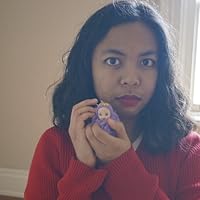
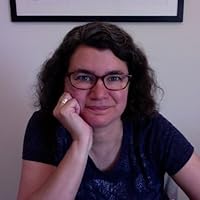
Monica Macansantos is a 2025 Marguerite and Lamar Smith Fellow with the Carson McCullers Center in Columbus, Georgia, and was a 2024-25 Shearing Fellow with the Black Mountain Institute at the University of Nevada, Las Vegas. Born and (mostly) raised in the Philippines, she is the author of the essay collection, Returning to My Father's Kitchen (Northwestern University Press/Curbstone Books, 2025), and the story collection, Love and Other Rituals (Grattan Street Press, 2022). She was a James A. Michener Fellow at the University of Texas at Austin, where she earned her MFA in Writing, and also holds a PhD in Creative Writing from the Victoria University of Wellington. She is a recipient of fellowships and awards from Hedgebrook, Storyknife Writers Retreat, the I-Park Foundation, Monson Arts, the Kimmel Harding Nelson Center for the Arts, and the Honor Society of Phi Kappa Phi. More at monicamacansantos.com.
Each essay is special. Even when unpacking happy and painful memories, Macansantos writes with clarity and compassion. One my favorite essays in the book is Becoming a Writer: The Silences We Write Against where she reflects on the disenfranchisement of Filipino voices in mainstream literature and the personal and cultural barriers writers must overcome to assert their narratives. As some someone who is passionate about sharing books by Filipino authors, this deeply resonates with me.
This book is both a personal memoir and a call to action for greater inclusivity, kindness, and recognition of diverse voices in literature. I highly recommend it.
I thoroughly enjoyed this whole book of stories about this author’s experiences growing up the daughter of a prominent Filipino writer and their lives together navigating a less than ideal educational system and a clique-y writing scene. She also immerses us in her around the world journey in becoming an award winning writer herself - the whole book is spellbinding, emotional and has both a warm and biting tone.
I read it all on a cross-Atlantic flight and it made the time pass so pleasantly. I couldn’t wait to see how each story played out and what lens, angle and subject matter she took in the next one. She explores so many themes many of them challenging such as race, class, gender, cultural difference and interpersonal conflict. Her tone is so balanced that I always felt like I learned something through each challenge she faced and overcame. I felt strong emotions, while still being grounded by her rigorous craft and care not to leave the reader without all the information to see and feel the whole picture of what is happening in each immersive and crystal clear story.
Deeply personal and unflinchingly honest. Macansantos essays are an easy read, and brings you into a difficult time in her life, and does so without hesitation in each piece.
This collection achieves an admirable balance between critical interrogation - of the self, others, and the systems of power that inform our interactions - and compassion. Beautifully written.
Reading this collection of essays feels similar to sitting down with a friend in their kitchen over coffee, while they prepare a feast and share their story with you. Macansantos' evocative collection of essays is both a tribute to her father, the late poet Francis C. Macansantos (who has won the Palanca Award several times in the Philippines) and an exploration of her own identity as a writer, trying to forge her own path.
The essays, while thematically focused on the loss of her father, also delve into her growth, her experiences returning to the Philippines (after living in the U.S.) and leaving it once again, her academic explorations, and finding joy in small moments.
The first essay, "Returning to My Father’s Kitchen," is beautiful and heartfelt. We get a glimpse of the close-knit relationship the author had with her father as she recounts her father's recipes, their bond while cooking, and the many ways she has tried to learn from him in the kitchen and out. It is an evocative and powerful piece that resonates and ties the essays together. I also loved that her father had a different take on a staple Filipino dish.
The essay "Becoming a Writer" focuses on her experiences as a student at the University of the Philippines, studying writing and participating in a writing workshop where her fiction piece was eviscerated by a panelist. She vividly describes the attitudes, mores and values of the Filipino literati/writing community, to be elitist (you can be snubbed just because they don't like you), and memorization of ideas was valued over actual learning and discourse. Ultimately, it showed the author's resiliency and steadfastness in an atmosphere that didn't foster support.
"The Power of a Vacant House" focuses on a reconnection with an old acquaintance whose mother died, even while the author is still mourning her own loss. This piece explores many themes-reconnection, grief, history, and a surprising discussion about her choices to become a writer as she defends herself against a stranger. For lack of a better term, it's also a classic example of Filipino overstepping in one of the worst ways.
I am most intrigued with the essay "James" which is a fleeting, almost like stream-of-consciousness piece, but still impactful.
While the author writes about grief and loss, the collection speaks to the idea of belonging in the different spheres of life --her place in the writing community, her culture, her father's kitchen, and belonging to the spaces she occupies, despite being marginalized. "To Resist Being Unseen," and "I Do Not Know How it is in Your Country" are set in New Zealand, where she studied for her PhD. She deftly channels the rage and raw emotions of feeling "othered."
Macansantos' writing is intimate, deliberate, and authentic. I appreciate the way she walks us through little avenues of side-stories within some of the essays. I learned a lot about her journey as a writer and gained insight into writing as a career. Her essays are immensely moving and reflective of the diasporic experience and crafted with a careful hand.
I had the pleasure of attending a virtual chat with the author through Bel Canto Books and was so impressed by her warmth and wit, and her passion for writing. This book is perfect for reflection and to me, the essays can be read in any order.
Thank you to the author for the #gifted copy of the book.
This evocative collection takes us into the experience of a young writer as she learns her craft, processes her identity and takes on the world. Macansantos looks at issues readers will find familiar – coming to terms with the death of a loved one, finding your voice in your personal life and your work and facing down the forces that would keep you from achieving your goals. She elevates these moments by finding beauty in everyday surroundings and meaning in life’s challenges. NOTE: If you’re a writer at any stage, be sure to read her third essay in the collection “Becoming a Writer” and her account of having her work shredded publicly, inappropriately, in a workshop. We’ve all been there. Macansantos shows us how to emerge from that with your dignity and creative vision intact.
There is so much to love in the writings of Ms. Macansantos. In this memoir, she stands out yet again. The reflective prose, the beautifully crafted recollection, the precision in language, and the ability of her words to stir poignant memories. She is a master at a different level, and yet she is still just a hint of the certain possibilities of grander things to come. I look forward to her novel! She is a modern voice of old masters and her work belongs in the anthology of the best Filipino stories at par with those Palanca winners. ❤️❤️❤️