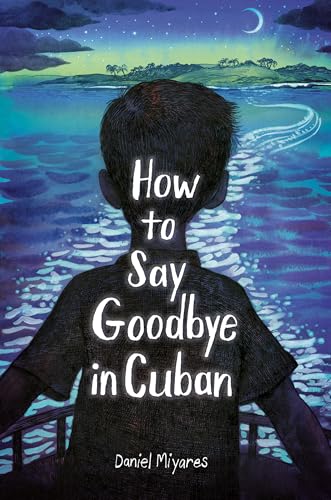
Here is the dramatic coming-of-age memoir -- told in the form of a graphic novel -- of 12-year-old Carlos (who would grow up to become the author’s father), his life during the Cuban Revolution, and his family’s harrowing escape to America.
The year is 1957. Carlos lives with his family in Ceiba Mocha, a small town in the Cuban countryside. He loves to play baseball with his best friend, Alvaro, and to shoot home-made slingshots with his abuelo.
One day, a miracle Carlos' father, his papi, wins the lottery! He uses the money to launch his growing furniture business and to move the family to a big house in the city. Carlos hates having to move -- hates leaving Abuelo and Alvaro behind -- and hates being called country kid at his new school.
But the pains of moving and middle school turn out to be the least of his problems.
When rebel leader Fidel Castro overthrows the existing Cuban president, the entire country is thrust into revolution. Then, suddenly, Papi disappears. Carlos' mother tells him that Papi has gone to America, and that their whole family will soon join him. But Carlos really doesn't want to leave Cuba, the only home he's ever known. Besides, how will they get to America when Castro's soldiers are policing their every move? Will Carlos ever see his father again?
This powerful book about a boy coming of age amid massive political upheaval tells a timeless story of one family's quest for freedom and for a new place to call home.
Daniel Miyares is a critically acclaimed picture book author and illustrator. Some of his books include Float, Night Out, Pardon Me!, Night Walk to the Sea, written by Deborah Wiles, and Hope at Sea. He also illustrated Surf's Up, written by Newbery Medalist Kwame Alexander. Daniel believes that our stories have the power to connect us all. Daniel's story currently takes place in Lenexa, Kansas, with his wife, their two wonderful children and a dog named Violet who gives them all a run for their money.
Confession: I have never been able to read a graphic novel from beginning to end. My sons have pressed their favorites on me, but I just could not manage them. There's something about how my brain processes so much art with text that it becomes overwhelming for me.
Yet I finished this graphic novel by Daniel Miyares in one evening.
The story of how Daniel's father's family escaped Cuba during Castro's rise is searing and emotional on so many levels.
(And it would be sticking my head in the sand not to admit that I see too many parallels to what's happening now in America.)
I've always been enchanted by the way Daniel portrays light in his illustration, and there is a wealth of that artistry here. I loved the chapter separations -- especially the hairy, too-real tarantula.
The most gripping image for me was one that didn't necessarily reflect reality but one that was the child -- Carlos, Daniel's father -- imagining his fears: sharks attacking Cubans in another boat after they had been shot by Castro's men.
A major part of this story is Carlos living with the anxiety of uncertainty, change, and fear of what's to come. It's something that I really related to as an anxious child myself who is now raising anxious children. Daniel gets right inside his father's young mind and pulls the reader with them.
I’m normally not a fan of graphic novels but this memoir grabbed my attention and I read it in 2 sittings. It would have been read in one sitting if I didn’t have a commitment. I couldn’t stop thinking about it until I could get back to the story. The hand painted illustrations combine with the speech bubbles to tell a powerful memoir of a young boy and his family living in Cuba when Castro took over. So much emotion is shown in the graphics of this story that is based on the author’s father’s life. Adventure, family love, family anger, history, warfare, political upheaval, and escape from Cuba are all in this book that should win awards.
A wonderful family story with some important history thrown in. Just the right mix. Can’t wait to share this with my granddaughter and my son’s middle school class (he teaches history).
The illustrations are SO GORGEOUS. A lot of YA graphic novel art feels interchangeable, but Miyares' beautifully composed, island-hued watercolors of revolutionary Cuba are unforgettable. The story is his father's, and the narration sticks close to a kid's POV. I would love to see this book taught in classrooms, both for the history and for the parallels to present-day immigration stories and political upheaval.
In this graphic novel set in 1956, we meet Carlos, who has a great life in Ceiba Mocha, Cuba. He lives in a cozy house in the countryside with his Mama, Papi, younger brother Lazaro, and sisters Maggie and Isaura. His aunt lives nearby, as do his grandparents. His best friend, Alvaro, has a father who works on the grandparents’ farm. There are so many things to do outside, his grandmother’s good food, and a lot of time spent with his grandfather fishing and hanging out. Carlos’ father seems stressed and unhappy with his life, so when he wins the lottery, he moves the family to Matanzas, a town where he sets up a furniture manufacturing business. Carlos doesn’t care about the bigger house or better opportunities; he wants his old life back. This is unlikely to happen, especially since Batista’s government is overthrown by Castro, and the resulting conflict seeps into every facet of Carlos’ life. It takes a while, but eventually the government appropriates his father’s business, leading his father to become involved in underground activities, and to eventually become a “Gusano”, the term used by Castro’s supporters to describe people who leave for the US. Carlos’ mother does her best to keep the family together, but eventually the revolution comes a little too close, and the family moves back with the grandparents. The father returns, and Carlos’ family makes the dangerous journey to the United States. The grandparents, who have their farm taken over by the government, move to an apartment in Matanzas and remain in Cuba. The journey is difficult, but by 1962 the family has settled into a new life in Miami, Florida. This story is based on the life of the author’s father. Strengths: I absolutely loved that the biggest portion of this book was spent describing Carlos’ life before things become difficult. His close relationship with his grandfather, his idyllic childhood in the country, and his family’s increasing involvement in current events will help modern readers understand that war torn places in the world have not always been that way. While the basic circumstances of Carlos’ family are repeated again and again, the details of the family’s experiences give this a personal touch, especially since this is based on Miyares’ own father. The artwork is lovely, and very different for a graphic novel. The style and the colors felt very midcentury to me, which was very nice. This is one of the best graphic novels I have read recently, so I will definitely purchase it. Weaknesses: While there is a good deal of information about Castor’s process of taking over the government spread throughout the book, it wouldn’t have hurt to have a two page overview of events, or perhaps a timeline, at the end of the book. Young readers will have little idea about this era in history, and may need some support in understanding the events. What I really think: I will definitely purchase this graphic novel. Castro’s revolution, and especially Operation Pedro Pan, is probably my third favorite horrible historic event, after the Triangle Shirtwaist Factory fire and the Partition of India. A few years ago, a student’s grandmother came to speak to our school about her own journey from Cuba to the US with Operation Pedro Pan, so it’s good to see this story being told in books like Castellanos' wordless graphic novel, Isla to Island, Cartaya's A Hero's Guide to Summer Vacation, Behar's Letters From Cuba Cuevas' Cuba in My Pocket, Gonzales' The Bluest Sky and The Red Umbrella, Diaz's Farewell Cuba, Manzano's Coming Up Cuban and Flores-Galbis' 90 Miles to Havana.
12-year-old Carlos lives in the countryside in Cuba, alongside his family. Although life there is calm and predictable, Carlos’ relationship with his father is not ideal. One day his father wins the lottery, prompting the family to relocate to the city in pursuit of better opportunities. In the city, Carlos and his family live in a big house and his father’s furniture business is successful. However, there are bullies at school and others that are a part of the rapidly growing revolution led by Fidel Castro. Feeling threatened and fearful, Carlos’ father hides in an unknown place, while Carlos is unaware of his whereabouts. His family is hiding as well. Soon, Carlos becomes aware of his father’s plan; they escape, along with other Cuban families who carry only hope with them. A coming-of-age, graphic novel memoir that presents the challenging topics of separation, loss, migration, revolution, and chaos in an age-appropriate and educational manner. Told from the child’s perspective, this moving and delicate story is centered around his own emotions, experiences and words. A must-read story with in-depth investigation – Miyares craftily details the chronological development of the Cuban Revolution while paralleling it to the child’s life. Written entirely by hand and illustrated with pen and watercolor, Miyares honors his father’s story while demonstrating the impact it has had on his own life. 12-year-old Carlos lives in the countryside in Cuba, alongside his family. Although life there is calm and predictable, Carlos’ relationship with his father is not ideal. One day his father wins the lottery, prompting the family to relocate to the city in pursuit of better opportunities. In the city, Carlos and his family live in a big house and his father’s furniture business is successful. However, there are bullies at school and others that are a part of the rapidly growing revolution led by Fidel Castro. Feeling threatened and fearful, Carlos’ father hides in an unknown place, while Carlos is unaware of his whereabouts. His family is hiding as well. Soon, Carlos becomes aware of his father’s plan; they escape, along with other Cuban families who carry only hope with them. A coming-of-age, graphic novel memoir that presents the challenging topics of separation, loss, migration, revolution, and chaos in an age-appropriate and educational manner. Told from the child’s perspective, this moving and delicate story is centered around his own emotions, experiences and words. A must-read story with in-depth investigation – Miyares craftily details the chronological development of the Cuban Revolution while paralleling it to the child’s life. Written entirely by hand and illustrated with pen and watercolor, Miyares honors his father’s story while demonstrating the impact it has had on his own life.
Thank you to Netgalley and Anne Schwartz Books for sharing a digital copy with me to review. All opinions are my own – No AI used. Out Now!
"Being scared doesn't mean you can't do hard things. Just remember where you come from and be strong for your family." Rounded from a 4.5.
Told simultaneously during Castro's revolution in Cuba (1957), Carlos is a young boy living in Ceiba Mocha. He loves spending time with his Abuelo, going to the beach, and playing baseball with his best friend Alvaro. Carlos' life seems relatively normal when unexpectedly, his Papi wins the lottery. Using his winnings, he builds his family a new home and expands his furniture building business. Carlos hates having to move, leaving his Abuelo and Alvaro behind, but little does he know, his problems are just beginning.
Castro is now in control, his Papi is gone, and his schoolmates are calling Carlos and his family traitors. Carlos' mother then confesses that his Papi is in America...and will soon be coming back for them.
Told from the POV of a young boy, this stunning memoir, in form of a graphic novel, offers a unique perspective of a family's path to freedom during a time of intense, dangerous political upheaval.
The artwork in this memoir is absolutely amazing - incredibly vibrant and beautiful. I was captivated by the images, alone. The story was simple to follow and being told from the perspective of a child really exemplifies how sudden and scary that time of history was for everyone. A young boy couldn't even trust his own friends to not put his family at risk. I really appreciated the author's note, at the end, that gives more background on the real-life Carlos and how the story came to be.
I docked half a star due to, what in my opinion are, continuity errors. When Abuelo picks up Carlos and his family, Carlos mentions how he left his necklace behind and was upset. But then his Abuelo tells him he has it at the end of their trip - could he not have given the necklace to Carlos right after he brought it up? Also, on the boat, Papi invites Carlos to stay on the upper deck, but then chastises him, pages later, for being on the upper deck.
Those issues aside, I thoroughly enjoyed this read and plan to purchase my own physical copy once it releases.
Much appreciation to NetGalley/author/publisher for the advanced copy. All opinions expressed are my own.
This entire review has been hidden because of spoilers.
How to Say Goodbye in Cuban is a middle grade graphic novel based on the childhood of author Daniel Miyares' father, Carlos. Miyares aged him up a little to realistically narrate the story, and filled in a lot of the gaps in his father's memory, so this more of a work of historical fiction than biography.
Carlos lives with his family in a small town in the Cuban countryside. One day, his father wins the lottery and his family moves to a big house in the city. His father uses his winnings to start his own furniture business, but Fidel Castro revolution has started, and everyone who owns property and businesses has what they own seized in the name of communism. People are disappearing, being questioned, and Carlos is being harassed at school. One day, his Papi disappears on a "fishing trip," and a year later, it is revealed that he fled to America, and the father is coming with him. (I basically just told the whole plot, but I think it's fairly obvious if you know about the Cuban revolution.)
Although I understand the omission given the age of the narrator, I would've liked to see more about the process of immigrating to America. It isn't really touched upon very much in the Author's Note, either. I think it would've been especially timely with current events.
Since I read an ARC (see below), the watercolor and ink art was in black and white, which made it maybe not as engaging as it could've been. I thought that the graphic novel format made this topic more accessible to its audience and will hopefully expose kids to a new historical context.
Ages 9-12 I received this book as an ARC at ALA Annual in June 2025. Publication date is September 30, 2025.
I felt so mixed about this book. I think it was because I kept trying to put myself into an adult POV and the children's POV. For a majority of this I had to try really hard to look at this from the child's POV because I felt like MC came off as ungrateful for the sacrifices his parents were making to give him and his siblings a better life. I did sympathize with him regarding his bad relationship with his father but after reading the authors note at the end about how the main character is his father and how they don't have a close relationship and how he'd never heard this story of his father's life until he was a grown man irritated me. The MC seems to criticize and complain about his fathers actions and their relationship and sometimes rightfully so but it just comes off hypocritical and left me more annoyed with some of the MCs actions. I do think this story definitely reads like someone telling a story and not their life which did make sense when you learn this is not the authors story. I personally decided to read this because I am interested in more of cubas history so I was hoping this would be a good introduction. And while this does have some historical information mixed in this wasn't as informative as I was hoping to be.
Reading this does make me interested in reading about someone's story who had the opposite experience (getting land and businesses from Castro) I don't think it was right for them to take people's property and businesses but I do wonder how different the story would be if his father never won the lottery and had been one of the people who received land or a business.
I was on the edge of the seat reading How to Say Goodbye In Cuban by Daniel Miyares. It’s a graphic novel based on real events - both real historical events and personal ones of the author’s father, Carlos, when he was 12 years old in Cuba and his life during the Cuban Revolution. Chapter breaks have information about the major historical events of the early ’60s leading up to and after Castro took control of Cuba and the story follows what these events meant to Carlos and his family. I particularly liked how close Carlos was with his abuelo (grandfather) and the conversations and what they do together make reading this heartwarming. And I rarely read a graphic novel, i thoroughly enjoyed this one and think the graphic novel format makes the history accessible to young and old alike. The illustrations propel the story but as soon as I write that I think about the conversations between Carlos and his abuelo, Carlos and his father, a relationship which we see changing over time, and Carlos and a few school mates and I think the writing, along with the illustrations make this one suspenseful book with memorable events and people and a lot of heart. So many good possible Newbery award winners out there, this one stands out, and rounds out my Top 5. For now. I’m still reading!
A MG graphic memoir based on the author’s father. 🇨🇺 It’s the year 1957 and Carlos lives with his brother, sisters and parents in Ceiba Mocha, a small town in Cuba. In a stroke of good luck, Carlos’ father wins the lottery, allowing them to move to the city, build a new house and open a furniture business. But slowly creeping up is Fidel Castro, overthrowing the existing Cuban president and turning the country into a communist state with a revolution. Carlos’ father leaves for America to help get things set up. Will Carlos and his family ever be able to join their dad or will they become casualties of this rebellion? 🇨🇺 This graphic novel hit the right balance between historical content and a character-driven story, which can be hard to do. I had all the feels reading this one, mainly because of the parallels from the 1960s to now and everything we are facing in this country. The Author’s Note is a must-read, as the author wrote about his own father’s story. This title releases 9/30: you won’t want to miss it.
CW: war, protest, death, government control, gun violence, bullying, vandalism, classism
(Bill W’s 2025 for his 3rd grade Caldecott project)
The sheer quality of illustrations in this 234 page graphic novel is mind-boggling. The author/artist, Daniel Miyeres tell us the story of the 1959 – 60s escape of his father and his family from Castro‘s Cuban rebellion and taking over of all private industry in Cuba. The pictures on each page range from single page. Illustrations to multiple page illustrations. The colors are vibrant and warm and picture the lush warm temperatures of Cuba and the Florida area along with deep dark Knight pictures as they are on the water or hiding in the woods or escaping on a boat. This is the biography of the author‘s father and how the family got to Key West and then to Miami in the United States. We feel the fear, the elation of winning the lotto, the sadness of leaving Carlos‘s grandparents out in the country where they had all lived and going to the big city where his father starts a new business and builds the new home, but it isn’t long before Castro wins the revolution and takes over the entire country of Cuba. It is a story powerfully told and the illustrations are exquisite.
Going to start with: I don't know enough about Cuban history to refute this, but a lot of this story seems...embellished. My understanding is the first wave of people to flee Cuba were upper class and didn't like wealth redistribution, which this book seems to back up. I don't particularly love the way America is portrayed in this book since we did or had done a lot of the things he's criticizing Cuba for in the book (ex. ration booklets during the depression, putting people in camps for being "enemies of the state" [something we are currently doing again with immigrants], using guns to force people to obey the government, snitching on neighbors [which we did at the same time, but in the opposite direction]). It all feels very one-sided to me and I think it's more nuanced than this.
Additionally, I think the art isn't great. I really dislike the cheek patches on nearly every character. It makes the skin look weird to me. I like the way the backgrounds look, but I find the people unappealing to look at for most of the book. Additionally, while part of it is due to his age, the main character comes off bratty.
Carlos is a happy kid, living in the Cuban countryside, playing baseball with his best friend and spending time with his abuelo. When the impossible happens and his Papi wins the lottery, he thinks his life is turned upside down, moving to the city for their new family furniture business. But those changes are only the beginning. A revolution is brewing in Cuba, as Castro is gaining power and neighbors are turning on each other. Then Papi’s business is seized and suddenly he disappears. Did Papi take a raft to America like people have said? What will happen to his family? What will happen to Cuba? This beautifully illustrated graphic novel tells the highly personal story of Miyares’ own father, growing up during the Cuban Revolution. It is gorgeously illustrated in watercolors and authentically captures the anxiety and confusion of a kid living through his world turning dramatically upside down. Link to complete review: https://ysbookreviews.wordpress.com/2...
Part of the reason my review of this is lower is that up until I read it, I kept thinking I was about to read a graphic novel memoir from someone else. Now, that is not Daniel Miyares fault......but still, I needed a brain shift ;)
The book itself though was quite good. I read it in a day. Learning about the Cuban revolution (beyond the Bay of Pigs) was a gap in my education so I enjoyed seeing this through Carlos's eyes (Carlos would become Daniel's father). I think all generations can relate in some way whether it is moving and leaving family behind.....or leaving somewhere due to persecution....or seeking a better life for themselves.
The ending is one of hope. And oh how I wish more immigrants felt that hope from the United States than they undoubtedly are these days. We used to be a country of prosperity and one others desired to come to. That was so evident in the final pages of this graphic novel. May the US become that again one day.
There are a lot of historical events that have taken place that I know a little about but don’t really have any context so they’re just jumbled facts. This graphic novel has cleared up the jumbled facts I had about the rise of Castro and the fleeing of so many of Cuba’s citizens throughout the decades. The story is told through the eyes of a young boy so you feel the confusion and fear he feels at all the events that the adults don’t want to talk about. I will admit his attitude, at times, was annoying, but I the writing made it clear exactly where it was coming from and why it was written that way. I also loved the letter at the end, explaining where the story came from and how it came to be written. This was educational and interesting. Highly recommended!
I received a copy from #NetGalley and #RandomHouseChildrens for an honest review.
Set in the 1960, right in the middle of the Cuban Revolution, this coming of age story works as a second-hand account graphic memoir.
The story is based on the real life events of the authors own father’s escape for the communist nation, and it’s persecution of those who oppose it. It’s dramatic and at times raw. His family’s escape is what ultimately allows the author to grow up in a place of opportunity.
Its a powerful story, like many others of migration, it has sacrifice, loss, regret, love and nostalgia. It has a lot of information in between the chapters that helps place the events in the context of what was going on in Cuba. I found this specially helpful for those unfamiliar with the history and for children now just starting out learn of it.
The illustrations and colors were great and went well with the time the story takes place.
I received a digital advance copy for review via NetGalley, all opinions are my own.
How to Say Goodbye in Cuban is a graphic novel memoir about the author's father, Carlos's, early life growing up in rural Cuba during the 1960s. Carlos was close with his abuelo (grandfather) and enjoyed being a carefree kid. When the Cuban Revolution occurred, his world was turned upside down after just having moved to the city so his father could live out his dream of owning his own furniture business. The business is taken over by Fidel Castro's rebel army. Soon after, Carlos's father disappears. When his mother finally tells him that his father has gone to America to prepare for the family to join him, Calos is wondering how they will ever manage to escape when their every move is being watched. The graphic novel format makes this pivotal event much more accessible to audiences of all ages. The illustrations are gorgeous and add to the reader's understanding of the events. The chapter breaks also give succinct information about the major historical events of the Revolution.
Thanks to Random House Children's, Anne Schwartz Books, and NetGalley for a review copy of How to Say Goodbye in Cuban.
Miyares shares a version of his dad's story of fleeing Cuba during the revolution in this middle grade graphic novel that isn't nonfiction but loosely based in real life. Using his dad as the main character, it's the story of Castro's crew moving in and the tumultuous times that it brought, especially for their family. The dad was a notorious lottery player attempting to win money to start a business only to win a lottery, move the family, start the business, and lose the business while attempting to settle a life for his family in another country (where he disappeared for quite some time) and the hardship that it brought on his mother.
It's doesn't include gratuitous violence, in fact I think it elegantly portrays the fear and danger that was inherent in the coup before the family made their decision to hike through the swamps and get on a boat bound for the United States.
Reading 2025 Book 263: How to Say Goodbye in Cuban by Daniel Miyares
A graphic memoir I found searching for books for #NonfictionNovember. Was able to grab this middle grade graphic memoir at the library.
Synopsis: Here is the dramatic coming-of-age memoir -- told in the form of a graphic novel -- of 12-year-old Carlos (who would grow up to become the author’s father), his life during the Cuban Revolution, and his family’s harrowing escape to America.
Review: This book was an excellent look at a family’s journey from Cuba, during the revolution, to the US. An intimate look at the author’s father’s view of what was happening to his parents and community. We know the story of the revolution, but to read about it from a small boy’s perspective was great. My rating 4.25⭐️.
“The government is gone, the rebels have won. Cuba will never be the same”
How to Say Goodbye in Cuban is, at its heart, a love letter to the author’s father- the real life Carlos. Inspired by a true story, this graphic novel, ages 8+, tells the story of a young boy growing up in Cuba living a normal life, until he couldn’t anymore. It does a great job of explaining Fidel Castro’s rise to power in an appropriate way for children/adolescent. 5 stars.
Thank you to NetGalley for the opportunity to read the graphic novel How to Say Goodby in Cuban.
In this graphic memoir, Miyares relates his father's life as a child during the Cuban revolution. Carlos is happy living near his family in rural Cuba, but their fortunes change when his father wins the lottery and moves the family to town to live out his dream of starting his own furniture-building business. Castro comes to power shortly after and the family's fortunes change again. My students who love refugee stories will love this one, but it is a 5-star read regardless.
Thanks to NetGalley and Anne Schwartz Books/Random House Children's for the digital ARC.
This absolutely gorgeously-illustrated graphic novel ends with an Author’s Note explaining how he came to start creating the book, and it made me long for weekly phone calls with my own dad writing out his story (and made me miss him more than ever!) The story told here is important, and I think there’s just enough history about the Cuban Revolution woven in that it will be accessible for kids without them being too “bored” by the facts.
A beautiful story of bravery, immigration, and hope for middle grade readers.
Daniel Miyares tells the story of how 12 year old Carlos and his family escape from Cuba during the Cuban Revolution. The coming of age story, told in graphic novel form, is a testament to the human desire for freedom and a place to call home. Carlos is based on Miyares father, and the Author's Note at the end is touching. I read this in a single sitting, completely engaged from start to finish. This book deserves all the Newbery and Caldecott buzz it is generating. The story is riveting and the ink and watercolor illustrations are stunning.
How to Say Goodbye is written well and clearly lays out the events of Castro's revolution. I like that the main action is taken up with the main character, and the events of the larger revolution are placed at all the chapter breaks. This is a story well worth telling, particularly as it is based on true events. Graphic biographies are not popular in my collection, and this one doesn't have any features to make it stand out. However, it is well done.
In this graphic novel Miyares recounts the true story of his father who left Cuba when he was a young boy. His Author’s note contains family photographs and explanations of how he learned about his father’s story and why he decided to write about it. Read more on my blog about this ARC I was sent by the publisher in exchange for an honest review: https://shouldireaditornot.wordpress....
I haven’t read many books based on refugees from Cuba though am well aware of thei struggle to leave Castro’s Cuba and arrive in the States. Reading this book was much required to understand what led to the revolution and people fleeing. I’d have loved if the author told a bit more of the story of Cuba via his protagonists, but I understand he wanted to create the world his father saw as a child, when they wouldn’t share information freely.