Jump to ratings and reviews
Rate this book

Aerth

Rate this book
Winner of Weatherglass Books’ Inaugural Novella Prize, chosen by Ali Smith.

Magnus lives on Aerth, which is currently moving into an Ice Age, with a strange virus limiting the population. When the planet Urth is discovered, he vows to become an astronaut and travel there, but on arriving he finds it hot, crowded, corrupt and violent, despite it being initially welcoming. Slowly Magnus realises he will not find what he's looking for, but there seems no way back. Aerth is a story about migration, climate, conspiracy theories and interplanetary homelessness. Ali Smith says: 'What planet are we on? Can we leave? Does it mean we can never go home again if we do? What does a phrase like worlds apart really mean? Deep-forged, witty and resonant, this dimensionally stunning novella deals with dystopia and hope in a way that reveals them as profoundly related. A work of real energy and narrative grip, brilliantly earthy and airy at once, it blasts open a reader's past/future consciousness and taps into literary antecedents as disparate as Hardy and Atwood. Funny, terrifying, humane, this is a thrilling journey in a story the size of a planet - no, the size of several, all of them altogether strange and uncannily familiar.'

180 pages, Paperback

First published January 25, 2025

22 people are currently reading
1281 people want to read

About the author

Deborah Tomkins

2 books17 followers

Ratings & Reviews

What do you think?
Rate this book

Friends & Following

Create a free account to discover what your friends think of this book!

Community Reviews

5 stars
133 (29%)
4 stars
191 (42%)
3 stars
106 (23%)
2 stars
17 (3%)
1 star
4 (<1%)
Displaying 1 - 30 of 86 reviews
Profile Image for Henk.
1,253 reviews399 followers
August 18, 2025
Imagining two alternative worlds, one like us and one pristine and sparsely populated, form the heart of Aerth. We get slow science fiction, focused on society and ordinary life instead of technology, very similar to Le Guin
He doesn’t own himself, and perhaps never has.

Aerth is an accomplished debut by Deborah Tomkins, which strongly reminded me of the writing of Ursula K. Le Guin.
We have two planets, one cooling, lightly populated, where we meet the protagonist as a young boy. He is chased by bears, indoctrinated by his mom to be a good person, strongly influenced by communal thinking: First, do no harm, says his mother every morning at breakfast: Before anything else, first, do no harm.

Still an unrest grips this farmer child on Aerth, and brings him to Urth, a counterpart that is similar to earth in its greed, exploitation of resources and climate warming. Impressive how this novella manages to cover not just a whole life, including all the despair this entails in facing a dying world.
It is interesting how Mars exploration is just getting started and a virus killed a lot of the population, where especially the growing awareness of the world, including the matriarchal society that banned a belief in an afterlife, is interestingly done. As often, complete transparency is professed (We have passed the age of secrets) but we still get a sense of unease in respect to Aerth.

While the narrative itself is not very original in a sense, very Odyssey like actually, the sense of unrest and yearning for something more touched me emotionally: He’ll never be wise enough, good enough. Or even enough.
The culture shock is well portrayed and in general I was impressed, even though at the start of the book I was sometimes slightly disoriented. Deborah Tomkins is a writer to look out for, and Aerth is a thought provoking book that would have been a worthy addition to the Booker Longlist of this year in my view.

Quotes:
The way forward is forward

Rules and guidelines don’t apply to you, and perhaps they never did. You are outside all worlds.

He’ll explore what it means to do no harm, how to listen wholeheartedly, how to walk gently, how to love and live truth.
How to live a glad and joyful life.
Profile Image for Paul Fulcher.
Author 2 books2,031 followers
September 20, 2025
Heart whispering

In Magnus's third week at the Space Agency, new information comes his way in the form of a most astonishing lecture: an Aerth-like planet has been discovered circling the Sun at the same distance from the Sun as Aerth itself; it is, in fact, concealed by the Sun. Aerth Two, or, as the other planet calls itself, Urth.

How these twin planets have arisen is unknown. Some say that one planet has made an incursion into the other's universe. Others talk about a mirrorverse and dark matter. All Magnus knows is that he'd do anything to be part of any team that visits Urth.

It seems Urth can't afford to send astronauts to Aerth, or perhaps their technology isn't advanced enough. It's not quite clear. So a team of Aerth's brightest and healthiest astronauts will travel to Mars, and from there to Urth. It'll take time, but these things can't - shouldn't - be hurried.


Aerth by Deborah Tomkins was the joint winner of the 2024 Weatherglass Novella Prize (the other joint winner was Astraea by Kate Kruimink), Weatherglass press then publishing the book. The judge for the prize was the wonderful Ali Smith, who citation read:

What planet are we on? Can we leave? Does it mean we can never go home again if we do? What does a phrase like worlds apart really mean? Deep-forged, witty and resonant, this dimensionally stunning novella deals with dystopia and hope in a way that reveals them as profoundly related. A work of real energy and narrative grip, brilliantly earthy and airy at once, it blasts open a reader's past/future consciousness and taps into literary antecedents as disparate as Hardy and Atwood. Funny, terrifying, humane, this is a thrilling journey in a story the size of a planet - no, the size of several, all of them altogether strange and uncannily familiar.

The author has described this as a gently sci-fi and speculative novella-in-flash, and, as until recently co-chair of Green Christian has described her literary credo as I am passionate about our living planet and the world future generations will inherit, so I write a good deal about nature and climate change – but not exclusively. I am also very interested in relationships of all kinds, between ourselves, and between us and nature.

The novel centres around the figure of Magnus, aged 7 when the story opens. He lives on Aerth:

Now we are seven

Had Magnus of Arden stayed home, enjoyed his party, blown out the seven candles on his cake, he would not now be sitting at the top of an oak tree, quietly observing like an explorer.

Through gaps in the bright early-summer leaves Magnus can see the farmhouse a quarter mile away, and beyond it the once-wide elm-lined high road, the machine dump - forbidden to all but a few - and the turf roofs of the village, solar panels gleaming scarlet in the setting sun. Surrounding all looms the wildwood, dense, dark, almost impenetrable.

Here bears and wolves and lynxes prowl, and elk and moose roam the narrow paths which were at one time thoroughfares for humans but are now entangled with brambles, ivy and straggling, twisted shrubs. When he's older, he and Ryan will explore some of the abandoned villages, visit the old machines in the dump. If their mothers will let them.

People have gathered in twos and threes, milling about the garden and orchard, sipping from mugs of tea, glasses of cider. They arrive in pony carts, on bicycles, by foot. Voices carry far on this windless evening.


Aerth is a planet like our own - a possible future? - now in a largely post-industrial society. Magnus's family are farmers and seldom journey far from their settlement in Meriden, near Waerwic in the Forest of Arden. Aerth is sliding into a new ice age, the UK now locked in wintry conditions, and all crops grown in a brief May-September window. And society has been devasted by two terrible pandemics - waves - which have lingering effect to this day in very high miscarriage rates and a shrinking population.

Magnus wishes he'd never heard of the wave. He wishes people had been kind enough to keep him in ignorance, but apparently everyone needs to know, because those who forget the past (I never forgot anything, I never knew about it!) are condemned to repeat it. Now Magnus is twelve the wave turns up in every subject in school. History, geography, ethics, literature, philosophy, science, maths, art, farming... it influences everything, taints everything, provides nothing worth remembering in this life where he is always, always, being told to be kind and truthful and loving and considerate. Magnus fails to see exactly what he's supposed to learn from this litany of disaster.

The reference here to 'always being told' is to the five rules of the society, which are taught by personal ethics lesson with a counsellor starting from Magnus's teenage years:
First, do no harm (which was the original title for the novel)
Listen with all your heart
Walk gently
Live truth
Love
(the other four rules forming the chapter titles for the book)

Style wise, the novella-in-flash description speaks to the short (1-2 page) and episodic nature of the sub chapters in each chapter, which also use a variety of styles including second as well as third person narrative.

Despite the apparent lo-tech nature of Aerth, they have a Space Force, based in Thetford Forest, and have recently established a colony on Mars. Magnus is not content with staying as a farmer, as his parents believe he should, but wants to explore the world and eventually joins a mission to Mars, a story told in the short 'Walk gently' chapter. And from the Mars mission, Aerth discovers the existence of Urth, as per the quote that opens my review, a mirror planet, and in 'Live truth', the longest chapter, Magnus is the one of 6 astronauts who makes the journey to Urth, and the only one to survive a difficult landing.

Urth is in many respects the opposite of Aerth - the same basic geography and language(s) but Urth presents perhaps another future for our planet - the main difference is it geopolitics, a term no longer used on Aerth a more heavily industrialised, materalistic, over-populated and divided society, and one where the climate is warming.

Initially Magnus is a feted celebrity but increasingly, as the years pass, people even doubt his story - how can the primitive Aerth society have managed interplanetary travel?; even the space colony of Urth, on a planet with a breathable if thin atmosphere and lifeforms, differs from the dead planet known to the Urth scientists. And Magnus discovers he has a double on the planet but coming into his vicinity causes disturbances such as earth tremors, which the Urthians write off as due to fracking.

'Love' brings Magnus back to Aerth, three decades later, and the story full circle.

This is a fascinating novel - wise, compassionate and lyrical, inventive in form, and with much to say about climate politics and societal and personal relationships.

This is the February 2025 book from the brilliant Republic of Consciousness Book of the Month club, which raises funds that support the UKs most exciting annual book prize, as well as showcasing a collection of books from the vibrant small independent press scene.

The publisher - Weatherglass Books

Weatherglass Books is a new independent press founded by Neil Griffiths (novelist and founder of the Republic of Consciousness Prize for Small Presses) and Damian Lanigan (novelist and playwright).

Weatherglass was founded on a shared love of Penelope Fitzgerald’s The Blue Flower and a shared fear that it wouldn’t find a publisher today.

Weatherglass Books wants to clear a space for the next The Blue Flower.

“Running the Republic of Consciousness Prize I read hundreds of novels from small presses and loved a great many, but I did feel an absence of novels that were somehow exquisite at the simplest level: great story-telling built up from beautiful sentence-making.” Neil Griffiths, co-publisher

"We’re looking for intelligent, original, beautiful writing, and we're finding it. Additionally - maybe it's a reaction to the unhinged, fictional-seeming times we live in - we find writers trying to be truthful. It's a fascinating combination: writers who have extraordinary things to say, and are saying them with energy and style, whilst also trying to express something real and true about the world. It's bracing and exciting. It feels like the perfect time to start a literary press.” Damian Lanigan, co-publisher

Other reviews

Eric the Lonesome Reader has this in his top 10 books of 2024 - see his take here

Other novels/films with mirror earths

description

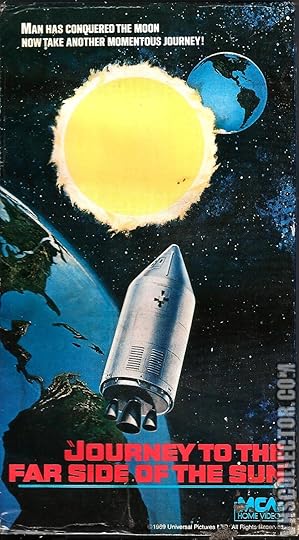
Countersolar! (Twin Planets, #2) by Richard A. Lupoff

TARNSMAN OF GOR - THE CHRONICLES OF COUNTER-EARTH VOLUME 1 - BALLANTINE 27583 by John Norman
810 reviews110 followers
January 11, 2026
4,5 - that was a beautiful, soothing reading experience.

Magnus is born on Aerth, a planet closely resembling ours but where - following a pandemic - history has taken a different turn. It's not quite utopia, but people's highest aim is to live in harmony with nature and 'do no harm'.

Aerth is plagued by global cooling, and Magnus' dream is to become an astronaut and travel to Mars to join the early settlement efforts. During his training, astronomers discover a 'twin planet' Urth and eventually it falls to Markus to join and expedition.

I am not a big SF-reader, but this premise seemed quite original to me and provoked reflection. Magnus' outside holds up a mirror and questions why we have chosen to organize society the way we have. It also worked really well to convey messages on climate change, consumerism etc.

Well recommended!
Profile Image for Emmeline.
469 reviews
February 4, 2026
3.5 stars

The early chapters of this were almost breathlessly immersive. I loved that I was in a science-fiction universe that also felt like a utopian, if sometimes frustrating past, on an Aerth that is living a little ice age.

Magnus grows up on an underpopulated world, where most children don’t make it to adulthood or even past babyhood. He himself is the miracle 10th child with nine deceased siblings. His parents are desperate to keep him safe, but Magnus dreams of being an astronaut, and eventually he gets the chance.

He crash lands on Urth, and discovers a mirror world where his forest home is a Birmingham suburb, and global heating, overpopulation and conflict are rife. He wants to go home, but can he? And what will happen if he meets his mirror self.?

I loved the wise and compassionate nature of this novella and its dilemmas, though I don’t think the story as a whole held up to the level of the first few chapters. Magnus becomes embroiled in Urth celebrity, he is lionized and then abused—and ultimately I found I wasn’t terribly interested in Urth (that old place) and might have preferred to spend more time on Aerth.
Profile Image for Nadine in California.
1,208 reviews137 followers
August 25, 2025
If you love Ursula Le Guin and especially The Dispossessed: An Ambiguous Utopia you'll want to pick up this book. It has a thoughtful, measured voice that sounds like Le Guin, but doesn't feel like a copy to me. It feels more like two authors who come from the same place and share the same accent. In the early coming-of-age section I got echos of Lois Lowry's The Giver, but again, it's not a copy, just shares the same sensibility.

Although it's a short book, Aerth covers a lot of ground successfully by having short sections where we sometimes jump years at a time, rather than dwell on the day-to-day tick tock of Magnus' life. The jumps were not jarring to me - instead they honed in on only what was important. I still had a strong sense of Magnus' interior life and struggles, and the world(s) he lived in were fully realized. The book did feel like it was written in separate chunks, but they wove together well.
Profile Image for Tom Mooney.
917 reviews429 followers
January 31, 2025
Good takeoff, rocky journey, crash lands in a ball of flames.
Profile Image for Rebecca.
4,210 reviews3,502 followers
January 8, 2025
At Weatherglass Books’ “The Future of the Novella” event in September (my write-up is here), I was intrigued to learn about this sci-fi novella in flash set on alternative Earths. It was the joint winner of the inaugural Weatherglass Novella Prize. The draft title was “First, Do No Harm,” referring to one of the five mantras for life on Aerth, a peaceful matriarchal planet that has been devastated by a pandemic. Magnus, the Everyman protagonist, is his parents’ only surviving offspring after their first nine children died of the virus. We meet Magnus in what seems an idyllic childhood of seasonal celebrations and his mother’s homemade cakes. But the weight of his parents’ expectations is too much, and after his relationship with Tilly disintegrates, he decides to fulfil a long-held ambition of becoming an astronaut and travelling to Urth. Here he starts off famous – a sought-after talking head in the media with the ear of the prime minister – but public opinion eventually turns against him.

Urth could be modelled on contemporary London: polluted, capitalist and celebrity-obsessed. But it would be oversimplifying to call Aerth a pre-industrial foil; although at first its lifestyle seems more wholesome, later revelations force us to question why it developed in this way. The planets are twins with potentially parallel environmental and societal trajectories and some exact counterparts; the hints about this “mirrorverse” are eerie. It all could have added up to an unsubtle allegory in which Aerth represents what we should aspire to and Urth symbolizes what we must resist, but Tomkins makes it more nuanced than that. Magnus’s homesickness when he fears he’s trapped on Urth is a heart-rending element, and the diverse styles and formats (such as lists, documents, and second-person sections) keep things interesting. The themes of parenting and loneliness are particularly potent.

Tomkins first wrote this for the Bath Prize in 2018 and was longlisted. She initially sent the book out to science fiction publishers but was told that it wasn’t ‘sci-fi enough’. I can see how it could fall into the gap between literary fiction and genre fiction: though it’s set on other planets and involves space travel, its speculative nature is understated; it feels more realist. A memorable interrogation of longing and belonging, this novella ponders the value of individuals and their choices in the midst of inexorable planetary trajectories.

Originally published on my blog, Bookish Beck.
Profile Image for SJ.
118 reviews17 followers
January 20, 2025
This is the book I’m always looking for.

Magnus lives in Aerth, a post-industrial world slipping into an ice age in which the woods, bears, lynx and wolves roam. He dreams of travel, and seeks opportunity and escape from his restricted community where everyone is responsible for eachother. When a new planet the other side of the sun is discovered, Urth, he grabs the opportunity to take that journey, and discovers that other ways of living aren’t always greener.

Tompkins deftly tackles immigration, homesickness, climate change and broken hearts, in sparse, tender, and surprising prose, framing notions so familiar to us in a wholly new way.

At once a cautionary table, fable like in its telling, and an interplanetary adventure ambitious in its scope, this novella packs a whole life in its pages. It’s science fiction that centres the human experience, warts and all, and holds a mirror up to us so we can see ourselves clearly.

For those that loved Orbital’s beautiful, bird’s eye view of life on our planet, and the themes of LeGuin’s The Dispossessed.
Profile Image for Sam James.
21 reviews
February 2, 2025
Wonderful storytelling. A lesson for how we should be. I loved this book.

I didn’t get a free copy from the publisher. I paid for it, in a bookshop.
Profile Image for Anna.
2,174 reviews1,067 followers
March 2, 2026
Aerth was another book recommendation from Vinted, of all places, that I found in the library. Both the cover and blurb intrigued me. This short debut novel follows a boy named Magnus growing up on a version of Earth (the titular Aerth) that is entering an ice age. A parallel version of the planet, named Urth, is discovered to also be orbiting the sun and Magnus is consumed by the desire to visit it, so he leaves his community and heads into the unknown.

The obvious point of comparison is Ursula le Guin's The Dispossessed: An Ambiguous Utopia, as the socioeconomic structures of two worlds are contrasted when a guy from the utopian anarchist scarcity planet travels to the dystopian capitalist abundance planet. Urth is very similar to the Earth we know, in the details at least. Of course The Dispossessed: An Ambiguous Utopia is a sci-fi classic and difficult to live up to. Although I appreciated some of the elegant writing and thoughtful details in Aerth, I did not find Magnus a very vividly characterised protagonist. The places he went always seemed much more interesting than his reactions to them. The effects of his interactions with James are pleasingly weird, but his dynamics with other characters seemed insubstantial. On a pettier note, I did not understand where his mother was getting all of her cake ingredients in a forest subsistence community where it's winter for eight months of the year. I can only assume that Aerth's cake recipes are quite different to those commonly made on Earth. Aerth offers some good political commentary, but unfortunately the protagonist comes across as rather flat.
Profile Image for T Davidovsky.
767 reviews31 followers
September 6, 2025
I have to admire the ambition of this novella. Is there anything it doesn't try to tackle? It's about climate change. It's about family. It's about loneliness. It's about immigration. It's about crime. It's about wealth. It's about politics. It's about pandemics. It's about space travel. It's about technology. It's about media. It's about survival. It's about revolution. It's about love.

Set on two planets that are each familiar and strange in their own way, it tells the story of an astronaut named Magnus. His story unfolds in vignettes that begin with his childhood before following him across the solar system and back. The writing is lyrical and full of precise details that add perfect texture to both the setting and the people in it. Some of the worldbuilding is contrived in order to serve the book's central metaphors, so if you're looking for traditional science fiction, you're not going to find it here. What you will find here is an attempt to capture the human experience in under two hundred pages.

Is it successful? The short answer is that it is. The long answer is that various ambitions are achieved, but they don't really cohere into a greater whole as much as they should. Some of the vignettes are just tangents. They're clever, and I would not say this book is bloated, but I wish more was done to tie everything together a little more tightly. Maybe the book wants to say there's less order and meaning in the world than we believe, but I don't think so. It might be a sad and bittersweet story, but it is most definitely not nihilistic, so I was a tiny bit disappointed at times when, despite it's grand ambitions, it doesn't seem ambitious enough to do more than gesture half heartedly at an overarching set of points. I don't need everything to be neat and tidy, but when a book takes such a big picture approach (even if it does so from a very personal lens), it should have the space to show how various observations are related. To be clear, some of the big ideas do tie together really ingeniously. Others just don't, not as much as I wanted them to.

Criticisms aside, I think it's an excellent book. It kind of scratched my Orbital itch, but where Samantha Harvey gave us a perspective of earth from a physical distance, Deborah Tomkins focuses more on emotional, personal, and societal divides.
Profile Image for Wendelle.
2,091 reviews69 followers
Read
March 5, 2026
This is a short book but it really takes the reader places, in our cosmos and out of it. It imagines a tale of two parallel earths, each close enough to our own situation to be recognizable but shifted incrementally to foretell paths we could be taking. One is a pastoral earth called 'Aerth', where the forests are broadening, the population is dwindling (through repeated stillbirths and premature births) and the glaciers are encroaching southward on arable land. Here people live in cohesion with nature, farming and planting and baking with the seasons, while wildlife like bears and deer and squirrels flourish in temperate forests filled with trees and lichen. Magnus is a young boy whose dreams surpass his village's command to 'Do no harm', which often in practice translates to the sublimation of individuality for the preservation of harmony, and the avoidance of risk in preference of conservation of the current benefits. His ambition as a spaceman leads him to 'Urth', Aerth's mirror world, which has an opposing situation of global warming, overpopulation, dire lack of wildland and woodlands in favor of concrete and steel developments, global poverty and rank pollution, uninhabitable stretches of drought and heat, and a global British Empire. The story might seem predictable with an ecological moral at heart, but the author doesn't take this easy road, showing instead that the massive underpopulation in Aerth was struck with intention by humans there over and over again, and humanity has problems everywhere. The bulk of the narrative is taken by the examination of the psychological displacement of the Spaceman lost in a different world and unable to cope. This part was reminiscent of 'The Man who fell to Earth'-- though this one is a gentler story, right to the very end. The descriptions of the natural world are comforting and the depictions of Magnus' alienation and homesickness feel real.
Profile Image for Scandal Wonder.
196 reviews30 followers
February 10, 2026
Un’Altra Terra di Deborah Tomkins è l’ultima uscita di Zona 42 nella collana “Libri dell’Iguana”, dedicata alla fantascienza. Si tratta di un romanzo piuttosto breve ma molto incisivo, incentrato su Magnus, protagonista e astronauta, e sulla sua difficoltà nel trovare un posto nel mondo: nel suo, Aerth, ma non solo.
Deborah Tomkins ci parla di sopravvivenza e di cambiamento climatico, ma anche di umanità e di amore. Magnus è un ragazzo curioso, sempre alla ricerca di sé stesso e di nuove frontiere da esplorare. Grazie alle sue qualità e alla sua determinazione, riesce a imbarcarsi per primo verso un pianeta appena scoperto, Urth.
I sogni e le speranze di Magnus si scontreranno però ben presto con la realtà: Urth è un pianeta sì pieno di vita, ma inadatto a ospitare lui e la sua gente.
Il worldbuilding è una parte fondamentale della narrazione, perché i due pianeti sono molto simili e allo stesso tempo profondamente diversi. Aerth, il pianeta di Magnus, è poco popolato, sull’orlo della glaciazione, costantemente ricoperto di neve. I suoi abitanti sono esseri umani dal carattere mite e pacifico, cresciuti seguendo una regola fondamentale: non fare del male.
Su Urth, invece, la situazione è completamente ribaltata: il pianeta è rovente, l’acqua e le risorse scarseggiano, la popolazione è eccessiva e il livello tecnologico è estremamente avanzato. Le persone sono cattive, corrotte e spietate.
Mi è parso incredibile come l’autrice sia riuscita a dipingere due mondi così distinti, entrambi ispirati a caratteristiche opposte della nostra Terra. Aerth richiama il paesaggio rurale, i piccoli villaggi sperduti abitati da poche persone che vivono in costante contatto con la natura, con una tecnologia ancora agli albori. Urth, al contrario, mostra città evolute e sovraffollate, dove le persone si rubano spazio, cibo e attenzione.
Mettere Magnus nella posizione dello straniero che visita Urth ci permette di osservare dall’esterno problematiche e assurdità a cui ormai siamo assuefatti: la violenza, lo spreco, l’inquinamento, il tradimento costante delle più basilari promesse tra esseri umani. È una visione potente, che mi ha colpito nel profondo.
La narrazione è episodica, ma sempre incentrata sul protagonista e organizzata in ordine cronologico, una scelta efficace che permette di concentrarsi solo sugli eventi più significativi. La prosa della Tomkins, ottimamente tradotta da Chiara Reali, riesce a trasmettere tutta la tenerezza e l’umanità necessarie per accogliere pienamente i messaggi del romanzo.
In conclusione, consiglio questo libro a chi è disposto a lasciarsi trasportare in un viaggio doloroso e privo di speranza, ma attraversato da una profonda sensibilità.
Ringrazio la casa editrice per la copia in collazione.
Profile Image for amy.
62 reviews
April 23, 2025
GORGEOUS STUNNING INCREDIBLE YES YES YES
Profile Image for Glenda.
323 reviews
February 5, 2026
Una riflessione potente sulle conseguenze del cambiamento climatico, raccontata attraverso due pianeti paralleli.

Accanto al tema ambientale, l’autrice affronta anche quello delle migrazioni, viste come una minaccia e per questo discriminate, temute, respinte.

Un libro che non si limita a denunciare un problema sotto gli occhi di tutti, ma ci ricorda che la soluzione non è fuggire su un altro pianeta — rischiando di distruggerlo allo stesso modo — bensì imparare a vivere in modo responsabile, per salvare e custodire quello che già chiamiamo casa.

𝘈𝘴𝘤𝘰𝘭𝘵𝘢 𝘤𝘰𝘯 𝘵𝘶𝘵𝘵𝘰 𝘪𝘭 𝘤𝘶𝘰𝘳𝘦.
𝘊𝘢𝘭𝘱𝘦𝘴𝘵𝘢 𝘭𝘢 𝘵𝘦𝘳𝘳𝘢 𝘤𝘰𝘯 𝘥𝘦𝘭𝘪𝘤𝘢𝘵𝘦𝘻𝘻𝘢.
𝘝𝘪𝘷𝘪 𝘤𝘰𝘯 𝘴𝘪𝘯𝘤𝘦𝘳𝘪𝘵𝘢’.
𝘈𝘮𝘢.
Profile Image for Mike.
50 reviews
February 15, 2025
5* - Anyone who has enjoyed something by Ali Smith absolutely needs to check this one out.

Fantastic and beautiful, mesmerizing... this short story captures something raw, emotionally charged.

I am so happy to have this to read, after enjoying Gliff just a few weeks ago. So fucking good.
Profile Image for Harriet.
15 reviews
February 3, 2025
A fun concept deployed reasonably well in slight but sensual prose. Between its own merits and the Ali Smith endorsement, I imagine it will haunt creative writing course reading lists for years to come.

The endings felt a touch gratuitous near the end- there were three points where you could have neatly concluded, rather than the extended cut it felt like we were getting. But I didn’t mind it too much
This entire review has been hidden because of spoilers.
Profile Image for Jonathan.
15 reviews
February 3, 2025
Excellent read, great story, lovely writing style, highly recommended!
Profile Image for natalie.
96 reviews263 followers
February 6, 2025
Aerth follows Magnus who lives on planet Aerth, whose ethos is ‘do no harm’. It’s entering an ice age, and Magnus dreams of visiting a place that is warm, filled with opportunities.

It follows Magnus into adulthood where he becomes an astronaut and travels to Urth, a planet that mirrors Aerth almost perfectly opposite. It is heating up, there are numerous climate disasters, and Magnus starts to realise this land of opportunity isn’t what it seems.

I absolutely loved this book. It packed so much in for such a small page count. it was sparse but expansive, and absolutely beautifully written.

It shared similarities with Van Der Meer’s Annihilation for me. Beautiful and literary and thought provoking. I wish I could read it again for the first time.
Profile Image for Gordie.
77 reviews12 followers
March 8, 2026
Coinvolgente romanzo breve che rientra nella speculative fiction questo Un'altra Terra (Aerth) di Deborah Tomkins pubblicato da Zona 42 per la collana "I libri dell'Iguana".
Scritto con la tecnica della fiction flash, di cui ne è fautrice, prestata questa volta ai capitoli e non ai racconti.
Narra la storia di Magnus che, fin dall'infanzia vive su Aerth (la nostra Terra in un futuro non quantificato oppure in un universo parallelo?), un pianeta avviato verso la glaciazione, in cui l'umanità affronta ogni giorno, nella maniera più rispettosa possibile, una natura avversa, vive in piccoli villaggi circondati da boschi e foreste impenetrabili, flora e fauna selvatica pronte a cancellare il ricordo dell'uomo.
Magnus sogna fin dall'adolescenza di poter frequentare l'agenzia spaziale che da tempo ha colonizzato e tentato di terraformare Marte, con la speranza, un giorno, di poterci mettere piede e, finalmente, un giorno il suo sogno si avvera: da Marte viene scoperto un pianeta gemello, lontanissimo, dalla parte opposta del Sole. Magnus sarà tra i cinque esploratori scelti per il lungo viaggio verso Urth, il pianeta che il lettore riconoscerà (più o meno) come la nostra Terra attuale, avviato verso il riscaldamento globale a causa di inquinamento e cambiamenti climatici. Un'altra Terra? O solamente un altro tempo in un altro luogo, oppure due universi di poco sfasati? Le teorie sono molteplici, ma non sono il fulcro della storia che sarà incentrata sempre e solamente sull'essere umano e la fragile armonia con ciò che lo circonda, e anche, perché no, sull'amicizia e l'amore. Lettura consigliatissima.
133 reviews2 followers
March 11, 2025
What a great little book. I skipped through it and enjoyed it very much. I like her style of writing which might be called minimalist, with short chapters which made the story flow nicely. Magnus lives on Aerth and is very dissatisfied with his life. He wants adventure. He wants to travel. Then another planet is discovered. Urth. Magnus resolves to become an astronaut and go there. But when he arrives, tragedy ensues and nothing is what he expected. Nothing is what it seems.

This mini novel is very short. But packed inside it are many ideas. About climate change, about what we call ‘home’, about love and loss and about being ‘other’. Loved it.
Profile Image for Paige.
102 reviews
December 30, 2025
4.5

this has been on my list for a very long time and it didn’t disappoint at all. really lovely, changing prose, touching on the climate crisis, immigration and society in both a light and heavy way - thanks josh for the excellent christmas present
Profile Image for Lucie Cash.
18 reviews
April 10, 2025
Aerth is a small masterpiece. A profound and thought provoking novella which broke my heart a little bit. Great writing, well paced and a brilliant, well executed book all round.
Profile Image for Andy Weston.
3,312 reviews241 followers
September 17, 2025
Tomkins's short novel charts the life of Magnus, from the age of 8. The only survivor out of his parents’ ten children in a world with a disease that causes high numbers of stillbirths, he lives on a planet called Aerth, for which there is a gradual drip-feed of information that enables gives the reader some information, though not enough to get a full picture. The planet is moving into an ice age. At the age of 10 he watches as astronaut (called Niall Strong) lead the first mission to Mars and from that moment, is determined to follow in his footsteps. The first half of the novel deals with how he achieves this.

A second planet, almost a twin to Aerth, on the opposite side of the sun, named Urth, is discovered. The second half of the novel, much more vague than the first, concerns how Magnus leads a manned mission to the planet. I use the word 'vague', though considered 'surreal', and even 'nonsensical', as what would seem important questions remain unanswered, as if, to ask them is not the point of the novel - the planets seem similar yet quite separate, but clearly related, an undisclosed distance away, just 'the other side of the sun'. Transport is not mentioned, and nor are any other crew members. Magnus's own concerns seem trivial, rather than reflect on his voyage of exploration, he is concerned with home, his partner, and his own culture. His impassive reaction to events that occur and discoveries he makes is difficult to accept.

The story led me to think several times about which genre I was reading. Its not really science fiction as it is billed, more of alternate history, but then not that either. Speculative fiction perhaps; but then the writing doesn't speculate. More than once I thought I should be reading it as a type of allegory, though any underlying message is unclear (some day in the future we will have to find a new planet to live on??).

I enjoyed it overall, more so the first half though. In the end it left me feeling frustrated. Its as if the second half was one idea of many for the way the book might go, and perhaps the least successful. Too much time is spent on Magnus's own deteriorating mental state. I'm all for a novel that provokes discussion and is short on answers to the questions it poses, but with this, I'm not sure where even I would start..

Profile Image for  Dan.
105 reviews3 followers
April 18, 2026
Aerth by Deborah Tomkins — ⭐⭐⭐¾

A lyrical and quietly compelling novella, Aerth follows Magnus, a boy growing up on a distant planet gradually slipping into an ice age, where a mysterious virus has reduced the population. When he is selected for a space program, he travels to a twin planet — Urth — orbiting the same sun, only to find a world that feels disturbingly similar to our own: crowded, polluted, and morally complex.

The novel draws much of its strength from the contrast between the two worlds. Aerth, despite its decline, carries a sense of simplicity and openness — a place where life feels slower, more honest, and closely tied to nature. Urth, by comparison, is dense and unsettling, shaped by systems, ambition, and human complexity. Magnus, arriving from a very different world, finds himself out of place, at times observed more as something unusual than fully understood.

The narrative unfolds in short, episodic sections, moving through key moments of Magnus’s journey. This structure can feel slightly disorienting at first, but it gradually settles into a rhythm. The prose itself is consistently lyrical and often striking, and the use of a close third-person perspective allows us to remain anchored in Magnus’s thoughts and emotional responses as he navigates this unfamiliar world.

There is a clear environmental undercurrent running through the novel. Aerth and Urth feel like two contrasting possibilities — one closer to a fragile, almost idealised existence, the other reflecting overdevelopment, disconnection, and excess. Without being overly didactic, the novel invites comparisons that are difficult to ignore.

That said, the focus on Magnus means that many of the secondary characters — his family, his relationships — remain lightly sketched. Whether intentional or not, this leaves the emotional weight resting almost entirely on his perspective, which may create some distance for the reader.

Still, Aerth remains a thoughtful and evocative read. It balances a clear narrative with lyrical prose and a quietly unsettling vision of two worlds that feel less like opposites and more like reflections of different possibilities.
Profile Image for Alice.
611 reviews102 followers
March 8, 2026
4.25 stelle
I primi capitoli avevano fatto fatica a prendermi, ma quando ha ingranato non sono riuscita a staccarmi.

Un'altra Terra è un libro particolare, perché tiene il lettore distante dal protagonista Magnus con una prosa ampia ed evocativa, per poi tirarlo per il bavero con passaggi in seconda persona (che io personalmente adoro) e un ritmo perfetto.

Le storie gemelle e completamente opposte di Aerth, così verde e fondata sull'aiuto reciproco, ma con grossi problemi legati alla scarsa tecnologia, soprattutto medica, contro Urth, inquinata e ultracapitalista, ma con gli avanzamenti necessari per sconfiggere le malattie più pericolose. O crearne di nuove.

Seguire Magnus è stata come una caduta in un inferno che sta diventando sempre più familiare e la risposta aperta che ci viene proposta alla fine è forse l'unica che ci potrebbe, se non salvare, aiutare.

Ho anche particolarmente apprezzato il piccolo accenno agli universi paralleli, anche se quella è la parte che rimane più in sospeso e avrei voluto avere qualche risposta in più.
Profile Image for Birch.
7 reviews1 follower
Read
February 28, 2025
Stranger in the Strange Land of the 21st century.

Read the same week that BP announced it was scrapping its green commitments, and this little novella made me feel in turn furious, heartbroken, and gently hopeful.
Profile Image for Carolanne.
15 reviews1 follower
April 30, 2025
Book Club book and what a pick.
This book made me feel wonder and outrage and pain and wonder all over again. Some parts I wanted more of, it was rather fast paced, but it really took me on a journey of humanity.
Profile Image for Karen.
50 reviews1 follower
June 17, 2025
what an emotional & interesting story of gratitude and isolation and belonging. The format was a bit jarring at first but it's almost poem-like in its structure. Totally unlike anything else I've read
Displaying 1 - 30 of 86 reviews