Gujaratis are an uncommonly industrious and resourceful people. In India alone, there are some 55 million people who consider Gujarati to be their mother tongue, and possibly 6 million more of them abroad, on every continent, if not in every country. They are known for their entrepreneurial spirit, and their love of business and the profitable deal. After all, paiso bole chhe—money talks. No wonder then, that some of India’s greatest industrial houses—Tata, Reliance, Wipro, and scores of others—owe their existence to brilliant Gujarati businessmen. Beyond business, Gujaratis have made their mark in politics (Mahatma Gandhi was Gujarati as was Sardar Vallabhbhai Patel; there have also been two Gujarati prime ministers, Morarji Desai and Narendra Modi— three, if Rajiv Gandhi, whose father was Gujarati, is counted), science, culture, cricket, and many other fields of endeavour. Some of them have also become notorious as conmen, swindlers, and rioters—Gujarat ranks high among states in which communal riots have taken place. Gujaratis are renowned for their delicious vegetarian snacks (often mispronounced as ‘snakes’), stringent dietary restrictions, and love for the garba, natak nights, and sugam sangeet. But beyond these stereotypical representations of the community, who are the Gujaratis, really? Where do they come from? Why are they the way they are? How do they earn, politick, pray, create, make merry, and even kill when they feel threatened? How do they build a sense of self and community and then take it too far, making ‘others’ out of Dalits, Muslims, and denotified tribes? No study of the Gujarati people has yet attempted to answer all these questions and more. Until now. In The Gujaratis, through wideranging scholarship, original research, and a lifetime of observing the community he was born into, and is proud of belonging to, distinguished journalist and writer Salil Tripathi crafts an engrossing account of the community. From the holy town of Somnath, steeped in incense and distorted histories, to the high-octane corporate boardrooms of Mumbai, down the bustling avenue of Hovenierstraat, the heart of Belgium’s diamond trade, to lonely American highways dotted with Patel-owned motels, Tripathi dissects the Gujarati presence in India and across the world and observes the strengths, weaknesses, and idiosyncrasies of the community with acuity and wit. We learn about asmita, the essence of being Gujarati, and understand what it means to be ‘Gujarati’ as the author traces the epic story of his people through centuries of social, political, and cultural upheavals.
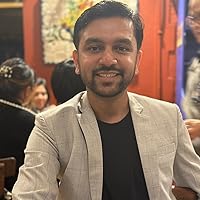
Salil Tripathi was born in Bombay, India. He is a contributing editor at Mint and at Caravan in India. In the UK, he was board member of English PEN from 2009 to 2013, and with novelist Kamila Shamsie, he co-chaired PEN’s Writers-at-Risk Committee. In November 2011, he won the third prize at the Bastiat Awards for Journalism about free societies, in New York. In 1994 in Hong Kong, he received one of the awards at the Citibank Pan Asia Journalism Awards for economic journalism. He was a correspondent in India from 1987 to 1990 and moved to Singapore (and later Hong Kong) from 1991 to 1999. He moved to London in 1999.
Salil has written for The Wall Street Journal, The International Herald Tribune, The Washington Post, The New York Times, The New Republic, The New Yorker, The San Francisco Chronicle, Salon, and The Philadelphia Inquirer in the United States; The Guardian, The Independent, The New Statesman, The Spectator, Prospect, and Index on Censorship in the United Kingdom; Far Eastern Economic Review in Hong Kong; Global Asia in South Korea; The National in the United Arab Emirates; Shinchosha in Japan, and a few other publications. In India, he had been assistant editor at the Indian Post and senior correspondent at India Today.
He has been a senior visiting fellow for business and human rights at the Kennedy School, Harvard University, and is also an adviser to several global initiatives involving business and human rights. He studied at the New Era School in Bombay and graduated from Sydenham College at the University of Bombay. He later obtained his Masters in Business Administration from the Amos Tuck School of Business Administration at Dartmouth College in the United States.
Gujarati Merchants, Millionaires, and Tamil Middle-Class Morality
Many Americans are familiar with Zohran Mamdani, the current Mayor of New York City. But how many know about his Gujarati ancestry?
Mamdani was born in Kampala, Uganda, to a Gujarati Muslim father and a Punjabi Hindu mother. His family background reflects a fascinating history of Gujarati migration to East Africa, where Gujarati communities established businesses, commercial networks, and institutions over several generations.
I felt deeply saddened and grieved when reading about how Asians were expelled from Uganda by Idi Amin in 1972; many Gujaratis were wealthy in Uganda and had British passports. But Idi Amin expelled them after having a dream.
Imagine losing everything your family had built over generations, simply because a dictator decided you no longer belonged in your own country?
When they wanted to settle in India as refugees, the Indian government denied them and asked Britain to take them. Initially, Britain was reluctant; the Gujaratis were helpless, not able to move to India or even Britain, even with their British passport. Finally, Britain accepted them.
Recently, I finished reading *The Gujaratis: A Portrait of a Community* by Salil Tripathi. It is a remarkable work examining the history, anthropology, sociology, religious traditions, politics, and commercial achievements of the Gujarati people.
I reviewed this book. Coming from Tamil Nadu, I was particularly interested in comparing Gujarati commercial traditions with those of Tamil society.
Tamil Nadu itself has produced extraordinary industrialists, including the founders of TVS, Murugappa, Ramco, Hatsun Agro, Freshworks, and Zoho.
Yet I wonder whether certain middle-class social expectations discourage younger generations from pursuing unconventional careers and entrepreneurial ventures. I find middle class morality stops many Tamil families to stop taking risks.
I hope this writing encourages readers, particularly younger Tamils, to think more seriously about developing scientific curiosity, hands-on engineering skills, entrepreneurship, industrialization, wealth creation, and the social institutions that make them possible.
Salil Tripathi's "The Gujaratis: A Portrait of a Community" is a captivating and meticulously researched masterpiece that delves into the dense intricacies of the Gujarati community and significantly explores its ancient history, continuing traditions and rich culture.
The book has been constructed chronologically. There're twelve parts, each part consists of a few chapters, each chapter focuses on a specific theme. Author has masterfully captured the complex and diverse sense of Gujarati entity and identity. He has impartially highlighted the community's industriousness, resourcefulness entrepreneurial enthu, cultural innovations philanthropic endeavors that have shaped the national progress of India, as well as the backwardness, shortcomings, caste-based discrimination and social inequality.
The book has been oriented in the most perfect way. The language is easy, the chapters are informative, every single passage is relevant, containing crucial discussion. Mr. Tripathi is an eminent journalist, his expertise and experience can be witnessed at every single page. Besides his ability in writing such a huge book and making it accessible for the common readers is laudable.
Ultimately it is a landmark in the field of communal history that will encourage the readers to study widely, researchers to acquire valuable informations required for their research and on a broad aspect, it will raise communal harmony through its meaningful presentation.
This tour de force of a book manages to somehow combine a panoramic sweep across the history, culture, politics, cuisine and personality traits of the diverse people whose native tongue is Gujarati, with deep, personal experiences and insights. This is only possible because the author follows the advice of Father Carlos Valles whom he quotes as saying, “It’s important that this story is told by someone from inside but who can see it from outside.” While extolling the community’s many accomplishments and revelling in its quirks, the book also provides a clear eyed exposition of the violence that has been a recurrent theme in a supposedly non-violent, Gandhian ethos. It travels widely covering remote tribal hamlets and desert communities while including a far flung diaspora. Despite its considerable length, and the density of information it packs in, its conversational style makes it eminently readable.
"Salil Tripathi's 'Gujaratis' is nothing short of a magisterial achievement. Eight years in the making, the sheer depth and breadth of this book are immediately apparent. It's a deeply researched portrait of the Gujarati community, a group as colorful and multifaceted as the state they hail from. Tripathi's scope is truly impressive, delving into the community's history, culture, culinary traditions, unique quirks, extensive travel history, and much more.
Known globally for their exceptional mercantile skills, Gujaratis have been master merchants and shipmasters since the medieval era. Their prowess as bankers, moneylenders, and traders is legendary, and Tripathi meticulously traces the origins and expansion of their intricate trading networks, stretching from their homeland across India to Africa, Europe, and in more recent times, to the Americas. The book, clocking in at nearly 800 pages, doesn't shy away from exploring the political behaviors of Gujaratis both within India and in the diaspora, the NRI community. Intriguingly, Tripathi also examines the various financial scandals that have involved members of the Gujarati community, offering a comprehensive and unflinching look at this dynamic group.
This book is undoubtedly on its way to becoming the definitive work for understanding the Gujarati community from the most comprehensive perspective. It's fitting that such an ambitious and insightful book comes from the great-great-grandson of Govardhanram Tripathi, arguably one of Gujarat's most celebrated authors. 'Gujaratis' is an essential read for anyone seeking a deep understanding of this influential community and their significant contributions to India and the world."
A very well-researched book overall, but it might not be for everyone.
It covers many different things — Gujarat's history as a state and a community, its traditions, culture, food, and its contributions to the world, among other topics.
This is definitely not a one-go read. It's more the kind of book you keep around and return to as and when you want to know about a certain topic, like a library book.
The book is written about facts and details which mostly only a gujarati would want to read in this depth. but the book has the tone of explaining things to an outsider, a non-gujarati. The two don't quite go together. Since the content is the kind that would mostly draw in gujaratis, I think it should have been written in a way that lets gujaratis connect with it, rather than an introduction to someone unfamiliar.
I feel also that whenever someone tries to explain the vastness of a community's or region's identity to an outsider, the nuances get flattened, even without meaning to. This happens with most things, of course, but it feels shallow to watch your own experiences and stories get constrained by words written for someone else's understanding.
The book also mentions a great many gujaratis who've contributed to the world in various ways, which is a good thing and a nice tribute, but it's also one of the reasons this isn't a one-go read. I liked most of the rest of the book, but found myself not particularly interested in these accounts; a few were genuinely engaging, but most I ended up skimming.
You can’t remain isolated from Gujarat, be it Asansol or Antwerp. While they are accused of being narrow minded, corrupt, not valuing education, and putting sugar in everything, Gujaratis are unapologetic about them all. Few other communities are as closely knit, and proud of their culture as Gujaratis, ans this demands a closer inspection of them. Salil Tripathi’s tome examines in great detail the phenomenon of Gujarat, its people, its culture, the history and geography, and the future of the community.
The book is a massive undertaking, containing 12 parts subdivided into 87 chapters - spanning 628 pages plus 100 more for notes and appendix. The author’s ideology aside, this is ‘the’ book on Gujaratis, covering the past, present, and future - what shaped the Gujarati mentality, cuisine, language, politics, and economics. Filled with interesting interviews and anecdotes, I was however irked by the fact that the notes were not referenced properly in the main text.
If you are interested in knowing more about the community and culture, this is a very good choice to pick up. However, I will not classify it as an easy read, and it might to difficult for a casual reader to finish this.
The book is for every Gujarati and non Gujarati alike. If you are a Gujarati who is looking for a detailed account of who we are this is the book. Excellent that this comes from a highly accomplished Gujarati who is well travelled , well read and well acquainted with his fellow Gujaratis around the world. The book mentions hundreds of names of prominent Gujaratis from wide range of areas from freedom struggle to literature to fashion to army and beyond. The book is divided into various sections that discusses about our food, our art, our politics and also our dark past.
So the book is just not about massaging our ego and showing how great and rich we are, the book also covers the darker side of Gujaratis and how we can draw blood when time comes. The casteism and the classism, the ego and the high headedness of Gujarati is also discussed here that many who live in a bubble might find discomforting.
The author is a descendant of a legendary Gujarati writer Goverdhamram Tripathy who wrote the magnum Opus Saraswatichandra. Born and brought up in Mumbai he has seen his fellow Gujaratis up close and personal and some instances in the book clearly shows that he is well aware of the nuances of our society.
Please pick this up or gift it to people. Highly recommended
The book covers many different aspects of the Gujarati community. There were many new and surprising things I learnt (e.g. Gujaratis celebrated through history as seamen and navigators!) and I really appreciated the author's attempt to be nuanced and objective, and in particular the reminder that the Gujarati community is defined more by the language, traditions and approach to life rather than religion.