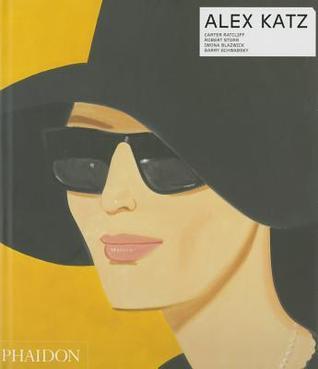
Alex Katz is a towering figure in contemporary painting, a key New York-based artist since the early 1960s. Katz is best known for his distinct portraits of sophisticated, irresistible women, masterfully painted using precise, broad areas of colour.
SYLVESTER: So although there's a very high degree of abstraction in your work, you don't invent at the expense of the optical?
KATZ: Yes. People say painting's 'real' and 'abstract'. Everything in paint that's representational is false because it's not representational, it's paint. We speak different languages and have different syntax. The way I paint, realistic is out of abstract painting as opposed to abstract style. So I use a line, a form and a colour. So my contention is that my paintings are as realistic as Rembrandt's. Now, that's supposed to be realistic, but I don't see those dark things around it, I don't see those dark things anywhere. It was realistic painting in its time. It's no longer a realistic painting. Realism's a variable. For an artist, this is the highest thing an artist can do -- to make something that's real for his time, where he lives. But people don't see it as realistic, they see it as abstract. But for me it's realistic. I mean, do those Impressionist paintings actually look realistic? You open Pandora's box when you start off with that. Then you say, 'Well, then what is realistic?' Then I say, 'Well, maybe my things are as realistic as the next guy's.' Giacometti is very realistic, but for his time and place. It's not very realistic in my time and place. It has nothing to do with the quality of the art, it's the quality of the vision. And when paintings somehow are no longer realistic, they often become great, great art.