

What do you think?
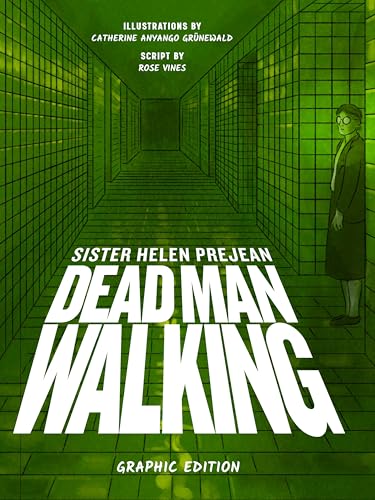
Dead Man Walking: Graphic Edition
In this graphic adaptation of Sister Helen Prejean’s bestselling memoir, acclaimed artist Catherine Anyango Grünewald and writer Rose Vines bring to striking visual life the story of a nun who becomes a fierce advocate against the death penalty.
“The now legendary story of Dead Man Walking has been heard and seen by millions. This updated, graphic presentation is yet another way for others, hopefully a new generation, to witness the inhumane treatment of those in our prisons.”—John Grisham
Growing up in a middle-class Roman Catholic family in the Jim Crow South, Sister Helen Prejean had resisted the idea that religious faith could be harnessed into social justice until dramatic changes sweeping the Catholic Church in the 1960s and ’70s landed her in the heart of the New Orleans housing projects.
There, she was asked to write a letter to Patrick Sonnier—a man sentenced to die in Louisiana’s electric chair for the murder of two teenagers. When Sonnier wrote back, Prejean’s life irrevocably altered course. She came to know a man who was as terrified as he had once been terrifying, as well as the victims’ families and the men who were charged with putting Sonnier to death.
For more than four decades, Prejean has worked alongside the convicted, as well as the families of victims, to abolish the death penalty, a sentence often determined by race, economic status, and geography.
This graphic adaptation of Prejean’s memoir offers an accessible way to engage with one of the most complex moral and emotional issues facing our country. Rose Vines skillfully interlaces recent developments with the original account, amplifying its relevance for today’s readers. Catherine Anyango Grünewald’s illustrations urge us to grapple with the humanity of this story, drawing an evocative, unforgettable portrait of mercy and justice.
“The now legendary story of Dead Man Walking has been heard and seen by millions. This updated, graphic presentation is yet another way for others, hopefully a new generation, to witness the inhumane treatment of those in our prisons.”—John Grisham
Growing up in a middle-class Roman Catholic family in the Jim Crow South, Sister Helen Prejean had resisted the idea that religious faith could be harnessed into social justice until dramatic changes sweeping the Catholic Church in the 1960s and ’70s landed her in the heart of the New Orleans housing projects.
There, she was asked to write a letter to Patrick Sonnier—a man sentenced to die in Louisiana’s electric chair for the murder of two teenagers. When Sonnier wrote back, Prejean’s life irrevocably altered course. She came to know a man who was as terrified as he had once been terrifying, as well as the victims’ families and the men who were charged with putting Sonnier to death.
For more than four decades, Prejean has worked alongside the convicted, as well as the families of victims, to abolish the death penalty, a sentence often determined by race, economic status, and geography.
This graphic adaptation of Prejean’s memoir offers an accessible way to engage with one of the most complex moral and emotional issues facing our country. Rose Vines skillfully interlaces recent developments with the original account, amplifying its relevance for today’s readers. Catherine Anyango Grünewald’s illustrations urge us to grapple with the humanity of this story, drawing an evocative, unforgettable portrait of mercy and justice.
304 pages, Paperback
Published October 28, 2025
About the author
Helen Prejean
39 books139 followersSister Helen Prejean, CSJ (b. April 21, 1939, Baton Rouge, Louisiana) is a vowed Roman Catholic religious sister, one of the Sisters of St. Joseph of Medaille, who has become a leading American advocate for the abolition of the death penalty.
Her efforts began in New Orleans, Louisiana, in 1981, through a correspondence she maintained with a convicted murderer, Elmo Patrick Sonnier, who was sentenced to death by electrocution. She visited Sonnier in prison and agreed to be his spiritual adviser in the months leading up to his death. The experience gave Prejean greater insight into the process involved in executions and she began speaking out against capital punishment. At the same time, she also founded Survive, an organization devoted to providing counselling to the families of victims of violence.
Prejean has since ministered to many other inmates on death row and witnessed several more executions. She served as National Chairperson of the National Coalition to Abolish the Death Penalty from 1993 to 1995.
An autobiographical account of her relationship with Sonnier and other inmates on death row served as the basis for the feature film and opera Dead Man Walking. In the film, she was portrayed by Susan Sarandon, who won an Academy Award. (Although Prejean herself was uncredited, she made a minor cameo as a woman in a candlelit vigil scene outside Louisiana State Penitentiary[1])
In addition to Sonnier, the account is also based on the inmate Robert Lee Willie who, with his friend Joseph Jesse Vaccaro, raped and killed 18-year-old Faith Hathaway May 28, 1980, eight days later kidnapping a Madisonville couple from a wooded lovers' lane and driving them to Alabama. They raped the 16-year-old girl, Debbie Morris (née Cuevas), who would later become the author of her book Forgiving the Dead Man Walking [2] and then stabbed and shot her boyfriend, 20-year-old Mark Brewster, leaving him tied to a tree paralyzed from the waist down.[3]
In 1999 Prejean formed Moratorium 2000 - a petition drive that eventually grew into a National Education campaign entitled The Moratorium Campaign, initially staffed by Robert Jones, Theresa Meisz and Jené O'Keefe and launching Witness to Innocence.
Prejean's second book, The Death of Innocents: An Eyewitness Account of Wrongful Executions was published in December 2004. In it, she tells the story of two men, Dobie Gillis Williams and Joseph O'Dell, whom she accompanied to their executions. She believes that both of these men were innocent. The book also examines the recent history of death penalty decisions by the Supreme Court of the United States and looks at the track record of George W. Bush as Governor of Texas.
In 1998 Prejean was awarded the Pacem in Terris Award. It was named after a 1963 encyclical letter by Pope John XXIII that calls upon all people of good will to secure peace among all nations. Pacem in Terris is Latin for "Peace on Earth."
Prejean now bases her work at the Death Penalty Discourse Network in New Orleans and spends her time giving talks across the United States and around the world. She is pro-life: "The pope says we should be unconditionally pro-life; against abortion, against euthanasia, against suicide and (that means also) against the death penalty." This view is commonly called the Consistent Life Ethic.
In 2008, Sister Helen spoke at Jesuit High School, Sacramento, for a theme regarding social justice and the death penalty. Over 1000 students watched her speak on her opinions. Sr. Helen spoke at LaSalle University in Philadelphia on March 23, 2009 Prejean is currently scheduled to speak at the University of Puget Sound on March 30th. The event is open to the public
From Wikipedia, the free encyclopedia
This page was last modified on 24 April 2009, at 17:45 (UTC).
Her efforts began in New Orleans, Louisiana, in 1981, through a correspondence she maintained with a convicted murderer, Elmo Patrick Sonnier, who was sentenced to death by electrocution. She visited Sonnier in prison and agreed to be his spiritual adviser in the months leading up to his death. The experience gave Prejean greater insight into the process involved in executions and she began speaking out against capital punishment. At the same time, she also founded Survive, an organization devoted to providing counselling to the families of victims of violence.
Prejean has since ministered to many other inmates on death row and witnessed several more executions. She served as National Chairperson of the National Coalition to Abolish the Death Penalty from 1993 to 1995.
An autobiographical account of her relationship with Sonnier and other inmates on death row served as the basis for the feature film and opera Dead Man Walking. In the film, she was portrayed by Susan Sarandon, who won an Academy Award. (Although Prejean herself was uncredited, she made a minor cameo as a woman in a candlelit vigil scene outside Louisiana State Penitentiary[1])
In addition to Sonnier, the account is also based on the inmate Robert Lee Willie who, with his friend Joseph Jesse Vaccaro, raped and killed 18-year-old Faith Hathaway May 28, 1980, eight days later kidnapping a Madisonville couple from a wooded lovers' lane and driving them to Alabama. They raped the 16-year-old girl, Debbie Morris (née Cuevas), who would later become the author of her book Forgiving the Dead Man Walking [2] and then stabbed and shot her boyfriend, 20-year-old Mark Brewster, leaving him tied to a tree paralyzed from the waist down.[3]
In 1999 Prejean formed Moratorium 2000 - a petition drive that eventually grew into a National Education campaign entitled The Moratorium Campaign, initially staffed by Robert Jones, Theresa Meisz and Jené O'Keefe and launching Witness to Innocence.
Prejean's second book, The Death of Innocents: An Eyewitness Account of Wrongful Executions was published in December 2004. In it, she tells the story of two men, Dobie Gillis Williams and Joseph O'Dell, whom she accompanied to their executions. She believes that both of these men were innocent. The book also examines the recent history of death penalty decisions by the Supreme Court of the United States and looks at the track record of George W. Bush as Governor of Texas.
In 1998 Prejean was awarded the Pacem in Terris Award. It was named after a 1963 encyclical letter by Pope John XXIII that calls upon all people of good will to secure peace among all nations. Pacem in Terris is Latin for "Peace on Earth."
Prejean now bases her work at the Death Penalty Discourse Network in New Orleans and spends her time giving talks across the United States and around the world. She is pro-life: "The pope says we should be unconditionally pro-life; against abortion, against euthanasia, against suicide and (that means also) against the death penalty." This view is commonly called the Consistent Life Ethic.
In 2008, Sister Helen spoke at Jesuit High School, Sacramento, for a theme regarding social justice and the death penalty. Over 1000 students watched her speak on her opinions. Sr. Helen spoke at LaSalle University in Philadelphia on March 23, 2009 Prejean is currently scheduled to speak at the University of Puget Sound on March 30th. The event is open to the public
From Wikipedia, the free encyclopedia
This page was last modified on 24 April 2009, at 17:45 (UTC).
Ratings & Reviews
Friends & Following
Create a free account to discover what your friends think of this book!
Community Reviews
Displaying 1 - 17 of 17 reviews
December 3, 2025
A beautifully illustrated version of Sister Prejean’s book that includes updated information and more personal stories. Graphic novels can work well to provide juxtapositions and to convey emotional content through pictures. This one is very well done, at least as good or better than the original.

January 30, 2026
Dead Man Walking by Sister Helen Prejean, Catherine Anvango Grunewald, & Rose Vines
What I wrote on February 2nd, 2026: "I wasn't anticipating this to make me emotional, but one panel really got to me: en route to witness her first execution, Sister Helen is granted the opportunity to touch a man - a convicted murderer walking to his execution - on the arm, and reacts with surprise. She and the man have grown close over an extended period - and this is the first time she's touched him. Her reaction - something so mundane, so taken for granted - is pure surprise at the novelty of the moment.
It got me."
What I'm writing on February 10th, 2026:
I've been aware of Sister Helen Prejean for quite awhile, and was a longtime donator to her ministry. I love a nun who's not afraid to get her hands dirty for the sake of her convictions. I hadn't thought about her in some time, though, until I listened to her interview with Julia Louis-Dreyfus on Louis-Dreyfus' podcast Wiser Than Me. Louis-Dreyfus refers to the 86-year-old in the episode as "saucy" and it's such a great descriptor - nothing like nun talking about "whoopin' ass" and her love of the movie Fargo. The interview made me aware for the first time of the graphic novel edition of Prejean's memoir. I've never read the original memoir, nor have I seen the film adaptation, but this made me far more interested in both.
This is an extraordinary book. Regardless of one's take on the death penalty, you have to admire the forcefulness of Prejean's convictions - and you also have to admire her reckoning with her own actions or inactions on the topic. I wept reading this (why is that happening so much to me these days?) several times.
A few pages that I marked because of the emotions it brought up:
pp. 155 - This is the aforementioned scene where Preean touches Sonnier on his way to his execution. The panel on the bottom reads, "Oh! It's the first time I've ever touched him." That "Oh!" got me. The shock of the moment, and the reality of how extraordinary it was for Prejean to have grown a relationship with this person, in a system that has dehumanized him so much that physical touch is a rarity.
pp. 288-289 - The scene between Mr. LeBlanc and Mrs. Sonnier made me weep. This is an interaction between the father of a murder victim and the mother of the man who committed the murder and was executed for the crime. Mr. LeBlanc: "Tell me how you've been faring, Miz Sonnier. I think we've both been doin' it hard." I'm tearing up writing this now. It's... an extraordinary moment of humanity. My goodness.
Reading history:
Normally I keep this in my private notes section, but I'm moving it. Yay!
Reading history was not added on Goodreads, but was instead kept on a piece of paper kept with the book.
Started January 17th, 2026.
Restarted January 29th, 2026.
Finished February 3rd, 2026.
January 17th, 2026: read pp. 1-25 in physical copy.
January 29th, 2026: restarted; pp. 1-201 in physical copy.
February 2nd/3rd (lost track of time here, started right before midnight and realized it just after midnight): read pp. 202-221 in physical copy.
February 3rd, 2026 (after midnight): read pp. 222-303 in physical copy.
What I wrote on February 2nd, 2026: "I wasn't anticipating this to make me emotional, but one panel really got to me: en route to witness her first execution, Sister Helen is granted the opportunity to touch a man - a convicted murderer walking to his execution - on the arm, and reacts with surprise. She and the man have grown close over an extended period - and this is the first time she's touched him. Her reaction - something so mundane, so taken for granted - is pure surprise at the novelty of the moment.
It got me."
What I'm writing on February 10th, 2026:
I've been aware of Sister Helen Prejean for quite awhile, and was a longtime donator to her ministry. I love a nun who's not afraid to get her hands dirty for the sake of her convictions. I hadn't thought about her in some time, though, until I listened to her interview with Julia Louis-Dreyfus on Louis-Dreyfus' podcast Wiser Than Me. Louis-Dreyfus refers to the 86-year-old in the episode as "saucy" and it's such a great descriptor - nothing like nun talking about "whoopin' ass" and her love of the movie Fargo. The interview made me aware for the first time of the graphic novel edition of Prejean's memoir. I've never read the original memoir, nor have I seen the film adaptation, but this made me far more interested in both.
This is an extraordinary book. Regardless of one's take on the death penalty, you have to admire the forcefulness of Prejean's convictions - and you also have to admire her reckoning with her own actions or inactions on the topic. I wept reading this (why is that happening so much to me these days?) several times.
A few pages that I marked because of the emotions it brought up:
pp. 155 - This is the aforementioned scene where Preean touches Sonnier on his way to his execution. The panel on the bottom reads, "Oh! It's the first time I've ever touched him." That "Oh!" got me. The shock of the moment, and the reality of how extraordinary it was for Prejean to have grown a relationship with this person, in a system that has dehumanized him so much that physical touch is a rarity.
pp. 288-289 - The scene between Mr. LeBlanc and Mrs. Sonnier made me weep. This is an interaction between the father of a murder victim and the mother of the man who committed the murder and was executed for the crime. Mr. LeBlanc: "Tell me how you've been faring, Miz Sonnier. I think we've both been doin' it hard." I'm tearing up writing this now. It's... an extraordinary moment of humanity. My goodness.
Reading history:
Normally I keep this in my private notes section, but I'm moving it. Yay!
Reading history was not added on Goodreads, but was instead kept on a piece of paper kept with the book.
Started January 17th, 2026.
Restarted January 29th, 2026.
Finished February 3rd, 2026.
January 17th, 2026: read pp. 1-25 in physical copy.
January 29th, 2026: restarted; pp. 1-201 in physical copy.
February 2nd/3rd (lost track of time here, started right before midnight and realized it just after midnight): read pp. 202-221 in physical copy.
February 3rd, 2026 (after midnight): read pp. 222-303 in physical copy.
March 2, 2026
Sister Helen Prejean, a Catholic nun, became a crusader against capital punishment in the United States, beginning with a case in her native Louisiana in 1984. This is a graphic rendering of her journey to educate others and assist both families of victims as well as the inmates on death row. This story has also been made into a film starring Sean Penn and Susan Sarandon. A graphic depiction allows for a more profound portrayal, in its power to depict both emotion and action (or inaction). An important book in the social justice of capital punishment, an engrossing read for all graphic novel fans, and an informative read for the rest of us.
April 20, 2026
I would give this more stars if I could! The graphics were incredible. Very emotive and evocative. Combined with the beautiful writing and amazing story telling I was captivated. It was an emotional and incredible read.
September 7, 2026
The graphics are well done and Prejean deserves credit for making very clear the horrific nature of the crimes committed by the men whom she wishes to be spared the death penalty. It is also admirable that she unflinchingly portrays the suffering of the victims' families, and how understandable it is that some of those families want justice via the death penalty. Oddly, I came away from the book reinforced in my beliefs that (1) the state should execute those who have committed heinous murders as long there are victims families, supported by a majority of citizens, who want the death penalty carried out; (2) Christians are under obligation to love and support the victims' families, but also to love and bring the message of repentance, salvation, and reconciliation through Jesus Christ to the murderers in the hope that they will receive forgiveness and new life through Him. The new conviction that I came away with is that because of my life in Christ, I would not carry out the execution of the convicted. If at some point in the future, the state cannot find those who have no qualms of conscience to be executioners, then there should be no more executions. And everyone who is considering taking the job of executioner should be required to undergo a counseling session with articulate opponents of the death penalty, such as Sister Prejean, so that they know what they are getting themselves into.

April 2, 2026
I will lead with the fact that I'm against the death penalty, so anything Sr. Helen says makes utter and complete sense to me. But I am human and also can understand how people feel like it is a necessary evil to find some justice for the horrible injustice.
This book blew me away with the compassion Sr. Helen expresses. She fully explains how the death penalty is problematic because it "is a cruel, inherently unjust violation of human rights that dehumanizes everyone involved. Through her ministry, she argues that all life is sacred, advocating for restorative justice over state-sanctioned killing, which she believes disproportionately targets the poor and people of color." (quoted from youtube) We are all of us more than the very worst thing we've ever done. How do we as a nation grapple with the fact that we too become murderers when I we use this method of punishment?
Sr. Helen also expresses the compassion we must have for the victims and especially their families who have been left behind to detail with the mix of grief and rage that a sudden violent death will cause. The book illustrates how she struggled with how to connect with these family members given her stance on what should happen to these men who ultimately caused their pain.
The illustrations in this graphic novel are beautifully done and pull you right in. It took me quite a while to finish because I wanted to fully examine all of them and also because they truly had me weeping at several points.
Highly recommend!
This book blew me away with the compassion Sr. Helen expresses. She fully explains how the death penalty is problematic because it "is a cruel, inherently unjust violation of human rights that dehumanizes everyone involved. Through her ministry, she argues that all life is sacred, advocating for restorative justice over state-sanctioned killing, which she believes disproportionately targets the poor and people of color." (quoted from youtube) We are all of us more than the very worst thing we've ever done. How do we as a nation grapple with the fact that we too become murderers when I we use this method of punishment?
Sr. Helen also expresses the compassion we must have for the victims and especially their families who have been left behind to detail with the mix of grief and rage that a sudden violent death will cause. The book illustrates how she struggled with how to connect with these family members given her stance on what should happen to these men who ultimately caused their pain.
The illustrations in this graphic novel are beautifully done and pull you right in. It took me quite a while to finish because I wanted to fully examine all of them and also because they truly had me weeping at several points.
Highly recommend!
December 11, 2025
Brilliant and moving. There’s a reason that the book Dead Man Walking has been made into a movie, a play, and an opera. The story is elemental, mythical, timeless. Sister Helen's book is unforgettable, and seeing the opera is an intense emotional experience. This graphic edition is as good as either of them. It distills the essence of the story, and provides context that educates the reader and supports the narrative. Suitable for most older children, and I hope it will be used in schools. Well done.
February 17, 2026
Have never read a graphic novel before. I enjoyed this a lot. Molly gave me this book because she met sister Helen. Wow! Sister Helen was so honest about all the conflict she felt on this journey. Hard to see an issue from all sides. She is very human and very sincere.
August 27, 2026
Sister Helen Prejean is a Catholic nun who got involved in death penalty abolition. This is the graphic adaptation of her 1993 memoir and it is stunning!
The art work is incredible. Most pages don’t have panels but utilize other formats. Most of the colors are muted but certain pages have bright (meaningful!) splashes of color. Occasionally there is mixed media with photographs, newspaper articles, police records, etc.
The story itself is even more incredible. While the story is entertaining and moving, it is also incredibly informative. I feel like I just took a class on capital punishment and abolition.
It’s just great on every level.
The art work is incredible. Most pages don’t have panels but utilize other formats. Most of the colors are muted but certain pages have bright (meaningful!) splashes of color. Occasionally there is mixed media with photographs, newspaper articles, police records, etc.
The story itself is even more incredible. While the story is entertaining and moving, it is also incredibly informative. I feel like I just took a class on capital punishment and abolition.
It’s just great on every level.
April 30, 2026
Saw Sister Prejean during the ongoing book release. Highly recommend listening or seeing her if possible, even if YouTube or other recent interviews. Folksy, lively, powerful, courageous, and humble. She just turned 87! this week while touring, and celebrated the 15th? anniversary of Illinois illinois abolition of death penalty with former Gov Quinn. Also great recent interview on Julia Louis-Dreyfus podcast, Wiser Than Me.

Read
September 2, 2025Booklist review pending

December 30, 2025
Adding my coffee table books now that the year is wrapping up. Dead Man Walking is exceptional, and the graphic edition is a lovely addition to the legacy of such an important book.

January 16, 2026
Gorgeous visuals and heartbreaking stories.

February 22, 2026
I’m glad this book was published as it gives a new generation of readers a chance to learn about the death penalty in a format they are used to.

July 15, 2026
This is a very skillfully accomplished rendering of the story with interesting updates.

September 19, 2026
Comme quoi pas tout le monde peut être une nonne fr
June 22, 2026
I watched the movie when I was still in school and though I have never rewatched it, it has remained ingrained in my memory and is still a favourite - I still remember the music, the impeccable performances and the story that left a lasting emotional weight.
So naturally, I was quite drawn when I spotted this the book at my local library! Reading the graphic novel behind the movie all these years later has been an incredible experience and I was glued to the book.
The illustrations by Catherine Anyango Grünewald were exceptional. She captured sadness, anger, injustice with such force that you could feel it through the pages. I will definitely be seeking out more of her work.
So naturally, I was quite drawn when I spotted this the book at my local library! Reading the graphic novel behind the movie all these years later has been an incredible experience and I was glued to the book.
The illustrations by Catherine Anyango Grünewald were exceptional. She captured sadness, anger, injustice with such force that you could feel it through the pages. I will definitely be seeking out more of her work.
Displaying 1 - 17 of 17 reviews