

What do you think?

The Death of the Hired Man
The famous poem The Death of the Hired Man by Robert Frost.
Enjoy The Death of the Hired Man today!!
Enjoy The Death of the Hired Man today!!
30 pages, Kindle Edition
First published December 10, 2012
About the author
Robert Frost
1,080 books5,235 followersFlinty, moody, plainspoken and deep, Robert Frost was one of America's most popular 20th-century poets. Frost was farming in Derry, New Hampshire when, at the age of 38, he sold the farm, uprooted his family and moved to England, where he devoted himself to his poetry. His first two books of verse, A Boy's Will (1913) and North of Boston (1914), were immediate successes. In 1915 he returned to the United States and continued to write while living in New Hampshire and then Vermont. His pastoral images of apple trees and stone fences -- along with his solitary, man-of-few-words poetic voice -- helped define the modern image of rural New England. Frost's poems include "Mending Wall" ("Good fences make good neighbors"), "Stopping by Woods on a Snowy Evening" ("Whose woods these are I think I know"), and perhaps his most famous work, "The Road Not Taken" ("Two roads diverged in a wood, and I-- / I took the one less traveled by"). Frost was awarded the Pulitzer Prize for poetry four times: in 1924, 1931, 1937 and 1943. He also served as "Consultant in Poetry to the Library of Congress" from 1958-59; that position was renamed as Poet Laureate Consultant in Poetry (or simply Poet Laureate) in 1986.
Frost recited his poem "The Gift Outright" at the 1961 inauguration of John F. Kennedy... Frost attended both Dartmouth College and Harvard, but did not graduate from either school... Frost preferred traditional rhyme and meter in poetry; his famous dismissal of free verse was, "I'd just as soon play tennis with the net down."
Frost recited his poem "The Gift Outright" at the 1961 inauguration of John F. Kennedy... Frost attended both Dartmouth College and Harvard, but did not graduate from either school... Frost preferred traditional rhyme and meter in poetry; his famous dismissal of free verse was, "I'd just as soon play tennis with the net down."
Ratings & Reviews
Friends & Following
Create a free account to discover what your friends think of this book!
Community Reviews
Displaying 1 - 14 of 14 reviews

July 28, 2022
Oh, man. This is a sort of poem that will make you cry. Even if you don't want to.
This poem is about a farmer and his hired man. Poet has shown the lives of four people. The master, the mistress, a hired man and his son. The way Frost has demonstrated the relationship between them is heartwarming.
Women right? They have the purest heart when it comes to loving people. Whom they love, they love wholeheartedly. Here also we can see how the woman in this poem makes her husband leave his anger. How she waits for her husband just to make sure that he doesn’t say anything to the hired man. I could picture the beating of the heart of that woman who was waiting just to make sure he understands her saying.
The poet has shown the life circle of the hired man. His beliefs and disbelief. His wanting in life and what he thinks about education and work. What he wants his child to be.
It was a good read. The poem is so wonderfully written that you will fall in love with this poem.
This poem is about a farmer and his hired man. Poet has shown the lives of four people. The master, the mistress, a hired man and his son. The way Frost has demonstrated the relationship between them is heartwarming.
Women right? They have the purest heart when it comes to loving people. Whom they love, they love wholeheartedly. Here also we can see how the woman in this poem makes her husband leave his anger. How she waits for her husband just to make sure that he doesn’t say anything to the hired man. I could picture the beating of the heart of that woman who was waiting just to make sure he understands her saying.
The poet has shown the life circle of the hired man. His beliefs and disbelief. His wanting in life and what he thinks about education and work. What he wants his child to be.
It was a good read. The poem is so wonderfully written that you will fall in love with this poem.
January 29, 2016
Personal review
I read the poem called The Death of the Hired Man by Robert Frost. I did not like the characters or quite enjoy the plot of this poem. I feel like it could have been a lot better. It did not grab my attention at any moment inside of the poem. I did enjoy the maid idea/theme of this book. I feel like it teaches many lessons, such as pride of work and quality of friendships. My teacher had advised me to read this poem, and I did not necessarily enjoy it, but did learn valuable lessons from it.
Plot/summary
Mary, was a wife that had helped out many people in her lifetime. For example, a friend named Silas had stayed with Mary and her husband, Warren. When Silas had obtained a decent job with a decent pay, he had moved out. Warren was happier now that Silas was gone. He had complete trust into his wife and Silas, but that was just not it. He felt as if Silas was using Mary for his own personal needs. They had not talked as much when he got a new job and a new home. Warren did not like how Silas did this. One moment he was getting helped, and had thanked them; the next moment Silas was off to his own self and forgot about Mary and the things she had done for him. A couple years later, Silas had been laid off. He came back to Mary. She welcomed him into his new home. They had caught up and talked about their new lives. As the seasons changed, so did Silas' mind. He had been offered a new position at his old job. He accepted it, and once again left Mary in the dust. Warren was furious. He said that she could not let a man use her like that again. This time he did no little as saying a thank you. As you could have guessed, Silas had once again been laid off from his job. He had come back to live with Mary. Mary was very uneasy to answering his question. Warren did not at all like the idea of this. Mary then declined his offer. Leaving him off on his own.
Review and recommendations
I recommend this poem to boys and girls ages 10 and up. The gender that reads this does not matter. The lessons learned from this poem is the most important thing. I think that the most valuable lesson being taught in this poem was the importance of friendships, and how dedicated you are to your lifestyle. My teacher told me to read this poem, and I am glad that I did. It had really make me think about what I am taking for granted.
I read the poem called The Death of the Hired Man by Robert Frost. I did not like the characters or quite enjoy the plot of this poem. I feel like it could have been a lot better. It did not grab my attention at any moment inside of the poem. I did enjoy the maid idea/theme of this book. I feel like it teaches many lessons, such as pride of work and quality of friendships. My teacher had advised me to read this poem, and I did not necessarily enjoy it, but did learn valuable lessons from it.
Plot/summary
Mary, was a wife that had helped out many people in her lifetime. For example, a friend named Silas had stayed with Mary and her husband, Warren. When Silas had obtained a decent job with a decent pay, he had moved out. Warren was happier now that Silas was gone. He had complete trust into his wife and Silas, but that was just not it. He felt as if Silas was using Mary for his own personal needs. They had not talked as much when he got a new job and a new home. Warren did not like how Silas did this. One moment he was getting helped, and had thanked them; the next moment Silas was off to his own self and forgot about Mary and the things she had done for him. A couple years later, Silas had been laid off. He came back to Mary. She welcomed him into his new home. They had caught up and talked about their new lives. As the seasons changed, so did Silas' mind. He had been offered a new position at his old job. He accepted it, and once again left Mary in the dust. Warren was furious. He said that she could not let a man use her like that again. This time he did no little as saying a thank you. As you could have guessed, Silas had once again been laid off from his job. He had come back to live with Mary. Mary was very uneasy to answering his question. Warren did not at all like the idea of this. Mary then declined his offer. Leaving him off on his own.
Review and recommendations
I recommend this poem to boys and girls ages 10 and up. The gender that reads this does not matter. The lessons learned from this poem is the most important thing. I think that the most valuable lesson being taught in this poem was the importance of friendships, and how dedicated you are to your lifestyle. My teacher told me to read this poem, and I am glad that I did. It had really make me think about what I am taking for granted.

October 16, 2025
A long one, but good. A sad story of a worker on a farm who comes back to find work because he has no other means. The poem alludes to the people at the farm being his only family - the only place he feels like home. The women speaks well of the man and sits him next to the fire. The man comes home and says he's sorry but he has no jobs for him. She tries to plead his case to no avail. He says the man is not our famly. He should go elsewhere. They finally go inside to see him, and find him dead. I don't feel like I'm giving anything away here, since it pretty much says it in the title of the poem, but it's good. Heartwrenching and forlorn, it plucks your heart strings and will make even Scrooge melt. Highly recommended.

April 6, 2022
I really liked this poem. It is lonely and melancholy, with so many themes and meanings packed into such a short story. I normally have a tough time reading blank verse poetry, but I got the hang of it after a few lines. I was captivated by the way Frost paints a picture and lays out the scene just by using dialogue and the bare minimum of description. It was sort of a sad spin-off of the prodigal son, with the wife, Mary, playing the graceful, merciful character. Coincidence? I loved it, and I feel like I could think about it for hours.
July 26, 2024
"Poor Silas, so concerned for other folk,
And nothing to look backward to with pride,
And nothing to look forward to with hope,
So now and never any different.’"
The poem addresses the question of what home is, there's little to ponder there beyond dwelling on Frost's answer - but what is family? There's the sticking point as you finish reading.
And nothing to look backward to with pride,
And nothing to look forward to with hope,
So now and never any different.’"
The poem addresses the question of what home is, there's little to ponder there beyond dwelling on Frost's answer - but what is family? There's the sticking point as you finish reading.

August 23, 2022
‘Home is the place where, when you have to go there,
They have to take you in.’
‘I should have called it
Something you somehow haven’t to deserve’
This poem never fails to get me.
They have to take you in.’
‘I should have called it
Something you somehow haven’t to deserve’
This poem never fails to get me.

May 7, 2017
Master poet
Once again Frost has chosen the right words in the right order. He is one of my favorite poets. Grateful to have found this poem.
Once again Frost has chosen the right words in the right order. He is one of my favorite poets. Grateful to have found this poem.

September 27, 2018
Not my favorite of Frost but I don’t hate it either. I really need to think on it l.

July 18, 2019
weird story about a man. i guess the lesson is to listen to those who are bad in health
read for eng1102
read for eng1102

Read
January 15, 2022Ambiguous. I loved it


May 11, 2026
Home is a place if pleasure

November 12, 2022
Short, tearjerker of a Poem. I don't like poetry normally, but because this came up in a book by Stephen King, i decided to risk it.

April 11, 2016
Free download available at Story of the Week - Library of America.
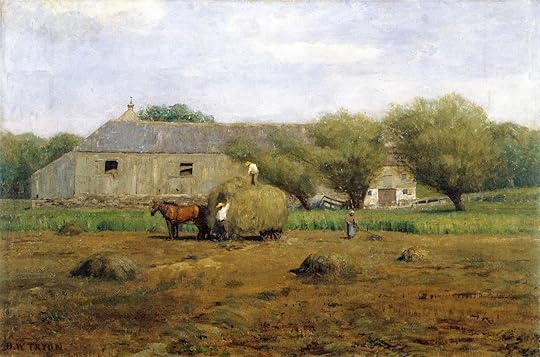
Haymaking, undated, oil on canvas by American artist Dwight William Tryon (1849–1925). Image courtesy of The Athenaeum.
Haymaking, undated, oil on canvas by American artist Dwight William Tryon (1849–1925). Image courtesy of The Athenaeum.
Displaying 1 - 14 of 14 reviews