

What do you think?

Η διαθήκη της Μαρίας
Με τρυφερότητα και θλίψη, με πικρία και οργή, η Μαρία καταθέτει τη δική της εκδοχή του συγκλονιστικού γεγονότος που υπήρξε καθοριστικό τόσο για την ίδια όσο και για την ανθρωπότητα. Γερασμένη, καταπονημένη και εξόριστη, η Μαρία αγνοεί την παράμετρο ανθρωπότητα. Για εκείνη μετράει το ότι το παιδί της πέθανε με τρόπο σκληρό και απάνθρωπο για έναν απροδιόριστο σκοπό, σε μια εποχή αλλαγών και ανακατατάξεων.
Καθώς η ζωή της έχει αρχίσει να παίρνει μυθικές διαστάσεις, η Μαρία αποφασίζει να μιλήσει. Μέσα από τη σπαρακτική αφήγηση των γεγονότων αναδύεται όχι μόνον η τραγική μορφή της μητέρας αλλά και η μορφή της γυναίκας που ασκεί με το ίδιο ήθος και αυστηρότητα την κριτική και την αυτοκριτική.
Η διαθήκη της Μαρίας ήταν στη βραχεία λίστα του βραβείου Μπούκερ για το 2013 και έχει ανέβει με μεγάλη επιτυχία σε θεατρική σκηνή του Λονδίνου.
Καθώς η ζωή της έχει αρχίσει να παίρνει μυθικές διαστάσεις, η Μαρία αποφασίζει να μιλήσει. Μέσα από τη σπαρακτική αφήγηση των γεγονότων αναδύεται όχι μόνον η τραγική μορφή της μητέρας αλλά και η μορφή της γυναίκας που ασκεί με το ίδιο ήθος και αυστηρότητα την κριτική και την αυτοκριτική.
Η διαθήκη της Μαρίας ήταν στη βραχεία λίστα του βραβείου Μπούκερ για το 2013 και έχει ανέβει με μεγάλη επιτυχία σε θεατρική σκηνή του Λονδίνου.
Paperback
First published October 1, 2012
About the author
Colm Tóibín
245 books5,810 followersColm Tóibín FRSL, is an Irish novelist, short story writer, essayist, playwright, journalist, critic, and poet. Tóibín is currently Irene and Sidney B. Silverman Professor of the Humanities at Columbia University in Manhattan and succeeded Martin Amis as professor of creative writing at the University of Manchester.
Ratings & Reviews
Friends & Following
Create a free account to discover what your friends think of this book!
Community Reviews
Displaying 1 - 30 of 3,198 reviews

February 21, 2016
Gentle, stoical, visceral pain leaches from every page, into my fingers, till my very blood is charged with it.
The agony of wounds and guilt, yes, but the balm of forgiveness, too, I hope.
“I did not think that the cursed shadow of what had happened would ever lift… It pumped darkness… It was a heaviness in me that often became a weight which I could not carry.”

Image: Statue of weeping woman in a cemetery (Source)
Who is this for?
I expect this novel provokes the strongest reactions in those who can tick at least one of the following:
• A parent, especially a mother.
• Raised with New Testament stories.
• Lost a loved-one prematurely, especially a child.
• Burdened with guilt and "what if?" about a situation that ended, or looks as if it will end, badly.
The devout may find it too heretical.
Militant atheists and followers of other faiths may find this too steeped in the New Testament.
I read it as neither.
I read it as a mother, sharing the agonies of another mother: grief, pain, and guilt to a degree I hope I will never have to face.
Mary looks back
Mary, mother of Jesus, is looking back at the life and death of her beloved son.
She remembers how her beautiful, thoughtful child was transformed and lost to her, lost to life.
The first, innocuous loss, was at the temple, when he was twelve, staying behind in his “Father’s house”.
In later years, she lost him to delusions and dodgy friends that turned him into a dangerous demagogue.
Ultimately she lost him to a gruesome and humiliating death that left her vulnerable to shadowy principalities and powers.
She examines his faults, questions his miracles, and agonises over what she could have done differently: how she might have saved the life of the one she gave life to, how she might have saved the Saviour of mankind.
Her greatest pain is that there was nothing.
Nothing she could have done to save him.
And now all she has are memories.
Memories which hurt as much as they heal.
Memories which are milked and curdled by protective predators with a new religion to start.
She looks back for solace, to the virginal ancient goddess Artemis, even as she looks ahead, in answer to the whispered call of death.
What use a mother who cannot help her child at their time of greatest need?
I weep for the times when I have failed my own child, and humbly seek forgiveness - not from God, but from the flesh of my flesh, my beloved, precious child.
I first read and reviewed this book in 2016, when I was worried about my 22-year old child. It hit hard. I updated it on 1 January 2019, when I was able to relax a great deal about that. My child was happy, healthy, and beginning to thrive again: working productively and enjoyably, and planning the future.
But that joy and relief coincided with the shock and grief of my father unexpectedly ending his life. And then a loved one said how cathartic they'd found this book when they were in a deep depression a few years ago. So I turned to this review, and read it with generations reversed:
What use a child who cannot help their parent at their time of greatest need?
So I wept for the times when I failed my own father, and would humbly seek his forgiveness, were it not too late.
A few years on, I merely weep for all my many failings.
Quotes
• “It would not be long before all the life in me, the little left, would go, as a flame goes out on a mild day, easily, needing only the smallest hint of wind, a sudden flicker and then out, gone, as though it had never been alight.”
• “Their brother grew easily towards death in the same way as a source for a river, hidden under the earth, begins flowing and carries water across a plain to the sea. They would have done anything to divert the stream, make it meander on the plain and dry up under the weight of the sun… his last breath, when he was fully part of the waves of the sea, an invisible aspect of their rhythm.”
• “Moving as though his spirit was still full with the thunderous novelty of its own great death, like a pitcher of sweet water, filled to the brim, heavy with itself.”
• “The wildness that was in the very air… this great disturbance in the world made its way like creeping mist or dampness into the two or three rooms I inhabit.”
• “What was to occur weighed on me. At times, however, I forgot about it, I let my mind linger over anything at all only to find that what I was moving towards was waiting to spring as a frightened animal will spring… And then it came more slowly, more insidiously. It entered my consciousness, it edged its way into me as something poisonous will crawl along the ground.”
• “Now that the days are shorter and the nights are cold… There is a richness in the light. It is as if, in becoming scarce… it lets loose something more intense, something that is filled with a shivering clarity. And then, when it begins to fade, it seems to leave raked shadows on everything. And during that hour, the hour of ambiguous light, I feel safe to slip out and breathe the dense air when colours are fading and the sky seems to be pulling them in, calling them home.”
See also
• The painful memories this novella stirred in me were stirred again by Claire Oshetsky's brilliant, raw, and disturbing novel, Chouette, which I reviewed HERE.
• Doris Lessing's The Fifth Child was partial inspiration for Chouette, and overlaps with Tóibín's themes. See my review HERE.
• I was surprised to be reminded of this novella by a story in Daisy Johnson's Fen, which is a collection of mythic, mystical short stories, focused on young women, and set in the Fens of contemporary England. See my review HERE.
• Vladimir Nabokov's short story, Symbols and Signs, features parents struggling to cope with an adult child's mental health issues. See my review HERE.
The agony of wounds and guilt, yes, but the balm of forgiveness, too, I hope.
“I did not think that the cursed shadow of what had happened would ever lift… It pumped darkness… It was a heaviness in me that often became a weight which I could not carry.”
Image: Statue of weeping woman in a cemetery (Source)
Who is this for?
I expect this novel provokes the strongest reactions in those who can tick at least one of the following:
• A parent, especially a mother.
• Raised with New Testament stories.
• Lost a loved-one prematurely, especially a child.
• Burdened with guilt and "what if?" about a situation that ended, or looks as if it will end, badly.
The devout may find it too heretical.
Militant atheists and followers of other faiths may find this too steeped in the New Testament.
I read it as neither.
I read it as a mother, sharing the agonies of another mother: grief, pain, and guilt to a degree I hope I will never have to face.
Mary looks back
Mary, mother of Jesus, is looking back at the life and death of her beloved son.
She remembers how her beautiful, thoughtful child was transformed and lost to her, lost to life.
The first, innocuous loss, was at the temple, when he was twelve, staying behind in his “Father’s house”.
In later years, she lost him to delusions and dodgy friends that turned him into a dangerous demagogue.
Ultimately she lost him to a gruesome and humiliating death that left her vulnerable to shadowy principalities and powers.
She examines his faults, questions his miracles, and agonises over what she could have done differently: how she might have saved the life of the one she gave life to, how she might have saved the Saviour of mankind.
Her greatest pain is that there was nothing.
Nothing she could have done to save him.
And now all she has are memories.
Memories which hurt as much as they heal.
Memories which are milked and curdled by protective predators with a new religion to start.
She looks back for solace, to the virginal ancient goddess Artemis, even as she looks ahead, in answer to the whispered call of death.
What use a mother who cannot help her child at their time of greatest need?
I weep for the times when I have failed my own child, and humbly seek forgiveness - not from God, but from the flesh of my flesh, my beloved, precious child.
I first read and reviewed this book in 2016, when I was worried about my 22-year old child. It hit hard. I updated it on 1 January 2019, when I was able to relax a great deal about that. My child was happy, healthy, and beginning to thrive again: working productively and enjoyably, and planning the future.
But that joy and relief coincided with the shock and grief of my father unexpectedly ending his life. And then a loved one said how cathartic they'd found this book when they were in a deep depression a few years ago. So I turned to this review, and read it with generations reversed:
What use a child who cannot help their parent at their time of greatest need?
So I wept for the times when I failed my own father, and would humbly seek his forgiveness, were it not too late.
A few years on, I merely weep for all my many failings.
Quotes
• “It would not be long before all the life in me, the little left, would go, as a flame goes out on a mild day, easily, needing only the smallest hint of wind, a sudden flicker and then out, gone, as though it had never been alight.”
• “Their brother grew easily towards death in the same way as a source for a river, hidden under the earth, begins flowing and carries water across a plain to the sea. They would have done anything to divert the stream, make it meander on the plain and dry up under the weight of the sun… his last breath, when he was fully part of the waves of the sea, an invisible aspect of their rhythm.”
• “Moving as though his spirit was still full with the thunderous novelty of its own great death, like a pitcher of sweet water, filled to the brim, heavy with itself.”
• “The wildness that was in the very air… this great disturbance in the world made its way like creeping mist or dampness into the two or three rooms I inhabit.”
• “What was to occur weighed on me. At times, however, I forgot about it, I let my mind linger over anything at all only to find that what I was moving towards was waiting to spring as a frightened animal will spring… And then it came more slowly, more insidiously. It entered my consciousness, it edged its way into me as something poisonous will crawl along the ground.”
• “Now that the days are shorter and the nights are cold… There is a richness in the light. It is as if, in becoming scarce… it lets loose something more intense, something that is filled with a shivering clarity. And then, when it begins to fade, it seems to leave raked shadows on everything. And during that hour, the hour of ambiguous light, I feel safe to slip out and breathe the dense air when colours are fading and the sky seems to be pulling them in, calling them home.”
See also
• The painful memories this novella stirred in me were stirred again by Claire Oshetsky's brilliant, raw, and disturbing novel, Chouette, which I reviewed HERE.
• Doris Lessing's The Fifth Child was partial inspiration for Chouette, and overlaps with Tóibín's themes. See my review HERE.
• I was surprised to be reminded of this novella by a story in Daisy Johnson's Fen, which is a collection of mythic, mystical short stories, focused on young women, and set in the Fens of contemporary England. See my review HERE.
• Vladimir Nabokov's short story, Symbols and Signs, features parents struggling to cope with an adult child's mental health issues. See my review HERE.

March 15, 2016
My grandfather was a preacher.
I remember him as a kind man who liked to work in his garden but he was also a “fire and brimstone” orator who would deliver Jonathon Edwards like sermons. This was rural Tennessee in the mid 70s and I recall standing in the back of the church with him and stoic men in overalls and stiff jackets shaking his hand and thanking him for “the message.”
He liked to ask me what I knew about the Bible and he would quietly sing hymns and tell me stories. My grandmother would make buttermilk cornbread and he and I would talk about his lessons.
My grandfather asked me once if I understood that Jesus had been a man, that he had been a child and had grown and that he had an earthly mother. I think it was important for him to impart to me that God had come to us as a man.
Irish writer Colm Tóibín’s 2012 novella The Testament of Mary imbues the story of Christ with a lasting and very real image of that humanity. Told from the perspective of an aging Mary not long for this world, with little left to her but memories, many painful and difficult to recall.
Mary’s memories of her son, in the distant but still hurtful past, are of her deep love for her little boy who grew to be a man, whom she did not completely understand. Surrounded by a “group of misfits” Mary’s son became something different than what she had expected him to be, and surrounded by attention that she did not welcome.
In her final years she is attended by those who would chronicle the miracles and who look on her as related to deity. The tale Tóibín tells, though, is from a strong willed woman, a mother, who lives with pain, regrets and even some bitterness. Far from the beatific Mary of legend, this is a hard woman with practical concerns and recollections who stands apart from those who would worship her son, and by extension, her. Her remembrance of Lazarus was an especially poignant anecdote that does much to set the tone of Tóibín’s narrative.
Mary is also described as a Hebrew woman living in a pagan time and place, having come to live her final years in Ephesus (in modern Turkey). Historically accurate, Mary would have lived in a cultural crossroads with a great many influences and theological backgrounds. Looking back on this, I think this was an oblique but important aspect of this work. By placing the setting in this place and at this time, and all the while telling a revisionist, somewhat contrarian image of Mary, Tóibín has made a statement about the complexities not just of this region but also about religion as a whole. It is important to note that the author does not discount or question the deity of Christ, only describes an alternate perspective.
Written simply, but with an evocation of great emotional depth, Colm Tóibín has given us a thoughtful, mortal portrayal of Mary.

I remember him as a kind man who liked to work in his garden but he was also a “fire and brimstone” orator who would deliver Jonathon Edwards like sermons. This was rural Tennessee in the mid 70s and I recall standing in the back of the church with him and stoic men in overalls and stiff jackets shaking his hand and thanking him for “the message.”
He liked to ask me what I knew about the Bible and he would quietly sing hymns and tell me stories. My grandmother would make buttermilk cornbread and he and I would talk about his lessons.
My grandfather asked me once if I understood that Jesus had been a man, that he had been a child and had grown and that he had an earthly mother. I think it was important for him to impart to me that God had come to us as a man.
Irish writer Colm Tóibín’s 2012 novella The Testament of Mary imbues the story of Christ with a lasting and very real image of that humanity. Told from the perspective of an aging Mary not long for this world, with little left to her but memories, many painful and difficult to recall.
Mary’s memories of her son, in the distant but still hurtful past, are of her deep love for her little boy who grew to be a man, whom she did not completely understand. Surrounded by a “group of misfits” Mary’s son became something different than what she had expected him to be, and surrounded by attention that she did not welcome.
In her final years she is attended by those who would chronicle the miracles and who look on her as related to deity. The tale Tóibín tells, though, is from a strong willed woman, a mother, who lives with pain, regrets and even some bitterness. Far from the beatific Mary of legend, this is a hard woman with practical concerns and recollections who stands apart from those who would worship her son, and by extension, her. Her remembrance of Lazarus was an especially poignant anecdote that does much to set the tone of Tóibín’s narrative.
Mary is also described as a Hebrew woman living in a pagan time and place, having come to live her final years in Ephesus (in modern Turkey). Historically accurate, Mary would have lived in a cultural crossroads with a great many influences and theological backgrounds. Looking back on this, I think this was an oblique but important aspect of this work. By placing the setting in this place and at this time, and all the while telling a revisionist, somewhat contrarian image of Mary, Tóibín has made a statement about the complexities not just of this region but also about religion as a whole. It is important to note that the author does not discount or question the deity of Christ, only describes an alternate perspective.
Written simply, but with an evocation of great emotional depth, Colm Tóibín has given us a thoughtful, mortal portrayal of Mary.

January 31, 2022
“I remember everything. Memory fills my body as much as blood and bones.”
“I remember too much; I am like the air on a calm day as it holds itself still, letting nothing escape.”
The Testament of Mary is written simply, with flowing prose and metaphorically rich language that has a hypnotic quality, creating perfectly a silent and dark atmosphere of Biblical times.
Both harrowing and ecstatically beautiful, the story of Jesus is told from the completely absorbing perspective of Mary. In The Testament of Mary, Colm Tóibín walks a thin line between being heretical and staying true to the narrative of the Gospels. Tóibín did not want to conform to the public and to the readers as he wanted to give his own unique vision of Christianity in rejecting some dogmas, and accepting others, ignoring the risk of leaving both devoted Christians and fans of debunking Christianity unsatisfied, staying both traditional and controversial. Colm Tóibín succeded in narrating the story of Gospels with a female voice, a voice of the mother in unspeakable pain, filled with guilt and regret. He enlightened the profound dimensions of conventional story I never thought about, even though I'm raised as a Catholic and heard the Gospels numerous times, which makes me think about how deeply we are wrapped in only men’s perspective of the whole history which oftentimes disregards emotional aspects of horrifying historical events and values only abstract reasoning and ideas, always justifying the burden of pain with moral ideals. But Mary gives the exact opposite in her perspective.
“if you want witnesses then I am one and I can tell you now, when you say that he redeemed the world, I will say that it was not worth it. It was not worth it.”
One dogma Tóibín completely rejected is a dogma of a Virgin Mary, the way she is being idolized and perceived by Christians, especially Catholics. She is an idealized, ethereal woman, without any faults and sins, the symbol of patience, kindness, mercy, perfect pure statue that becomes so unrealistic and distant picture. It also becomes hard to imagine her as a mortal going through the visceral pain of losing her beloved son by witnessing his torturous death. Being immaculate, she loses all the right to have doubt, anger, guilt, regret, cowardness, depression or reject God and renounce faith - the right to go through the ordinary trajectory of mourning, the phases which precede the final phase of acceptance, the only one she attitude she is allowed to have. Colm Tóibín reimagines the world where Mary is not God-like but a human-like figure, evoking the profound emotional depths she is unapologetic about. Tóibín's Mary also does not shy from the despise she feels towards men “[...] all my life when I have seen more than two men together I have seen foolishness and I have seen cruelty, but it is foolishness that I have noticed first.”
But Tóibín makes the readers sympathize not with a Mother of God, one that carries the suffering perfectly, but with a mortal mother that lost her son and suffered in isolation. Even though the Christian version of the Mary is engraved in our cultural mind, every sentence Tóibín wrote made sense.
Unique, simple, and masterfully written, but in some sense too short and rushed, without the adequate cohesion, The Testament of Mary is still a thoughtful examination of trauma and loss, that gives back the world not only a version of Mary but the perspective of history we are robbed from, looking exclusively throughs men’s eyes.
“I do not know why it matters that I should tell the truth to myself at night, why it should matter that the truth should be spoken at least once in the world. Because the world is a place of silence, the sky at night when the birds have gone is a vast silent place. Words will make the slightest difference to the sky at night. They will not brighten it or make it less strange. And the day too has its own deep indifference to anything that is said.”
“I remember too much; I am like the air on a calm day as it holds itself still, letting nothing escape.”
The Testament of Mary is written simply, with flowing prose and metaphorically rich language that has a hypnotic quality, creating perfectly a silent and dark atmosphere of Biblical times.
Both harrowing and ecstatically beautiful, the story of Jesus is told from the completely absorbing perspective of Mary. In The Testament of Mary, Colm Tóibín walks a thin line between being heretical and staying true to the narrative of the Gospels. Tóibín did not want to conform to the public and to the readers as he wanted to give his own unique vision of Christianity in rejecting some dogmas, and accepting others, ignoring the risk of leaving both devoted Christians and fans of debunking Christianity unsatisfied, staying both traditional and controversial. Colm Tóibín succeded in narrating the story of Gospels with a female voice, a voice of the mother in unspeakable pain, filled with guilt and regret. He enlightened the profound dimensions of conventional story I never thought about, even though I'm raised as a Catholic and heard the Gospels numerous times, which makes me think about how deeply we are wrapped in only men’s perspective of the whole history which oftentimes disregards emotional aspects of horrifying historical events and values only abstract reasoning and ideas, always justifying the burden of pain with moral ideals. But Mary gives the exact opposite in her perspective.
“if you want witnesses then I am one and I can tell you now, when you say that he redeemed the world, I will say that it was not worth it. It was not worth it.”
One dogma Tóibín completely rejected is a dogma of a Virgin Mary, the way she is being idolized and perceived by Christians, especially Catholics. She is an idealized, ethereal woman, without any faults and sins, the symbol of patience, kindness, mercy, perfect pure statue that becomes so unrealistic and distant picture. It also becomes hard to imagine her as a mortal going through the visceral pain of losing her beloved son by witnessing his torturous death. Being immaculate, she loses all the right to have doubt, anger, guilt, regret, cowardness, depression or reject God and renounce faith - the right to go through the ordinary trajectory of mourning, the phases which precede the final phase of acceptance, the only one she attitude she is allowed to have. Colm Tóibín reimagines the world where Mary is not God-like but a human-like figure, evoking the profound emotional depths she is unapologetic about. Tóibín's Mary also does not shy from the despise she feels towards men “[...] all my life when I have seen more than two men together I have seen foolishness and I have seen cruelty, but it is foolishness that I have noticed first.”
But Tóibín makes the readers sympathize not with a Mother of God, one that carries the suffering perfectly, but with a mortal mother that lost her son and suffered in isolation. Even though the Christian version of the Mary is engraved in our cultural mind, every sentence Tóibín wrote made sense.
Unique, simple, and masterfully written, but in some sense too short and rushed, without the adequate cohesion, The Testament of Mary is still a thoughtful examination of trauma and loss, that gives back the world not only a version of Mary but the perspective of history we are robbed from, looking exclusively throughs men’s eyes.
“I do not know why it matters that I should tell the truth to myself at night, why it should matter that the truth should be spoken at least once in the world. Because the world is a place of silence, the sky at night when the birds have gone is a vast silent place. Words will make the slightest difference to the sky at night. They will not brighten it or make it less strange. And the day too has its own deep indifference to anything that is said.”

December 10, 2012
I read The Testament of Mary before dawn on this Easter Sunday. A coincidence, but not altogether without significance. It is an Easter Sunday direct-dialed from heaven: every color in the dyed-egg basket is reflected in spring’s delicate light - from the cornflower blue sky to the coral-pink sunrise to the daffodils in scene-stealing yellow. It is a day to believe in Resurrection and rebirth. Yet, I am not a Believer in the Christian sense. That Jesus was a real man I have no doubt. That he was a chosen being born to a virgin and endowed with super-natural powers I cannot accept. In that, I share heart and mind with his mother Mary, as envisioned by Colm Tóibín.
These 81 pages are grim and transcendent: they are a mother’s reckoning with herself, a full acceptance of grief and guilt. Years after watching as her son was crucified on a cross in front of a jeering mob, Mary shares the experience of being the mother of a demagogue.
Mary is witness to the cheerful, vulnerable child who develops into an arrogant, impassioned man. She presents his miracles as she observed them, not discounting them entirely, but offering enough doubt that we question not her loyalty, but the sanity of those who remain convinced. Ultimately, however, the greatest theme to her recollections is the question “Was it worth it?” And the mother can only respond, “No.”
Mary fled to Ephesus after her son’s death, in fear for her life. There she finds greater peace with the ancient gods than with her own Judaism or the new faith bound to her son’s life, death and the legend of his resurrection. But she is haunted by two men who appear in her home to interrogate her. They are her captors and her protectors, disciples of the Christ not present at his death (Tóibín explains in this Guardian podcast that one of the men is John, which is confusing to this reader, as John is one of the principal witnesses of the crucifixion; the other, impossible in historical terms, but right in its literary context, is the officious and vaguely threatening Paul). These men urge and pressure Mary to relive that horrible last day so they can record and share the gospels they are writing. Mary reveals her testament as a mother hollowed by the guilt of what she witnessed but could not prevent.
In an interview on NPR’s Fresh Air last year, the author rejected the notion that Irish writers are natural storytellers, that they are imbued with an instinctive affinty for words. Tóibín stated that he writes the silence, the space between the words. Nowhere in his work has this been more evident than in The Testament of Mary. This is not a work of religion, nor of faith or doubt; this is a book about a mother (a theme present in many of Tóibín’s works) and the empty space left at the death of a child. Mary never once speaks her son’s name. The unnamed dead represents the black, empty space Tóibín explores.
In the same podcast, the author also discussed what it cost him emotionally to envision the crucifixion of Christ - to set himself in that place of excruciating physical pain. It is rendered with terrible beauty, told in the voice of a mother who feels every moment of her son’s agony.
Mary is a symbol of peace and serenity and (disturbing) devotion. Colm Tóibín offers a brave and agonizing dimension she is rarely granted: that of a tortured and lonely mother, living alone with her grief. Whatever your beliefs, I hope you will allow Mary, as Tóibín does, an even greater dimension -one of a mother’s humanity and grace.
Note: This review was written on Easter Sunday, March 31, 2013. Today, March 31, 2024—also Easter Sunday—I had cause to reread what I'd written 11 years ago. I am leaving my original review intact, but adding this "Author's Note" to say that I have come full circle in my approach to my faith and Christianity and embrace the full aspect, intent, reality, and grace of Jesus as the Christ and Savior of man.
These 81 pages are grim and transcendent: they are a mother’s reckoning with herself, a full acceptance of grief and guilt. Years after watching as her son was crucified on a cross in front of a jeering mob, Mary shares the experience of being the mother of a demagogue.
Mary is witness to the cheerful, vulnerable child who develops into an arrogant, impassioned man. She presents his miracles as she observed them, not discounting them entirely, but offering enough doubt that we question not her loyalty, but the sanity of those who remain convinced. Ultimately, however, the greatest theme to her recollections is the question “Was it worth it?” And the mother can only respond, “No.”
Mary fled to Ephesus after her son’s death, in fear for her life. There she finds greater peace with the ancient gods than with her own Judaism or the new faith bound to her son’s life, death and the legend of his resurrection. But she is haunted by two men who appear in her home to interrogate her. They are her captors and her protectors, disciples of the Christ not present at his death (Tóibín explains in this Guardian podcast that one of the men is John, which is confusing to this reader, as John is one of the principal witnesses of the crucifixion; the other, impossible in historical terms, but right in its literary context, is the officious and vaguely threatening Paul). These men urge and pressure Mary to relive that horrible last day so they can record and share the gospels they are writing. Mary reveals her testament as a mother hollowed by the guilt of what she witnessed but could not prevent.
In an interview on NPR’s Fresh Air last year, the author rejected the notion that Irish writers are natural storytellers, that they are imbued with an instinctive affinty for words. Tóibín stated that he writes the silence, the space between the words. Nowhere in his work has this been more evident than in The Testament of Mary. This is not a work of religion, nor of faith or doubt; this is a book about a mother (a theme present in many of Tóibín’s works) and the empty space left at the death of a child. Mary never once speaks her son’s name. The unnamed dead represents the black, empty space Tóibín explores.
In the same podcast, the author also discussed what it cost him emotionally to envision the crucifixion of Christ - to set himself in that place of excruciating physical pain. It is rendered with terrible beauty, told in the voice of a mother who feels every moment of her son’s agony.
Mary is a symbol of peace and serenity and (disturbing) devotion. Colm Tóibín offers a brave and agonizing dimension she is rarely granted: that of a tortured and lonely mother, living alone with her grief. Whatever your beliefs, I hope you will allow Mary, as Tóibín does, an even greater dimension -one of a mother’s humanity and grace.
Note: This review was written on Easter Sunday, March 31, 2013. Today, March 31, 2024—also Easter Sunday—I had cause to reread what I'd written 11 years ago. I am leaving my original review intact, but adding this "Author's Note" to say that I have come full circle in my approach to my faith and Christianity and embrace the full aspect, intent, reality, and grace of Jesus as the Christ and Savior of man.

February 1, 2022
It is the word of the Mother of Christ. The one we never heard after the crucifixion—the one who knows pain, who has known fear, incomprehension, and doubt.
Certain apostles harass her and want her to say things for posterity, the legend to write. But she refuses. She lands.
This short novel does not intend to transcribe history. On the other hand, it says what one never imagines: the hope of a mother who believes that she can prevent the tragic fate of her son, the suffering of a mother who sees her son arrested, flogged, humiliated, crucified, screaming in pain. But she cannot stay at the foot of the cross to retrieve the body and lay it on the ground. She has to flee, and she can't forgive herself for it. She awaits death as a deliverance, refusing the role we want her to play. She is alone and finds no peace.
That's a little book that grips the guts.
Certain apostles harass her and want her to say things for posterity, the legend to write. But she refuses. She lands.
This short novel does not intend to transcribe history. On the other hand, it says what one never imagines: the hope of a mother who believes that she can prevent the tragic fate of her son, the suffering of a mother who sees her son arrested, flogged, humiliated, crucified, screaming in pain. But she cannot stay at the foot of the cross to retrieve the body and lay it on the ground. She has to flee, and she can't forgive herself for it. She awaits death as a deliverance, refusing the role we want her to play. She is alone and finds no peace.
That's a little book that grips the guts.

February 18, 2016
“The Testament of Mary” is a book I was aware of, but had no burning desire to read. When it was picked for my book club I read it, and I am glad that I did. The idea for the story is great. Putting aside the faith based aspect of the Christ story, what would a mother think of her son in the circumstances that surrounded the last three year of Jesus’ life? I believe that Colm Toibin has done a good job at taking a story that is known by most, and making parts of it seem new.
First off, the text is beautifully written. Astoundingly so at times. I would place an example here, but there are plenty in the text. Read it and find some for yourself. It is told in first person, as if Mary is recounting her version of events. The plotting and pacing of the book are also well done. It is only 81 pages long, and frankly that is one of its strengths. Had it been longer I don’t think the text would have the impact that it does.
After hearing about the miracle of the resurrection of Lazarus, and witnessing the turning of water into wine for herself, Mary spends the three years of Jesus’ ministry in near isolation in her home and only hears snippets of the events going on with her son. This device keeps the focus on her, as opposed to Jesus, and her motherly disapproval of what she hears about and her worries over the attention that her son is receiving ring true as motherly actions. Her perspective as his mother adds a tension to these well known stories. The wedding where Jesus turns the water into wine is nerve-racking, mainly because of how Mary herself views the proceedings.
There is also a good device in the invented character of Marcus, Mary’s childhood friend, through whom she hears details of her son’s doings. Marcus makes very practical observations about the events the novel portrays. Another strong element is the characterization of Mary and Martha, the sisters of Lazarus. Mary is a convert, someone who believes in the message Jesus delivers. Martha is practical (like Mary Jesus’ mother) and is more concerned about the dangers that Jesus’ ministry is putting all of them in. The contrast is well written, and gives the novel a sense of realism.
Toibin also incorporates, in subtle manner, the inklings of the patriarchy that were to be a hallmark of early Christianity. They are presented in the context of the story, and never remarked on, but they are undeniably there. It is a clever touch.
Mary’s version of the crucifixion is heartrending. I held my breath as a mother watched the murder of her son. The simplicity and honesty in which her character delivers the details of this event is a very strong facet of the book.
I am a Christian and I was not offended by this text. I viewed it as an interesting piece of fiction. It is a good novella, and boasts some of the best writing I have read in years. Give it a chance, approach it on its own terms, and I don’t think you will be disappointed.
First off, the text is beautifully written. Astoundingly so at times. I would place an example here, but there are plenty in the text. Read it and find some for yourself. It is told in first person, as if Mary is recounting her version of events. The plotting and pacing of the book are also well done. It is only 81 pages long, and frankly that is one of its strengths. Had it been longer I don’t think the text would have the impact that it does.
After hearing about the miracle of the resurrection of Lazarus, and witnessing the turning of water into wine for herself, Mary spends the three years of Jesus’ ministry in near isolation in her home and only hears snippets of the events going on with her son. This device keeps the focus on her, as opposed to Jesus, and her motherly disapproval of what she hears about and her worries over the attention that her son is receiving ring true as motherly actions. Her perspective as his mother adds a tension to these well known stories. The wedding where Jesus turns the water into wine is nerve-racking, mainly because of how Mary herself views the proceedings.
There is also a good device in the invented character of Marcus, Mary’s childhood friend, through whom she hears details of her son’s doings. Marcus makes very practical observations about the events the novel portrays. Another strong element is the characterization of Mary and Martha, the sisters of Lazarus. Mary is a convert, someone who believes in the message Jesus delivers. Martha is practical (like Mary Jesus’ mother) and is more concerned about the dangers that Jesus’ ministry is putting all of them in. The contrast is well written, and gives the novel a sense of realism.
Toibin also incorporates, in subtle manner, the inklings of the patriarchy that were to be a hallmark of early Christianity. They are presented in the context of the story, and never remarked on, but they are undeniably there. It is a clever touch.
Mary’s version of the crucifixion is heartrending. I held my breath as a mother watched the murder of her son. The simplicity and honesty in which her character delivers the details of this event is a very strong facet of the book.
I am a Christian and I was not offended by this text. I viewed it as an interesting piece of fiction. It is a good novella, and boasts some of the best writing I have read in years. Give it a chance, approach it on its own terms, and I don’t think you will be disappointed.

March 30, 2023
Audiobook….read by Meryl Streep
….3 hours and 7 minutes
Shortlisted for the Man Booker Prize!
“Memory fills my body as much as blood and bones”
I had no desire to read this book when it first was published in in 2012….
but after reading Cecily’s review yesterday, I changed my mind. Her ‘review’ resonated with me in my gut.
I let go of my preconceived prejudices.
Being Jewish —
I had reservations about spending time with this book (but I admit to pre-judging unfairly).
I didn’t want to get into an animalistic/dynamistic debate between Christianity and Judaism.
Cecily’s review showed me I didn’t have to worry.
My local library had the audiobook available to download instantly.
Knowing Meryl Streep was the voice narrator was added sweetness.
[I’m waiting patiently for a new ebook; my Kindle died recently]….
or I might have downloaded the library ebook (without even noticing Meryl Streep was reading) ….
but boy was she was flawless.
It’s pouring rain here today …so I snuggled up with my cozy quilt - a cuppa tea - a ‘dot’ of dark chocolate- and listened to this 81 page novella in one lie-down rest.
I love what one reviewer said:
“It’s best to read this book simply as literature, leaving theology to those better informed”.
And what one ‘other’ reviewer said about Colm Toibin…
“Only a master writer would contemplate this subject”.
Such a sad story for any mother…..the days living up to her son’s death.
Mary is old - close to her own death.
As Meryl Streep reads this story - Toibin’s beautiful prose — reflecting on a full range of Mother-memories from her son’s childhood to man…
in first person narrative—
she became an extraordinary ordinary-very human MOTHER who was grieving the loss of her son.
With Passover around the corner - a reform Jew — but not terribly religious— this was as great a time as ever for me to have engaged with this book.
I’ve fabulous memories of having spent a few hours listening to (funny guy) Colm Toibin entertain our group our group Berkeley years ago. I saw a different side of him that day. Everyone did. And it was fun.
Kudos to Colm Toibin - and Meryl Streep. All-around powerfully heartbreaking- intriguing and *Terrific*!
….3 hours and 7 minutes
Shortlisted for the Man Booker Prize!
“Memory fills my body as much as blood and bones”
I had no desire to read this book when it first was published in in 2012….
but after reading Cecily’s review yesterday, I changed my mind. Her ‘review’ resonated with me in my gut.
I let go of my preconceived prejudices.
Being Jewish —
I had reservations about spending time with this book (but I admit to pre-judging unfairly).
I didn’t want to get into an animalistic/dynamistic debate between Christianity and Judaism.
Cecily’s review showed me I didn’t have to worry.
My local library had the audiobook available to download instantly.
Knowing Meryl Streep was the voice narrator was added sweetness.
[I’m waiting patiently for a new ebook; my Kindle died recently]….
or I might have downloaded the library ebook (without even noticing Meryl Streep was reading) ….
but boy was she was flawless.
It’s pouring rain here today …so I snuggled up with my cozy quilt - a cuppa tea - a ‘dot’ of dark chocolate- and listened to this 81 page novella in one lie-down rest.
I love what one reviewer said:
“It’s best to read this book simply as literature, leaving theology to those better informed”.
And what one ‘other’ reviewer said about Colm Toibin…
“Only a master writer would contemplate this subject”.
Such a sad story for any mother…..the days living up to her son’s death.
Mary is old - close to her own death.
As Meryl Streep reads this story - Toibin’s beautiful prose — reflecting on a full range of Mother-memories from her son’s childhood to man…
in first person narrative—
she became an extraordinary ordinary-very human MOTHER who was grieving the loss of her son.
With Passover around the corner - a reform Jew — but not terribly religious— this was as great a time as ever for me to have engaged with this book.
I’ve fabulous memories of having spent a few hours listening to (funny guy) Colm Toibin entertain our group our group Berkeley years ago. I saw a different side of him that day. Everyone did. And it was fun.
Kudos to Colm Toibin - and Meryl Streep. All-around powerfully heartbreaking- intriguing and *Terrific*!
March 21, 2015
This is such a lovely book. A very dear friend of mine is a bit obsessed with Tóibín, madly in love with his writing and really doesn’t think he could ever put a foot wrong. And reading this it is hard not to agree. I found myself reading large parts of this aloud, unable to resist hearing the words – I virtually finished it in one sitting, but fell asleep last night and then read what was left on the train today, a little upset I had to read it to myself. The sentences are so beautifully crafted and they deserve to be spoken. They sing, they fill your mouth.
And this is a wonderful retelling of the Jesus myth, told from the perspective of his mother. Of her watching as her son becomes something she barely recognises, surrounding himself with earnest, angry, certain men – dear God, spare us from certainty. How these men continue to remake her son in their image long after he has died. I’m sure certain Christians will have trouble with reading this book – but such are the kinds of Christians who say they ‘only read one book’, but really haven’t even read that very closely either. It is pretty clear in the Bible that Mary wasn’t always utterly convinced that her little boy was divine. For the myth to work, this does basically need to be the case.
As I was reading this I kept thinking, ‘you know what, McCandless, when you review this you are going to say this is basically a Pietà, if a literary one. If you are not sure what that means – Google image Pietà. And, of course, how could it be anything else – surely, other than his birth, the death of Christ is Mary’s main walk on piece. But I can’t talk about this, not without spoiling this wonderful book – except, of course, what Tóibín does with this is one of the things you are meant to be left thinking about in this story. To me, this is a book about nature of memory, the way love and fear and terror are intimately and intricately bound together and how love changes with death, as does memory. When something seems perfectly ‘right’, when it leaves an image in our minds we can barely think around, it being so poignant and sublime – how can it not also be perfectly ‘true’. The Pietà is a stunning case in point.
I’m going to have to stop now – it seems odd to say that one could really spoil this story, for surely, isn’t this one of the most ‘known’ stories in our culture, yes, Jesus dies in the end, who’d have thought? – but what is done here, particularly with the beautiful references at the end to Artemis, the virgin huntress, need to be allowed the time Tóibín takes over them, need to be allowed to work their magic. This is such a short book but one that is strikingly beautiful – like I said, it contains prose that tastes like honey as it spills from your lips. You really should read this, it is a stunning piece of writing.
And this is a wonderful retelling of the Jesus myth, told from the perspective of his mother. Of her watching as her son becomes something she barely recognises, surrounding himself with earnest, angry, certain men – dear God, spare us from certainty. How these men continue to remake her son in their image long after he has died. I’m sure certain Christians will have trouble with reading this book – but such are the kinds of Christians who say they ‘only read one book’, but really haven’t even read that very closely either. It is pretty clear in the Bible that Mary wasn’t always utterly convinced that her little boy was divine. For the myth to work, this does basically need to be the case.
As I was reading this I kept thinking, ‘you know what, McCandless, when you review this you are going to say this is basically a Pietà, if a literary one. If you are not sure what that means – Google image Pietà. And, of course, how could it be anything else – surely, other than his birth, the death of Christ is Mary’s main walk on piece. But I can’t talk about this, not without spoiling this wonderful book – except, of course, what Tóibín does with this is one of the things you are meant to be left thinking about in this story. To me, this is a book about nature of memory, the way love and fear and terror are intimately and intricately bound together and how love changes with death, as does memory. When something seems perfectly ‘right’, when it leaves an image in our minds we can barely think around, it being so poignant and sublime – how can it not also be perfectly ‘true’. The Pietà is a stunning case in point.
I’m going to have to stop now – it seems odd to say that one could really spoil this story, for surely, isn’t this one of the most ‘known’ stories in our culture, yes, Jesus dies in the end, who’d have thought? – but what is done here, particularly with the beautiful references at the end to Artemis, the virgin huntress, need to be allowed the time Tóibín takes over them, need to be allowed to work their magic. This is such a short book but one that is strikingly beautiful – like I said, it contains prose that tastes like honey as it spills from your lips. You really should read this, it is a stunning piece of writing.

April 28, 2013
OK, I'll start with the jokes. A laconic Jewish mother? Let me tell you, if they would have nailed me to a cross when I was about 30 years old, my mom would have had way more than 20K words to say about it. And this book? It's the only part of the "New Testament," with the exception of Revelation, that I've ever read. The Old Testament? I've read that backwards (Hebrew) and forwards (Yinglish), complete with footnotes. Here we get Mary, kvetchy as anything, but also ice cold sane. I'd be kvetchy too if my son were 30 years old and not married.
OK, enough blasphemy. The Testimony of Mary is as serious as a heart attack. Colm Toibin is an apostate, but he is, in my view, a respectful one. He imagines what the mother of Jesus would witness and think around the time of Jesus' death. It's a very plausible view except that the Mary giving testimony here is definitely not a Middle Eastern mother from 2000 years ago. In this testament, Toibin takes the major leap of giving Mary modern (well, 19th century) attitudes and psychology. This approach certainly makes Mary more accessible to today's reader. But it does take away from any sense of authenticity. I would have preferred a book like this to feel more like a true biblical text, but that is personal preference.
Both the Disciples and Jesus do not come off well in this telling by Jesus' grieving mother. If that bothers you, don't read this book. The Testimony of Mary is both thoughtful and brief. It isn't an intellectual tour de force, but it is a carefully crafted story.
OK, enough blasphemy. The Testimony of Mary is as serious as a heart attack. Colm Toibin is an apostate, but he is, in my view, a respectful one. He imagines what the mother of Jesus would witness and think around the time of Jesus' death. It's a very plausible view except that the Mary giving testimony here is definitely not a Middle Eastern mother from 2000 years ago. In this testament, Toibin takes the major leap of giving Mary modern (well, 19th century) attitudes and psychology. This approach certainly makes Mary more accessible to today's reader. But it does take away from any sense of authenticity. I would have preferred a book like this to feel more like a true biblical text, but that is personal preference.
Both the Disciples and Jesus do not come off well in this telling by Jesus' grieving mother. If that bothers you, don't read this book. The Testimony of Mary is both thoughtful and brief. It isn't an intellectual tour de force, but it is a carefully crafted story.
June 23, 2018
3.5 stars rounded up for the audio version of The Testament of Mary, as narrated by Meryl Streep.
This is Mary's story as she tells it. Her thoughts, opinions, and self-doubt all laid bare in a most intimate fashion on the page. There are no words wasted in the telling of this narrative, which results in a book that is very short, but incredibly tightly written.
Listening to this book is a very powerful experience -- exactly what one would expect from the wonderful Ms. Streep. She manages to imbue even the most mundane-seeming sentences with real emotion.
Some parts of the book were really interesting to me, and I'd LOVE to get a cuppa (or maybe split a bottle of wine?) with the Mary of this book. She's not portrayed in the typical ever-peaceful and serene way we usually see her shown. This Mary is not a true believer, she's not ever-patient, she has a somewhat snarky side to her (I do love me some snark!), and she loses her temper on occasion.
At the end of the day, though, this was a bit on the boring side for me. I appreciated the beauty as I was listening (and I'm glad I did listen), but I was frequently reminded of my unquestionable status as a heathen. There were some parts of the story that I'm sure went (way, way) over my head simply because I'm not familiar enough with the stories from the Bible.
Special thanks to Brian, for his excellent review that put this book on my radar.
This is Mary's story as she tells it. Her thoughts, opinions, and self-doubt all laid bare in a most intimate fashion on the page. There are no words wasted in the telling of this narrative, which results in a book that is very short, but incredibly tightly written.
Listening to this book is a very powerful experience -- exactly what one would expect from the wonderful Ms. Streep. She manages to imbue even the most mundane-seeming sentences with real emotion.
Some parts of the book were really interesting to me, and I'd LOVE to get a cuppa (or maybe split a bottle of wine?) with the Mary of this book. She's not portrayed in the typical ever-peaceful and serene way we usually see her shown. This Mary is not a true believer, she's not ever-patient, she has a somewhat snarky side to her (I do love me some snark!), and she loses her temper on occasion.
At the end of the day, though, this was a bit on the boring side for me. I appreciated the beauty as I was listening (and I'm glad I did listen), but I was frequently reminded of my unquestionable status as a heathen. There were some parts of the story that I'm sure went (way, way) over my head simply because I'm not familiar enough with the stories from the Bible.
Special thanks to Brian, for his excellent review that put this book on my radar.

January 7, 2017
In this short piece, Tóibín offers readers an insightful look into the life of Jesus Christ, from the perspective of his mother. The story becomes a monologue, delivered by Mary, that weaves throughout the life of her son, though she will never use his name. Mary offers memories from the evolving life of Jesus, adding editorial commentary when it suits her best. Choosing to see the disciples as a collection of vagrants and vagabonds, Mary cannot always understand why Jesus would associate with these fellows, which is further exacerbated by her 'handling' after the crucifixion. Perhaps of greatest interest in the piece, Mary explores the period of Jesus' ministry, depicting him as 'high on himself' and trying to flaunt his connection to God, as well as a miracle worker who, like a carnival barker, wants the attention brought towards him. Tóibín's presentation of Mary during the latter part of the ministry is, perhaps, the most stunning of all. An interesting piece that explores Jesus Christ from the one human being who knew him best. Tóibín's writing is not one that should be dismissed as blasphemy, though surely many will try.
While not a 'guilty pleasure', stories that surround biblical events hold interest for me, though not when I am left with a sense of religious and spiritual inculcation. Tóibín does not do that in this piece, though the reader should be well-versed in some of the key events of the life of Jesus. Offering a sobering look into the man's life, Mary is able to balance the highly laudatory nature of the four Gospels. Jesus was a boy, a teenager, and a man like any other, which is sometimes lost on those who have such a reverence for him and the plight he suffered at the hands of the Romans. I would venture to say that he was arrogant, an ass at times, and perhaps, so focussed on laying the groundwork for his ministry that those closest to him were left in the dust, both figuratively and in a literal sense. Tóibín does not stray from the first-person narrative of Mary, but is able to introduce a number of key characters into this story, as seen through the eyes of the woman and not the Gospel writers. The pace of the narrative was ideal, keeping things moving, but was not dismissive of events to save time. Honest sentiment flowed freely from the piece, which kept the entire story grounded and does not leave it as carte blanche acceptance of everything Sunday School and sermons have instilled. Perhaps the greatest thing of all about this piece would be that Meryl Streep narrated the audiobook version, using her stellar acting background to shade portions of the story in such a way that one could almost see Mary actually uttering these words. Brilliant and has left me wondering why I have never read Tóibín before now.
Kudos, Mr. Tóibín on this short story that pushes the boundaries at every turn. This is surely a piece that has created much hoopla, in pews and around water coolers alike.
Like/hate the review? An ever-growing collection of others appears at:
http://pecheyponderings.wordpress.com/
While not a 'guilty pleasure', stories that surround biblical events hold interest for me, though not when I am left with a sense of religious and spiritual inculcation. Tóibín does not do that in this piece, though the reader should be well-versed in some of the key events of the life of Jesus. Offering a sobering look into the man's life, Mary is able to balance the highly laudatory nature of the four Gospels. Jesus was a boy, a teenager, and a man like any other, which is sometimes lost on those who have such a reverence for him and the plight he suffered at the hands of the Romans. I would venture to say that he was arrogant, an ass at times, and perhaps, so focussed on laying the groundwork for his ministry that those closest to him were left in the dust, both figuratively and in a literal sense. Tóibín does not stray from the first-person narrative of Mary, but is able to introduce a number of key characters into this story, as seen through the eyes of the woman and not the Gospel writers. The pace of the narrative was ideal, keeping things moving, but was not dismissive of events to save time. Honest sentiment flowed freely from the piece, which kept the entire story grounded and does not leave it as carte blanche acceptance of everything Sunday School and sermons have instilled. Perhaps the greatest thing of all about this piece would be that Meryl Streep narrated the audiobook version, using her stellar acting background to shade portions of the story in such a way that one could almost see Mary actually uttering these words. Brilliant and has left me wondering why I have never read Tóibín before now.
Kudos, Mr. Tóibín on this short story that pushes the boundaries at every turn. This is surely a piece that has created much hoopla, in pews and around water coolers alike.
Like/hate the review? An ever-growing collection of others appears at:
http://pecheyponderings.wordpress.com/

January 14, 2020
Perhaps, as someone who was raised in a Catholic household (albeit, by hippies with Catholic backgrounds), I will never fully manage to shake off a certain curiosity about Jesus. Even if I haven’t considered myself a Catholic since I was seven years old (long story, but its apparently when I declared that I would not go to Mass with my grandparents anymore), I still find him interesting, but I much prefer to hear historical or so-called “alternative” narratives about Jesus and his life, whether it's Christopher Moore’s amazing “Lamb” (https://www.goodreads.com/review/show...) or Denys Arcand’s magnificent movie, “Jesus of Montreal” – you know, perspectives that don’t try to convert me to an ideology.
Toibin’s choice, to explore this well-known story through the eyes of Jesus’s mother, Mary, fascinates me. It is not a perspective I had come across before, which in hindsight, surprises me, because it has so much potential. While she is the Mother of God to so many Christians, I found myself wondering: what does anyone actually know about her? Because of “Jesus of Nazareth” (despite all the New Age stuff, my mom still watched it religiously every Easter; some old habits die hard, I guess), I had always pictured her as a young Olivia Hussey – even if I knew better (as a Jewish woman from the Middle East, she probably didn’t look much like Ms. Hussey). I admit I thought only about her youth: her controversial pregnancy, her marriage to a man who was old enough to be her father, fleeing the city she lived in for fear that her baby would be killed… It hadn’t occurred to me to think about what she might have done after her son had left the house he was raised in. Toibin’s writing, which I had so far only enjoyed in “Brooklyn” (https://www.goodreads.com/review/show...), takes this incredible idea to a whole other level.
Exhiled in Ephesus after her son’s death, both for her safety and for the comfort this city offers her, an ageing woman is frequently visited by two men who have come to interrogate her. They don’t want the truth; they want their own beliefs to be confirmed. But the story this woman has for them is filled with grief and guilt.
This woman does not believe her son was the Son of God, she knows only that he was her son, and that she was not able to do anything to help him, let alone save him. She expresses those sentiments by talking mostly about Lazarus' resurrection, and the crucifixion. And if there is a weakness in this book, its that I wish Toibin had made it longer, worked more events of Jesus' life into Mary's reminiscing.
I am not a mother, and there are some aspects of motherhood that I might never understand. But I was still deeply moved by this tale, by the meticulous way Toibin expresses what it must have been like to lose a child in such a brutal and horrifying way - and to be powerless to do anything about it. He also takes the historical setting into account, the brutality of life in that particular time and place, to illustrate just how truly violent all these events were.
A short, moving and intriguing read by an incredibly talented novelist. I really just wish it was a bigger book!
Toibin’s choice, to explore this well-known story through the eyes of Jesus’s mother, Mary, fascinates me. It is not a perspective I had come across before, which in hindsight, surprises me, because it has so much potential. While she is the Mother of God to so many Christians, I found myself wondering: what does anyone actually know about her? Because of “Jesus of Nazareth” (despite all the New Age stuff, my mom still watched it religiously every Easter; some old habits die hard, I guess), I had always pictured her as a young Olivia Hussey – even if I knew better (as a Jewish woman from the Middle East, she probably didn’t look much like Ms. Hussey). I admit I thought only about her youth: her controversial pregnancy, her marriage to a man who was old enough to be her father, fleeing the city she lived in for fear that her baby would be killed… It hadn’t occurred to me to think about what she might have done after her son had left the house he was raised in. Toibin’s writing, which I had so far only enjoyed in “Brooklyn” (https://www.goodreads.com/review/show...), takes this incredible idea to a whole other level.
Exhiled in Ephesus after her son’s death, both for her safety and for the comfort this city offers her, an ageing woman is frequently visited by two men who have come to interrogate her. They don’t want the truth; they want their own beliefs to be confirmed. But the story this woman has for them is filled with grief and guilt.
This woman does not believe her son was the Son of God, she knows only that he was her son, and that she was not able to do anything to help him, let alone save him. She expresses those sentiments by talking mostly about Lazarus' resurrection, and the crucifixion. And if there is a weakness in this book, its that I wish Toibin had made it longer, worked more events of Jesus' life into Mary's reminiscing.
I am not a mother, and there are some aspects of motherhood that I might never understand. But I was still deeply moved by this tale, by the meticulous way Toibin expresses what it must have been like to lose a child in such a brutal and horrifying way - and to be powerless to do anything about it. He also takes the historical setting into account, the brutality of life in that particular time and place, to illustrate just how truly violent all these events were.
A short, moving and intriguing read by an incredibly talented novelist. I really just wish it was a bigger book!

March 17, 2022
This wonderful heart-rending novella has been my first experience with the author, Colm Tóibín, and it certainly won't be the last.
Storytelling is absolutely amazing, the lyrical is fast-flowing and intense, and Mary is pictured in a most vulnerable, engaging and humanlike manner.
This is the tale of Mary, mother of Jezus Christ, and after her son was taken from her and from the world, two guardians (Disciples) are prying for her recollections to make their own creative works from it, but Mary sees and think of them as nonentities, and so she rather takes her dreams, Truth of God, about her life with her son into the Darkness of her grave.
She will reveal certainly things that are hard to bear as a mother, right until the final moments of her son's life and subsequently death on a cross.
While being observed, hated by the Jewish Elders and the Romans, and in Jezus case finally betrayed, Jezus will be crucified and his family and followers persecuted, while Mary will flee, before the final moment of her son's dying, with her guardians to Ephesus to make this final Testament.
What is to follow is a magnificent novella which is filled with deeply moving human emotions, like Mary seeing her son celebrated by resurrecting the "dead" Lazarus until her son's trial and following torture and execution on the cross, and so losing her only child in this way is for a mother the hardest and cruellest thing to bear, and this is brought to us in a most brilliant and humane fashion by the author.
Highly recommended, for is a top-class little work on its own, and that's why I like to call it: "A Beautiful Little Gem"!
Storytelling is absolutely amazing, the lyrical is fast-flowing and intense, and Mary is pictured in a most vulnerable, engaging and humanlike manner.
This is the tale of Mary, mother of Jezus Christ, and after her son was taken from her and from the world, two guardians (Disciples) are prying for her recollections to make their own creative works from it, but Mary sees and think of them as nonentities, and so she rather takes her dreams, Truth of God, about her life with her son into the Darkness of her grave.
She will reveal certainly things that are hard to bear as a mother, right until the final moments of her son's life and subsequently death on a cross.
While being observed, hated by the Jewish Elders and the Romans, and in Jezus case finally betrayed, Jezus will be crucified and his family and followers persecuted, while Mary will flee, before the final moment of her son's dying, with her guardians to Ephesus to make this final Testament.
What is to follow is a magnificent novella which is filled with deeply moving human emotions, like Mary seeing her son celebrated by resurrecting the "dead" Lazarus until her son's trial and following torture and execution on the cross, and so losing her only child in this way is for a mother the hardest and cruellest thing to bear, and this is brought to us in a most brilliant and humane fashion by the author.
Highly recommended, for is a top-class little work on its own, and that's why I like to call it: "A Beautiful Little Gem"!

August 16, 2022
A story of shame, sadness and less than divine people. It impacted me less than I imagined, but I
appreciate the humanity the author imbues Mary with
I told him before he departed that all my life when I have seen more than two men together I have seen foolishness and I have seen cruelty, but it is foolishness I have noticed first.
An old, reflective Mary is visited by two of the apostles. They want to capture her recollection on the fatal events involving her son, but her truth is more reflective and human than what they have in mind. Colm Tóibín writes Mary in a solemn manner, as a woman who dearly would like her son back and who has little patience with those convinced that his suffering meant anything positive. She feels ashamed for abandoning Jesus in his need, and is well rendered. The Testament of Mary is well crafted in terms of psychological depth, but for me could have come a bit more to life in terms of historical setting. Also the shortness of the book and the familiarity with the subject just made it hard for me to fully feel emotionally invested in the resolution of the book, however well crafted it is.
appreciate the humanity the author imbues Mary with
I told him before he departed that all my life when I have seen more than two men together I have seen foolishness and I have seen cruelty, but it is foolishness I have noticed first.
An old, reflective Mary is visited by two of the apostles. They want to capture her recollection on the fatal events involving her son, but her truth is more reflective and human than what they have in mind. Colm Tóibín writes Mary in a solemn manner, as a woman who dearly would like her son back and who has little patience with those convinced that his suffering meant anything positive. She feels ashamed for abandoning Jesus in his need, and is well rendered. The Testament of Mary is well crafted in terms of psychological depth, but for me could have come a bit more to life in terms of historical setting. Also the shortness of the book and the familiarity with the subject just made it hard for me to fully feel emotionally invested in the resolution of the book, however well crafted it is.

January 3, 2017
Meryl Streep reads Mary of Nazareth
My god this is gorgeous!! If you read this book, you MUST use the audio version. It's a monologue. Streep brings Mary to life as a bitter, realistic mother. This novel was just beautiful on its tragic honesty, giving the reader brutal insight into Mary's thoughts and opinions about the "misfits" and this "son of god" business. I remember years ago reading The Master by this same author and absolutely loving it too. He may be a new go-to writer for me.
#96 audio

November 19, 2023
Rating: Actually no stars from me.
When reading this...I only wondered why write such a book in the first place? Was it ego? Was it to be radical for the sake of it? It would have been more believable if it were not Mary but another woman from the same time period whose child was wrongfully crucified as many would have been if accused of a crime at that time.
But for Toilbin to say that Mary was not there to be with her son in his death is just cruel.... it comes from someone that I assume that does not understand a mother's love and self sacrifice. To imagine Mary leaving out of fear or cowardice and being so disconnected from her son just does not make sense.
Yes one may feel a life was sacrificed for a doomed, often selfish, greedy, depraved people who never deserved it but this is not the way to make that point. To take away a mother's understanding, love and sorrow of her dying child when it was not so is just plain cruel. You need not exploit the little good we have to draw attention to yourself. FYI: I myself am not Christian, so I am not being simply devout to the story as told.
When reading this...I only wondered why write such a book in the first place? Was it ego? Was it to be radical for the sake of it? It would have been more believable if it were not Mary but another woman from the same time period whose child was wrongfully crucified as many would have been if accused of a crime at that time.
But for Toilbin to say that Mary was not there to be with her son in his death is just cruel.... it comes from someone that I assume that does not understand a mother's love and self sacrifice. To imagine Mary leaving out of fear or cowardice and being so disconnected from her son just does not make sense.
Yes one may feel a life was sacrificed for a doomed, often selfish, greedy, depraved people who never deserved it but this is not the way to make that point. To take away a mother's understanding, love and sorrow of her dying child when it was not so is just plain cruel. You need not exploit the little good we have to draw attention to yourself. FYI: I myself am not Christian, so I am not being simply devout to the story as told.
This entire review has been hidden because of spoilers.

May 27, 2017
Throughout history, I doubt there has ever been a woman who has inspired more devotion than Mary, mother of Jesus of Nazareth... known to Christians as the Messiah, the Son of God. People throughout the world pray to God each day, invoking Mary's name, hoping she will intercede on their behalf so that their prayers might be answered. As a young Roman Catholic girl, I was taught that Mary was the standard bearer for how a Catholic girl should live her life. I was to mold myself using the qualities Mary possessed.. she was obedient ( a servant of God), modest, chaste and devout. This, of course, was an impossible standard; and in fact, I never could quite grasp who Mary was. I never COULD get an image of her to take shape in my mind. She remained throughout my life a mystical and mysterious figure.. not divine but more than a saint... someone OTHER; but I never could determine what OTHER meant.
I picked up this novella, The Testament of Mary written by Colm Toibin and in the couple of hours it took me to read the book, I realized that I finally had an answer of sorts to my lifelong dilemma. Granted, the 'Mary' in this novella came to life in Mr. Toibin's imagination... but I think somehow THAT was the point. He brought Mary to life through his imagination.. for ME.
This testament of Mary takes place in the ancient town of Ephesus and it is years after the crucifixion of Jesus. Mary lives alone in a house provided for her by Jesus' disciples. There is an air of fear and expectation surrounding the disciples and this fear encompasses Mary as well. But the disciples are also excited. They come to Mary's home each day and are feverishly writing the story of the Messiah... his teachings.. and what later become known as the gospels. Mary suspects that these followers of her son have installed her in this house, not only for her safety, but also in hopes that SHE may relate stories of her son to them to include in their writings; but Mary is old and weary. Even after all of these years, she remains angry and bitter over the events that had transpired which had resulted in the violent death of her only son.. a 'state sanctioned' execution which seemed to her to have been politically motivated... although she had never really understood what it had all been about and she certainly did not wish to become involved in whatever the 'followers' of her son were doing.
This imagined story of Mary was not at all like the one I had carried in my mind. I had never considered how Mary... a mother, after all.... might have felt after the murder of her only son. But in reading this story, I had to ask myself.... how might I have felt if I had been her? I had to admit that if I was an old, widowed woman with an only son who had been murdered for reasons I could not comprehend, OF COURSE I would feel angry, bitter and afraid. She had expected that her son would be there to look after her in her older years.. especially after the death of her husband. She had hopes he would live his life in a more traditional way.. working at his trade, marrying and having children... NOT roaming the countryside with a band of followers she considered 'rabble rousers' who couldn't even "look a woman in the eye." And worst of all, her son had somehow become a political threat and ended up being put to death.. and she had been helpless to stop it. It was not at all difficult for me to imagine the grief, disappointment and loss this woman must have felt.
Colm Toibin's The Testament of Mary presented what felt to me an imaginative and yet plausible portrait of this woman who has been shrouded in mystery for more than 2,0000 years... a woman revered by so many. It seems to me that above all, this woman was a human being.. a mother... and thinking of her in these terms makes her not only understandable but somehow accessible. This was a thought-provoking book and my only complaint was that it seemed too short.
I picked up this novella, The Testament of Mary written by Colm Toibin and in the couple of hours it took me to read the book, I realized that I finally had an answer of sorts to my lifelong dilemma. Granted, the 'Mary' in this novella came to life in Mr. Toibin's imagination... but I think somehow THAT was the point. He brought Mary to life through his imagination.. for ME.
This testament of Mary takes place in the ancient town of Ephesus and it is years after the crucifixion of Jesus. Mary lives alone in a house provided for her by Jesus' disciples. There is an air of fear and expectation surrounding the disciples and this fear encompasses Mary as well. But the disciples are also excited. They come to Mary's home each day and are feverishly writing the story of the Messiah... his teachings.. and what later become known as the gospels. Mary suspects that these followers of her son have installed her in this house, not only for her safety, but also in hopes that SHE may relate stories of her son to them to include in their writings; but Mary is old and weary. Even after all of these years, she remains angry and bitter over the events that had transpired which had resulted in the violent death of her only son.. a 'state sanctioned' execution which seemed to her to have been politically motivated... although she had never really understood what it had all been about and she certainly did not wish to become involved in whatever the 'followers' of her son were doing.
This imagined story of Mary was not at all like the one I had carried in my mind. I had never considered how Mary... a mother, after all.... might have felt after the murder of her only son. But in reading this story, I had to ask myself.... how might I have felt if I had been her? I had to admit that if I was an old, widowed woman with an only son who had been murdered for reasons I could not comprehend, OF COURSE I would feel angry, bitter and afraid. She had expected that her son would be there to look after her in her older years.. especially after the death of her husband. She had hopes he would live his life in a more traditional way.. working at his trade, marrying and having children... NOT roaming the countryside with a band of followers she considered 'rabble rousers' who couldn't even "look a woman in the eye." And worst of all, her son had somehow become a political threat and ended up being put to death.. and she had been helpless to stop it. It was not at all difficult for me to imagine the grief, disappointment and loss this woman must have felt.
Colm Toibin's The Testament of Mary presented what felt to me an imaginative and yet plausible portrait of this woman who has been shrouded in mystery for more than 2,0000 years... a woman revered by so many. It seems to me that above all, this woman was a human being.. a mother... and thinking of her in these terms makes her not only understandable but somehow accessible. This was a thought-provoking book and my only complaint was that it seemed too short.

July 2, 2020
A book that attempts to humanize a fantastical story, and it's certainly more effective (as a basis for faith) in the form of a fantastical story. What a different book the Bible would have been had it been written, even partly, by Jesus's mother. We embrace and yet at the same time are repelled by the idea that Jesus was just a man. Sure, he performed miracles, but what were his motivations? Is it acceptable that he turned water into wine because he was at a party--a wedding--and there wasn't enough to drink? That he was young and full of himself, and neglectful, even rude, to his worried mother? And that in the final moments of His life even his mother acted purely out of self interest. All of a sudden it's not such an inspiring story anymore--in fact, it's actively deflating. Which I think was sort of the point, you know?

May 3, 2013
I am not a Christian and I do not believe Jesus is the Son of God any more than all of us are somehow connected to the unknowable force of creation. Ok, having said that, The Testament of Mary is a beautifully constructed imagining of a mother’s anguish over the life choices of a son she sees as increasingly confused and pompous, pushed by the agenda of others to go further and further until he becomes a threat that must be eliminated by the powers that be. The description of her son’s crucifixion and death is powerfully written and moving. The absence in Mary of any clue that her son is not of her husband, whose empty chair leaves an indelible image, offers a story far more plausible than that which those who followed Jesus will eventually tell, fifty or so years after the fact.

June 10, 2017
I don’t spend much of my time reading anything related directly to any sort of organized faith. I picked this one up because of it being on the ‘2013 Man Booker Longlist’. It was also an easy one to knock off the list since it is fairly short. Even with all of that, I’ve read worse than this. It had its problems but made the Jesus story somewhat understandable.
It was a very short book. In one way, I liked it. As I said, I’m not a big fan of religious books. So, the fact that it was short was nice for me. I wouldn’t have to spend endless hours on a beaten to death story of one man who may or may not have even existed and still has control over millions and millions of people. In another way, if I was religious I would definitely think it was way too short. It’s a complex story, or a story made complex, when all the lore is put together. It should have had more detail and heart for such a sensitive topic. I know its only from Mary’s point of view but I have read books from grieving mothers and they could talk endlessly about their children or at the very least how they felt about their children and what happened to their children. At the very least, this is a story about a mother grieving a child. If an author is going to write a story about that type of relationship with a horrific outcome, then more should be said or at least felt through the words used. So, for me it was long enough but the story could have benefited from a longer one.
The mysterious characters of the bible are written as very unlikeable people. They’re self-absorbed and magical figures. Their personalities are not solid either. Mary has a weird perception of the world without faith in her son. All of this was very unexpected in what I knew about the story of Jesus.
Based on my memory, the traditional story of Jesus and this book had a lot of differences between them. His conception, his childhood, his adulthood, some bits of his death. I’m assuming it’s because this book is through the eyes of Mary and the story is bent through her perception. I think if it wasn’t such an ingrained story it would have been better. However, it is a deeply rooted story of the christian faith, as far as I remember it. This new version of events may not go over well with some.
I enjoyed it as much as I could being what it is. Others may enjoy it less or more based on the length, the character changes, and the changes in the story. For me, it was a quick and easy read. Although, I don’t really think I’ll ever recommend it to anyone.
It was a very short book. In one way, I liked it. As I said, I’m not a big fan of religious books. So, the fact that it was short was nice for me. I wouldn’t have to spend endless hours on a beaten to death story of one man who may or may not have even existed and still has control over millions and millions of people. In another way, if I was religious I would definitely think it was way too short. It’s a complex story, or a story made complex, when all the lore is put together. It should have had more detail and heart for such a sensitive topic. I know its only from Mary’s point of view but I have read books from grieving mothers and they could talk endlessly about their children or at the very least how they felt about their children and what happened to their children. At the very least, this is a story about a mother grieving a child. If an author is going to write a story about that type of relationship with a horrific outcome, then more should be said or at least felt through the words used. So, for me it was long enough but the story could have benefited from a longer one.
The mysterious characters of the bible are written as very unlikeable people. They’re self-absorbed and magical figures. Their personalities are not solid either. Mary has a weird perception of the world without faith in her son. All of this was very unexpected in what I knew about the story of Jesus.
Based on my memory, the traditional story of Jesus and this book had a lot of differences between them. His conception, his childhood, his adulthood, some bits of his death. I’m assuming it’s because this book is through the eyes of Mary and the story is bent through her perception. I think if it wasn’t such an ingrained story it would have been better. However, it is a deeply rooted story of the christian faith, as far as I remember it. This new version of events may not go over well with some.
I enjoyed it as much as I could being what it is. Others may enjoy it less or more based on the length, the character changes, and the changes in the story. For me, it was a quick and easy read. Although, I don’t really think I’ll ever recommend it to anyone.
Read
August 2, 2014The whole premise of this is a strange one. Our image of Mary is thickly encrusted with the dried sediment of centuries of veneration, with iconic paintings, with maestà and pietà, with Marian devotional practices and Marian beliefs and Marian dogmas. Is it really possible to crack open that carapace and expose the authentic, historical human being underneath? Let's just think about that for a moment: Mary as a mother who saw her son crucified. So. What do you think she felt?
Obviously.
So. There you are. No surprises there, then.
Perhaps the question should not be is it possible, but is it necessary?
Oh, and another gripe. I've moaned about this before, but I'd just like to point out again that the Booker prize is supposed to go to a novel.
Obviously.
So. There you are. No surprises there, then.
Perhaps the question should not be is it possible, but is it necessary?
Oh, and another gripe. I've moaned about this before, but I'd just like to point out again that the Booker prize is supposed to go to a novel.

July 7, 2015
The Testament of Mary is presented as a missing part of the Bible told in the first person by Mary, Jesus’ mother. Missing (or suppressed) because Colm Toibin’s Mary is a sceptic of the Christian faith who relates memories of her son that question the foundation of the other testaments that paved the way to the world’s most popular religion.
I have no dog in this fight - I’m not religious at all so I’m not saying I disliked this book because it’s blasphemous or dares to adopt the voice of the venerated holy mother Mary, particularly as she’s portrayed contrary to her popular image in a non-maternal way (she and her son don’t really connect), or any of that crap. My critique is much less nuanced: I found it boring.
I appreciate that Toibin’s Mary is written as a real person, a mother who outlived her son and is saddened by it and angry at his disciples who she blames for his premature and violent demise.
The novella has its moments here and there as Mary relates some key scenes - the turning of water into wine, walking on water, Lazarus rising from the dead - with observations that hint at their phoniness.
It’s like she’s suggesting that her son was a patsy, lifted up by others, knowing he would be killed by the Romans, but allowing for his myth to be created thus concentrating power with the emerging Christian faith. I can see why some Christians might be offended as the book is a subtle but very deliberate sideswipe at the religion with its core story presented as a sham.
As shallow as it is though, I was mostly uninterested in Mary’s story. Besides her perspective on those famous Bible scenes, she mostly spends her days miserable in her home, being watched by a couple of her son’s followers. It’s a one-note portrayal: a sad mother who’s lost her son but bears the misery mutely because of the patriarchal society she lives in. You can only read about that bitterness for so long, especially as she’s uneducated and basically devoid of a personality; she’s just not a very interesting person to have as a main character.
Toibin’s style is very much like Henry James, one of his major influences, who was a master of writing subtle stories about emotion but not really containing any. And if there’s any writer I would avoid over any other, it’s Henry James! The man’s writing was incomparably dull - and yes I’m aware that I sound like a philistine!
The Testament of Mary is technically well written but reads as a quite crushingly snoozeworthy story. Maybe if I was more familiar with the biblical representations of these people I would’ve appreciated it more. If you read only for prose quality, you’ll enjoy this - if you read for entertainment, like me, you’ll be glad that it’s a very short book at just over 100 pages!
I have no dog in this fight - I’m not religious at all so I’m not saying I disliked this book because it’s blasphemous or dares to adopt the voice of the venerated holy mother Mary, particularly as she’s portrayed contrary to her popular image in a non-maternal way (she and her son don’t really connect), or any of that crap. My critique is much less nuanced: I found it boring.
I appreciate that Toibin’s Mary is written as a real person, a mother who outlived her son and is saddened by it and angry at his disciples who she blames for his premature and violent demise.
The novella has its moments here and there as Mary relates some key scenes - the turning of water into wine, walking on water, Lazarus rising from the dead - with observations that hint at their phoniness.
It’s like she’s suggesting that her son was a patsy, lifted up by others, knowing he would be killed by the Romans, but allowing for his myth to be created thus concentrating power with the emerging Christian faith. I can see why some Christians might be offended as the book is a subtle but very deliberate sideswipe at the religion with its core story presented as a sham.
As shallow as it is though, I was mostly uninterested in Mary’s story. Besides her perspective on those famous Bible scenes, she mostly spends her days miserable in her home, being watched by a couple of her son’s followers. It’s a one-note portrayal: a sad mother who’s lost her son but bears the misery mutely because of the patriarchal society she lives in. You can only read about that bitterness for so long, especially as she’s uneducated and basically devoid of a personality; she’s just not a very interesting person to have as a main character.
Toibin’s style is very much like Henry James, one of his major influences, who was a master of writing subtle stories about emotion but not really containing any. And if there’s any writer I would avoid over any other, it’s Henry James! The man’s writing was incomparably dull - and yes I’m aware that I sound like a philistine!
The Testament of Mary is technically well written but reads as a quite crushingly snoozeworthy story. Maybe if I was more familiar with the biblical representations of these people I would’ve appreciated it more. If you read only for prose quality, you’ll enjoy this - if you read for entertainment, like me, you’ll be glad that it’s a very short book at just over 100 pages!

April 26, 2022
Excelentă scriitură și curajoasă idee. Tot ce propune Tóibín este o perspectiva feminină, de la Maria care crede că prețul plătit de fiul ei e prea mare, chiar dacă mântuirea ar fi reală (dar ea o consideră "o credință naivă"), la zeița Artemis, cea care îi primește pe toți cei ce vin la ea, "să ii hraneasca la mulții ei sâni". Este perspectiva celor care dau viață și ea se opune religiei masculine a zeului-bărbat, care cere să sacrifici totul pentru el.

May 25, 2013
I was bewildered while reading this novella and was left bewildered at the end. Not in the way some books leave you with intriguing questions, but in a way that had me wondering why the author (and I am a big fan of his) made some of the choices he did.
For example, why have Mary never name the two disciples (John and the other who I thought might be Luke, but have since learned is Paul, though that would be historically inaccurate) who are bothering her while writing their accounts? Because John never names himself in his Gospel? Mary doesn't know he will do that. Because she doesn't want to give their ambition publicity? It's not clear and the device is very awkward. It also is confusing about whether Marcus of Cana (Mary's 'cousin') is the father of the bride at the famous wedding. And some of the jumping-around in time is very confusing and that's not something that usually confuses me.
Toibin is great at giving a voice to women on the margins and I'm sure that's what he was trying to do here, to give a voice to a grieving mother who felt guilty, suffered in a horrifying way and didn't believe what others believed, but I don't think he broke any new ground there. Perhaps he wanted to give an alternative version in the way that many writers give different takes on traditional stories, myths and legends. If so, he approached new ground about three-fourths of the way, giving me a hopeful frisson, but then he backed away from that almost immediately.
And though there are some lovely sentences here and there, and I liked his depiction of Lazarus; the biggest flaw for me, besides the lack of clarity, is that his story is boring.
For example, why have Mary never name the two disciples (John and the other who I thought might be Luke, but have since learned is Paul, though that would be historically inaccurate) who are bothering her while writing their accounts? Because John never names himself in his Gospel? Mary doesn't know he will do that. Because she doesn't want to give their ambition publicity? It's not clear and the device is very awkward. It also is confusing about whether Marcus of Cana (Mary's 'cousin') is the father of the bride at the famous wedding. And some of the jumping-around in time is very confusing and that's not something that usually confuses me.
Toibin is great at giving a voice to women on the margins and I'm sure that's what he was trying to do here, to give a voice to a grieving mother who felt guilty, suffered in a horrifying way and didn't believe what others believed, but I don't think he broke any new ground there. Perhaps he wanted to give an alternative version in the way that many writers give different takes on traditional stories, myths and legends. If so, he approached new ground about three-fourths of the way, giving me a hopeful frisson, but then he backed away from that almost immediately.
And though there are some lovely sentences here and there, and I liked his depiction of Lazarus; the biggest flaw for me, besides the lack of clarity, is that his story is boring.

July 30, 2013
What a beautiful little book. The language is lyrical and the story provoking. As someone who attended a religious school as a child, I immensely enjoyed reading how Mary was exasperated by the disciples of Christ, who insisted to force their version of the story of events upon the future of mankind. Mary thought them fools and misfits and had no patience with them and their misinterpretation of what happened. She just mourned for her son and regretted that he brought himself in danger in such a foolish way. I will surely think of her interpretation from now on! She sounded like a sane woman. Wholly recommended!

Read
May 3, 2016This is an exquisitely written book and the prose is sublime. However, I cannot really come to terms with the fact that this is a fictionalized form of the latter part of the Son of God’s life.
Reading this book made me feel very uncomfortable and the prophecies in the text rather unnerved and disturbed me. I’m not religious, inclining more towards spiritual views, but there was a sense of déjà vu which confused me.
As for its publication, well I really don’t wish to comment on that.
Nevertheless, despite my thoughts on this particular work, I do wish to read further books by this author and have ordered The Master, “Mothers and Sons and the “The Empty Family.
I have no doubt that these will prove to be excellent choices.
Reading this book made me feel very uncomfortable and the prophecies in the text rather unnerved and disturbed me. I’m not religious, inclining more towards spiritual views, but there was a sense of déjà vu which confused me.
As for its publication, well I really don’t wish to comment on that.
Nevertheless, despite my thoughts on this particular work, I do wish to read further books by this author and have ordered The Master, “Mothers and Sons and the “The Empty Family.
I have no doubt that these will prove to be excellent choices.

January 31, 2025
Interesantă perspectiva lui Toibin asupra vieții Mariei, mama lui Iisus Hristos. Cartea este scrisă la persoana întâi, în vocea Mariei, și astfel toate gândurile ei, toate emoțiile, toate îndoielile, au un impact mult mai mare asupra cititorului decât dacă ar fi fost la persoana a treia. Nu i-am dat punctajul maxim fiindcă nu sunt în totalitate de acord cu modul în care autorul a ales s-o portretizeze pe cea mai faimoasă femeie din istoria omenirii, după Eva, însă trebuie să recunosc că mi-a plăcut foarte mult fața umană a unei mame care își pierde fiul în circumstanțe incredibil de crude și care face tot posibilul să nu înnebunească de durere. Maria este un filtru prin care se văd aspectele mai puțin plăcute ale ucenicilor lui Iisus, și este o oglindă a societății patriarhale clasice, în care femeile gândesc, simt și suferă, dar sunt tratate ca cetățeni de rangul doi. Da, chiar și mama lui Hristos. :) Cum spuneam, faină perspectivă, și mă bucur că un bărbat a reușit să surprindă atât de bine tumultul sufletesc al unei femei și mame.

January 15, 2017
Very short tale narrated by Mary in Ephesus harangued by (it seems) two of the gospel writers to help them write their stories and reflecting on her son’s death, baffled by his miracles - especially the mysterious resurrection of Lazarus and his transformation in confidence, in despair at the needy and inadequate disciples, ashamed at her fleeing from the cross to avoid arrest from a Roman/Jewish leader clamp down on all his followers, taking some consolation in Artemis.
Unoriginal, incoherent and unworthwhile.
Unoriginal, incoherent and unworthwhile.

August 2, 2021
Mary, in most of Christian religions, is a symbol of patience, kindness, mercy, one who quietly ministers, offering comfort. Almost ethereal in her perfection. Tóibín brings her to life in a more realistic portrait of a woman whose feelings, reactions, frustrations allow her to be viewed through her struggle to accept the path he is on, the rumours she’s heard, and what awaits her son as he gathers more followers, more attention is paid to him, both positive and negative attention.
Tóibín’s Mary not only feels the normal positive and negative emotions, but voices them, as well, absent any degree of apology or reason for them. In other words, she is a mother who is worried for her son. Nothing more, nothing less. She resents the stories his disciples are creating, the Gospels, as they spread the word that he is the Son of God, and the word spreads to the attention who will make sure he speaks no more. She resents their constant hovering over her, as well.
’They appear more often now, both of them, and on every visit they seem more impatient with me and with the world. There is something hungry and rough in them, a brutality boiling in their blood, which I have seen before and can smell as an animal that is being hunted can smell. But I am not being hunted now. Not anymore. I am being cared for, and questioned softly, and watched. They think that I do not know the elaborate nature of their desires. But nothing escapes me now except sleep. Sleep escapes me. Maybe I am too old to sleep. Or there is nothing further to be gained from sleep. Maybe I do not dream to dream, or need to rest. Maybe my eyes know that soon they will be closed for ever. I will stay awake if I have to. I will come down these stairs as the dawn breaks, as the dawn insinuates its rays of light into this room. I have my own reasons to watch and wait. Before the final rest comes this long awakening. And it is enough for me to know that it will end.’
This is how this novella begins, with a sense of bitterness that they have created a narrative about her son that will destroy both her and her son. The number of his followers will grow, drawing even more attention, and distance her even more from the son she loves. The news will travel beyond just his followers, and will reach those who want to destroy him. She will live through it, but it will break her, nevertheless.
’He was the boy I had given birth to and he was more defenceless now than he had been then. And in those days after he was born, when I held him and watched him, my thoughts included the thought that I would have someone now to watch over me when I was dying, to look after my body when I had died. In those days if I had even dreamed that I would see him bloody, and the crowd around filled with zeal that he should be bloodied more, I would have cried out as I cried out that day and the cry would have come from a part of me that is the core of me. The rest of me is merely flesh and blood and bone.’
Her pain and frustrations are felt, her desire as a mother for the son she gave birth to, nursed, and watched as he grew into a young boy, and then a man are at the heart of this. No mother can be blamed for not wanting this fate that awaits her son. For her, as her final words declare, ’It was not worth it.’

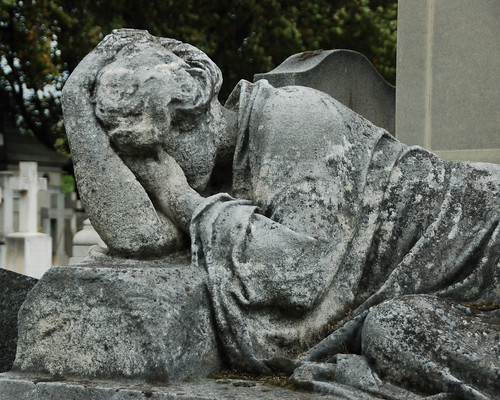
April 7, 2023
"I remember everything. Memory fills my body as much as blood and bones."
A book steeped in grief, sadness and blood. The disbelief of a mother losing her son to a cruel and barbaric death. I found myself holding my breath so many times while reading this. It's a very short story, a mere 104 pages, and is all the more powerful for it.
There are no spare words, yet the writing is descriptive and filled with emotion.
Told by Mary, the mother of Jesus, we view the world through her eyes. How she finds it difficult to understand the rapt adoration of the men following her son, despite being eye witness to several miracles which he performed. The fear of being warned that his trial was imminent and she should escape while it was possible. Watching her son die a slow and agonizing death, crucified atop a hill for all to see.
The fanatacism of a mob, the fairground atmosphere of people lighting campfires and cooking food while someone's life was slowly and painfully ebbing away.
The aftermath of being unable to return home. Unable to sleep. Being hounded by some of Jesus' disciples to tell her story, while writing down words which were not her own.
I couldn't help but ponder on how much of history is actual fact, and how much a viewpoint. As we depend on the quill or pen of long gone times to make sense of the world which was long before us.
I saw this book performed onstage as a play many years ago, and it always haunted me. I felt such sadness for Mary, as to her, Jesus was simply her son. Not the Messiah or Son of God, but a babe she birthed and loved with all her heart.
I read this in one sitting this afternoon. A sunny one where the clouds began to scud across the sky, as the air slowly chilled. It was apt that today is Good Friday, the very day in question in the book.
It was interesting to me see the ancient world which Colm Tóbín has created. A mixture of Hebrew, pagan and Roman beliefs. I was intrigued where Mary went to the "other"Temple to pray to the ancient goddess Artemis. I couldn't help but smile.
Regardless of your religious persuasion, or lack thereof, Colm Tóbín has painted with words a thought provoking work of a snippet of history which continues to both unite and divide.
A book steeped in grief, sadness and blood. The disbelief of a mother losing her son to a cruel and barbaric death. I found myself holding my breath so many times while reading this. It's a very short story, a mere 104 pages, and is all the more powerful for it.
There are no spare words, yet the writing is descriptive and filled with emotion.
Told by Mary, the mother of Jesus, we view the world through her eyes. How she finds it difficult to understand the rapt adoration of the men following her son, despite being eye witness to several miracles which he performed. The fear of being warned that his trial was imminent and she should escape while it was possible. Watching her son die a slow and agonizing death, crucified atop a hill for all to see.
The fanatacism of a mob, the fairground atmosphere of people lighting campfires and cooking food while someone's life was slowly and painfully ebbing away.
The aftermath of being unable to return home. Unable to sleep. Being hounded by some of Jesus' disciples to tell her story, while writing down words which were not her own.
I couldn't help but ponder on how much of history is actual fact, and how much a viewpoint. As we depend on the quill or pen of long gone times to make sense of the world which was long before us.
I saw this book performed onstage as a play many years ago, and it always haunted me. I felt such sadness for Mary, as to her, Jesus was simply her son. Not the Messiah or Son of God, but a babe she birthed and loved with all her heart.
I read this in one sitting this afternoon. A sunny one where the clouds began to scud across the sky, as the air slowly chilled. It was apt that today is Good Friday, the very day in question in the book.
It was interesting to me see the ancient world which Colm Tóbín has created. A mixture of Hebrew, pagan and Roman beliefs. I was intrigued where Mary went to the "other"Temple to pray to the ancient goddess Artemis. I couldn't help but smile.
Regardless of your religious persuasion, or lack thereof, Colm Tóbín has painted with words a thought provoking work of a snippet of history which continues to both unite and divide.
Displaying 1 - 30 of 3,198 reviews