“The most engaging translation available of one of the most important medieval epics.” -R. D. Fulk, Indiana University
“This is a book that every person interested in the Middle Ages should want to own.” -Joseph Harris, Harvard University
“Waltharius brilliantly illuminates the so-called Dark Ages. Any reader can enjoy this lively rendering of an epic that fuses Latin learning with Germanic legend.” -Marijane Osborn, University of California, Davis
“Tremendous! A rich introduction unveils the fascinating history behind Waltharius. Copious notes shed light on its interpretation. The Latin text is included, and the riveting verse translation brings the poem vividly to life.” -Geoffrey Russom, Brown University
Waltharius is one of the great monuments of medieval European literature. Set in a fifth-century world of Goths, Huns, Franks, and Burgundians, this poem from the ninth or tenth century tells a lively tale of adventure, treachery, and combat. It recounts the daring escape of Walther and his betrothed, Hildegund, from the court of Attila the Hun, the pursuit of the lovers by Gunther and the Franks, and the moral dilemma of Hagen, who is torn between conflicting loyalties. In their new edition and translation, professors Brian Murdoch and Leonard Neidorf endeavour to make Waltharius more accessible and appealing than it has ever been before. In addition to a facing-page presentation of the Latin text and the modern English verse translation, this book contains an extensive introduction, ample notes, and other supplementary materials.
Brian Murdoch is Professor Emeritus of German at Stirling University. His works include Kudrun (1987), The Germanic Hero (1996), and Three Political Tales from Medieval Germany (2024).
Leonard Neidorf is Distinguished Professor of English at Shenzhen University. His works include The Art and Thought of the Beowulf Poet (2022) and Translation and Commentary (2023).
Leonard Neidorf is Professor of English at Nanjing University, where he teaches courses on medieval literature and the history of the English language. He is the author of The Art and Thought of the Beowulf Poet (Cornell University Press, 2022) and The Transmission of Beowulf: Language, Culture, and Scribal Behavior(Cornell University Press, 2017). He is the editor of The Dating of Beowulf: A Reassessment (Boydell & Brewer, 2014), and a co-editor (with Rafael J. Pascual and Tom Shippey) of Old English Philology: Studies in Honour of R.D. Fulk (Boydell & Brewer, 2016).
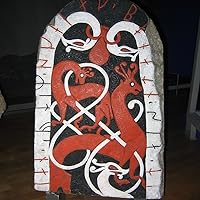
The cover design is, as always, stunning. I especially like the facing-page format, which allows easy access to both the original Latin text and the English translation. The introductory chapter, bibliography, and notes really help. This edition of Waltharius is an excellent option for both beginners and scholars.
Waltharius: The Latin Epic of Walther of Aquitaine remains a vital text for understanding the interplay between Latin and Germanic literary traditions in the early Middle Ages. The translators have succeeded in making Waltharius both an engaging narrative and a rich field of study, offering a model of how to approach the translation and analysis of mediaeval texts. Highly recommended for its contribution to the field and its accessibility to both scholars and enthusiasts of mediaeval literature.
This book is beautifully designed! The facing-page layout makes reading a breeze, and the translation is clear and accessible. A classic I'll return to time and again!
As a fan of Germanic heroic legends—"Beowulf," the Eddas, the "Nibelungenlied"—I wholeheartedly recommend this book to anyone interested in that cultural world. It is simply a great read.
The translation and the editor are widely acclaimed experts in Germanic philology and literature, equipped with the knowledge needed to guide readers into this medieval masterpiece. Professor Neidorf’s "Introduction" (pp. 1–28), "Bibliography" (pp. 29–45), "Notes" (pp. 141–164), and "Appendix" (pp. 165–175) provide readers and researchers with nearly everything they need for this book. Prof. Murdoch renders the Latin into elegant English (comparable to Heaney’s "Beowulf" or Robert Fitzgerald’s "Aeneid." Crucially, the translation remains accurate throughout. I especially appreciate the facing-page Latin text and translation, which conveniently enables me to check the original.
A recommendation for the book has been made by the “Sutton Who” channel (https://www.youtube.com/watch?app=des...). Personally, I am also grateful to Uppsala Books for bringing out an affordable, scholarly edition and translation of "Waltharius" for self-didactic learners. Without the renewed efforts of Prof. Brian Murdoch and Prof. Leonard Neidorf to resurrect this treasure long hoarded by specialists in ivory towers, I would never have encountered such a fantastic medieval epic at such an early stage in my studies.
Crazy because I am learning Old English and those studies led me to this book, because I was advised that the story was of Walter of Aquitaine was unmissable. And it was! Perhaps if I pay excellent attention to the facing page translation I might pick up Latin. I recommend this great book from this awesome boutique publisher.
This new edition of Waltharius looks beautiful and informative! The side-by-side Latin and English texts plus the thorough notes allow one to appreciate this medieval work in its full grace. I like in particular the cinematic scenes in the epic, almost like some parallel shots in modern movies.
The cover is stunningly beautiful. The facing page design—Latin text on one side, English translation on the other—makes it accessible for both amateurs and scholars. A valuable addition to the Waltharius world!
A highly readable translation of this underappreciated medieval epic poem. It’s also a beautifully prepared edition, with a great introduction and notes. This book is a must-have for anyone interested in medieval literature.