

What do you think?

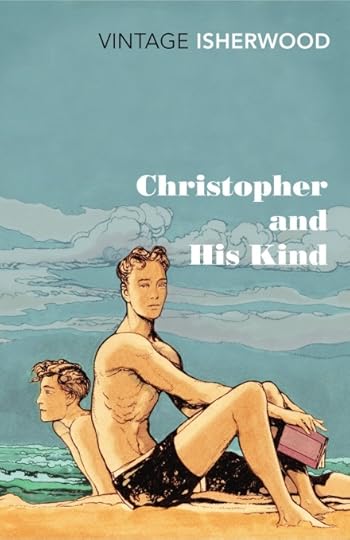
Christopher and His Kind: A Memoir, 1929-1939
Originally published in 1976, Christopher and His Kind covers the most memorable ten years in the writer's life-from 1929, when Isherwood left England to spend a week in Berlin and decided to stay there indefinitely, to 1939, when he arrived in America. His friends and colleagues during this time included W. H. Auden, Stephen Spender, and E. M. Forster, as well as colorful figures he met in Germany and later fictionalized in his two Berlin novels-who appeared again, fictionalized to an even greater degree, in I Am a Camera and Cabaret. What most impressed the first readers of this memoir, however, was the candor with which he describes his life in gay Berlin of the 1930s and his struggles to save his companion, a German man named Heinz, from the Nazis. An engrossing and dramatic story and a fascinating glimpse into a little-known world, Christopher and His Kind remains one of Isherwood's greatest achievements.A major figure in twentieth-century fiction and the gay rights movement, Christopher Isherwood (1904-1986) is the author of Down There on a Visit, Lions and Shadows, A Meeting by the River, The Memorial, Prater Violet, A Single Man, and The World in the Evening, all available from the University of Minnesota Press.
352 pages, Paperback
First published January 1, 1976
About the author
Christopher Isherwood
160 books1,592 followersEnglish-born American Christopher William Bradshaw Isherwood was a novelist, playwright, screenwriter, autobiographer, and diarist who portrayed Berlin in the early 1930s in his best known works, such as
Goodbye to Berlin
(1939), the basis for the musical
Cabaret
(1966).
With W.H. Auden he wrote three plays— The Dog Beneath the Skin (1932), The Ascent of F6 (1936), and On the Frontier (1938). Isherwood tells the story in his first autobiography, Lions and Shadows .
After Isherwood wrote joke answers on his second-year exams, Cambridge University in 1925 asked him to leave. He briefly attended medical school and progressed with his first two novels, All the Conspirators (1928) and The Memorial (1932). In 1930, he moved to Berlin, where he taught English, dabbled in Communism, and enthusiastically explored his homosexuality. His experiences provided the material for Mister Norris Changes Trains (1935) and Goodbye to Berlin (1938), still his most famous book.
In Berlin in 1932, he also began an important relationship with Heinz Neddermeyer, a young German with whom he fled the Nazis in 1933. England refused entry to Neddermeyer on his second visit in 1934, and the pair moved restlessly about Europe until the Gestapo arrested Neddermeyer in May 1937 and then finally separated them.
In 1938, Isherwood sailed with Auden to China to write Journey to a War (1939), about the Sino-Japanese conflict. They returned to England and Isherwood went on to Hollywood to look for movie-writing work. He also became a disciple of the Ramakrishna monk, Swami Prabhavananda, head of the Vedanta Society of Southern California. He decided not to take monastic vows, but he remained a Hindu for the rest of his life, serving, praying, and lecturing in the temple every week and writing a biography, Ramakrishna and His Disciples (1965).
In 1945, Isherwood published Prater Violet, fictionalizing his first movie writing job in London in 1933-1934. In Hollywood, he spent the start of the 1950s fighting his way free of a destructive five-year affair with an attractive and undisciplined American photographer, William Caskey. Caskey took the photographs for Isherwood’s travel book about South America, The Condor and The Cows (1947). Isherwood’s sixth novel, The World in the Evening (1954), written mostly during this period, was less successful than earlier ones.
In 1953, he fell in love with Don Bachardy, an eighteen-year-old college student born and raised in Los Angeles. They were to remain together until Isherwood’s death. In 1961, Isherwood and completed the final revisions to his new novel Down There on a Visit (1962). Their relationship nearly ended in 1963, and Isherwood moved out of their Santa Monica house. This dark period underpins Isherwood’s masterpiece A Single Man (1964).
Isherwood wrote another novel, A Meeting by the River (1967), about two brothers, but he gave up writing fiction and turned entirely to autobiography. In Kathleen and Frank (1971), he drew on the letters and diaries of his parents. In Christopher and His Kind (1976), he returned to the 1930s to tell, as a publicly avowed homosexual, the real story of his life in Berlin and his wanderings with Heinz Neddermeyer. The book made him a hero of gay liberation and a national celebrity all over again but now in his true, political and personal identity.
With W.H. Auden he wrote three plays— The Dog Beneath the Skin (1932), The Ascent of F6 (1936), and On the Frontier (1938). Isherwood tells the story in his first autobiography, Lions and Shadows .
After Isherwood wrote joke answers on his second-year exams, Cambridge University in 1925 asked him to leave. He briefly attended medical school and progressed with his first two novels, All the Conspirators (1928) and The Memorial (1932). In 1930, he moved to Berlin, where he taught English, dabbled in Communism, and enthusiastically explored his homosexuality. His experiences provided the material for Mister Norris Changes Trains (1935) and Goodbye to Berlin (1938), still his most famous book.
In Berlin in 1932, he also began an important relationship with Heinz Neddermeyer, a young German with whom he fled the Nazis in 1933. England refused entry to Neddermeyer on his second visit in 1934, and the pair moved restlessly about Europe until the Gestapo arrested Neddermeyer in May 1937 and then finally separated them.
In 1938, Isherwood sailed with Auden to China to write Journey to a War (1939), about the Sino-Japanese conflict. They returned to England and Isherwood went on to Hollywood to look for movie-writing work. He also became a disciple of the Ramakrishna monk, Swami Prabhavananda, head of the Vedanta Society of Southern California. He decided not to take monastic vows, but he remained a Hindu for the rest of his life, serving, praying, and lecturing in the temple every week and writing a biography, Ramakrishna and His Disciples (1965).
In 1945, Isherwood published Prater Violet, fictionalizing his first movie writing job in London in 1933-1934. In Hollywood, he spent the start of the 1950s fighting his way free of a destructive five-year affair with an attractive and undisciplined American photographer, William Caskey. Caskey took the photographs for Isherwood’s travel book about South America, The Condor and The Cows (1947). Isherwood’s sixth novel, The World in the Evening (1954), written mostly during this period, was less successful than earlier ones.
In 1953, he fell in love with Don Bachardy, an eighteen-year-old college student born and raised in Los Angeles. They were to remain together until Isherwood’s death. In 1961, Isherwood and completed the final revisions to his new novel Down There on a Visit (1962). Their relationship nearly ended in 1963, and Isherwood moved out of their Santa Monica house. This dark period underpins Isherwood’s masterpiece A Single Man (1964).
Isherwood wrote another novel, A Meeting by the River (1967), about two brothers, but he gave up writing fiction and turned entirely to autobiography. In Kathleen and Frank (1971), he drew on the letters and diaries of his parents. In Christopher and His Kind (1976), he returned to the 1930s to tell, as a publicly avowed homosexual, the real story of his life in Berlin and his wanderings with Heinz Neddermeyer. The book made him a hero of gay liberation and a national celebrity all over again but now in his true, political and personal identity.
Ratings & Reviews
Friends & Following
Create a free account to discover what your friends think of this book!
Community Reviews
Displaying 1 - 30 of 312 reviews

October 3, 2021
“In his two novels about Berlin, Christopher tried to make not only the bizarre seem humdrum but the humdrum seem bizarre—that is, exciting. He wanted his readers to find excitement in Berlin’s drab streets and shabby crowds, in the poverty and dullness of the overgrown Prussian provincial town which had become Germany’s pseudo-capital. Forty years later, I can claim that that excitement has been created—largely by all those others who have reinterpreted Christopher’s material: actresses and actors, directors and writers. Christopher was saying, in effect: “Read about us and marvel! You did not live in our time—be sorry!” And now there are young people who agree with him. “How I wish I could have been with you there!” they write. This is flattering but also ironic; for most of them could no more have shared Christopher’s life in Berlin than they could have lived with a hermit in the desert. Not because of any austerities Christopher endured. Because of the boredom.”
Sigh. It's like he read my mind. It must have been SO hundrum, SO ordinary, to have spent a decade living in and traveling by train and ship through much of Europe and the world with various lovers and friends such as WH Auden and Stephen Spender and E. M. Forster while finding your voice as one of the most prominent gay writers of the century. Riiigght. Nice try, Chris. Good one. True, you may be the reason why gay boys have spent the last a century or more dreaming of pre-WWII Berlin, but you're still not fooling anyone. How soon is too soon to reread this?

March 6, 2017
"he must never again give way to embarrassment, never deny the rights of his tribe, never apologize for its existence..."
christopher and his kind provides a fascinating depiction of (privileged) gay life in western europe in the tinderbox years before ww2. what struck me thoroughly was how relatively uninhibited isherwood and his close circle of gay friends were. if i do come across gay characters set in this period, i'm used to them being deeply repressed and thoroughly self-hating, often torn between family/duty and love - it was refreshing to read that here it wasn't really the case. while persecuted by society, they still lived and loved relatively openly.
interestingly isherwood uses 'christopher', rather than the first person, for what is essentially an autobiography. in all of the books of his i've read so far, you get a real sense of isherwood having lived each moment through what he could later write about it - placing himself as a character ('christopher') in his own autobiography is an extension of that. it also somewhat mischievously makes the book even harder to categorize, to its merit.
also worthy of mention, and something that (for some reason) i wasn't quite expecting, was the sheer amount of famous people who pop up in. it's almost ridiculous! w.h. auden, e.m. forster, virginia and lenoard woolf, benjamin britten, thomas mann and his family, to name just a few.
to get the most out of this book, i think you have to read isherwood's earlier works - he goes into them in quite some detail, fleshing out the real people behind his eccentric cast of characters, and filling in the (gay) details left unsaid or subverted in his earlier fiction.
part travelogue, part memoir, part fiction, part revisionist history, i don't think i've ever read anything quite like it.
christopher and his kind provides a fascinating depiction of (privileged) gay life in western europe in the tinderbox years before ww2. what struck me thoroughly was how relatively uninhibited isherwood and his close circle of gay friends were. if i do come across gay characters set in this period, i'm used to them being deeply repressed and thoroughly self-hating, often torn between family/duty and love - it was refreshing to read that here it wasn't really the case. while persecuted by society, they still lived and loved relatively openly.
interestingly isherwood uses 'christopher', rather than the first person, for what is essentially an autobiography. in all of the books of his i've read so far, you get a real sense of isherwood having lived each moment through what he could later write about it - placing himself as a character ('christopher') in his own autobiography is an extension of that. it also somewhat mischievously makes the book even harder to categorize, to its merit.
also worthy of mention, and something that (for some reason) i wasn't quite expecting, was the sheer amount of famous people who pop up in. it's almost ridiculous! w.h. auden, e.m. forster, virginia and lenoard woolf, benjamin britten, thomas mann and his family, to name just a few.
to get the most out of this book, i think you have to read isherwood's earlier works - he goes into them in quite some detail, fleshing out the real people behind his eccentric cast of characters, and filling in the (gay) details left unsaid or subverted in his earlier fiction.
part travelogue, part memoir, part fiction, part revisionist history, i don't think i've ever read anything quite like it.

January 7, 2016
Immediately prior to reading Christopher and His Kind by Christopher Isherwood I read, and really enjoyed, Mr Norris Changes Trains, so I was excited to find out more about Christopher Isherwood’s life during the 1930s.
Christopher and His Kind is an autobiographical account of Christopher Isherwood's life from 1929, when he left England to spend a week in Berlin and decided to stay there indefinitely, through to 1939, when he arrived in America. I hoped Christopher and His Kind would provide new insights into both Berlin in the 1930s and, in particular, the events related in Mr Norris Changes Trains.
The first thing that struck me was the use of the third person. Christopher Isherwood wrote Christopher and His Kind in the early 1970s and so I assume he decided to treat “Christopher” (his younger self) as a separate character. If so, whilst I understand the rationale, I found it both distracting and confusing.
Christopher Isherwood explains how he kept himself out of the Berlin stories as he thought his homosexuality would distract from the narrative and, understandably given the attitudes of the era, he was guarded about being explicit. There is no such evasiveness or coyness in Christopher and His Kind - he is frank and open about his sex life and his relationships. As such Christopher and His Kind also reflects the era in which it was written (the early 1970s) as gay liberation was gaining momentum whilst Isherwood was writing this book.
I didn't enjoy this book as much as I hoped or expected. As always, Christopher Isherwood writes beautifully about the pre-war era, however it was too detailed for my level of interest and, as I said at the outset, the use of the third person did not work for me.
I enjoyed reading about Gerald Hamilton, the real life Arthur Norris from Mr Norris Changes Trains, and who was every bit as venal and morally bankrupt as his fictionalised version, and there are also some interesting anecdotes involving Isherwood's friends W.H. Auden, Stephen Spender, and E.M. Forster.
Overall though I was less captivated than I had hoped and expected.
3/5
Christopher and His Kind is an autobiographical account of Christopher Isherwood's life from 1929, when he left England to spend a week in Berlin and decided to stay there indefinitely, through to 1939, when he arrived in America. I hoped Christopher and His Kind would provide new insights into both Berlin in the 1930s and, in particular, the events related in Mr Norris Changes Trains.
The first thing that struck me was the use of the third person. Christopher Isherwood wrote Christopher and His Kind in the early 1970s and so I assume he decided to treat “Christopher” (his younger self) as a separate character. If so, whilst I understand the rationale, I found it both distracting and confusing.
Christopher Isherwood explains how he kept himself out of the Berlin stories as he thought his homosexuality would distract from the narrative and, understandably given the attitudes of the era, he was guarded about being explicit. There is no such evasiveness or coyness in Christopher and His Kind - he is frank and open about his sex life and his relationships. As such Christopher and His Kind also reflects the era in which it was written (the early 1970s) as gay liberation was gaining momentum whilst Isherwood was writing this book.
I didn't enjoy this book as much as I hoped or expected. As always, Christopher Isherwood writes beautifully about the pre-war era, however it was too detailed for my level of interest and, as I said at the outset, the use of the third person did not work for me.
I enjoyed reading about Gerald Hamilton, the real life Arthur Norris from Mr Norris Changes Trains, and who was every bit as venal and morally bankrupt as his fictionalised version, and there are also some interesting anecdotes involving Isherwood's friends W.H. Auden, Stephen Spender, and E.M. Forster.
Overall though I was less captivated than I had hoped and expected.
3/5

November 20, 2025
I found this charming but also a bit unfocused. Somehow Isherwood's style in this memoir didn't grab me the way his writing in The Berlin Novels did - and, equally, it's the life in Berlin that came over far more vividly than the rest. It was hard for me to feel engaged in the back and forth relationship with Isherwood's mother, his rather petty quarrels with Stephen Spender, and the later travelogue to China and Japan.
Highlights for me are the portraits of the real people who inspired Mr Norris and Sally Bowles, as well as a franker account of Isherwood's sexual relationships. Despite the encroaching of Nazi power and the Second World War, these events still feel rather marginal in this account. More striking is the wave of optimism invested in communism, at least in the values and principals.
Worth reading in parts as an adjunct to the Berlin novels, but this was surprisingly blander than I'd expected.
Highlights for me are the portraits of the real people who inspired Mr Norris and Sally Bowles, as well as a franker account of Isherwood's sexual relationships. Despite the encroaching of Nazi power and the Second World War, these events still feel rather marginal in this account. More striking is the wave of optimism invested in communism, at least in the values and principals.
Worth reading in parts as an adjunct to the Berlin novels, but this was surprisingly blander than I'd expected.

June 25, 2024
Początek mi się podobał, ale książka szybko zrobiła się powtarzalna i po prostu nużąca. Być może gdybym znał inne dzieła Isherwooda to wyciągnąłbym z lektury więcej, a tak częściej czułem irytację niż satysfakcję. Mamy tu obraz uprzywilejowanego białego Europejczyka, który podróżuje po świecie oraz opisuje swoich kolejnych kochanków i partnerów, głównie nieletnich i pochodzących z klasy robotniczej (miejscami wręcz ich fetyszyzując, co czyta się bardzo nieprzyjemnie). Obraz Berlina oraz ogólnie Europy przed drugą wojną też był dość ubogi i skupiony wyłącznie na zamkniętej bańce. Zdecydowanie są tu momenty, ale toną w całości.

April 9, 2007
In this memoir of 1930s Berlin Isherwood reflects on the writing of "The Berlin Stories," shifting back and forth between his real-life friends and events and the fictional characters and events they inspired. It sounds tiresome but it really works, and is even comprehensible to someone who hasn't read "The Berlin Stories."
Because Nabokov lived, worked and set almost all of his Russian novels in 1920-30s Berlin, I'm accustomed to thinking of the city as his ground, but Isherwood made his own world of it, too.
The cover of this edition is rather lame, a Herbert List photograph of a scrawny teen in tighty-whities, standing contrappasto in knee-deep water. Now, I realize that publishers cannot issue a book by a gay writer without a homoerotic cover image, but come on: Herbert List has better pictures...and there's always August Sander if you want great images of German society at the time.
Because Nabokov lived, worked and set almost all of his Russian novels in 1920-30s Berlin, I'm accustomed to thinking of the city as his ground, but Isherwood made his own world of it, too.
The cover of this edition is rather lame, a Herbert List photograph of a scrawny teen in tighty-whities, standing contrappasto in knee-deep water. Now, I realize that publishers cannot issue a book by a gay writer without a homoerotic cover image, but come on: Herbert List has better pictures...and there's always August Sander if you want great images of German society at the time.

Read
June 5, 2024Piękna, urzekająca, poetycka i czarująca. Osobliwie poczytna i ironiczna. Co ja bym oddał, żeby wybrać się z Christopherem Isherwoodem na kawę...
Pozostawiam bez oceny, jak to robię w przypadku memuarów.
Pozostawiam bez oceny, jak to robię w przypadku memuarów.

July 16, 2017
The most ironic part of being a reader of "Christopher and His Kind" is that one regrets having not read the rest of his oeuvre while simultaneously experiencing the dragging feeling that one really doesn't want to read the rest of his works. While this work is certainly speckled with important thoughts about pre-war gay life and vibrant recountings of the fear and anxiety that rifled much of the European continent in the 30s, it is weighed down by the oblivious bourgeois narcissism of, who would later become, one of Britain's foremost writers of the decade.
Perhaps the most difficult part of the book is Isherwood's decision to give a third-person retelling - supposedly as a way to demarcate a distinction between his older self and his much younger (naive?) self. In the end, this makes it difficult both for the reader to emotionally connect with young Christopher and, in turn, it makes Christopher Isherwood himself come off as described above. This coupled with the fact that Isherwood-the-narrator regularly intercedes into the telling of Isherwood-the-protagonist, made this a book that was both emotionally shallow and difficult to connect with (which is surprising considering what should have been deeply emotional source material involving friends and lost lovers.)
While I appreciate this work for its significance to gay literature and history and for its truthful tellings of pre-war Europe, it lacked the depth needed to draw readers in and keep them connected. Whether or not I pick up another Isherwood (I have already read "A Single Man," but any others...) is still to be determined.
Perhaps the most difficult part of the book is Isherwood's decision to give a third-person retelling - supposedly as a way to demarcate a distinction between his older self and his much younger (naive?) self. In the end, this makes it difficult both for the reader to emotionally connect with young Christopher and, in turn, it makes Christopher Isherwood himself come off as described above. This coupled with the fact that Isherwood-the-narrator regularly intercedes into the telling of Isherwood-the-protagonist, made this a book that was both emotionally shallow and difficult to connect with (which is surprising considering what should have been deeply emotional source material involving friends and lost lovers.)
While I appreciate this work for its significance to gay literature and history and for its truthful tellings of pre-war Europe, it lacked the depth needed to draw readers in and keep them connected. Whether or not I pick up another Isherwood (I have already read "A Single Man," but any others...) is still to be determined.

December 26, 2012
Isherwood fills my mind and heart with his intelligence, serenity and pure literate swooning (poising over young boys- excuse the pun, without being irritating or disgusting in the detail). What I mean to say is this, for me, Isherwood, as with Wilde, Gibson (and other gay writers) fills my heart with this sense that, 'we are not alone'.
Cliched, perhaps, but here's a few thoughts:
1. The topsellers among teenagers in recent years (The Hunger Games, Twilight etc.) have followed 'straight' relationships, rather than the rational, and oh-so-common notion that some of their readers may in fact be GAY.
2. 'Fifty Shades of Grey' sold 60 million copies. That's almost one per person in the UK. Does it follow the (rather disturbing) relationship between two men, or two women? No. But somehow society still condones it, despite the awful fact that many have linked its pages with domestic and sexual abuse.
3. 'Christopher and his Kind' not only demonstrates his homosexuality, but Isherwood admits there were other implications behind it. A sense of rebellion against his mother. His difficult relationship with his brother as a result.
4. We see that it wasn't always easy- Heinz was punished for his homosexuality in the end. And there had to be a victim- there had to be a corrupt party in order for this to take place.
5. This book may be discussing the 30s-40s but the connotations have not escaped the twenty-first century. They're still here.
I, personally, feel that Isherwood is one of the most under-rated authors Britain has ever produced. His work follows his personal life, which I simply love. He depicted straight relationships, gay relationships and all the gruesome details of both. For those reason he talks to our hearts, and with his wit and intelligence, our minds too.
Cliched, perhaps, but here's a few thoughts:
1. The topsellers among teenagers in recent years (The Hunger Games, Twilight etc.) have followed 'straight' relationships, rather than the rational, and oh-so-common notion that some of their readers may in fact be GAY.
2. 'Fifty Shades of Grey' sold 60 million copies. That's almost one per person in the UK. Does it follow the (rather disturbing) relationship between two men, or two women? No. But somehow society still condones it, despite the awful fact that many have linked its pages with domestic and sexual abuse.
3. 'Christopher and his Kind' not only demonstrates his homosexuality, but Isherwood admits there were other implications behind it. A sense of rebellion against his mother. His difficult relationship with his brother as a result.
4. We see that it wasn't always easy- Heinz was punished for his homosexuality in the end. And there had to be a victim- there had to be a corrupt party in order for this to take place.
5. This book may be discussing the 30s-40s but the connotations have not escaped the twenty-first century. They're still here.
I, personally, feel that Isherwood is one of the most under-rated authors Britain has ever produced. His work follows his personal life, which I simply love. He depicted straight relationships, gay relationships and all the gruesome details of both. For those reason he talks to our hearts, and with his wit and intelligence, our minds too.

December 10, 2012
The first book that I picked up after completing the last course for my English M.A. program was one that had been hovering near the top of my to-read list for a long while: Isherwood’s elegant autumnal autobiography Christopher and His Kind. If I had realized how much of it is devoted to clarifying references contained within The Berlin Stories and other earlier texts–almost all of which I have not yet read–I might have held off, but it turns out prior knowledge is not at all necessary to enjoy Isherwood’s book. Rather, I was constantly drawn to the formal quality of “rewriting”–of Isherwood very consciously revisiting events that had found their way into his autobiographical writing over the years, and then later attempting to set the record “straight” about them. Wonderfully enough, being set “straight” in this situation entails being forthright about queer dimensions that had had to be necessarily encoded, deleted, or obscured. It’s a wonderful account of a great 20th century queer life, and the many figures and events that intersected it. In addition, with the careful differentiation between “Christopher” and “I” Isherwood perfectly captures the sensation I often experience when revisiting my own memories: of feeling at once both connected to and severed from them, as if they were observed but not actually experienced firsthand, and that it is only through the process of writing them down–and rewriting them again and perhaps even again–that makes them feel most “real.”
[Capsule review from the post My Year of Reading Queerly over at my blog, Queer Modernisms.]
[Capsule review from the post My Year of Reading Queerly over at my blog, Queer Modernisms.]

July 30, 2008
So many things I loved about this book-
1. Clever switching between first and third person throughout. He'll say "I think that Christopher should have realized bla bla bla" when speaking about his current opinions and thoughts on himself in the past.
2. I had previously read "The Berlin Stories" and loved the way in which he described the "fictional" characters. In this work, he introduces them again but as actual people. It was funny to hear him admit that the girl upon whom "Sally Bowles" is based is somewhat warped in his memory, because of the version of her in the book, the version of her in the play, the version of her in the movies, and all of the actresses who have played her. No one is any less interesting, and it was good to meet the narrator of the stories- Isherwood was always very careful to leave himself (and mainly his homosexuality) out of the stories in order for the reader to better relate to him and the action.
3. There is very little plot, which some might have a problem with. The main action of the book is Isherwood traveling with his lover all over the world for several years, avoiding the oncoming war with Germany. The characters all react to this imminent danger in different ways, catastrophizing or genuine bravery or ignoring it entirely.
4. If you know anything of Isherwood's biography, the last passage of the book will just kill you. Especially if you ever get a chance to see the film "Chris and Don: A Love Story". I highly recommend it.
1. Clever switching between first and third person throughout. He'll say "I think that Christopher should have realized bla bla bla" when speaking about his current opinions and thoughts on himself in the past.
2. I had previously read "The Berlin Stories" and loved the way in which he described the "fictional" characters. In this work, he introduces them again but as actual people. It was funny to hear him admit that the girl upon whom "Sally Bowles" is based is somewhat warped in his memory, because of the version of her in the book, the version of her in the play, the version of her in the movies, and all of the actresses who have played her. No one is any less interesting, and it was good to meet the narrator of the stories- Isherwood was always very careful to leave himself (and mainly his homosexuality) out of the stories in order for the reader to better relate to him and the action.
3. There is very little plot, which some might have a problem with. The main action of the book is Isherwood traveling with his lover all over the world for several years, avoiding the oncoming war with Germany. The characters all react to this imminent danger in different ways, catastrophizing or genuine bravery or ignoring it entirely.
4. If you know anything of Isherwood's biography, the last passage of the book will just kill you. Especially if you ever get a chance to see the film "Chris and Don: A Love Story". I highly recommend it.

October 24, 2024
I love Christopher Isherwood (A Single Man is one of my all time favorite books AND movies) and this is his famous memoir, so of course I had to read it. There were a lot of poignant, profound moments. Certain insights hit home in that magical way only the wisest writing can. I didn’t, however, love the prose—in his attempt to be objective, I think Isherwood took the emotion out of his life story. That may have been the intention, though; the emotionally charged art-piece memoirs of today may not have been in style yet for Isherwood.
Also, how cool is it to read in a 1976 memoir about the author’s relationship with Virginia Woolf, EM Forster, and Graham Greene, in his own recollection?
Also, how cool is it to read in a 1976 memoir about the author’s relationship with Virginia Woolf, EM Forster, and Graham Greene, in his own recollection?

June 1, 2011
I should confess up front that I have never read The Berlin Stories, nor have I even seen Cabaret. Blasphemer! The ultimate bad gay!
...but I do like Isherwood? Or at any rate I loved A Single Man (novel & film!). I was a bit baffled to see so many reviews here note that reading about the writing of The Berlin Stories was tedious, because I actually found Isherwood's reflective, sometimes nostalgic relationship to his own earlier writing endlessly fascinating, particularly in the sense of his comments about self-censoring and the ways in which he felt his sight about the situations he was narrating appears so limited in hindsight. More interesting was Isherwood's hazy delineation between the writing-I and "Christopher," as he frequently referred to his past self/selves. Recently I read Edmund White's "City Boy," where he has no interest in a kind of metatextual consideration of identity--memoir writing should be founded on fact and authenticity to White's mind; on the other hand, Isherwood/"I"/"Christopher" seems almost to eroticize his relationship with his past, and clearly believes that there can't be an objective relationship between the self and the world that the self experiences, because we are not transparent to ourselves, and our understanding of our social being necessitates far too many subjective filters. Despite White's protestations, I found Isherwood's notion of memoir writing far more truthful and nuanced.
All that said, the memoir is also incredibly fun to read. It covers his major Berlin years--basically, from when he went there at the end of the 20s until he decided to sail for America at the end of the 30s. We see his love affairs, his novel-writing, his "slumming," his experience with the Hirschfield Institute. There's a great deal of his passionate friendship with Auden, and Stephen Spender and the Woolfs and Thomas Mann and his daughter all wriggle in and out of the narrative here. Obvs the rise of European fascism (well, mainly Hitler) casts a broad shadow over Isherwood's time in Germany. There's a terror to this tale that recalls V Woolf's journals and letters--also, Between the Acts, her final novel and the one most anxious about the oncoming War. Isherwood is a quite exciting prose writer, too: even in mundane sections, nothing seems to drag, as he's constantly tossing a witticism or a strange anecdote or a viciously honest comment on himself in. This was my first of a journey into the "gay memoir" (well, gay male memoir--for whatever reason, I have, like, a pretty solid history with lesbian fiction, but almost none with the tradition of My People??), and I couldn't be more glad to have it as the initial touchstone, though I imagine using it as my yardstick may be a bit overreaching. We shall see...
...but I do like Isherwood? Or at any rate I loved A Single Man (novel & film!). I was a bit baffled to see so many reviews here note that reading about the writing of The Berlin Stories was tedious, because I actually found Isherwood's reflective, sometimes nostalgic relationship to his own earlier writing endlessly fascinating, particularly in the sense of his comments about self-censoring and the ways in which he felt his sight about the situations he was narrating appears so limited in hindsight. More interesting was Isherwood's hazy delineation between the writing-I and "Christopher," as he frequently referred to his past self/selves. Recently I read Edmund White's "City Boy," where he has no interest in a kind of metatextual consideration of identity--memoir writing should be founded on fact and authenticity to White's mind; on the other hand, Isherwood/"I"/"Christopher" seems almost to eroticize his relationship with his past, and clearly believes that there can't be an objective relationship between the self and the world that the self experiences, because we are not transparent to ourselves, and our understanding of our social being necessitates far too many subjective filters. Despite White's protestations, I found Isherwood's notion of memoir writing far more truthful and nuanced.
All that said, the memoir is also incredibly fun to read. It covers his major Berlin years--basically, from when he went there at the end of the 20s until he decided to sail for America at the end of the 30s. We see his love affairs, his novel-writing, his "slumming," his experience with the Hirschfield Institute. There's a great deal of his passionate friendship with Auden, and Stephen Spender and the Woolfs and Thomas Mann and his daughter all wriggle in and out of the narrative here. Obvs the rise of European fascism (well, mainly Hitler) casts a broad shadow over Isherwood's time in Germany. There's a terror to this tale that recalls V Woolf's journals and letters--also, Between the Acts, her final novel and the one most anxious about the oncoming War. Isherwood is a quite exciting prose writer, too: even in mundane sections, nothing seems to drag, as he's constantly tossing a witticism or a strange anecdote or a viciously honest comment on himself in. This was my first of a journey into the "gay memoir" (well, gay male memoir--for whatever reason, I have, like, a pretty solid history with lesbian fiction, but almost none with the tradition of My People??), and I couldn't be more glad to have it as the initial touchstone, though I imagine using it as my yardstick may be a bit overreaching. We shall see...

October 1, 2026
Writing this autobiography in the third person makes it extremely odd to read, especially as Isherwood keeps slipping back into first-person mode. I have since read that he did this to differentiate himself in his younger years; 'Christopher', being the younger version of him.
Goodbye to Berlin, I enjoyed immensely. I find Christopher and His Kind forced and contradictory. Perhaps from reading between the lines, the reader discovers more of Christopher's true personality than he reveals. Some chapters felt like viewing other people’s holiday snaps - not terribly interesting.
His relationship with Heinz sounded painful, partly, I imagine, due to Isherwood's behaviour as much as Heinz’s predicament. Part of me thinks Isherwood liked the idea of being seen as a writer at pains with the world, as if it made him seem more interesting. I doubt I would have liked him.
After finishing the book, I felt a distinct measure of disappointment.
Goodbye to Berlin, I enjoyed immensely. I find Christopher and His Kind forced and contradictory. Perhaps from reading between the lines, the reader discovers more of Christopher's true personality than he reveals. Some chapters felt like viewing other people’s holiday snaps - not terribly interesting.
His relationship with Heinz sounded painful, partly, I imagine, due to Isherwood's behaviour as much as Heinz’s predicament. Part of me thinks Isherwood liked the idea of being seen as a writer at pains with the world, as if it made him seem more interesting. I doubt I would have liked him.
After finishing the book, I felt a distinct measure of disappointment.

December 4, 2021
This is a chatty, dishy, and effervescent memoir that is scaldingly truthful, even when it casts Isherwood in an unflattering light. Or perhaps, especially so, as he saves his most thorough eviscerations for himself, skewering his own fussiness and his penchant for empty posturing. Referring to himself in the third-person on page 145, he writes, “I am confronted by the reality of Christopher’s monster behaviour—his tears followed by cold calculation—and it shocks me, it hurts my self-esteem, even after all these years! The more reason for recording it.” To assist him in this endeavour, he takes advantage of passages from other writers to present a more objective image of himself. And the distancing method of Isherwood separating himself from his younger “Christopher” iteration offers a truer inflection by embracing the fictional colourings of all our memories of the distant past and allowing a wiser iteration to offer commentary.
For all his considerable storytelling skills, it remains frustrating throughout when he underplays—and arguably underserves—key developments in favour of sometimes tedious details of circumstance and a bewildering parade of names. For instance, we are made to invest in his relationship with Otto, but then told “he and Otto were on bad terms” or that they “at last cooled off,” and not much else. This seems part of his British severity when it comes to encapsulating the rawest of his emotions—which is to say, he rarely does.
Instead, as a dazzling consolation prize, what we get are crystalline lines of prose about the blind arrogance of youth, the nourishment of travel, and the unheroic brutalism and bureaucracy of war—the kind of lines that convey great complexities of existence in a single sentence or two, which keep you dipping back in, sifting for gold.
For all his considerable storytelling skills, it remains frustrating throughout when he underplays—and arguably underserves—key developments in favour of sometimes tedious details of circumstance and a bewildering parade of names. For instance, we are made to invest in his relationship with Otto, but then told “he and Otto were on bad terms” or that they “at last cooled off,” and not much else. This seems part of his British severity when it comes to encapsulating the rawest of his emotions—which is to say, he rarely does.
Instead, as a dazzling consolation prize, what we get are crystalline lines of prose about the blind arrogance of youth, the nourishment of travel, and the unheroic brutalism and bureaucracy of war—the kind of lines that convey great complexities of existence in a single sentence or two, which keep you dipping back in, sifting for gold.

October 3, 2008
Oddly enough, I read this after seeing cabaret but before reading the Berlin Novels.
It's a fascinating (partial) autobiography - at times embarrassingly, almost painfully personal and honest - but what would you expect from a skilled writer recalling life in Berlin with several other bright young literary stars at one of the most fascinating periods of its history?
The Christopher here is not the rather confused, bisexual and passive Christopher we know and love from Cabaret or the Berlin Novels. He's far deeper, far more angst-ridden, aware of his sexuality and also far more interesting in many ways. The joys of Bohemian life in Berlin with a small group of privileged and talented friends are juxtaposed to the sad and desperate realities of his relationship with a young German lover whose life seems increasingly threatened by the onset of Hitler and Nazism.
It's fascinating to read this alongside the fictional account he gives in the Berlin Novels and the even more fictionalised Cabaret film. The atmosphere and mores of contemporary Britain and America limited in some ways the plot of his novels but this tells a truer and often less flattering picture.
It's a fascinating (partial) autobiography - at times embarrassingly, almost painfully personal and honest - but what would you expect from a skilled writer recalling life in Berlin with several other bright young literary stars at one of the most fascinating periods of its history?
The Christopher here is not the rather confused, bisexual and passive Christopher we know and love from Cabaret or the Berlin Novels. He's far deeper, far more angst-ridden, aware of his sexuality and also far more interesting in many ways. The joys of Bohemian life in Berlin with a small group of privileged and talented friends are juxtaposed to the sad and desperate realities of his relationship with a young German lover whose life seems increasingly threatened by the onset of Hitler and Nazism.
It's fascinating to read this alongside the fictional account he gives in the Berlin Novels and the even more fictionalised Cabaret film. The atmosphere and mores of contemporary Britain and America limited in some ways the plot of his novels but this tells a truer and often less flattering picture.

June 8, 2024
3.5
Największy problem stanowiła jednak nieznajomość żadnego innego tekstu autora. To przeszkoda nie do przeskoczenia, gdy cała opowieść opiera się na przywoływaniu fragmentów z wcześniej publikowanych tytułów i omawianie ich na zasadzie „ta osoba nazywała się tutaj tak, a naprawdę nazywa się tak i wcale nie zachowuje się tak, tylko tak”. I choć zdarzały się momenty, gdzie zaginałam sobie rogi, czasem z cringu (Isherwood praktycznie wymuszający na jednej z bohaterek zgodę, by napisać o jej aborcji), a czasem z zachwytu (Isherwood piszący o rozłące z Heinzem), wielokrotnie po kilkudziesięciu stronach musiałam zrobić przerwę, żeby przetrawić wszystkie te informacje.
Czy polecam? Jak każdą klasykę - warto znać. Ale chyba szczególnie polecam osobom dla których nie będzie to pierwsze spotkanie z Isherwoodem. Ja na pewno kiedyś wrócę do innych jego tekstów. Szczególnie chodzi mi po głowie „Pożegnanie z Berlinem”.
Największy problem stanowiła jednak nieznajomość żadnego innego tekstu autora. To przeszkoda nie do przeskoczenia, gdy cała opowieść opiera się na przywoływaniu fragmentów z wcześniej publikowanych tytułów i omawianie ich na zasadzie „ta osoba nazywała się tutaj tak, a naprawdę nazywa się tak i wcale nie zachowuje się tak, tylko tak”. I choć zdarzały się momenty, gdzie zaginałam sobie rogi, czasem z cringu (Isherwood praktycznie wymuszający na jednej z bohaterek zgodę, by napisać o jej aborcji), a czasem z zachwytu (Isherwood piszący o rozłące z Heinzem), wielokrotnie po kilkudziesięciu stronach musiałam zrobić przerwę, żeby przetrawić wszystkie te informacje.
Czy polecam? Jak każdą klasykę - warto znać. Ale chyba szczególnie polecam osobom dla których nie będzie to pierwsze spotkanie z Isherwoodem. Ja na pewno kiedyś wrócę do innych jego tekstów. Szczególnie chodzi mi po głowie „Pożegnanie z Berlinem”.

February 28, 2017
Allow me to bitch my way towards praising Isherwood's memoir: it grated that he told it in the third person with a few retrospective first person observations; too much of it was an undisciplined diary dump, too much again a dull exposé of who, and, tediously, to what degree, his characters were based on real people. That said, there are too many wonderful stories here of 1930s gay and literary life for this not to be an enthusiastic pick.

October 14, 2013
(3.5 / 5)
A fascinating view of Hitler's rise to power through the eyes of a group of friends, but Isherwood's style of narrating in both first and third person tends to distance you from it emotionally. Sometimes this is effective, but there are also times when it is to its detriment.
A fascinating view of Hitler's rise to power through the eyes of a group of friends, but Isherwood's style of narrating in both first and third person tends to distance you from it emotionally. Sometimes this is effective, but there are also times when it is to its detriment.

June 11, 2024
Książka stanowi wartościowy obraz epoki w kontekście społeczności queerowej, zmian obyczajowych, i zresztą nie tylko, a Isherwood to świetny prozaik, ale też człowiek swojej epoki i klasy społecznej czasami.

February 18, 2025
2.5/5⭐
Szczerze, na początku książka mi się spodobała, jednakże po stu stronach zaczęła mnie nużyć. Połączenie trzeciej i pierwszej osoby w narracji utrudniło mi sprawne czytanie a opisanie jedynie punktu widzenia uprzywilejowanego, białego europejczyka, zmieniającego partnerów seksualnych jak skarpetki stało się irytujące.
Szczerze, na początku książka mi się spodobała, jednakże po stu stronach zaczęła mnie nużyć. Połączenie trzeciej i pierwszej osoby w narracji utrudniło mi sprawne czytanie a opisanie jedynie punktu widzenia uprzywilejowanego, białego europejczyka, zmieniającego partnerów seksualnych jak skarpetki stało się irytujące.

May 12, 2019
I should start by saying that I like why Isherwood felt the need to write this autobiography; to revise some of the suppressed sexual nature within his previous written works; to do justice to his own sexuality and to clearly take a stance on social attitudes. This is certainly a statement piece and a clear indicator of social progress (it was written in 1976. Context: the first Gay Pride Rally in London was held in 1972).
Despite being autobiographical, however, you do feel some sense of distance from Isherwood. It's there in the (wonderful, let me say) narrative voice where he reflects upon his own life and writes about his younger-self as an omniscient narrator. It's also there in Isherwood's clear lack of emotions. I don't doubt that he has an emotional depth but it is not present in this autobiography, in any of his relationships: be that lovers (Heinz, Wystan) or his own family (mother Kathleen, brother Richard). His relationship with Heinz dominates this book and it is very bittersweet and Isherwood decidedly does not dwell on it.
Whilst I ultimately did enjoy reading this and learning a lot about an author I admire and value, I did find the aforementioned distance and a sometimes confusing writing style (for example the sudden introduction of new people often assumed that you had prior knowledge), did somewhat inhibit my enjoyment.
That said, it has enthused me to seek out more of his works, so it can't all be bad!
Despite being autobiographical, however, you do feel some sense of distance from Isherwood. It's there in the (wonderful, let me say) narrative voice where he reflects upon his own life and writes about his younger-self as an omniscient narrator. It's also there in Isherwood's clear lack of emotions. I don't doubt that he has an emotional depth but it is not present in this autobiography, in any of his relationships: be that lovers (Heinz, Wystan) or his own family (mother Kathleen, brother Richard). His relationship with Heinz dominates this book and it is very bittersweet and Isherwood decidedly does not dwell on it.
Whilst I ultimately did enjoy reading this and learning a lot about an author I admire and value, I did find the aforementioned distance and a sometimes confusing writing style (for example the sudden introduction of new people often assumed that you had prior knowledge), did somewhat inhibit my enjoyment.
That said, it has enthused me to seek out more of his works, so it can't all be bad!

Read
December 20, 2019Christopher Isherwood, more than most novelists, is able to walk the line between cynical distance and sincere emotion with grace, and he applies the same standard to his memoirs. Granted, his memoir drags a bit in places, but at other times, it's an absolutely fascinating portrait of prewar gay society, something that's hard to even imagine nowadays. And the parts where he tries to save his lover from the maelstrom of 1930s Germany, well, that's downright heartbreaking.

May 22, 2019
4.5 stars.
Reread AGAIN in April 2022, partly during a visit to Berlin where I stood outside the house that Isherwood lived in and took inspiration for Goodbye to Berlin from. I still love this man and his self-absorbed writings very much, and it was fun to view this book through a wide-angle lens this time, since both times I've previously read it I've been looking for very specific things. God this is dense though. Great, if you're as interested in Isherwood as I am, but a lot if you're not. Will this be the last time I read this book? Probably not. Isherwood is always calling me back.
----------------------------------------------
Reread in May 2020 for my upcoming Isherwood dissertation (yaaaaaay). Reading Christopher and His Kind for a second time really highlighted to me just how problematic Isherwood is in a variety of ways (the bit where he calls his boyfriend the n-word because he's tanned is uncomfortable as HELL), but also what an engaging, reflective, and generally brilliant life writer he is. Also: it really showed me that it pays to have read Isherwood's other work before you dive into this so that you actually understand what he's on about most of the time! I ended up enjoying this far more the second time than I did the first. I still can't quite bring myself to award it the perfect 5 star rating, however.
--------------------------
This is one of the single most interesting books I've ever read. It's part memoir, part literary criticism, part history, and almost part fiction (since it interacts so inextricably with Isherwood's fictionalised accounts of this time period as well as what actually happened). I would imagine that this book is an absolute gift to Isherwood scholars, as it reveals both the present man and the past man AND provides an illuminating insight into his work. Honestly, Christopher and His Kind is just utterly fascinating. It is long, yes, and it can be confusing in places; Isherwood uses the first-person pronoun 'I' to mark his present self who is looking back on the events of 1929-1939, and refers to the version of himself living these events as 'Christopher' (even more confusingly, the fictional character 'Christopher Isherwood' from Goodbye to Berlin pops up a few times, and he is referred to as 'Isherwood'). Personally, once I got used to this division of different Christophers, I didn't find it too hard to follow, but I imagine that it would be quite jarring to other readers, especially if you read it slowly or in dispersed chunks. I also think that readers who are unfamiliar with Christopher Isherwood might struggle here, as it engages so directly with his other published work rather than presenting itself as a straightforward memoir. I personally had only read Goodbye to Berlin before this, which was fine as that's probably the text that Isherwood hearkens back to the most, but there were times that I felt I was missing out by not having read more of his work. Christopher and His Kind, then, is a highly unusual book, but it is one that I absolutely loved. I was interested in Isherwood before I read this, but that interest has increased tenfold having read it.
In the most basic terms possible, Christopher and His Kind is a detailed memoir of Christopher Isherwood's time living as an expatriate in Berlin, explaining why he went there and what he did once he was there. Except it's not just that, really. It's also a commentary on Germany in the 1930s, detailing the country's slide into fascism and the consequences of this for (especially gay) people living in Germany (there's one particularly interesting segment on Magnus Hirschfeld and his institute for sexology research, which was producing pioneering work on homosexuality and particularly transgender people at the time before its archives were destroyed during Nazi book burnings). It also isn't just a book about Germany, as, once Isherwood falls in love with a German named Hans, who attempts to avoid conscription and prevent Nazis from discovering he is gay by leaving the country, he ends up travelling to various different parts of the world, before ultimately ending up in America with his best friend W.H. Auden, aiming to start a new life. Really, I guess that you could call this a travel narrative, but, again, there's so much more to it than that. What makes this book so fascinating is that it provides incredibly detailed insight into numerous different things: Isherwood's past and present lives, Isherwood's writing, Isherwood's famous friends (Auden, Stephen Spender, and E.M. Forster among others), Isherwood's German lovers ('Otto' and Hans), gay life in the 1930s, Nazi Germany, and various other countries and cultures. It encompasses so much, despite its narrow time frame and focus on just one life, and it is for this reason that it is utterly fascinating to read.
Another thing that I really enjoyed about this book was the self-reflexivity of it. I think that in calling himself 'I' and his past self 'Christopher', Isherwood clearly demonstrates how much he had changed as a person from the time written about to the time of writing (1976), and that shows in moments of the narrative too. Isherwood's narrative voice is often critical of Christopher's decisions and behaviour, and comments upon what he would have done differently if he could live those years again. Not only does that show growth and acknowledgement of imperfections, but it also creates a really interesting duplicity in the image of Isherwood that you gain from reading this book: you see what he did then and what he thinks about it now, creating a rounded and realistic portrait of the man overall. As an autobiography, I think that this book absolutely excels in presenting so many complex, varied versions of Isherwood that you feel that you truly know him by the time it is finished. This is not to say that I think that Isherwood was a perfect person who successfully called out all of his old questionable behaviour, because he wasn't. Some of the things that he goes on record saying and doing in this book would be called problematic by modern standards, particularly his taste for younger men, which continued throughout his life (the last line of Christopher and His Kind is more than just a little icky). However, I do think that he's honest, and that makes his memoir ever more compelling than one that glamorises or censors the truth would be.
Overall, this made for an incredibly interesting reading experience, and I'm still brimming with ideas nearly a month after reading it. Isherwood currently sits right near the top of my list of writers that I might like to write on when dissertation times rolls around again, and, if I do decide to write on him, I imagine that this book will be invaluable to me. It just contains so much, and everything within it is super interesting. That's the crux of the matter, really: Christopher and His Kind feels like a book that encompasses everything that interests me, and, as a result, it was a complete joy to read.
Reread AGAIN in April 2022, partly during a visit to Berlin where I stood outside the house that Isherwood lived in and took inspiration for Goodbye to Berlin from. I still love this man and his self-absorbed writings very much, and it was fun to view this book through a wide-angle lens this time, since both times I've previously read it I've been looking for very specific things. God this is dense though. Great, if you're as interested in Isherwood as I am, but a lot if you're not. Will this be the last time I read this book? Probably not. Isherwood is always calling me back.
----------------------------------------------
Reread in May 2020 for my upcoming Isherwood dissertation (yaaaaaay). Reading Christopher and His Kind for a second time really highlighted to me just how problematic Isherwood is in a variety of ways (the bit where he calls his boyfriend the n-word because he's tanned is uncomfortable as HELL), but also what an engaging, reflective, and generally brilliant life writer he is. Also: it really showed me that it pays to have read Isherwood's other work before you dive into this so that you actually understand what he's on about most of the time! I ended up enjoying this far more the second time than I did the first. I still can't quite bring myself to award it the perfect 5 star rating, however.
--------------------------
This is one of the single most interesting books I've ever read. It's part memoir, part literary criticism, part history, and almost part fiction (since it interacts so inextricably with Isherwood's fictionalised accounts of this time period as well as what actually happened). I would imagine that this book is an absolute gift to Isherwood scholars, as it reveals both the present man and the past man AND provides an illuminating insight into his work. Honestly, Christopher and His Kind is just utterly fascinating. It is long, yes, and it can be confusing in places; Isherwood uses the first-person pronoun 'I' to mark his present self who is looking back on the events of 1929-1939, and refers to the version of himself living these events as 'Christopher' (even more confusingly, the fictional character 'Christopher Isherwood' from Goodbye to Berlin pops up a few times, and he is referred to as 'Isherwood'). Personally, once I got used to this division of different Christophers, I didn't find it too hard to follow, but I imagine that it would be quite jarring to other readers, especially if you read it slowly or in dispersed chunks. I also think that readers who are unfamiliar with Christopher Isherwood might struggle here, as it engages so directly with his other published work rather than presenting itself as a straightforward memoir. I personally had only read Goodbye to Berlin before this, which was fine as that's probably the text that Isherwood hearkens back to the most, but there were times that I felt I was missing out by not having read more of his work. Christopher and His Kind, then, is a highly unusual book, but it is one that I absolutely loved. I was interested in Isherwood before I read this, but that interest has increased tenfold having read it.
In the most basic terms possible, Christopher and His Kind is a detailed memoir of Christopher Isherwood's time living as an expatriate in Berlin, explaining why he went there and what he did once he was there. Except it's not just that, really. It's also a commentary on Germany in the 1930s, detailing the country's slide into fascism and the consequences of this for (especially gay) people living in Germany (there's one particularly interesting segment on Magnus Hirschfeld and his institute for sexology research, which was producing pioneering work on homosexuality and particularly transgender people at the time before its archives were destroyed during Nazi book burnings). It also isn't just a book about Germany, as, once Isherwood falls in love with a German named Hans, who attempts to avoid conscription and prevent Nazis from discovering he is gay by leaving the country, he ends up travelling to various different parts of the world, before ultimately ending up in America with his best friend W.H. Auden, aiming to start a new life. Really, I guess that you could call this a travel narrative, but, again, there's so much more to it than that. What makes this book so fascinating is that it provides incredibly detailed insight into numerous different things: Isherwood's past and present lives, Isherwood's writing, Isherwood's famous friends (Auden, Stephen Spender, and E.M. Forster among others), Isherwood's German lovers ('Otto' and Hans), gay life in the 1930s, Nazi Germany, and various other countries and cultures. It encompasses so much, despite its narrow time frame and focus on just one life, and it is for this reason that it is utterly fascinating to read.
Another thing that I really enjoyed about this book was the self-reflexivity of it. I think that in calling himself 'I' and his past self 'Christopher', Isherwood clearly demonstrates how much he had changed as a person from the time written about to the time of writing (1976), and that shows in moments of the narrative too. Isherwood's narrative voice is often critical of Christopher's decisions and behaviour, and comments upon what he would have done differently if he could live those years again. Not only does that show growth and acknowledgement of imperfections, but it also creates a really interesting duplicity in the image of Isherwood that you gain from reading this book: you see what he did then and what he thinks about it now, creating a rounded and realistic portrait of the man overall. As an autobiography, I think that this book absolutely excels in presenting so many complex, varied versions of Isherwood that you feel that you truly know him by the time it is finished. This is not to say that I think that Isherwood was a perfect person who successfully called out all of his old questionable behaviour, because he wasn't. Some of the things that he goes on record saying and doing in this book would be called problematic by modern standards, particularly his taste for younger men, which continued throughout his life (the last line of Christopher and His Kind is more than just a little icky). However, I do think that he's honest, and that makes his memoir ever more compelling than one that glamorises or censors the truth would be.
Overall, this made for an incredibly interesting reading experience, and I'm still brimming with ideas nearly a month after reading it. Isherwood currently sits right near the top of my list of writers that I might like to write on when dissertation times rolls around again, and, if I do decide to write on him, I imagine that this book will be invaluable to me. It just contains so much, and everything within it is super interesting. That's the crux of the matter, really: Christopher and His Kind feels like a book that encompasses everything that interests me, and, as a result, it was a complete joy to read.

April 20, 2025
Meraviglioso spaccato del'Europa alla vigilia della Seconda guerra mondiale raccontato dal punto di vista di uno dei membri di una rete di amici/amanti scrittori cosmopoliti che si supportano e si proteggono in uno dei momenti più bui della storia del mondo.
Da grande vorrei essere Christopher Isherwood e avere una amicizia come quella tra lui e Wystan Auden 🩵.
Berlino anni Trenta prima del nazionalsocialismo the place to be.
Da grande vorrei essere Christopher Isherwood e avere una amicizia come quella tra lui e Wystan Auden 🩵.
Berlino anni Trenta prima del nazionalsocialismo the place to be.

January 5, 2025
I'm a sucker for media that is about how other media is made, or art about the artist. Here we get Christopher Isherwood talking at length about his time in Weimar Berlin, (in the 3rd person, oddly enough) writing what would end up being The Berlin Stories. "Goodbye to Berlin", which I had the pleasure of reading in 2023, is the source material for "Cabaret" (my favorite musical). Surely I will be reading more of Isherwood's work.
Also, completely aside, it is delightful to see how much has and has not changed in gay culture in the last 100 years. I genuinely laughed out loud when he called a failed night out "a flop".
Also, completely aside, it is delightful to see how much has and has not changed in gay culture in the last 100 years. I genuinely laughed out loud when he called a failed night out "a flop".

October 4, 2021
A few years ago I read A Single Man by Christopher Isherwood and was completely blown away by it. I was certain that Isherwood will be the kind of writer I admire, one whose books I will obsessively hunt down, and that I will start to casually annoy people by bringing him up into conversations. But then I read Christopher and His Kind and that romantic idea of Isherwood just sort of… crumbled.
Christopher and His Kind is Isherwood’s memoir from the period between 1929 and 1939 (from his first visit in Berlin to his move to the US) and is a very candid and open account of his life, experiences and relationships during this ten-year period. What I found interesting is his use of the third person narrative as he writes from the point of view of an omniscient observer. At first I was surprised by this choice, the detachedness from himself, but then I started feeling it might have made talking about sensitive topics easier for him. As if by talking about Christopher, he could spare himself some of the embarrassment and guilt.
As for “His Kind”, though, I quickly grew a bit confused by what that “kind” is as I noticed three distinctive ones:
- the aristocratic / upper-class: with their snobbish dinners and getting money from mother dear or an elderly uncle whom they would discuss behind their back while living a life of travelling, having lots of affairs and being full of themselves.
- the predator: always on the lookout for new boys, preferably poor and needing support, preferably willing to put up with anything for a nice dinner, a present and a trip to a Greek island, and preferably underaged.
- the self-centred writer: who would have no issues with using his friends’ unfortunate experiences and slip ups for their next big novel, while also feeling a superior writer to everyone else.
Yes, I know I am harsh, but just a few chapters in I started feeling that Isherwood the writer is actually not such a likeable person… His fantastic writing and honesty didn’t make his predator desires or bloated ego any more tolerable. And while I will try to separate the writer from his art and read more of his works, I’m afraid I have to admit I don’t like their creator.
Christopher and His Kind is Isherwood’s memoir from the period between 1929 and 1939 (from his first visit in Berlin to his move to the US) and is a very candid and open account of his life, experiences and relationships during this ten-year period. What I found interesting is his use of the third person narrative as he writes from the point of view of an omniscient observer. At first I was surprised by this choice, the detachedness from himself, but then I started feeling it might have made talking about sensitive topics easier for him. As if by talking about Christopher, he could spare himself some of the embarrassment and guilt.
As for “His Kind”, though, I quickly grew a bit confused by what that “kind” is as I noticed three distinctive ones:
- the aristocratic / upper-class: with their snobbish dinners and getting money from mother dear or an elderly uncle whom they would discuss behind their back while living a life of travelling, having lots of affairs and being full of themselves.
- the predator: always on the lookout for new boys, preferably poor and needing support, preferably willing to put up with anything for a nice dinner, a present and a trip to a Greek island, and preferably underaged.
- the self-centred writer: who would have no issues with using his friends’ unfortunate experiences and slip ups for their next big novel, while also feeling a superior writer to everyone else.
Yes, I know I am harsh, but just a few chapters in I started feeling that Isherwood the writer is actually not such a likeable person… His fantastic writing and honesty didn’t make his predator desires or bloated ego any more tolerable. And while I will try to separate the writer from his art and read more of his works, I’m afraid I have to admit I don’t like their creator.

January 2, 2016
Young Christopher Isherwood spent much of the 1930s in continental Europe, including a few years in Berlin. He wrote a novel and some short stories based on his experiences there.
Middle-aged Christopher Isherwood wrote this book about young Christopher Isherwood, in the third person and gave details of what young Christopher was up to and how he came to write the stories.
The style of talking about himself in the third person is rather off-putting until you get used to it, but it does work. The older author can look back and make sense of the younger man's experiences, while the younger one keeps the immediacy of those experiences. It is a very candid autobiography and includes details of his homosexual affairs and liaisons with teenage boys, which he could not have been quite as open about at the time (although he did not try to hide them from his friends and family).
Middle-aged Christopher Isherwood wrote this book about young Christopher Isherwood, in the third person and gave details of what young Christopher was up to and how he came to write the stories.
The style of talking about himself in the third person is rather off-putting until you get used to it, but it does work. The older author can look back and make sense of the younger man's experiences, while the younger one keeps the immediacy of those experiences. It is a very candid autobiography and includes details of his homosexual affairs and liaisons with teenage boys, which he could not have been quite as open about at the time (although he did not try to hide them from his friends and family).

August 28, 2024
Isherwood, they will never make me like you, you entitled, possessive, insecure little English bitch boy

October 30, 2025
kluczowym momentem tej książki jest kiedy Isherwood mówi że jest vers....
ale tak fr fr, pisanie fragmentu autobiografi w trzeciej osobie lowkey slaps, szczególnie jak się dowiadujemy, że Isherwood w tamtych czasach nie był otwarty co do swojej seksualności (obvi, to były lata 30). kontekst historyczno-społeczny w tej książki jest dokurwiony. sama wspomniana narracja po prostu zapiera dech w piersiach w wielu momentach...
ale... niestety... jeśli jakieś postacie wracały powiedzmy po 200 stronach, totalnie już nie wiedziałem kto to jest. totalnie było za dużo momentów w których powinienem pamiętać np. Francisa z początku ksiazki, ale przez to że łącznie był on bohaterem jakichś 10 stron, to totalnie nie miałem siły tego szukać.
anyways, polecam przeczytać bo dużo rzeczy się dowiedziałem :3
ale tak fr fr, pisanie fragmentu autobiografi w trzeciej osobie lowkey slaps, szczególnie jak się dowiadujemy, że Isherwood w tamtych czasach nie był otwarty co do swojej seksualności (obvi, to były lata 30). kontekst historyczno-społeczny w tej książki jest dokurwiony. sama wspomniana narracja po prostu zapiera dech w piersiach w wielu momentach...
ale... niestety... jeśli jakieś postacie wracały powiedzmy po 200 stronach, totalnie już nie wiedziałem kto to jest. totalnie było za dużo momentów w których powinienem pamiętać np. Francisa z początku ksiazki, ale przez to że łącznie był on bohaterem jakichś 10 stron, to totalnie nie miałem siły tego szukać.
anyways, polecam przeczytać bo dużo rzeczy się dowiedziałem :3
Displaying 1 - 30 of 312 reviews