

What do you think?
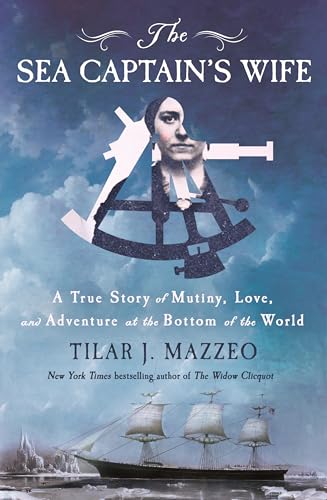
The Sea Captain's Wife
A True Story of Mutiny, Love, and Adventure at the Bottom of the World
The true story of the first female captain of a merchant ship and her treacherous navigation of Antarctica's deadly waters.
Summer, 1856
Nineteen-year-old Mary Ann Patten and her husband, Joshua, were young and ambitious. Both from New England seafaring families, they had already completed their first clipper-ship voyage around the world with Joshua as captain. If they could win the race to San Francisco that year, their dream of building a farm and a family might be within reach. It would mean freedom. And the price of that freedom was one last dangerous transit—into the most treacherous waters in the world.
As their ship, Neptune’s Car, left New York Harbor and sailed down the jagged coast of South America, Joshua fell deathly ill and was confined to his bunk, delirious. The treacherous first mate, confined to the brig for insubordination, was agitating for mutiny. With no obvious option for a new captain and heartbroken about her husband, Mary Ann stepped into the breach and convinced the crew to support her, just as they slammed into a gale that would last 18 days. Determined to save the ship, the crew, and their future, she faces down the deadly waters of Drake’s Passage.
Set against the backdrop of the California Gold Rush and taking us to the brink of Antarctica, The Sea Captain's Wife finally gives Mary Ann Patten—the first woman to command a merchant vessel as captain — her due. Mazzeo draws on new archival research from nineteenth-century women’s maritime journals and on her own expedition to the Southern Ocean and Antarctica in search of Mary Ann’s route. Thrilling, harrowing, and heroic, The Sea Captain's Wife is the story of one woman who, for love, would do what was necessary to survive.
The true story of the first female captain of a merchant ship and her treacherous navigation of Antarctica's deadly waters.
Summer, 1856
Nineteen-year-old Mary Ann Patten and her husband, Joshua, were young and ambitious. Both from New England seafaring families, they had already completed their first clipper-ship voyage around the world with Joshua as captain. If they could win the race to San Francisco that year, their dream of building a farm and a family might be within reach. It would mean freedom. And the price of that freedom was one last dangerous transit—into the most treacherous waters in the world.
As their ship, Neptune’s Car, left New York Harbor and sailed down the jagged coast of South America, Joshua fell deathly ill and was confined to his bunk, delirious. The treacherous first mate, confined to the brig for insubordination, was agitating for mutiny. With no obvious option for a new captain and heartbroken about her husband, Mary Ann stepped into the breach and convinced the crew to support her, just as they slammed into a gale that would last 18 days. Determined to save the ship, the crew, and their future, she faces down the deadly waters of Drake’s Passage.
Set against the backdrop of the California Gold Rush and taking us to the brink of Antarctica, The Sea Captain's Wife finally gives Mary Ann Patten—the first woman to command a merchant vessel as captain — her due. Mazzeo draws on new archival research from nineteenth-century women’s maritime journals and on her own expedition to the Southern Ocean and Antarctica in search of Mary Ann’s route. Thrilling, harrowing, and heroic, The Sea Captain's Wife is the story of one woman who, for love, would do what was necessary to survive.
288 pages, Hardcover
First published December 9, 2025
About the author
Tilar J. Mazzeo
18 books348 followersTilar J. Mazzeo is a cultural historian, biographer, and passionate student of wine and food culture. She divides her time among the California wine country, New York City, and Maine, where she is a professor of English at Colby College.
(from the author's website)
(from the author's website)
Ratings & Reviews
Friends & Following
Create a free account to discover what your friends think of this book!
Community Reviews
Displaying 1 - 30 of 552 reviews

September 27, 2025
The Sea Captain's Wife is one of those books where the content is wonderfully told and engaging, but the title and subtitle might be saying too much. Author Tilar Mazzeo tells the story of Mary Ann Patten, who at 19 years old, took over her ill husband's ship in Drake's Passage which is literally the worst place to ever be on a ship. In the midst of this, there is also a bit of a mutiny. This all sounds quite exciting and it is! At least, when you get to this part anyway.
Mazzeo writes a fun tale and does a fair bit of explaining for those readers who have no idea what a jibboom is, for instance. I don't want to undersell the good bits of the book with the criticism I have for it. This is an enjoyable read and Mazzeo does a wonderful job with what she has.
The singular criticism is that it is clear Mazzeo is throwing a lot into the narrative to fill out the story. Much of it makes perfect sense, from the background of the families and a short tutorial on maritime trading. However, as a reader I could feel her straining to fill up the pages. It is well into the book before we get to the fateful voyage and aspects like the mutiny are minor diversions. I think shipwreck tale addicts (that's me!) will find a lot of the information in the beginning of the book as filler rather than vital points. People who are grabbing this for the adventure portions will have a good number of pages ahead of them before getting to the excitement. I still think it is all worth it in the end.
(This book was provided as an advance reader copy by NetGalley and St. Martin's Press.)
Mazzeo writes a fun tale and does a fair bit of explaining for those readers who have no idea what a jibboom is, for instance. I don't want to undersell the good bits of the book with the criticism I have for it. This is an enjoyable read and Mazzeo does a wonderful job with what she has.
The singular criticism is that it is clear Mazzeo is throwing a lot into the narrative to fill out the story. Much of it makes perfect sense, from the background of the families and a short tutorial on maritime trading. However, as a reader I could feel her straining to fill up the pages. It is well into the book before we get to the fateful voyage and aspects like the mutiny are minor diversions. I think shipwreck tale addicts (that's me!) will find a lot of the information in the beginning of the book as filler rather than vital points. People who are grabbing this for the adventure portions will have a good number of pages ahead of them before getting to the excitement. I still think it is all worth it in the end.
(This book was provided as an advance reader copy by NetGalley and St. Martin's Press.)

November 16, 2025
This is a beautifully written, meticulously researched biography of Mary Ann Patten, the first woman to command a merchant vessel. It vividly describes seafaring in the 1850's. I was fully immersed in the fascinating life of this young trailblazer, whose courage and bravery are commendable and truly inspiring. The epilogue and acknowledgements contain personal insight, and are enlightening and informative. I found the epitaph to be especially moving. Many thanks to St. Martin's Press, Dr. Mazzeo, and NetGalley, who provided me with an advanced reader copy of this fabulous book. This is my honest opinion.

April 23, 2026
"How Mrs. Patten fought that ship is a story that has no parallel in fiction." (One account from Neptune's Car crew).

January 10, 2026
The premise for this book is fascinating: a woman taking charge of a seagoing clipper in an era when women held no power whatsoever. The writing in the book is exceptional and the author is meticulous in her research. That said, I found the book exasperating and often boring.
Because there are no first-hand accounts of what happened—and only sketchy records of what can objectively be gleaned—much of what the author writes is conjecture. Frequently one reads about what the author imagines might have happened and what the protagonist might have felt. This includes myriad examples of rhetorical flourish and speculative poetic license in the author’s attempt both to humanize the story and to expand the event’s historical significance. In the epilogue Mazzeo seeks to excuse such speculative history; however, to me her postscript reads more like an excuse to make up what she wants the details and results of history to be rather than what they actually were.
As a result, a very significant portion of the book is tangentially-related filler. It is full of somewhat tertiary contexts and details about the era, clipper ships, weather patterns and prior navigational discoveries, ports of call, global trade, geneologies, newspaper articles, the generations of future women inspired by Mary Patten, Mary’s post-voyage financial state, and far more (my list here could go on for quite some time). The ostensible focus of the book—Mary having assumed the leadership of a clipper ship for a few weeks upon her husband’s invalidism—makes up only a tiny part of the book. There is also the added problem that, as the sole person on board who could read, write, do math, and navigate, it was inevitable that she’d ostensibly be in charge for that portion of voyage.
Make no mistake: the book is full of often interesting contexts and details; one can learn a lot from them. Mary Patten did indeed do something groundbreaking. But in trying to create a book-length project from an historical event around which there are very few known details, Mazzeo tends to have a “kitchen sink” approach.
Because there are no first-hand accounts of what happened—and only sketchy records of what can objectively be gleaned—much of what the author writes is conjecture. Frequently one reads about what the author imagines might have happened and what the protagonist might have felt. This includes myriad examples of rhetorical flourish and speculative poetic license in the author’s attempt both to humanize the story and to expand the event’s historical significance. In the epilogue Mazzeo seeks to excuse such speculative history; however, to me her postscript reads more like an excuse to make up what she wants the details and results of history to be rather than what they actually were.
As a result, a very significant portion of the book is tangentially-related filler. It is full of somewhat tertiary contexts and details about the era, clipper ships, weather patterns and prior navigational discoveries, ports of call, global trade, geneologies, newspaper articles, the generations of future women inspired by Mary Patten, Mary’s post-voyage financial state, and far more (my list here could go on for quite some time). The ostensible focus of the book—Mary having assumed the leadership of a clipper ship for a few weeks upon her husband’s invalidism—makes up only a tiny part of the book. There is also the added problem that, as the sole person on board who could read, write, do math, and navigate, it was inevitable that she’d ostensibly be in charge for that portion of voyage.
Make no mistake: the book is full of often interesting contexts and details; one can learn a lot from them. Mary Patten did indeed do something groundbreaking. But in trying to create a book-length project from an historical event around which there are very few known details, Mazzeo tends to have a “kitchen sink” approach.

August 16, 2025
I received a free copy of, The Sea Captain's Wife, by Tilar J. Mazzeo, from the publisher and Netgalley in exchange for an honest review. I have never heard of Mary Ann Patten before, I wish I had though, she is an incredibly brave and strong women. Mary Ann took over being the captain of the ship after her husband Josh became sick. This was an interesting read.

December 3, 2025
In 1857 Mary Ann Patten and her husband Captain Joshua Patten set sail from New York harbor on a trip to deliver goods around the world. The first destination port was San Francisco, and in a race with several other clipper ships in hopes of making it within 100 days. This was the second journey that Mary Ann joined her husband, impressing the crew on the first journey in her skills, healing injured or sick men as well as charting and using a sextant.
By the time they reached the most dangerous part of the journey to San Francisco, rounding the Cape Horn, the first mate was held in the brig. Captain Patten fell unconscious from lack of sleep and an illness that finally overtook him. And this was during a violent storm, one of the worst tempests in years. Despite being a woman, Mary Ann took over as captain to get them through this danger ensure they stayed on course. This was an unheard of action. Mary Ann was just 19, pregnant and petite, which endeared her further in newspapers.
This was a non-fiction book that reads like fiction. There were moments when I wondered if the author went too far in attempting to do this readability like a fictional book. Yet I did quite enjoy the book.
It is sewn together by the true accounts of what happened. By genealogy, newspaper reports, diaries, ship logs and other documents. It is very well researched. Bonus was learning about clipper ships and the mid 1800s trade.
By the time they reached the most dangerous part of the journey to San Francisco, rounding the Cape Horn, the first mate was held in the brig. Captain Patten fell unconscious from lack of sleep and an illness that finally overtook him. And this was during a violent storm, one of the worst tempests in years. Despite being a woman, Mary Ann took over as captain to get them through this danger ensure they stayed on course. This was an unheard of action. Mary Ann was just 19, pregnant and petite, which endeared her further in newspapers.
This was a non-fiction book that reads like fiction. There were moments when I wondered if the author went too far in attempting to do this readability like a fictional book. Yet I did quite enjoy the book.
It is sewn together by the true accounts of what happened. By genealogy, newspaper reports, diaries, ship logs and other documents. It is very well researched. Bonus was learning about clipper ships and the mid 1800s trade.

November 18, 2025
Special thanks to NetGalley and the publisher for a free, electronic ARC of this novel received in exchange for an honest review.
Expected publication date: Dec. 9, 2025
“The Sea Captain's Wife: A True Story of Mutiny, Love, and Adventure at the Bottom of the World” by Tilar J. Mazzeo is a non-fiction story about a young woman named Mary Ann who was the wife of a sea captain in 1856. When Mary Ann set out to sea with her husband, Joshua, and his crew, she did not expect that by the end of the voyage she would be seen nationwide as a hero. When Joshua took sick on the months-long voyage, Mary Ann stepped in as captain and, in an unprecedented move in the nineteenth century, was even supported by her husband’s crew. Mary Ann successfully completed the ship’s journey, through Drake’s Passage, a dangerous trek through stormy, unpredictable waters, at “the bottom of the world”.
“Wife” is a true story of a sea captain’s wife, and it’s energizing and powerful to see Mazzeo give Mary Ann Patten her due. Although Joshua is featured at the beginning, before his illness, Mazzeo ensures that readers know who the real star of the journey is, and by the end of “Wife”, I was cheering even harder for the heroine of the high seas.
The story starts off with some background on Joseph and Mary Ann, before they met each other, and the necessary details of their families and upbringing. Ships and sailing play prominent roles in both young people’s lives, in different ways, and “Wife” pays homage to that. If there is anything you ever wanted to know about ships, sailing or the daily struggles of working on a ship, you can be sure that Mazzeo’s story will scratch your itch. That being said, the information Mazzeo provides is useful and informative, and is not at all dry or long-winded.
For Mary Ann to be able to commandeer and direct an entire ship of men in the nineteenth century is nothing short of a miracle, especially considering the ludicrous superstitions that seamen had at that time of women’s presence on a ship “bringing bad luck”. Add to this fact that Mary Ann was just nineteen and expecting her first child, and her story is even more remarkable. It is a devastating truth in our society that middle-class women (and men) like Mary Ann and her husband very rarely leave a mark on future generations, unless they do something exceptional and, even then, their stories often go untold. I am grateful to Mazzeo for telling Mary Ann’s story.
“Wife” is a tale for anyone who has an obsession with the nautical life, from commercial shipping to pleasure sailing, and everything in between, but will also speak to those looking for a story about seemingly common people during uncommon, and even exceptional, things.
Expected publication date: Dec. 9, 2025
“The Sea Captain's Wife: A True Story of Mutiny, Love, and Adventure at the Bottom of the World” by Tilar J. Mazzeo is a non-fiction story about a young woman named Mary Ann who was the wife of a sea captain in 1856. When Mary Ann set out to sea with her husband, Joshua, and his crew, she did not expect that by the end of the voyage she would be seen nationwide as a hero. When Joshua took sick on the months-long voyage, Mary Ann stepped in as captain and, in an unprecedented move in the nineteenth century, was even supported by her husband’s crew. Mary Ann successfully completed the ship’s journey, through Drake’s Passage, a dangerous trek through stormy, unpredictable waters, at “the bottom of the world”.
“Wife” is a true story of a sea captain’s wife, and it’s energizing and powerful to see Mazzeo give Mary Ann Patten her due. Although Joshua is featured at the beginning, before his illness, Mazzeo ensures that readers know who the real star of the journey is, and by the end of “Wife”, I was cheering even harder for the heroine of the high seas.
The story starts off with some background on Joseph and Mary Ann, before they met each other, and the necessary details of their families and upbringing. Ships and sailing play prominent roles in both young people’s lives, in different ways, and “Wife” pays homage to that. If there is anything you ever wanted to know about ships, sailing or the daily struggles of working on a ship, you can be sure that Mazzeo’s story will scratch your itch. That being said, the information Mazzeo provides is useful and informative, and is not at all dry or long-winded.
For Mary Ann to be able to commandeer and direct an entire ship of men in the nineteenth century is nothing short of a miracle, especially considering the ludicrous superstitions that seamen had at that time of women’s presence on a ship “bringing bad luck”. Add to this fact that Mary Ann was just nineteen and expecting her first child, and her story is even more remarkable. It is a devastating truth in our society that middle-class women (and men) like Mary Ann and her husband very rarely leave a mark on future generations, unless they do something exceptional and, even then, their stories often go untold. I am grateful to Mazzeo for telling Mary Ann’s story.
“Wife” is a tale for anyone who has an obsession with the nautical life, from commercial shipping to pleasure sailing, and everything in between, but will also speak to those looking for a story about seemingly common people during uncommon, and even exceptional, things.

January 15, 2026
This was an odd book for me as the author introduced quite bit of extraneous information including a fairly detailed lineage of the captain and his wife. The actual story of the couple, the voyage and what happened after was interesting but only about 40% of the book. The author also conjectured various aspects of the story although she did mention this fact in the book. Really this might have been better served as a historical fiction novel vs the current nonfiction telling. As is , the book could have been considerably shorter and still done the story justice.

December 13, 2025
Review to come

October 10, 2025
“The Sea Captain’s Wife” is a fascinating non-fiction tale of seafaring in the mid-1800s. Fans of clipper ships, 19th Century American maritime history, exciting sea stories, and most especially, biographies of groundbreaking women will find much to interest them.
It is the story of 19-year-old Mary Ann Patten, wife of Captain Joshua Patten, who assumed command of his “extreme clipper” ship when illness incapacitated him. She would put down a mutiny, earn the loyalty of the crew, and navigate the vessel through Cape Horn’s perilous “Drake’s Passage” during a monstrous storm to bring it and its multi-million dollar cargo safely to port in San Francisco.
First and foremost, “The Sea Captain’s Wife” is a story of adventure fueled by a woman’s competence and heroism—a story that captured the imagination of the entire nation back in the 1850s. It’s also a love story about two young people committed to each other who dreamed of making their fortune circumnavigating the globe in the fastest ships available. I also found it to be a great learning experience. Author Tilar J. Mazzeo leaves no topic related to the Pattens, clipper ships, and maritime trade in the 1800s uncovered. Those topics include the economics of maritime trade, how ship owners and sea captains made their money, the properties of clipper ships and the seas they sailed, the communities that built and serviced clippers (e.g., Rockland, ME and Boston, MA where Joshua and Mary Ann, respectively, were raised), and the technological developments of the times.
In sum, a very worthwhile read, especially for those interested in “the golden age of sail” and/or the position of women in America in the mid-1800s.
My thanks to NetGalley, publisher St. Martin’s Press, and author Tilar J. Mazzeo for providing me with a complimentary electronic ARC. All of the foregoing is my honest, independent opinion.
It is the story of 19-year-old Mary Ann Patten, wife of Captain Joshua Patten, who assumed command of his “extreme clipper” ship when illness incapacitated him. She would put down a mutiny, earn the loyalty of the crew, and navigate the vessel through Cape Horn’s perilous “Drake’s Passage” during a monstrous storm to bring it and its multi-million dollar cargo safely to port in San Francisco.
First and foremost, “The Sea Captain’s Wife” is a story of adventure fueled by a woman’s competence and heroism—a story that captured the imagination of the entire nation back in the 1850s. It’s also a love story about two young people committed to each other who dreamed of making their fortune circumnavigating the globe in the fastest ships available. I also found it to be a great learning experience. Author Tilar J. Mazzeo leaves no topic related to the Pattens, clipper ships, and maritime trade in the 1800s uncovered. Those topics include the economics of maritime trade, how ship owners and sea captains made their money, the properties of clipper ships and the seas they sailed, the communities that built and serviced clippers (e.g., Rockland, ME and Boston, MA where Joshua and Mary Ann, respectively, were raised), and the technological developments of the times.
In sum, a very worthwhile read, especially for those interested in “the golden age of sail” and/or the position of women in America in the mid-1800s.
My thanks to NetGalley, publisher St. Martin’s Press, and author Tilar J. Mazzeo for providing me with a complimentary electronic ARC. All of the foregoing is my honest, independent opinion.
March 21, 2026
3.5 stars
There's nothing quite like a harrowing nautical tale of mutiny and misadventure. The book focused specifically on Mary Ann Patten. The 19 year old wife of Captain Joshua Patten, captain of the cutter Neptune's Car. The story primarily takes place off the eastern coast of the US in the mid-1800's.
Mary Ann and Joshua, early on their marriage, decide that Joshua will travel the world as captain of Neptune's Car. They agree that they don't want to live apart for years on end while they amass their fortunes so decide that Mary Ann will accompany her husband.
The story of Mary Ann and Joshua was fascinating and riveting. During this part, I could not put the book down. I was brought into the folds of their seafaring adventure and the challenges they faced. The storms, the races between other cutters, the exporting of goods to make a profit, the rivalries, the near mutiny, the sicknesses, the challenges of travel, and life aboard a ship. It was all so eye-opening and vividly portrayed.
However, much of the book involves the many relatives of Mary Ann and Joshua and their wives, husbands and professions. There are many tangents involving nautical history of the east coast and nearby islands. I found much of this information overwhelming and confusing.
The story also follows Mary Ann after her feat in captaining Neptune's Car around Cape Horn and into San Francisco. The ending went on a bit too long with too many details. However, it was an amazing account of how a young woman in the 1850's made a significant impact on history, which paved the way for many other women.
I love stories about women making big splashes in history and this one was new for me. It was fun learning about Mary Ann but also quite tragic at the end.
Thank you #NetGalley for an ARC in exchange for an honest review.
There's nothing quite like a harrowing nautical tale of mutiny and misadventure. The book focused specifically on Mary Ann Patten. The 19 year old wife of Captain Joshua Patten, captain of the cutter Neptune's Car. The story primarily takes place off the eastern coast of the US in the mid-1800's.
Mary Ann and Joshua, early on their marriage, decide that Joshua will travel the world as captain of Neptune's Car. They agree that they don't want to live apart for years on end while they amass their fortunes so decide that Mary Ann will accompany her husband.
The story of Mary Ann and Joshua was fascinating and riveting. During this part, I could not put the book down. I was brought into the folds of their seafaring adventure and the challenges they faced. The storms, the races between other cutters, the exporting of goods to make a profit, the rivalries, the near mutiny, the sicknesses, the challenges of travel, and life aboard a ship. It was all so eye-opening and vividly portrayed.
However, much of the book involves the many relatives of Mary Ann and Joshua and their wives, husbands and professions. There are many tangents involving nautical history of the east coast and nearby islands. I found much of this information overwhelming and confusing.
The story also follows Mary Ann after her feat in captaining Neptune's Car around Cape Horn and into San Francisco. The ending went on a bit too long with too many details. However, it was an amazing account of how a young woman in the 1850's made a significant impact on history, which paved the way for many other women.
I love stories about women making big splashes in history and this one was new for me. It was fun learning about Mary Ann but also quite tragic at the end.
Thank you #NetGalley for an ARC in exchange for an honest review.

August 11, 2025
What a cool book. I was totally invested in Mary Ann's (and Joshua's) story, especially once we got to the meat of the book. Some of the stuff in the early chapters bogged down the narrative a bit (like the exact ages of everyone's siblings and what their grandparents did for work, etc) and I think if that had been pared back a bit so we hit the exciting parts sooner, this would have been 5 stars. I love ship stories like this, age of sail mutinies and disasters, etc, but this is the first one that features a woman at the helm and I can't believe it's not a more well-known tale. It's absolutely fascinating and I hope this book spreads Mary Ann Patten's legendary account far and wide. I received this book through NetGalley in exchange for an honest review.

March 14, 2026
The promise of the prologue is high. It drops you into a broiling setting, a mad sea, an ill captain, a conflicted crew. And then we are drowned by nearly 160 pages of slack water read by a reader who tried her best to add dramatic substance to something that read more like the Bibles’s Chronicles. Names, dates, places, details that rendered the story basically lifeless and oh so dull. If you’re an insomniac, go for it. This may be your cure.

November 28, 2025
⭐⭐.5
Pre-Read Notes:
I really like stories of people at sea; on page, the setting is relentless and thus compelling.
Final Review
(thoughts & recs) Despite the lively style, this book still felt dry to me. This figure is interesting, but I didn't click with the book.
My Favorite Things:
✔️ "Let the globe of our world spin slowly. Set this chariot upon a point, a latitude, a longitude. Turn west to the New World. Follow the line south from New York City and south some more, past Brazil, to the very last reaches, a place called Tierra del Fuego, the land of fire. Put your finger somewhere in that furious passage, between the end of the Earth and the frozen land of ice, Antarctica. Here is our tempest." p5 The writing style is (admittedly a bit purple, but still) lovely.
✔️ "A lady had to get these stiff skirts over the edge of a boat, into a wood-and-wicker swing, and down twenty feet or more, over the side of a vessel, without somehow showing more than an ankle . Indeed , stiff skirts had an unfortunate tendency to tip over entirely or catch the breeze , making for some unfortunate exhibitions. Thanks to laced corsets and tight-fitting bodices, ... a lady had to perform this exercise constrained and constricted and without a great deal of oxygen to assist her. And this was all assuming the crew didn’t dunk or, worse , drop her... Mary Ann almost certainly did not know how to swim, but, if she had known, it would not have mattered if she ended up in the water. The weight of her skirts would have sunk her." p112 I'll take the pants, and the land, please.
Content Notes: death of family, being at sea, illness, death of a spouse,
Thank you to Tilar J. Mazzeo, St. Martin's Press, and NetGalley for an accessible digital arc of THE SEA CAPTAIN'S WIFE. All views are mine.
Pre-Read Notes:
I really like stories of people at sea; on page, the setting is relentless and thus compelling.
Final Review
(thoughts & recs) Despite the lively style, this book still felt dry to me. This figure is interesting, but I didn't click with the book.
My Favorite Things:
✔️ "Let the globe of our world spin slowly. Set this chariot upon a point, a latitude, a longitude. Turn west to the New World. Follow the line south from New York City and south some more, past Brazil, to the very last reaches, a place called Tierra del Fuego, the land of fire. Put your finger somewhere in that furious passage, between the end of the Earth and the frozen land of ice, Antarctica. Here is our tempest." p5 The writing style is (admittedly a bit purple, but still) lovely.
✔️ "A lady had to get these stiff skirts over the edge of a boat, into a wood-and-wicker swing, and down twenty feet or more, over the side of a vessel, without somehow showing more than an ankle . Indeed , stiff skirts had an unfortunate tendency to tip over entirely or catch the breeze , making for some unfortunate exhibitions. Thanks to laced corsets and tight-fitting bodices, ... a lady had to perform this exercise constrained and constricted and without a great deal of oxygen to assist her. And this was all assuming the crew didn’t dunk or, worse , drop her... Mary Ann almost certainly did not know how to swim, but, if she had known, it would not have mattered if she ended up in the water. The weight of her skirts would have sunk her." p112 I'll take the pants, and the land, please.
Content Notes: death of family, being at sea, illness, death of a spouse,
Thank you to Tilar J. Mazzeo, St. Martin's Press, and NetGalley for an accessible digital arc of THE SEA CAPTAIN'S WIFE. All views are mine.

May 25, 2026
⭐⭐⭐ A Fascinating Maritime Story That Needed More Mary Ann Patten
The Sea Captain’s Wife by Tilar J. Mazzeo has a premise that immediately caught my attention. Mary Ann Patten’s story is genuinely remarkable: a young pregnant woman placed in an extraordinary position aboard a ship during a dangerous voyage. As someone who enjoys maritime history, I appreciated the book’s attention to sailing, clipper ships, global trade, and the shipping industry of the 1850s. Mazzeo does a strong job showing how dangerous and demanding sea travel was during this period. I also appreciated the chance to learn about a woman who distinguished herself so admirably in a world where command and authority were overwhelmingly reserved for men.
At the same time, the book takes quite a while to reach the heart of Mary Ann’s story. The maritime background is interesting, but it sometimes begins to overshadow the woman at the center of the book. I wanted more time with Mary Ann actually captaining the ship, making decisions, facing pressure, and dealing directly with the crisis unfolding around her. The conflict with Mr. Keeler stood out because it brought real tension and danger into the narrative, but once the central action finally arrived, it moved more quickly than I expected.
Some of this may simply come from the limits of the historical record, especially since Mary Ann died so young. Still, as a reader, I often felt that I understood the events around her better than I understood Mary Ann herself. This is a worthwhile read for those interested in maritime history, women’s history, and forgotten historical figures, but I wish the book had stayed closer to Mary Ann at sea, in command, and fully at the center of her own extraordinary story.
The Sea Captain’s Wife by Tilar J. Mazzeo has a premise that immediately caught my attention. Mary Ann Patten’s story is genuinely remarkable: a young pregnant woman placed in an extraordinary position aboard a ship during a dangerous voyage. As someone who enjoys maritime history, I appreciated the book’s attention to sailing, clipper ships, global trade, and the shipping industry of the 1850s. Mazzeo does a strong job showing how dangerous and demanding sea travel was during this period. I also appreciated the chance to learn about a woman who distinguished herself so admirably in a world where command and authority were overwhelmingly reserved for men.
At the same time, the book takes quite a while to reach the heart of Mary Ann’s story. The maritime background is interesting, but it sometimes begins to overshadow the woman at the center of the book. I wanted more time with Mary Ann actually captaining the ship, making decisions, facing pressure, and dealing directly with the crisis unfolding around her. The conflict with Mr. Keeler stood out because it brought real tension and danger into the narrative, but once the central action finally arrived, it moved more quickly than I expected.
Some of this may simply come from the limits of the historical record, especially since Mary Ann died so young. Still, as a reader, I often felt that I understood the events around her better than I understood Mary Ann herself. This is a worthwhile read for those interested in maritime history, women’s history, and forgotten historical figures, but I wish the book had stayed closer to Mary Ann at sea, in command, and fully at the center of her own extraordinary story.

September 28, 2025
This is a fascinating adventure tale of a resourceful, pregnant woman handling a ship and its crew around the southern tip of South America while her husband was incapacitated from illness. This is also a story about and from the golden age of ocean-travelling clipper ships.
It was also an era of advanced navigation by considering complicated, prevailing current patterns. due to the insights of Matthew Maury. As a sailor, Maury noted numerous lessons that ship masters had learned about the effects of adverse winds and drift currents on the path of a ship. The captains recorded the lessons faithfully in their logbooks, which were then forgotten. Maury uncovered an enormous collection of thousands of old ships' logs and charts in storage in trunks dating back to the start of the U.S. Navy. He pored over the documents, collecting information on winds, calms, and currents for all seas in all seasons. His dream was to put that information in the hands of all captains. Maury's work on ocean currents and investigations of the whaling industry led him to suspect that a warm-water, ice-free northern passage existed between the Atlantic and Pacific. He thought he detected a warm surface current pushing into the Arctic, and logs of old whaling ships indicated that whales killed in the Atlantic bore harpoons from ships in the Pacific (and vice versa). The frequency of these occurrences seemed unlikely if the whales had traveled around Cape Horn. Maury published his Wind and Current Chart of the North Atlantic, which showed sailors how to utilize the ocean's currents and winds to their advantage, thereby drastically reducing the length of voyages. His Sailing Directions and Physical Geography of the Seas and Its Meteorology remain standard.
So, the famous clippers and Maury's famous navigation science. Above all of this, was the fame and adoration of Mary Ann Patten herself.
Not only did Mary have to struggle against a patriarch that would not see the ship owners value her work for a captain's pay, but her husband had to struggle against the discrimination then applied to those with epilepsy or anything causing the seizures, as her husband suffered from.
A clipper could travel at previously unimaginable speeds and cut days or even weeks off the long sea voyages that integrated trade in a global economy. They were, if you will, the “just-in-time” portion of the nineteenth-century supply chain, the expedited couriers of the 1850s. When it had to be there and fast, it had to be clipper.
...
The Great Republic, built in 1853 in Boston, the longest clipper ever constructed, was 400 feet from bowsprit to stern. She launched to a crowd of 50,000 cheering spectators. To understand how intense the celebrity surrounding these clippers was, consider that Boston in 1853 had a population of fewer than 150,000. Extreme clippers were sexy, fast, and capable of making the shipowners and the captains very, very wealthy because their speed meant that they could charge a premium on freight rates and could specialize in only the most profitable cargo.
It was also an era of advanced navigation by considering complicated, prevailing current patterns. due to the insights of Matthew Maury. As a sailor, Maury noted numerous lessons that ship masters had learned about the effects of adverse winds and drift currents on the path of a ship. The captains recorded the lessons faithfully in their logbooks, which were then forgotten. Maury uncovered an enormous collection of thousands of old ships' logs and charts in storage in trunks dating back to the start of the U.S. Navy. He pored over the documents, collecting information on winds, calms, and currents for all seas in all seasons. His dream was to put that information in the hands of all captains. Maury's work on ocean currents and investigations of the whaling industry led him to suspect that a warm-water, ice-free northern passage existed between the Atlantic and Pacific. He thought he detected a warm surface current pushing into the Arctic, and logs of old whaling ships indicated that whales killed in the Atlantic bore harpoons from ships in the Pacific (and vice versa). The frequency of these occurrences seemed unlikely if the whales had traveled around Cape Horn. Maury published his Wind and Current Chart of the North Atlantic, which showed sailors how to utilize the ocean's currents and winds to their advantage, thereby drastically reducing the length of voyages. His Sailing Directions and Physical Geography of the Seas and Its Meteorology remain standard.
There is a river in the ocean. In the severest droughts it never fails, and in the mightiest floods it never overflows. Its banks and its bottom are of cold water, while its current is of warm. The Gulf of Mexico is its fountain, and its mouth is in the Arctic.—Matthew Maury, The Physical Geography of the Sea It would be difficult to overstate the importance of Maury’s theories about oceanography in a world dominated by— and linked by— sail.
...
Throughout the 1850s, more than a thousand sea captains every year were sending Maury their logbooks— the logs of tens of thousands of our collective voyages sit in storage. Maury’s work—and the unrecorded and unremembered work of generations of mariners who crowdsourced his data and the dozens of assistants in his office who collated and organized it— remains the basis for modern pilot charts still published by the United States government and used today by mariners.
So, the famous clippers and Maury's famous navigation science. Above all of this, was the fame and adoration of Mary Ann Patten herself.
It is difficult to overstate, in fact, the fame of Mary Ann Patten in the late 1850s and into the 1860s. The speaker was right: She did represent, at that moment in time, something that seemed to many as quintessentially American. The America we wanted to be as a young nation, at the moment when the nation stood on the precipice of that terrible reckoning.
...
Mary Ann Patten was also a living symbol. “What a splendid text for the woman’s rights people,” wrote Philadelphia’s Star of the North on March 11. After all, if a young girl just nineteen could inspire a crew of unruly seamen to let her take a clipper around Cape Horn in a terrible gale as their master, if women could be captains when permitted, then surely women could be trusted to vote in an election?
* * *
Society was not, in 1857, ready yet for that bold proposition, but Mary Ann did pave the way for a generation of other women who, in the years that followed, would take the helm and also tell those stories.
Not only did Mary have to struggle against a patriarch that would not see the ship owners value her work for a captain's pay, but her husband had to struggle against the discrimination then applied to those with epilepsy or anything causing the seizures, as her husband suffered from.
Until 1956, seventeen American states outlawed marriage for anyone with epilepsy; Britain only repealed that law in 1970. Epilepsy tended to go hand in hand with other neurological disorders, and over time the seizures also created cognitive deficits in sufferers, in a kind of terrible self-fulfilling prophecy.

March 16, 2026
“Are there seas in heaven, Joshua?
And is there such a vessel as our Neptune’s Car?
If there is, wait for me, and we shall explore
the vast and boundless reaches of Eternity.”
I haven’t been able to stop thinking about Mary Ann’s epitaph for her husband Joshua.
And is there such a vessel as our Neptune’s Car?
If there is, wait for me, and we shall explore
the vast and boundless reaches of Eternity.”
I haven’t been able to stop thinking about Mary Ann’s epitaph for her husband Joshua.

March 31, 2026
The genealogy was a bit to detailed for my taste. I really enjoeyed the other chapters. The book painted a very clear picture of the time.

September 12, 2025
With The Sea Captain’s Wife, I am once again reminded of how selective mainstream history is and how much we don’t learn about in school.
This book is about clipper ships in the mid-nineteenth century, and a husband and wife that captained one. Neither is something I can ever remember learning about before.
Captains of clipper ships during this time were almost like modern day NFL quarterbacks, with the same celebrity status and potential to make bank, but with way more responsibility and knowledge needed.
The clipper ships themselves compared to traditional ships on an international scale are the difference in modern day times of shipping something ground versus air. These ships were engineered and steered to MOVE, shaving weeks of transit time of oceanic voyages of passengers and cargo.
Not surprisingly, races were held and bets were placed on these clippers and their captains, just as we do those quarterbacks and their teams today.
At the helm of one of these ships was Captain Joshua Patten. Along for the journey was his wife Mary Ann, the couple being deeply in love and not wanting to be separated for the significant period of time it would take for Joshua to circumnavigate the globe.
His first duty captaining a clipper and finishing behind another captain by mere hours gets him a second chance with the Neptune Car to win a new race. Illness and a combative first mate determined to derail the success of the ship will force his wife Mary Ann to step up in some of the most dangerous and deadly waters of the world to steer the ship on its journey to port in San Francisco.
This, in the 1850s, is no small task for anyone, let alone a nineteen year old woman (who was also pregnant at the time!) on only her second voyage, dealing with a deathly ill husband and a first mate in irons trying to raise a mutiny.
Can we all slow hand clap for Mary Ann Patten please and then ask ourselves why a woman that was a celebrity in her time for her accomplishments has had her story almost completely lost to history? This was way more fascinating than most of the history that was regurgitated year after year in my history classes growing up.
If you are well familiar with the history of ships during this time period, Mazzeo’s background on the ships may be below your level of interest. Mazzeo also steers off the primary topic in several other places to provide background or context. This was helpful to me most of the time for understanding the gravity or importance of something, but does interrupt the flow of the story some.
We need more books like this. Mazzeo acknowledges in her epilogue that historical sources for stories like the Pattens are never going to be as comprehensive as a prominent historical figure, and that filling in a bigger picture requires some liberties. Most narrative nonfiction does, no matter how comprehensive source material is. But she also does a great job of not putting words in their mouths and making it pretty clear she’s speculating on what may have happened based on what we do know followed.
Definitely worth the read.
A complimentary copy of this book was provided by the publisher. All thoughts and opinions are my own.
This book is about clipper ships in the mid-nineteenth century, and a husband and wife that captained one. Neither is something I can ever remember learning about before.
Captains of clipper ships during this time were almost like modern day NFL quarterbacks, with the same celebrity status and potential to make bank, but with way more responsibility and knowledge needed.
The clipper ships themselves compared to traditional ships on an international scale are the difference in modern day times of shipping something ground versus air. These ships were engineered and steered to MOVE, shaving weeks of transit time of oceanic voyages of passengers and cargo.
Not surprisingly, races were held and bets were placed on these clippers and their captains, just as we do those quarterbacks and their teams today.
At the helm of one of these ships was Captain Joshua Patten. Along for the journey was his wife Mary Ann, the couple being deeply in love and not wanting to be separated for the significant period of time it would take for Joshua to circumnavigate the globe.
His first duty captaining a clipper and finishing behind another captain by mere hours gets him a second chance with the Neptune Car to win a new race. Illness and a combative first mate determined to derail the success of the ship will force his wife Mary Ann to step up in some of the most dangerous and deadly waters of the world to steer the ship on its journey to port in San Francisco.
This, in the 1850s, is no small task for anyone, let alone a nineteen year old woman (who was also pregnant at the time!) on only her second voyage, dealing with a deathly ill husband and a first mate in irons trying to raise a mutiny.
Can we all slow hand clap for Mary Ann Patten please and then ask ourselves why a woman that was a celebrity in her time for her accomplishments has had her story almost completely lost to history? This was way more fascinating than most of the history that was regurgitated year after year in my history classes growing up.
If you are well familiar with the history of ships during this time period, Mazzeo’s background on the ships may be below your level of interest. Mazzeo also steers off the primary topic in several other places to provide background or context. This was helpful to me most of the time for understanding the gravity or importance of something, but does interrupt the flow of the story some.
We need more books like this. Mazzeo acknowledges in her epilogue that historical sources for stories like the Pattens are never going to be as comprehensive as a prominent historical figure, and that filling in a bigger picture requires some liberties. Most narrative nonfiction does, no matter how comprehensive source material is. But she also does a great job of not putting words in their mouths and making it pretty clear she’s speculating on what may have happened based on what we do know followed.
Definitely worth the read.
A complimentary copy of this book was provided by the publisher. All thoughts and opinions are my own.
February 11, 2026
Inspiring!
A small piece of astonishing feminist history. Maybe a little too much genealogy, but overall I was engrossed in this story from start to finish.
A small piece of astonishing feminist history. Maybe a little too much genealogy, but overall I was engrossed in this story from start to finish.
March 7, 2026
Incredible tale of Mary Ann Patten and her courageous survival at the fall of her husband. Absolutely loved the story of her journey and strength.
The one criticism is it took almost half the book to get to her journey. While her background is briefly mentioned early on, there seems to be quite a bit of filler about the world of the sea and her husband before we get to her heroics.
The one criticism is it took almost half the book to get to her journey. While her background is briefly mentioned early on, there seems to be quite a bit of filler about the world of the sea and her husband before we get to her heroics.

August 20, 2026
The prologue hooked me good. The rest... did not.
I was promised this maritime adventure full of heartbreak, love, loyalty, honor, colluding shipmates, feminist power, and more. I got... well, I got a bit of an info dump.
If I had to read how much their cargo was worth, and then how much it was worth in modern dollars one more time, I think I would've exploded. Like, girl, I do not care, you've talked about his paycheck like 40,000,000 times already, I don't need any more!
The actual time of her captaining the ship was maybe twenty pages. Max.
I didn't cry, and I didn't really feel that emotionally attached to any of the characters. I wanted to! I wanted to see the adorable moments between Joshua and Mary Ann, but those... never really existed. I feel like for an author who admitted to "filling in" the historical record, she could've added just a touch more romance...
But it was interesting and educational. So, read it of you want to know more about Maine and it's 1800s clipper captains, I guess.
I was promised this maritime adventure full of heartbreak, love, loyalty, honor, colluding shipmates, feminist power, and more. I got... well, I got a bit of an info dump.
If I had to read how much their cargo was worth, and then how much it was worth in modern dollars one more time, I think I would've exploded. Like, girl, I do not care, you've talked about his paycheck like 40,000,000 times already, I don't need any more!
The actual time of her captaining the ship was maybe twenty pages. Max.
I didn't cry, and I didn't really feel that emotionally attached to any of the characters. I wanted to! I wanted to see the adorable moments between Joshua and Mary Ann, but those... never really existed. I feel like for an author who admitted to "filling in" the historical record, she could've added just a touch more romance...
But it was interesting and educational. So, read it of you want to know more about Maine and it's 1800s clipper captains, I guess.

March 23, 2026
My first, and probably last, non fiction book. And it has only made it onto my list, because, you guessed it, the GR challenge.
I don’t really have any thoughts on this, other than it should’ve been called ‘The Sea Captain And His wife’ because there was so little about the actual wife’s tale (and therefore the whole alleged premise of this book) that I’d say it took up about like maybe 5% of the book. Maybe. But that’s how short it was. The beginning was about the husband, his family, and then some about her and her family. Throughout it there was stories and little pieces about other people sprinkled about, and then it was her short tale, and then the last bit was about her son.
It wasn’t bad, but there really wasn’t enough information—other than some records here and there, and some imagination—to make a whole book about, and as I said to my sister, this could have been a pamphlet—if the author REALLY wanted to write about Mary Ann Patten.
(Also, there was an absurd amount of Mary’s, Ann’s, and Mary Ann’s lol)
I don’t really have any thoughts on this, other than it should’ve been called ‘The Sea Captain And His wife’ because there was so little about the actual wife’s tale (and therefore the whole alleged premise of this book) that I’d say it took up about like maybe 5% of the book. Maybe. But that’s how short it was. The beginning was about the husband, his family, and then some about her and her family. Throughout it there was stories and little pieces about other people sprinkled about, and then it was her short tale, and then the last bit was about her son.
It wasn’t bad, but there really wasn’t enough information—other than some records here and there, and some imagination—to make a whole book about, and as I said to my sister, this could have been a pamphlet—if the author REALLY wanted to write about Mary Ann Patten.
(Also, there was an absurd amount of Mary’s, Ann’s, and Mary Ann’s lol)

December 16, 2025
"She was a slip of a girl, who, anyone could see, was deeply in love with her husband, and who, out of devotion and loyalty to him, had shown immense courage and strength of purpose. Every seaman aboard wished for a wife like Captain Mrs. Patten."
I have loved stories about ships and sea adventures ever since I borrowed my uncle's Jules Verne collection when I was little more than a first grader, and I also love history lessons so I loved this book. I loved learning about the workings of the merchant sailing business in those days, how the Clippers were built and the background stories of the community Joshua, Mary Ann and their extended families lived and worked in.
This is a story of a young woman's great courage under fire, and an extraordinary feat that had she been a man would have garnered her lots more accolades, money and several bronze statues in and around Maine, Boston, etc., instead her husband's employer tried like heck not to pay her until it turned into a public relations disaster.
This book is also a sad, tragic love story, Joshua and Mary Ann had dreams that were not to be, the epitaph on their graves in Mary Ann's own words almost made me cry.
“Are there seas in heaven, Joshua? And is there such a vessel as our Neptune’s Car? If there is, wait for me, and we shall explore the vast and boundless reaches of Eternity.”
I have loved stories about ships and sea adventures ever since I borrowed my uncle's Jules Verne collection when I was little more than a first grader, and I also love history lessons so I loved this book. I loved learning about the workings of the merchant sailing business in those days, how the Clippers were built and the background stories of the community Joshua, Mary Ann and their extended families lived and worked in.
This is a story of a young woman's great courage under fire, and an extraordinary feat that had she been a man would have garnered her lots more accolades, money and several bronze statues in and around Maine, Boston, etc., instead her husband's employer tried like heck not to pay her until it turned into a public relations disaster.
This book is also a sad, tragic love story, Joshua and Mary Ann had dreams that were not to be, the epitaph on their graves in Mary Ann's own words almost made me cry.
“Are there seas in heaven, Joshua? And is there such a vessel as our Neptune’s Car? If there is, wait for me, and we shall explore the vast and boundless reaches of Eternity.”

January 4, 2026
I consider myself a naval historian buff, but to my surprise, I have never heard of Mary Ann Patten.
The first few chapters were a bit of slog with all of the tight family connections and who is who, but once we got into the meat of the book with clipper sailing and circumnavigation, it was utterly fascinating.
I knew about ship designs, the Maury currents and challenges of sailing through the Drake Passage. I found it fascinating how merchant captains earn money. Captains who can bring in highly sought cargo in perfect condition and in record time are celebrities in that age. Going from New York to San Francisco in the 1840 and 1850s meant going through the bottom of South America and rounding Cape Horn. There was no USA transcontinental railroad or Panama Canal then.
Mary Ann Patten navigating a ship through the Drake Passage and arriving in San Francisco successfully while pregnant after her husband (the official Captain) collapsed due to severe sickness was a fascinating read. This meant that she had skill, toughness and the ability to lead a crew under hard conditions successfully. It was meticulously researched, but the storytelling made it a captivating read.
The first few chapters were a bit of slog with all of the tight family connections and who is who, but once we got into the meat of the book with clipper sailing and circumnavigation, it was utterly fascinating.
I knew about ship designs, the Maury currents and challenges of sailing through the Drake Passage. I found it fascinating how merchant captains earn money. Captains who can bring in highly sought cargo in perfect condition and in record time are celebrities in that age. Going from New York to San Francisco in the 1840 and 1850s meant going through the bottom of South America and rounding Cape Horn. There was no USA transcontinental railroad or Panama Canal then.
Mary Ann Patten navigating a ship through the Drake Passage and arriving in San Francisco successfully while pregnant after her husband (the official Captain) collapsed due to severe sickness was a fascinating read. This meant that she had skill, toughness and the ability to lead a crew under hard conditions successfully. It was meticulously researched, but the storytelling made it a captivating read.

August 27, 2025
I am normally able to maintain an academic distance when I read nonfiction. Yes, I can acknowledge, thing were tragic, but I can keep reading because at least the events are over. Mazzeo absolutely destroyed that distance for me - I found myself crying so hard over the 19-year-old woman who loved her husband that my kobo started turning pages on its own from the tears landing on this.
This book did start pretty slowly, and I do think that a lot of the first two chapters could have been cut. But I think a stellar job was done of showing us who Mary Ann and Joshua were as people - and showcasing their incredible youth and optimism. I found myself wishing I could go back in time and manufacture a better ending for them.
4.5 rounded up - thanks to Netgalley for the ARC
This book did start pretty slowly, and I do think that a lot of the first two chapters could have been cut. But I think a stellar job was done of showing us who Mary Ann and Joshua were as people - and showcasing their incredible youth and optimism. I found myself wishing I could go back in time and manufacture a better ending for them.
4.5 rounded up - thanks to Netgalley for the ARC

March 28, 2026
I usually find non-fiction unappealing. This story, however, captured my attention as we saw the story of Captain Mrs. Patten unravel. It made me discover that there is a certain charm in reading about real people who did something extraordinary (which might seem obvious, but, as I said, I'm not big on non-fiction). A big part of it is that the premise itself is very attractive, but I also found the efforts of the author to provide context, historical, political and economic data, really enriched the book and gave depth to the lives of the Pattens. Even though the beginning is a bit slow and hard to follow, starting several generations before, I found myself rooting for Mary Ann and Joshua and completely invested in their dreams. I think now I'll add to my bucket list to visit their graves in Boston. Kudos to the author!

May 13, 2026
I thought this would be a 5-star read, and I'm so disappointed to say it was 3.75/4 stars. Mary Ann Patten has an unbelievable story, and sadly, it felt very rushed. While the author may not have a lot of primary sources to go off of for the daily lives of Mary Ann and her husband, Captain Joshua Patten, their heroic acts received a single chapter each. Mary Ann was the first woman to ever captain a merchant sailing vessel - a 200+ ft extreme clipper at that - and her entire 18-day ordeal in Drake's Passage is written in one brief chapter. I have read countless stories of harrowing and heroic seafaring voyages, and the Sea Captain's Wife is one of the most compelling stories, but sadly, the writing doesn't fully paint that picture. I wish this book were twice as long and detailed as it is. These are such important stories to learn and remember.

March 9, 2026
To this reader it is an injustice that little of the World knows of Captain Mrs. Mary Ann Patten. Her story has finally been written by a talented and gifted writer. ALL readers and movie buffs of the SS Titanic are familiar with its hapless Captain E.J. Smith. Smith was forewarned of icebergs in his ship's path; but he chose to retire for the evening leaving a junior officer on the Bridge.
Captain Mrs. Mary Ann Patten, on the other hand, did not have the modern technologies to for warn of icebergs. But she remained on the Bridge because her lookouts spotted icebergs directly in her ship's path. It was in September 1857; the Titanic met her fate in April 1912. Captain Mrs. Mary Ann Patten was determined to save her ship and her crew and her cargo at all cost; and so she did. Ms. Mazzeo masterfully described the events in her "The Captain's Wife" book.
Captain Mrs. Mary Ann Patten, on the other hand, did not have the modern technologies to for warn of icebergs. But she remained on the Bridge because her lookouts spotted icebergs directly in her ship's path. It was in September 1857; the Titanic met her fate in April 1912. Captain Mrs. Mary Ann Patten was determined to save her ship and her crew and her cargo at all cost; and so she did. Ms. Mazzeo masterfully described the events in her "The Captain's Wife" book.

April 21, 2026
An extraordinary story well-told. Nonfiction that reads more like fiction, this tells the story of a 19 year old woman who takes control of her husband’s clipper ship when he collapses and rounds Cape Horn. Read this if you want more stories of real women doing incredible things.
Displaying 1 - 30 of 552 reviews