

What do you think?
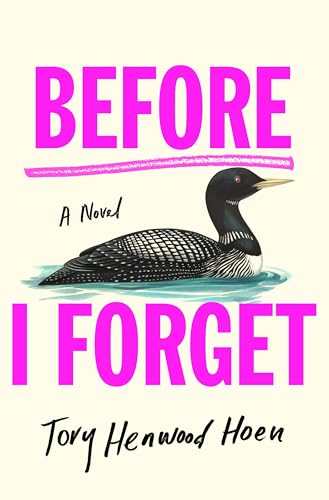
Before I Forget
A funny, heartfelt, late coming-of-age story that examines the role of memory in holding us back—and in moving us forward
Call it inertia. Call it a quarter-life crisis. Whatever you call it, Cricket Campbell is stuck. Despite working at a zeitgeist-y wellness company, the twenty-six-year-old feels anything but well. Still adrift after a tragedy that upended her world a decade ago, she has entered early adulthood under the weight of a new burden: her father’s Alzheimer’s diagnosis.
When Cricket’s older sister Nina announces it is time to move Arthur from his beloved Adirondack lake house into a memory-care facility, Cricket has a better idea. In returning home to become her father’s caretaker, she hopes to repair their strained relationship and shake herself out of her perma-funk. But even deeply familiar places can hold surprises.
As Cricket settles back into the family house at Catwood Pond―a place she once loved, but hasn’t visited since she was a teenager―she discovers that her father possesses a rare gift: as he loses his grasp of the past, he is increasingly able to predict the future. Before long, Arthur cements his reputation as an unlikely oracle, but for Cricket, believing in her father’s prophecies might also mean facing the most painful parts of her history. As she begins to remember who she once was, she uncovers a vital truth: the path forward often starts by going back.
Call it inertia. Call it a quarter-life crisis. Whatever you call it, Cricket Campbell is stuck. Despite working at a zeitgeist-y wellness company, the twenty-six-year-old feels anything but well. Still adrift after a tragedy that upended her world a decade ago, she has entered early adulthood under the weight of a new burden: her father’s Alzheimer’s diagnosis.
When Cricket’s older sister Nina announces it is time to move Arthur from his beloved Adirondack lake house into a memory-care facility, Cricket has a better idea. In returning home to become her father’s caretaker, she hopes to repair their strained relationship and shake herself out of her perma-funk. But even deeply familiar places can hold surprises.
As Cricket settles back into the family house at Catwood Pond―a place she once loved, but hasn’t visited since she was a teenager―she discovers that her father possesses a rare gift: as he loses his grasp of the past, he is increasingly able to predict the future. Before long, Arthur cements his reputation as an unlikely oracle, but for Cricket, believing in her father’s prophecies might also mean facing the most painful parts of her history. As she begins to remember who she once was, she uncovers a vital truth: the path forward often starts by going back.
274 pages, Hardcover
First published December 2, 2025
About the author
Tory Henwood Hoen
4 books512 followersTory Henwood Hoen is a writer based in Vermont, where she is a solo mom to her toddler daughter. She is the author of BEFORE I FORGET (2025) and THE ARC (2022). You can find her on Instagram @toryhenwoodhoen.
Ratings & Reviews
Friends & Following
Create a free account to discover what your friends think of this book!
Community Reviews
Displaying 1 - 30 of 5,308 reviews

July 30, 2025
Some books don’t just tell a story — they reach inside you, stir up feelings you didn’t know were buried, and gently remind you that healing is never linear, but always possible. Before I Forget by Tory Henwood Hoen is one of those rare novels that feels like a warm hand on your shoulder during a moment of reckoning.
At 26, Cricket Campbell isn’t a fresh-faced heroine chasing her dreams — she’s stuck. Lost in the fog of unresolved grief, stalled potential, and a tragedy she’s never really made peace with. When her older sister decides it’s time to move their father Arthur, who’s been diagnosed with Alzheimer’s, into a memory-care facility, Cricket steps in. Not because she’s ready — but because somewhere deep inside, she knows she needs to be.
What follows is not a straightforward journey of redemption, but a layered, funny, and quietly aching late coming-of-age story. Returning to her childhood home on Catwood Pond is like opening a time capsule sealed with emotion — familiar, yet hauntingly changed. Arthur, once unreachable, now carries a surprising gift: as his memories fade, he begins predicting the future. This beautiful twist doesn’t just serve as a whimsical plot device; it becomes a mirror through which Cricket is forced to confront her own truths — and perhaps for the first time, allow herself to rewrite them.
The brilliance of this book lies in how effortlessly it weaves humor into heartbreak. I found myself laughing out loud on one page and wiping away unexpected tears on the next. Hoen’s writing is whip-smart, lyrical, and profoundly observant. She captures the subtle nuances of family — the silence between words, the inherited habits, the unsaid regrets — with so much grace and accuracy, it made me pause more than once just to breathe it all in.
Cricket’s relationship with Arthur is the heart of this novel. It’s raw, layered, and astonishingly tender. Watching their roles shift — daughter becoming caretaker, father becoming prophet — is both devastating and deeply human. Their connection reminded me that even in the face of illness and memory loss, love doesn’t disappear. It simply changes shape.
Before I Forget isn’t just about Alzheimer’s. It’s about what we remember and what we choose to forget — and how both can shape the stories we tell ourselves. It’s about home, grief, time, identity, and above all, hope. That elusive, quiet kind of hope that whispers: you can still begin again.
This novel left a mark on me. Not with flashy plot twists or dramatic crescendos, but with the slow, steady unfolding of emotional truth. It’s the kind of book that feels like it was written just for you — like someone reached into your chest, found your most hidden hurt, and gave it space to exhale.
Huge thanks to NetGalley and St. Martin’s Press for sharing this embracing, emotional women’s fiction digital reviewer copy with me in exchange for my honest thoughts. This story will stay with me for a long, long time — and I feel incredibly lucky to have read it.
medium blog
instagram
facebook
twitter
At 26, Cricket Campbell isn’t a fresh-faced heroine chasing her dreams — she’s stuck. Lost in the fog of unresolved grief, stalled potential, and a tragedy she’s never really made peace with. When her older sister decides it’s time to move their father Arthur, who’s been diagnosed with Alzheimer’s, into a memory-care facility, Cricket steps in. Not because she’s ready — but because somewhere deep inside, she knows she needs to be.
What follows is not a straightforward journey of redemption, but a layered, funny, and quietly aching late coming-of-age story. Returning to her childhood home on Catwood Pond is like opening a time capsule sealed with emotion — familiar, yet hauntingly changed. Arthur, once unreachable, now carries a surprising gift: as his memories fade, he begins predicting the future. This beautiful twist doesn’t just serve as a whimsical plot device; it becomes a mirror through which Cricket is forced to confront her own truths — and perhaps for the first time, allow herself to rewrite them.
The brilliance of this book lies in how effortlessly it weaves humor into heartbreak. I found myself laughing out loud on one page and wiping away unexpected tears on the next. Hoen’s writing is whip-smart, lyrical, and profoundly observant. She captures the subtle nuances of family — the silence between words, the inherited habits, the unsaid regrets — with so much grace and accuracy, it made me pause more than once just to breathe it all in.
Cricket’s relationship with Arthur is the heart of this novel. It’s raw, layered, and astonishingly tender. Watching their roles shift — daughter becoming caretaker, father becoming prophet — is both devastating and deeply human. Their connection reminded me that even in the face of illness and memory loss, love doesn’t disappear. It simply changes shape.
Before I Forget isn’t just about Alzheimer’s. It’s about what we remember and what we choose to forget — and how both can shape the stories we tell ourselves. It’s about home, grief, time, identity, and above all, hope. That elusive, quiet kind of hope that whispers: you can still begin again.
This novel left a mark on me. Not with flashy plot twists or dramatic crescendos, but with the slow, steady unfolding of emotional truth. It’s the kind of book that feels like it was written just for you — like someone reached into your chest, found your most hidden hurt, and gave it space to exhale.
Huge thanks to NetGalley and St. Martin’s Press for sharing this embracing, emotional women’s fiction digital reviewer copy with me in exchange for my honest thoughts. This story will stay with me for a long, long time — and I feel incredibly lucky to have read it.
medium blog

March 23, 2026
i'm bummed that i didn't love this! no part of the story grabbed me, except for the flashbacks! it wasn't for me, but a lot of people really loved this one, so definitely keep that in mind!
edited to add: i lost my Gaga to Alzheimer's and although every experience is different, i thought the depiction of it in this book was not realistic at all to my personal connection.. not taking anything away from what was potentially the author's experience, but if you had a much more negative experience like i did with anger, frustration, the sadness, this just completely missed the mark and felt very juvenile.
edited to add: i lost my Gaga to Alzheimer's and although every experience is different, i thought the depiction of it in this book was not realistic at all to my personal connection.. not taking anything away from what was potentially the author's experience, but if you had a much more negative experience like i did with anger, frustration, the sadness, this just completely missed the mark and felt very juvenile.

November 12, 2025
My Reviews Can Also Be Found On:
The Book Review Crew Blog
Let me start with a shout-out and a HUGE thank you to my Goodreads friend, Heather Adores Books . It was because of her wonderful five star review that I requested this book. Heather's review can be found HERE . Now on to MY review...
Oh my gosh, this book! It's about 26-year-old Cricket, and she is stuck in a rut. She is traumatized by a tragedy in her past and in a funk at her wellness job. When her dad is diagnosed with Alzheimer's, she goes against her sister's plan to move him into a care home and instead returns to her family home and becomes his caretaker. She hopes that doing this will help to fix her strained relationship with him. As she settles in, she finds that her dad's illness of forgetting the past makes him able to predict the future.
This book is freaking incredible and truly special. It was incredibly profound and funny. The humour was witty and the story heartfelt. It sort of reads as coming of age, but the protagonist is in her twenties. The way the author dealt with Alzheimer's was very tender and emotional. I have had to deal with this with three different family members over the years, and it was so realistic. I liked how the author didn't just focus on the loss of a loved one with this disease; it was so uplifting at times that it surprised me. Cricket realises what she's missed by not spending time with her dad in such a joyful way. I wanted to reach through the pages and hug her at times. I will miss both her and Arthur.
This is a short book that can be read easily in a day or two. It was funny, magical and heartbreaking. Family is complex, and so is our love for them, and Tory Henwood Hoen writes this story that way. I can't recommend this book enough. It was captivating, charming and unforgettable from the first page to the last. All. The. Stars.
Thank you to NetGalley and the publisher for the ARC.
The Book Review Crew Blog
Let me start with a shout-out and a HUGE thank you to my Goodreads friend, Heather Adores Books . It was because of her wonderful five star review that I requested this book. Heather's review can be found HERE . Now on to MY review...
Oh my gosh, this book! It's about 26-year-old Cricket, and she is stuck in a rut. She is traumatized by a tragedy in her past and in a funk at her wellness job. When her dad is diagnosed with Alzheimer's, she goes against her sister's plan to move him into a care home and instead returns to her family home and becomes his caretaker. She hopes that doing this will help to fix her strained relationship with him. As she settles in, she finds that her dad's illness of forgetting the past makes him able to predict the future.
This book is freaking incredible and truly special. It was incredibly profound and funny. The humour was witty and the story heartfelt. It sort of reads as coming of age, but the protagonist is in her twenties. The way the author dealt with Alzheimer's was very tender and emotional. I have had to deal with this with three different family members over the years, and it was so realistic. I liked how the author didn't just focus on the loss of a loved one with this disease; it was so uplifting at times that it surprised me. Cricket realises what she's missed by not spending time with her dad in such a joyful way. I wanted to reach through the pages and hug her at times. I will miss both her and Arthur.
This is a short book that can be read easily in a day or two. It was funny, magical and heartbreaking. Family is complex, and so is our love for them, and Tory Henwood Hoen writes this story that way. I can't recommend this book enough. It was captivating, charming and unforgettable from the first page to the last. All. The. Stars.
Thank you to NetGalley and the publisher for the ARC.

November 21, 2025
Delightful. Gentle. Loving. Heartwarming...
26-year-old Cricket Campbell is the daughter-caregiver to her father, Arthur, who has Alzheimer’s. They live together in the old family home on Catwood Pond in the Adirondacks. She moved back home from NYC, her choice, after years of estrangement. Arthur no longer recognizes Crickett, but it doesn't seem to matter. Getting reacquainted in their new roles seems easy, natural, and comforting to both of them. Hearing about their life together is the joy in reading this book...
Before I Forget was a welcome read, and I quickly connected with the story and the characters. We learn about the Campbell Family dynamics before and after Crickett's return, as well as why she left Catwood Pond a decade ago. Arthur is quite the character and has a special, newly discovered talent. He reminds me of Teddy Roosevelt: a larger-than-life personality with energetic determination, childlike enthusiasm, and a deep love of nature. He even sounds a bit like him, or what I think he should sound like.
An immersive read with the advanced reading and listening copies, the audiobook is narrated by the amazing Barrie Kreinik, a master of gender voicing who delivers a satisfying listening experience. Hands down, the audiobook is the way to go with this entertaining read.
Before I Forget could have been a challenging, heavy, triggering read given its sensitive topic. Instead, the author created a story that was thoughtful, tender, touching, and one I'll think about for a long time. It's a hidden jewel!
5⭐
Thank you to St. Martin's Press, Macmillan Audio, and Tory Henwood Hoen for the gifted DRC and ALC through NetGalley. This is my honest and voluntary review.
26-year-old Cricket Campbell is the daughter-caregiver to her father, Arthur, who has Alzheimer’s. They live together in the old family home on Catwood Pond in the Adirondacks. She moved back home from NYC, her choice, after years of estrangement. Arthur no longer recognizes Crickett, but it doesn't seem to matter. Getting reacquainted in their new roles seems easy, natural, and comforting to both of them. Hearing about their life together is the joy in reading this book...
Before I Forget was a welcome read, and I quickly connected with the story and the characters. We learn about the Campbell Family dynamics before and after Crickett's return, as well as why she left Catwood Pond a decade ago. Arthur is quite the character and has a special, newly discovered talent. He reminds me of Teddy Roosevelt: a larger-than-life personality with energetic determination, childlike enthusiasm, and a deep love of nature. He even sounds a bit like him, or what I think he should sound like.
An immersive read with the advanced reading and listening copies, the audiobook is narrated by the amazing Barrie Kreinik, a master of gender voicing who delivers a satisfying listening experience. Hands down, the audiobook is the way to go with this entertaining read.
Before I Forget could have been a challenging, heavy, triggering read given its sensitive topic. Instead, the author created a story that was thoughtful, tender, touching, and one I'll think about for a long time. It's a hidden jewel!
5⭐
Thank you to St. Martin's Press, Macmillan Audio, and Tory Henwood Hoen for the gifted DRC and ALC through NetGalley. This is my honest and voluntary review.

January 4, 2026
“Thank you for loving me, Dad. I know you don’t remember me, but I remember you. I always will.”
At 4:00 a.m., the sump pump alarm blares from the basement. Rain has been falling steadily all night, and the alarm signals the possibility of flooding. My husband is already sound asleep in another state—Texas—having left the day before to spend time with our grandchildren while my son and daughter-in-love celebrate their anniversary on a cruise. So, there I am, alone, bleary-eyed, wondering: What now?
I pull on shoes and step out into the rain, only to discover the basement door lock is rusted shut. I’m now soaked, flustered, and more than a little overwhelmed. Texts and calls to my husband go unanswered. Finally, spotting a random piece of wood in the yard, I use it to knock the lock loose and make my way inside. Within moments, I figure out how to silence the alarm. Crisis resolved.
Less than half an hour after being jolted awake, I’m back in bed—dogs comfortably curious, then content to snuggle in. And, that’s when I pick up this book.
My Goodreads friends have raved about it. I’d hoped my local library would get a copy, but it never did. Then, days earlier, a small bit of good fortune: it arrived as a donation to my Little Free Library Shed. I finished the books I was reading and chose this one the night before as my next read.
So, there I was at 4:30 a.m.—safe from the rain, alarm silenced—reading. And I could not put it down.
As I consider this review, the book sits beside me bristling with colorful Post-it notes—markers for moments that touched me deeply, thoughts I didn’t want to lose.
“Something wants me to listen; something wants to emerge.”
This is a novel powered not by plot twists, but by people—people who feel so real they quietly take up residence in your heart. I wanted Cricket, the daughter, to find her way. I loved her father and his best friend Carl. And Paula. Even Dominic the cat. And, Cynthia the dog. Animals who are not just background companions, but fully realized souls in their own right, offering comfort, loyalty, and moments of unexpected grace. These characters feel fully alive—woven into a story rich with love, heartbreak, and discovery.
“Alzheimer’s is a devious affliction. Not necessarily for the people who have it… but for those who witness its machinations: a forgotten name or sacred memory… The ground is always shifting beneath us.”
And yet, even with this devastating illness at its center, something quietly magical unfolds within these pages. A belief in creativity. In seeing things that may not be “there,” yet carry meaning. What might have been only painful or confusing becomes something else entirely—an unexpected redesign of relationships. A new way of seeing. A path through grief that allows for discovery rather than only loss.
For anyone who has lived with or loved someone with dementia, there is so much here to recognize, understand, and grieve. But there is also joy—found in simplicity, humor, and fleeting moments that matter.
“Alzheimer’s is not funny, except when it is, which is often… Those who witness it learn to live in limbo, because there’s nowhere else to live.”
This compelling, thoughtful, and deeply heartfelt novel will undoubtedly touch readers. This is the kind of book that reminds us how deeply we connect through relationships—how finding one’s way is rarely a solitary journey. A beautiful, character-driven read that lingers.
And while I may have woken up that morning to an annoying sump pump alarm, it led me to the gift of this book.
For that—my Goodreads friends and for this story—I am grateful beyond words.
I think you will be, too.
At 4:00 a.m., the sump pump alarm blares from the basement. Rain has been falling steadily all night, and the alarm signals the possibility of flooding. My husband is already sound asleep in another state—Texas—having left the day before to spend time with our grandchildren while my son and daughter-in-love celebrate their anniversary on a cruise. So, there I am, alone, bleary-eyed, wondering: What now?
I pull on shoes and step out into the rain, only to discover the basement door lock is rusted shut. I’m now soaked, flustered, and more than a little overwhelmed. Texts and calls to my husband go unanswered. Finally, spotting a random piece of wood in the yard, I use it to knock the lock loose and make my way inside. Within moments, I figure out how to silence the alarm. Crisis resolved.
Less than half an hour after being jolted awake, I’m back in bed—dogs comfortably curious, then content to snuggle in. And, that’s when I pick up this book.
My Goodreads friends have raved about it. I’d hoped my local library would get a copy, but it never did. Then, days earlier, a small bit of good fortune: it arrived as a donation to my Little Free Library Shed. I finished the books I was reading and chose this one the night before as my next read.
So, there I was at 4:30 a.m.—safe from the rain, alarm silenced—reading. And I could not put it down.
As I consider this review, the book sits beside me bristling with colorful Post-it notes—markers for moments that touched me deeply, thoughts I didn’t want to lose.
“Something wants me to listen; something wants to emerge.”
This is a novel powered not by plot twists, but by people—people who feel so real they quietly take up residence in your heart. I wanted Cricket, the daughter, to find her way. I loved her father and his best friend Carl. And Paula. Even Dominic the cat. And, Cynthia the dog. Animals who are not just background companions, but fully realized souls in their own right, offering comfort, loyalty, and moments of unexpected grace. These characters feel fully alive—woven into a story rich with love, heartbreak, and discovery.
“Alzheimer’s is a devious affliction. Not necessarily for the people who have it… but for those who witness its machinations: a forgotten name or sacred memory… The ground is always shifting beneath us.”
And yet, even with this devastating illness at its center, something quietly magical unfolds within these pages. A belief in creativity. In seeing things that may not be “there,” yet carry meaning. What might have been only painful or confusing becomes something else entirely—an unexpected redesign of relationships. A new way of seeing. A path through grief that allows for discovery rather than only loss.
For anyone who has lived with or loved someone with dementia, there is so much here to recognize, understand, and grieve. But there is also joy—found in simplicity, humor, and fleeting moments that matter.
“Alzheimer’s is not funny, except when it is, which is often… Those who witness it learn to live in limbo, because there’s nowhere else to live.”
This compelling, thoughtful, and deeply heartfelt novel will undoubtedly touch readers. This is the kind of book that reminds us how deeply we connect through relationships—how finding one’s way is rarely a solitary journey. A beautiful, character-driven read that lingers.
And while I may have woken up that morning to an annoying sump pump alarm, it led me to the gift of this book.
For that—my Goodreads friends and for this story—I am grateful beyond words.
I think you will be, too.

December 11, 2025
The Publisher blurb describes this story as “A funny, heartfelt, late coming-of-age story that examines the role of memory in holding us back—and in moving us forward” and that description is actually quite perfect.
Can “heartbreak and healing be intertwined”?
Cricket’s older sister Nina announces it is time to move their father Arthur from his beloved Adirondack lake house into a memory-care facility, as his Alzheimer’s is progressing but Cricket has another idea. The twenty six year old no longer believes in the “wellness products” that her boss Gemma is peddling and she feels more than ready for a change.
She has stayed away from Catwood Pond because of a tragedy that occurred there when she was sixteen, and is hoping that by returning home to become her father’s caretaker, she can repair their uneasy relationship and find purpose in her own life again.
As the pair settle into their new routine, she discovers that her father may possess a rare gift. His memories may be failing him, but he seems able to predict the future. Could an Alzheimer’s patient both forget the PAST but possibly see what is ahead?
As she watches her father as he unknowingly speaks with and brings comfort to others, Cricket learns to make peace with her own past and she will find forgiveness in unlikely places.
It’s a beautiful story but the best part to me was how Cricket felt this time with her Dad was a gift-not a burden.
Instead of being sad, the story is quietly uplifting.
I initially passed on the opportunity to read this last Summer. The book cover didn’t attract my attention and the tag “coming of age” put me off as I don’t typically enjoy spending time with young adults discovering themselves. (a small part!) Also, her first book didn’t work for me.
But recent reviews from Sarah, Terrie and Shelley had me rethinking that decision and downloading this book after publication date. I am so glad that they shared their love and praise for the story on Goodreads, or I may have missed out. 🤧
AVAILABLE NOW
Thank You to St. Martin’s Press for the gifted ARC provided through NetGalley. As always, these are my candid thoughts!
Can “heartbreak and healing be intertwined”?
Cricket’s older sister Nina announces it is time to move their father Arthur from his beloved Adirondack lake house into a memory-care facility, as his Alzheimer’s is progressing but Cricket has another idea. The twenty six year old no longer believes in the “wellness products” that her boss Gemma is peddling and she feels more than ready for a change.
She has stayed away from Catwood Pond because of a tragedy that occurred there when she was sixteen, and is hoping that by returning home to become her father’s caretaker, she can repair their uneasy relationship and find purpose in her own life again.
As the pair settle into their new routine, she discovers that her father may possess a rare gift. His memories may be failing him, but he seems able to predict the future. Could an Alzheimer’s patient both forget the PAST but possibly see what is ahead?
As she watches her father as he unknowingly speaks with and brings comfort to others, Cricket learns to make peace with her own past and she will find forgiveness in unlikely places.
It’s a beautiful story but the best part to me was how Cricket felt this time with her Dad was a gift-not a burden.
Instead of being sad, the story is quietly uplifting.
I initially passed on the opportunity to read this last Summer. The book cover didn’t attract my attention and the tag “coming of age” put me off as I don’t typically enjoy spending time with young adults discovering themselves. (a small part!) Also, her first book didn’t work for me.
But recent reviews from Sarah, Terrie and Shelley had me rethinking that decision and downloading this book after publication date. I am so glad that they shared their love and praise for the story on Goodreads, or I may have missed out. 🤧
AVAILABLE NOW
Thank You to St. Martin’s Press for the gifted ARC provided through NetGalley. As always, these are my candid thoughts!

Did Not Finish
March 27, 2026Remind me, before I forget, why this didn’t work for me.
Having beared witness to Alzheimer's and still with dementia, some of the behaviours in this story seemed like a stretch...at least from my own experience. For example, remembering a neighbour's name who has only been around for 3 years but not remembering a child's name. Usually, I stress usually, long term memory is retained rather than short-term.
I just was not able to relate to this one and hence, it is getting dumped onto my DNF shelf. I hope I forget about it!
Having beared witness to Alzheimer's and still with dementia, some of the behaviours in this story seemed like a stretch...at least from my own experience. For example, remembering a neighbour's name who has only been around for 3 years but not remembering a child's name. Usually, I stress usually, long term memory is retained rather than short-term.
I just was not able to relate to this one and hence, it is getting dumped onto my DNF shelf. I hope I forget about it!

December 2, 2025
Even though Cricket Campbell works for a wellness company in New York City, she feels stuck. At twenty-six, she should have life figured out by now, right? But after a tragedy years prior leaves her heart shattered, on top of her dad’s Alzheimer’s diagnosis that rocks her world, Cricket’s life feels purposeless. So when her sister, Nina, tells her that it’s time to move their dad from his Adirondack home and into a memory-care facility, Cricket returns to the small town of Locust, which she’s been avoiding since that fateful night.
But when she sees how much Arthur loves his home at Catwood Pond, mixed with her desire to be with her dad, Cricket decides that she’ll take care of him until it’s completely necessary to move him. As she spends more time with Arthur, she notices that even though he is losing his grasp of the past, he can somehow predict the future. And when his fame as an oracle spreads, Cricket realizes that her dad’s extraordinary gift is forcing her to revisit the painful past that made her lose sight of who she really is.
Hello? Yeah, hi. It’s me again. I want to make another appointment for a therapy session. And be sure to have plenty of boxes of tissues on standby because I can’t even stop crying at this point. 😭
Oh my gosh, this book was EVERYTHING that I needed! 🤧❤️🩹 There was humor that made me laugh. There were life lessons that made me rethink my life choices, and want to do and be better. There were heartbreaking moments that made me hide under my blanket and sob like a baby. The writing was so beautiful yet simple. The story was both moving and engaging. The characters were flawed, relatable, and so, so memorable. Ugh, I loved them so much, and I wished I were a part of their small group. Also, can I live near Catwood Pond, please? It sounds like paradise. 😍
I have read many good books this year, but this one is in the top 5 that I think are THE BEST OF THE BEST. I mean, I was supposed to read another book while I read this, but I was instantly HOOKED. I could not put this down. I tried to stay up all night to finish this, but my body wanted to rest. 😂
Have you ever wanted to personally thank an author for writing such a wonderful book that may have just changed your life? Yeah, that’s how I feel about this one. If I could give this a million stars, I would because this was so freaking beautiful and amazing. Arthur, you are such a freaking gem! 😭❤ Cricket, I related so much to how you felt about yourself and life, and I wish I could give you a big hug! 😭🫂 And that ending? Yeah, it completely and utterly destroyed me, and I don’t regret a minute of it. 😅😭
You know, I think this book hit so close to home for me because I lost my sweet and beautiful grandma a month ago, and good Lord, this story constantly reminded me of her and those painful last days before she passed. It hurt a lot, but I’m glad I got to think more of her as I read this. 🩷 I know not everyone will love this book, but that’s okay. This was exactly what I needed, and I’m so, so glad that my GR friends put this on my radar because I just found a new favorite that added some healing to my soul. 🫶🏼
Do I recommend this? Heck yes. Absolutely. I probably won’t ever shut up about it, and I apologize in advance. 😂 If and when Tory Henwood Hoen writes more books, I will be the first person in line to get a copy of whatever she writes next.
Thank you to St. Martin’s Press and NetGalley for providing the arc in exchange for an honest review! All opinions and statements are my own.
❗Content Warnings❗
Death and mentions depression.
Swearing: Yes
Spice: No–mainly kissing and talking about sex. (🌶/5)
But when she sees how much Arthur loves his home at Catwood Pond, mixed with her desire to be with her dad, Cricket decides that she’ll take care of him until it’s completely necessary to move him. As she spends more time with Arthur, she notices that even though he is losing his grasp of the past, he can somehow predict the future. And when his fame as an oracle spreads, Cricket realizes that her dad’s extraordinary gift is forcing her to revisit the painful past that made her lose sight of who she really is.
Hello? Yeah, hi. It’s me again. I want to make another appointment for a therapy session. And be sure to have plenty of boxes of tissues on standby because I can’t even stop crying at this point. 😭
Oh my gosh, this book was EVERYTHING that I needed! 🤧❤️🩹 There was humor that made me laugh. There were life lessons that made me rethink my life choices, and want to do and be better. There were heartbreaking moments that made me hide under my blanket and sob like a baby. The writing was so beautiful yet simple. The story was both moving and engaging. The characters were flawed, relatable, and so, so memorable. Ugh, I loved them so much, and I wished I were a part of their small group. Also, can I live near Catwood Pond, please? It sounds like paradise. 😍
I have read many good books this year, but this one is in the top 5 that I think are THE BEST OF THE BEST. I mean, I was supposed to read another book while I read this, but I was instantly HOOKED. I could not put this down. I tried to stay up all night to finish this, but my body wanted to rest. 😂
Have you ever wanted to personally thank an author for writing such a wonderful book that may have just changed your life? Yeah, that’s how I feel about this one. If I could give this a million stars, I would because this was so freaking beautiful and amazing. Arthur, you are such a freaking gem! 😭❤ Cricket, I related so much to how you felt about yourself and life, and I wish I could give you a big hug! 😭🫂 And that ending? Yeah, it completely and utterly destroyed me, and I don’t regret a minute of it. 😅😭
You know, I think this book hit so close to home for me because I lost my sweet and beautiful grandma a month ago, and good Lord, this story constantly reminded me of her and those painful last days before she passed. It hurt a lot, but I’m glad I got to think more of her as I read this. 🩷 I know not everyone will love this book, but that’s okay. This was exactly what I needed, and I’m so, so glad that my GR friends put this on my radar because I just found a new favorite that added some healing to my soul. 🫶🏼
Do I recommend this? Heck yes. Absolutely. I probably won’t ever shut up about it, and I apologize in advance. 😂 If and when Tory Henwood Hoen writes more books, I will be the first person in line to get a copy of whatever she writes next.
Thank you to St. Martin’s Press and NetGalley for providing the arc in exchange for an honest review! All opinions and statements are my own.
❗Content Warnings❗
Death and mentions depression.
Swearing: Yes
Spice: No–mainly kissing and talking about sex. (🌶/5)

November 4, 2025
5⭐
Genre ~ family life fiction, coming of age
Setting ~ New York
Publication date ~ December 2, 2025
Publisher ~ Macmillan Audio
Est Page Count ~ 288 (54 chapters)
Audio length ~ 9 hours 11 minutes
Narrator ~ Barrie Kreinik
POV ~ single 1st
Featuring ~ dual timeline, parent with Alzheimers
If you have read my reviews before you might know that I’m scared of getting Alzheimers. More so scared for my daughter than for myself and here we have a daughter, Cricket, choosing to become a caregiver for her father, Arthur (74). She’s only 26 and still trying to figure her own life out. As she spends time at the lake house in the Adirondacks, a place that holds painful memories, she’ll come to find her way.
We get a story of patience and making the most of the time you have left while you can. They create a phenomenon that people travel far and wide to experience. Arthur sounded like a truly lovely person in both the flashbacks and in the present.
Overall, just heartbreakingly lovely.
Narration notes:
She did a wonderful job.
Pre-reading notes:
Seems like I might need to have the tissues handy for this one 🥹
Genre ~ family life fiction, coming of age
Setting ~ New York
Publication date ~ December 2, 2025
Publisher ~ Macmillan Audio
Est Page Count ~ 288 (54 chapters)
Audio length ~ 9 hours 11 minutes
Narrator ~ Barrie Kreinik
POV ~ single 1st
Featuring ~ dual timeline, parent with Alzheimers
If you have read my reviews before you might know that I’m scared of getting Alzheimers. More so scared for my daughter than for myself and here we have a daughter, Cricket, choosing to become a caregiver for her father, Arthur (74). She’s only 26 and still trying to figure her own life out. As she spends time at the lake house in the Adirondacks, a place that holds painful memories, she’ll come to find her way.
We get a story of patience and making the most of the time you have left while you can. They create a phenomenon that people travel far and wide to experience. Arthur sounded like a truly lovely person in both the flashbacks and in the present.
Overall, just heartbreakingly lovely.
Narration notes:
She did a wonderful job.
Pre-reading notes:
Seems like I might need to have the tissues handy for this one 🥹

February 18, 2026
Such a beautifully written book! This definitely takes a different direction in portraying Alzheimer's compared to what we usually see. Instead of focusing on the sadness, there's almost this more optimistic tone to the story - looking at the positive ways in which we can open up when memory isn't strong anymore. And while I love reading stories that sit more in reality with this illness and how it can affect a person and their loved ones, it was refreshing to see this portrayed in a different light... almost in a whimsical way.
There was a moment in this book where the magical realism bit got a bit TOO magical for me. The story started going in a more paranormal direction than what I was expecting, and felt like we were focusing on more of an external plotline vs getting taking time to get deep in the feels. But as I continued to read on, I accepted it. And in the end, I think this was a really well rounded story!
(also loved the critique and poking fun at wellness culture haha)
There was a moment in this book where the magical realism bit got a bit TOO magical for me. The story started going in a more paranormal direction than what I was expecting, and felt like we were focusing on more of an external plotline vs getting taking time to get deep in the feels. But as I continued to read on, I accepted it. And in the end, I think this was a really well rounded story!
(also loved the critique and poking fun at wellness culture haha)

January 6, 2026
For anyone who lost a parent, may their memory be a blessing!
Full RTF
Full RTF

March 17, 2026
In a Nutshell: A contemporary drama partly focussing on memory and memories. Expected to like this much more, but it felt more like a Hallmark depiction of Alzheimer’s. Many of the plot inclusions weren't my cup of tea. This is an outlier opinion.
~~~~~~~~~~~~~~~~~~~~~~~
Plot Preview:
As a person who constantly judges books by their covers, I didn’t even give this book a second glance. The loon on the cover (well, I first thought it was a duck! 🤭) made me think that it was some kind of literary work, which I wasn’t in the mood for. But when my GR friends started showering 5 stars for its emotional plotline and its depiction of Alzheimer’s, I succumbed to the FOMO. While some of the content indeed grabbed me, a lot of it wasn’t my cup of tea, partly because I hadn’t anticipated the book to have those inclusions. The character development is its least impressive feature.
I am currently a caregiver for my dad who is also suffering from dementia, though he isn't at the advanced stage that Arthur is in. So to some extent, I appreciate the portrayal of dementia and the struggles of caregiving in this novel. It is a mostly tiring and often thankless job, and the book captures SOME of the frustrations accurately. However, it also makes caregiving sound more like a vacation than a vocation; the major challenges are conveniently glossed over.
Arthur is easily the best character of the book. Wise and loving, he is the kind of father every girl would love to have. I absolutely loved his joie de vivre. However, I didn’t find the depiction of his dementia realistic. Though I am willing to concede that dementia affects people differently, I wish his character development had included at least some of the darker consequences of this stupid disease.
I liked Cricket at first, but once she decided to use her father as “an oracle”, I lost all respect for her. No matter her justifications, she was still using an old man with an uncertain state of mind to guide strangers towards betterment – who does that?! It puts both her dad and the strangers at risk, albeit for different reasons.
The book is described as ‘coming of age’ in several places, but to me, Cricket never really *came of age*. It’s just that luck turned in her favour by the end. Also, most of her personality is of one who enjoys interacting with other people, so I almost laughed in disbelief when, in the final quarter, she suddenly claims to be an introvert. There was nothing introverted about her behaviour throughout the story!
I didn’t expect the story to come through two timelines. The older timeline reveals to us Cricket’s past loss, with romance as a key subplot. This might interest readers who like reading young romances, but to me, the entire love story was weak. Cricket’s behaviour in this timeline was somewhat entitled, and contained two very questionable decisions that I just didn’t agree with. As such, despite the presence of one well-written emotional scene, I didn’t like the past timeline at all.
Obviously, to compensate for the past sadness, there is the expected new romance in the contemporary timeline. This love track, which comes way too late in the book, feels forced in. Just imagine: a character has no job and no future security to speak of, and the plot is still determined to find her a love partner first. 🤦🏻♀️
The whole clairvoyance thingy also bugged me. It is an unexpected inclusion that seems different at first but soon turns ridiculous. I like magical realism, but reading it in a book that I thought was about dementia and caregiving annoyed me more. (Part of the blame lies on me for not reading the complete blurb, but with so many blurbs *spoilering* books, I rarely read them entirely these days.) The prophecy mumbo-jumbo took away from the actual challenges of Alzheimer’s and I found myself aligning with Nina in her stance against the whole shenanigan. Patients with dementia/Alzheimers need stability and routine, not random strangers popping in for advice. The small saving grace was that Cricket didn’t charge for Arthur’s “services”.
The book doesn’t even depict both sides of this dementia-prophecy angle. Though Arthur has advanced dementia, he conveniently functions well when it comes to being an oracle. There’s not a single scene where he is not in the right frame of mind to make his predictions, or when he fumbles and makes an inaccurate estimation. A very lopsided portrayal, this! Further, though the oracle track becomes a major subplot of the book, we rarely get to see Arthur in action. As the story is in Cricket’s first-person POV, we see his interactions with the clients only when Cricket is in the same room, which isn't often. The rest of the time, we only hear from Cricket about her plans for “the oracle”. The book tries hard to make Cricket sound noble in this endeavour, but I just can't agree: I found her exploitative!
I found Cricket’s elder sister Nina more relatable at the start. As the elder daughter who had to compromise on her goals to care for her father for many years before Cricket took over caregiving, Nina won my respect. One line in the book states, ‘Eldest daughters carry the weight of the whole family on their shoulders’, and as an elder daughter myself, I was hit hard by the truth of this sentiment. Call this my elder-daughter bias, but I don’t like how the book indirectly rates Cricket’s go-with-the-flow caregiving higher than Nina’s disciplined efforts of five years. Nina deserved way more credit than the book gave her. Cricket didn’t sacrifice anything when she came to take care of her father; Nina did. Unfortunately, Nina also didn’t click for me later because of one major inconsistency in her character detailing.
Some of the secondary characters are good, but many of them are also one-noted, with barely any depth to their sketching. Dominic the cat is a good addition to the cast. Gemma is not; her role later in the story is as annoying as the oracle track.
The prose is good, with some thought-provoking lines. I enjoyed the portrayal of the Adirondacks and of Arthur’s love for country living. It takes a while to understand the significance of the loons, but once it comes up, we understand why the cover has a loon on it. The question is: will such a cover art appeal to people who have no idea what the book is about? Will they be able to gauge the right genre of the book from the cover?
The ending has its beauty but is also too neat in certain aspects.
🎧 The Audiobook Experience:
The audiobook, clocking at a little more than 9 hrs, is narrated by the experienced and talented Barrie Kreinik. She does a commendable job, infusing the narration with the right amount of modulation and emotion. If the plot interests you, the audio version is a great option, as long as you don't get bogged down by dual timelines. The years are mentioned at the start of each past-timeline chapter, if that helps.
Basically, this book has a good mix of things to offer, some of which worked for me and some didn’t. I liked Arthur’s character and some part of the portrayal of Alzheimer’s and the challenges of caregiving. But I didn’t like the overall poor character development and the dual timelines, and hated the whole prophecy track. The start was rock solid, but after a point, it just lost my interest.
Then again, mine is very much an outlier opinion. Of all my GR friends who have read this book, a vast majority found it an emotional and even uplifting read worth 5 stars. So please do read the other reviews before you take a final call on this work. If you are more open to the idea of prophecies in an otherwise realistic topic and to the inclusion of romance in a non-romance work, this book might work better for you. I think the crux of my problem is: I wanted a story about Arthur but I got a story about Cricket. 🤷🏻♀️
Recommended to readers looking for a Hallmark-style story about the complexities of growing up. Helps if you are intrigued by the clairvoyance angle. Don’t pick this up if you want a realistic story of dementia/Alzheimer’s; the realism in this story is minimal.
2 stars, mostly for Arthur and the narrator.
My thanks to Macmillan Audio for providing the ALC of “Before I Forget” via NetGalley. This review is voluntary and contains my honest opinion about the audiobook. Sorry this didn’t work better for me.
~~~~~~~~~~~~~~~~~~~~~~~
I follow the Goodreads rating policy:
⭐⭐⭐⭐⭐ - Lifelong favourite!
⭐⭐⭐⭐ - I loved the book.
⭐⭐⭐ - I liked the book.
⭐⭐ - I found the book average.
⭐ - I hated the book.
The decimals indicate the degree of the in-between feelings.
~~~~~~~~~~~~~~~~~~~~~~~
Connect with me through:
My Blog || The StoryGraph || Instagram || Facebook ||
~~~~~~~~~~~~~~~~~~~~~~~
Plot Preview:
Though twenty-six-year-old Cricket is doing decently at her job with a modern wellness company, she feels like she is weighed down under the burdens of a past tragedy and of a present worry: her father’s Alzheimer’s has worsened. When her elder sister Nina declares that they need to move their dad Arthur into a hospice-care facility, Cricket decides to use his health as the catalyst she needed to make a change in her life. She quits her job and moves to their home in the Adirondacks to become Arthur’s caregiver, and in the process, hopes to heal the old rift between them, though he doesn’t remember it. As Cricket settles into her new role, she soon discovers that her father has a special gift: as he forgets his past, he can predict the future. What next!?
The story comes to us in Cricket’s first-person perspective from two timelines: past and present.
As a person who constantly judges books by their covers, I didn’t even give this book a second glance. The loon on the cover (well, I first thought it was a duck! 🤭) made me think that it was some kind of literary work, which I wasn’t in the mood for. But when my GR friends started showering 5 stars for its emotional plotline and its depiction of Alzheimer’s, I succumbed to the FOMO. While some of the content indeed grabbed me, a lot of it wasn’t my cup of tea, partly because I hadn’t anticipated the book to have those inclusions. The character development is its least impressive feature.
I am currently a caregiver for my dad who is also suffering from dementia, though he isn't at the advanced stage that Arthur is in. So to some extent, I appreciate the portrayal of dementia and the struggles of caregiving in this novel. It is a mostly tiring and often thankless job, and the book captures SOME of the frustrations accurately. However, it also makes caregiving sound more like a vacation than a vocation; the major challenges are conveniently glossed over.
Arthur is easily the best character of the book. Wise and loving, he is the kind of father every girl would love to have. I absolutely loved his joie de vivre. However, I didn’t find the depiction of his dementia realistic. Though I am willing to concede that dementia affects people differently, I wish his character development had included at least some of the darker consequences of this stupid disease.
I liked Cricket at first, but once she decided to use her father as “an oracle”, I lost all respect for her. No matter her justifications, she was still using an old man with an uncertain state of mind to guide strangers towards betterment – who does that?! It puts both her dad and the strangers at risk, albeit for different reasons.
The book is described as ‘coming of age’ in several places, but to me, Cricket never really *came of age*. It’s just that luck turned in her favour by the end. Also, most of her personality is of one who enjoys interacting with other people, so I almost laughed in disbelief when, in the final quarter, she suddenly claims to be an introvert. There was nothing introverted about her behaviour throughout the story!
I didn’t expect the story to come through two timelines. The older timeline reveals to us Cricket’s past loss, with romance as a key subplot. This might interest readers who like reading young romances, but to me, the entire love story was weak. Cricket’s behaviour in this timeline was somewhat entitled, and contained two very questionable decisions that I just didn’t agree with. As such, despite the presence of one well-written emotional scene, I didn’t like the past timeline at all.
Obviously, to compensate for the past sadness, there is the expected new romance in the contemporary timeline. This love track, which comes way too late in the book, feels forced in. Just imagine: a character has no job and no future security to speak of, and the plot is still determined to find her a love partner first. 🤦🏻♀️
The whole clairvoyance thingy also bugged me. It is an unexpected inclusion that seems different at first but soon turns ridiculous. I like magical realism, but reading it in a book that I thought was about dementia and caregiving annoyed me more. (Part of the blame lies on me for not reading the complete blurb, but with so many blurbs *spoilering* books, I rarely read them entirely these days.) The prophecy mumbo-jumbo took away from the actual challenges of Alzheimer’s and I found myself aligning with Nina in her stance against the whole shenanigan. Patients with dementia/Alzheimers need stability and routine, not random strangers popping in for advice. The small saving grace was that Cricket didn’t charge for Arthur’s “services”.
The book doesn’t even depict both sides of this dementia-prophecy angle. Though Arthur has advanced dementia, he conveniently functions well when it comes to being an oracle. There’s not a single scene where he is not in the right frame of mind to make his predictions, or when he fumbles and makes an inaccurate estimation. A very lopsided portrayal, this! Further, though the oracle track becomes a major subplot of the book, we rarely get to see Arthur in action. As the story is in Cricket’s first-person POV, we see his interactions with the clients only when Cricket is in the same room, which isn't often. The rest of the time, we only hear from Cricket about her plans for “the oracle”. The book tries hard to make Cricket sound noble in this endeavour, but I just can't agree: I found her exploitative!
I found Cricket’s elder sister Nina more relatable at the start. As the elder daughter who had to compromise on her goals to care for her father for many years before Cricket took over caregiving, Nina won my respect. One line in the book states, ‘Eldest daughters carry the weight of the whole family on their shoulders’, and as an elder daughter myself, I was hit hard by the truth of this sentiment. Call this my elder-daughter bias, but I don’t like how the book indirectly rates Cricket’s go-with-the-flow caregiving higher than Nina’s disciplined efforts of five years. Nina deserved way more credit than the book gave her. Cricket didn’t sacrifice anything when she came to take care of her father; Nina did. Unfortunately, Nina also didn’t click for me later because of one major inconsistency in her character detailing.
Some of the secondary characters are good, but many of them are also one-noted, with barely any depth to their sketching. Dominic the cat is a good addition to the cast. Gemma is not; her role later in the story is as annoying as the oracle track.
The prose is good, with some thought-provoking lines. I enjoyed the portrayal of the Adirondacks and of Arthur’s love for country living. It takes a while to understand the significance of the loons, but once it comes up, we understand why the cover has a loon on it. The question is: will such a cover art appeal to people who have no idea what the book is about? Will they be able to gauge the right genre of the book from the cover?
The ending has its beauty but is also too neat in certain aspects.
🎧 The Audiobook Experience:
The audiobook, clocking at a little more than 9 hrs, is narrated by the experienced and talented Barrie Kreinik. She does a commendable job, infusing the narration with the right amount of modulation and emotion. If the plot interests you, the audio version is a great option, as long as you don't get bogged down by dual timelines. The years are mentioned at the start of each past-timeline chapter, if that helps.
Basically, this book has a good mix of things to offer, some of which worked for me and some didn’t. I liked Arthur’s character and some part of the portrayal of Alzheimer’s and the challenges of caregiving. But I didn’t like the overall poor character development and the dual timelines, and hated the whole prophecy track. The start was rock solid, but after a point, it just lost my interest.
Then again, mine is very much an outlier opinion. Of all my GR friends who have read this book, a vast majority found it an emotional and even uplifting read worth 5 stars. So please do read the other reviews before you take a final call on this work. If you are more open to the idea of prophecies in an otherwise realistic topic and to the inclusion of romance in a non-romance work, this book might work better for you. I think the crux of my problem is: I wanted a story about Arthur but I got a story about Cricket. 🤷🏻♀️
Recommended to readers looking for a Hallmark-style story about the complexities of growing up. Helps if you are intrigued by the clairvoyance angle. Don’t pick this up if you want a realistic story of dementia/Alzheimer’s; the realism in this story is minimal.
2 stars, mostly for Arthur and the narrator.
My thanks to Macmillan Audio for providing the ALC of “Before I Forget” via NetGalley. This review is voluntary and contains my honest opinion about the audiobook. Sorry this didn’t work better for me.
~~~~~~~~~~~~~~~~~~~~~~~
I follow the Goodreads rating policy:
⭐⭐⭐⭐⭐ - Lifelong favourite!
⭐⭐⭐⭐ - I loved the book.
⭐⭐⭐ - I liked the book.
⭐⭐ - I found the book average.
⭐ - I hated the book.
The decimals indicate the degree of the in-between feelings.
~~~~~~~~~~~~~~~~~~~~~~~
Connect with me through:
My Blog || The StoryGraph || Instagram || Facebook ||

December 27, 2025
Powerful in its simplicity Before I Forget grabbed me by the hand and took me on a unique journey that I'm grateful to have traveled.
Cricket has been unfulfilled and rather aimless in her 20's following an accident that occurred in her teens. She seems to have needed help that she didn't receive because the adults in her life were chasing their dreams and she probably wasn't receptive anyway. The result is she's twenty-seven and stagnant. Her sister Nina has been caring for their ailing father who has Alzheimer's but is preparing to move to Stockholm for work. The sisters decide to look at care facilities together with their father. As Cricket tours these facilities, she notices how much her father wants to go home. She decides to abandon her city life and move to the family cabin her father calls home in the Adirondacks to care for him. She knows the past will haunt her there, but maybe it's time to face some ghosts.
I've read novels that look at Alzheimer's and dementia, but nothing like this. There was the grim reality juxtaposed with growth and happiness that felt like hope. Sometimes we smile through the tears when life gets overwhelming and that is the feeling this novel conveyed for me. Cricket sitting across from her father who doesn't know she's his daughter and having conversations struck my heart. Her father still had words to offer her that reframed her thinking and shared pieces of who he still was. It was lovely and sad, but wonderful too. I couldn't put this endearing novel down.
I loved the cover even more after reading. The way the loons were written into the narrative was a treat. I found myself looking forward to each mention of the birds and all they represented.
A beautiful story sure to pull at your heartstrings!
*Now Available*
All the stars!
⭐⭐⭐⭐⭐
Thank you to St. Martin's Press for providing an ARC via NetGalley. All thoughts and opinions are my own.
Cricket has been unfulfilled and rather aimless in her 20's following an accident that occurred in her teens. She seems to have needed help that she didn't receive because the adults in her life were chasing their dreams and she probably wasn't receptive anyway. The result is she's twenty-seven and stagnant. Her sister Nina has been caring for their ailing father who has Alzheimer's but is preparing to move to Stockholm for work. The sisters decide to look at care facilities together with their father. As Cricket tours these facilities, she notices how much her father wants to go home. She decides to abandon her city life and move to the family cabin her father calls home in the Adirondacks to care for him. She knows the past will haunt her there, but maybe it's time to face some ghosts.
I've read novels that look at Alzheimer's and dementia, but nothing like this. There was the grim reality juxtaposed with growth and happiness that felt like hope. Sometimes we smile through the tears when life gets overwhelming and that is the feeling this novel conveyed for me. Cricket sitting across from her father who doesn't know she's his daughter and having conversations struck my heart. Her father still had words to offer her that reframed her thinking and shared pieces of who he still was. It was lovely and sad, but wonderful too. I couldn't put this endearing novel down.
I loved the cover even more after reading. The way the loons were written into the narrative was a treat. I found myself looking forward to each mention of the birds and all they represented.
A beautiful story sure to pull at your heartstrings!
*Now Available*
All the stars!
⭐⭐⭐⭐⭐
Thank you to St. Martin's Press for providing an ARC via NetGalley. All thoughts and opinions are my own.

January 19, 2026
Thank you to all my wonderful Goodreads friends for your lovely reviews, and for bringing this book to my attention. I can assure you that this is one book that I won’t forget anytime soon. This book was an absolute pleasure to read, and it’s worth every star! 🌟
This story starts off with Cricket Campbell receiving a phone call from her sister Nina, that their father needs full-time care due to his Alzheimer’s. Nina is moving away to Sweden for a postdoc on women’s health studies, and they are going to have to sell the family home on Catwood Pond, and put their father in a full-time memory care facility.
Cricket returns home after being away for nine years, and it is then that she decides to become the full-time caregiver for her father, Arthur. Being back home in the Adirondack’s is a big adjustment for Cricket, especially after leaving her wellness job in NYC. It is back home with her father that old memories resurface from her teenage years, and memories from a first love are still traumatizing her.
Cricket and her father grow close again with their new time spent together. Cricket also notices that her father has developed an ability to predict the future with his dementia. The people on Catwood Pond now see Arthur as an oracle of sorts.
This book brought tears, chuckles, sadness, happiness… It literally had it all! I also loved all the relatable characters that I felt like I knew personally and could be friends with (except Greg).
This was just a wonderful book, and I highly recommend reading this!
This story starts off with Cricket Campbell receiving a phone call from her sister Nina, that their father needs full-time care due to his Alzheimer’s. Nina is moving away to Sweden for a postdoc on women’s health studies, and they are going to have to sell the family home on Catwood Pond, and put their father in a full-time memory care facility.
Cricket returns home after being away for nine years, and it is then that she decides to become the full-time caregiver for her father, Arthur. Being back home in the Adirondack’s is a big adjustment for Cricket, especially after leaving her wellness job in NYC. It is back home with her father that old memories resurface from her teenage years, and memories from a first love are still traumatizing her.
Cricket and her father grow close again with their new time spent together. Cricket also notices that her father has developed an ability to predict the future with his dementia. The people on Catwood Pond now see Arthur as an oracle of sorts.
This book brought tears, chuckles, sadness, happiness… It literally had it all! I also loved all the relatable characters that I felt like I knew personally and could be friends with (except Greg).
This was just a wonderful book, and I highly recommend reading this!

February 20, 2026
4.5 ⭐️ this was gutwrenchingly beautiful

January 16, 2026
Life can only be understood backwards, but it must be lived forwards. - Kierkegaard
Cricket is having a quarter-life crisis. There was a tragedy in her past that left her unmoored, and now at 26, she is unfulfilled at her job with a bougie wellness company.
Her father, who lives in the Adirondacks, is diagnosed with Alzheimer’s and Cricket chooses to go home to care for him despite the fact that the place holds painful memories.
The story is funny, touching, and achingly beautiful. Voice is everything in a book and Cricket’s was charming and funny. Her father’s condition could have been dealt with in a heavy-handed depressing way but it was not. It was tender and thoughtful. Cricket found this special time with her dad to be a gift and opportunity not only to reconnect with him, but to confront her past.
As her father loses his memory, he seems to have gained the gift clairvoyance. This could have been cheesy but was not. The supporting characters were all delightful, and the jabs taken at the wellness industry were hilarious.
By the end I was fully invested in these characters and didn’t want the story to end. The author captured the tenderness and beauty of caring for someone in need, while not minimizing the challenges. There was much joy to be found in their relationship.
It’s some kind of magic that the author could weave such a delightful, funny, uplifting story with such a premise.
My words can’t possibly do this book justice, don’t miss it!
The audiobook’s narrator, Barrie Kreinik, captured Cricket flawlessly.
Cricket is having a quarter-life crisis. There was a tragedy in her past that left her unmoored, and now at 26, she is unfulfilled at her job with a bougie wellness company.
Her father, who lives in the Adirondacks, is diagnosed with Alzheimer’s and Cricket chooses to go home to care for him despite the fact that the place holds painful memories.
The story is funny, touching, and achingly beautiful. Voice is everything in a book and Cricket’s was charming and funny. Her father’s condition could have been dealt with in a heavy-handed depressing way but it was not. It was tender and thoughtful. Cricket found this special time with her dad to be a gift and opportunity not only to reconnect with him, but to confront her past.
As her father loses his memory, he seems to have gained the gift clairvoyance. This could have been cheesy but was not. The supporting characters were all delightful, and the jabs taken at the wellness industry were hilarious.
By the end I was fully invested in these characters and didn’t want the story to end. The author captured the tenderness and beauty of caring for someone in need, while not minimizing the challenges. There was much joy to be found in their relationship.
It’s some kind of magic that the author could weave such a delightful, funny, uplifting story with such a premise.
My words can’t possibly do this book justice, don’t miss it!
The audiobook’s narrator, Barrie Kreinik, captured Cricket flawlessly.

January 30, 2026
╰┈➤ 𝟺.𝟻 ✰ ꜱᴛᴀʀꜱ
📚⋮ 𝐁𝐞𝐟𝐨𝐫𝐞 𝐈 𝐅𝐨𝐫𝐠𝐞𝐭 𝐛𝐲 𝐓𝐨𝐫𝐲 𝐇𝐞𝐧𝐰𝐨𝐨𝐝 𝐇𝐨𝐞𝐧
📱⋮ 𝐅𝐨𝐫𝐦𝐚𝐭: 𝙺𝚒𝚗𝚍𝚕𝚎
🏷️⋮ 𝐆𝐞𝐧𝐫𝐞: 𝙲𝚘𝚗𝚝𝚎𝚖𝚙𝚘𝚛𝚊𝚛𝚢 𝙵𝚒𝚌𝚝𝚒𝚘𝚗
📆⋮ 𝐃𝐚𝐭𝐞𝐬 𝐑𝐞𝐚𝐝: 𝟷/𝟹𝟶/𝟸𝟼-𝟸/𝟹/𝟸𝟼
📃⋮ 𝐒𝐲𝐧𝐨𝐩𝐬𝐢𝐬
「 ”Cricket Campbell is stuck. Still adrift after a tragedy that upended her world a decade ago, she has entered early adulthood under the weight of her father's Alzheimer's diagnosis. When Cricket's older sister Nina announces it is time to move Arthur from his beloved Adirondack lake house into a memory care facility, Cricket has a better idea. In returning home to become her father's caretaker, she hopes to repair their strained relationship and shake herself out of her perma funk. As Cricket settles back into the family house at Catwood Pond, a place she once loved, but hasn't visited since she was a teenager, she discovers that as her father loses his grasp of the past, he is increasingly able to predict the future. Before long, Arthur cements his reputation as an unlikely oracle, but for Cricket, believing in her father's prophecies might also mean facing the most painful parts of her history. As she begins to remember who she once was, she uncovers the path forward often starts by going back.”」
𓂃 ོ⋆☀︎𓂃𓂃 ོ⋆☀︎𓂃𓂃 ོ⋆☀︎𓂃𓂃 ོ⋆☀︎𓂃𓂃 ོ⋆☀︎𓂃𓂃 ོ⋆☀︎𓂃
ᴍʏ ʀᴀᴛɪɴɢ: ★★★★½
ɢᴏᴏᴅʀᴇᴀᴅꜱ ʀᴀᴛɪɴɢ: 𝟺.𝟸𝟿 ☆ ꜱᴛᴀʀꜱ
ᴘᴀɪʀ ᴡɪᴛʜ: ᴡᴀꜰꜰʟᴇꜱ 🧇
ᴡᴏᴜʟᴅ ɪ ʀᴇᴄᴏᴍᴍᴇɴᴅ?: 👍🏼
ɴᴏᴡ ᴘʟᴀʏɪɴɢ: ꜱᴛᴀʀꜱ — ᴄᴏʟᴅᴘʟᴀʏ
0:54 ———♡——— 3:46
╭───
┆
╰⪼ 🎶 𝘣𝘶𝘵 𝘐 𝘱𝘳𝘰𝘮𝘪𝘴𝘦 𝘺𝘰𝘶 𝘵𝘩𝘪𝘴, 𝘐'𝘭𝘭 𝘢𝘭𝘸𝘢𝘺𝘴 𝘭𝘰𝘰𝘬 𝘰𝘶𝘵 𝘧𝘰𝘳 𝘺𝘰𝘶. 𝘺𝘦𝘢𝘩, 𝘵𝘩𝘢𝘵'𝘴 𝘸𝘩𝘢𝘵 𝘐'𝘭𝘭 𝘥𝘰, 𝘐 𝘴𝘢𝘺, "𝘰𝘩" 𝘐 𝘴𝘢𝘺, "𝘰𝘩.” 𝘮𝘺 𝘩𝘦𝘢𝘳𝘵 𝘪𝘴 𝘺𝘰𝘶𝘳𝘴’, 𝘪𝘵'𝘴 𝘺𝘰𝘶 𝘵𝘩𝘢𝘵 𝘐 𝘩𝘰𝘭𝘥 𝘰𝘯 𝘵𝘰, 𝘺𝘦𝘢𝘩, 𝘵𝘩𝘢𝘵'𝘴 𝘸𝘩𝘢𝘵 𝘐 𝘥𝘰 𝘢𝘯𝘥 𝘐 𝘬𝘯𝘰𝘸 𝘐 𝘸𝘢𝘴 𝘸𝘳𝘰𝘯𝘨, 𝘣𝘶𝘵 𝘐 𝘸𝘰𝘯'𝘵 𝘭𝘦𝘵 𝘺𝘰𝘶 𝘥𝘰𝘸𝘯.
⊱ ────── {⋆ ‧₊˚♪𝄞 ⋆} ────── ⊰
ʀᴇᴀᴅ ɪꜰ ʏᴏᴜ ʟɪᴋᴇ:
🦆 ʟᴀᴋᴇ ʜᴏᴜꜱᴇ ꜱᴇᴛᴛɪɴɢ
🛶 ᴄᴏᴍɪɴɢ ᴏꜰ ᴀɢᴇ ꜱᴛᴏʀɪᴇꜱ
🦆 ʀᴇᴅɪꜱᴄᴏᴠᴇʀɪɴɢ ᴡʜᴏ ʏᴏᴜ ᴀʀᴇ
🛶 ꜰᴀᴛʜᴇʀ/ᴅᴀᴜɢʜᴛᴇʀ ʀᴇʟᴀᴛɪᴏɴꜱʜɪᴘꜱ
🦆 ʟᴇᴀʀɴɪɴɢ ʜᴏᴡ ᴛᴏ ᴄᴏᴘᴇ ᴡɪᴛʜ ɢʀɪᴇꜰ
𓂃 ོ⋆☀︎𓂃𓂃 ོ⋆☀︎𓂃𓂃 ོ⋆☀︎𓂃𓂃 ོ⋆☀︎𓂃𓂃 ོ⋆☀︎𓂃𓂃 ོ⋆☀︎𓂃
💬⋮ 𝐓𝐡𝐨𝐮𝐠𝐡𝐭𝐬
• This book was a pleasant surprise. I was hesitant at first to read it because I really wasn’t in the mood to bawl my eyes out, but spoiler alert: I didn’t! Sure, I teared up, but that’s excusable. As someone who is currently dealing with a family member who has the beginning of Alzheimer’s & someone who’s lost her father, I knew this book would hit me hard, especially with the discussion of grief & guilt.
• From reading the summary, I wasn’t sure if I was going to like the FMC, Cricket. Her name alone made me want to not like her, as juvenile as that sounds. Boy, was I wrong. Not only did I like Cricket, but I related to her in so many ways. I also admired how she completely stepped up to be her father’s caregiver. It was such a selfless act that really takes a toll on a person. Her strength & compassion was inspiring.
• Dealing with a loved one who is ill & is physically here, but not mentally there is one of the hardest things I’ve ever dealt with. Before I Forget hit home for me. I laughed & I cried (not bawled!). I felt hope & I felt despair. I felt heartfelt moments & heartache... & I loved every minute of Cricket & Arthur’s precious time together.
𓂃 ོ⋆☀︎𓂃𓂃 ོ⋆☀︎𓂃𓂃 ོ⋆☀︎𓂃𓂃 ོ⋆☀︎𓂃𓂃 ོ⋆☀︎𓂃𓂃 ོ⋆☀︎𓂃𓂃 ོ⋆☀︎𓂃
❝𝑊ℎ𝑎𝑡 𝑖𝑓 𝐴𝑙𝑧ℎ𝑒𝑖𝑚𝑒𝑟’𝑠 𝑖𝑠𝑛’𝑡 𝑗𝑢𝑠𝑡 𝑎 𝑠𝑙𝑜𝑤 𝑑𝑒𝑎𝑡ℎ? 𝑊ℎ𝑎𝑡 𝑖𝑓 𝑖𝑡’𝑠 𝑎𝑛𝑜𝑡ℎ𝑒𝑟 𝑑𝑖𝑚𝑒𝑛𝑠𝑖𝑜𝑛 𝑒𝑛𝑡𝑖𝑟𝑒𝑙𝑦—𝑎𝑛 𝑎𝑠𝑐𝑒𝑛𝑠𝑖𝑜𝑛, 𝑒𝑣𝑒𝑛? 𝑊𝑒 ℎ𝑢𝑚𝑎𝑛𝑠 𝑎𝑟𝑒 𝑠𝑜 𝑓𝑖𝑥𝑎𝑡𝑒𝑑 𝑜𝑛 𝑜𝑢𝑟 𝑚𝑖𝑛𝑑𝑠 𝑡ℎ𝑎𝑡 𝑤𝑒 𝑠𝑒𝑒 𝑡ℎ𝑒𝑖𝑟 𝑙𝑜𝑠𝑠 𝑎𝑠 𝑎 𝑡𝑟𝑎𝑔𝑒𝑑𝑦. 𝐵𝑢𝑡 𝑤ℎ𝑎𝑡 𝑖𝑓 𝑖𝑡’𝑠 𝑎 𝑔𝑖𝑓𝑡? 𝑀𝑎𝑦𝑏𝑒 𝑡ℎ𝑒 𝑒𝑟𝑜𝑠𝑖𝑜𝑛 𝑜𝑓 𝑚𝑒𝑚𝑜𝑟𝑦 𝑐𝑙𝑒𝑎𝑟𝑠 𝑠𝑝𝑎𝑐𝑒 𝑓𝑜𝑟 𝑠𝑜𝑚𝑒𝑡ℎ𝑖𝑛𝑔 𝑡𝑟𝑢𝑒𝑟. 𝑀𝑎𝑦𝑏𝑒 𝑡ℎ𝑒 𝑖𝑛𝑡𝑒𝑙𝑙𝑒𝑐𝑡 𝑔𝑒𝑡𝑠 𝑖𝑛 𝑡ℎ𝑒 𝑤𝑎𝑦 𝑜𝑓 𝑡ℎ𝑒 ℎ𝑒𝑎𝑟𝑡, 𝑢𝑛𝑡𝑖𝑙 𝑙𝑖𝑡𝑡𝑙𝑒 𝑏𝑦 𝑙𝑖𝑡𝑡𝑙𝑒, 𝑖𝑡 𝑑𝑜𝑒𝑠𝑛’𝑡.❞
📚⋮ 𝐁𝐞𝐟𝐨𝐫𝐞 𝐈 𝐅𝐨𝐫𝐠𝐞𝐭 𝐛𝐲 𝐓𝐨𝐫𝐲 𝐇𝐞𝐧𝐰𝐨𝐨𝐝 𝐇𝐨𝐞𝐧
📱⋮ 𝐅𝐨𝐫𝐦𝐚𝐭: 𝙺𝚒𝚗𝚍𝚕𝚎
🏷️⋮ 𝐆𝐞𝐧𝐫𝐞: 𝙲𝚘𝚗𝚝𝚎𝚖𝚙𝚘𝚛𝚊𝚛𝚢 𝙵𝚒𝚌𝚝𝚒𝚘𝚗
📆⋮ 𝐃𝐚𝐭𝐞𝐬 𝐑𝐞𝐚𝐝: 𝟷/𝟹𝟶/𝟸𝟼-𝟸/𝟹/𝟸𝟼
📃⋮ 𝐒𝐲𝐧𝐨𝐩𝐬𝐢𝐬
「 ”Cricket Campbell is stuck. Still adrift after a tragedy that upended her world a decade ago, she has entered early adulthood under the weight of her father's Alzheimer's diagnosis. When Cricket's older sister Nina announces it is time to move Arthur from his beloved Adirondack lake house into a memory care facility, Cricket has a better idea. In returning home to become her father's caretaker, she hopes to repair their strained relationship and shake herself out of her perma funk. As Cricket settles back into the family house at Catwood Pond, a place she once loved, but hasn't visited since she was a teenager, she discovers that as her father loses his grasp of the past, he is increasingly able to predict the future. Before long, Arthur cements his reputation as an unlikely oracle, but for Cricket, believing in her father's prophecies might also mean facing the most painful parts of her history. As she begins to remember who she once was, she uncovers the path forward often starts by going back.”」
𓂃 ོ⋆☀︎𓂃𓂃 ོ⋆☀︎𓂃𓂃 ོ⋆☀︎𓂃𓂃 ོ⋆☀︎𓂃𓂃 ོ⋆☀︎𓂃𓂃 ོ⋆☀︎𓂃
❝ “…𝑚𝑜𝑠𝑡 𝑝𝑎𝑟𝑒𝑛𝑡𝑠 𝑠𝑎𝑦 𝑡ℎ𝑎𝑡 𝑎𝑙𝑙 𝑡ℎ𝑒𝑦 𝑤𝑎𝑛𝑡 𝑖𝑠 𝑓𝑜𝑟 𝑡ℎ𝑒𝑖𝑟 𝑐ℎ𝑖𝑙𝑑𝑟𝑒𝑛 𝑡𝑜 𝑏𝑒 ℎ𝑎𝑝𝑝𝑦. 𝐵𝑢𝑡 𝑡ℎ𝑎𝑡’𝑠 𝑛𝑜𝑡 ℎ𝑜𝑤 𝑙𝑖𝑓𝑒 𝑤𝑜𝑟𝑘𝑠, 𝐶𝑟𝑖𝑐𝑘𝑒𝑡. 𝐼 𝑤𝑎𝑛𝑡 𝑦𝑜𝑢 𝑡𝑜 𝑒𝑥𝑝𝑒𝑟𝑖𝑒𝑛𝑐𝑒 ℎ𝑎𝑝𝑝𝑖𝑛𝑒𝑠𝑠, 𝑜𝑓 𝑐𝑜𝑢𝑟𝑠𝑒, 𝑏𝑢𝑡 𝑠𝑎𝑑𝑛𝑒𝑠𝑠 𝑖𝑠 𝑝𝑎𝑟𝑡 𝑜𝑓 𝑡ℎ𝑒 𝑒𝑞𝑢𝑎𝑡𝑖𝑜𝑛, 𝑡𝑜𝑜, 𝑎𝑠 𝑦𝑜𝑢 𝑤𝑒𝑙𝑙 𝑘𝑛𝑜𝑤. 𝑊ℎ𝑎𝑡 𝐼 𝑤𝑎𝑛𝑡 𝑖𝑠 𝑓𝑜𝑟 𝑦𝑜𝑢 𝑡𝑜 ℎ𝑎𝑣𝑒 𝑎 𝑟𝑖𝑐ℎ, 𝑓𝑢𝑙𝑙 𝑙𝑖𝑓𝑒 𝑡ℎ𝑎𝑡 𝑖𝑠 𝑢𝑛𝑖𝑞𝑢𝑒𝑙𝑦 𝑦𝑜𝑢𝑟𝑠. 𝑊ℎ𝑎𝑡 𝐼 𝑤𝑎𝑛𝑡 𝑖𝑠 𝑓𝑜𝑟 𝑦𝑜𝑢 𝑡𝑜 𝑐ℎ𝑎𝑟𝑡 𝑦𝑜𝑢𝑟 𝑜𝑤𝑛 𝑐𝑜𝑢𝑟𝑠𝑒.” ❞
ᴍʏ ʀᴀᴛɪɴɢ: ★★★★½
ɢᴏᴏᴅʀᴇᴀᴅꜱ ʀᴀᴛɪɴɢ: 𝟺.𝟸𝟿 ☆ ꜱᴛᴀʀꜱ
ᴘᴀɪʀ ᴡɪᴛʜ: ᴡᴀꜰꜰʟᴇꜱ 🧇
ᴡᴏᴜʟᴅ ɪ ʀᴇᴄᴏᴍᴍᴇɴᴅ?: 👍🏼
ɴᴏᴡ ᴘʟᴀʏɪɴɢ: ꜱᴛᴀʀꜱ — ᴄᴏʟᴅᴘʟᴀʏ
0:54 ———♡——— 3:46
⇄ ◃◃ ⅠⅠ ▹▹ ↻
╭───
┆
╰⪼ 🎶 𝘣𝘶𝘵 𝘐 𝘱𝘳𝘰𝘮𝘪𝘴𝘦 𝘺𝘰𝘶 𝘵𝘩𝘪𝘴, 𝘐'𝘭𝘭 𝘢𝘭𝘸𝘢𝘺𝘴 𝘭𝘰𝘰𝘬 𝘰𝘶𝘵 𝘧𝘰𝘳 𝘺𝘰𝘶. 𝘺𝘦𝘢𝘩, 𝘵𝘩𝘢𝘵'𝘴 𝘸𝘩𝘢𝘵 𝘐'𝘭𝘭 𝘥𝘰, 𝘐 𝘴𝘢𝘺, "𝘰𝘩" 𝘐 𝘴𝘢𝘺, "𝘰𝘩.” 𝘮𝘺 𝘩𝘦𝘢𝘳𝘵 𝘪𝘴 𝘺𝘰𝘶𝘳𝘴’, 𝘪𝘵'𝘴 𝘺𝘰𝘶 𝘵𝘩𝘢𝘵 𝘐 𝘩𝘰𝘭𝘥 𝘰𝘯 𝘵𝘰, 𝘺𝘦𝘢𝘩, 𝘵𝘩𝘢𝘵'𝘴 𝘸𝘩𝘢𝘵 𝘐 𝘥𝘰 𝘢𝘯𝘥 𝘐 𝘬𝘯𝘰𝘸 𝘐 𝘸𝘢𝘴 𝘸𝘳𝘰𝘯𝘨, 𝘣𝘶𝘵 𝘐 𝘸𝘰𝘯'𝘵 𝘭𝘦𝘵 𝘺𝘰𝘶 𝘥𝘰𝘸𝘯.
⊱ ────── {⋆ ‧₊˚♪𝄞 ⋆} ────── ⊰
ʀᴇᴀᴅ ɪꜰ ʏᴏᴜ ʟɪᴋᴇ:
🦆 ʟᴀᴋᴇ ʜᴏᴜꜱᴇ ꜱᴇᴛᴛɪɴɢ
🛶 ᴄᴏᴍɪɴɢ ᴏꜰ ᴀɢᴇ ꜱᴛᴏʀɪᴇꜱ
🦆 ʀᴇᴅɪꜱᴄᴏᴠᴇʀɪɴɢ ᴡʜᴏ ʏᴏᴜ ᴀʀᴇ
🛶 ꜰᴀᴛʜᴇʀ/ᴅᴀᴜɢʜᴛᴇʀ ʀᴇʟᴀᴛɪᴏɴꜱʜɪᴘꜱ
🦆 ʟᴇᴀʀɴɪɴɢ ʜᴏᴡ ᴛᴏ ᴄᴏᴘᴇ ᴡɪᴛʜ ɢʀɪᴇꜰ
❝ “𝐺𝑢𝑖𝑙𝑡 𝑖𝑠 𝑐𝑜𝑛𝑛𝑖𝑣𝑖𝑛𝑔. 𝐼𝑡 𝑏𝑒𝑓𝑟𝑖𝑒𝑛𝑑𝑠 𝑦𝑜𝑢𝑟 𝑒𝑔𝑜 𝑎𝑛𝑑 𝑡𝑟𝑖𝑒𝑠 𝑡𝑜 𝑐𝑜𝑛𝑣𝑖𝑛𝑐𝑒 𝑦𝑜𝑢 𝑡ℎ𝑎𝑡 𝑒𝑣𝑒𝑟𝑦𝑡ℎ𝑖𝑛𝑔’𝑠 𝑎𝑏𝑜𝑢𝑡 𝑦𝑜𝑢—𝑡ℎ𝑒 𝑝𝑎𝑠𝑡, 𝑡ℎ𝑒 𝑓𝑢𝑡𝑢𝑟𝑒. 𝐵𝑢𝑡 𝑖𝑡’𝑠 𝑗𝑢𝑠𝑡 𝑛𝑜𝑡 𝑡𝑟𝑢𝑒. 𝑇ℎ𝑒 𝑜𝑛𝑙𝑦 𝑡ℎ𝑖𝑛𝑔 𝑤𝑒 𝑒𝑣𝑒𝑟 ℎ𝑎𝑣𝑒 𝑖𝑠 𝑡ℎ𝑒 𝑝𝑟𝑒𝑠𝑒𝑛𝑡, 𝑎𝑛𝑑 𝑤𝑒 𝑑𝑜 𝑡ℎ𝑒 𝑏𝑒𝑠𝑡 𝑤𝑒 𝑐𝑎𝑛 𝑤𝑖𝑡ℎ 𝑖𝑡.” ❞
𓂃 ོ⋆☀︎𓂃𓂃 ོ⋆☀︎𓂃𓂃 ོ⋆☀︎𓂃𓂃 ོ⋆☀︎𓂃𓂃 ོ⋆☀︎𓂃𓂃 ོ⋆☀︎𓂃
💬⋮ 𝐓𝐡𝐨𝐮𝐠𝐡𝐭𝐬
• This book was a pleasant surprise. I was hesitant at first to read it because I really wasn’t in the mood to bawl my eyes out, but spoiler alert: I didn’t! Sure, I teared up, but that’s excusable. As someone who is currently dealing with a family member who has the beginning of Alzheimer’s & someone who’s lost her father, I knew this book would hit me hard, especially with the discussion of grief & guilt.
• From reading the summary, I wasn’t sure if I was going to like the FMC, Cricket. Her name alone made me want to not like her, as juvenile as that sounds. Boy, was I wrong. Not only did I like Cricket, but I related to her in so many ways. I also admired how she completely stepped up to be her father’s caregiver. It was such a selfless act that really takes a toll on a person. Her strength & compassion was inspiring.
• Dealing with a loved one who is ill & is physically here, but not mentally there is one of the hardest things I’ve ever dealt with. Before I Forget hit home for me. I laughed & I cried (not bawled!). I felt hope & I felt despair. I felt heartfelt moments & heartache... & I loved every minute of Cricket & Arthur’s precious time together.
𓂃 ོ⋆☀︎𓂃𓂃 ོ⋆☀︎𓂃𓂃 ོ⋆☀︎𓂃𓂃 ོ⋆☀︎𓂃𓂃 ོ⋆☀︎𓂃𓂃 ོ⋆☀︎𓂃𓂃 ོ⋆☀︎𓂃
❝ 𝐼𝑡’𝑠 𝑎𝑛 𝑖𝑛𝑡𝑒𝑟𝑒𝑠𝑡𝑖𝑛𝑔 𝑖𝑑𝑒𝑎: 𝑡ℎ𝑒 𝑟𝑒𝑔𝑒𝑛𝑒𝑟𝑎𝑡𝑖𝑛𝑔 ℎ𝑒𝑎𝑟𝑡. 𝐴𝑓𝑡𝑒𝑟 𝑎𝑙𝑙, 𝑤𝑒 𝑑𝑜 𝑔𝑜 𝑜𝑛, 𝑛𝑜 𝑚𝑎𝑡𝑡𝑒𝑟 ℎ𝑜𝑤 𝑚𝑢𝑐ℎ 𝑤𝑒 𝑠ℎ𝑢𝑑𝑑𝑒𝑟 𝑤𝑖𝑡ℎ 𝑔𝑟𝑖𝑒𝑓. 𝐴𝑛𝑑 𝑚𝑎𝑦𝑏𝑒 𝑜𝑢𝑟 ℎ𝑒𝑎𝑟𝑡𝑠 𝑑𝑜𝑛’𝑡 𝑎𝑐ℎ𝑒 𝑏𝑒𝑐𝑎𝑢𝑠𝑒 𝑡ℎ𝑒𝑦’𝑟𝑒 𝑠𝑐𝑎𝑟𝑟𝑒𝑑 𝑜𝑟 𝑏𝑟𝑜𝑘𝑒𝑛 𝑜𝑟 𝑏𝑒𝑐𝑎𝑢𝑠𝑒 𝑠𝑜𝑚𝑒𝑡ℎ𝑖𝑛𝑔 𝑖𝑠 𝑤𝑟𝑜𝑛𝑔. 𝑀𝑎𝑦𝑏𝑒 𝑡ℎ𝑒𝑦 𝑎𝑐ℎ𝑒 𝑏𝑒𝑐𝑎𝑢𝑠𝑒 𝑡ℎ𝑒𝑦 𝑎𝑟𝑒 𝑠ℎ𝑎𝑝𝑒-𝑠ℎ𝑖𝑓𝑡𝑖𝑛𝑔. 𝐿𝑖𝑘𝑒 𝑡ℎ𝑒 𝑔𝑟𝑜𝑤𝑡ℎ 𝑠𝑝𝑢𝑟𝑡𝑠 𝑜𝑓 𝑜𝑢𝑟 𝑦𝑜𝑢𝑡ℎ, 𝑡ℎ𝑒𝑦 𝑚𝑎𝑘𝑒 𝑢𝑠 𝑞𝑢𝑎𝑘𝑒 𝑤𝑖𝑡ℎ 𝑐ℎ𝑎𝑛𝑔𝑒; 𝑏𝑢𝑡 𝑜𝑛𝑐𝑒 𝑤𝑒𝑎𝑡ℎ𝑒𝑟𝑒𝑑, 𝑡ℎ𝑒𝑦 𝑙𝑒𝑎𝑣𝑒 𝑢𝑠 𝑠𝑡𝑟𝑜𝑛𝑔𝑒𝑟 𝑎𝑛𝑑 𝑒𝑣𝑒𝑛 𝑚𝑜𝑟𝑒 𝑜𝑢𝑟𝑠𝑒𝑙𝑣𝑒𝑠. 𝑁𝑜𝑡 𝑜𝑢𝑟 𝑓𝑖𝑛𝑎𝑙 𝑠𝑒𝑙𝑣𝑒𝑠, 𝑜𝑟 𝑜𝑢𝑟 𝑏𝑒𝑠𝑡 𝑠𝑒𝑙𝑣𝑒𝑠, 𝑜𝑟 𝑒𝑣𝑒𝑛 𝑜𝑢𝑟 𝑖𝑚𝑝𝑟𝑜𝑣𝑒𝑑 𝑠𝑒𝑙𝑣𝑒𝑠, 𝑏𝑢𝑡 𝑗𝑢𝑠𝑡 𝑜𝑢𝑟 𝑛𝑒𝑥𝑡 𝑠𝑒𝑙𝑣𝑒𝑠. 𝐴𝑠 𝐼 𝑛𝑜𝑤 𝑘𝑛𝑜𝑤, 𝑤𝑒 𝑎𝑟𝑒 𝑎𝑙𝑤𝑎𝑦𝑠 𝑏𝑒𝑡𝑤𝑒𝑒𝑛 𝑠𝑒𝑙𝑣𝑒𝑠. 𝐼𝑡 𝑑𝑜𝑒𝑠𝑛’𝑡 𝑚𝑒𝑎𝑛 𝑤𝑒 𝑎𝑟𝑒 𝑙𝑜𝑠𝑡—𝑖𝑡 𝑚𝑒𝑎𝑛𝑠 𝑤𝑒 𝑎𝑟𝑒 𝑔𝑟𝑜𝑤𝑖𝑛𝑔 ❞

December 29, 2025
4 stars!
An estranged daughter returns home to care for her father after an Alzheimer’s diagnosis.
I was immediately engrossed in this atmospheric plot. The opening scene introduces a daughter trudging through the muddy backroads of her childhood hometown to reunite with her ill father. The setting was palpable from page one. The writing was excellent, as it drew me fully into the setting and the characters lives and minds right away. I immediately cared for the main characters and their situation and truly enjoyed the strong nature themes that enveloped the entire storyline. I loved the small town isolated setting. Navigating an Alzheimer’s diagnosis was a main plot point and I felt an emotional attachment to this heartbreaking journey.
The narrative switches from present day to flashbacks of ten years prior. The flashbacks were interspersed periodically and flowed extremely well to reveal important pieces of the family history and heartache. The emotional pull was strong as the author created an endearing and heartfelt familial relationship. The devastating reality of the disease was met with tenderness and loyal love.
The first two thirds of this book was 5 stars for me. I was fully invested and completely engrossed. The last third was somewhere between 3-3.5 stars. What changed was the shift to romance and a new plot point that felt silly to me. The silliness (and somewhat cheesiness) took away from my emotional connection toward the end. I can certainly understand why the author would add in these elements as they lightened the story and would appeal to many readers, but those aspects didn’t work for me.
Another issue I had was the secondary character development. For me, the main characters were real, raw, vulnerable people who had layers to their personalities and I felt emotionally invested in. On the other hand, the secondary characters (and there were a lot of them!), were predictable, surface level cliches. They were there to serve their specific formatted purpose, but they lacked depth and realness. I loved being able to connect so strongly with the main characters, but the lack of depth with the secondary characters took away from my overall connection and enjoyment.
Overall, I think this book will please many readers. The issues I had will likely be small in the grand total of reviewer opinions. Even though there were these problematic aspects for me, I still really enjoyed the novel. I recommend you give it a try and see for yourself!
Thank you to the publisher for my physical review copy! This is OUT NOW!
An estranged daughter returns home to care for her father after an Alzheimer’s diagnosis.
I was immediately engrossed in this atmospheric plot. The opening scene introduces a daughter trudging through the muddy backroads of her childhood hometown to reunite with her ill father. The setting was palpable from page one. The writing was excellent, as it drew me fully into the setting and the characters lives and minds right away. I immediately cared for the main characters and their situation and truly enjoyed the strong nature themes that enveloped the entire storyline. I loved the small town isolated setting. Navigating an Alzheimer’s diagnosis was a main plot point and I felt an emotional attachment to this heartbreaking journey.
The narrative switches from present day to flashbacks of ten years prior. The flashbacks were interspersed periodically and flowed extremely well to reveal important pieces of the family history and heartache. The emotional pull was strong as the author created an endearing and heartfelt familial relationship. The devastating reality of the disease was met with tenderness and loyal love.
The first two thirds of this book was 5 stars for me. I was fully invested and completely engrossed. The last third was somewhere between 3-3.5 stars. What changed was the shift to romance and a new plot point that felt silly to me. The silliness (and somewhat cheesiness) took away from my emotional connection toward the end. I can certainly understand why the author would add in these elements as they lightened the story and would appeal to many readers, but those aspects didn’t work for me.
Another issue I had was the secondary character development. For me, the main characters were real, raw, vulnerable people who had layers to their personalities and I felt emotionally invested in. On the other hand, the secondary characters (and there were a lot of them!), were predictable, surface level cliches. They were there to serve their specific formatted purpose, but they lacked depth and realness. I loved being able to connect so strongly with the main characters, but the lack of depth with the secondary characters took away from my overall connection and enjoyment.
Overall, I think this book will please many readers. The issues I had will likely be small in the grand total of reviewer opinions. Even though there were these problematic aspects for me, I still really enjoyed the novel. I recommend you give it a try and see for yourself!
Thank you to the publisher for my physical review copy! This is OUT NOW!

December 20, 2025
Feeling completely stuck in life, twenty-six-year-old Cricket Campbell returns home following her father’s Alzheimer’s diagnosis. Returning to her hometown wrought with memories of a tragedy that touched her deeply, she is forced to grapple with both the memories she holds and those her father is losing. But when she discovers her father has a rare gift, the two will work together to bring emotional peace to more than just their family.
This book was all I had envisioned it to be and more. The simple, yet gorgeous cover, is a perfect representation of this story that looks at the role of memory in our lives— the memories that haunt us, the memories that hold us back, and the memories we may one day struggle to hold on to.
I felt almost instantly connected to our two central characters, Cricket Campbell and her dad , though the quirky, endearing side characters also stole my heart, including feline Dominic. Grief is a central theme here, and author Tony Henwood Hoen does a remarkable job of making it an essential part of the story without becoming the story.
Another element I love is the way she juxtaposes the lost memories of Cricket’s dad with her own troubling memories over the tragedy that occurred years prior. While there is a certain amount of suspension of disbelief needed (depending on your views on the afterlife and our connection to it), it never seemed over the top but rather the perfect balance of the mundane and the extraordinary. And by the time you reach the end, it will become clear just how much of a connection to the characters, you as a reader, will have established— something that caught me off guard in the very best way.
🎧 The audiobook is absolutely fantastic, narrated by Barrie Kreinik, who did an absolutely impeccable job of bringing Cricket and the gang to life. If you are a fan of audio, or of immersive reading, this is definitely the way to go.
Read if you like:
▪️coming of age
▪️found family
▪️stories featuring father/daughter relationship
▪️journeys of self discovery
▪️bittersweet books
CW: There are a few triggers in this one, particularly around dementia and death. Please use caution of you are sensitive to them.
Thank you Macmillan Audio for the advanced audiobook.
This book was all I had envisioned it to be and more. The simple, yet gorgeous cover, is a perfect representation of this story that looks at the role of memory in our lives— the memories that haunt us, the memories that hold us back, and the memories we may one day struggle to hold on to.
I felt almost instantly connected to our two central characters, Cricket Campbell and her dad , though the quirky, endearing side characters also stole my heart, including feline Dominic. Grief is a central theme here, and author Tony Henwood Hoen does a remarkable job of making it an essential part of the story without becoming the story.
Another element I love is the way she juxtaposes the lost memories of Cricket’s dad with her own troubling memories over the tragedy that occurred years prior. While there is a certain amount of suspension of disbelief needed (depending on your views on the afterlife and our connection to it), it never seemed over the top but rather the perfect balance of the mundane and the extraordinary. And by the time you reach the end, it will become clear just how much of a connection to the characters, you as a reader, will have established— something that caught me off guard in the very best way.
🎧 The audiobook is absolutely fantastic, narrated by Barrie Kreinik, who did an absolutely impeccable job of bringing Cricket and the gang to life. If you are a fan of audio, or of immersive reading, this is definitely the way to go.
Read if you like:
▪️coming of age
▪️found family
▪️stories featuring father/daughter relationship
▪️journeys of self discovery
▪️bittersweet books
CW: There are a few triggers in this one, particularly around dementia and death. Please use caution of you are sensitive to them.
Thank you Macmillan Audio for the advanced audiobook.

April 7, 2026
before i dive into my review, note that loons are very important in this book.
oh wow, this completely destroyed me. i listened to the audiobook and originally had to restart my listen because i did not initially connect to the story or the characters in the first five percent, but i am so glad i restarted and forced myself to engage.
before i forget is such an emotionally charged novel, full of the different struggles people may experience at the different phases of life.
our fmc cricket is adrift in life, holding on to the guilt of a tragedy that occurred over ten years ago, when her older sister decides it’s time for their father with alzheimer’s to move into a care-facility. cricket has the feeling she can’t shake that moving their father is the wrong decision, and decides to take over his care so that her sister can complete her phd; from there, the story evolves into something beautifully hopeful and healing, despite the sad reality of caring for an ailing parent.
i literally cried through the last 10% of this book on my commute to work, and so that’s how i know it will stick with me.
the narrator did a fantastic job!
——
i've seen so many mutuals read this and so my libby hold has finally come in, and i am diving in! i hope to love it as much as others have🙂↕️
oh wow, this completely destroyed me. i listened to the audiobook and originally had to restart my listen because i did not initially connect to the story or the characters in the first five percent, but i am so glad i restarted and forced myself to engage.
before i forget is such an emotionally charged novel, full of the different struggles people may experience at the different phases of life.
our fmc cricket is adrift in life, holding on to the guilt of a tragedy that occurred over ten years ago, when her older sister decides it’s time for their father with alzheimer’s to move into a care-facility. cricket has the feeling she can’t shake that moving their father is the wrong decision, and decides to take over his care so that her sister can complete her phd; from there, the story evolves into something beautifully hopeful and healing, despite the sad reality of caring for an ailing parent.
i literally cried through the last 10% of this book on my commute to work, and so that’s how i know it will stick with me.
the narrator did a fantastic job!
——
i've seen so many mutuals read this and so my libby hold has finally come in, and i am diving in! i hope to love it as much as others have🙂↕️

January 8, 2026
I am stuck between selves. Right now, I am no one.--------------------------------------
Sometimes our mistakes define us—that’s just how life is.Bad experiences in youth or young adulthood can embed in our DNA. For some, a broken heart can lead to a disconnected life, for good or ill. Gambles that turn out poorly can lead one to a low-risk, low-reward existence of mere emotional subsistence. Cricket Campbell had suffered one of those reverses that can permanently push one’s life off the rails. A tragedy had set her adrift a decade before. She subsequently made some bad decisions and does not now have the highest opinion of herself.

Tory Henwood Hoen - image from Loomis Chaffee – shot by Frances F. Denny
Fortunately, she is still a young’un of 26, and there remains time to correct that. Working for a frou-frou purveyor of supposedly near-magical substances (think Goop) in New York City, she has a gift for promoting this junk, but is starting to have doubts about her career direction. Her father and sister live in upstate New York, the Adirondacks, about five hours north of Manhattan, Pop having made this place his permanent home many years back, after the divorce. The sisters had spent summers there as kids. Cricket’s older sibling, Nina, has been holding the fort with dad for the last several years, taking care of him as he endures the onset of dementia. But Nina has a chance to pursue her dream with a postdoc in Stockholm. So, Cricket is asked to pony up her share of parental care duty, and the game is afoot. The prospect does not excite her.
I barely have the wherewithal to take care of myself, let alone a seventy-four-year-old with dementia. I am only twenty-six, which means I am essentially a larva. In contemporary America, childhood can last well into one’s thirties, forties, and even fifties. I’ve seen it happen. And besides, my father doesn’t even know who I am anymore. He hasn’t recognized me for at least three or four years—I don’t know exactly when I faded from his memory, but I know I’m gone. “Me? Move to Catwood Pond? You’re kidding, right?”But Cricket (real name Christine) sees an opportunity to rebuild her relationship with Dad, playing with whatever marbles still remain in his bag. There is the usual sort of acclimatization to be endured. Although she had lived there every summer during her tender years, it has been nearly a decade since her last visit.
A string of support characters stroll into view, some helping with her struggle. We get a little time with Nina, her sister, before she leaves for Sweden. Carl, a mid-50s neighbor, is a frequent visitor to their father and he often volunteers his services to help out with this or that. Paula Garibaldi is a dance instructor, offering a bit of the culture (and employment) Cricket misses from her city life. Gemma Dwyer is the full-of-herself CEO of Actualize. She is not quite ready to let Cricket go entirely, and would like her link to Cricket to become a
chain.
after two years, I no longer believe in Actualize’s mission. I’m convinced that Gemma’s version of wellness is really just a form of narcissism, a way to divide the body—sorry, the vessel—into infinite components that all beg to be lavished with money and attention.Dad, Arthur, is the why of the story. With Nina leaving, something must be done, probably relegation to a nursing home. The sisters have a look at a couple, but Cricket decides she will have a go as caretaker. She is in need of a change, and this may offer her the opportunity to grow as a human being. Cricket dips a toe in, then makes a leap, thinking of it as her “quarter-life crisis.”
Some of the ingredients of this story came from my own lived experience,” Tory continued. “My father was diagnosed with Alzheimer’s when I was in my 20s, and though I was not his caretaker, his illness really affected my outlook and my sense of myself in the world. It made the stakes of life feel much higher, for better or worse. So, when planning this book, I started with a father-daughter relationship at the center of the story. - from Loomis ChaffeeWe follow Cricket’s growth as she takes in each new revelation of Arthur’s unusual talents, and as she takes each step in her personal maturation. While his grip may be slipping on the reality shared by the rest of us, he appears to be finding his footing in a range of parallel perceptions. He anticipates future events. He sees dead people. He is able to offer sage wisdom that joins his newfound talents with his innate self, becoming known, as The Oracle. Alzheimer's as a literary subject can be tricky. But this bit of magical realism leavens what could be a minefield with grace, delicacy and a sense of humor.
This is, of course, Cricket’s coming of age story, her heretofore life having proven unsatisfying and limited. She reinvents herself, but is not alone in that.
I "reinvented" myself in my mid-thirties, when I finally decide to pursue my dream of writing fiction. So I wanted to explore how Cricket reinvents herself in her 20s AND how Arthur reinvents himself in his 70s, despite his illness. - Goodreads Q/AForgiveness and acceptance are core themes, the persistence of parent-child love offering a sturdy bond, however much else of ourselves we may shed.
The writing is beautiful without being florid, sensitive to the subject and the setting. Sometimes it will make you pause and smile.
There is a particular richness to early September, when the sunlight is broad and lazy. Everything is holding on to life, but not as resolutely as it did in the earlier months of the season. Even the birdsong that sparkles through the canopy is a little off-tune, as if the birds are relaxed and tipsy after a spring and summer of diligent work (nest building, egg laying, chick rearing). It’s the end of the party, and all of nature is stumbling home, spent and satisfied. A breeze rustles the ferns along the road, and every once in a while, I get a quick whiff of decay, a reminder of the inevitable.The loon featured on the cover offers a thematic touchstone. Loons have been absent for some years but Arthur anticipates their return, a re-establishment of permanence. A loonlet must find its way in the world as Cricket must. The presence of loons is an ecological indicator. Thus it is simple, accessible imagery that adds warmth and texture to the tale.
Before I Forget is an engaging, charming story of young woman in search of herself, taking on a real-life challenge. A bit of magic softens what could have been difficult edges, lending Cricket’s growth a graceful, appreciative connection to her father’s experience. The supporting cast is well-drawn and the writing is lovely. In short, Before I Forget is a novel you will long remember.
Why should dementia be the end of creativity? Why can’t it be the starting point?Review posted - 01/09/25
Publication date – 12/02/25
I received an eARE of Before I Forget from St Martin’s Press in return for a fair review. Thanks, folks, and thanks to NetGalley for facilitating.


This review will soon be cross-posted on my site, Coot’s Reviews. Stop by and say Hi!
=============================EXTRA STUFF
Links to the author’s personal,
FB, Instagram, and Twitter (no longer active there) pages
Profile - from her site
I grew up in Connecticut; graduated from Brown University; spent a few years becoming feral in Paris; then spent 15 years in New York City. I now live in Vermont with my daughter and two cats, and I’m an “SMBC” (solo mother by choice).Interviews
----Club Calvi - Author Tory Henwood Hoen talks about "Before I Forget," her new book - with Mary Calvi - Video - 2:50
-----Goodreads Q/A
----- Loomis Chaffee - Alumna Author Weaves Together Life’s Material
Item of Interest
-----Goop

October 23, 2025
A very sweet moving story about a girl who returns home after being away for nearly a decade to take care of her ailing father. It wasn’t as heavy as I thought it would be even though the topics of dementia and Alzheimer’s were there. The author was able to bring light to the story with the heavy subject matter and I appreciated the whimsy.

November 23, 2025
⭐⭐.5
Pre-Read Notes:
I couldn't resist the amazing cover here. The water fowl combined with the glaring pink typeface made me so curious! This book takes on some important and brave subjects in the first quarter and I'm looking forward to the rest.
"There are some problems that solve themselves if you simply wait a while." p39
"I have a vague feeling that, when it comes to my life, not only am I sitting on the sidelines, but I’m playing the wrong game altogether. As I look around at the leftover mess from the weekend, I think: I’m ready to be something other than young." p41
Final Review
(thoughts & recs) I feel like I'm about to disappoint some friends, because almost everyone I know loves this book. I really get *why* everyone loves this book. But I feel an overwhelming need to remind everyone that magical disabled people don't exist and real disabled people still have value, live creatively, and deserve care, respect, and love without performing their disability for other people.
Basically, if a disabled person makes you feel inspired in a story, I encourage you to have a conversation with that text about why disability is "inspiring". Disabled people are just trying to live and our acceptance should not rest on being inspiring to not disabled people.
It's important because people who actually get Alzheimer's don't magically become psychics or oracles. And even though they are not magical they are still important, which is an idea not at all communicated by this story. This character was considered valuable in this story specifically because he did something no actual person, disabled or not, could have actually done. (Oh and because he could forgive the main character.) Thus not inherently valuable. So sadly I rounded down to 3 stars despite the spectacular subplot development going on in this book.
My Favorite Things:
✔️ "“Do you taste that spice?”“Yep. It kicks you right in the esophagus.” He laughs and says, “Let me get you one. We have all kinds of wonderful drinks here.” As he shuffles toward the kitchen, my sadness shifts to curiosity. What if Alzheimer’s isn’t just a slow death? What if it’s another dimension entirely— an ascension, even? We humans are so fixated on our minds that we see their loss as a tragedy. But what if it’s a gift? Maybe the erosion of memory clears space for something truer. Maybe the intellect gets in the way of the heart, until little by little, it doesn’t. How freeing, I think. For him —but also for me." p31 This is a great premise, and not just for a book. I think we too often think of disease and illness from the perspective of what we think is lost, rather than what remains and changes us. *unfortunately, the author ruins it.
✔️ I relate so much to the isolation illness can create. "“How’s your dad?” I don’t know how to answer this question. My father is himself, but he’s changing. He’s alive, but he’s dying. The ground is shifting, but in slow motion. There’s nothing we can do about it, even if we wanted to. I’m tired, so I just say, “He’s fine.”" p37
✔️ The writing style in this book is phenomenal. "...I wake in my creaky twin bed from a confounding dream: I coughed up my own heart. One quick retch and there it was in my hand, continuing its steady, purple thud. Bewildered, I thrusted it toward hazy passersby, asking, “Can I live without this?” They all shrugged— not knowing, not caring, or both. Can I live without this? Perhaps I don’t need my heart after all, my dream-self decided, so I threw it toward the frozen pond, where it fell through a hole in the ice and sank." p59
✔️ "I couldn’t imagine being apart from my father for a full school year, even though he assured me I could spend my vacations with him. I knew I would miss one of my parents either way, but I preferred to miss my mother and live with my father, rather than the other way around." p152 I get this. Divorce is so hard on kids, no matter how old they are.
✔️ "After four years of caretaking for our father, with very little in the way of medical or government support— because that’s not really America’s thing— she is now reaping the benefits of a system that actually wants to help its citizens thrive. Swedes don’t need to win the lottery; they already have." p164 Yeah I wish America took better care of it's citizens also. I really love how the author takes the opportunity to critique society whenever she can with hammering me over the head.
✔️ "In that moment, I had never felt more alone in my life. ... It’s not that I had lost my father—it’s that he had lost me. I had been erased. ... I now had to face the fact that my relationship with my father would never be repaired." p173 Poor thing. It's not over yet Cricket!
✔️ "I know that she has given me a gift, too: the feeling of being both mothered and understood. I hadn’t realized how badly I needed those things, and I never knew heartbreak and healing could be so intertwined." p269 In freaking deed.
Notes: Alzheimer's, caretaking, estrangement, dementia, memory loss, nursing care, alcohol, underage drinking, driving after consumption, divorce, family separation, joint custody, unexpected pregnancy, magical disabled person trope
Thank you to Tory Henwood Hoen, St. Martin's Press, and NetGalley for an accessible digital arc of BEFORE I FORGET. All views are mine.
Pre-Read Notes:
I couldn't resist the amazing cover here. The water fowl combined with the glaring pink typeface made me so curious! This book takes on some important and brave subjects in the first quarter and I'm looking forward to the rest.
"There are some problems that solve themselves if you simply wait a while." p39
"I have a vague feeling that, when it comes to my life, not only am I sitting on the sidelines, but I’m playing the wrong game altogether. As I look around at the leftover mess from the weekend, I think: I’m ready to be something other than young." p41
Final Review
(thoughts & recs) I feel like I'm about to disappoint some friends, because almost everyone I know loves this book. I really get *why* everyone loves this book. But I feel an overwhelming need to remind everyone that magical disabled people don't exist and real disabled people still have value, live creatively, and deserve care, respect, and love without performing their disability for other people.
Basically, if a disabled person makes you feel inspired in a story, I encourage you to have a conversation with that text about why disability is "inspiring". Disabled people are just trying to live and our acceptance should not rest on being inspiring to not disabled people.
It's important because people who actually get Alzheimer's don't magically become psychics or oracles. And even though they are not magical they are still important, which is an idea not at all communicated by this story. This character was considered valuable in this story specifically because he did something no actual person, disabled or not, could have actually done. (Oh and because he could forgive the main character.) Thus not inherently valuable. So sadly I rounded down to 3 stars despite the spectacular subplot development going on in this book.
My Favorite Things:
✔️ "“Do you taste that spice?”“Yep. It kicks you right in the esophagus.” He laughs and says, “Let me get you one. We have all kinds of wonderful drinks here.” As he shuffles toward the kitchen, my sadness shifts to curiosity. What if Alzheimer’s isn’t just a slow death? What if it’s another dimension entirely— an ascension, even? We humans are so fixated on our minds that we see their loss as a tragedy. But what if it’s a gift? Maybe the erosion of memory clears space for something truer. Maybe the intellect gets in the way of the heart, until little by little, it doesn’t. How freeing, I think. For him —but also for me." p31 This is a great premise, and not just for a book. I think we too often think of disease and illness from the perspective of what we think is lost, rather than what remains and changes us. *unfortunately, the author ruins it.
✔️ I relate so much to the isolation illness can create. "“How’s your dad?” I don’t know how to answer this question. My father is himself, but he’s changing. He’s alive, but he’s dying. The ground is shifting, but in slow motion. There’s nothing we can do about it, even if we wanted to. I’m tired, so I just say, “He’s fine.”" p37
✔️ The writing style in this book is phenomenal. "...I wake in my creaky twin bed from a confounding dream: I coughed up my own heart. One quick retch and there it was in my hand, continuing its steady, purple thud. Bewildered, I thrusted it toward hazy passersby, asking, “Can I live without this?” They all shrugged— not knowing, not caring, or both. Can I live without this? Perhaps I don’t need my heart after all, my dream-self decided, so I threw it toward the frozen pond, where it fell through a hole in the ice and sank." p59
✔️ "I couldn’t imagine being apart from my father for a full school year, even though he assured me I could spend my vacations with him. I knew I would miss one of my parents either way, but I preferred to miss my mother and live with my father, rather than the other way around." p152 I get this. Divorce is so hard on kids, no matter how old they are.
✔️ "After four years of caretaking for our father, with very little in the way of medical or government support— because that’s not really America’s thing— she is now reaping the benefits of a system that actually wants to help its citizens thrive. Swedes don’t need to win the lottery; they already have." p164 Yeah I wish America took better care of it's citizens also. I really love how the author takes the opportunity to critique society whenever she can with hammering me over the head.
✔️ "In that moment, I had never felt more alone in my life. ... It’s not that I had lost my father—it’s that he had lost me. I had been erased. ... I now had to face the fact that my relationship with my father would never be repaired." p173 Poor thing. It's not over yet Cricket!
✔️ "I know that she has given me a gift, too: the feeling of being both mothered and understood. I hadn’t realized how badly I needed those things, and I never knew heartbreak and healing could be so intertwined." p269 In freaking deed.
Notes: Alzheimer's, caretaking, estrangement, dementia, memory loss, nursing care, alcohol, underage drinking, driving after consumption, divorce, family separation, joint custody, unexpected pregnancy, magical disabled person trope
Thank you to Tory Henwood Hoen, St. Martin's Press, and NetGalley for an accessible digital arc of BEFORE I FORGET. All views are mine.
December 30, 2025
5⭐️ Cricket Campbell is stuck in an unsatisfying wellness job in NYC, away from her home, estranged from her father. When her sister Nina takes a job in Norway she takes the plunge to care for her dad Arthur who is suffering from Alzheimer’s.
Being back home in the family home by the lake in the Adirondacks brings back memories of a tragedy that struck when she was 16. Though Cricket’s dad, Arthur doesn’t remember her as his daughter, they find their way back in their relationship due to his premonitions.
This one was a great page turner, beautiful family story, funny, smart, sad at times, with a perfect ending! I loved it! Highly recommend!
Thank you NetGalley and Saint Martin’s Press for the eARC in exchange for my honest review.
Being back home in the family home by the lake in the Adirondacks brings back memories of a tragedy that struck when she was 16. Though Cricket’s dad, Arthur doesn’t remember her as his daughter, they find their way back in their relationship due to his premonitions.
This one was a great page turner, beautiful family story, funny, smart, sad at times, with a perfect ending! I loved it! Highly recommend!
Thank you NetGalley and Saint Martin’s Press for the eARC in exchange for my honest review.

May 3, 2026
3⭐️ i think i’m in the minority on this one but it was just… okay for me?
i wanted to love it because the concept is so interesting and the setting + family dynamics were genuinely charming! but the execution just didn’t fully land for me. it meanders a lot and i found myself pretty bored at times, which is tough for such a short book. i was even tempted to DNF, but ultimately i’m glad i finished it! the ending was heartwarming and really tied things together in a satisfying, full circle way 🥹
the writing is nice and clearly aiming to be thoughtful, but i think that’s also where it lost me a bit. it felt like the narrative was trying to elevate everything into something deeper, while cricket herself felt more quirky, immature, and unpolished, so the tone didn’t fully match the character. her inner monologue read much older and more refined than her actions, which made her feel older than she was and a bit inconsistent to me.
i listened to a few chapters on audio and the narration was really good so honestly i think i might’ve enjoyed this more fully as an audiobook. overall, it was enjoyable… but kinda underwhelming 🤷♀️
i wanted to love it because the concept is so interesting and the setting + family dynamics were genuinely charming! but the execution just didn’t fully land for me. it meanders a lot and i found myself pretty bored at times, which is tough for such a short book. i was even tempted to DNF, but ultimately i’m glad i finished it! the ending was heartwarming and really tied things together in a satisfying, full circle way 🥹
the writing is nice and clearly aiming to be thoughtful, but i think that’s also where it lost me a bit. it felt like the narrative was trying to elevate everything into something deeper, while cricket herself felt more quirky, immature, and unpolished, so the tone didn’t fully match the character. her inner monologue read much older and more refined than her actions, which made her feel older than she was and a bit inconsistent to me.
i listened to a few chapters on audio and the narration was really good so honestly i think i might’ve enjoyed this more fully as an audiobook. overall, it was enjoyable… but kinda underwhelming 🤷♀️

February 4, 2026
I don’t even know how to explain how much I loved Before I Forget. Like… this book just did something to me.
I’ll start off by saying my family has always owned a cabin on a lake in the Adirondacks. I could picture this story VIVIDLY. I inherited that cabin from my grandmother and I learned so much from her there. The wisdom transfer from parent to child at the Adirondack location in this book actually felt physically real to me.
It’s only February, but I’m calling it now, this is the best book I’ve read this year so far. And it’s not even close.
At the heart of it is Cricket and her dad, and their relationship absolutely had me in my feelings. The love between them is so real, so messy, so tender, and the Alzheimer’s diagnosis adds this layer that just hits you right in the chest. It’s heartbreaking, but it’s also beautiful in that quiet way where the smallest moments end up being the biggest ones.
Cricket comes home thinking she’s going to take care of her father, and she does… but what I loved most is how she ends up finding herself in the process too. Like she’s been stuck, going through the motions, and coming back forces her to actually face everything she’s been avoiding.
And then there’s her dad’s “gift.” The way he starts predicting things as he loses pieces of the past. I know that sounds like it could feel out there, but it worked so well. And I loved watching Cricket go from questioning it, to feeling it, to finally trusting her gut. That part really stayed with me.
This book is full of those “little” moments that don’t look big on the page, but they’re the ones that take you out emotionally.
“Thank you for loving me, Dad. I know you don’t remember me, but I remember you. I always will.”
Like… come on. 😭
This one is funny in places, emotional in others, and just so full of heart. It’s about memory, but it’s also about love, grief, healing, and learning how to move forward when life isn’t what you thought it would be.
I adored it. Five stars.
I’ll start off by saying my family has always owned a cabin on a lake in the Adirondacks. I could picture this story VIVIDLY. I inherited that cabin from my grandmother and I learned so much from her there. The wisdom transfer from parent to child at the Adirondack location in this book actually felt physically real to me.
It’s only February, but I’m calling it now, this is the best book I’ve read this year so far. And it’s not even close.
At the heart of it is Cricket and her dad, and their relationship absolutely had me in my feelings. The love between them is so real, so messy, so tender, and the Alzheimer’s diagnosis adds this layer that just hits you right in the chest. It’s heartbreaking, but it’s also beautiful in that quiet way where the smallest moments end up being the biggest ones.
Cricket comes home thinking she’s going to take care of her father, and she does… but what I loved most is how she ends up finding herself in the process too. Like she’s been stuck, going through the motions, and coming back forces her to actually face everything she’s been avoiding.
And then there’s her dad’s “gift.” The way he starts predicting things as he loses pieces of the past. I know that sounds like it could feel out there, but it worked so well. And I loved watching Cricket go from questioning it, to feeling it, to finally trusting her gut. That part really stayed with me.
This book is full of those “little” moments that don’t look big on the page, but they’re the ones that take you out emotionally.
“Thank you for loving me, Dad. I know you don’t remember me, but I remember you. I always will.”
Like… come on. 😭
This one is funny in places, emotional in others, and just so full of heart. It’s about memory, but it’s also about love, grief, healing, and learning how to move forward when life isn’t what you thought it would be.
I adored it. Five stars.

January 29, 2026
Cricket is trying to find herself after a childhood trauma has lasting impact on her life,her father has
Alzheimer’s disease and she decides to take care of him as he becomes sort of a oracle,it’s a good heartfelt story and I think it lets you learn a lot about Alzheimer’s and how it affects your life and theirs.
Alzheimer’s disease and she decides to take care of him as he becomes sort of a oracle,it’s a good heartfelt story and I think it lets you learn a lot about Alzheimer’s and how it affects your life and theirs.

October 15, 2025
Dementia is a gnarly beast. My father was diagnosed with it about a year before his passing, and he became a completely different person. I picked up Before I Forget by Tory Henwood Hoen knowing it would be a deeply emotional read, and yes, probably a tearful one. I tend to seek out stories that hit me hard, and this one had all the makings of a book that would do exactly that.
It had all the makings, and it delivered, though not until near the very end. I was pleasantly surprised to find a perspective on Alzheimer’s I hadn’t seen before, one rooted in hope. When Cricket returns home to help care for her father, she ends up staying far longer than planned and discovers that his forgetfulness comes with an uncanny gift: he seems to predict the future. What follows is a quiet, moving exploration of family, purpose, and how letting go of the past can be the only way to move forward.
Cricket is our main character and narrator, and she feels like someone you might actually know. She even reminded me a little of myself. Over the time she spends caring for her father, she grows into her confidence and purpose, and it’s genuinely empowering to witness. It’s easy to root for both her and her dad. The supporting cast is likable and adds texture to the story, though none of them have quite the same emotional depth as Cricket. Her father, in particular, stands out as one of the most compelling and quietly moving figures in the book.
The story moves at a steady pace, never too fast or too slow. Henwood Hoen fills it with the rhythms of everyday life and the complicated emotions that come with becoming a parent’s caretaker. Through quiet moments of reflection, Cricket begins to see herself more clearly and to heal old wounds from her adolescence. These wounds are revealed through occasional dual-timeline chapters, and while the structure makes good sense, it did take me a moment to re-orient to the present after those sections ended. There are moments of genuine laughter, and yes, as hinted above, moments of tears. Henwood Hoen captures many of the same experiences I went through with my own parents, and that sense of recognition made the story deeply moving. She really hits the target with that. There is a clear sense of seasonality woven through the story. The trauma of Cricket’s past took place in winter, and now, as her father enters the winter of his own life, those emotional cycles begin to mirror one another. It becomes a poignant reminder that life, much like memory, moves in seasons and each one eventually fades into the next.
Before I Forget is a moving story about family, love, loss, and the gradual reinvention that comes from rediscovering oneself. It should resonate deeply with readers who enjoy stories that are both heartwarming and a little bittersweet. As a work of women’s fiction, it captures the emotional complexity and quiet strength that define the genre, making it a rewarding read for anyone drawn to character-driven storytelling.
I read a digital copy made available by St. Martin's Press through NetGalley, and this review reflects my honest opinion.
It had all the makings, and it delivered, though not until near the very end. I was pleasantly surprised to find a perspective on Alzheimer’s I hadn’t seen before, one rooted in hope. When Cricket returns home to help care for her father, she ends up staying far longer than planned and discovers that his forgetfulness comes with an uncanny gift: he seems to predict the future. What follows is a quiet, moving exploration of family, purpose, and how letting go of the past can be the only way to move forward.
Cricket is our main character and narrator, and she feels like someone you might actually know. She even reminded me a little of myself. Over the time she spends caring for her father, she grows into her confidence and purpose, and it’s genuinely empowering to witness. It’s easy to root for both her and her dad. The supporting cast is likable and adds texture to the story, though none of them have quite the same emotional depth as Cricket. Her father, in particular, stands out as one of the most compelling and quietly moving figures in the book.
The story moves at a steady pace, never too fast or too slow. Henwood Hoen fills it with the rhythms of everyday life and the complicated emotions that come with becoming a parent’s caretaker. Through quiet moments of reflection, Cricket begins to see herself more clearly and to heal old wounds from her adolescence. These wounds are revealed through occasional dual-timeline chapters, and while the structure makes good sense, it did take me a moment to re-orient to the present after those sections ended. There are moments of genuine laughter, and yes, as hinted above, moments of tears. Henwood Hoen captures many of the same experiences I went through with my own parents, and that sense of recognition made the story deeply moving. She really hits the target with that. There is a clear sense of seasonality woven through the story. The trauma of Cricket’s past took place in winter, and now, as her father enters the winter of his own life, those emotional cycles begin to mirror one another. It becomes a poignant reminder that life, much like memory, moves in seasons and each one eventually fades into the next.
Before I Forget is a moving story about family, love, loss, and the gradual reinvention that comes from rediscovering oneself. It should resonate deeply with readers who enjoy stories that are both heartwarming and a little bittersweet. As a work of women’s fiction, it captures the emotional complexity and quiet strength that define the genre, making it a rewarding read for anyone drawn to character-driven storytelling.
I read a digital copy made available by St. Martin's Press through NetGalley, and this review reflects my honest opinion.

October 23, 2025
This story drew me in right away with its immersive opening—the setting was so vividly described that I could easily imagine being at Catwood pond alongside the characters! I enjoyed the heartwarming and emotionally rich plot, thoughtfully balancing heavier themes with moments of humor and lighter tones, creating a steady rhythm throughout.
The touch of magical realism adds a unique and memorable layer, giving Cricket and Arthur’s journey both meaning and a gentle sense of wonder. I loved getting to know them, and even the minor characters stood out with their own charm and distinct personalities.
Barrie Kreinik did a fantastic job giving Cricket’s voice depth and authenticity, deepening my connection to her and enhancing the listening experience.
Overall, this is a sweet, touching story filled with atmosphere, heart, and just enough magic to make it truly shine!
** I received an ARC through NetGalley in exchange for an honest review. Thanks to the author and publisher! **
The touch of magical realism adds a unique and memorable layer, giving Cricket and Arthur’s journey both meaning and a gentle sense of wonder. I loved getting to know them, and even the minor characters stood out with their own charm and distinct personalities.
Barrie Kreinik did a fantastic job giving Cricket’s voice depth and authenticity, deepening my connection to her and enhancing the listening experience.
Overall, this is a sweet, touching story filled with atmosphere, heart, and just enough magic to make it truly shine!
** I received an ARC through NetGalley in exchange for an honest review. Thanks to the author and publisher! **

December 8, 2025
Thank you to St. Martin’s Press and Macmillan Audio for the opportunity to read and listen to an advanced copy of Before I Forget by Tory Henwood Hoen. Put this on your Want To Read list ASAP!
*****
I wasn’t sure what to expect from a book that is essentially about a man in his 70s with Alzheimer’s. I figured it would be pretty emotional, and it was, but not in the way I had anticipated. I had a close relative who had dementia and it was heartbreaking. But somehow this book was almost the opposite of heartbreaking. It was heartwarming, in fact. And kind of funny too.
Cricket is 26 and has been drifting from job to job for several years. Her older sister, Nina, seems to have/be everything Cricket isn’t: organized, for one thing. Their dad, Arthur, has Alzheimer’s and Nina has been his caretaker for a while now, living in their childhood Adirondack lakeside home. (Their mother isn’t in the picture much, remarried and living in England.) When Nina gets a great opportunity in Sweden in her field, Cricket steps up to be with her dad. Problem is, Cricket and her dad haven’t really spoken much in several years. A tragedy during Cricket’s senior year in high school sent her fleeing the Adirondacks for a distant college and then, after dropping out, all over the US in various jobs. So there’s a lot of turmoil wrapped up in her return to Locust, New York and the house on Catwood Pond.
We gradually get Cricket’s backstory. There’s a bit of magical realism woven into the current day story, with Arthur supposedly seeing dead people and foreseeing events. He, of course, doesn’t realize there’s anything out of the ordinary. (He doesn’t even remember that Cricket is his daughter.) Cricket’s growth throughout the year or so she takes care of her dad is portrayed beautifully. She gradually learns to let go of the past.
Cricket’s latest job in NYC was for a wellness company whose products made me grin. Her former boss, Gemma, is a nut job of an influencer and provided a good bit of levity to what could have been a very sad story.
I mostly listened to the audiobook which was beautifully narrated by one of my favorite narrators, Barrie Kreinik. If you like audiobooks, this one was terrific.
*****
I wasn’t sure what to expect from a book that is essentially about a man in his 70s with Alzheimer’s. I figured it would be pretty emotional, and it was, but not in the way I had anticipated. I had a close relative who had dementia and it was heartbreaking. But somehow this book was almost the opposite of heartbreaking. It was heartwarming, in fact. And kind of funny too.
Cricket is 26 and has been drifting from job to job for several years. Her older sister, Nina, seems to have/be everything Cricket isn’t: organized, for one thing. Their dad, Arthur, has Alzheimer’s and Nina has been his caretaker for a while now, living in their childhood Adirondack lakeside home. (Their mother isn’t in the picture much, remarried and living in England.) When Nina gets a great opportunity in Sweden in her field, Cricket steps up to be with her dad. Problem is, Cricket and her dad haven’t really spoken much in several years. A tragedy during Cricket’s senior year in high school sent her fleeing the Adirondacks for a distant college and then, after dropping out, all over the US in various jobs. So there’s a lot of turmoil wrapped up in her return to Locust, New York and the house on Catwood Pond.
We gradually get Cricket’s backstory. There’s a bit of magical realism woven into the current day story, with Arthur supposedly seeing dead people and foreseeing events. He, of course, doesn’t realize there’s anything out of the ordinary. (He doesn’t even remember that Cricket is his daughter.) Cricket’s growth throughout the year or so she takes care of her dad is portrayed beautifully. She gradually learns to let go of the past.
Cricket’s latest job in NYC was for a wellness company whose products made me grin. Her former boss, Gemma, is a nut job of an influencer and provided a good bit of levity to what could have been a very sad story.
I mostly listened to the audiobook which was beautifully narrated by one of my favorite narrators, Barrie Kreinik. If you like audiobooks, this one was terrific.
Displaying 1 - 30 of 5,308 reviews