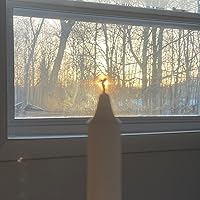
slim thoughtful volume
educating from my lap
and when i finish...
When I was at university I become acquainted with a group who would text exclusively in haiku, and this was actually my introduction to the form. I’d occasionally receive anonymous texts along the lines of:
evening o John Donne
fancy a party tonight?
text back for address
The messages tended to be funnier and more eloquent but unfortunately I never thought to save them. Browsing my parents’ poetry shelves recently I came across this volume Japanese Haiku and picked it up, intrigued to read some authentic examples.
The introduction is illuminating and provides some clues about how to read these traditional poems, stating that the form ‘is not expected to be always a complete or even a clear statement, the reader is supposed to add to the words his own associations and imagery, and thus to become a co-creator of his own pleasure in the poem.’ In light of which I’ll discuss three poems from the collection.
friend, that open mouth
reveals your whole interior...
silly hollow frog!
Anon.
The ambiguity of this poem is its particular pleasure for me and a good example of what the introduction describes as the ‘implied identity between two seemingly different things’ characteristic of good haiku. The poem is addressed to a friend and a frog. Final lines of haiku sometimes express what appear to be unrelated thoughts or ideas but the ‘open mouth [which] reveals your whole interior’ connects the friend with the frog. Is the friend an actual frog? Haiku do frequently address animals and inanimate objects anthropomorphically. Or is the poem about a human friend whose open mouth reminds the poet of a frog? For me the poem is a reproach against a person whose ‘open mouth’ talks too much and ill-advisedly reveals their whole hollow interior, unveiling their their vanity through their loquacity.
vendor of bright fans
carrying his pack of breeze...
suffocating heat
Shiki
I enjoy the irony of this poem and the image it creates for me of a man bent over double carrying his pack of fans, struggling in the ‘suffocating heat’ with this load of goods whose purpose is precisely to alleviate the symptoms of such weather. The idea of his ‘pack of breeze’ also suggests a light pack, one which weighs as little as the breeze, though I see its weight in the heat as the cause of the man's suffocation. The poem reminds me of a conversation I had recently about how doctors often look after themselves far worse than their patients - the doctor carries his pack of medicine but suffocates under the burden of his responsibility - and in this sense the poem illustrates the absurdity of the human condition. I like the fact that ‘suffocating heat’ has no grammatical connection to the first two lines and so it is totally up to the reader to link these disparate images and ‘co-create’ the poem's meaning.
describe plum-blossoms?
better than my verses ... white
wordless butterflies
Reikan
Finally, having written my undergraduate dissertation largely about metapoetics in Latin and Greek verse, poetry about poetry intrigues me. I love the pessimistic idea contained in the phrase ‘better than my verses’. Reikan sullenly (or philosophically?) tells us that nature is more beautiful than human creation, developing the idea with ‘white *wordless* butterflies’. The poem talks to me of our inability to do nature justice with our words and in a sense the futility of writing. And yet, ironically, the poet writes.