About the Author-Sir Arthur Ignatius Conan Doyle KStJ, DL (22 May 1859 - 7 July 1930) was a Scottish physician and writer who is most noted for his fictional stories about the detective Sherlock Holmes, which are generally considered milestones in the field of crime fiction. He is also known for writing the fictional adventures of a second character he invented, Professor Challenger, and for popularising the mystery of the Mary Celeste.He was a prolific writer whose other works include fantasy and science fiction stories, plays, romances, poetry, non-fiction, and historical novels.-Wikipedia
Sir Arthur Ignatius Conan Doyle was a Scottish writer and physician. He created the character Sherlock Holmes in 1887 for A Study in Scarlet, the first of four novels and fifty-six short stories about Holmes and Dr. Watson. The Sherlock Holmes stories are milestones in the field of crime fiction.
Doyle was a prolific writer. In addition to the Holmes stories, his works include fantasy and science fiction stories about Professor Challenger, and humorous stories about the Napoleonic soldier Brigadier Gerard, as well as plays, romances, poetry, non-fiction, and historical novels. One of Doyle's early short stories, "J. Habakuk Jephson's Statement" (1884), helped to popularise the mystery of the brigantine Mary Celeste, found drifting at sea with no crew member aboard.
Famous Indian surgeon, Sir Dominick Holden, is literally haunted by an Indian hill man, to whom he had made a promise that unfortunately, through no fault of his own, he failed to keep. When his nephew, Dr Hardacre is asked to help appease this spirit, it will make the spirit very angry, but will Dr Hardacre be successful? Not particularly scary, but interesting nevertheless.
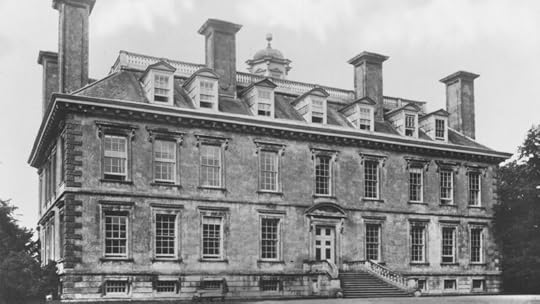
Intriguing story about an Indian surgeon named Sir Dominick Holden who spends his retirement in a property named Rodenhurst in Wiltshire. But he and his wife are haunted by the daily experience of a sinister small man. What does he want? When his nephew Dr Haracre (good name) visits him and meets the strange appearance himself he sees that a hand is missing on the ghost. May this be the key to a solution for the problem? Compelling tale, good plotted, eerie elements and a great denouement. Recommended!
A ghost story with a happy ending published May 1899 in The Strand Magazine.. Not really a horror story more of a psychic adventure. Arthur Conan Doyle was a believer in psychic occurrences and in the reality of communicating with the dead and maybe other spirits as well. If I remember correctly there was a rivalry between Conan Doyle and Harry Houdini concerning psychics and mediums with Conan Doyle giving lectures on spiritualism and Houdini debunking it. Houdini also made a sort of second career of exposing fraudulent mediums and spiritualists.
Famously, Houdini promised his wife that if it is possible to communicate from beyond the grave he would contact her. He never did. Over the years many spiritualists and occultists attempted to communicate with Houdini without success. Houdini died on Halloween. His wife's last attempt to communicate with him was on a Halloween night, the 10th anniversary of his death. Since then many others have held seances on Halloween attempting to communicate with Houdini. Some have also claimed communication with Arthur Conan Doyle but there had been no proof of success.
The Brown Hand was later published in ROUND THE FIRE STORIES, a collection of Conan Doyle's dark tales. The collection is available from Amazon at about the same cost as a single story.
Dr. Hardacre, an English low-paid country doctor of poor means, is unexpectedly benefited with a large inheritance from is long distant uncle, the incredibly renowned and world-wide famous surgeon Sir Dominick Holden, recently returned from India. Everybody wonders why would the late eminent doctor preferred Hardacre over many of his more closest family, yet hardly anybody knows about the great and secret service he provided for him many years ago, on a matter that plagued the old doctor for years on.
Ah, this was great. The more I read by Conan Doyle, the more I find that he truly excels at the horror thing. A truly remarkable work. Slow build-up, short, but very enjoyable. This felt like reading one of MR James finest, but without any of the pompous vocabulary or the tedious narrating style. Doyle certainly knows how to do it right. Recommendable.
El Dr. Hardacre, un médico rural inglés de bajos ingresos y escasos recursos, se ve inesperadamente beneficiado con una gran herencia de su tío lejano, el increíblemente renombrado y mundialmente famoso cirujano Sir Dominick Holden, recientemente regresado de la India. Todo el mundo se pregunta por qué el difunto y eminente médico preferiría a Hardacre sobre muchos de sus familiares más cercanos; sin embargo, casi nadie sabe sobre el gran y secreto servicio que le prestó hace muchos años, en un asunto que atormentó al viejo médico durante años.
Ah, esto fue genial. Cuanto más leo de Conan Doyle, más encuentro que realmente sobresale en el tema del terror. Un trabajo realmente descatable. Desarrollo lento, corto, pero muy disfrutable. Esto se sintió como leer uno de los mejores de MR James, pero sin el vocabulario pomposo ni el estilo de narración tedioso. Doyle ciertamente sabe cómo hacerlo bien. Recomendable.
A very interesting short story! I quite liked the plot and the writing. It's not a very thrilling and innovative one, but it's gripping and enjoyable. SYNOPSIS: "The story is based on an Indian urban legend that tells of a Muslim who was forced to have his arm amputated after an accident, and died a few months later, but after death became a ghost and began wandering about in search of his limb."
ডাঃ হার্ডেকার ছিলেন একজন সাধারণ ডাক্তার। কিন্তু একটা বিশেষ ঘটনার পরে তার কাকা স্যার ডোমেনিক হোল্ডেন তাকে তার বিশাল সম্পত্তির উত্তরাধিকারী করে গেছেন। বইটিতে হার্ডেকার সেই কাহিনী বলছেন। কাকা ছিলেন বিখ্যাত সার্জন। ইন্ডিয়াতে প্র্যাকটিস করতেন। সেই কাকা হার্ডেকারকে ডেকে পাঠালেন উইন্ডশায়ার এ, তার বাড়িতে। বিশালাকায় কাকার চেহারা। কোনো এক বিশেষ কারণে একেবারে ভেঙে গেছেন। ডিনারের পর অলৌকিক এবং সুপার-ন্যাচারাল বিষয় নিয়ে হার্ডেকারের সাথে কাকার আলোচনা শুরু হলো। কাকার ল্যাবরেটরিতে মানুষের বডি পার্টস এর বিশাল সংগ্রহ। কাকার অনুরোধে সেই ঘরেই রাত কাটালেন হার্ডেকার। রাতে দেখলেন ঘরে একটি হাতকাটা লোক ল্যাবের প্রত্যেকটি জারে কি যেন খুঁজে বেড়াচ্ছে। তারপর চোখের পলকে সে অদৃশ্য হয়ে গেল। এই অলৌকিক ঘটনার সমাধান করতেই কাকা তাকে এখানে ডেকে পাঠান।
“The Brown Hand” is a riveting tale by the famed Sir Arthur Conan Doyle who is most famous for his more than fifty short stories about the detective Sherlock Holmes, although he wrote many other tales, this one included, about fantasy, science fiction, and other subjects, such as history. He wrote over four hundred works. All are very good because Doyle was a very good writer, but the general population ignored his other writings because of the enormous popularity of his Sherlock Holmes stories.
This tale is one of his fantasies. It concerns a doctor who practiced for many decades in India before returning to England. He told his nephew a tale of a ghoulish situation that has been frightening him and his wife for some two years.
Six years ago, a brown Indian came to his laboratory in India with a cancerous right hand. He told the man that his only chance for life was to have the hand amputated. The man agreed. After the operation, the man requested his hand. He said that his religion required that all parts of him be buried with him when he dies. The doctor promised to hold the hand for him and assured him that he would return it when the man died. Unfortunately, the doctor’s laboratory was burned and the hand was lost in the fire.
The Indian apparently died two years ago, because for the past two years, the man appeared before the doctor and his laboratory in England every night searching for his hand. This chilling situation has disturbed and aged the doctor and his wife greatly.
I will not reveal here how the doctor’s nephew helped him. Suffice it to say, that what he did is amazing, and how the doctor rewarded him very interesting.
* -} Gestalt Psychology Simplified with Examples and Principles {- *
* -:}|{}|{: = MY SYNTHESISED ( ^ GESTALT ^ ) OF THE * -:}|{}|{:=:}|{}|{:- * ( WAY THE AUTHOR FRAMES = HIS WRITING PERSPECTIVES ) & ( POINTERS & IMPLICATIONS = the conclusion that can be drawn IMPLICITYLY from something although it is not EXPLICITLY stated ) = :}|{}|{:- *
Thy kingdom come. Let the reign of divine Truth, Life, and Love be established in me, and rule out of me all sin; and may Thy Word enrich the affections of all mankind
A mighty oak tree standing firm against the storm, As sunlight scatters the shadows of night A river nourishing the land it flows through
I felt this story was slightly hackneyed. The term "predictable" definitely fits here, but I mean the term to show that the mystery of a ghost story--the sense of atmosphere--was lost via this predictability; it was campy.
The themes of this story--themes of robbery--link, in my mind, with Colonialism. The Indian doctor in question was, after all, an Englishman who doctored in India, presumably under British rule. That this doctor would take the hand of his Indian patient--take it on promise to return it--and fail to keep that promise (via an accident) is interesting; that another brown man's death and amputation would allow for the spirit to disappear is also fairly intriguing along those lines. These themes are perhaps unintentional--the whole contrivance of the wrong hand given, for example, pretty clearly indicates a more lurid design by Doyle; however, his positioning of the Indian man as something ghostly and (in a sense) lesser in England, and nevertheless the interminable need to appease him before he rests and allows the wealth to spread (to our landed narrator) has some fun implications. It's not real implications, perhaps--it's just reading too far into it, I think, in this case--but I fear that it's still jostling the box about.
Some of the imagery in this tale is marvelous. The wall of grotesqueries goes along quite well with the narrative--these are the after-images of suffering preserved, obviously something evocative of spirits and afterlife; it's a bit of irony that the real brown hand was destroyed, whilst these others weren't.
I read this is a part of Bookopoly readathon 2020 hosted by Becca and the Books on YouTube for the prompt: supernatural or magical realism.
I have a vintage story collection by Conan Doyle that I love to visit every now and then. I chose to read a short story because this is a 48h only readathon and there will be a total of 4 prompts which I wanna fulfill best as I could.
This story is so well written and easy to read, I just enjoyed it so much , there isn't extensive boring description paragraphs which I tend to dislike most in classics and the story starts and ends so fast it's super easy to follow. Highly recommend
I actually listened to an audio version of this on Spotify and thought it was excellent. Could kinda see where the story was heading, and especially after the nephew (was it his nephew or cousin? I’ve already forgotten and I only listened to it yesterday! 😂) already got one hand. When the ghost didn’t take it I immediately knew he’d got the wrong hand. Idiot! 🤦🏻♀️ But I enjoyed the story nonetheless for that and thought the characterisation was lovely. There’s a reason Sir Arthur was as renowned as he was.
This entire review has been hidden because of spoilers.
I didn't realize this was going to be a ghost story. A doctor returns from India and finds that a strange Indian man without a hand comes to him every night. His nephew comes to see him and renders help. Its a simple story and would appeal to the horror artists instead of the usual sherlock fans... There is some deduction though. Good for a night read.
Another will written British family novella by Sir Arthur Conan Doyle. A wealth British doctor is dying without children and must select an heir for his estate. I would recommend this novella to anyone looking for an entertaining quick read. Enjoy the adventure of reading 👓 or 🎶listening to 👍books 📚 2022🏰🏡
The first Conan Doyle short story I have read, ‘The Brown Hand’ tells of the spectral haunting of an English Doctor in India, by a deceased patient who gave the former his amputated hand before he died. Whilst certainly sinister, I actually found the writing humorous at times - as the imagery that the author uses conjures some brilliantly-unorthodox ideas.
This entire review has been hidden because of spoilers.
This was a nice little ghost story. The plot was rather silly, but that didn't matter too much, simply because I just enjoy ACD's style of writing and the atmosphere he manages to create. Not a masterpiece, but perfectly harmless entertainment.
This is such a creepy story! When a man visits his uncle who was a dr. in India for many years, he finds he must help to rid his uncle of a spirit that is haunting him! Highly Recommend!
Essa história impressiona com sua narrativa envolvente e mistério em torno do protagonista, Dr. Hardacre. A história se desenrola com a herança inesperada de Sir Dominick Holden, levando o Dr. Hardacre a eventos misteriosos que revelam um lado mais sombrio e aventureiro. É um exemplo clássico do talento de Doyle para o suspense e o inesperado.
This is a classic example of Victorian ghost story that delves into themes of imperialism, cultural haunting, and poetic justice through the unsettling return of a disembodied appendage. Doyle's narrative centers around two friends who become entangled in the fate of a military man haunted by the vengeful "Brown Hand" of an Indian fakir he wronged. The prose is typically efficient and engaging, maintaining a high level of atmospheric suspense as the mystery of the hand and its motivation unfolds, providing a subtle critique of the exploitation inherent in colonial expansion. While the characters are somewhat archetypal of the period, the central macabre image of the restless hand is powerfully imaginative and keeps the reader engaged in the supernatural retribution at play. It is a solid, albeit slightly dated, entry in Doyle's body of short fiction that fans of early horror and moralistic ghost stories should certainly explore.
Sir Dominick and Lady Holden are eventually relieved of the unwelcomed visitor that has interrupted their lives... Mentioned elements of this brief tale encompass an unusual choice, a fortune, and a brown hand...