

What do you think?

This House is Not for Sale
The award-winning author of Voice of America paints a vivid, fully imagined portrait of an extraordinary African family and the house that holds them together
A powerful tale of family and community, This House Is Not for Sale brings to life an African neighborhood and one remarkable house, seen through the eyes of a young member of the household. The house lies in a town seemingly lost in time, full of colorful, larger-than-life characters; at the narrative’s heart are Grandpa, the family patriarch whose occasional cruelty is balanced by his willingness to open his doors to those in need, and the house itself, which becomes a character in its own right and takes on the scale of legend. From the decades-long rivalry between owners of two competing convenience stores to the man who convinces his neighbors to give up their earthly possessions to prepare for the end of the world, Osondu’s story captures a place beyond the reach of the outside world, full of superstitions and myths that sustain its people.
Osondu’s prose has the lightness and magic of fable, but his themes—poverty, disease, the arrival of civilization in an isolated community—are timeless and profound. At once full of joyful energy and quiet heartbreak, This House Is Not for Sale is an utterly original novel from a master storyteller.
A powerful tale of family and community, This House Is Not for Sale brings to life an African neighborhood and one remarkable house, seen through the eyes of a young member of the household. The house lies in a town seemingly lost in time, full of colorful, larger-than-life characters; at the narrative’s heart are Grandpa, the family patriarch whose occasional cruelty is balanced by his willingness to open his doors to those in need, and the house itself, which becomes a character in its own right and takes on the scale of legend. From the decades-long rivalry between owners of two competing convenience stores to the man who convinces his neighbors to give up their earthly possessions to prepare for the end of the world, Osondu’s story captures a place beyond the reach of the outside world, full of superstitions and myths that sustain its people.
Osondu’s prose has the lightness and magic of fable, but his themes—poverty, disease, the arrival of civilization in an isolated community—are timeless and profound. At once full of joyful energy and quiet heartbreak, This House Is Not for Sale is an utterly original novel from a master storyteller.
192 pages, Hardcover
First published February 3, 2015
About the author
E.C. Osondu
16 books23 followersE. C. Osondu is a Nigerian writer known for his short stories. He received his MFA from Syracuse University and is the winner of the Caine Prize for African Writing and a Pushcart Prize. His fiction has appeared in The Atlantic, n+1, Guernica, and other publications. He teaches at Providence College in Rhode Island.
Ratings & Reviews
Friends & Following
Create a free account to discover what your friends think of this book!
Community Reviews
Displaying 1 - 30 of 58 reviews


February 27, 2015
I enjoyed this book which is a "novel" in the sense that its numerous stories are structured around a large place, Grandpa's "Family House," which apparently has numerous rooms in which many of the characters find themselves while contributing to Grandpa's financial well-being. The neighbors make up a speculative chorus of observers, not always but often gossips, frequently sources of a humor which shifts the weight of the narration from the very difficult situations of many of the characters. I am reminded of a much darker set of life stories in Gloria Naylor's anti-Chaucerian, anti-Christian BAILEY'S CAFE.
The desire for allegory really overwhelms me in reading this, overlaying Nigerian mythology with Christian, ancestor worship and the role of the elders with an omnipresent and wise God. Grandpa intervenes frequently, chastising and correcting bad behavior, offering succor, but always exacting some work from those he aids. Some of the stories verge on disaster, but in almost very case it is avoided. "Uncle Aya" tells of its eponymous hero, a prophet who was, according to Grandpa, the house eccentric, and who joined "The End of the World Ministries" led the West Indian Pastor Jonah. Needless to say, the followers were disappointed by an unending world, having sold or given away their earthly goods, and who, until Grandpa appeared with a shotgun, intended to burn down the Family House out of anger and frustration. Humorous situations turn sour and serious, people are hurt, and Grandpa settles the matter.
Occasionally a character will reappear in a later story or aspects of one character's story will develop in another, but there is nothing Balzacian about it as tightness and overwhelming realistic detail would smother the warmth and humor with which the Family House's is treated. Osondu's narrative point of view, that of a young lad brought up in the house, the style, characters, and their situations allow the reader the sense of the difficulty and tenuousness of life without sacrificing the humor that makes it bearable.
The desire for allegory really overwhelms me in reading this, overlaying Nigerian mythology with Christian, ancestor worship and the role of the elders with an omnipresent and wise God. Grandpa intervenes frequently, chastising and correcting bad behavior, offering succor, but always exacting some work from those he aids. Some of the stories verge on disaster, but in almost very case it is avoided. "Uncle Aya" tells of its eponymous hero, a prophet who was, according to Grandpa, the house eccentric, and who joined "The End of the World Ministries" led the West Indian Pastor Jonah. Needless to say, the followers were disappointed by an unending world, having sold or given away their earthly goods, and who, until Grandpa appeared with a shotgun, intended to burn down the Family House out of anger and frustration. Humorous situations turn sour and serious, people are hurt, and Grandpa settles the matter.
Occasionally a character will reappear in a later story or aspects of one character's story will develop in another, but there is nothing Balzacian about it as tightness and overwhelming realistic detail would smother the warmth and humor with which the Family House's is treated. Osondu's narrative point of view, that of a young lad brought up in the house, the style, characters, and their situations allow the reader the sense of the difficulty and tenuousness of life without sacrificing the humor that makes it bearable.

March 2, 2016
E.C. Osondu’s second book is sold as a novel, but feels much more like a collection of short stories. vignettes concerning the inhabitants of the Family House in an unnamed city (though, given its topography, it’s probably Lagos). The self-mythologising that surrounds the house, and the family that lives there, starts on page one, when we learn “How the House Came to Be” through a kind of Just So Stories parable: a man who gives a king the secret to long life is given the land as a reward, and eventually, the king builds him a handsome mansion there. But the gift is two-edged: sure, it’s to say thank you, but it’s also so that the king can keep an eye on the man. He’s to be killed in the event that the king dies of anything other than simple old age. That dynamic–of debt and power, bestowing and withholding–defines the Family House from its inception.
Read the rest of the review here: https://ellethinks.wordpress.com/2016...
Read the rest of the review here: https://ellethinks.wordpress.com/2016...

May 14, 2015
This slim volume from E.C. Osondu is less a novel and more a collection of short stories, similar to the author's first work, Voice of America.
Set in Nigeria, centered around the 'Family House', the home owned by the unnamed narrator's grandpa, each chapter tells a story linked to one of the many characters that reside there, from a thieving servant, to dissolute 'uncles', to orphaned children, and desperate widows.
The stories are mostly grim with themes such as adultery, murder, poverty, exploitation and rape, though there are flashes of dark humour. Some have a near myth-like edge but essentially reflect contemporary life in rural Nigeria. The stories are also said to reflect Nigeria's political state, rife with corruption, injustice and poverty.
I have to admit that while I found it somewhat interesting, I didn't particularly enjoy This House is Not For Sale.

October 21, 2014
In a big old house in Nigeria, a large extended family plus an assortment of neighbors and passersby make up the environment of the "family house." Watching over it all, punishing, rewarding, judging everything that goes on, Grandpa presides. Somehow, as conmen,market women,psychics and thieves meander through the life of the family and the house, Grandpa manages to turn every circumstance to his own material advantage while providing a place of secure, if not exactly comfortable, refuge for anyone who truly needs it. The spirit of family and community weighs in against the pain of poverty and social collapse in this freewheeling novel that is reminiscent of folklore in its somewhat chaotic but familiar style. Fun to read.

January 16, 2016
I found this to be a neat hybrid of a collection of short stories and a novel. Though each chapter reads as its own individual story focused on one particular resident of the house at the core of the entire book, the narrator remains consistent for them all, uniting the stories into one cohesive perspective on a large number of people who have lived at the house at one time or another. In an unspecified African country, a family/community comes to life in the The Family House, with Grandfather in the respected, and also at times feared, position of leader. The neighborhood surrounding The Family House is vibrant and ever-present, with many, many voices weighing in during the narrative, presented in bullet-point fashion in print that reads like overheard voices in a crowd. The first half or so of the book read quite comically at times, with even the misfortunes of some residents presented in a way that brought a chuckle, but then there was a sudden shift, and the stories (and fates) of the residents, some blood relatives of Grandfather, others simply people who sought out his assistance and shelter in his house, became much darker. The undercurrent of many conversations about the house and the people who called it their home was similar-- "It is always from that house that all things both good and bad emerge."

July 21, 2025
Let me just start by saying as someone who grew up in a house where you’re not quite sure if someone’s your cousin or just been there so long they became family this book had me from page one, LOL. The chaos, the characters, the comings and goings of people whose names you barely remember but who somehow always end up at dinner? 10/10 relatable.
Set in Nigeria and centered around the chaotic beauty of the "Family House," this anthology-style novel delivers chapter after chapter of stories about everyone who’s passed through its doors scandalous uncles, sneaky servants, forgotten children, and all the women left behind by life and men. The stories are dark, funny, sometimes shocking, and weirdly familiar. The book doesn’t hold back but it’s told with such dry wit and sharp observation that you’ll be laughing .
There’s also this surreal, myth-like vibe to some parts, but at its core, it’s just the realness of community living, dysfunction, and the quiet drama that happens when too many people live under one roof. The political and social commentary sneaks in too , a nod to corruption and injustice, but never in a preachy way. And just when you think the house itself is a character? Boom. It's gone. Demolished.
If you loved Nearly All the Men in Lagos Are Mad, Welcome to Lagos, or The Broken People’s Playlist, you’ll feel right at home here. It’s wild. It’s bizarre. It’s somehow comforting in its mess. And honestly? It’s one of the most entertaining reads I’ve picked up in a while.
P.s "abantu bazohlala bethetha (people will always talk) - do what makes you happy!
Set in Nigeria and centered around the chaotic beauty of the "Family House," this anthology-style novel delivers chapter after chapter of stories about everyone who’s passed through its doors scandalous uncles, sneaky servants, forgotten children, and all the women left behind by life and men. The stories are dark, funny, sometimes shocking, and weirdly familiar. The book doesn’t hold back but it’s told with such dry wit and sharp observation that you’ll be laughing .
There’s also this surreal, myth-like vibe to some parts, but at its core, it’s just the realness of community living, dysfunction, and the quiet drama that happens when too many people live under one roof. The political and social commentary sneaks in too , a nod to corruption and injustice, but never in a preachy way. And just when you think the house itself is a character? Boom. It's gone. Demolished.
If you loved Nearly All the Men in Lagos Are Mad, Welcome to Lagos, or The Broken People’s Playlist, you’ll feel right at home here. It’s wild. It’s bizarre. It’s somehow comforting in its mess. And honestly? It’s one of the most entertaining reads I’ve picked up in a while.
P.s "abantu bazohlala bethetha (people will always talk) - do what makes you happy!
January 16, 2026
I love a good short story
July 21, 2021
3.5, I liked the stories but the ending was way too abrupt and unexplained

December 3, 2019
This book is about "The Family House" a controversial dwelling owned and ruled by a grandpa who accommodates buggers, crooks, dolts, the homeless, orphans, etc as his tenants in return for working for him, helping his business and running errands.
This book is like being dragged through the rough streets of Lagos, forced to breathe that awful stench from the overflowing 'keep Lagos clean' litters. The stale liquor breath of the book's interesting characters, and forced to interact with literary types with names like "Ibegbunemkaotitojialimchi" meaning "O save me from my enemies so I can live to the evening of my days on this good Earth" . Who we all call Ibe for short. 😂
I love books that portray both the joy and madness of living in this country, with searing description, lively dialogue, dramatic tensions, convincing characters, coupled with reflections and deep axioms about life and death.
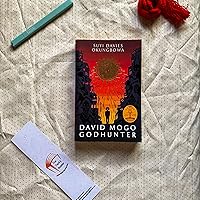
I grew up in Mushin and later Ilupeju, and I was surrounded by houses like this, with "This house is not for sale beware of 419" written boldly on them. Sometimes you have a large red X mark on them marking them for demolition.
This book reminds me of that reminisce of childhood, how we used to really notice the almost always drunk old soldier landlord and his interesting tenants. Yet, we didn't value it in that artistic way a painter (props to the cover designer of this book) or a novelist would.
L
It was just a rich throwaway daily experience of our community, that we may later in life come to regret losing. (I mean, where I stay now, I don't even know who my neighbour is, houses all gated with tall fences and shit)
This book is weird, outlandish, bizzare, strange crazy, wild, full of casual environmental awareness and interesting observations about communal living.
Meanwhile at the end, the house is gone, demolished. Probably to be replaced with a high fenced duplex lived in by people whose only connection to the land is Afrobeats and haha funny tweets 😏
This book is like being dragged through the rough streets of Lagos, forced to breathe that awful stench from the overflowing 'keep Lagos clean' litters. The stale liquor breath of the book's interesting characters, and forced to interact with literary types with names like "Ibegbunemkaotitojialimchi" meaning "O save me from my enemies so I can live to the evening of my days on this good Earth" . Who we all call Ibe for short. 😂
I love books that portray both the joy and madness of living in this country, with searing description, lively dialogue, dramatic tensions, convincing characters, coupled with reflections and deep axioms about life and death.
I grew up in Mushin and later Ilupeju, and I was surrounded by houses like this, with "This house is not for sale beware of 419" written boldly on them. Sometimes you have a large red X mark on them marking them for demolition.
This book reminds me of that reminisce of childhood, how we used to really notice the almost always drunk old soldier landlord and his interesting tenants. Yet, we didn't value it in that artistic way a painter (props to the cover designer of this book) or a novelist would.
L
It was just a rich throwaway daily experience of our community, that we may later in life come to regret losing. (I mean, where I stay now, I don't even know who my neighbour is, houses all gated with tall fences and shit)
This book is weird, outlandish, bizzare, strange crazy, wild, full of casual environmental awareness and interesting observations about communal living.
Meanwhile at the end, the house is gone, demolished. Probably to be replaced with a high fenced duplex lived in by people whose only connection to the land is Afrobeats and haha funny tweets 😏

July 4, 2014
While the title makes clear that This House Is Not for Sale is a novel, I felt it read more like a collection of short stories. Each chapter is focused on a different character (with the exception of one character who gets two chapters). The common threads that hold these stories together are Grandpa, the patriarch of the family, and the house itself.
This book is set in a neighborhood that is transitioning from tradition to modernity within an unnamed African country. The family who live here are extensive: a collection of blood relatives; any number of non-relatives who have achieved the status of “Auntie” or “Uncle”; a collection of children who work for Grandpa and serve as collateral on monies their parent have borrowed from him; and a constantly changing group of the homeless and those down on their luck.
Most of the stories/chapters have smallish arcs. A cousin newly arrived from another area impresses the other children with his worldly knowledge, most of which is inaccurate at best. A peddler of cloth and women’s clothes move up the economic ladder and back down again.
This is a book to read when one feels settled enough to enjoy its slow pace and to appreciate the process of getting to know the characters.
This book is set in a neighborhood that is transitioning from tradition to modernity within an unnamed African country. The family who live here are extensive: a collection of blood relatives; any number of non-relatives who have achieved the status of “Auntie” or “Uncle”; a collection of children who work for Grandpa and serve as collateral on monies their parent have borrowed from him; and a constantly changing group of the homeless and those down on their luck.
Most of the stories/chapters have smallish arcs. A cousin newly arrived from another area impresses the other children with his worldly knowledge, most of which is inaccurate at best. A peddler of cloth and women’s clothes move up the economic ladder and back down again.
This is a book to read when one feels settled enough to enjoy its slow pace and to appreciate the process of getting to know the characters.
September 17, 2016
This House Is Not For Sale is a tale of a Family House, its occupants and their experiences while overseen by a Patriarch - Grandpa. It is set in an African country which is no doubt Nigeria. A consistent unnamed narrator- his grandson who is of school age, takes us through each chapter, telling a story about a character. Each chapter poses as an individual story and begs one to ask if the book is a novel or a collection of different short stories.
The family house serves as a sanctuary to people in need, housing different personalities and so the stories address themes such as poverty, murder, corruption, adultery, religion etc with Grandpa's voice as overlord. The stories are laced with humor and easy to read without getting bored.
E.C Osondu's writing is beautiful and simple but he left me confused when in one chapter, he is bold and unapologetic and writes of akara as it is, then in another, writes of udara/Agbalumo as African star apple. I definitely enjoyed reading this and look forward to reading more from him.

February 8, 2025
I suppose everyone but me considers this book to be a novel. For me, it felt more like a collection of interrelated stories, each with both latent and manifest connections.
"This house" is Grandfather's house. The various stories we read—from the disgraced woman in the first story to the childless woman endowed with power by a goddess, and even the teenager who tries to impress others with his stories—all take place in Grandfather's house.
Grandfather is a man whom no one can truly label as good or evil. While he always has a solution, his solutions always come with a price. This is reminiscent of the story in which a king bestows a handsome house on Grandfather’s ancestor but uses that gift as a means to keep watch over him.
However, the book unveils the fascinating, yet strikingly real, stories of an African community. E. C. Osondu masterfully establishes the setting of his story without explicitly naming the place. For me, that is the mark of a true storyteller—one who can show readers a reality they recognize without needing to be told.
Some of the themes explored—rape, death, theft, murder, and other vices—are undeniably dark. But nothing is more sobering than reality.
My best book of 2025 so far.
"This house" is Grandfather's house. The various stories we read—from the disgraced woman in the first story to the childless woman endowed with power by a goddess, and even the teenager who tries to impress others with his stories—all take place in Grandfather's house.
Grandfather is a man whom no one can truly label as good or evil. While he always has a solution, his solutions always come with a price. This is reminiscent of the story in which a king bestows a handsome house on Grandfather’s ancestor but uses that gift as a means to keep watch over him.
However, the book unveils the fascinating, yet strikingly real, stories of an African community. E. C. Osondu masterfully establishes the setting of his story without explicitly naming the place. For me, that is the mark of a true storyteller—one who can show readers a reality they recognize without needing to be told.
Some of the themes explored—rape, death, theft, murder, and other vices—are undeniably dark. But nothing is more sobering than reality.
My best book of 2025 so far.

October 1, 2026
4.5 ⭐️
This House Is Not for Sale by E.C. Osondu is classified as a novel, and while that holds true in a sense, stepping into the book feels much more like reading an interconnected collection of eighteen short stories. The common thread linking every chapter is the sprawling mansion simply referred to as "The Family House."
Throughout the book, we witness how the house came to be, alongside the lives of its many inhabitants, with each key character given a dedicated chapter to anchor their story. Told through the eyes of an unnamed young boy, we observe the everyday lives of the house's residents, as well as the neighbors along their street. We get a clear sense of how those living inside view the house versus what outsiders think of its happenings, with public opinion seamlessly woven into the narrative. Balancing it all is the occasional intervention of the family patriarch, simply known as Grandpa. Deeply respected by everyone, Grandpa serves as the first and last port of call for anyone in trouble; he is the voice of reason, bringing resolution to every crisis.
This is a beautifully written book with compelling stories that don't always set out to be grand, yet turn out utterly captivating anyway. The penmanship is exquisite. Osondu has a way of taking simple, mundane moments and elevating them into something almost folkloric, echoing the rich cadence of oral tradition. It’s a thoroughly enjoyable read that I highly recommend, and if you’re ever looking to write short stories and need a masterclass in the craft, this is definitely a book to study!
This House Is Not for Sale by E.C. Osondu is classified as a novel, and while that holds true in a sense, stepping into the book feels much more like reading an interconnected collection of eighteen short stories. The common thread linking every chapter is the sprawling mansion simply referred to as "The Family House."
Throughout the book, we witness how the house came to be, alongside the lives of its many inhabitants, with each key character given a dedicated chapter to anchor their story. Told through the eyes of an unnamed young boy, we observe the everyday lives of the house's residents, as well as the neighbors along their street. We get a clear sense of how those living inside view the house versus what outsiders think of its happenings, with public opinion seamlessly woven into the narrative. Balancing it all is the occasional intervention of the family patriarch, simply known as Grandpa. Deeply respected by everyone, Grandpa serves as the first and last port of call for anyone in trouble; he is the voice of reason, bringing resolution to every crisis.
This is a beautifully written book with compelling stories that don't always set out to be grand, yet turn out utterly captivating anyway. The penmanship is exquisite. Osondu has a way of taking simple, mundane moments and elevating them into something almost folkloric, echoing the rich cadence of oral tradition. It’s a thoroughly enjoyable read that I highly recommend, and if you’re ever looking to write short stories and need a masterclass in the craft, this is definitely a book to study!
February 27, 2025
When I started this book, I found it a bit hard to get into. However, by the time I finished, I couldn't believe it was over.
This House is Not for Sale is a short book about a Nigerian man who owns a big house, has a lot of power, and is well connected. I dare say it is the story of a liberal capitalist, by which I mean a man that is driven by greed and yet is open minded.
Beyond that, the book is filled with so many Nigerian "pop-lores" so much so that I realize most of us were told the same stories growing up. Or how else would I explain to being able to relate to so many of the tales in this book even though I am quite certain I grew up under different circumstances as E. C. Osondu, who is much older than me and is Igbo, whereas I'm Yoruba.
If you are looking for a short, interesting book, written in a very simple style, then "This House is Not for Sale" is definitely one you should consider.
This House is Not for Sale is a short book about a Nigerian man who owns a big house, has a lot of power, and is well connected. I dare say it is the story of a liberal capitalist, by which I mean a man that is driven by greed and yet is open minded.
Beyond that, the book is filled with so many Nigerian "pop-lores" so much so that I realize most of us were told the same stories growing up. Or how else would I explain to being able to relate to so many of the tales in this book even though I am quite certain I grew up under different circumstances as E. C. Osondu, who is much older than me and is Igbo, whereas I'm Yoruba.
If you are looking for a short, interesting book, written in a very simple style, then "This House is Not for Sale" is definitely one you should consider.
August 31, 2022
Written in a unique conversational style that won't suit all tastes, This House is both stylistically interesting and a satisfying story if you're into contemporary literature. The "Family House" in the story becomes an enigmatic character itself that you learn about only obliquely through the gossipy comments of neighbours criticising the various human inhabitants that pass through it. This conceit also allows for some fascinating insights into the thoughts and morals of the middle and aspirational classes in contemporary Nigeria.

July 31, 2023
A riveting collection of short stories centered around an old 'family house' and its occupants.
Every story follows a different member of the household, exploring vast themes and encapsulating the rural essence which the novel is grounded in. Some stories have an ambiguous feel to them, which in hindsight might put off some readers but personally I feel that's what really makes this book come alive. We don't even know who is actually narrating these tales for us.
A 4.5 and sure to be re-read in the future.
Favourite story: Ibe
Every story follows a different member of the household, exploring vast themes and encapsulating the rural essence which the novel is grounded in. Some stories have an ambiguous feel to them, which in hindsight might put off some readers but personally I feel that's what really makes this book come alive. We don't even know who is actually narrating these tales for us.
A 4.5 and sure to be re-read in the future.
Favourite story: Ibe

September 9, 2017
Grabbed this on a whim at the library and simply ENJOYED it. It's a fairly short collection of short stories. Each one is about a person who lives in a huge house and the weird things that happen to them. Some of the stories have magical realism; others are realistic -- but all have a VIBE about them that's a little bit otherworldly. Fun.

July 11, 2019
This House is not for Sale:
“E.C Osondu is a fun writer, except you are a really busy person you could finish this in 2 days.. such a juicy fiction with so many moral lessons
A collection of short stories of occupants of a typical African house, this piece is a page turner... well put, very enjoyable... Good one!
“E.C Osondu is a fun writer, except you are a really busy person you could finish this in 2 days.. such a juicy fiction with so many moral lessons
A collection of short stories of occupants of a typical African house, this piece is a page turner... well put, very enjoyable... Good one!
May 18, 2020
It is not a novel. This is a compilation of different people's stories who have connections to the house.
Grandpa, his well established status in the community and the safety provided by the physical shelter of the house bring respect, disgust, privilege, stability and redemption.
It is easy to get through if you're looking for a book to fill a reading gap 📚.
Grandpa, his well established status in the community and the safety provided by the physical shelter of the house bring respect, disgust, privilege, stability and redemption.
It is easy to get through if you're looking for a book to fill a reading gap 📚.
October 25, 2020
After the first few chapters, I struggled (with disinterest) to finish this "novel". This collection of short stories is somewhat haphazard. The only connecting line between the dots of chapters is Grandpa (and perhaps the all-seeing narrator).
I absolutely expected more. The conclusion of the book is not just it.
I absolutely expected more. The conclusion of the book is not just it.
February 27, 2025
This is indeed a collection of really nice stories beautifully written. I think my favorite chapter was IBE, ibe always had something to say about everything.
Personally I think grandpa did all he could to keep the house standing and I felt a little bad when I read the part they brought down the house at the end.
Anyways this was a really interesting read.
Personally I think grandpa did all he could to keep the house standing and I felt a little bad when I read the part they brought down the house at the end.
Anyways this was a really interesting read.

April 17, 2025
short stories
While this book is billed as a novel, it is comprised of short stories. It doesn’t have the flow of a novel, although all of the stories are connected to the Family House. I liked most of the stories and enjoyed the fable aspect. I also liked the House as a character.
While this book is billed as a novel, it is comprised of short stories. It doesn’t have the flow of a novel, although all of the stories are connected to the Family House. I liked most of the stories and enjoyed the fable aspect. I also liked the House as a character.

January 2, 2026
I had the desire to immerse myself in the average Nigerian street, like the type I grew up on, with all its attendant drama. I also needed to peek into one rowdy compound house and glean all its stories. The cover house made me know I had what I was looking and the content did not disappoint. I am sated.
Read
February 11, 2026Felt just like picking up someone’s family album and reading all their stories :) Sometimes I was a bit confused on what was going on because the narrator feels unreliable at times but I kinda like that too, it’s the vibe of trying to follow along someone’s story about their cousins that you’ve never met
October 2, 2018
I really, really enjoyed reading this book. It is written by names of the characters instead of chapters. Each tale offers a lesson that we can use in life. I loved it so much that I purchased 3 more copies...2x as gifts and 1 just in case something happens to my original hardcover

February 2, 2022
It was an interesting read centered around a house, with different characters and stories, but it ended abruptly like the author was tired and wanted to finish the book,aside that,it was a lovely read.
January 13, 2025
As a Nigerian who grew up in a somewhat large house I totally get the author, the comings and goings of the inhabitants, most of whom you can remember how you are related to them all you know is you live in the same house. It was a well written anthology and I strongly recommend
July 9, 2018
Excellent read.

September 17, 2018
I really enjoyed reading this book
Displaying 1 - 30 of 58 reviews