

What do you think?

Art on Fire
A darkly comic and compelling satire of the art world from the author of The Disaster Tourist.
An Yiji’s career had been stalling for some time when a representative of the illustrious Robert Foundation offers her a spot on their all-expenses-paid artist residency in California. The residency has launched many famous artists’ careers, so she knows she can’t waste this opportunity. Still, she feels reluctant to accept, and with good the foundation’s patron is a small dog named Robert, known for both his talent as a photographer, but also his arrogance. Moreover, the offer comes with a on the last day of the residency, one of An’s paintings must be incinerated, and Robert gets to select which one.
When An reaches California, she finds the state ablaze with wildfires, but at the Foundation all is calm. She navigates awkward dinners with Robert, tries to find inspiration while being bombarded with sponsors who all want their business to be the subject of her art, and despairs at the prospect of her work being set on fire. Was coming to California a huge mistake?
An Yiji’s career had been stalling for some time when a representative of the illustrious Robert Foundation offers her a spot on their all-expenses-paid artist residency in California. The residency has launched many famous artists’ careers, so she knows she can’t waste this opportunity. Still, she feels reluctant to accept, and with good the foundation’s patron is a small dog named Robert, known for both his talent as a photographer, but also his arrogance. Moreover, the offer comes with a on the last day of the residency, one of An’s paintings must be incinerated, and Robert gets to select which one.
When An reaches California, she finds the state ablaze with wildfires, but at the Foundation all is calm. She navigates awkward dinners with Robert, tries to find inspiration while being bombarded with sponsors who all want their business to be the subject of her art, and despairs at the prospect of her work being set on fire. Was coming to California a huge mistake?
256 pages, Paperback
Published October 14, 2025
About the author
Yun Ko-eun
9 books86 followersYun Ko Eun is her pen name and her real name is Ko Eun-ju. She was born in 1980 in Seoul, South Korea. She studied creative writing at Dongguk University. She made her literary debut in 2004 when she won the 2nd Daesan Collegiate Literary Prize. In 2008, she won the 13th Hankyoreh Literary Award for her novel Mujungryeok jeunghugun (무중력증후군 The Zero G Syndrome). She has published three short story collections: Irinyong siktak (1인용 식탁 Table for One), Aloha (알로하 Aloha), and Neulgeun chawa hichihaikeo (늙은 차와 히치하이커 The Old Car and Hitchhiker)—and the novel Bamui yeohaengjadeul (밤의 여행자들 Travelers of the Night).
Ratings & Reviews
Friends & Following
Create a free account to discover what your friends think of this book!
Community Reviews
Displaying 1 - 30 of 41 reviews

February 22, 2026
Yun Ko-eun mercilessly lampoons the workings of the contemporary artworld particularly the continuing rise in private art galleries and affluent patrons eager to make their cultural mark. Yun’s incredibly-entertaining story’s recounted by young Korean artist An Yiji whose early promise has led to a dead-end job in food delivery. When she’s suddenly offered an American residency at the prestigious Robert Foundation, she’s nervous but excited, all she has to do is spend four months producing paintings while living on the Foundation’s estate in Palm Springs. But there’s a curious catch, at the end of her stay the Foundation’s head will select one of An Yiji’s pieces to publicly incinerate. What’s more this is no ordinary sponsor, Robert’s a dog, a papillon to be precise. He made his name after supposedly producing a now-iconic photograph by manipulating a smartphone camera with his paw. Later adopted, now the inheritor of his former owner’s millions, he presides over the Foundation determining which budding artists to fund.
From the moment An Yiji sets foot on American soil her experiences form a marvellous play on the notion of the “suffering artist.” Nobody turns up to collect her; she’s trapped in a seedy hotel as rapidly-spreading wildfires cut her off from the Foundation’s mansion. An Yiji’s bizarre travails as she struggles to reach the Foundation take up almost half of Yun’s novel. Not that I minded, it’s an exceedingly gripping account of an increasingly-surreal journey. On arrival at the estate, An Yiji’s summoned to the first in a succession of carefully-curated meals. All lorded over by capricious Robert - along with an array of interpreters and a mysterious black box which translates Robert’s arcane pronouncements into human speech.
Yun’s ambitious, tightly-constructed narrative proffers a clever critique of the relationship between art and the wealthy gatekeepers whose patronage can almost guarantee success in a highly competitive marketplace. Yun’s own take on art is a rather conventional one based on the idea of the artist as intimately bound to their ‘unique’ creations – she doesn’t reflect on art as theory, art as politics or more experimental practice. An Yiji’s a painter - painting’s still the dominant in Korean art – an identity which reinforces Yun’s perspective. Self-aggrandising Robert encapsulates prevailing attitudes within the wider artworld, for Robert art’s situated within the realms of consumer and promotional culture. Although it’s evident his understanding of art’s basically rote Robert apparently holds all the cards.
Robert’s ability to decide whether or not an artist’s work will survive or be offered up on a pyre underlines the immense reach of his brand of cultural elite. Ultimately, they decide the goal of art: what it is and how it will be made to mean. Then position themselves to bask in its glow. Robert’s eccentric system offers his chosen artists the celebrity needed to make a living. But the ways in which it borrows from performance and site-specific art, building on concepts of ephemerality, centre Robert as a kind of co-creator. Rather than art as sacred this is art as outrage or art as spectacle but ultimately in service to the cult of personality and profit – Yun’s narrative seems particularly timely in the context of a contemporary America riddled with uber-rich figures like Musk engaged in shaping broader cultural conversations for personal gain.
Yun underlines the absurdity and destructiveness of the blinkered activities of the ultra-wealthy through her depiction of the environmental blight surrounding the Foundation’s grounds. A stark contrast to the tranquil scenes within its walls. Two thousand gallons of water are used up daily to maintain its lush greenery and its decorative lakes. Outside drought looms, the world burns. The estate’s a version of the luxury bunkers and private cities favoured by people like Peter Thiel. Given this reality, the ravages and rampant inequalities of late-stage capitalism, the fact that Robert’s a dog starts to seem far less weird.
Despite its fable-like aspect, Yun’s novel’s clearly based on extensive research. Disputes around ownership of Robert’s infamous photograph recall the copyright case involving monkey selfies and photographer David J. Slater. Robert’s ceremonial burning of his artists’ work reads like a re-versioning of Juree Kim’s gradually-dissolving artworks. Making Robert a papillon references the numerous appearances of the breed in fine art; historical associations with royalty and aristocracy. All in all, an impressive piece, funny, thoughtful, bristling with ideas. I particularly enjoyed the deliciously deadpan delivery. But, although open endings aren’t exactly uncommon in Korean fiction, this one did feel particularly abrupt. Translated by Lizzie Buehler.
Thanks to Edelweiss Plus and publisher Scribe for an ARC
From the moment An Yiji sets foot on American soil her experiences form a marvellous play on the notion of the “suffering artist.” Nobody turns up to collect her; she’s trapped in a seedy hotel as rapidly-spreading wildfires cut her off from the Foundation’s mansion. An Yiji’s bizarre travails as she struggles to reach the Foundation take up almost half of Yun’s novel. Not that I minded, it’s an exceedingly gripping account of an increasingly-surreal journey. On arrival at the estate, An Yiji’s summoned to the first in a succession of carefully-curated meals. All lorded over by capricious Robert - along with an array of interpreters and a mysterious black box which translates Robert’s arcane pronouncements into human speech.
Yun’s ambitious, tightly-constructed narrative proffers a clever critique of the relationship between art and the wealthy gatekeepers whose patronage can almost guarantee success in a highly competitive marketplace. Yun’s own take on art is a rather conventional one based on the idea of the artist as intimately bound to their ‘unique’ creations – she doesn’t reflect on art as theory, art as politics or more experimental practice. An Yiji’s a painter - painting’s still the dominant in Korean art – an identity which reinforces Yun’s perspective. Self-aggrandising Robert encapsulates prevailing attitudes within the wider artworld, for Robert art’s situated within the realms of consumer and promotional culture. Although it’s evident his understanding of art’s basically rote Robert apparently holds all the cards.
Robert’s ability to decide whether or not an artist’s work will survive or be offered up on a pyre underlines the immense reach of his brand of cultural elite. Ultimately, they decide the goal of art: what it is and how it will be made to mean. Then position themselves to bask in its glow. Robert’s eccentric system offers his chosen artists the celebrity needed to make a living. But the ways in which it borrows from performance and site-specific art, building on concepts of ephemerality, centre Robert as a kind of co-creator. Rather than art as sacred this is art as outrage or art as spectacle but ultimately in service to the cult of personality and profit – Yun’s narrative seems particularly timely in the context of a contemporary America riddled with uber-rich figures like Musk engaged in shaping broader cultural conversations for personal gain.
Yun underlines the absurdity and destructiveness of the blinkered activities of the ultra-wealthy through her depiction of the environmental blight surrounding the Foundation’s grounds. A stark contrast to the tranquil scenes within its walls. Two thousand gallons of water are used up daily to maintain its lush greenery and its decorative lakes. Outside drought looms, the world burns. The estate’s a version of the luxury bunkers and private cities favoured by people like Peter Thiel. Given this reality, the ravages and rampant inequalities of late-stage capitalism, the fact that Robert’s a dog starts to seem far less weird.
Despite its fable-like aspect, Yun’s novel’s clearly based on extensive research. Disputes around ownership of Robert’s infamous photograph recall the copyright case involving monkey selfies and photographer David J. Slater. Robert’s ceremonial burning of his artists’ work reads like a re-versioning of Juree Kim’s gradually-dissolving artworks. Making Robert a papillon references the numerous appearances of the breed in fine art; historical associations with royalty and aristocracy. All in all, an impressive piece, funny, thoughtful, bristling with ideas. I particularly enjoyed the deliciously deadpan delivery. But, although open endings aren’t exactly uncommon in Korean fiction, this one did feel particularly abrupt. Translated by Lizzie Buehler.
Thanks to Edelweiss Plus and publisher Scribe for an ARC

January 6, 2026
A struggling Korean artist is invited to a prestigious American foundation whose patron is a dog. A charming absurdist comedy with a climate change angle, this is pitched as ‘a satire of the art world’ but I’m not sure I could tell you what aspects of the art world it was satirising. It’s one of those freewheeling, difficult-to-pin-down novels in which the central concept can be summed up succinctly, but the book’s true nature is much looser. Funny in an oddball way, with a likeable if slightly too inert protagonist. Reminded me particularly of
Radio Iris
by Anne-Marie Kinney.

December 24, 2025
i’m between 3 and 4 stars for this one… captured my attention with the premise but found the ending just ok. overall this book just made me REALLY on edge which i kind of hated but i can acknowledge it takes a lot of talent to do so!! like i definitely felt a whole range of emotions! annoyance, confusion, generally just weird!
i recommend reading this if you like murakami and the woman in the dunes kind of style (a little surreal?) mixed with some commentary on capitalism, classism, art, and climate change.
oh ps this book mentions untitled (perfect lovers) though which omg <33
rating: 3.5 stars
i recommend reading this if you like murakami and the woman in the dunes kind of style (a little surreal?) mixed with some commentary on capitalism, classism, art, and climate change.
oh ps this book mentions untitled (perfect lovers) though which omg <33
rating: 3.5 stars

June 15, 2026
I refused to comment on this novel until I read it a second time, and I’m so glad that I did. At first glance, everything about it is absurd. Amidst a backdrop of California burning and delivery customers fuming, our Korean narrator arrives at an art residency spearheaded by — you guessed it! — a dog. The kicker: said dog (who communicates through an aptly named black box, eats multi-course meals, and only poos occasionally) chooses one piece to incinerate at the end of the residency. What could possibly go wrong?
It would be easy to write this novel off as merely a satire of the art world (and it is), but what I find so compelling about it is its slightly askance portrayal of yet another world: the one burning around us. As the narrator navigates the increasingly frustrating world of the Robert Foundation, so too is she met with the ever-intensifying absurdities of the climate crisis: California burning, streets flooding, and two-headed fish dying in dried out lakes. But these absurdities only concern her insofar as they impede the development of her — frankly absurd, useless, and annoying — story. And in a novel that invites us to think about storytelling (there is, after all, a movie director casting characters onto real life), how can we ignore this focus on the curated world of the novel? If “I AM INDEX” is a plot device leading the narrator to her escape, is it not also an invitation to consider what the “I” is — the voice that tells and shapes the story, a story that can be about art but also about so much else?
The final lines of the novel: “‘Only the art that burns is real,’ she said. ‘Only when it’s on fire does it have the power to move souls. In that sense, if you run from the flames, you’re no longer the real thing.’”
Perhaps the same is true of the natural environment, too — the very environment that peeks through in the novel and in the smoke-filled skies over North America. Only when it’s on fire does it have the power to move souls.
It would be easy to write this novel off as merely a satire of the art world (and it is), but what I find so compelling about it is its slightly askance portrayal of yet another world: the one burning around us. As the narrator navigates the increasingly frustrating world of the Robert Foundation, so too is she met with the ever-intensifying absurdities of the climate crisis: California burning, streets flooding, and two-headed fish dying in dried out lakes. But these absurdities only concern her insofar as they impede the development of her — frankly absurd, useless, and annoying — story. And in a novel that invites us to think about storytelling (there is, after all, a movie director casting characters onto real life), how can we ignore this focus on the curated world of the novel? If “I AM INDEX” is a plot device leading the narrator to her escape, is it not also an invitation to consider what the “I” is — the voice that tells and shapes the story, a story that can be about art but also about so much else?
The final lines of the novel: “‘Only the art that burns is real,’ she said. ‘Only when it’s on fire does it have the power to move souls. In that sense, if you run from the flames, you’re no longer the real thing.’”
Perhaps the same is true of the natural environment, too — the very environment that peeks through in the novel and in the smoke-filled skies over North America. Only when it’s on fire does it have the power to move souls.
This entire review has been hidden because of spoilers.

November 23, 2025
So so engrossing and super funny, but really sputters out by the final third. Worth a read but a bit of a missed opportunity
March 10, 2026
i have many questions.
June 23, 2026
3.5 rounded down
I think this book was better written and better translated than “The Disaster Tourist.” Had a good book club discussion about it and I found that fruitful and enjoyable. Book is a quick read with some good moments of tension that, unfortunately, fizzle out in the end.
I think this book was better written and better translated than “The Disaster Tourist.” Had a good book club discussion about it and I found that fruitful and enjoyable. Book is a quick read with some good moments of tension that, unfortunately, fizzle out in the end.

Did Not Finish
September 6, 2026Enjoyed the Disaster Tourist by the author, but this one has lost me. I loved the dog nonsense, but then the story got bogged down by some tedious LA and hotel logistics. Not as focused as I want it!

July 28, 2026
C'est tellement le livre le plus chelou que j'ai lu de ma vie mais c'est assez divertissant !!

March 2, 2026
This was a wild ride! I'm a writer married to a visual artist and I loved how this book managed to be both incisive and absurd. A fast read that ends too abruptly (because I wanted more)
Want to Read
July 5, 2026Thanks to LTIK

October 8, 2025
Last day of exhibition: incineration of one piece by artist, to be chosen by the Robert Foundation.
전시회 마지막 날에 작품 중 하나를 소각한다. 소각할 작품은 로버트 재단에서 선택한다.
Incineration?
I wondered if 'sale' had somehow been mistranslated as 'incineration' or maybe there'd been a printing error. But no - they really did mean that the art was to be burned. It wasn't a metaphor.
소각?
혹시 ‘구매’가 ‘소각’으로 잘못 번역된 것은 아닌지, 인쇄상의 오류가 아닌지 의심했는데 그건 정말 작품을 불태우는 행위 그자체를 가리키는 것이었다. 은유나 상징의 표현도 아니었다. 정말 불태운다고 했다.
Art on Fire is Lizzie Buehler's translation of 불타는 작품 by 윤고은 (Yun Ko-eun), following The Disaster Tourist and Table for One from the same translator/author.
The novel - part slapstick satire of the modern art scene, part intelligent ekphrastic writing, and 100% frogadabbadobulously bonkers (© Smashie) - has the narrator, 안이지 (An Yiji), a promising but relatively unsuccessful author invited to the US to be artist-in-residence at the Robert Foundation (로버트 재단), named after and managed by a famous photographer and art-collector. The only two catches:
1. as per the quote above from the Foundation's rule book, one of the artist's 10 pieces produced on the residency will be selected by Robert and publicly burned.
2. Robert is a dog, from the papillon breed.
The trip to the Foundation also proves tricker than Yiji expected, and Robert an arrogant host, communication made rather complex by the layers of translation, including a human who interprets Robert's barks and body language:
Our conversation was made possible by four separate stages of translation: Robert → black box → Danny → English-English interpreter → English-Korean interpreter → me. Even if I spoke English completely fluently, Sam later told me, they would have hired an interpreter. Interpreters considered more than just the flow of language; they provided a certain security. For safety rea-sons, Robert's words passed through several checkpoints before reaching me. If I were a native English speaker, that would have removed only one of the checkpoints. Multiple stops existed between artist and patron.
Not helped by the English-Korean interpreter deciding to alter what is said to please Robert, '상여놀이' becoming 'supercar':
Some might have seen his impact as a disaster lying in wait, but I thought that in some ways, hed unexpectedly helped me and Robert. For example, when my sentence I painted a picture of sangyeo nori, traditional Korean casket performances was translated from Korean to English, it became, T'm very interested in traditional Korean supercars, and Robert was hooked. 'Supercar' was one of Rober's favourite words. He asked me several times about traditional Korean supercars.
'Is the Korean supercar you're painting from a long time ago?" he asked.
At the time, I had painted neither a Korean supercar nor a funerary casket, and I had no intention of doing so. I was so focused on this point that I forgot the content of the conversation. In response, I said, Not from a long time ago — it'll be a modern supercar.'
The Korean word for modern, hyundae, sounded like the car brand Hyundai, so the interpreter thought I was talking about Hyundai Motors. Referring to Hyundai rather than modernity wasn't a small incident. The topic of funerary rites had now turned into a new supercar that Hyundai was making. Robert and I had the entire conversation without him realising that we were talking about different things.
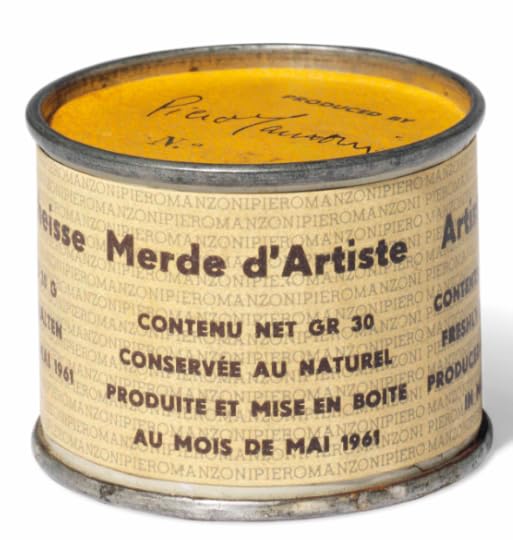
Modern art plays a key role in the text - the work that Yiji makes as the centrepiece of her exhibition, and which Robert selects to burn, is inspired by 'Merda d'artista' by Piero Manzoni
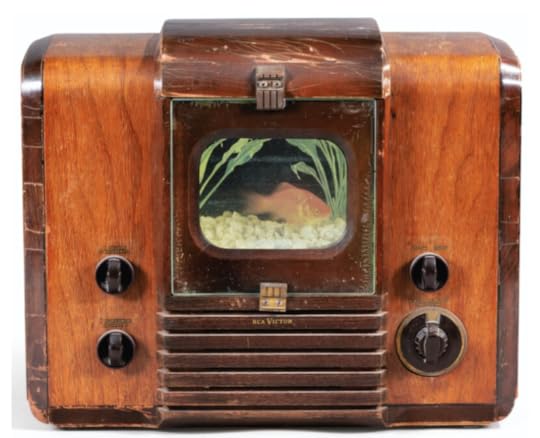
And the narrator has some Ship-of-Thesues like musings on the Foundation's, and Robert's, longevity inspired by Nam June Paik's 'Sonatine for goldfish'
Not entirely successful - in part as it wasn't clear what the author meant success to be - but stimulating, entertaining and very different.
전시회 마지막 날에 작품 중 하나를 소각한다. 소각할 작품은 로버트 재단에서 선택한다.
Incineration?
I wondered if 'sale' had somehow been mistranslated as 'incineration' or maybe there'd been a printing error. But no - they really did mean that the art was to be burned. It wasn't a metaphor.
소각?
혹시 ‘구매’가 ‘소각’으로 잘못 번역된 것은 아닌지, 인쇄상의 오류가 아닌지 의심했는데 그건 정말 작품을 불태우는 행위 그자체를 가리키는 것이었다. 은유나 상징의 표현도 아니었다. 정말 불태운다고 했다.
Art on Fire is Lizzie Buehler's translation of 불타는 작품 by 윤고은 (Yun Ko-eun), following The Disaster Tourist and Table for One from the same translator/author.
The novel - part slapstick satire of the modern art scene, part intelligent ekphrastic writing, and 100% frogadabbadobulously bonkers (© Smashie) - has the narrator, 안이지 (An Yiji), a promising but relatively unsuccessful author invited to the US to be artist-in-residence at the Robert Foundation (로버트 재단), named after and managed by a famous photographer and art-collector. The only two catches:
1. as per the quote above from the Foundation's rule book, one of the artist's 10 pieces produced on the residency will be selected by Robert and publicly burned.
2. Robert is a dog, from the papillon breed.
The trip to the Foundation also proves tricker than Yiji expected, and Robert an arrogant host, communication made rather complex by the layers of translation, including a human who interprets Robert's barks and body language:
Our conversation was made possible by four separate stages of translation: Robert → black box → Danny → English-English interpreter → English-Korean interpreter → me. Even if I spoke English completely fluently, Sam later told me, they would have hired an interpreter. Interpreters considered more than just the flow of language; they provided a certain security. For safety rea-sons, Robert's words passed through several checkpoints before reaching me. If I were a native English speaker, that would have removed only one of the checkpoints. Multiple stops existed between artist and patron.
Not helped by the English-Korean interpreter deciding to alter what is said to please Robert, '상여놀이' becoming 'supercar':
Some might have seen his impact as a disaster lying in wait, but I thought that in some ways, hed unexpectedly helped me and Robert. For example, when my sentence I painted a picture of sangyeo nori, traditional Korean casket performances was translated from Korean to English, it became, T'm very interested in traditional Korean supercars, and Robert was hooked. 'Supercar' was one of Rober's favourite words. He asked me several times about traditional Korean supercars.
'Is the Korean supercar you're painting from a long time ago?" he asked.
At the time, I had painted neither a Korean supercar nor a funerary casket, and I had no intention of doing so. I was so focused on this point that I forgot the content of the conversation. In response, I said, Not from a long time ago — it'll be a modern supercar.'
The Korean word for modern, hyundae, sounded like the car brand Hyundai, so the interpreter thought I was talking about Hyundai Motors. Referring to Hyundai rather than modernity wasn't a small incident. The topic of funerary rites had now turned into a new supercar that Hyundai was making. Robert and I had the entire conversation without him realising that we were talking about different things.
Modern art plays a key role in the text - the work that Yiji makes as the centrepiece of her exhibition, and which Robert selects to burn, is inspired by 'Merda d'artista' by Piero Manzoni
And the narrator has some Ship-of-Thesues like musings on the Foundation's, and Robert's, longevity inspired by Nam June Paik's 'Sonatine for goldfish'
Not entirely successful - in part as it wasn't clear what the author meant success to be - but stimulating, entertaining and very different.
February 18, 2026
Award winning Korean author Yun Ko-eun has been writing since 2004 but only more recently have her novels been receiving English translations. Her 2013 book The Disaster Tourist, a dystopian satire, was translated in 2020 by Lizzie Beuhler. Now her 2023 novel Art on Fire (Burning Work in the original Korean), another dark satire based around the art world has been released in translation also by Beuhler.
Art on Fire has an intriguing and more than a little weird opening sequence. It concerns photographer Bill Mori who becomes famous for a photograph he took accidentally on the rim of the Grand Canyon. Only it turns out that the photograph was actually taken by a dog called Robert. Fast forward a few years and Robert has been made the patron of an American art institute based near Palm Springs known as the Robert Foundation. Every year the Foundation invites an artist to a residency with one condition. At the end of the residency, Robert will choose one of their art works to be incinerated.
The story itself is narrated by Korean artist An Yiji, who has been invited to take up a residency at the Robert Foundation. Just getting to the Foundation turns out to be a kind of surreal experience due to raging wildfires. But once she is there, An finds things to be even weirder, down to her meals with Robert which are translated by a Korean translator (even though she speaks English) and then a second translator who interprets for Robert the dog. She also encounters a range of strange characters from the staff at the foundation to the residents of the local city of Q, which is partnering with the Foundation on An’s residency.
Art on Fire is a satire on the art and entertainment world but given this background it is really hard to know what Yun is trying to say. The introduction and trip to the Foundation are both well handled but once An actually reaches the Foundation things slow down. She experiences a, not surprising, painter’s block but then when she starts painting starts to worry about the work that will be destroyed. And the fact that the Foundation is run by a hyper-intelligent, photograph taking dog is an idea that very quickly runs out of steam.
The idea of the value of art is central to the narrative. Is An’s remaining art more valuable because she has to destroy a painting? Does the chosen painting become more valuable in her eyes because it is the one she is required to destroy? The interesting thing with asking this question being that this is not a thought experiment. It is exactly what happened with Banksy’s painting Girl with Balloon which, in 2018 was sold and then passed through a shredder. It has since turned out that “the act of destruction turned the piece into a unique, historical object, significantly boosting its value rather than destroying it.”
Yun Ko-eun has a range of things to say about inspiration, the nature and value of art, the pressure on artists and the artificiality of the art world. And while there is some strange enjoyment to be had from some aspects of Art on Fire and its bizarre set up, it does not quite hit mark.
Art on Fire has an intriguing and more than a little weird opening sequence. It concerns photographer Bill Mori who becomes famous for a photograph he took accidentally on the rim of the Grand Canyon. Only it turns out that the photograph was actually taken by a dog called Robert. Fast forward a few years and Robert has been made the patron of an American art institute based near Palm Springs known as the Robert Foundation. Every year the Foundation invites an artist to a residency with one condition. At the end of the residency, Robert will choose one of their art works to be incinerated.
The story itself is narrated by Korean artist An Yiji, who has been invited to take up a residency at the Robert Foundation. Just getting to the Foundation turns out to be a kind of surreal experience due to raging wildfires. But once she is there, An finds things to be even weirder, down to her meals with Robert which are translated by a Korean translator (even though she speaks English) and then a second translator who interprets for Robert the dog. She also encounters a range of strange characters from the staff at the foundation to the residents of the local city of Q, which is partnering with the Foundation on An’s residency.
Art on Fire is a satire on the art and entertainment world but given this background it is really hard to know what Yun is trying to say. The introduction and trip to the Foundation are both well handled but once An actually reaches the Foundation things slow down. She experiences a, not surprising, painter’s block but then when she starts painting starts to worry about the work that will be destroyed. And the fact that the Foundation is run by a hyper-intelligent, photograph taking dog is an idea that very quickly runs out of steam.
The idea of the value of art is central to the narrative. Is An’s remaining art more valuable because she has to destroy a painting? Does the chosen painting become more valuable in her eyes because it is the one she is required to destroy? The interesting thing with asking this question being that this is not a thought experiment. It is exactly what happened with Banksy’s painting Girl with Balloon which, in 2018 was sold and then passed through a shredder. It has since turned out that “the act of destruction turned the piece into a unique, historical object, significantly boosting its value rather than destroying it.”
Yun Ko-eun has a range of things to say about inspiration, the nature and value of art, the pressure on artists and the artificiality of the art world. And while there is some strange enjoyment to be had from some aspects of Art on Fire and its bizarre set up, it does not quite hit mark.

December 9, 2025
I first came across Yun Ko-Eun when I read her climate fiction, DISASTER TOURIST, back in 2020 when it was released. I was pleasantly surprised by her satirical commentary on climate change and environmental tourism. That book was slim but wild—it’s one I really enjoyed and recommend often.
ART ON FIRE is a very different book but has similar satirical and witty tone with Disaster Tourist specifically around the commentary for climate change and public consumption. In DISASTER TOURIST, Yun explores the fascination, exploitation and ultimately, destruction of nations existing on the periphery of the imperial core due to ecotourism and the public’s role as complicit spectators and tourists. In ART ON FIRE, she both expands and narrows in on the idea of public consumption and engagement through an artist and her patron.
An Yiji makes ends meet by working as a food delivery person. She’s long abandoned her dreams of making a living as an artist, so when she is recruited and accepted into an all-expenses paid artist’s residency at the Robert Foundation in Palm Springs, she knows it is an opportunity she cannot pass up. Still, she is apprehensive. After all, the head and patron of the foundation is a discerning and eccentric photographer who just happens to be a dog, a papillon named Robert. She’s also uneasy about the fact that one of her works, chosen by Robert, will be incinerated at the end of her residency per the rules of the Foundation. But knowing this residency has launched the careers of many famous artists, she sees no other option but to accept.
The way Yun poses nature and art, and how they impact one another is really interesting, especially when set against capitalism as driving force. While nature usually serves as inspiration for art, in this book it also plays a role as a barrier to the public consumption and commodification of art. A lot happens in this book with a lot of themes being explored, and it’s done with humor and wit. I did struggle with the pace in the middle and wanted more focus look at critique of the intersectionality of cultural elitism and climate change. Still, similar to DISASTER TOURIST, I thought this was a very unique premise and overall, a really entertaining read. And I am continually impressed with the seamless translation of Lizzie Buehler. I would definitely recommend to anyone who enjoys surrealist fiction, especially to those who want to explore more Korean translated books.
Full review here.
ART ON FIRE is a very different book but has similar satirical and witty tone with Disaster Tourist specifically around the commentary for climate change and public consumption. In DISASTER TOURIST, Yun explores the fascination, exploitation and ultimately, destruction of nations existing on the periphery of the imperial core due to ecotourism and the public’s role as complicit spectators and tourists. In ART ON FIRE, she both expands and narrows in on the idea of public consumption and engagement through an artist and her patron.
An Yiji makes ends meet by working as a food delivery person. She’s long abandoned her dreams of making a living as an artist, so when she is recruited and accepted into an all-expenses paid artist’s residency at the Robert Foundation in Palm Springs, she knows it is an opportunity she cannot pass up. Still, she is apprehensive. After all, the head and patron of the foundation is a discerning and eccentric photographer who just happens to be a dog, a papillon named Robert. She’s also uneasy about the fact that one of her works, chosen by Robert, will be incinerated at the end of her residency per the rules of the Foundation. But knowing this residency has launched the careers of many famous artists, she sees no other option but to accept.
The way Yun poses nature and art, and how they impact one another is really interesting, especially when set against capitalism as driving force. While nature usually serves as inspiration for art, in this book it also plays a role as a barrier to the public consumption and commodification of art. A lot happens in this book with a lot of themes being explored, and it’s done with humor and wit. I did struggle with the pace in the middle and wanted more focus look at critique of the intersectionality of cultural elitism and climate change. Still, similar to DISASTER TOURIST, I thought this was a very unique premise and overall, a really entertaining read. And I am continually impressed with the seamless translation of Lizzie Buehler. I would definitely recommend to anyone who enjoys surrealist fiction, especially to those who want to explore more Korean translated books.
Full review here.

July 27, 2026
Weird but not really in the way I wanted it to be? I think too weird for 'normal' readers but not quite weird enough for the weird girls? So maybe an intro to translated weird?
I have enjoyed books that go into how bizarre and subjective and pretentious the art world is, and sci-fi elements like fake towns and cloney tech but maybe with those elements in combination this was trying to do too much? The sci-fi elements didn't really feel fleshed out, and I was hoping to see more of the process of the protagonist's art and the process of creation in this environment, which we didn't really get.
I liked the ideas explored about art becoming derivative as it has become commercialised, and how many 'art people' care more about ownership and status rather than the meaning and process of art, and what this means for creatives having to commercialise or starve. The dog just didn't really work for me, though I did like the ridiculousness of everyone bowing down to him and the ambiguity about whether there was really some technological breakthrough allowing him to communicate or if there was someone behind a curtain pulling the strings.
I feel we got a bit lost in the middle, and then I got more lost by the end and there were a few too many loose ends for it to feel satisfying. There is a message in there about the value held in being the original iteration of something - whether that be a person or art - but I just don't really know what it was doing with that. I think it was trying to make a point about tech making things (and lifespans) infinite which makes them valueless, and how AI and self-replicating technology will make both art and humanity devoid of all meaning. And I guess too how the destruction of the earth is something that can't be solved with this new tech - it is the ultimate original!
Art is the friends we make along the way!! The experience of creation is more important than the end state!! You are the only one of you!!
I have enjoyed books that go into how bizarre and subjective and pretentious the art world is, and sci-fi elements like fake towns and cloney tech but maybe with those elements in combination this was trying to do too much? The sci-fi elements didn't really feel fleshed out, and I was hoping to see more of the process of the protagonist's art and the process of creation in this environment, which we didn't really get.
I liked the ideas explored about art becoming derivative as it has become commercialised, and how many 'art people' care more about ownership and status rather than the meaning and process of art, and what this means for creatives having to commercialise or starve. The dog just didn't really work for me, though I did like the ridiculousness of everyone bowing down to him and the ambiguity about whether there was really some technological breakthrough allowing him to communicate or if there was someone behind a curtain pulling the strings.
I feel we got a bit lost in the middle, and then I got more lost by the end and there were a few too many loose ends for it to feel satisfying. There is a message in there about the value held in being the original iteration of something - whether that be a person or art - but I just don't really know what it was doing with that. I think it was trying to make a point about tech making things (and lifespans) infinite which makes them valueless, and how AI and self-replicating technology will make both art and humanity devoid of all meaning. And I guess too how the destruction of the earth is something that can't be solved with this new tech - it is the ultimate original!
Art is the friends we make along the way!! The experience of creation is more important than the end state!! You are the only one of you!!

June 21, 2026
With her career stalling, artist An Yiji accepts an prestigious, all-expenses-paid residency in California hosted by the illustrious Robert Foundation. But the foundation's patron is an arrogant, photography-prodigy dog, and An is required to let him incinerate one of her paintings at the end of her stay. An must navigate awkward dinners with her canine patron, dodge overbearing sponsors demanding to be the subjects of her art, and face the agonizing reality of her work being destroyed. Was this opportunity of a lifetime actually a huge mistake?
Ahh, this book is wonderfully bizarre - just right for my reading taste! The premise was so incredibly fresh, with clever symbolism scattered throughout the entire story, and the dark humor was absolutely spot-on.
The opening immediately hooked me, with An contemplating her residency while wildfires raged across California. The origin of the foundation was completely wild, and I found myself shaking my head at how everyone just accepted Robert the dog as a human-like patron. Human beings naturally love to anthropomorphise, and I adored how this book dialled that exact tendency up to the absolute maximum.
I thoroughly enjoyed the entire unpredictable journey and genuinely didn’t want the book to end. In fact, the conclusion felt a bit too abrupt for me, simply because I was so absorbed in the story that I wanted more! I’d highly recommend this to anyone who loves unique, bizarre, and deeply creative reads - and no, you don’t even have to set it on fire!
(Thanks to Scribe for a gifted review copy)
See my bookstagram review.
Ahh, this book is wonderfully bizarre - just right for my reading taste! The premise was so incredibly fresh, with clever symbolism scattered throughout the entire story, and the dark humor was absolutely spot-on.
The opening immediately hooked me, with An contemplating her residency while wildfires raged across California. The origin of the foundation was completely wild, and I found myself shaking my head at how everyone just accepted Robert the dog as a human-like patron. Human beings naturally love to anthropomorphise, and I adored how this book dialled that exact tendency up to the absolute maximum.
I thoroughly enjoyed the entire unpredictable journey and genuinely didn’t want the book to end. In fact, the conclusion felt a bit too abrupt for me, simply because I was so absorbed in the story that I wanted more! I’d highly recommend this to anyone who loves unique, bizarre, and deeply creative reads - and no, you don’t even have to set it on fire!
(Thanks to Scribe for a gifted review copy)
See my bookstagram review.

February 14, 2026
'Art on Fire' by Korean writer, Yun Ko-eun. This book is surreal. It's a satirical look at the world of art. It's a 'make you stop and think' book. It's fun, perturbing, clever, discomfiting, unbelievable and believable all at the same time. It's a reflection of modern life, culture and the way mass hysteria seems to take over society at whim with everyone jumping on the extreme bandwagon of believing something is really good (REALLY GOOD and no-one is allowed to think otherwise) or really bad (REALLY BAD and no-one is allowed to think otherwise).
Chapter one tells the story of a photograph and how the photographer accidently captured an image that went viral.
Chapter two feels like the chapter one of a completely different book as we meet the Korean artist An Yiji. She has been struggling financially and just started to do 'walking deliveries' via an app to earn some money. Out of the blue she is offered an all-paid retreat at the Robert Foundation in California. The Robert Foundation is known for making artists' careers and so this isn't something she can lightly turn down.
She arrives in California as wildfires rage cutting her off from the foundation. She gets through this, and through the fires, and arrives at the Foundation. That's when it gets surreal and perturbing. It's also when we learn that chapter one hadn't mistakenly been added to the front of this book.
I really enjoyed this book and I'm still thinking about it more than a week after finishing it. The ending slightly let it down, but other than that, I loved it.
Chapter one tells the story of a photograph and how the photographer accidently captured an image that went viral.
Chapter two feels like the chapter one of a completely different book as we meet the Korean artist An Yiji. She has been struggling financially and just started to do 'walking deliveries' via an app to earn some money. Out of the blue she is offered an all-paid retreat at the Robert Foundation in California. The Robert Foundation is known for making artists' careers and so this isn't something she can lightly turn down.
She arrives in California as wildfires rage cutting her off from the foundation. She gets through this, and through the fires, and arrives at the Foundation. That's when it gets surreal and perturbing. It's also when we learn that chapter one hadn't mistakenly been added to the front of this book.
I really enjoyed this book and I'm still thinking about it more than a week after finishing it. The ending slightly let it down, but other than that, I loved it.

November 1, 2025
Occasionally I read a book that keeps my interest in part by making me wonder how an author actually came up with the story line, and how they manage to accomplish writing the book. This is one of those times. The author has presented the reader with a book that manages to be compelling in spite of making very little realistic sense. Although the roots of the novel are grounded in reality, dealing with issues such as climate change, the pretentiousness of art criticism, and the nature of identity, the actual premise of the book's plot is absurd in the extreme. Nonetheless, I found the book highly engaging.
The book follows the story of a young Korean artist, Ahn Yiji, who spends her time working as a delivery person until she is recruited as The Robert Foundation's new artist in residence. When she travels to LA to begin her fellowship, she is confronted with massively destructive forest fires and is unable to reach her final destination as planned. From this point on, things become more and more strange as the book finds its place somewhere along the absurd-satirical-surreal borderline. The author effectively uses fire as a metaphor for thoughts throughout the book and uses Robert (the dog), ostensibly the force behind the foundation, as a stand-in for the indefinable nature of art, individuality and reality.
If you like your fiction realistic, this is not for you. If you like trying to tease the underlying meaning out of sometimes nonsensical narratives, you'll love this. I liked it quite a bit and rated it higher than average.
The book follows the story of a young Korean artist, Ahn Yiji, who spends her time working as a delivery person until she is recruited as The Robert Foundation's new artist in residence. When she travels to LA to begin her fellowship, she is confronted with massively destructive forest fires and is unable to reach her final destination as planned. From this point on, things become more and more strange as the book finds its place somewhere along the absurd-satirical-surreal borderline. The author effectively uses fire as a metaphor for thoughts throughout the book and uses Robert (the dog), ostensibly the force behind the foundation, as a stand-in for the indefinable nature of art, individuality and reality.
If you like your fiction realistic, this is not for you. If you like trying to tease the underlying meaning out of sometimes nonsensical narratives, you'll love this. I liked it quite a bit and rated it higher than average.

June 3, 2026
4/5 ⭐️ Haven't read such a fun, zany novel in a while!
Art on Fire is an absurdist satire novel based on the pretentious art world, bursting with metaphorical social commentary on the meaningfulness of contemporary art and society's over-dependence on convenience. The story is ambiguous and vague enough that readers have to read between the lines and think about what the book's message is (akin to a museum-goer analysing a piece of art).
The main protagonist, An Yiji is a Korea-based pedestrian delivery person turned artist when one day she is selected to join the prestigious Robert Foundation's artist residency all the way in Los Angeles. She has to produce several artworks and will be provided accommodation and food. But there's a catch, at the end of the exhibition, she'll have to give up one art piece for incineration, chosen by the founder, Robert. Funnily enough, Robert is not a human being, but a Papillon, hooked up to a black box that supposedly translates his thoughts. On reaching LA, Ms An has to battle raging wildfires and finds herself abandoned and having to get to the residency on her own. Art on Fire is a really inventive, cinematic read that I think would translate well to the silver screen. I'm looking forward to reading the author's earlier work, The Disaster Tourist. Though the half-hearted ending left me just as stumped and confused as when I began reading the novel (re-reading chapter one didn't really help), it was still an enjoyable journey as I found myself rooting for Ms An and also wanting to uncover the mysteries of the Robert Foundation.
3 quotes to sum up this book:
"There's more power in burning a piece the artist really loves, isn't there?"
"Robert isn't choosing a piece because the artist loves it. The artist loves the piece that gets burned because it's destroyed. In any case, the artist can't avoid fate: the art that he or she loves will burn."
"Humans die. Recycling them isn't possible. Humans are single-use organisms. Living beings are waste destined for incineration, but that doesn't mean we live our lives in feature of our impending cremation."
Art on Fire is an absurdist satire novel based on the pretentious art world, bursting with metaphorical social commentary on the meaningfulness of contemporary art and society's over-dependence on convenience. The story is ambiguous and vague enough that readers have to read between the lines and think about what the book's message is (akin to a museum-goer analysing a piece of art).
The main protagonist, An Yiji is a Korea-based pedestrian delivery person turned artist when one day she is selected to join the prestigious Robert Foundation's artist residency all the way in Los Angeles. She has to produce several artworks and will be provided accommodation and food. But there's a catch, at the end of the exhibition, she'll have to give up one art piece for incineration, chosen by the founder, Robert. Funnily enough, Robert is not a human being, but a Papillon, hooked up to a black box that supposedly translates his thoughts. On reaching LA, Ms An has to battle raging wildfires and finds herself abandoned and having to get to the residency on her own. Art on Fire is a really inventive, cinematic read that I think would translate well to the silver screen. I'm looking forward to reading the author's earlier work, The Disaster Tourist. Though the half-hearted ending left me just as stumped and confused as when I began reading the novel (re-reading chapter one didn't really help), it was still an enjoyable journey as I found myself rooting for Ms An and also wanting to uncover the mysteries of the Robert Foundation.
3 quotes to sum up this book:
"There's more power in burning a piece the artist really loves, isn't there?"
"Robert isn't choosing a piece because the artist loves it. The artist loves the piece that gets burned because it's destroyed. In any case, the artist can't avoid fate: the art that he or she loves will burn."
"Humans die. Recycling them isn't possible. Humans are single-use organisms. Living beings are waste destined for incineration, but that doesn't mean we live our lives in feature of our impending cremation."
May 13, 2026
This book was a wild ride: at times a little too disorienting in terms of the shifts in the narrative, the book in most impressive in its emotional impact. Just imagine being gaslit for 250 pages, at every turn, by a Kafkaesque world, and then imagine you're in a script that David Lynch drafted during the Mulholland Drive/Inland Empire stage of his career, and you've got an idea. I think this book's take on the artworld is at once more clever and more oblique than novels like Immaculate Conception (to which I inevitably compared this, as another recent take on weird fiction set in the contemporary artworld.) Sure, there are sometimes slightly blunt references to modern and contemporary art, but most of the book operates in the strange zone that I've seen a lot in Korean and Japanese fiction especially, where the main character continually encounters people whose inexplicably have more power or social capital than her, and who keep moving the goalposts of even the simplest effort to understand how one should act and what should be done. The back of the book's description makes this sound far more coherent than it is, and it's true that the ending is very abrupt--but still highly recommended. Realistically for me this was a 4.5/

December 22, 2025
I didn't read the book jacket closely enough. All I saw was the setting of an artist residency, Palm Springs, and California fires. Those things piqued my interest, were in my scope of art world interests and experience of artist residency weirdness and the desert landscape. What I didn't take note of was this: "the Foundation's president and patron is a small dog named Robert, known for his talent as a photographer and his arrogance." I wasn't expecting this to be an absurdist satire, a sci-fi dystopian adventure with random plot points that are foisted upon a hapless Korean painter. The outlandish inventions in the plot points are wacky and non-sequitur metaphors. What does it mean to have a patron be a dog? That the Hollywood sign would be a mutable thing and corporations rule nefariously? That delivery apps can be an espionage tool or escape route? Or that dogs can be trained not to shit? The theme of burning is a constant-- the landscape is on fire, and a stipulation of the residency is that one of the artworks, chosen by the dog, will be incinerated in a pizza oven. There are desert mall scenes, but no mention of a California Pizza Kitchen. . . .

May 25, 2026
Finished this book out of spite. Somehow despite a dog literally being on the front (which I thought was abstract fire), and on the spine (I somehow just missed that), AND mentioned in one line on the back (can I even read), I didn't realize it was partially about this enigma of a quasi humanesque intelligent dog? Felt like I was tripping when reading the beginning of the story. I don't like any of the characters really, I don't think the story is as deep of a critique on art as it tries to be?? I'm overall just confused if it was poorly written, poorly translated, or both. TRULY sped through it to just get it over with. Only giving it a 2 because a 1 to me is a DNF.
July 11, 2026
this was one of the few unsealed books in the store and the first 2 pages convinced me to get it. It has an absurd premise - a dog has an artist’s flair and a curator’s eye, becomes world famous and has its own Foundation, sure ok let’s go with that. A Korean woman is chosen to be the artist in residence, and it’s her POV that informs the book. She arrives to wild fires and dead fish and a talking dog. The story only got weirder as it went on. I held on to the end, though I really can’t tell it if was a satisfying ending.
Read
May 24, 2026dnf @ page 170 🎨🔥
could've persisted because i was so close to the end but honestly i think i got what i needed from it already, and at this point the plot was just meandering. the start is so viscerally gripping and strong, and i thought this commentary on art, ownership, and creativity would've been sustained but now it's just an amalgamation of scattered ruminations. would highly recommend this to people who have more patience than me!
could've persisted because i was so close to the end but honestly i think i got what i needed from it already, and at this point the plot was just meandering. the start is so viscerally gripping and strong, and i thought this commentary on art, ownership, and creativity would've been sustained but now it's just an amalgamation of scattered ruminations. would highly recommend this to people who have more patience than me!

July 4, 2026
3.5 stars rounded up.
I have a turbulent relationship with satire and this one actually hit for me!!! Was not a home run though because I think the pacing was off and I kept falling into the "but what does THIS mean specifically, what is the author trying to say with this?" hole that did a disservice to me and the book.
I have a turbulent relationship with satire and this one actually hit for me!!! Was not a home run though because I think the pacing was off and I kept falling into the "but what does THIS mean specifically, what is the author trying to say with this?" hole that did a disservice to me and the book.
October 6, 2025
I picked this off a bookshop shelf kind of at random, but what a beautifully surreal book it is. Its skewering of the art world reminded me a lot of Peter Strickland's Flux Gourmet, a film I really loved.

October 14, 2025
Rating: 3.75
I think this one worked better as a satire compared to "The Disaster Tourist". All the allusions to the art world's idiosyncrasies reminded me a lot of Banksy's stunt of destroying the artwork someone bought off him (as he should). Wonder if the author was inspired by that.
I think this one worked better as a satire compared to "The Disaster Tourist". All the allusions to the art world's idiosyncrasies reminded me a lot of Banksy's stunt of destroying the artwork someone bought off him (as he should). Wonder if the author was inspired by that.
May 22, 2026
It pains me not to finish things but I finally gave up. The beginning was captivating enough but the story got more and more bizarre and I never really cared about the characters and I wanted to like it for its satire but in the end I lost interest.
October 22, 2025
I hate a book where the plot surrounds a magical dog and no other mystical elements. Like why
November 12, 2025
don’t take this review as a recommendation
Displaying 1 - 30 of 41 reviews