Set in nineteenth-century New England, this exquisite novel tests a woman's love against her husband's utopian quest.
Sophy Hedge, the artistic daughter of the town's minister, falls in love with Gideon Birdsall, a troubled theology student studying with her father. Sophy is drawn to his intellect, passion, and spiritual nature, while Gideon glimpses in her a free soul unbound by convention. Yet Gideon's restlessness after they wed worries her, and she finds his friendship with Leander Solloway, the charismatic new schoolmaster, a cause for anxiety. When Sophy becomes pregnant, Gideon and Leander construct a faux Eden in a greenhouse as part of a daring experiment to discover the language of paradise, the tongue Adam spoke when he named the creatures of the earth. Sophy must decide whether to live and paint in the world her husband has made or leave to save her child and herself. Addressing the timeless issues of faith, art, and love, Barbara Klein Moss has also captured the fragility of human longing.
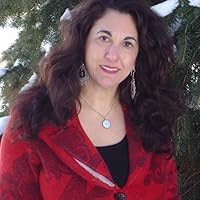
Barbara Klein Moss graduated from Syracuse University and received her MFA from the Warren Wilson College MFA Program for Writers. She lives in Annapolis, Maryland.
The Language of Paradise might be described as a love story between a dreamy young scholar and an equally dreamy and artistic, preacher's daughter, but the real love affair is with language. The story unfolds slowly, sometimes too slowly, but you almost don't mind because of Klein Moss's elegant prose. I would read a paragraph and marvel at the author's skill to transport me to the time, place or situation described. The main characters are also enthrall with language, the Hebrew language written by the first biblical scholars and their primary interest is translating these texts. The translation of the Hebrew texts takes on an "other worldy" tone at times, hinting at a hidden paradise?
The contrast between the extremely pragmatic and rather stern preacher's family, and the unstable, intellectual young student that the family adopts, first through an apprenticeship and later through marriage, provides a nice tension for the first half of the story. The literal paradise in the book comes into play more than halfway through the book, thanks to the intercession of Leander Solloway, a charismatic local school teacher with a mysterious past.
So many themes in this book, and so little time to describe them all! This is not a light, easy read, and moves a little too slowly at first, but it is so beautifully written that it is worth the effort.
This remarkable book, set in 19th century New England, tells the story of two fervently idealistic men seeking to forge a linguistic bridge to a less fractured world. Their misguided yearnings are pitted against the sensibility of a young woman who is as well grounded as she is artistic and high minded.
For all its ambition, the story unfolds with simplicity — there is little sense of artifice or contrivance in the telling. I would even go so far as to say that the story felt to me as if was woven with nothing but love — so much compassion infuses the telling. The plot unfolded without the sacrifice of any of its main characters. No one’s bad was a foil for another’s good. Every character was complex and sympathetic even when their actions were not.
In fact, the only negative for me was that the last couple of chapters deviated from this purity and brought us back to earth with a thud. Suddenly, the flatness of normal existence asserted is dominion. I so loved the airy habitation of the main part of the book that this felt a little disappointing to me. But maybe I was just disappointed that the story had to end — I really loved it so.
Sophy Hedge, the protagonist of Barbara Klein Moss' expansive 19th-century novel, first appears as a rather diffident creature who gradually reveals sparks of talent, wildness, and strength that make her most attractive. Orphaned at birth, she has been brought up by her uncle, the Reverend Samuel Hedge, a small-town minister in 1830s Massachussetts, and a scholar of Biblical languages. He is determined to prove that Hebrew was the language used by Adam to name the creatures in Eden, and that proper study of the roots of the language can open the gates of Paradise. Sophy, however, has her own way of approaching more accessible paradises, through her painting (though she is modest about her skills), her gardening, and (when she thinks no one is looking) her dancing.
Ah, but someone is indeed looking! Gideon Birdsall, one of the Reverend Hedge's students, sees her dancing in a meadow on his way to his first Sunday dinner at the parsonage. A romantic idealist, he believes he has seen an earth spirit. She looks at the golden-haired young man and believes him to be an angel. We already know from the prologue that they will be married and have a child, although it takes 135 pages for the first to come about and another 150 for the second. Gideon, meanwhile, has been employed as the older man's amanuensis. Going beyond a linguistic search for Paradise, he turns to mysticism, on several occasions falling into a trance while contemplating one of the Hebrew letters, granting him a vision of Paradise as an almost attainable place.
Earth spirit and naive visionary, not perhaps the best combination for a marriage. But Gideon has made the acquaintance of the new master of the local school, Leander Solloway, a charismatic individual with a surprising amount of worldly know-how. Leander steers the young couple past some early difficulties and also helps them financially, enabling the three of them to move into a house on a hill where they can create their own paradise, the perfect environment for bringing up the child, whom they name Aleph. Though we suspect that Leander's intimacy will present a sexual threat, his role as the serpent in this Eden is in fact an even more insidious one, and there is a time when the novel becomes almost Gothic in its mounting horror.
Moss does everything with the grace of another century, and just as she had taken her time building up the picture of this strange marriage, so she allows the tension to subside in a gentle epilogue that takes us through the next decade or so. I appreciated this, just as I appreciated her deep sense of period, both in what she describes and the language in which she describes it. Perhaps the pace was a little too slow, the language a little too self-indulgent, but for a debut novel the book is a real achievement; more than once, I thought of Middlemarch. And it made me aware that stern New England Calvinism might also be the breeding ground for reactionary movements, and of how easily the Transcendentalism of Emerson and Thoreau might shift into a mystical idealism, and from there into madness.
Masterful characterization, impressive historical research, and a provocative premise combine in a beautifully nuanced story that explores the fine line between intellectual ambition and personal obsession. Nineteenth-century New England is the backdrop for two men's quest to determine the original language spoken in Eden. Gideon Birdsall, a brilliant theology student, marries Sophy, the young niece of his esteemed teacher, whom he assists in compiling a Hebrew lexicon. When Leander Solloway, a brash, idealistic new schoolmaster, arrives in town, he recruits Gideon to embark on a bold experiment with the child Gideon and Sophy are expecting as its subject. The threesome isolate themselves from the townspeople in an attempt to keep the newborn in a completely silent environment to await its first utterances. As time passes, what began as a spiritual quest takes on a more questionable nature, and Sophy feels increasingly trapped in an artificial environment that distances her from her husband. There are writers who are gifted storytellers, and then there are writers who not only create a powerful narrative, but also demonstrate keen intelligence and deep insight into human nature. Moss is, without question, among the select ranks of the latter. Highly recommended!
I'm tempted to give this little-known novel, my 63rd book of the year, my first 5-star rating of the year--it's that good--but not quite, I think. The characters are brilliantly conceived and vividly and lovingly portrayed, and the prose is vivid, too, but perhaps doesn't quite rise to my 5-star level. And there are a few chapters leading to the climax that I thought got off track--out of character. It's 1830s New England. The Hebrew instructor at Andover Seminary, who is also a pastor of a church in a small town nearby and father of 4 boys and a girl whom he and his wife adopted after her mother died in childbirth and who is 16 years old as the story begins, takes on a promising Hebrew student as his "amanuensis." The student is immediately enamored of the daughter, and vice versa--he sees her as a sprite; she sees him as an angel. Both see visions but respond to them very differently. Together, they attempt to create a new Paradise. Alas, there's a subtle serpent in the garden who undermines their vision while appearing to support both of them. (It's the male here who is more susceptible to the temptation.) This novel is reminiscent, for me, of another little-known novel, one of my all-time favorites, The Knowledge of Angels. I highly recommend both of them to thoughtful readers looking to have their view of the world challenged.
Are you feeling fragmented and alienated with our culture of constant connectivity and dumpster fire social media? Brew yourself a cup of tea, settle into your favourite reading spot and escape to 19th century New England with Barbara Klein Moss' rich and beautiful debut novel, THE LANGUAGE OF PARADISE. The story centres on Sophy Hedge, an artist and daughter of the town minister, who falls in love with Gideon Birdsall, a theology student assisting Sophie's father with parsing a Hebrew lexicon. All is not well in paradise. As the two men immerse in mysticism, Sophy creates secret paintings. When she becomes pregnant, her husband and father create a faux Eden in a greenhouse to discover the language of paradise. Sophy is caught between painting in the world these men have created or to escape to freedom with her child. Moss is a beautiful, lush stylist and she created layered fascinating characters. The world is vivid and compelling. This is a novel that asks big questions. What does faith mean? Is there a conflict between intellect and spirit? How to serve faith, family, and community without going under. Highly recommended.
One of the most enjoyable books I’ve read in a long time in terms of prose. The writing is so poignant. It manages to be poetic while still being succinct. She covers a wide distance through some pretty distressing landscape while never letting you get bogged down.
The writing was far better than the plot, which probably was what kept me reading for as long as I did. And maybe the blurb could have indicated that the apparently pivotal relationships don't even form until over a third of the way into the book (I know this only because I got a third of the way through and realized that what I was reading didn't match anything on the back, which is when I gave up). Even the set up to this was incredibly slow. Yes, it matches literature of that time, but some sensible editing and a little faster pacing would not have gone amiss. DNF.
I just read this book to review it for the Historical Novel Society, so i'm not allowed to re-print what i wrote for them until it comes out in print -- but let me just say, this is an incredible "debut" novel. It's seriously metaphorical, philosophical, literary, symbolic -- and it's a good story, too! I'll be back with more detail after the HNS Review comes out, but in the meantime, look forward to reading this book!
Lovely first novel by a promising writer. I'd read her short stories "Little Edens" several years ago and admired her writing. Truth: I got to know Barbara at Breadloaf writers conference. I recall her early frustrations in writing this book, and was impressed at how she overcame those challenges. The characters of this book are not heros or heroines. But they are painted on the page in a way that you will never forget them.
I haven't written many book reviews, but I finished this book almost a month ago, and these characters, that are still living inside my head, compelled me to do so. I can still feel Sophy's repression and her yearning for freedom, Gideon's obsession to find that very first language, and Leander - ah Leander - he is still seducing me, as he seduced so many others. This book pulled me into the most beautiful fictional world I have visited in a long time.
People are mysteries, and our assessment of them is often tragically flawed. This book is about two people who seem well-suited in their unearth lines, but tragically are never able to connect. Their marriage is tainted by the presence of a man whose past and intentions are uncertain, odd at best and sinister at worst. I kept expecting horrible things to happen, events of terrible proportions. But the sad dwindling of potentialities and hope is somehow just as sad.
It's like reading Nathaniel Hawthorne and Sinclair Lewis if the two of them became one author. It's very literary, very descriptive, and very interesting. I can see this becoming a point of discussion in an American Lit. class.
Barbara Klein Moss creates a fascinating collection of characters in this historical novel that explores the ideas of perfection, faith, and the hidden power of art and the origin of language. A lovely book, with beautiful writing, and thought-provoking ideas and themes.
This is first of all a love story between two very different people. The story also explore some of their differences and where that leads them as well.
It started out with a unique premise, took about a million years to build to some pretty good suspense, and then just petered out and didn't know how to end.