Jump to ratings and reviews
Rate this book

Touch Me, I'm Sick: A Memoir in Essays

Rate this book
Reject the stigmas of trauma and chronic illness by fostering queer forms of intimacy—and embracing the many ways humans can care for one another.

The writer behind the popular @softcore_trauma Instagram offers a deeply personal memoir for folks seeking healing and better care.


The forms of intimacy and care that we’ve been sold are woefully inadequate and problematic. In a world that treats those who are sick and traumatized as problems in need of a cure, nonbinary writer, artist, educator, and Instagram creator Margeaux Feldman offers a different story.

Trauma, which all too often manifests as chronic illness, tells us that there is something deeply wrong with the world we live in. A world that promotes individualism, fractures us from community through violence and systemic oppression, and leaves us traumatized. That is what we need to cure.

While unveiling their own lived experiences caregiving for their sick father, losing their mother, surviving sexual abuse, and grappling with their own chronic illness, Feldman provides roadmaps for embracing queer modes of care, or “hysterical intimacies,” that reject the notion that those who have been labeled sick are broken. Feldman looks at the lengthy history of branding girls, women, and femmes–and their desires–as sick, from the treatment of hysterics by Jean-Martin Charcot and Sigmund Freud in the 19th and 20th centuries. What emerges is a valiant call for rethinking the ways we seek healing.

This compelling blend of theory, personal narrative, and cultural criticism offers a path forward for reimagining the shapes and forms that intimacy, care, and interdependence can take.

244 pages, Kindle Edition

Published September 9, 2025

31 people are currently reading
2748 people want to read

About the author

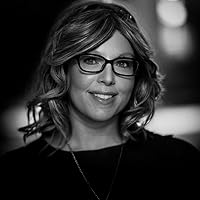
Margeaux Feldman

3 books17 followers

Ratings & Reviews

What do you think?
Rate this book

Friends & Following

Create a free account to discover what your friends think of this book!

Community Reviews

5 stars
20 (39%)
4 stars
17 (33%)
3 stars
9 (17%)
2 stars
5 (9%)
1 star
0 (0%)
Displaying 1 - 8 of 8 reviews
Profile Image for this_eel.
225 reviews56 followers
January 28, 2026
This book did not work for me, for reasons which boil down to (1) a simultaneous lack of intimacy and lack of expansiveness (2) a reliance on theory that fails to make the book less myopic and (3) "feels."

Here are the things I liked: certain elements of the discussion of mutual accountability and a reciprocal community that does not rely on exact material equivalence to be equitable and kind. The rejection of a common weaponization of "boundaries" as a rough tool to sever social connection and community and mutual care. Discussions of the connection between emotional and psychological distress and trauma, and physical chronic illness. The idea that queerness and mutual harm are not antithetical to one another because being outside of normative social expectations doesn't make you either less human with its foibles or invulnerable to the effects of societally pervasive evils. These are all interesting topics and we started to get some good discussion going about them.

Broadly, I was frustrated.

Feldman is both explicit about the events of their life and weirdly cagey. The reader may learn the facts of Feldmen's most damaging traumas, which is a brave thing to offer up publicly, but they never commit by letting the reader in with storytelling. Because of this, the beats of their trauma become repetitive in a way that left me restless (and yes, it is an uncomfortable thing to be restless about someone discussing the worst things that have ever happened to them).

Their efforts at extrapolating from personal experience into broad truths are not convincing, because while they quote a lot of critics, theorists, memoirists and spiritual practitioners, the crux of their arguments is...okay, it's navel-gazing. I expect a memoir to be self-centered, but I expect a good memoir to be self-centered in the form of intimacy. But this book is not intimate; it's the bare facts of a life cast into broad conclusions that are fortified by a hefty reading list but with a result that still feels oddly selfish. In wanting their own story to be the keystone of a journey through ideas of repair, disability, sexuality, and community, they become self-aggrandizing. There's not enough of self to make it memoir; they hold a distance between the narrator and the reader through walls of quotes and terminology rather than rich storytelling and vulnerability. And on the other hand, there's too much of "self as only anecdote" to ground the wide application of their experiences into universal ideas.

I'll be honest, here, and add that there is a disconnect between my way of navigating the world and Feldman's that is not traversable. I am not someone drawn to tarot, workshops, and the word "feels" as a noun. I do not process my experiences through theory. Because I am essentially a private person, I enjoy the same poetry as people around me but I do not read it out loud with them. I struggle with a book that takes as dogma both neuroscience (which is fascinating, but still in an uncertain, nascent era) and astrology (my general reaction to which is, for reasons not worth exploring but deeply considered, fairly hostile). I am not completely turned off to reading someone who has different perspectives on any of these things, but they are not things that automatically compel me.

Disability: the title and premise of the book suggest a lot more discussion of disability than there really is, which disappointed me.

Terminology: Feldman fails at any point to define their term of "femmes," which is a complex and sometimes loaded term that is also load-*bearing* in the book but never explored. The book is mostly about women and "femmes" and I still don't know who that means. That could have been an interesting conversation, except it never happened. Without that discussion it becomes a lazy way to loop in an underdescribed population for the purposes of Feldman's arguments without giving depth or personhood to the embodiments (eg the people they're talking about) of the term.

I did not expect and did not particularly like the preciousness assigned to the feminine to the exclusion of all masculinities. When you're talking about queer softness, for example, it would be fascinating to dig into the ways in which transmascs and queer cis men tend towards or *fail* to tend towards those ideals. Given the content of Feldman's past and the book, it's understandable that they have some fairly dark views of masculinity, and there is much to be justly said about its toxic elements. I don't need this book to be about masc people or men. But there did seem to be a gap in the discussion, and personally I think of the transmasculine people I know and their navigation of the world and experiences of gender and queerness and trauma fit very, very well with many of the topics in the book. I don't necessarily hold it against Feldman - except where they suggest that only femme relationships can hold soft magic - but I did wish there were at least a couple paragraphs gesturing to the idea that masc people aren't completely shut off from this utopian imagining. Especially, I might add, since some of the most poignant quotes they use in the book are from men and otherwise masc writers. Why include them to exclude them? I expect that some people might vehemently disagree with my stance here, but they and I will simply have to exist out of alignment with one another.

Finally, I am uncomfortable on a personal level with ending a book with an entire essay about how someone broke up with you after a couple months and then told you three times that they don't want to be friends and then you put everything about it in your book and say "I still hope that one day, C will reach out to do the hard work of repair." Woof. They didn't want to before, and they certainly won't now.

In conclusion: if you're a different person than me, you will possibly enjoy this. But you'll need to be quite a different person.
Profile Image for Sarah Jensen.
2,092 reviews194 followers
August 16, 2025
Book Review: Touch Me, I’m Sick: A Memoir in Essays by Margeaux Feldman
Rating: 4.8/5

Public Health Perspective & Thematic Analysis
Margeaux Feldman’s Touch Me, I’m Sick disrupts conventional public health narratives by reframing trauma and chronic illness through a queer, anti-capitalist lens. The memoir-essay hybrid critiques systemic failures in healthcare, particularly how cisheteronormative institutions pathologize marginalized bodies. Feldman’s concept of hysterical intimacies—care practices born from necessity in queer/disabled communities—aligns with disability justice principles, offering radical alternatives to biomedical individualism. Their analysis of Freudian hysteria diagnoses and modern anti-trans policies exposes how medicine historically weaponizes “sickness” against femmes and gender-nonconforming people.

While the theoretical depth is academically rigorous, some transitions between personal narrative and theory could be smoother for general readers.

Emotional Resonance & Structural Innovation
Feldman’s vulnerability—whether describing caregiver burnout for their father or “ugly sex” as healing—creates visceral connections. The essay “Queer Wounds” particularly impacted me; their assertion that we owe each other messy care challenged my clinical training’s emphasis on professional detachment. The @softcore_trauma Instagram voice shines through, blending meme-style accessibility with scholarly critique.

However, the memoir’s strength—its hybridity—also creates pacing inconsistencies. For example, “Femme4Femme Intimacy” could benefit from more ethnographic examples to ground its visionary theory.

Key Contributions to Public Health Discourse
- Trauma as Structural Violence: Links chronic illness to systemic oppression (e.g., anti-trans laws, capitalist healthcare).
- Queer Care Models: Proposes “soft magic” and communal care as harm reduction.
- Historical Continuums: Traces pathologization from 19th-century hysteria to modern PTSD diagnoses.

Constructive Criticism

Strengths:
-Interdisciplinary brilliance (memoir + disability studies + public health) .
-Urgent critique of the “wellness” industry’s ableism.

Weaknesses:
-Occasional jargon barriers (“hysterical intimacies” isn’t defined until mid-book).
-Underdeveloped exploration of racialized trauma.

How I would describe this book:
- A Body Keeps the Score for the queer apocalypse—Feldman turns sickbeds into sites of revolution.
- If Audre Lorde and Susan Sontag co-wrote a disability manifesto, it would sound like this.
- Forgets ‘patient compliance’ to teach us how to be gloriously non-compliant.

Final Thoughts
Thank you to Beacon Press and Edelweiss for the review copy. As a public health professional, I’ll recommend Feldman’s work to challenge colleagues’ notions of “treatment” and “recovery.” While the book’s genre-blurring style may disorient some, its refusal to simplify mirrors its thesis: that true healing thrives in complexity.

Rating: 4.8/5 (Docked slightly for accessibility gaps, but essential reading for trauma-informed practitioners.)
Profile Image for Ailey | Bisexual Bookshelf.
329 reviews96 followers
November 9, 2025
“Healing from trauma is a queer utopian project that honors softness, vulnerability, desire, longing, magic, and interdependence.”

Margeaux Feldman’s Touch Me, I’m Sick is a collection of essays that traces the porous boundary between trauma and the body, between what we are allowed to name and what we are forced to carry in silence. Rooted in memoir yet expansive in scope, Feldman interrogates how cultural narratives of illness and femininity have been shaped by Freud’s legacy of hysteria and how those same narratives still govern who is believed, who is cared for, and who is dismissed as “too much.” From the story of Freud’s patient Dora—the “originary sick mother”—to their own experience of chronic illness, Feldman reframes sickness as the body’s revolt against repression, a refusal to quietly absorb violence that society refuses to confront.

Feldman’s prose balances vulnerability with critical clarity. They write not only about eczema, pain, and fatigue, but about how these sensations index larger structures of gendered, sexual, and medical violence. Each essay feels like a small act of reclamation, insisting that the sick and the traumatized deserve language expansive enough to hold their contradictions. Feldman’s concept of “hysterical intimacies” becomes a radical reimagining of care: one grounded in reciprocity, interdependence, and the refusal to pathologize desire or need. Their reflections on femme identity, caregiving, and somatic healing reveal how softness can be both a survival tactic and a site of political resistance.

What makes Touch Me, I’m Sick so affecting is its insistence that healing is not about erasing damage but about living honestly within it. Feldman writes of trauma as a collective inheritance and of intimacy as a space where that inheritance can be rewritten through mutual recognition. This is a book that demands we rethink what it means to be “well” in a world that makes so many of us sick, and invites us to imagine tenderness itself as a form of liberation. For readers who find truth in messiness, who believe that care can be both fierce and gentle, Feldman’s work will feel like being seen in the most radical way.

📖 Read this if you love: feminist theory braided with memoir, queer and crip liberation frameworks, and the works of Johanna Hedva or Leah Lakshmi Piepzna-Samarasinha.

🔑 Key Themes: Trauma and the Body, Chronic Illness and Medical Gaslighting, Femme Identity and Interdependence, Queer Intimacy and Mutual Care, Softness as Political Praxis.

Content / Trigger Warnings: Sexual Harassment (minor), Child Abuse (minor), Pedophilia (minor), Sexual Assault (moderate), Sexual Violence (moderate), Rape (moderate), Cancer (minor), Death of Parent (minor), Drug Use (minor), Suicide (minor), Bullying (minor), Suicidal Thoughts (minor), Self Harm (minor), Sexual Content (minor), Ableism (minor), Transphobia (minor), Medical Trauma (minor), Pandemic (minor), Toxic Relationship (minor).
1 review
February 14, 2026
I wanted to like this, but stopped reading in the first full chapter. Feldman leans heavily on Gabor Maté's work, implying that unresolved trauma was the cause of their father's ALS:


In his national bestseller When the Body Says No, trauma specialist Dr. Gabor Maté argues that those with chronic illnesses share similar character traits: namely, the repression of emotions and the inability to say “no.” Among the illnesses cited by Maté are multiple sclerosis, Crohn’s disease, autoimmune disorders, fibromyalgia, endometriosis, and ALS. In these descriptions I see my father, and I see myself.

> The life histories of people with ALS invariably tell of emotional deprivation or loss in childhood. Characterizing the personalities of ALS patients is relentless self-drive, reluctance to acknowledge the need for help and the denial of pain whether physical or emotional. All these behaviors and psychological coping mechanisms far predate the onset of illness.


This is, frankly, bullshit. We don't know exactly what causes ALS, but we do know that there are genetic risk factors, and that toxin exposure is implicated. Maté's position, and Feldman's as well, is frank victim blaming. You don't get ALS because you're repressing trauma. I am a disabled person, and part of my journey was medical professionals telling me that unresolved emotional issues were the most likely cause of pain. This, again, was bullshit - it turns out that I have a condition that is very painful, and through careful management and years of physical therapy, I've been able to reduce my pain levels.

I was excited to read a book about queerness and disability, but this line of thinking is actively harmful.
Profile Image for Abbie Martin.
220 reviews2 followers
January 22, 2026
Beautiful and relatable in many ways… really appreciated the use of IFS theory and commentary on the over-pathologizing of people especially women, queer, and marginalized people in a system that traumatizes within community that will inevitably cause harm… "Illness in this society, physical or mental, they are not [anomalies]. They are a result of a way of life... [our society] is harmful to human development" Gabor Maté
154 reviews4 followers
November 21, 2025
This book is one to savor and re-read. The author has created a memoir of essays about being disabled, queer, and more in a biased society. The essays explore various aspects about living with chronic illness, being a survivor, and queering ways of relating, thinking, accessing care, and more.

I highly recommend it!

Thank you to Edelweiss and the publisher for an ARC!
377 reviews
November 11, 2025
Gorgeous cover and an overall interesting read! I thought there was a lot of interesting theory in here, and I especially liked the analysis of "ugly sex," but I think the essays overall were a touch long and could've benefitted from being broken up into smaller, more concentrated essays.
Profile Image for Brian Candelori.
165 reviews11 followers
February 20, 2026
4.7/5

Phenomenal - touches on so many things: diff ways to heal from trauma, the trauma, hurt, and harm - all defined by them - done to and by queer communities. Vulnerable and educational while being critical of themselves
Displaying 1 - 8 of 8 reviews

Can't find what you're looking for?

Get help and learn more about the design.