

What do you think?

Jack the Modernist
Set in the early 1980's, Robert Glück's first novel, Jack the Modernist, has become a classic of postmodern gay fiction. Bob is excited and lonely. He meets and pursues the elusive Jack, a director who is able to transform others without altering himself. Bob goes to the baths, gossips on the phone, goes to a bar, thinks about werewolves, has an orgasm, and discovers a number of truths about Jack. A paean to love and obsession, Glück's novel explores the everyday in a language that is both intimate and lush.
"Robert Glück has found a new way of making fiction passionate. This novel is a strange, exhilarating love story rich with invention and observation." -Edmund White
"Robert Glück has found a new way of making fiction passionate. This novel is a strange, exhilarating love story rich with invention and observation." -Edmund White
176 pages, Paperback
First published January 1, 1985
About the author
Robert Glück
40 books87 followersBorn in Cleveland, poet, fiction writer, editor, and New Narrative theorist Robert Glück grew up there and in Los Angeles. He was educated at the University of California, Los Angeles, the University of Edinburgh, the College of Art in Edinburgh, and the University of California, Berkeley, where he earned a BA. He also studied writing in New York City workshops with poet Ted Berrigan and earned an MA at San Francisco State University.
With Bruce Boone and other writers, Glück co-founded the New Narrative movement in San Francisco in the early 1980s. Glück’s experimental work—typically prose—infuses L=A=N=G=U=A=G=E theory with queer, feminist, and class-based discourse while exploring issues of autobiography and self. In his essay “Long Note on New Narrative,” which appeared in Biting the Error: Writers Explore Narrative (2004), Glück stated, “We were thinking about autobiography; by autobiography we meant daydreams, nightdreams, the act of writing, the relationship to the reader, the meeting of flesh and culture, the self as collaboration, the self as disintegration, the gaps, inconsistencies and distortions, the enjambments of power, family, history and language.”
Glück’s poetry includes the collection Reader (1989) and, with Bruce Boone, the collaboration La Fontaine (1981). His fiction includes the story collection Denny Smith (2003) and the novels Jack the Modernist (1995) and Margery Kempe (1994). Glück’s work has been selected for numerous anthologies, including The Faber Book of Gay Short Fiction (1992), Best American Erotica 2005, and Lust for Life: On the Writings of Kathy Acker (2006). He has received a California Arts Council Fellowship and a San Francisco Arts Commission Cultural Equity Grant.
Glück has served as director of San Francisco State’s Poetry Center, codirector of the Small Press Traffic Literary Center, and editor for Lapis Press and the literary journal Narrativity. He lives in San Francisco.
With Bruce Boone and other writers, Glück co-founded the New Narrative movement in San Francisco in the early 1980s. Glück’s experimental work—typically prose—infuses L=A=N=G=U=A=G=E theory with queer, feminist, and class-based discourse while exploring issues of autobiography and self. In his essay “Long Note on New Narrative,” which appeared in Biting the Error: Writers Explore Narrative (2004), Glück stated, “We were thinking about autobiography; by autobiography we meant daydreams, nightdreams, the act of writing, the relationship to the reader, the meeting of flesh and culture, the self as collaboration, the self as disintegration, the gaps, inconsistencies and distortions, the enjambments of power, family, history and language.”
Glück’s poetry includes the collection Reader (1989) and, with Bruce Boone, the collaboration La Fontaine (1981). His fiction includes the story collection Denny Smith (2003) and the novels Jack the Modernist (1995) and Margery Kempe (1994). Glück’s work has been selected for numerous anthologies, including The Faber Book of Gay Short Fiction (1992), Best American Erotica 2005, and Lust for Life: On the Writings of Kathy Acker (2006). He has received a California Arts Council Fellowship and a San Francisco Arts Commission Cultural Equity Grant.
Glück has served as director of San Francisco State’s Poetry Center, codirector of the Small Press Traffic Literary Center, and editor for Lapis Press and the literary journal Narrativity. He lives in San Francisco.
Ratings & Reviews
Friends & Following
Create a free account to discover what your friends think of this book!
Community Reviews
Displaying 1 - 30 of 191 reviews

October 11, 2019
For the first half I thought I had discovered a new favorite: breathlessly poetic, deeply sexy, with buoyant flights of fancy anchored by the social and sexual rituals of the gay artistic demimonde of 1980s San Francisco. Truly some of the most beautiful passages and individuals lines I've encountered in quite a while. But in the second half, as the central romance unravels, so does the fabric of the narrative—whole chapters are given over to increasingly ornate reveries and obscure spirals of thought, and it would kind of float away... somewhere... for long stretches of time (it kind evoked the sensation of becoming out of sync during sex, and of patiently waiting for a partner to finish and find their way back to a sense of intimate connection). This is no doubt an intentional narrative decision and while I still thoroughly enjoyed the book overall, by the end it definitely felt like our whirlwind affair was drawing to its natural close at just the right moment: I was ready to move on.
"His library appealed to me as a source of great potential energy. The books stood two deep, shelved with a free hand—mighty classics and plenty of books I'd never heard of sped up my heart with their flirtatious glances."
"His library appealed to me as a source of great potential energy. The books stood two deep, shelved with a free hand—mighty classics and plenty of books I'd never heard of sped up my heart with their flirtatious glances."

January 31, 2024
Why the fuck hasn’t this book been reissued yet? Semiotext(e), fix this.
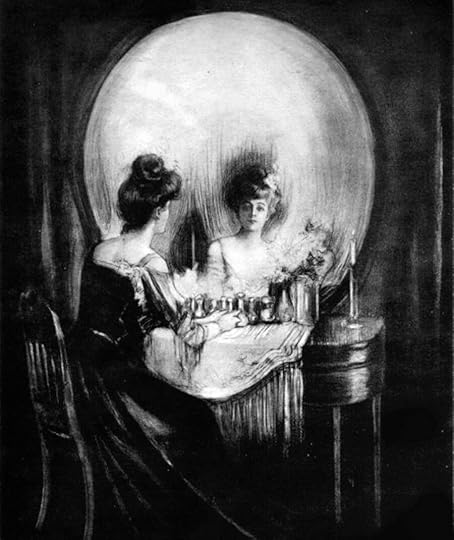
“Getting fucked and masturbated produces an orgasm that can be read two ways, like the painting of a Victorian woman with her sensual hair piled up who gazes into the mirror of her vanity table. Then the same lights and darks reveal a different set of contours: her head becomes one eye, the reflection of her face another eye and her mirror becomes the dome of a grinning skull/woman/skull/woman/skull—I wanted my orgasm to fall between those images. That’s not really a place. I know. The pious Victorian named his visual pun ‘Vanity.’ I rename it ‘Identity.’ I relinquished the firm barrier that separated us—no, that separated me from nothing. I might have liked to shoot far for boundlessness but when I get fucked in the ass that rarely happens, it just spills.”
“Getting fucked and masturbated produces an orgasm that can be read two ways, like the painting of a Victorian woman with her sensual hair piled up who gazes into the mirror of her vanity table. Then the same lights and darks reveal a different set of contours: her head becomes one eye, the reflection of her face another eye and her mirror becomes the dome of a grinning skull/woman/skull/woman/skull—I wanted my orgasm to fall between those images. That’s not really a place. I know. The pious Victorian named his visual pun ‘Vanity.’ I rename it ‘Identity.’ I relinquished the firm barrier that separated us—no, that separated me from nothing. I might have liked to shoot far for boundlessness but when I get fucked in the ass that rarely happens, it just spills.”

Read
January 10, 2026this book was a bit of a mixed bag for me. i absolutely lovvvvved so many chapters and passages, the prose really was breathtaking. glück has some of the best literary sex writing i’ve ever read. having become acquainted with his writing style after reading his memoir ‘about ed’ i knew going in that his style is very abstract and requires close reading and a willingness to get lost within the narrative and this was definitely the case for this classic novel, way ahead of its time. i loved how the story centred on the narrator’s obsession with his lover as well as depiction of the gay community, the plotlessness of it all. my only quip being that some chapters i honestly was truly lost and couldn’t get a grip on what glück was getting at with some passages/references. probably more of a me issue, but otherwise, this was a delightful and challenging little volume. recommend if you’re into reading rediscovered queer classics.

December 10, 2025
It occurred to me as I was reading this that novels by (and about) gay men have something in common with novels by Scottish people. Namely, that they both seem to be under the impression that they are unique in experiencing certain human sensations. Scottish writers seem to think that only Scottish people have an accent (and therefore must AT ALL TIMES write the entirety of their books using that particular vernacular), and gay men seem to think that they... and they alone... have ever experienced something called sex. As such, this book has all the requisite fornication and is swamped by an inordinate amount of cock and balls and spurting semen and bum sex and... Yipee!!
I was rather enjoying this for the first third, it was fun, intelligent, well-written, and explored those first person experiences and that myopic personal narration that I'm a fan of, a book that has a voice, is introspective, the protagonist's inner thoughts emblematic of a poetic soul. Bob (Gluck barely conceals that this is very autobiographical) is a gay man living in London (for some reason) and meets Jack, a gay, 34-year-old intellectual with a life that suits his status. What follows is ostensibly a very thin story of their relationship where the reader is, it seemed to me, being asked to consider the fact that Bob loved Jack but Jack did not love Bob. At the very least, Jack appears to be somewhat distant. Except, it's hard to believe this entirely because Bob (the one in love, remember) has a habit of popping down to the local swimming baths to have several men ejaculate into his anus. And they say love is dead. But I think we're supposed to conclude that this is just how gay men work. They don't do monogamy or love or commitment like the boring normal people, they have exciting, promiscuous sex and express their love in a more artistic and progressive manner. Sigh. I mean, I'm sorry but there's something a little... not very romantic about that. Don't get me wrong, the sex isn't very gratuitous or unpleasant, or remotely shocking, it's just very boring. As I said at the beginning, Gluck, like so many gay authors, seems to think sex is a discovery unique to the gay community. It's only a small gripe but there comes a point where I really don't need the details. Let's just assume he put his thingamajig up your wotsit-called and move on. I'm trying to eat a fruit corner!!
Anyway, I was enjoying the book but it definitely felt like it dropped off as it went along, as though Gluck was more interested in his internal feelings than the external experiences, his spiralling private view, expressing it in a slightly obscure fashion, making the narrative ethereal and a tad self-indulgent. It never really developed or became as inspiring as it might have. Funnily enough, just like their relationship, what starts as a fun book descends into something a little dull and ultimately unimportant. Maybe that was deliberate but if it was then Gluck's a frikkin genius. But I highly doubt it. Definitely a book I would recommend, with moments of wit, creative prose, and thoughtful reflection (especially for the first third), but perhaps not as good as it could have been.
I was rather enjoying this for the first third, it was fun, intelligent, well-written, and explored those first person experiences and that myopic personal narration that I'm a fan of, a book that has a voice, is introspective, the protagonist's inner thoughts emblematic of a poetic soul. Bob (Gluck barely conceals that this is very autobiographical) is a gay man living in London (for some reason) and meets Jack, a gay, 34-year-old intellectual with a life that suits his status. What follows is ostensibly a very thin story of their relationship where the reader is, it seemed to me, being asked to consider the fact that Bob loved Jack but Jack did not love Bob. At the very least, Jack appears to be somewhat distant. Except, it's hard to believe this entirely because Bob (the one in love, remember) has a habit of popping down to the local swimming baths to have several men ejaculate into his anus. And they say love is dead. But I think we're supposed to conclude that this is just how gay men work. They don't do monogamy or love or commitment like the boring normal people, they have exciting, promiscuous sex and express their love in a more artistic and progressive manner. Sigh. I mean, I'm sorry but there's something a little... not very romantic about that. Don't get me wrong, the sex isn't very gratuitous or unpleasant, or remotely shocking, it's just very boring. As I said at the beginning, Gluck, like so many gay authors, seems to think sex is a discovery unique to the gay community. It's only a small gripe but there comes a point where I really don't need the details. Let's just assume he put his thingamajig up your wotsit-called and move on. I'm trying to eat a fruit corner!!
Anyway, I was enjoying the book but it definitely felt like it dropped off as it went along, as though Gluck was more interested in his internal feelings than the external experiences, his spiralling private view, expressing it in a slightly obscure fashion, making the narrative ethereal and a tad self-indulgent. It never really developed or became as inspiring as it might have. Funnily enough, just like their relationship, what starts as a fun book descends into something a little dull and ultimately unimportant. Maybe that was deliberate but if it was then Gluck's a frikkin genius. But I highly doubt it. Definitely a book I would recommend, with moments of wit, creative prose, and thoughtful reflection (especially for the first third), but perhaps not as good as it could have been.

Want to Read
May 10, 2026Did I need to get this... no I did not... but it was $9 and I had $10 in cash so basically I got a free book but also made $1 today :)

November 28, 2025
Bob sees Jack at a forum, they make eye contact during a presentation, and Bob notices Jack's arm "draped around the back of the empty chair next to him as though it were a boyfriend." The extended arm hugging an empty chair is laced with implicit meaning: empty—so Jack is single, draped around a chair—so Jack is the dominant one, eye-contact—so he is cruising? Already Bob is in love with Jack and doing what lovers do: noticing, examining, fantasizing, reading for and projecting signs of availability, compatibility, reciprocity. Bob sees himself in the empty chair, imagines himself beneath Jack's arm, wonders what will happen next. Attention is the first act of desire.
Only a few sentences into meeting one another, they are speaking with ironic familiarity:
It's amusing banter but evasive. Jack demurs at the house invite and its innuendo of sex, and instead changes the topic to Dante; Bob is sarcastic and nonplussed and becomes even more explicit, not just doubling down on the proposition of sex but pooh-poohing the Divine Comedy and suggesting TV instead. There's a humorous bonhomie in that exchange but, to an outsider, the conversation would already suggest that the two are not well-matched: Jack prefers high art, indirectness, and intimacy; Bob is all about vulgar tastes, brash explicitness, and sex.
Getting to know Jack becomes an epistemological struggle for Bob. When Bob visits Jack's apartment, he scrutinizes everything in his house for signs of meaning: the decor of Jack's apartment ("The kitchen was yellow—it's cheerfulness more an academic point. The color said "Life is Great" but was contradicted by shabby cupboards, weary linoleum, chipped dishes and cookbooks shelved too high for use."); Jack's handwriting ("it was amazingly sleek and deliberate as set-type: the y's descended and the r's ascended, flags and pennants. I could love that."); even Jack's name ("From the envelope I learned his name was John. Jack was a nickname. I relished it: Jack is so flat like a flat rock or a landing strip between the flights a sentence can make. I could love that.") Bob registers every detail of Jack's life, sifting it carefully with studious attention, trying to divine the real man. Later in the novel, when Jack shares a short story about a former lover, Bob is transformed into a rabbinical exegete: "I applied myself like a Talmudic scholar decoding Jack the Unspoken, establishing the principles and guides."
Jack is a mystery—his age, his job, his sexual past are all a combination of lies, half-truths and fictions. Bob, understandably, is jealous and insecure, and spends much of the novel probing every word, every facial expression, for signs that Jack is in love with someone else or concealing some secret affair (hypocritically, Bob often goes to the baths and participates in orgies—but Bob's issue is not about sexual fidelity but rather about Jack's indecipherable aloofness). Bob has become a philologist of his beloved, an interpreter and relentless cross-examiner. Every gesture that Jack makes is imbued with a deeper, even magical power: Jack "ran his fingers through his curls to dispense with me," Bob notes and then needles him about whether he wants to fellate a young poet they just met. Later, Bob describes how Jack "smoothed my apprehension into a pillow and punched a comfortable place for his head to fall asleep on" and then "closed the chapter with an allegory". Bob has trapped Jack in a narrative of his own imagination, one in which every motion has some psychic symbolism, "smoothing" his fears and "closing" chapters.
"We are so edited. What if I tell you something serious?" Jack says in the middle of a quarrel. "You have gonorrhea!" Bob exclaims in response. It's another moment in which the two talk past one another. Jack means to say that the two of them are so self-censored, so filtered, so "edited" that they can never seem to talk candidly. Bob is always trying to play the role of the unpredictable but beguiling enchantress, and his response confirms Jack's point: "You have gonorrhea!" just drags the conversation back into the unserious and road-blocks an open pass to communication. Elsewhere Bob seems desperate for earnest truth-telling but in the moment he is afraid to confront such honesty head-on. And yet that word "edited" points to the larger crux of the novel: Jack and Bob are so clearly literary constructs, following prewritten scripts, playing the roles of lover, love-struck lover, love-sick lover, love-crazed lover, brooding lover, mooching lover, unfaithful lover, jilted lover—and the most ancient elegiac figure of the exclusus amator—the shut-out lover.
Jack is, like all ex-lovers, a gestalt and not a person. Bob has turned the man into a literary project, an interpretative riddle, a muse, an object of ekphrasis, a narrative topos. Jack the Modernist is allusively based on Diderot's Jacques the Fatalist, but he is not a fatalist so much as a man resigned to his literary destiny: the treacherous lover. He is conscious of his own status as literary object in the course of the relationship. Bob is, after all, a writer. At the very end, Jack asks Bob to give him a different name in his story, perhaps something more epic and regal like "Alexander". He dreams of a different ending, but Jack fails to understand that he can only ever be a plot device. "You're not a lover until you blab about it," the novel opens. It's a supremely modernist inversion of the love story: the story written not to commemorate love but rather a love plotted and acted out to make a story.
It's is a brilliantly witty novel, less esoteric than Glück's Margery Kempe but no less cerebral and no less smutty.
Only a few sentences into meeting one another, they are speaking with ironic familiarity:
I said, "My flat's a few blocks away."
Jack looked past me, smiling into the crowd. "Let's read the Divine Comedy together out loud."
"Jack, we hardly know each other—how about some TV and then sex." We settled on a walk.
It's amusing banter but evasive. Jack demurs at the house invite and its innuendo of sex, and instead changes the topic to Dante; Bob is sarcastic and nonplussed and becomes even more explicit, not just doubling down on the proposition of sex but pooh-poohing the Divine Comedy and suggesting TV instead. There's a humorous bonhomie in that exchange but, to an outsider, the conversation would already suggest that the two are not well-matched: Jack prefers high art, indirectness, and intimacy; Bob is all about vulgar tastes, brash explicitness, and sex.
Getting to know Jack becomes an epistemological struggle for Bob. When Bob visits Jack's apartment, he scrutinizes everything in his house for signs of meaning: the decor of Jack's apartment ("The kitchen was yellow—it's cheerfulness more an academic point. The color said "Life is Great" but was contradicted by shabby cupboards, weary linoleum, chipped dishes and cookbooks shelved too high for use."); Jack's handwriting ("it was amazingly sleek and deliberate as set-type: the y's descended and the r's ascended, flags and pennants. I could love that."); even Jack's name ("From the envelope I learned his name was John. Jack was a nickname. I relished it: Jack is so flat like a flat rock or a landing strip between the flights a sentence can make. I could love that.") Bob registers every detail of Jack's life, sifting it carefully with studious attention, trying to divine the real man. Later in the novel, when Jack shares a short story about a former lover, Bob is transformed into a rabbinical exegete: "I applied myself like a Talmudic scholar decoding Jack the Unspoken, establishing the principles and guides."
Jack is a mystery—his age, his job, his sexual past are all a combination of lies, half-truths and fictions. Bob, understandably, is jealous and insecure, and spends much of the novel probing every word, every facial expression, for signs that Jack is in love with someone else or concealing some secret affair (hypocritically, Bob often goes to the baths and participates in orgies—but Bob's issue is not about sexual fidelity but rather about Jack's indecipherable aloofness). Bob has become a philologist of his beloved, an interpreter and relentless cross-examiner. Every gesture that Jack makes is imbued with a deeper, even magical power: Jack "ran his fingers through his curls to dispense with me," Bob notes and then needles him about whether he wants to fellate a young poet they just met. Later, Bob describes how Jack "smoothed my apprehension into a pillow and punched a comfortable place for his head to fall asleep on" and then "closed the chapter with an allegory". Bob has trapped Jack in a narrative of his own imagination, one in which every motion has some psychic symbolism, "smoothing" his fears and "closing" chapters.
"We are so edited. What if I tell you something serious?" Jack says in the middle of a quarrel. "You have gonorrhea!" Bob exclaims in response. It's another moment in which the two talk past one another. Jack means to say that the two of them are so self-censored, so filtered, so "edited" that they can never seem to talk candidly. Bob is always trying to play the role of the unpredictable but beguiling enchantress, and his response confirms Jack's point: "You have gonorrhea!" just drags the conversation back into the unserious and road-blocks an open pass to communication. Elsewhere Bob seems desperate for earnest truth-telling but in the moment he is afraid to confront such honesty head-on. And yet that word "edited" points to the larger crux of the novel: Jack and Bob are so clearly literary constructs, following prewritten scripts, playing the roles of lover, love-struck lover, love-sick lover, love-crazed lover, brooding lover, mooching lover, unfaithful lover, jilted lover—and the most ancient elegiac figure of the exclusus amator—the shut-out lover.
Jack is, like all ex-lovers, a gestalt and not a person. Bob has turned the man into a literary project, an interpretative riddle, a muse, an object of ekphrasis, a narrative topos. Jack the Modernist is allusively based on Diderot's Jacques the Fatalist, but he is not a fatalist so much as a man resigned to his literary destiny: the treacherous lover. He is conscious of his own status as literary object in the course of the relationship. Bob is, after all, a writer. At the very end, Jack asks Bob to give him a different name in his story, perhaps something more epic and regal like "Alexander". He dreams of a different ending, but Jack fails to understand that he can only ever be a plot device. "You're not a lover until you blab about it," the novel opens. It's a supremely modernist inversion of the love story: the story written not to commemorate love but rather a love plotted and acted out to make a story.
It's is a brilliantly witty novel, less esoteric than Glück's Margery Kempe but no less cerebral and no less smutty.

October 20, 2025
Thank you to NYRB for the gifted, advanced copy! 🏳️🌈

December 26, 2007
About ten years ago I'd buy up anything that went into the bargain section of B&N or Borders from High Risk Books, just because they put out a couple of the Stewart Home books, and I was hoping to find another writer like him. Time after time after time I was burned by this buying pattern. I don't know why it didn't ever dawn on me that all I was getting each time was 'edgy' gay and lesbian fiction, all of which seemed to be on the verge of painful to read, but I kept buying them. I was quite stupid, but I liked to think of myself as smart.

March 20, 2026
I could grapple and I could surrender—that meant a lot to me.

Read
May 21, 2026I love Robert Gluck. He was just chatting with me while I read. I was gulping down the sentences

November 26, 2025
a capital G Great American novel that bears more resemblance to what was going on elsewhere in contemporary literature (France, for instance, comes to mind given the clear inheritance from Bataille and Sadean erotics, and I was more than once reminded of the Argentine / French writer Copi). The prose is impeccable, better than most. At his best, Glück's simply one of the best prose stylists america has to offer. Funny, surprising, tragic. Made me very excited for Wayne Koestenbaum's forthcoming novel (Koestenbaum being a writer I associate, maybe a bit erroneously, with Glück's preoccupations).
Publishing really does so much infrastructural canon creation, it is a wonderful thing that NYRB reprinted Jack the Modernist this year. I suggest reading it sooner rather than later to get ahead of the curve.
Publishing really does so much infrastructural canon creation, it is a wonderful thing that NYRB reprinted Jack the Modernist this year. I suggest reading it sooner rather than later to get ahead of the curve.

February 10, 2024
Het juiste boek, op het juiste moment, vol met zinnen om eindeloos naar terug te grijpen: ‘Why not write a story about how people we love extend us and their loss is the door of our life shut in our face?’

February 22, 2026
So like I had fun, despite it all
February 27, 2026
tl;dr the freewheeling structure of this freshly republished 80s gay cult classic lends the passionately romantic, unabashedly carnal affair between two artists a bloodthumping transcendence
The initial 1985 publication of Jack the Modernist, according to the introduction of the 2025 edition by Rob Halpern, contained a short caveat from the author:
“Note: Jack the Modernist is set in 1981. Before the onset of the AIDS epidemic, I would have gone (did go) to the baths and liberally exchange body fluids; now I don’t.”
The shock of tens-of-thousands dead from AIDS between the novel's setting and its publication imbues this novel's freewheeling exploration of a gay love affair a presciently haunting quality. Jack is a director, and our narrator Bob (not too far from our author) is a writer, and it seems as though they love each other, very much, at least over a period of a few months. That's the bones of the story: in Jack the Modernist Bob traces the arc of their relationship, mining the significances of their interactions together (and apart).
Despite the flourish of intense feeling Bob experiences around Jack, it's quite difficult to tell what Jack is thinking or feeling about Bob, even as they cavort; this uncertainty about their present (and later their future) is the jumping-off point for Bob's wild hairpin turns through various forms: poetry, screenplay, epistolary, images that foretell future remarks in the book. The first thing that you see, before the novel starts, even before the publication pages, is a picture of Minnie Mouse, and an odd caption that points to a future point in Jack the Modernist. Utterly devoid of context, these images and captions will sit in your brain dormant until you visit that point in the book, as though Bob is trying to take control of the future. If not in life, then in this novel.
The inherent instability, the (ostensibly) unprecedented/unchecked hedonism, of gay male partnership in the 1980s isn't something that you could navigate; already, Glück was considering what the future of a partnership could be. Domesticity? Living Partner to Partner? A series of disclosures and concealments about previous partners/diseases statuses? Again, this was written and set before the AIDS onslaught, and all these things for Glück were already top-of-mind: could two men have a future? And if so, what would that look like?
Which brings us to the urgent present-moment of Bob and Jack as it happens, which is strikingly bodily and dialectic in fits and starts. At a housewarming party, Bob is prisoner to his overthinking, to subjecting himself to throes of questioning as Jack encounters someone he may-or-may-not have been also sleeping with, capturing the dropped-heart feeling of jealousy in a manner suitable for that one film director he's down-bad for:
Glück's prose here is inventive, novel, and often downright hilarious (an outrageous "club sandwich" metaphor made me howl), but the reality of their shaky relationship always rings true and human. Occasionally, he launches into a screenplay format to highlight dialogue, rendering their conversations with a tongue-in-cheek loftiness, an ironic dialectical clarity that undermines the actual communication that they don't have access to. It's subtly heartbreaking, this breaking of form, as if the very phenomenon of two men being together is so unheard of that the novel can't contain it.
The novel form feels, in many ways, inadequate to how intense this book gets, especially with regards to its sexual content. The extended sexually explicit scene in the bathhouse (the direct result of one of Bob's crashouts) feels gleefully iconolastic, joyfully and unabashedly transgressive, but contains a hum of melancholy throughout. Its fractured presentation is striking and overwhelming, as if it dares us to keep up with it. Even without the looming shadow of the epidemic, the alternating fulfillment-emptiness complex of gay men has been an enduring tale. And, of course, with AIDS considered, it's even more devastating. Glück considers sex as communication, as connection, as conversation between two bodies; in one of many striking observations, Glück wonders if, in these moments of unrestrained libidinousness, that we "...watch the pleasure rather than the men" (51).
Sure, there's a lot of sex in Jack the Modernist's lean pagecount, but that's not the only way that Glück accesses (and interrogates) the body. There's a scene towards the beginning where Bob essentially performs a meditative body scan, in almost quotidian wonder of what the body is capable of doing and perceiving and feeling:
Glück's contemplation of the body, of emotion and thought and sex and sensation, all of these things crash their parts together in this incredible, short, formbreaking volume. Jack the Modernist takes us through a passionate relationship's disorienting ride, astutely recorded and transcribed through a very specific gay lens, its chaotic and unpredictable beauty a profane language of love all its own.
Dear Jack,
Everything we do is nothing short of life itself. (105)
The initial 1985 publication of Jack the Modernist, according to the introduction of the 2025 edition by Rob Halpern, contained a short caveat from the author:
“Note: Jack the Modernist is set in 1981. Before the onset of the AIDS epidemic, I would have gone (did go) to the baths and liberally exchange body fluids; now I don’t.”
The shock of tens-of-thousands dead from AIDS between the novel's setting and its publication imbues this novel's freewheeling exploration of a gay love affair a presciently haunting quality. Jack is a director, and our narrator Bob (not too far from our author) is a writer, and it seems as though they love each other, very much, at least over a period of a few months. That's the bones of the story: in Jack the Modernist Bob traces the arc of their relationship, mining the significances of their interactions together (and apart).
Desire is not satisfied; it's expelled. (48)
Despite the flourish of intense feeling Bob experiences around Jack, it's quite difficult to tell what Jack is thinking or feeling about Bob, even as they cavort; this uncertainty about their present (and later their future) is the jumping-off point for Bob's wild hairpin turns through various forms: poetry, screenplay, epistolary, images that foretell future remarks in the book. The first thing that you see, before the novel starts, even before the publication pages, is a picture of Minnie Mouse, and an odd caption that points to a future point in Jack the Modernist. Utterly devoid of context, these images and captions will sit in your brain dormant until you visit that point in the book, as though Bob is trying to take control of the future. If not in life, then in this novel.
The inherent instability, the (ostensibly) unprecedented/unchecked hedonism, of gay male partnership in the 1980s isn't something that you could navigate; already, Glück was considering what the future of a partnership could be. Domesticity? Living Partner to Partner? A series of disclosures and concealments about previous partners/diseases statuses? Again, this was written and set before the AIDS onslaught, and all these things for Glück were already top-of-mind: could two men have a future? And if so, what would that look like?
Which brings us to the urgent present-moment of Bob and Jack as it happens, which is strikingly bodily and dialectic in fits and starts. At a housewarming party, Bob is prisoner to his overthinking, to subjecting himself to throes of questioning as Jack encounters someone he may-or-may-not have been also sleeping with, capturing the dropped-heart feeling of jealousy in a manner suitable for that one film director he's down-bad for:
“They sat on facing director’s chairs in the exact center of the party, talking soulfully in a tête-à-tête that recast the rest of us as ignored weather, and we agreed to be dull in order to highlight those two." (48)
Glück's prose here is inventive, novel, and often downright hilarious (an outrageous "club sandwich" metaphor made me howl), but the reality of their shaky relationship always rings true and human. Occasionally, he launches into a screenplay format to highlight dialogue, rendering their conversations with a tongue-in-cheek loftiness, an ironic dialectical clarity that undermines the actual communication that they don't have access to. It's subtly heartbreaking, this breaking of form, as if the very phenomenon of two men being together is so unheard of that the novel can't contain it.
The novel form feels, in many ways, inadequate to how intense this book gets, especially with regards to its sexual content. The extended sexually explicit scene in the bathhouse (the direct result of one of Bob's crashouts) feels gleefully iconolastic, joyfully and unabashedly transgressive, but contains a hum of melancholy throughout. Its fractured presentation is striking and overwhelming, as if it dares us to keep up with it. Even without the looming shadow of the epidemic, the alternating fulfillment-emptiness complex of gay men has been an enduring tale. And, of course, with AIDS considered, it's even more devastating. Glück considers sex as communication, as connection, as conversation between two bodies; in one of many striking observations, Glück wonders if, in these moments of unrestrained libidinousness, that we "...watch the pleasure rather than the men" (51).
Sure, there's a lot of sex in Jack the Modernist's lean pagecount, but that's not the only way that Glück accesses (and interrogates) the body. There's a scene towards the beginning where Bob essentially performs a meditative body scan, in almost quotidian wonder of what the body is capable of doing and perceiving and feeling:
I wear hearing on the sides of my head. Does air have anything to do with me? Inhale. My first breath has the heavy lift of an airplane taking off. I try to locate some joy there but instead it is sluggish and unwilling—my breath does not satisfy me. Could that be true? (35)
Glück's contemplation of the body, of emotion and thought and sex and sensation, all of these things crash their parts together in this incredible, short, formbreaking volume. Jack the Modernist takes us through a passionate relationship's disorienting ride, astutely recorded and transcribed through a very specific gay lens, its chaotic and unpredictable beauty a profane language of love all its own.

December 11, 2025
What a wild and erotic swirl of prose and poetry and autofiction — just immensely captivating in its beautiful and filthy writing. There’s nothing shy about Robert Glück’s pen. It left me out of breath.
“Go where no meaning is to create meaning. Take pleasure with the abruptness of deities. Or Fred Astaire and Ginger Rogers, their first dance not less stunning because it doesn't include a home in the suburbs.
A man passing grazes my right nipple; he hears my gasp and returns interested. He traces a voluptuous circle around the nipple; a line of feeling shoots into my chest like the smell of gasoline. He looks at my face hard, he means it, then at the nipple. First there's a membrane that wants a caress: the rest is history. Do I describe his face? —two dots and a line. He's giving me an erection— that interests him. I asked my dad about nipples and he said yes, that's why he always wears cotton T-shirts, even cotton irritates them. During puberty I could make myself come by caressing my nipples if toward the end I laid one finger on my cock. The man who is interested tongues my left one; it makes a hot entrance into his mouth and then he sucks the hard tip in and out gently and patiently between his teeth: it causes air to rush through me. I fondle his hair and ears, I love him so much I would do anything he asked me to, my arms are weak.“
“Go where no meaning is to create meaning. Take pleasure with the abruptness of deities. Or Fred Astaire and Ginger Rogers, their first dance not less stunning because it doesn't include a home in the suburbs.
A man passing grazes my right nipple; he hears my gasp and returns interested. He traces a voluptuous circle around the nipple; a line of feeling shoots into my chest like the smell of gasoline. He looks at my face hard, he means it, then at the nipple. First there's a membrane that wants a caress: the rest is history. Do I describe his face? —two dots and a line. He's giving me an erection— that interests him. I asked my dad about nipples and he said yes, that's why he always wears cotton T-shirts, even cotton irritates them. During puberty I could make myself come by caressing my nipples if toward the end I laid one finger on my cock. The man who is interested tongues my left one; it makes a hot entrance into his mouth and then he sucks the hard tip in and out gently and patiently between his teeth: it causes air to rush through me. I fondle his hair and ears, I love him so much I would do anything he asked me to, my arms are weak.“

February 11, 2026
Came to me at just the right time, even though I'm not hopelessly obsessed with a man who'll break my heart. I can't believe, at this advanced age, I'm still discovering my flesh-and-blood ancestors. HOW MANY MORE LEFT LITERARY FAGGOTS ARE OUT THERE, JUST WAITING FOR ME? So camp, so theory, so poetry, so sex. Bob, I'd like to meet. Next time I'm in San Francisco?

June 4, 2026
Cynical is the word that appropriately fits 'Jack The Modernist.' The story is about two gay lovers Jack and Bob. Jack is the cynic. Bob is more carefree. There are some graphic scenes in the story that may offend some who are not acquainted with gay relationships.

May 18, 2026
Started this way back in the fall after Sasha and I had gone to Robert Glück’s reading in SF. I really could not get into it then for whatever reason… I abandoned it halfway through. When I picked it up again last week, I suddenly fell in love with his writing, I literally rerouted to page 1 and read the whole thing front to back. I’m thrilled that this book has ripened into the correct season of my life for me to be reading it. I was comforted and seriously charmed by how closely the book reads itself; how much freedom it finds even within that self-reflexivity.
“Our attraction to each other expressed itself as a problem to be solved, a topiary maze, each new distinction a turn in the inquiry until the pleasure grew so intense I had to look away. I would call that first lovemaking dusky, we kept slipping through each other’s hands — hide and seek by moonlight — it was charming. It charmed me. Jack simply converted without resistance or even a mood swing. I could grapple and I could surrender — that meant a lot to me. I pictured myself at my full height and I intrigued and even aroused myself; teary and improvisational, I looked for developments that equaled my mood and waited to see what I would do next.”
“Our attraction to each other expressed itself as a problem to be solved, a topiary maze, each new distinction a turn in the inquiry until the pleasure grew so intense I had to look away. I would call that first lovemaking dusky, we kept slipping through each other’s hands — hide and seek by moonlight — it was charming. It charmed me. Jack simply converted without resistance or even a mood swing. I could grapple and I could surrender — that meant a lot to me. I pictured myself at my full height and I intrigued and even aroused myself; teary and improvisational, I looked for developments that equaled my mood and waited to see what I would do next.”

October 11, 2015
Only / Sensation / Explains / Explanation

Read
November 24, 2021Really lovely book! Really frustrating to track down in physical form! If you’re reading this and want to check it out, please spare yourself and hit me up to borrow my copy

June 22, 2026
it’s raunchy, it’s feverish and it’s sweaty. it feels like the perfect book to read in the middle of a heatwave when you’re topless in the park, sweaty, delirious from the sun and albeit all aroused like a cat in heat. i liked it, i thought it was cute and funny
February 11, 2026
love! kinda a mixed bag, but mostly in a good way. such is the nature of collage/new narrative i am realizing. thinking about how my contemporary art history teacher would’ve loved this. accomplishes so much with so few pages. really good introduction (nyrb specialty! also speaking of them, their cover is so much better than on here). this really opened me up to a time/place/scene i am nearly unfamiliar with (80s male gay scene in SF, post LGBTQ+ rights movement, pre-AIDS epidemic) and has spurred a curiosity in me for this specific moment. at the same time, it is wildly relevant to today. i will say though a number of references were lost on me and made it difficult to appreciate. similarly a drawback was the increasing plotlessness towards the second half (as i tend to say, obviously intentional and illustrative of bob & jack’s deterioration, but still encumbering. that being said, the collage aspect is very cool and does reward the reader for being able to identify and parse glück’s references (anywhere from obscure 80s pop-media to 13th century welsh oral folk stories). the strongest qualities for me with this glück (my first i hope of many!) are its appreciation for the silly, out-of-pocket, and the absurd (taking serious the unserious), but also for raw emotionality. it shows us how meaning, language, and behavior can be continuously redefined under the constraints of modern culture and relationships (situationships or even, humiliationships).
4.75
also thank u eloise for this ever thoughtful xmas gift
4.75
also thank u eloise for this ever thoughtful xmas gift
November 13, 2025
"Excuse me, Sir, is this a great Romance silhouetted by the backdrop of History?"
What an unapologetically gay and endlessly fascinating piece of postmodernism that couldn't have been republished at a better time and NYRB is the perfect publisher to do it.
Written in the pocket between the gay liberation of the 1970s and the HIV/AIDS pandemic, this book provides a candid and hypnotic portrayal of a time of discovery and awakening in the establishment of gay culture and identity. Robert Glück writes with an assured and candid sense of authenticity but these vignettes are shrouded in surreal physicality that reaches from the past with a sense of urgency like a dream with a warning. So much beauty and optimism presaging so much tragedy and catastrophe.
What an unapologetically gay and endlessly fascinating piece of postmodernism that couldn't have been republished at a better time and NYRB is the perfect publisher to do it.
Written in the pocket between the gay liberation of the 1970s and the HIV/AIDS pandemic, this book provides a candid and hypnotic portrayal of a time of discovery and awakening in the establishment of gay culture and identity. Robert Glück writes with an assured and candid sense of authenticity but these vignettes are shrouded in surreal physicality that reaches from the past with a sense of urgency like a dream with a warning. So much beauty and optimism presaging so much tragedy and catastrophe.

November 18, 2025
This book gave me the best aesthetic understanding of post-modernism (maybe the only time it’s made sense to me?) yet.
What a boring way to start a review for a book that is always a few strokes away from pornography. Anyway, this is extremely compelling and sad (and funny and optimistic too). I think what charmed me the most was that it couches the gay love story in the universal love story-it manages to draw the universal and the particular into a steamy bathhouse affair. Now that I’m thinking about it, Spirit of Science Fiction also ended with a bathhouse scene. Much to consider…
What a boring way to start a review for a book that is always a few strokes away from pornography. Anyway, this is extremely compelling and sad (and funny and optimistic too). I think what charmed me the most was that it couches the gay love story in the universal love story-it manages to draw the universal and the particular into a steamy bathhouse affair. Now that I’m thinking about it, Spirit of Science Fiction also ended with a bathhouse scene. Much to consider…

November 5, 2011
I like that the french flaps of this edition feature a pattern of flying penises. Just in case, you know, you didn't realize this book was about a gay man. Anyway, superb, read a lot about Gluck by way of Bruce Boone and was delighted to get my hands on this. I wasn't disappointed at all.
February 11, 2026
can't even begin to tell you the number of times nico and i almost died here. No wonder dennis cooper loves this book
— “(To be loved and not touched—it made me feel abstract, like an idea. A wave carried me away.”
— “(To be loved and not touched—it made me feel abstract, like an idea. A wave carried me away.”

March 28, 2026
A novel about queer infatuation that plays with form and different narrative styles, so naturally I really enjoyed this. I think a lot of these unconventional novels go over my head a bit, but it definitely challenges me in an exciting way. Another win for my namesake.

May 13, 2026
took me forever to finish because i went through a very bittersweet breakup like halfway through reading this which is arguably the optimal circumstance to be reading this under and yet it didn’t really do it for me which leads me to conclude i am simply too much of a lesbian for this type of thing

December 21, 2010
"Why not write a story about how people we love extend us and their loss is the door of our life slammed shut in our face?"

January 19, 2026
Good, a bit gluttonous— in a way I related to.
Displaying 1 - 30 of 191 reviews