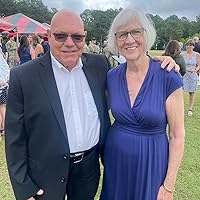
"This book is a game changer for caregivers of loved ones with dementia. It comes out of Emma’s pain, which she has turned into a purpose bigger than herself. I couldn’t be prouder of her and the courage it took for her to write this. This book will help millions of families, like hers, like yours, like mine, like everyone’s. It’s a book for our time.” —Maria Shriver
From Emma Heming Willis, wife of Bruce Willis, a deeply personal and richly compassionate supportive guide that helps caregivers care for themselves while they navigate a loved one's dementia.
AN OPEN FIELD PUBLICATION FROM MARIA SHRIVER
The day Emma Heming Willis’ husband, Bruce Willis, was diagnosed with frontotemporal dementia (FTD), all they were given was a pamphlet and told to check back in a few months. With no hope or direction, Emma walked out of that doctor’s appointment frozen with fear, confusion and a sense that her world had just fallen apart.
In fact, it had. Bruce and Emma had their story written, their future mapped out. Yet all those dreams crumbled with that diagnosis, and Emma felt alone and more isolated than ever. How would she care for her husband while parenting their young daughters?
At that devastating time, Emma just wanted someone who'd been through it to tell her, “This feels terrible right now. Your life is in shambles. But it’s going to be okay. Here are some things to think about and put in place so you cannot just survive but thrive.”
With The Unexpected Journey, Emma has written the book she wishes she’d been handed on the day of Bruce’s a supportive guide to navigating the complicated, heartbreaking, and transformative experience that is caregiving for your loved one. Weaving her personal journey as a care partner with the latest research and insights from the world’s top dementia, caregiving, and integrative experts she offers the guidance and wisdom caregivers everywhere so desperately need to hear,
A diagnosis isn’t just a label, it’s a starting point. It helps you better understand your person’s behavior and respond with more clarity and compassion.Taking care of yourself is not optional; it's mandatory. It will make you a better care partner. It’s not selfish, it’s self-preserving.You don’t have a choice about being on the dementia caregiving journey. But you do have a choice in terms of how you approach it and reframe it.Caregivers are human so you aren’t always going to be patient and selfless. You have challenges and struggle with conflicting emotions and that’s okay. Ultimately, The Unexpected Journey shows you how to care for yourself while doing one of the hardest, most heartbreaking jobs in the world. Because if you don’t take care of yourself, you are not going to be able to look after anyone else—especially your loved one with dementia.
For anyone caregiving for a loved one with any form of dementia, and even for those caregiving for other conditions, The Unexpected Journey shows that you are not alone. As Emma writes, “I know that no two caregiving journeys are the same, but we are connected by the same unchosen thread. It’s not an easy path for you, your loved one or your family. But I’m here to let you know that you are not alone, and, in time, you will find your footing, and a way forward."
I realize I will be dating myself, when I share the silly school girl crush, I had for Bruce Willis when he first walked on the scene in the television show, Moonlighting (1985 – 1989).
Willis played David Addison, the debonair, but very objectionable male chauvinist. But oh so sexy cute, wisecracking detective running the City of Angels Detective Agency. The show was successful because of the chemistry exuded on-screen by the two leading characters. His co-star being, the eloquent former fashion model Cybill Shepherd who played the character of Maddie Hayes. Viewers got to sit in each week and watch David Addison’s constant run-ins with Maddie, a smart former high-fashion model who would become his partner in all things involving sleuthing cases, along with their blatant romantic tension. Needless to say, I would be front-row and center each and every week while it aired.
Bruce Willis went on to play, John McClane, a New York City police detective, a truly vulnerable action hero, in the successful “Die Hard” series.
So, when years later, Willis’s ex-wife, Demi Moore and current wife, the author, announced his devastating dis-ease, frontotemporal dementia (FTD), it was hard to fathom this would be his unfortunate destiny.
According to the Mayo Clinic, “Frontotemporal dementia (FTD) is an umbrella term for a group of brain diseases that mainly affect the frontal and temporal lobes of the brain. These areas of the brain are associated with personality, behavior and language.”
In many ways, as much as this is the author’s story, it is definitely her husband’s, as well. And, it makes sense that the author would also sub-title this as a journey of “finding strength and hope, and yourself on the caregiving path.” Especially as a caregiver, since this has been the majority of her marriage.
The author not only shares her “love story,” but many helpful hints, suggestions and exercises on how to navigate the ‘loss’ of a loved one while they are still with you in this deeply affecting way.
There are 10 helpful chapters with such headings as: ‘making sense of the changing brain,’ ‘make time for yourself,’ ‘parenting while caregiving;’ and, ‘let friends and family take care of you.’ She also utilizes information from experts, and is clear in her ‘note to readers’ that her story is ‘not intended as medical advice.’
Readers will appreciate her journaling prompts of ‘something to think about’ at the end of each chapter.
There is definitely something heart-felt to appreciate about the author sharing this story about the once television/movie star who is now devoid of himself. Her story and anecdotes and guidance are beautifully, compassionately, meaningfully and thought-fully written. It is truly a compelling, bittersweet, and heartwarming journey.
This reading experience is recommended for anyone in a caregiving role, or just interested in learning more about the author’s experience negotiating dis-ease with her partner Bruce Willis, a once famous person, who some of us loved watching on our screens.
Having been a caregiver for close to 40 years for my son, my mother and now my husband who has Primary Progressive Aphasia, I think this book is long overdue. Emma makes a very strong argument for the importance of caregivers looking after their own health. And the data on this question is sobering as the caregiver statistically dies before the patient 67% of the time. Female caregivers of dementia patients have 3 times greater chance of getting dementia than their peers who have not had dementia. For male dementia caregivers it is even worse. They have 10 times the risk as their non-caregiving peers.
As a caregiver for a patient with FTD which often strikes younger people, she has had to simultaneously care for her husband and her daughters who were young children. She describes the dilemma of the spouse who not only sees her spouse disappear but is put in the position of taking over tasks and assuming a new more dominant role in the couple.
She addresses very important physical and psychological aspects of the journey; the importance of the caregiver addressing his/her own brain health, creating or finding a community of others on the same journey; creating a support network and meeting the children’s needs. She also includes the advice and input of the many experts she has consulted on her journey.
Emma recalls the shattering moment when Bruce’s doctor gave them his diagnosis and noted they would meet again in three months. Other than that, there was no information. Many other families have similar stories. When my husband suddenly became incontinent, I was told it was urge incontinence but provided with no other information or resources. And I agree that the medical professionals really fall short in that area as even a high school student could create a fairly comprehensive website for a medical practice in a fairly short period of time.
While her book offers a compelling argument for the caregiver to care for him or herself, she provides very few concrete details to facilitate the task of caregiving. There is no explanation, for example, of the pros and cons of daycare programs versus home care. What do Occupational Therapists do? Speech Therapists? What is the difference between palliative care and hospice? What does Medicare cover? Medicaid? What about the VA? If a family chooses to modify their bathroom for a patient, what features should they include? How can you evaluate a memory care? What options are there for families in more rural areas where not as many services are available? I would suggest that she provide an addendum or a couple of extra chapters to address these issues in subsequent editions of her book.
I think this book can be a gift for someone thrust into caregiving, especially if their person is suffering from FTD (frontotemporal dementia). It’s a great road map for caregivers, and an all around good read for all us humans who struggle to do it all.
This book is less memoir, more caregiving guide, but there is some tidbits on Emma and Bruce’s family and life together.
One of the best parts (for me personally) was the chapters on brain health and the pillars of what we can do to help keep our brains strong. Spoiler alert - we all know it already and struggle to do it:
Good nutrition Movement Sleep!!!!! Staying socially connected Staying on top of your medical health Stress reduction
Emma is very real and realistic in this book. She realizes not everyone has her resources, so there’s a lot of info that’s attainable to those with less time, money, etc. And she never pretends eating a vegetable or taking a walk is going to magically cure you. But she emphasizes the importance of the small things that can add up, and how taking care of yourself, helps you take care of others.
This is an invaluable resource for caregivers or care partners. “We come from all walks of life but our stories and experiences with this disease are common ground.”
In the introduction Emma Heming Willis states that it is “vital that we stop comparing and competing with one another. What’s most important is that we uplift and support the next caregiver who finds themselves in this role whether it’s by choice or circumstance.” I like the analogy Emma uses of the emergency protocol on flights whereby a parent puts the mask on themselves first before putting one on their child, as you cannot take care of someone else if you haven’t first taken care of yourself.
One essential message that I came away with is that you can’t do this alone and must bring in others to help you. “All caregiving journeys can feel lonely and isolating but the dementia caregiver’s path often feels even more so. The absence of shared decision making or meaningful conversations with your loved one amplifies that sense of isolation.”
One benefit of reaching out to others for support is that you can reclaim your unique role with your loved one or person and be truly present with them, while others help with support tasks. Don’t hog all the roles, and live in perpetual burnout, instead allow others to “show love to your person.” Additionally, your circle of support will expand as you reach out to others. “Hope on the caregiving journey lies in finding other people, that is what can get us through the worst of times.”
Some things Emma has learned and put into practice:
1. Acquiring a general road map of FTD has empowered her and made her feel more balanced or stable. “As care partners we must do whatever we can to lower our anxiety.”
2. Educate others – “Have your family and friends educate themselves about your person’s disease too.” For example, have pamphlets available that you can give to interested people, rather than becoming exhausted trying to find the words to explain yourself. They can absorb this information at their own rate and do further research themselves.
3. Find an expert. Emma found dementia care specialist Teepa Snow of Positive Approach to Care.
4. Understanding Teepa Snow’s Four Truths of Dementia: a. At least two parts of the brain are actively dying b. It is progressive and always changing c. It is a chronic condition (there is no cure or treatment that will stop, turn around, or fix it d. It is terminal (but so is life!)
5. Get a clear diagnosis. “The more we know with a specific diagnosis the better position we can put ourselves in to succeed.”
6. Knowledge is the key to stress reduction. There are many different types of dementia – they have a variety of different symptoms and treatments. Knowing what works best can help in communication between the carer and the person with dementia.
It’s important to “disconnect from this one note topic of living with dementia” from time to time to “feel normal.” It’s important to engage with friends who are outside of this experience and create what Emma refers to as a “second world.” However, it takes a “high level of strength and energy” to do this and it’s important to be honest when you need to cancel plans. Keep updates on your partner to the beginning of your time together and keep them brief, allowing for a mental break.
It’s almost impossible to take care of yourself when you are putting others before yourself. However, it’s vital to take the time to care of your own needs to be an effective caregiver of someone else. Your loved ones are “connected to and affected by your ‘emotional WIFI’ the mood or presence you bring into a space.”
Someone with dementia will especially be affected by your body language and the tone of your voice. They will know exactly how you feel. You must take care of yourself to be able to take care of someone else. Your calm presence will be a balm to others.
“When you reduce your anxiety and stress you may lower these emotions in your loved one too. What a beautiful thing.”
Regarding the judgment of others: “The reality is their experiences are unique to their situations as yours are to you.”
“Usually, when people make judgmental comments, it’s not about you, it’s about them and about their own emotions and experiences.”
Reframing the journey or what Emma refers to as the ‘Remarkable Reframe’ is vital as there is no stopping the progress of FTD, you only have control over your reaction to what is happening, what is being lost over time. She writes, “Even though there is immense sadness and deep grief, I am choosing to shift my perspective, to survive this, I have to find meaning in the pain and channel it into something purposeful. I need to turn my grief into action and create good from something that is so profoundly difficult. I need to find joy.”
As caregivers we can choose the lens we see our lives through. “Both can and do exist – the sadness and constant grief as well as the beauty that unfolds.” We can choose a path of joy and laughter if we reframe our thoughts. We can look for pieces of joy each day and reflect them to others. We can choose to honor the people in our lives. We are walking “an unchosen path” and we can make it “feel less dark and more purposeful.”
Emma's Remarkable Reframe
1. I can decide to accept a loved one’s disease. “Acknowledge reality as it is without denial or resistance and find ways to live alongside of it.”
2. Choose life. Find pockets of joy in each day. Create space for yourself.
3. The bad is that we are slowly losing our loved one to dementia. The good is that living with dementia provides us with time. “Time to sit together, to express love, to cherish even the smallest moments. It’s not the path any of us would choose but there’s beauty in the quiet opportunities it gives us to connect while we can.” Your loved one may be changing but you can choose to be present with the new person.
4. Remain in the present moment. “Stay here, don’t go there” - a mantra Emma’s therapist gave her that I think is great for helping us to remain present and not look back or too far forward. “If your person is not aware of what is unfolding see it as a blessing that they are not scared or worried, they are just living minute by minute surrounded by your care and love.”
5. Caregiving can be rewarding and transformative. We are provided with the opportunity to grow and become more empathetic to others.
6. I am experiencing unconditional love. Dementia takes away the traits of a person, and our expectations of that person must adapt. When we love our children, we love them unconditionally without expectations. Similarly, loving someone with dementia means we need to soften our expectations of them and love them without conditions.
7. My person has taught me so much. Ask questions such as, “What can I learn from this and how can I grow from this experience?”
8. My family is learning too. Emma writes that while her daughters have lost so much “they have witnessed what love is and how we show up for the people who matter most. It’s changed who they are for the better.”
9. I’m making an impact on my person. We can make a positive impact in the life of a person living with the disease of dementia and gain new life skills as we care for them. “Talk kindly to yourself.” Use an “affectionate inner voice” to acknowledge a bad day but reframe it by accentuating the positive such as, “That was a difficult day, but you sure did show up.”
10. I can bring my loved ones into the big moments. While our loved one may not be able to attend big events such as graduations and weddings we can conjure them there alongside of us, or “carry one of your person’s belongings, something that fits in your pocket or that you can hold or touch that connects you to them.” I wear my grandma’s pearls when I want to feel connected to her.
11. I can turn pain into purpose. Emma writes about discovering “the term ‘helpers high’ which describes that sense of fulfilment and happiness we experience when we give back.” Research shows that we benefit mentally and physically from helping others. Giving back “shifts the focus from what has been taken from us to what I can offer in return.”
Additional thoughts re: supporting a caregiver:
The worst thing to ask someone caring for someone with dementia is “how are they feeling today,” and “are they feeling better?” It is truly draining to answer questions such as these and is truly disheartening to have to explain that dementia is a progressive disease that you don’t get better from.
I recently learned that when you ask someone, “How can I help you?” it places the burden on the person you are trying to support to come up with ideas. Instead, consider what you can do and make a concrete offer such as, can I bring you dinner on Wednesday, or would you like to go out for a coffee this week, or can I do a grocery shop, or run errands for you on Friday?
FTD runs in my family. My aunt and uncle both died of it. If you do not have personal experience with this misunderstood disease, then I can assure you—
Whatever you suppose Bruce Willis and his family are confronting, it is assuredly leaps and leagues beyond your worst imagination.
This disease is not about “memory.” It is worse. It steals people and in part replaces them with shocking behaviors they would never, ever consciously do.
Enter Emma Heming Willis. Since the time of the announcement of Bruce’s illness, I fell in love with this woman and the way she shows up for Bruce, her daughters, and her whole family (including the family he built before meeting her). Hers is a beautiful soul. Her book is raw and vulnerable, but also includes practical and easy-to-follow advice and real talk for caregivers confronting the unthinkable.
Her basic thesis is: You can’t do it all. Forgive yourself. Let the emotions out. Don’t expect people to understand. And most of all, take care of yourself first. Enlist help.
On a practical note, it was a little hard to read her almost apologizing for the reality of her life at multiple points in this book. Yes, she’s a gorgeous model. Yes, she married one of Hollywood’s biggest stars. Yes, they are rich and have had all sorts of glitz that is unrelatable to almost everyone. I understood why she couched her luxe, pre-FTD life in apologetic terms. I don’t think it’s her fault. We as a culture have come to demand that of high-falutin’ speakers, or we shout them down. But if anything, the truth of the life she had before this brutal caregiving role and completely unfair heartbreak was forced on her makes her decision to step up and advocate all the more admirable.
She could have hid this. She had the resources to do so. She did not. Her bravery will change lives. Bruce would be very proud. As someone whose family tree must be riddled with FTD genes, I sure as hell am.
Much of the time reading of the book I had tears on the verge of springing from my eyes. They are finally doing so now, as I write this review.
We see you, girl. We love you. You are doing great work. Thank you.
As someone working in healthcare, I appreciate the thought behind this book. As a society, we should work to make the lives of caregivers easier by offering as much support as we can. This book does exactly that: it recognizes and supports caregivers throughout their journey, providing practical tips and a level of understanding that is often missing. In short, this book is a self-help guide for FTD caregivers, offering tips and information by consulting experts and sharing their perspectives.
I appreciate the writer’s courage in sharing her experience while living through it day by day. That takes tremendous strength.
The writer does not use narrative form of writing. The chapters of the book are structured so that each one can be read independently, which results in some overlap of information.
If you are considering reading this book to gain more insight into Bruce Willis’s life and his subsequent diagnosis, you will likely be disappointed. It is a caregiver’s guide.
I’m grateful that Emma Heming Willis wrote this and wants others in caregiving roles to learn from her experience and to be appreciated. While our circumstances may be vastly different, we have many of the same emotions.
One idea that will stay with me from reading this book is the theory of ambiguous loss, grieving someone before they’re actually gone. It’s an “…unclear loss. It can be about a person who is physically present but psychologically absent due to some illness or condition, like dementia.” This put a name to something I’ve felt for a long time.
For me, this was a more “enjoyable” listen than read.
Not what I was expecting. Hoping to hear everything leading up to Bruce's diagnosis, caring for Bruce and how he was dealing with life and his disease. This is a book about being an extremely rich, younger wife and mother who has the financial means to have her husband taken care of in a different home with 24 hour care. How much self care do you need for yourself, breaks, vacations, time on your own if your very famous husband lives in another home and is being cared for professionally 24/7? It comes across as disingenuous for others who have no choice but to care for their loved one 24/7 because they lack the financial means that Emma does. I appreciate Emma bringing awareness to FTD w/ PPA and brain degeneration in general.
I was looking forward to reading this book, but came away disappointed. With the exception of the initial chapter on how they met, the book reads like a self-help book. But, it felt like each of the subsequent chapters discussed others’ work while adding little to the existing body of thought. In addition, it seemed a little disingenuous to list Emma Heming Willis as the only author on the cover. She worked with an accomplished ghostwriter, Michele Bender.
W 2022 roku u Bruce’a Willisa zdiagnozowano najpierw afazję, a ostatecznie demencję czołowo-skroniową (FTD). To nieuleczalna choroba neurodegeneracyjna objawiająca się zaburzeniami mowy, zmianami zachowania, osobowości i problemami z rozumieniem mowy innych. Żona aktora, Emma po wyjściu z gabinetu lekarskiego została z druzgoczącą diagnozą i bez jakichkolwiek wskazówek i wyjaśnień co dalej. I właśnie z tej swojej własnej potrzeby napisała książkę-poradnik dla bliskich opiekunek/ów osób cierpiących na demencję (i na inne ciężkie choroby).
Emma w „Nieoczekiwanej podróży” opisała krótko ich historię miłosną, wspólne życie oraz pojawienie się pierwszych objawów choroby i moment postawienia diagnozy. Znacznie większą częścią książki są poparte jej doświadczeniami porady. I tak, autorka jest świadoma swojego ogromnego przywileju, co podkreśla w książce kilkukrotnie. I tak, są tutaj porady, które ciężko będzie przełożyć na polskie realia. Ale jest masa istotnych wskazówek, które można wdrożyć w życie nie będąc żoną jednego z najbardziej znanych na świecie aktorów.
I często są to oczywistości, jak to, że aby zadbać o inną osobą, najpierw powinniśmy zadbać o siebie. Ale są też te wydające się trywialne, ale o których często zapominamy, jak to, żeby nie bać się prosić o pomoc, czy że jeśli nie jesteśmy w stanie opiekować się najbliższym, to nie jest wstydem zorganizowanie domu opieki, który profesjonalnie zajmie się chorym. Jest też o tym jak rozmawiać z dziećmi o chorobie czlonka rodziny i o tym jak ważna jest społeczność, niekoniecznie rodzina, ale też inni opiekunowie, z którymi możemy porozmawiać o wspólnym trudnym doświadczeniu. I tak dalej.
Jeśli macie w swoim otoczeniu osoby poświęcające się opiece najbliższych lub same jesteście opiekunką, albo chcecie się do tej roli przygotować to bardzo polecam sięgnąć. A nawet jeśli tak jak ja, obecnie nie jesteście w takiej sytuacji, to jest to książka ucząca empatii, piękna historia miłosna i tytuł nie tylko o opiekowaniu się drugą osobą, ale też samą sobą. Polecam, bardzo warto!
This story begins when the author learns that her husband, Bruce Willis, was diagnosed with frontotemporal dementia. From that fearful, disorienting moment, she builds a guide on what you need as a caregiver. The book combines her personal story—navigating loss, confusion, fear, love, and managing day-to-day life while parenting—with research and advice from medical and wellness experts. Key themes include understanding what the diagnosis truly means, the importance of self-care (both emotional and physical), the tension of needing to support someone while preserving your own well-being, and finding a community so you don’t feel isolated.
Emma Heming Willis writes with vulnerability and clarity on how harsh caregiving can be (the grief, the mistakes, the fatigue). Still, she also offers tools and mindset shifts that feel doable. Her honesty about feeling lost, asking for help, and sometimes failing gives the book its power. This guide can help when caregiving feels like endless exhaustion, but there’s still reason to hope.
This is the book I wish existed when we started our FTD journey nearly two decades ago. I loved Emma's approach: respectful, informative, grief-stricken but also hopeful... I loved how she talked about Bruce and her extended family.
Of course, the one gaping hole: The answer to surviving the trauma and grief of FTD cannot come from inside yourself... You can't just try harder, sweet Emma. You can't self-care and therapy your way to happiness amidst such heartache.
I just wanted to wrap my arms around her and tell her about the peace and love and REST we believers have in Jesus... ❤️
...but that aside: Excellent resource for those just starting the journey especially, but also in the midst of it. I loved her admonishments to be humble enough (my words, not hers) to seek help, utilize community resources, and do what's best for your loved one despite the pushback you may get from outsiders who simply don't understand their needs.
It's less personal narrative, as I expected, and more like a well-researched, practical guide for others, but I'm still glad I read it. And would love others to read it too to understand the pressures of young onset dementia caregiving. • • CW: Dementia (of course,) step-family dynamics, handled very gently and with grace; 3-4 scattered curse words (including f-bombs)
I was afraid to read this. Afraid I wouldn’t feel seen or understood… that our pain would be different and that I’d close the book feeling alone. But goodness, how seen and understood and not alone these pages made me feel. I wish I’d taken notes or dog-eared more along the way. Hopefully instead I just flip through it as needed often. There’s a lot of good between these covers for us.
A great tool for anyone navigating the dementia caregiver role. The book emphasizes the importance of taking care of yourself in order to care for your loved ones.
If I could give this 10 stars I most certainly would. It is written with compassion, knowledge and love. For anyone who is a caregiver for a person with dementia - please read this! It is an important book.
“I could go on and on about the things I loved about Bruce and our life together, but what stops me in my tracks is having to use the past tense when he is alive. What a heart-wrenching gut punch. It's a quiet ache I carry daily,” (p. 12).
While we do get some parts of the more intimacies of Emma having to watch her husband slowly deteriorate, this book is more for those who are dealing with loved ones who have one of the many different types of dementia. It’s a type of self-help for caregivers.
There’s also diary-like space for taking notes about your experience - aimed to help you.
Good book - I hope I never need to use it as a reference. Just horrible.
This book hits with such a force of sadness. But I enjoyed the personal side of this book and not so much the technical side. Def more for reference / help / guidance than memoir.
This book was very validating for me, as a caregiver to a husband with the same fronto-temporal diagnosis as Bruce Willis. I enjoyed hearing Emma read this book, telling her story. She had some helpful suggestions and her advocacy for those dealing with the disease is encouraging and appreciated.
This might be my favourite book of all time - simply due to the relatability. Emma is so honest, raw, and brave to put together this book and give us insight on her journey. I teared up several times because I love Bruce Willis, Emma's honesty, and how much I resonate with her emotions and experiences.
I am a full-time RN who most of my patient population suffers from a form of dementia. Additionally my wife suffers from Left Temporal Lobe Epilepsy, and we have been navigating her disability for the past 2-3 years now as it has more significantly affected our lives.
Emma's journey with Bruce's FTD taught me so much both as a care partner in my role as a nurse in the hospital, and a wife and care partner to my spouse.
I learned it is okay to ask for help and that caregiving shouldn't not be done alone - something I really struggled to do as I am so independent and believe no one knows how to care for my spouse better than I.
She brings up the notion of feeling guilty - for seeking help or for putting yourself (as the care partner) and your needs first. This resonated so much with me as I felt guilt when I had to hire a part-time caregiver for my wife and guilt whenever I choose to go out for 2-3 hours to the gym or movies for me-time. Her perspective helped reframe these things for me and help me understand that I shouldn't feel guilty, but instead accept that these are necessary decisions.
"Ultimately, to take care of your loved one, you need to take care of you". Expanding your care team and choosing time for yourself as a care partner are so important - for you and your loved one. I strive to be the best me and caregiver I can be for both my patients at work and my wife with her epilepsy. However, I can only do that when I take care of myself. I used to skip medical appointments for myself, skip meal breaks, and not do things that made me happy because I was constantly in caregiver mode. This book inspires me to find more of that happy balance to take care of myself so I can better take care of my wife and patients.
I will definitely be recommending this book to anyone who is in a caregiving role whether for employment or for their loved one.
This entire review has been hidden because of spoilers.
I was intrigued to read this book when I saw it advertised. As a caregiver myself, I realise how important it is to look after yourself in order to be able to take care of your loved one. It's definitely a learning process, especially when you are thrown into the role suddenly. I am now 3 years into my journey, and whilst my Mum doesn't have dementia, she has been left with various mobility, health and neurological issues after suffering a stroke, 80% of which leads to vascular dementia. And I can see a lot of similarities in my Mum's symptoms as are written in the book.
Emma has been very brave putting her personal story out there and explaining how daunting this journey can be. Obviously, she is in a privileged position and has the means and friends to get the best expert help and advice. Which she acknowledges throughout the book. The book is full of practical advice and self-care, which will be useful for a lot of people. It is quite repetitive, but she does also mention that it has been written as such, so you can read it in whichever order you like. Or just pick up certain sections.
This is a self-help book, really not a memoir or Biography Memoir as tagged. This book gives a step-by-step guide on where to obtain help and support. It would be a useful tool for people caring for people with dementia or neurological issues. As she mentions in the book, once you get a diagnosis, you are usually left to navigate the journey yourself without the proper support.
Whilst I enjoyed the book and sympathise with Emma and their family, I was personally hoping for more information on Bruce and how he coped with his diagnosis, which wasn't in this book. As an '80s child, I grew up watching him as a great action hero. It would have been nice to hear more about him, not just how they met. However, I understand she would like to keep his privacy and dignity. I would just have enjoyed the book alot more had this been included.
She does give some really good advice: speak to your friends and family, let other people help. Join support groups so you can speak to people going through the same things you are. This also helps the loved one, not just you. For anyone else on this journey, I hope you found the book helpful.
Thank you to NetGalley for an ARC of this book in exchange for an honest review.
I listened to this audiobook narrated by its writer, the wife of Bruce Willis, primarily to gain more insight into the challenges of Frontotemporal Dementia (FTD). But what I got was more of a guide to how Emma H. Willis learned to be a caregiver/care partner to Bruce and how caregivers/partners can grow from this process.
While I don't specifically need this information now, so many of us will eventually have to care for someone with some form of dementia, often an aging parent, so I continued listening and filing some tidbits away, just in case. I wish I'd known some of these while my mother-in-law, who suffered from Vascular Dementia, was still alive. While my husband and I weren't her caregivers, we still could have learned better how to be with her when we visited.
Emma H. Willis has done an amazing job in growing into her role and in guiding her children as well. I give her huge props; what she is going through takes a lot of strength and love, and I know she's taken some hits for putting Bruce into a care home, but I agree with her that it was the right decision, given the level of care required at this stage of his disease.
I also enjoyed learning a little more about what Bruce was like as a dad and husband before this cruel disease took him so far away from his family (mentally, not physically).
I recommend the audiobook; it is powerful to hear Emma H. Willis read this in her own voice.
⭐️⭐️⭐️⭐️ Bruce Willis is a national treasure and his wife is a doll. What a force! I loved her energy and vibe. You can feel her love for him through this book (and wow back in the day what a dreamboat this man was). I felt so comforted by her multiple times during this audiobook. She made me feel seen.
This book really only pertains to those walking the caregiving path for someone with dementia—but that’s me :) It’s told through the caregiving lens, and nails so many feelings I’ve had on this journey. This audiobook struck the balance between being helpful and offering good advice without feeling preachy. Emma discusses holding both things—both grief AND appreciation—without falling into ‘pull yourself up by your bootstraps’ toxic positivity. Also, she recommends reading as a healthy escapist coping mechanism…would you believe that?? 😇
Thank you, Emma, for this book, and the reminder that it’s not the person you love, it’s dementia within the person you love. I’ll probably listen to this again at some point. ❤️🩹
This book is an honest and heartfelt account of navigating life when dementia enters a family. Emma Heming Willis shares her story with openness that makes you feel less alone, while also offering clear advice that can be put into practice. I valued the way she balances her role as wife, mother and advocate, never pretending it’s easy yet showing that strength can be found in the hardest of times. The inclusion of professional perspectives adds depth, but it’s Emma’s voice that resonates most. It’s a compassionate guide that will comfort and inform many.
thank you Emma for taking time to write this book. i also found myself a caregiver for my mother who is suffering with the same as Bruce and it is quite hard. my dad and me are a team. but sadly we dont have the money or the luck with friends and other family. so we are on our own. but the last chapter. the remarkable reframe chapter i will surely read again and again.
i would have loved to hear more about bruces progression and how he acting and and so forth. but i realize that this is more a book to help caregivers find sources of support and not a memoir of sorts. maybe in the future.
thanks again and my thoughts are out to all the caregivers out there
Definitely different that what I thought this book would be. I thought it may be a memoir of her journey so far being Bruce’s care partner. While the book did give their history as a couple and an insight into some things she deals with, Emma has really flipped the narrative and is using her platform in such a kind way. She shares lessons learned and lays this book out as a guide for individuals who are for a loved one or person with one of the many forms of Dementia. She worked with professionals in the field, counselors, and did research, while using her first hand experience to provide info in a part of the health world that has little and at the same time SO MUCH information. From how to process and accept diagnoses, to taking care of yourself, do reducing stigma on needing help and how to talk to kiddos about this (and more) - I am in awe of this woman’s heart to help others in the midst of this journey her family is on.
So well written, will be rereading parts again, that’s how much useful information Emma Heming Willis gives in this book. Learned so much about FTD (frontotemporal dimentia). But everything she writes is so useful to any person caring for someone with any kind of dementia, of which there are many. All about caring for self while caring for someone, in her case her husband, Bruce Willis. I mentioned to a friend that I was reading this, and they mentioned the special on ABC a few weeks ago. Midway though the book, I searched for it in OnDemand and found it. Sat on the couch with the book in my hand and cried as I watched her telling her story. Then I continued reading. Finished in two days. So much information for someone in the care giving role with nowhere to turn for help. This book will surely give you that and more. Wish I had this book back in 2007 at the beginning and throughout the next seven years of my mother’s Alzheimer’s journey. There is do much more I could say, but will leave it at, this one is worth a read! Beautifully written!
This is the book I wish I had as we lived alongside my father's dementia. I am so grateful for the intimacy that Emma shares, the need for resources and community. And the bold faced fact that caretakers and care partners need and deserve help to.
While I read it after our loss, I also sit with grievers and those anticipating this loss and know this book is like finding home. Permission we feel we need to feel the sadness and also the anger, guilt and rage.
There are interviews with leading experts, Emma's personal journey and practical tools and ideas to learn to live alongside this heartache. And the beauty and joy that remains.
I bought an extra at my bookstore and left it for someone in need. Maybe you will too.
I'm not going to rate this as it wasn't the book I thought it was. I love Bruce Willis. Ask anyone that knows me and they'll tell you I have a giant Die Hard poster hanging in my house. This book was directed for caregivers of those with dementia, with particular emphasis on FTD, Bruce's condition. It isn't really about Bruce Willis' personal life through the years (though I ate up every tidbit mentioned about Bruce and loved those parts). In the best way...I hope I never have to deal with this.