I. The Mingling of Races II. The Teachings of Nature III. Differentiation in Training IV. Sunshine, Good Air and Nourishing Food V. Dangers VI. Marriage of the Physically Unfit VII. Heredity — Predestination — Training VIII. Growth IX. Environment the Architect of Heredity X. Character XI. Fundamental Principles
Chapter 1 Excerpt
DURING the course of many years of investigation into the plant life of the world, creating new forms, modifying old ones, adapting others to new conditions, and blending still others, I have constantly been impressed with the similarity between the organization and development of plant and human life. While I have never lost sight of the principle of the survival of the fittest and all that it implies as an explanation of the development and progress of plant life, I have come to find in the crossing of species and in selection, wisely directed, a great and powerful instrument for the transformation of the vegetable kingdom along lines that lead constantly upward. The crossing of species is to me paramount. Upon it, wisely directed and accompanied by a rigid selection of the best and as rigid an exclusion of the poorest, rests the hope of all progress. The mere crossing of species, unaccompanied by selection, wise supervision, intelligent care, and the utmost patience, is not likely to result in marked good, and may result in vast harm. Unorganized effort is often most vicious in its tendencies.
Before passing to the consideration of the adaptation of the principles of plant culture and improvement in a more or less modified form to the human being, let me lay emphasis on the opportunity now presented in the United States for observing and, if we are wise, aiding in what I think it fair to say is the grandest opportunity ever presented of developing the finest race the world has ever known out of the vast mingling of races brought here by immigration.
By statistical abstract on immigration, prepared by the Bureau of Statistics of the Department of Commerce and Labor in Washington, I find, that, in the year 1904, 752,864 immigrants came into the United States, assigned to more than fifty distinct nationalities. It will be worth while to look carefully at this list. It shows how widely separated geographically, as well as ethnologically, is the material from which we are drawing in this colossal example of the crossing of species. . .
Windham Press is committed to bringing the lost cultural heritage of ages past into the 21st century through high-quality reproductions of original, classic printed works at affordable prices.
This book has been carefully crafted to utilize the original images of antique books rather than error-prone OCR text. This also preserves the work of the original typesetters of these classics, unknown craftsmen who laid out the text, often by hand, of each and every page you will read. Their subtle art involving judgment and interaction with the text is in many ways superior and more human than the mechanical methods utilized today, and gave each book a unique, hand-crafted feel in its text that connected the reader organically to the art of bindery and book-making.
We think these benefits are worth the occasional imperfection resulting from the age of these books at the time of scanning, and their vintage feel provides a connection to the past that goes beyond the mere words of the text.
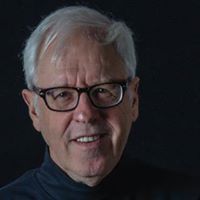
In 1849, Luther Burbank was born in Massachusetts. He found fame early, when he single-handedly saved U.S. potato crops from the deadly blight by cultivating russet potatoes. The inventor, who ran Burbank's Experimental Farms in Santa Rosa, Calif., produced more than 800 new varieties of fruits and plants, such as the Shasta daisy. He was recognized for his plant breeding by an Act of Congress. The beloved naturalist was one of Robert Ingersoll's greatest fans. Burbank believed, "Children are the greatest sufferers from outgrown theologies." Shaken by the Scopes trial, Burbank wrote: "And to think of this great country in danger of being dominated by people ignorant enough to take a few ancient Babylonian legends as the canons of modern culture. Our scientific men are paying for their failure to speak out earlier. There is no use now talking evolution to these people. Their ears are stuffed with Genesis." In 1926, an interview about his freethought views appeared in the San Francisco Bulletin, which headlined it: "I'm an Infidel, Declares Burbank, Casting Doubt on Soul Immortality Theory." The article was reprinted around the world, creating shockwaves. Burbank was inundated with mostly critical letters, which he felt he had to reply to personally. Friend and later biographer, Wilbur Hale, attributed Burbank's hastened death to the exertion of his replies: "He died, not a martyr to truth, but a victim of the fatuity of blasting dogged falsehood." A crowd estimated at 100,000 came to Luther's memorial, and heard the openly atheistic and ringing tribute by Judge Lindsay of Denver, Colorado. California still celebrates Luther Burbank's birthday as Arbor Day, planting trees in his memory. D. 1926.
I happened across this book by reading the 'Biography of a Yogi - Paramahansa Yogananda'. Burbank and Yogananda had a crossing of paths, more from their connection to the Divine Universe, and both realised that through love anything is possible. Whilst coming to this conclusion from differing points of view it is still the underlying principle of what both Burbank and Yoganda intrinsically knew and lived their lives by. As always when I read, I take out what resonates with me, and leave the rest to remain on the pages
I stumbled on this title mentioned in an article about Katherine Tingley and the school she established at Point Loma in San Diego, California. The reference had to do with the care and nuture of children. Both believed a proper and consistent environment for the first seven to ten years of a child's life would produce better people. From that point, the two diverged, Tingley believing formal education should begin by age two, Burbank after age 10. He cited the inability of girls, otherwise intelligent, to do math either by nature or inclination before then. Tingley's method employed a highly structured process while Burbank envisioned a less constrained upbringing in rural settings, focusing on family surroundings. Big cities had a negative effect on a child's nervous system.
Burbank was certainly a talented botanist and his experience with developing new and better plants led him to consider how to employ his knowledge to improve the American race. In doing so, he expressed some very odd ideas about heredity and its relationship to environment, including the affect by interacting with other people, in producing changes over time. Yet in another place he states that heredity can overcome environment. He also wrote that acquired characteristics such as good habits could be transmitted. At this time the work of Gregor Mendel was being rediscovered and the science of genitics becoming more widely known.
He believed a balanced diet was importent and cited obesity and malnutrition as problems to avoid. He advocated state aid for the poor to ensure their children received proper nurishment. His views on education and how it should be done properly are fairly progressive. One of the more scurillous ideas he had was the prohibition of marriage between unfit persons should be mandated in every state, laws that are still around in some places today.
Included in the text is a breakdown of immigration to the U.S. in 1904. More that 50 nations were represented by more than 750,000 individuals. (10 years before WWI nearly 170,000 came from the nations representing the Central Powers.) Burbank saw this extensive pool as having great potential for improving the human race.
A well-meaning individual, he wanted to lay out some rules for raising children of intelligence and character. He freely admitted that horticulture and animal husbandry were far different from childrearing, but believed the care required to produce successful outcomes were similar if not identical. However, his views as a non-parent seemed naive and fraught with wishful thinking and his ideas, other than public aid to the poor, lacked practical application.
The "Wizard of Botany" recounts his philosophy on humans... The man has some very interesting views on how people should be raised. The whole of his philosophy seems to state that humans should be raised with love and learn by Nature's laws ntil the age of 10, only then should "education" even be considered. Some ideas are outdated and may seem depraved such as not allowing the physically unfit to wed, but overall he has a lot of good, interesting ideas.
One of my favorites:
"A perfect system of education can never be attained because education is preparing one for the environment expected, and conditions change with time and place."
It would do a perfect introduction for a thesis, if only more data were available. A good book to go a bit out of the box. I missed some backing to all the ideas but somehow it leads the reader into some really good insights. Surprisingly updated, considering when it was written.
This is one of the books I will be rereading in 2012. I have started to write a Plant Your Dream Blog on it here. This book has basic ideas, some suitable for Art Work. I made one such in the past.