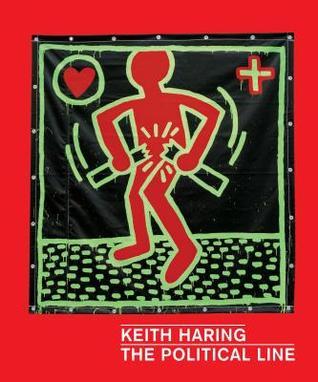
Exuberant, profane, witty, and provocative, the images in this book reveal the political dimension of Keith Haring’s artistic concerns. Through his graffiti-inspired drawings, paintings, sculptures, murals, and other works, Keith Haring created an immediately recognizable visual iconography that spoke to an enormous population—gay and straight, young and old, male and female. His importance in the annals of popular culture is indisputable, but little attention has been paid to his advocacy for social justice. Haring’s political perspective is the focus of this visually arresting selection of works that traces the artist’s development and historical significance and gives new gravitas to his career. Accompanying a major exhibition at the de Young museum in San Francisco, this book features more than 130 works of art, including large-scale paintings on tarpaulin and canvas, sculptures, and subway drawings. Together they create a narrative that explores Haring’s responses to nuclear disarmament, racial inequality, capitalist excess, environmental degradation, and other prevalent social issues. Essays and conversations with writers, critics, and art dealers round out this important analysis of Haring’s life, career, and passion.
I saw the exhibit at the museum and I’ve been working my way through the book since then, first a friend’s copy and then a copy from the library.
My favorite piece, early in the exhibit and in the book, is an abstract painting, in black and white and red (blood?) with the caption: “Everybody knows where meat comes from It comes from the store.”
That’s the brilliance of this art, the social commentary. A lot of it was done during the AIDS crisis in NYC, so a lot of the art is about that.
As far as the art: too many penis depictions for my taste, but otherwise great fun. It has a lot of whimsy and themes of social justice. The art shines in the context of what the artist was trying to communicate, particularly his street art. Lots also re religion, war, racism, technology, capitalism, and modern times.
True political art. I admire it.
For me? Art as beauty? Some of it, yes, some of it fun, some of it likeable in context. Important work? Yes!
The art exhibit also has a biographical film which was excellent.
It is practically impossible not to compare Haring with Basquiat. Not only were the two young painters friends, they came of age in the exact same milieu- that of early '80s New York, and both thus adopted the influences of Warhol, graffiti, the burgeoning hip-hop scene, and post-punk/ no-wave.
This is not to say that one cannot see great differences in their aesthetics. Basquiat was a child of modernism and post-modernism. While those influences were present in Haring's work, I would say he was most indebted to apocalyptic medieval art, such as the work of Hieronymus Bosch. Haring saw 1980s America as a hell-scape, with the demons of Reaganism violating humanity.
I would say that Basquiat was a more expansive, I guess it could be termed, more talented painter. Yet Haring was every bit as much the visionary. His trademarks- phallic dogs, aliens, TVs, and yes, penises, are at least as unmistakable as anything in Basquiat's oeuvre.
The other difference I see is, perhaps, inspired by the way the two men met their tragically premature ends. Basquiat died of a heroin overdose. I sense, throughout Basquiat's work but particularly in his later paintings, a deep mistrust of himself. A late Basquiat painting that has always haunted me is called "Riding With Death", as if the artist knew he had voluntarily gotten on the ride.
Haring, alternately, caught AIDS in the early '80s when no one saw it coming. He knew he was dying when he painted his last works, but I sense no rancor towards himself. Indeed, some of his last works were political statements demanding more pressing state action to address the AIDS crisis.