

What do you think?

The Hive #2
The Godwhale
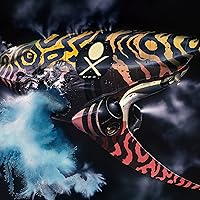
A post-apocalyptic dystopian fable by the acclaimed author of HALF PAST HUMAN, with an introduction by Ken MacLeodRorqual Maru was a cyborg - part organic whale, part mechanised ship - and part god. She was a harvester - a vast plankton rake, now without a crop, abandoned by earth society when the seas died. So she selected an island for her grave, hoping to keep her carcass visible for salvage.Although her long ear heard nothing, she believed that man still lived in his hive. If he should ever return to the sea, she wanted to serve. She longed for the thrill of a human's bare feet touching the skin of her deck. She missed the hearty hails, the sweat and the laughter.She needed mankind. But all humans were long gone ... or were they?
302 pages, Kindle Edition
First published December 12, 1973
About the author
T.J. Bass
11 books12 followersThomas Joseph Bassler, author of health & diet related non-fiction under the name Thomas J. Bassler
Ratings & Reviews
Friends & Following
Create a free account to discover what your friends think of this book!
Community Reviews
Displaying 1 - 30 of 90 reviews

July 15, 2012
Don't be fooled by the title. The "godhwhale" itself is only a portion of this epic, century spanning book. Chock full of ideas, hard science, and details, the Godwhale is no less than a masterpiece. It is SF on a HUGE scale. If you've never heard of it, don't let this deter you. The Godwhale is one of SF's lesser known classics.

July 12, 2013
The Godwhale came to me in a stack of classic sci-fi paperbacks, mostly Asimov and Wyndham and Vogt and the like. It stood out, party because of its relatively large size and its bizarre cover art, and it came complete with a recommendation from my Dad, who remembered reading it years ago. The problem being, of course, that stack of books didn't contain Half-past Human, the novel preceding the Godwhale. A quick Google search taught me the difference between the four-toed Nebish and the five-toed Benthics, and on I went, only partially confused by prior events. The book does not lend itself well to coherent reading. Time passes in a seemingly random manner, minutes and years pass alike without any reference in text. The plot follows the unfolding of a series of events, rather than characters, which meant just as you were getting to know one group of people the action would pass to another. My copy also had frequent grammatical errors; speech marks were scattered at random throughout.
The Godwhale does have a lot to recommend it however. Like all the best classic sci-fi, there's an ecological message in there about our destructive influence on Earth's ecology. The blend of biology and technology is unusual and well done, and a bizarre cast of characters rounds everything out. Once you realise the plot is going to meander all over the place without their help, you find yourself content to sit back and enjoy the exploits of King ARNOLD and his sexy chicken brain washing adventures and Larry the mechanical centaur. It's as weird as it sounds. Actually Larry is one of my favourite things about this novel. He gets crushed in half at the beginning of the book, so he agrees to be frozen in suspension until a decent set of working genitals can be found for him. After a rude awakening in the wrong future, he spends the majority of his time crawling around on his hands, serving as adviser and historic badass in equal measure, like a more competent version of Fry from Futurama. Well-written disabled characters are rare in genre fiction, and Larry is never just the-one-looking-to-walk-again. And his girlfriend is a robotic fruit machine. Yeah.
There's a doozy of a twist at the end as well, and it's not just "it was Earth all along!" which was a bit of a staple of sci-fi at the time. A good read then, not the most cohesive, but defintely one of the more imaginative pulps I've ever read.
The Godwhale does have a lot to recommend it however. Like all the best classic sci-fi, there's an ecological message in there about our destructive influence on Earth's ecology. The blend of biology and technology is unusual and well done, and a bizarre cast of characters rounds everything out. Once you realise the plot is going to meander all over the place without their help, you find yourself content to sit back and enjoy the exploits of King ARNOLD and his sexy chicken brain washing adventures and Larry the mechanical centaur. It's as weird as it sounds. Actually Larry is one of my favourite things about this novel. He gets crushed in half at the beginning of the book, so he agrees to be frozen in suspension until a decent set of working genitals can be found for him. After a rude awakening in the wrong future, he spends the majority of his time crawling around on his hands, serving as adviser and historic badass in equal measure, like a more competent version of Fry from Futurama. Well-written disabled characters are rare in genre fiction, and Larry is never just the-one-looking-to-walk-again. And his girlfriend is a robotic fruit machine. Yeah.
There's a doozy of a twist at the end as well, and it's not just "it was Earth all along!" which was a bit of a staple of sci-fi at the time. A good read then, not the most cohesive, but defintely one of the more imaginative pulps I've ever read.

October 31, 2015
I massively enjoyed this one. Only thing I didn't like was ARNOLD who essentially seemed to come in and dump patriarchy all over a more interesting society. I also wish the Godwhale herself had had more of a complex vocal role but still a ton of fun reading it.

March 5, 2025
When I come across a novel in the SF Masterworks series that's new to me, as happened here, I read it immediately. The Godwhale is another entry on the list of 1970s & 80s sci-fi by men expressing fears about overpopulation, with Stand on Zanzibar, The Sea and Summer, The Futurological Congress: From the Memoirs of Ijon Tichy, and Make Room! Make Room! The former three and The Godwhale are all thoughtful and creative explorations of this concern. I enjoyed them (but not Make Room! Make Room!, a much weaker book). Nonetheless, none of these novels ever consider the possibility that given actual choice over their reproductive health, most women who can have children don't want to have masses of them. Some do not want to have any. Maybe it's easy to dismiss the fears in these novels when looking at birth rates fifty years later, but I also think sexism was a big part of it. I've read a lot of science fiction and never found an overpopulation panic novel written by a woman. Conversely there is We Who Are About To... by Joanna Russ, a fascinating 1976 feminist sci-fi novel about resistance to compulsory reproduction. Unfortunately Ken McLeod misses this whole point in his introduction to The Godwhale.
Returning to the book at hand, The Godwhale's writing is best described as servicable. The narrative has little space for characterisation and blithely skims over long periods of time. What makes it a SF masterwork are its compelling and original ideas, mostly in the realms of genetic engineering and ecology. In the grim future of humanity, vast numbers of short-lived people live underground in densely populated Hives while a scant few barely survive in domes under the sea. The godwhale of the title is a strange cyborg being, revered as a god by the ocean-dwellers, who makes contact with humans and begins to bring biodiversity back to the sea. This creates conflict between the ocean-dwellers and the Hives, which the reader views from both sides. The main protagonists escape a Hive to live the freer ocean life. One of them is severely maimed in the first scene of the book, then put in suspension for several thousand years. He makes a useful outside point of view on this strange future. The most memorable elements of the book are notably visceral body horror and unusual angles on disability and body modification. The sexual essentialism gets tiresome, as it tends to in overpopulation sci-fi. I found The Godwhale engagingly strange, despite its flaws. It's an interesting example of 1970s sci-fi that has aged well in some ways and poorly in others.
Returning to the book at hand, The Godwhale's writing is best described as servicable. The narrative has little space for characterisation and blithely skims over long periods of time. What makes it a SF masterwork are its compelling and original ideas, mostly in the realms of genetic engineering and ecology. In the grim future of humanity, vast numbers of short-lived people live underground in densely populated Hives while a scant few barely survive in domes under the sea. The godwhale of the title is a strange cyborg being, revered as a god by the ocean-dwellers, who makes contact with humans and begins to bring biodiversity back to the sea. This creates conflict between the ocean-dwellers and the Hives, which the reader views from both sides. The main protagonists escape a Hive to live the freer ocean life. One of them is severely maimed in the first scene of the book, then put in suspension for several thousand years. He makes a useful outside point of view on this strange future. The most memorable elements of the book are notably visceral body horror and unusual angles on disability and body modification. The sexual essentialism gets tiresome, as it tends to in overpopulation sci-fi. I found The Godwhale engagingly strange, despite its flaws. It's an interesting example of 1970s sci-fi that has aged well in some ways and poorly in others.

October 1, 2018
I wasn't going to write a review for this book, because I had read it years ago and felt that most of the reviews, did it justice. However, upon reading some more recent reviews that mention the "rape scene" -- plus the fact that the scene is focused on in the Forward -- I wanted to share my view on this. I do not want that one event to overshadow the rest of the book and cause potential readers to turn away from this novel. (Rape is a heinous crime, in all of its forms. I'm not denying that. But the incident in this book is not gratuitous or explicit, it is a quick pounce and not treated as a rape for very explicit reasons, not because the author was blind to it. At least I don't think he was).
The rape occurs in order to illustrate who ARNOLD was and how he had been programmed by the Hive. I think the assault and his subsequent behavior illustrated how well the Hives conditioning and brainwashing worked. They created him for a very specific reason...
As some reviewers have pointed out, Arnold seems to take over the story and "eclipses the better, more interesting" characters, but I think there is a message in there. Perhaps a cautionary tale?
What about the future world that Bass created: Dead oceans, sterile genetically altered plants, test tube babies, the Hive society and the Benthic society? Are we killing our oceans? Does society program our behavior? If we had a population like the Benthics, would they be over-run by modern man? The book was written over 40 years ago - before the computers, invitro-fertilization, genetically modified foods, the dying oceans that we have today.
Like so many of the SF books written back then, they were written for a young male audience, have mostly male protagonists, and have a lot more going on than androcentric or misogynistic attitudes: We see speculation, extrapolation, and technology that is sometimes unbelievable but sometimes scarily close to what we see today. There is a reason his two books were nominated for Nebula Awards -- the same reason Orion brought them back into print-- Science Fiction fans enjoyed reading them.
The rape occurs in order to illustrate who ARNOLD was and how he had been programmed by the Hive. I think the assault and his subsequent behavior illustrated how well the Hives conditioning and brainwashing worked. They created him for a very specific reason...
As some reviewers have pointed out, Arnold seems to take over the story and "eclipses the better, more interesting" characters, but I think there is a message in there. Perhaps a cautionary tale?
What about the future world that Bass created: Dead oceans, sterile genetically altered plants, test tube babies, the Hive society and the Benthic society? Are we killing our oceans? Does society program our behavior? If we had a population like the Benthics, would they be over-run by modern man? The book was written over 40 years ago - before the computers, invitro-fertilization, genetically modified foods, the dying oceans that we have today.
Like so many of the SF books written back then, they were written for a young male audience, have mostly male protagonists, and have a lot more going on than androcentric or misogynistic attitudes: We see speculation, extrapolation, and technology that is sometimes unbelievable but sometimes scarily close to what we see today. There is a reason his two books were nominated for Nebula Awards -- the same reason Orion brought them back into print-- Science Fiction fans enjoyed reading them.
April 1, 2012
I read this book years ago and decided (abruptly) to find it again and re-read it.
It's surprisingly dense for such a small book, and covers and vast swathe of science fiction concepts in simply the first few chapters.
Still enjoyed it the second time around, though I found some sections to be predictable cliche. Despite this many of the ideas presented are still pretty novel and entertaining to read about.
It's surprisingly dense for such a small book, and covers and vast swathe of science fiction concepts in simply the first few chapters.
Still enjoyed it the second time around, though I found some sections to be predictable cliche. Despite this many of the ideas presented are still pretty novel and entertaining to read about.

October 18, 2008
Post-apocalyptic. That was my first real SF-book, I love it dearly. Regarding it being written in the 70ies, it´s quite amazing regarding the amount of AI. I say, recommended, including it´s predecessor, "Half Past Human". T.J. Bass delivered a tremendous work.
What I learned... humankind will never fit into a tupperware-box.
Peter
What I learned... humankind will never fit into a tupperware-box.
Peter

May 17, 2009
Been so long since I read this but it struck a chord so that - after all these years - I still remember "Augmented Renal Nucleus of Larry Dever" and "bots and warbles".
September 26, 2012
lives on in memory for years

May 17, 2020
With these old school sci-fis you never know if you’re going to get something super campy or a novel with a bit more substance (which is part of why I am addicted to buying these based solely on the covers). I clearly bought this one for that reason, but what I wasn’t expecting was a hard sci-fi heavily focused on technological advancements in the medical field, specifically cloning, augmentation, and genetic mutation.
The main plot takes place about 2000 years from now. It’s rather convoluted and there is so much techno-babble that pertinent events were glossed over. To get you started, Larry is bisected in an accident. Instead of living his life with sweet robot legs in a rather utopian society, he decides to be cybernetically frozen until they can remake him “whole” (he’s concerned about his penis. Valid concern, but it seems like quite the risk). He wakes up twice - the first time is a few hundred years later but they still haven’t been able to fix his damage, then he wakes again in the dystopian/semi-post-apocalyptic future (where the bulk of the novel is set). The story sticks within about 100 years of this time, though it does this annoying thing where all of a sudden it’s ten years later without warning. Despite the title and back cover talking mainly about the whale (named Rorqual), I’m still unsure what the whale even is - some sort of machine to re-harvest the seas after they’re dead?
Whatever.
As you can tell, I wasn’t that into this book. I thought it was before its time in terms of medical science postulating, but, quite frankly, the characterization and plot leave much to be desired.
We are given quite a few characters, but just when we get to know and understand or like them, they are thrown from the story only to emerge as minor characters later on. As such, you don’t care about any of them. Larry is the most interesting, because we follow him more than others, but he’s more of a way to tie the final section of the story together with part one than someone with a definitive story arc.
It also didn’t help for me that women were treated as periphery characters or simply “breeders” in this book, with absolutely no agency or relevance to the plot. In fact, one of the more equal societies is dismantled by patriarchy without any sort of pushback thematically or by the characters. Frustrating.
The novel is clearly more interested in its argument about ecological collapse (valid) and genetic/bodily manipulation (hyperbolic) than giving us characters to care about and a story. As such, I grew exceedingly bored and came away with nothing of value from this novel.
I was going to round up to a 3 from a 2.5, but instead I’m rounding down to a 2. I can’t imagine what the first novel was about, nor do I care to find out.
The main plot takes place about 2000 years from now. It’s rather convoluted and there is so much techno-babble that pertinent events were glossed over. To get you started, Larry is bisected in an accident. Instead of living his life with sweet robot legs in a rather utopian society, he decides to be cybernetically frozen until they can remake him “whole” (he’s concerned about his penis. Valid concern, but it seems like quite the risk). He wakes up twice - the first time is a few hundred years later but they still haven’t been able to fix his damage, then he wakes again in the dystopian/semi-post-apocalyptic future (where the bulk of the novel is set). The story sticks within about 100 years of this time, though it does this annoying thing where all of a sudden it’s ten years later without warning. Despite the title and back cover talking mainly about the whale (named Rorqual), I’m still unsure what the whale even is - some sort of machine to re-harvest the seas after they’re dead?
Whatever.
As you can tell, I wasn’t that into this book. I thought it was before its time in terms of medical science postulating, but, quite frankly, the characterization and plot leave much to be desired.
We are given quite a few characters, but just when we get to know and understand or like them, they are thrown from the story only to emerge as minor characters later on. As such, you don’t care about any of them. Larry is the most interesting, because we follow him more than others, but he’s more of a way to tie the final section of the story together with part one than someone with a definitive story arc.
It also didn’t help for me that women were treated as periphery characters or simply “breeders” in this book, with absolutely no agency or relevance to the plot. In fact, one of the more equal societies is dismantled by patriarchy without any sort of pushback thematically or by the characters. Frustrating.
The novel is clearly more interested in its argument about ecological collapse (valid) and genetic/bodily manipulation (hyperbolic) than giving us characters to care about and a story. As such, I grew exceedingly bored and came away with nothing of value from this novel.
I was going to round up to a 3 from a 2.5, but instead I’m rounding down to a 2. I can’t imagine what the first novel was about, nor do I care to find out.

November 1, 2015
Although it was written in the seventies “The Godwhale” is still a surprisingly relevant science fiction novel. Many of the themes explored are very much a product of its time, but themes of morality, economics and prejudice attitudes are still apt today. The most relevant theme of all is how to cope with overpopulation, which is a problem we are sure to face in the future, namely how to provide enough food to feed so many people. This has many echoes with our own world as it is estimated that the global population will rise to over 10 billion by the midpoint of the century.
As well as such prescient themes, the language can be challenging at times, but not to the detriment of the story. It is clear that the writer was once a doctor through his use of medical terms to reinforce the theory behind the pseudo-science described here. This adds a much greater level of believability rather than confusing the reader, a skill akin to the likes of the classic authors such as Jules Verne.
The characters that populate the story are not the most likeable, which is a reflection of the bleak and futile existence they endure. It actually soothes many peoples fear of technology as the most likeable of the characters are Rorqual Maru, the “Godwhale” of the title, and Trilobite. In fact the machines are more human than the humans themselves, with the exception of Larry, the main protagonist and Drum.
The story asks many questions and doesn’t supply all of the answers. I will not reveal too much as I got the impression that the ending is very subjective. It is a very personal experience and conclusions have to be drawn by the reader themselves. Also for reasons unknown Bass never returned to the fascinating world he created and as he is sadly no longer with us he never will. Ken Macleod’s forward in this SF Masterworks edition concludes with an apt assessment of the books ending. “The doctor gave us the diagnosis, and the prognosis. He left it for us to write the prescription”.
As well as such prescient themes, the language can be challenging at times, but not to the detriment of the story. It is clear that the writer was once a doctor through his use of medical terms to reinforce the theory behind the pseudo-science described here. This adds a much greater level of believability rather than confusing the reader, a skill akin to the likes of the classic authors such as Jules Verne.
The characters that populate the story are not the most likeable, which is a reflection of the bleak and futile existence they endure. It actually soothes many peoples fear of technology as the most likeable of the characters are Rorqual Maru, the “Godwhale” of the title, and Trilobite. In fact the machines are more human than the humans themselves, with the exception of Larry, the main protagonist and Drum.
The story asks many questions and doesn’t supply all of the answers. I will not reveal too much as I got the impression that the ending is very subjective. It is a very personal experience and conclusions have to be drawn by the reader themselves. Also for reasons unknown Bass never returned to the fascinating world he created and as he is sadly no longer with us he never will. Ken Macleod’s forward in this SF Masterworks edition concludes with an apt assessment of the books ending. “The doctor gave us the diagnosis, and the prognosis. He left it for us to write the prescription”.

March 19, 2019
This is a very important book. It was written by a pathologist in 1974 (he was also a genius and shaved his head to cut down on wind resistance when he ran marathons!) and describes a future Earth where humans have become little more than insects in the "Hive" that rules the land surfaces of the planet. It's a terrifying possible future, and apart from the odd mysticism and series of unlikely coincidences that drive the plot, a very good book. It's certainly a refreshing change from all the zombie dystopian future books which have, for some reason, become popular recently.
This edition contains a great many typos, which is a bit disappointing. I'm considering a sternly worded letter to the editors. That being said, this is a book worth reading.
This edition contains a great many typos, which is a bit disappointing. I'm considering a sternly worded letter to the editors. That being said, this is a book worth reading.

August 20, 2023
T.J. Bass only authored two Science Fiction books, this one and Half Past Human. Both are set on a far-future earth when humans have evolved into small four-toed Nebbish and live in an expansive underground city called The Hive. Most of the world has been turned over to an extensive agro-meck system to make enough food to feed everyone. As one might expect, The Hive is a highly ordered society, though some people live outside of it. Both books tell the stories of the margins, where the people inside The Hive meet those wo live without.
The Godwhale opens with a character named Larry Dever. He lives in our distant future, but in the Hive's distant past. The book doesn't dwell long on his era of birth, because in the first few pages he suffers an accident and must undergo a hemicorporectomy. His broken bottom half is removed and he's fixed to a semi-sentient cyber mannequin which acts as his legs (and renal functions etc.
T.J. Bass was a doctor, and he loved describing bodily functions and the setting's future medi-teck. Larry's life on a mannequin bottom isn't easy. Here's what happens when he has to go to bed:
Larry turned on his refresher and grasped a ceiling rung of his horizontal ladder. The mannequin walked away slowly, pulling flexible tubing out of his various surgical stoma. Sucking sounds. Drops of urine and feces soiled the meck's breastplates with yellow and granular brown. Larry progressed across the monkey bars to the hot shower, where he emptied his visceral sacs down the drain. Hooking his arms through the trapeze rings, he pulled on a pair of goggles and activated the strong ultraviolet lights. Scented lather softened his flaking trunk. Wearing a terrycloth body stocking, he climbed into his hammock. More UVs focused on him as he slept.
The mannequin stood beside his bed for a while, then strolled down the hall to make records...
Life with a mannequin isn't easy, so soon Larry opts to be put into cryo-suspension, so he can be re-awakened at some future time when the medicine is good enough to re-attach proper parts.
Some generations later, Larry wakes up. One on his very own descendants greets him, and tells him he's scheduled for the surgery at long last.
"The graft will be done high in your thoracic cord. You'll keep your diaphragm and its phrenic nerves, but all your abdominal viscera will come from the C.C. donor - strong, young organs from a ten-year-old."
Larry felt weak. "A ten-year-old what?"
"Donor. Grown from your nuclear material. A carbon copy."
"A live human?"
Jen noticed his agitation. "I'm sorry, Larry. But I keep forgetting you're from an era before budding. Your bud child is not considered a human being - just a donor. Business ethics require that a donor live only long enough to donate. Of course, if the donor is viable after the organs are taken, that is a different problem. But there is no question of viability in your donor's case. The anastomosis will be too high."
Larry clumped into his mannequin.
"My bud child is to die?"
Jen didn't answer. She was hoping the mannequin would administer a tranquilizer. Larry's vasomotors were not too strong so soon after his re-warming; his blood pressure fluctuated wildly.
Naturally, Larry isn't keen on this either, so he elects to go back into suspension. When next he awakes, it's in his own far future, as garbage in the sewage pits of The Hive.
Chapter Two opens by introducing the titular character - a massive undersea bio-harvester, long neglected and forgotten, lying semi dormant and reeflike under accumulating flotsam.
A thundering surf drowned the forlorn screams of sand-locked Rorqual Maru. Brine-tossed grains of olivine and calcite buries her left eye, blocking her view of the sky. Uranus had marched twenty times through the constellations while the islands changing beaches had slowly engulfed her tail. Six hundred feet of her shapely hull lay hidden under a silted and rooted green hump of palm and frond.
Rorqual Maru is dying, so she decides to donate her remaining energies to her small benthic servomeck, Iron Trilobite, and set it free. But Trilobite thinks of Rorqual Maru as a god, so instead he goes on a mission to find humans to re-energize her. This brings him in contact with the people of The Hive, and with the wild benthic feral people of the isles. The novel will spend most of its time heading for a clash between these two groups of people.
Before then, however, we're introduced to a few new characters - Nebbish people from the Hive. Particularly, the recently retired Drum (who just wants to settle down and consume calories with flavor, for which he has saved for a lifetime) and his friend Ode. His retirement plans soon go awry, though.
A dry female appeared on the screen. Drum didn't like her air of efficiency. Thin lips clashed with the gaudy smock. "Re-certification time," she said with her pasted-on smile.
Drum's mouth opened and closed - wordless.
"Earth Society has run a little short of calories," she continued. "Water table dropped and the harvest reflected it. We must cut back on the *warm* - the consuming population - for the duration. Please vote for those citizens with whom you want to share next year. Hurry now. Your friends need your vote to avoid being put into Temporary Suspension - TS. Remember, however, that you must not vote for yourself or your clone litter-mates. No blood prejudice allowed."
Drum smiled nervously. He had done this before when he had his job vote to protect him...
"My votes go to the Tinker who keeps my refresher, the pipe caste member who services this wing of the city - and Grandmaster Ode."
A screen played a geometric dance as tallies ran up. The thin-lipped female reappeared long enough to announce: "You failed to receive the necessary three votes, so it is TS for you."
Drum stared as his Temporary Suspension order was printed out.
"But I'm retired," he objected. My CQB is paid up for life..."
"Your retirement CQB remains in your name while you are in TS. When the harvests improve, you will be rewarmed and can continue consuming where you were interrupted. Hurry. You have to report to the clinics immediately. The air you are breathing belongs to someone else."
Luckily, Drum spots an opportunity while on his way to the TS Clinic, and instead takes a job in the sewers. It's not the greatest job, but I suppose it's better than TS:
Nebbish workmen sat around their barracks watching the sewer bouillabaisse simmer. Drum picked up his bowl and decanted a pint of surface fluid with it's fat gobbets and flecks of green basil.
"Don't you want any jointed creatures?" offered Ode, digging deep with the ladle.
Drum grinned widely, exposing a bad set of teeth; less than half remained in the lower jaw, and none in the upper.
"There'll be no more chewing for me."
"Did you put in a request for a new set?"
"Along with my usual requests for a lens and a hip joint," said Drum. "But you know what my priority is."
Ode sat silently running his tongue over his own set of broken teeth. He could use a few White team requisitions himself. The Wet Crew sloshed in and dumped their tithe down the Synthe chute. They sat down and picked up bowls of hot soup.
"Your shift," they said.
Ode and Drum finished eating and pulled on their boots.
And this is how they meet Larry, and Trilobite, and a whole new world of adventure is opened up.
Bass is a colourful writer, and his setting is incredibly rich. The writing itself can sometimes be terse. At times, important turns in the plot are hidden in the middle of a paragraph, and things can change over the course of a sentence - so his books are not the kind that you can snooze through parts and easily catch up later. His vocabulary is also large, and scientific, which may invite you to read things twice to make sure you got them. For example:
Hypertonics dehydrated his tissues and he slipped into cryotherapy torpor.
and
The city's energy organ cracked in the blast - spilling sixteen hundred kilo-amperes of toroidal plasma, at fifty million degrees Kelvin. For a moment, a bit of the sun existed in the sewers as fusion fuel spilled, spreading ionic gas in a yellow glow.
But it's a four-colour setting, to be sure. The characters a very human, very flawed, and quite relatable considering how alien the setting is. Bass tends to focus on everyman characters (yes, a product of its time, few of the main characters are women, and they are relegated to certain roles, such as goddesses and breeders). There are no 'evil villains', just the uncaring dystopian system under which the hive operates. But that said, the story telling is sometimes takes second place to the setting and Bass' efforts to describe it. And the lingo can get in the way, especially toward the end.
But despite the flaws, they are remarkable works at which every SF fan should someday take a stab.
The Godwhale opens with a character named Larry Dever. He lives in our distant future, but in the Hive's distant past. The book doesn't dwell long on his era of birth, because in the first few pages he suffers an accident and must undergo a hemicorporectomy. His broken bottom half is removed and he's fixed to a semi-sentient cyber mannequin which acts as his legs (and renal functions etc.
T.J. Bass was a doctor, and he loved describing bodily functions and the setting's future medi-teck. Larry's life on a mannequin bottom isn't easy. Here's what happens when he has to go to bed:
Larry turned on his refresher and grasped a ceiling rung of his horizontal ladder. The mannequin walked away slowly, pulling flexible tubing out of his various surgical stoma. Sucking sounds. Drops of urine and feces soiled the meck's breastplates with yellow and granular brown. Larry progressed across the monkey bars to the hot shower, where he emptied his visceral sacs down the drain. Hooking his arms through the trapeze rings, he pulled on a pair of goggles and activated the strong ultraviolet lights. Scented lather softened his flaking trunk. Wearing a terrycloth body stocking, he climbed into his hammock. More UVs focused on him as he slept.
The mannequin stood beside his bed for a while, then strolled down the hall to make records...
Life with a mannequin isn't easy, so soon Larry opts to be put into cryo-suspension, so he can be re-awakened at some future time when the medicine is good enough to re-attach proper parts.
Some generations later, Larry wakes up. One on his very own descendants greets him, and tells him he's scheduled for the surgery at long last.
"The graft will be done high in your thoracic cord. You'll keep your diaphragm and its phrenic nerves, but all your abdominal viscera will come from the C.C. donor - strong, young organs from a ten-year-old."
Larry felt weak. "A ten-year-old what?"
"Donor. Grown from your nuclear material. A carbon copy."
"A live human?"
Jen noticed his agitation. "I'm sorry, Larry. But I keep forgetting you're from an era before budding. Your bud child is not considered a human being - just a donor. Business ethics require that a donor live only long enough to donate. Of course, if the donor is viable after the organs are taken, that is a different problem. But there is no question of viability in your donor's case. The anastomosis will be too high."
Larry clumped into his mannequin.
"My bud child is to die?"
Jen didn't answer. She was hoping the mannequin would administer a tranquilizer. Larry's vasomotors were not too strong so soon after his re-warming; his blood pressure fluctuated wildly.
Naturally, Larry isn't keen on this either, so he elects to go back into suspension. When next he awakes, it's in his own far future, as garbage in the sewage pits of The Hive.
Chapter Two opens by introducing the titular character - a massive undersea bio-harvester, long neglected and forgotten, lying semi dormant and reeflike under accumulating flotsam.
A thundering surf drowned the forlorn screams of sand-locked Rorqual Maru. Brine-tossed grains of olivine and calcite buries her left eye, blocking her view of the sky. Uranus had marched twenty times through the constellations while the islands changing beaches had slowly engulfed her tail. Six hundred feet of her shapely hull lay hidden under a silted and rooted green hump of palm and frond.
Rorqual Maru is dying, so she decides to donate her remaining energies to her small benthic servomeck, Iron Trilobite, and set it free. But Trilobite thinks of Rorqual Maru as a god, so instead he goes on a mission to find humans to re-energize her. This brings him in contact with the people of The Hive, and with the wild benthic feral people of the isles. The novel will spend most of its time heading for a clash between these two groups of people.
Before then, however, we're introduced to a few new characters - Nebbish people from the Hive. Particularly, the recently retired Drum (who just wants to settle down and consume calories with flavor, for which he has saved for a lifetime) and his friend Ode. His retirement plans soon go awry, though.
A dry female appeared on the screen. Drum didn't like her air of efficiency. Thin lips clashed with the gaudy smock. "Re-certification time," she said with her pasted-on smile.
Drum's mouth opened and closed - wordless.
"Earth Society has run a little short of calories," she continued. "Water table dropped and the harvest reflected it. We must cut back on the *warm* - the consuming population - for the duration. Please vote for those citizens with whom you want to share next year. Hurry now. Your friends need your vote to avoid being put into Temporary Suspension - TS. Remember, however, that you must not vote for yourself or your clone litter-mates. No blood prejudice allowed."
Drum smiled nervously. He had done this before when he had his job vote to protect him...
"My votes go to the Tinker who keeps my refresher, the pipe caste member who services this wing of the city - and Grandmaster Ode."
A screen played a geometric dance as tallies ran up. The thin-lipped female reappeared long enough to announce: "You failed to receive the necessary three votes, so it is TS for you."
Drum stared as his Temporary Suspension order was printed out.
"But I'm retired," he objected. My CQB is paid up for life..."
"Your retirement CQB remains in your name while you are in TS. When the harvests improve, you will be rewarmed and can continue consuming where you were interrupted. Hurry. You have to report to the clinics immediately. The air you are breathing belongs to someone else."
Luckily, Drum spots an opportunity while on his way to the TS Clinic, and instead takes a job in the sewers. It's not the greatest job, but I suppose it's better than TS:
Nebbish workmen sat around their barracks watching the sewer bouillabaisse simmer. Drum picked up his bowl and decanted a pint of surface fluid with it's fat gobbets and flecks of green basil.
"Don't you want any jointed creatures?" offered Ode, digging deep with the ladle.
Drum grinned widely, exposing a bad set of teeth; less than half remained in the lower jaw, and none in the upper.
"There'll be no more chewing for me."
"Did you put in a request for a new set?"
"Along with my usual requests for a lens and a hip joint," said Drum. "But you know what my priority is."
Ode sat silently running his tongue over his own set of broken teeth. He could use a few White team requisitions himself. The Wet Crew sloshed in and dumped their tithe down the Synthe chute. They sat down and picked up bowls of hot soup.
"Your shift," they said.
Ode and Drum finished eating and pulled on their boots.
And this is how they meet Larry, and Trilobite, and a whole new world of adventure is opened up.
Bass is a colourful writer, and his setting is incredibly rich. The writing itself can sometimes be terse. At times, important turns in the plot are hidden in the middle of a paragraph, and things can change over the course of a sentence - so his books are not the kind that you can snooze through parts and easily catch up later. His vocabulary is also large, and scientific, which may invite you to read things twice to make sure you got them. For example:
Hypertonics dehydrated his tissues and he slipped into cryotherapy torpor.
and
The city's energy organ cracked in the blast - spilling sixteen hundred kilo-amperes of toroidal plasma, at fifty million degrees Kelvin. For a moment, a bit of the sun existed in the sewers as fusion fuel spilled, spreading ionic gas in a yellow glow.
But it's a four-colour setting, to be sure. The characters a very human, very flawed, and quite relatable considering how alien the setting is. Bass tends to focus on everyman characters (yes, a product of its time, few of the main characters are women, and they are relegated to certain roles, such as goddesses and breeders). There are no 'evil villains', just the uncaring dystopian system under which the hive operates. But that said, the story telling is sometimes takes second place to the setting and Bass' efforts to describe it. And the lingo can get in the way, especially toward the end.
But despite the flaws, they are remarkable works at which every SF fan should someday take a stab.

August 31, 2015
Out of the blue (whale) did I pick to read this book. It had sat abandoned in the depths of my book stack for many moons, just as Rorqual the Godwhale had been abandoned by the Earth people that created it. But I get ahead of myself. The book's main protagonist is a hemi-human by name of Larry Dever, who got cut in half (hence being hemi), frozen until he could be properly fixed, thawed, fixed but not to his satisfaction, so he had himself frozen again, then thawed again in a far flung future where humans, aided by their ever present robotic mecks, recycle unproductive citizens for protein to compensate for the lack of marine life due to whatever cataclysm killed the ecosphere (perhaps humans themselves). He escapes the suggested voluntary suicide and the global hive of humans to find himself among other escapees and human evolutions that live under and off the sea. Amid this, Rorqual the Godwhale, a plankton harvesting cyborg-ship-whale-AI constructed by humans of an earlier era, awakens to fulfill her mission, and the main conflict between the humans of the hive and the humans of the sea is finally revealed. The science elements keep the story grounded in reality and the science fiction elements keep the story interesting to this scifi reader. Or viewed from another perspective, T.J. Bass wanted to write a scene about a half-man who has sex with a sentient slot machine, and constructed a wild vision of the future that would make this scene not only possible but plausible. I don't mean to belittle Bass' imagination, but wow, what a creative and crazy futurescape!

April 26, 2024
This was great and it is in my opinion an example of a superior sequel. I found that not only could I follow this one much more easily but it was also a captivating plot and I was compelled to keep reading it.
If it wasn't for the obsession with sex you'd hardly guess that this was written in the 70s. Everything other than the reproductive habits of the characters is absolutely fascinating and well constructed. To be honest even those habits might have been interesting if they didn't dominate so much of the plot.
I became a little obsessed with the Olga equation (gy=c) which claims that a planet is most likely to be habitable if its acceleration due to gravity multiplied by the length of its "year" = the speed of light. What a dumb but fun idea. Go on calculate it for Earth, you know you want to. (Make sure your units are compatible)
As with book one, I loved the hard scifi elements, most of which were biological. The philosophical or perhaps spiritual elements less so but they certainly made up an interesting story.
I could recommend this and claim that you wouldn't need to bother with the first book, but that may be unfair. Either way you should get around to giving this one a try.
If it wasn't for the obsession with sex you'd hardly guess that this was written in the 70s. Everything other than the reproductive habits of the characters is absolutely fascinating and well constructed. To be honest even those habits might have been interesting if they didn't dominate so much of the plot.
I became a little obsessed with the Olga equation (gy=c) which claims that a planet is most likely to be habitable if its acceleration due to gravity multiplied by the length of its "year" = the speed of light. What a dumb but fun idea. Go on calculate it for Earth, you know you want to. (Make sure your units are compatible)
As with book one, I loved the hard scifi elements, most of which were biological. The philosophical or perhaps spiritual elements less so but they certainly made up an interesting story.
I could recommend this and claim that you wouldn't need to bother with the first book, but that may be unfair. Either way you should get around to giving this one a try.
July 22, 2011
I really liked this book. It is dated, and the editing is horrible, but the way the story is told is reminiscent of the era when Science-fiction could take flights of Fantasy.
This book was published shortly before the advent of biotechnology. It is truly a fantastical piece; suspend your imagination completely if you want to enjoy it.
This book was published shortly before the advent of biotechnology. It is truly a fantastical piece; suspend your imagination completely if you want to enjoy it.
April 8, 2013
Sort of a pseudo-sequel to Half Past Human by the same author.
Another great book I've read time and again.
Another great book I've read time and again.
August 12, 2014
Superb. I've read it at least four times now.

August 14, 2025
this is the weirdest book I have ever read

August 12, 2026
This was an interesting, dense yet fun ride, captivating from the very first page!
Loved the concept and its evolution through the many years the story develops in. The big majority of the characters are fun, down to earth and very likeable, especially loved Trilobite and Larry.
There's a lot of dry, biological doctor-like talk that gave the book quite a unique flavor I didn't mind.
It takes a bit to reach the real main plot, adding a couple of side stories to set how the world is actually working, but then the characters are chosen and kept until the end.
The conflict between the Hive and the Ocean people had a nice contrast, yet the inclusion of the People of the Deep was confusing, just out of nowhere and to me it could have been a fantastic addition if had been presented more ethereal, more "magical", instead it's just old senile people with wings that help them breathe underwater and do nothing.
Drum had a fascinating arch, where it showed how the Hive works, subdle and dangerous especially with its citizens, and his end was sad but incredibly satisfying.
Clam had gone through the brutal yet beautiful style of the Ocean people, but he had not a break his whole life... poor lad.
The creation of ARNOLD gave the story a sharp turn with a good twist, but him as a character was not among my favorite at all... I get he's conditioned for how the Hive trained him, but since his introduction the book took a slight misogynistic turn in a way, until then the theme was relatively balanced. It particularly showed with White Belly and at the end with Iris. It unfortunately left a bitter aftertaste in my mouth.
Overall, it was still a good read, with a good amount of humor especially in the first half.
Loved the concept and its evolution through the many years the story develops in. The big majority of the characters are fun, down to earth and very likeable, especially loved Trilobite and Larry.
There's a lot of dry, biological doctor-like talk that gave the book quite a unique flavor I didn't mind.
It takes a bit to reach the real main plot, adding a couple of side stories to set how the world is actually working, but then the characters are chosen and kept until the end.
The conflict between the Hive and the Ocean people had a nice contrast, yet the inclusion of the People of the Deep was confusing, just out of nowhere and to me it could have been a fantastic addition if had been presented more ethereal, more "magical", instead it's just old senile people with wings that help them breathe underwater and do nothing.
Drum had a fascinating arch, where it showed how the Hive works, subdle and dangerous especially with its citizens, and his end was sad but incredibly satisfying.
Clam had gone through the brutal yet beautiful style of the Ocean people, but he had not a break his whole life... poor lad.
The creation of ARNOLD gave the story a sharp turn with a good twist, but him as a character was not among my favorite at all... I get he's conditioned for how the Hive trained him, but since his introduction the book took a slight misogynistic turn in a way, until then the theme was relatively balanced. It particularly showed with White Belly and at the end with Iris. It unfortunately left a bitter aftertaste in my mouth.
Overall, it was still a good read, with a good amount of humor especially in the first half.

February 1, 2022
This was fantastic for the first third and then ran out of steam after that unfortunately. That first third felt ahead of its time though. It is a shame T.J. Bass didn't write any further SF novels after this.
January 12, 2024
"Guillotining ruins your day, but if you can't be repaired, it ruins your life."
I got a great haul of books on my last birthday (thank you, again, you know who you are), and *The Godwhale* was probably the second-quickest pickup of the nearly-twenty science fiction books I chose. Its cover and title are fantastic, and the back promised a unique and engaging science fictional future. I didn't know if this would be more of a masterpiece or a joke (especially without reading Bass' other novel, *Half-Past Human*, which takes place in the same future as *The Godwhale*), but I'm happy to say it leans towards the latter. There's something about this book which reminds me of strange adventures like *Radix* or even *The Book of the New Sun* despite there also being something about it that I just couldn't engage with as well as I'd like. Still, don't like my opinion of that strange opaqueness take anything away from the novel's fantastically bizarre core.
The novel's first chapter is about Larry Dever, who we first see using up his park-credits on a swim and a jog. The idea of paying for natural recreation is already interesting enough, and things get even more interesting when Dever tries to subway surf and gets chopped in half, with his upper half being stuck in a stew of cranberry fuel. He's almost stitched back together but the nerves just can't reconnect (see the opening epigraph), so Dever has to get a mannequin (a mechanical lower half with its own personality). That doesn't thrill him so he has himself frozen to hold out for greater medical research. He's woken up hundreds of years later when his family's descendants are preparing to explore and colonize a distant planet. They can regrow the organs he needs, but it would mean killing a ten-year-old clone of his that they've had growing. Dever is a principled man and refuses, saying that they can get his genes through his clone once he's been civilized and has himself frozen again. Our next chapter shifts to the *Rorqual Maru*, an ancient "Harvester" who seems to be dying. She sends her robotic companion, Trilobite, away to find mankind and serve him. Chapter Three finally introduces us to the Hive, a nasty future where trillions of humans live underground, through the perspective of Har the "tweenwaller," a child who was discarded after being used as a psychiatric tool when his disfigurations were discovered on the Hive baby assembly-line. Discarding human life is sick, but thankfully one robot rescues Har from his fate. He goes on to live his life between the walls until Larry Dever wakes up among the sludge of other human bodies, who escapes the Hive's sense of "mercy" and lives with Har in society's underbelly. Him and Har become good friends and spend years together within the scope of a couple lines.
Our final set pieces are Drum and Ode, musician-caste citizens who not enough people vote to keep warm, when they're on their way to be frozen until overpopulation subsides. Their stasis is delayed when Ode signs them up to be "citizen retreads," which means they'll stay awake in return for performing sewer duty. The cramped Hive is very well portrayed, and their role in the sewer eventually brings them into contact with It's a bizarre ending, but it works incredibly well.
This book is a bit unlike anything I've ever read before due to its melodically medicinal prose, especially throughout the first half of the book. I looked up more medical terms during the first morning I read this than I probably ever have in one sitting before and was surprised when every one of them turned out to be rooted in medicinal fact. Apparently T. J. Bass was a doctor when he wasn't writing cult-classic SF novels, and his understanding of human anatomy shows. Seriously - you've probably not read prose like this if you haven't read Bass before, and that's great, because great science fiction is made when fictional worlds are made strange through real-world science, and there's not enough science fiction that's based in medicine. Some people feel that the prose is clunky and poor, but I never felt that. It was very readable and while its turn of phrase was never too beautiful when it wasn't relating to the human body, it still fit the bizarre, unexplained world and the wacky plot.
Speaking of the wacky plot, I actually thought it was surprisingly well put together, especially when reviewing the book in retrospect. Books of this vein have the tendency to let their plot pieces get lost in the sauce, but Bass never lets that happen. It might appear that way if you're not used to science fiction and/or only read more conventional works, but when I read it I noticed that if I asked a question in my head, it was usually answered in the text. There are still some large time-jumps over the course of a sentence (or multiple, if you're lucky), but they fit the iconography of the Hive's glacial movement and of the barren sea. The book's themes revolve around eugenics and overpopulation, which both tend to feel quaint went seen through fifty-year-old lens, but this feels like it could've been equally written yesterday, the early 70s (when it was penned), or the 1920s. The fact that this world population is over three trillion people instead of the traditional overpopulation novel's grandiose four billion people probably helps in this regard.
And since we're already talking about overpopulation, let's talk about the whole world and how it's presented. First of all, this book holds no hands and provides no relatable "reference" characters for you to hang your hat on, not even Larry Dever. Second of all, it's disgusting at times; the Hive's treatment of people and babies is clinically yet grossly described and isn't exactly for the faint of heart. Third, it is a wonderful world more alien than most of what we read. I know I keep harping on the book's weirdness (and I'm probably overstating it if you're an SF-head like me), but the reading experience really did remind me of other books with murky and bizarrely engaging worlds.
Some of those comparison works include *Radix* by A. A. Attanasio, a novel from 1981 about a god-human-kid-thing who lives in a decadent and decaying world that used to be ours but was affected by a strange supposedly-technological event, and the Book of the New Sun series by Gene Wolfe. It's not that this book is as layered or symbolic or complex as *Shadow of the Torturer* and its lauded sequels, but there's this sense of weirdness that I had when reading the book which is replicated in *The Godwhale*. The other thing is that all these works feel somewhat fantastical, or at least mythological, due to their large scopes and colorful characters that seem like they couldn't live in our particular reality without being held in a psych ward. We'll get back to the characters, but first I have to point out two other books that this book strongly reminded me of; first, the Benthic culture reminded me a lot of the first quarter of Bob Shaw's *Medusa's Children*, which is an awesome depiction of an underwater strain of humanity that could've been an instant personal classic if the back of the book hadn't happened, and the more contemporary *The Stars Are Legion* for its treatment of human/embryonic waste. The way that Bass handles that ghastly subject is matter is still clinical put feels a bit more touching and "moral", if you will, but that's neither here nor there.
Now, onto the characters: some SF critics and reviewers have lambasted these characters for being "thin" and "improbable." I don't agree with that assessment even though I agree that the characters sometimes feel unrealistic, but I think that it's important to realize that people in the future won't have one-to-one attitudes and motivations to ours, and I prefer to interpret Dever and Drum and ARNOLD and everyone else's beings as interesting relics of the future instead of poorly written characters. They're plot pieces and set pieces more than engaging people, but you can still find folks to root for and to root against without feeling like you're reading characters straight out of a thinly-constructed and poorly-thought out thriller novel.
All in all, I quite enjoyed this romp through a strange and unknowable world with all of its thrills and organic bells and whistles! I'll totally pick up *Half-Past-Human* when I find it, and already wish that Bass had written more. He seems like a fascinating writer born of a certain point in time, and sometimes it's those voices who are the most interesting science fiction writers. I want to give this book an 8.5, but it might need to marinate a bit to get to that level since I didn't feel the most engaged when reading this, so I'm giving it an 8/10. A pretty good work that I recommend to everyone already entrenched in the genre, with the caveat that you should buy a medical dictionary beforehand so you don't end up distracted on your phone every couple of paragraphs, like yours truly, who's now wishing you a fantastic rest of your day.
I got a great haul of books on my last birthday (thank you, again, you know who you are), and *The Godwhale* was probably the second-quickest pickup of the nearly-twenty science fiction books I chose. Its cover and title are fantastic, and the back promised a unique and engaging science fictional future. I didn't know if this would be more of a masterpiece or a joke (especially without reading Bass' other novel, *Half-Past Human*, which takes place in the same future as *The Godwhale*), but I'm happy to say it leans towards the latter. There's something about this book which reminds me of strange adventures like *Radix* or even *The Book of the New Sun* despite there also being something about it that I just couldn't engage with as well as I'd like. Still, don't like my opinion of that strange opaqueness take anything away from the novel's fantastically bizarre core.
The novel's first chapter is about Larry Dever, who we first see using up his park-credits on a swim and a jog. The idea of paying for natural recreation is already interesting enough, and things get even more interesting when Dever tries to subway surf and gets chopped in half, with his upper half being stuck in a stew of cranberry fuel. He's almost stitched back together but the nerves just can't reconnect (see the opening epigraph), so Dever has to get a mannequin (a mechanical lower half with its own personality). That doesn't thrill him so he has himself frozen to hold out for greater medical research. He's woken up hundreds of years later when his family's descendants are preparing to explore and colonize a distant planet. They can regrow the organs he needs, but it would mean killing a ten-year-old clone of his that they've had growing. Dever is a principled man and refuses, saying that they can get his genes through his clone once he's been civilized and has himself frozen again. Our next chapter shifts to the *Rorqual Maru*, an ancient "Harvester" who seems to be dying. She sends her robotic companion, Trilobite, away to find mankind and serve him. Chapter Three finally introduces us to the Hive, a nasty future where trillions of humans live underground, through the perspective of Har the "tweenwaller," a child who was discarded after being used as a psychiatric tool when his disfigurations were discovered on the Hive baby assembly-line. Discarding human life is sick, but thankfully one robot rescues Har from his fate. He goes on to live his life between the walls until Larry Dever wakes up among the sludge of other human bodies, who escapes the Hive's sense of "mercy" and lives with Har in society's underbelly. Him and Har become good friends and spend years together within the scope of a couple lines.
Our final set pieces are Drum and Ode, musician-caste citizens who not enough people vote to keep warm, when they're on their way to be frozen until overpopulation subsides. Their stasis is delayed when Ode signs them up to be "citizen retreads," which means they'll stay awake in return for performing sewer duty. The cramped Hive is very well portrayed, and their role in the sewer eventually brings them into contact with It's a bizarre ending, but it works incredibly well.
This book is a bit unlike anything I've ever read before due to its melodically medicinal prose, especially throughout the first half of the book. I looked up more medical terms during the first morning I read this than I probably ever have in one sitting before and was surprised when every one of them turned out to be rooted in medicinal fact. Apparently T. J. Bass was a doctor when he wasn't writing cult-classic SF novels, and his understanding of human anatomy shows. Seriously - you've probably not read prose like this if you haven't read Bass before, and that's great, because great science fiction is made when fictional worlds are made strange through real-world science, and there's not enough science fiction that's based in medicine. Some people feel that the prose is clunky and poor, but I never felt that. It was very readable and while its turn of phrase was never too beautiful when it wasn't relating to the human body, it still fit the bizarre, unexplained world and the wacky plot.
Speaking of the wacky plot, I actually thought it was surprisingly well put together, especially when reviewing the book in retrospect. Books of this vein have the tendency to let their plot pieces get lost in the sauce, but Bass never lets that happen. It might appear that way if you're not used to science fiction and/or only read more conventional works, but when I read it I noticed that if I asked a question in my head, it was usually answered in the text. There are still some large time-jumps over the course of a sentence (or multiple, if you're lucky), but they fit the iconography of the Hive's glacial movement and of the barren sea. The book's themes revolve around eugenics and overpopulation, which both tend to feel quaint went seen through fifty-year-old lens, but this feels like it could've been equally written yesterday, the early 70s (when it was penned), or the 1920s. The fact that this world population is over three trillion people instead of the traditional overpopulation novel's grandiose four billion people probably helps in this regard.
And since we're already talking about overpopulation, let's talk about the whole world and how it's presented. First of all, this book holds no hands and provides no relatable "reference" characters for you to hang your hat on, not even Larry Dever. Second of all, it's disgusting at times; the Hive's treatment of people and babies is clinically yet grossly described and isn't exactly for the faint of heart. Third, it is a wonderful world more alien than most of what we read. I know I keep harping on the book's weirdness (and I'm probably overstating it if you're an SF-head like me), but the reading experience really did remind me of other books with murky and bizarrely engaging worlds.
Some of those comparison works include *Radix* by A. A. Attanasio, a novel from 1981 about a god-human-kid-thing who lives in a decadent and decaying world that used to be ours but was affected by a strange supposedly-technological event, and the Book of the New Sun series by Gene Wolfe. It's not that this book is as layered or symbolic or complex as *Shadow of the Torturer* and its lauded sequels, but there's this sense of weirdness that I had when reading the book which is replicated in *The Godwhale*. The other thing is that all these works feel somewhat fantastical, or at least mythological, due to their large scopes and colorful characters that seem like they couldn't live in our particular reality without being held in a psych ward. We'll get back to the characters, but first I have to point out two other books that this book strongly reminded me of; first, the Benthic culture reminded me a lot of the first quarter of Bob Shaw's *Medusa's Children*, which is an awesome depiction of an underwater strain of humanity that could've been an instant personal classic if the back of the book hadn't happened, and the more contemporary *The Stars Are Legion* for its treatment of human/embryonic waste. The way that Bass handles that ghastly subject is matter is still clinical put feels a bit more touching and "moral", if you will, but that's neither here nor there.
Now, onto the characters: some SF critics and reviewers have lambasted these characters for being "thin" and "improbable." I don't agree with that assessment even though I agree that the characters sometimes feel unrealistic, but I think that it's important to realize that people in the future won't have one-to-one attitudes and motivations to ours, and I prefer to interpret Dever and Drum and ARNOLD and everyone else's beings as interesting relics of the future instead of poorly written characters. They're plot pieces and set pieces more than engaging people, but you can still find folks to root for and to root against without feeling like you're reading characters straight out of a thinly-constructed and poorly-thought out thriller novel.
All in all, I quite enjoyed this romp through a strange and unknowable world with all of its thrills and organic bells and whistles! I'll totally pick up *Half-Past-Human* when I find it, and already wish that Bass had written more. He seems like a fascinating writer born of a certain point in time, and sometimes it's those voices who are the most interesting science fiction writers. I want to give this book an 8.5, but it might need to marinate a bit to get to that level since I didn't feel the most engaged when reading this, so I'm giving it an 8/10. A pretty good work that I recommend to everyone already entrenched in the genre, with the caveat that you should buy a medical dictionary beforehand so you don't end up distracted on your phone every couple of paragraphs, like yours truly, who's now wishing you a fantastic rest of your day.

April 24, 2016
Why hasn't this guy written more sci-fi? T.J. Bass is one of those interesting authors that left a mark on the science fiction genre, but has gathered almost zero notoriety. The man only wrote two science fiction novels! And that's a shame because Bass is a solid, solid spec fic writer. His works completely deserve their publication under the SF Masterworks. And thank god they did. T.J. Bass is a case in point as to why series like these are so important. People need to read this stuff. These stories deserve the eyeballs.
The Godwhale is a book of big ideas. Ideas of exploration. Expansive time scales. Cultural evolution. Societal foibles. Human carelessness that verges on outright villainy. *Extreme* violence. Disfigurement. Genocide. And in the end, a kind of rugged sense of hope. All of the good stuff. It also features a genetically modified whale-trawler-goddess but you already knew that. The story is chock full of characters you wouldn't want to be. Most viewpoint characters have tragic origins but damn it if you wouldn't want to hang out with them. Bass is fantastic at making you want to learn what makes them tick. The world he creates is just too interesting.
If you're a fan of world building, the Human Hive book duo would be right up your alley.
That said, Bass's habit of clinical speech can be a little overpowering at times. He was an MD and boy if he'll let you know it. Overall, these passages enhance the narrative; hard science fiction has many admirers, (myself included) but the prose can be a little unwieldy at times.
In the end, The Godwhale has a highly innovative central premise. Boiled down, it's golden. Parts really do shine. The characters are interesting. The conceit of a whale ship is downright awesome. The prose is strong. While often overlooked, T.J. Bass has written a true gem. It's just a shame he had to write so many dietary books. The world could have used more Rorqual Maru's.
The Godwhale is a book of big ideas. Ideas of exploration. Expansive time scales. Cultural evolution. Societal foibles. Human carelessness that verges on outright villainy. *Extreme* violence. Disfigurement. Genocide. And in the end, a kind of rugged sense of hope. All of the good stuff. It also features a genetically modified whale-trawler-goddess but you already knew that. The story is chock full of characters you wouldn't want to be. Most viewpoint characters have tragic origins but damn it if you wouldn't want to hang out with them. Bass is fantastic at making you want to learn what makes them tick. The world he creates is just too interesting.
If you're a fan of world building, the Human Hive book duo would be right up your alley.
That said, Bass's habit of clinical speech can be a little overpowering at times. He was an MD and boy if he'll let you know it. Overall, these passages enhance the narrative; hard science fiction has many admirers, (myself included) but the prose can be a little unwieldy at times.
In the end, The Godwhale has a highly innovative central premise. Boiled down, it's golden. Parts really do shine. The characters are interesting. The conceit of a whale ship is downright awesome. The prose is strong. While often overlooked, T.J. Bass has written a true gem. It's just a shame he had to write so many dietary books. The world could have used more Rorqual Maru's.
April 8, 2021
I can’t recall another book I’ve read recently that is so uneven. There is a real disparity in quality between the first and second halves. I thoroughly enjoyed reading the first half and on it’s own it would score much higher. There is some excellent world building and we are introduced to some interesting and unique characters with real potential. Then ARNOLD shows up, side-lines all this and the focus of the story shifts and the potential of the more interesting characters that were introduced earlier is squandered. Uneven time skips of several years are not always apparent. ARNOLD rapes the step daughter of one of the main characters. While it can be argued he is not entirely culpable as he is acting out conditioning from The Hive (his masters), the fact that he rapes someone isn’t really adequately addressed by anyone and he’s easily accepted into the fold of the very people of the woman he raped. And if that wasn’t enough, the woman he raped becomes one of his wives (yes plural). I’m not entirely sure what opinion the author intended the reader to have of ARNOLD, but rape aside, he’s an unlikeable, boorish boring character that never receives any comeuppance or censure for his questionable actions and gets way to much spotlight, eclipsing more interesting characters. There’s a lot of medical jargon. It was no surprise to me that the author is a doctor. While I would never advocate a write to dumb down their work, I think Bass could have taken a cue from Einstein's Violin. However, what is really jarring is that characters with no medical or scientific background will reel off sentences full of equations and complex multi syllable words.

September 23, 2015
On a whim I picked up another book from the SF Masterworks series - The Godwhale by TJ Bass.
Turns out it was an interesting find - set in the future where humanity has evolved into various underground and sea-bound dwellers, some primitive and some reliant on AI technology. The novel starts earlier in time (but still the future) with the protagonist Larry Dever accidentally truncated (!) and choosing to be temporarily suspended until medicinal technology can revive him properly.
He turns up in this strange future and finds himself on the run from the Hive, the humans who live underground and ruthlessly force all to conform to their strict ways. What follows is a weird ride, predominantly in the ocean and with the mutated inhabitants within, as the oceanic beings are pitted against the Hive.
The author was a medical doctor and this is evident in the biological and medical detail and terminology, but the novel itself is full of ideas, strange beings and technology. It was a bit reminiscent of China Mieveille's earlier novels in a way (like a Perdido Street Station set in the ocean), but with a bit less focus, and peppered with black humour.
Turns out it was an interesting find - set in the future where humanity has evolved into various underground and sea-bound dwellers, some primitive and some reliant on AI technology. The novel starts earlier in time (but still the future) with the protagonist Larry Dever accidentally truncated (!) and choosing to be temporarily suspended until medicinal technology can revive him properly.
He turns up in this strange future and finds himself on the run from the Hive, the humans who live underground and ruthlessly force all to conform to their strict ways. What follows is a weird ride, predominantly in the ocean and with the mutated inhabitants within, as the oceanic beings are pitted against the Hive.
The author was a medical doctor and this is evident in the biological and medical detail and terminology, but the novel itself is full of ideas, strange beings and technology. It was a bit reminiscent of China Mieveille's earlier novels in a way (like a Perdido Street Station set in the ocean), but with a bit less focus, and peppered with black humour.
February 28, 2018
Not great literature, but a very good sci-fi read. Set thousands of years in the future when the population of earth is 1 trillion, and everyone lives in underground shaft cities. Mankind has been genetically altered into the four toed homo nebbish - short weak people with little drive to achieve. The few homo sapiens around are considered aboriginals and live in the gardens that cover the surface of the earth and provide calories for the citizens. The oceans are dead, and then one day sea life reappears...
November 2, 2014
Al fin pude leer este libro, después de más de 30 años de haber leído el otro libro de T.J. Bass, "Más que humano". Al fin supe qué fue de OLGA, la Colmena y la humanidad del futuro. Interesantes revelaciones sobre biología y sicología. Estoy seguro que, al igual que el otro libro, volveré a leerlo para profundizar cosas que me han dejado perplejo.

February 4, 2012
"She was a cyborg...Part organic whale, part mechanized ship"
This is going to be awesome...
*******************************
Better than its '70s mass-market, pulp sci-fi cover design would suggest, but that just makes its shortcomings that much more disappointing.
This is going to be awesome...
*******************************
Better than its '70s mass-market, pulp sci-fi cover design would suggest, but that just makes its shortcomings that much more disappointing.

October 3, 2017
Just reread it, and it’s better than a 15 y.o. could fully appreciate.
Read it 40 years ago, and I still remember it fondly. That's a recommendation. Certainly, it's not Heinlein, but it's pretty good.
Read it 40 years ago, and I still remember it fondly. That's a recommendation. Certainly, it's not Heinlein, but it's pretty good.

April 8, 2018
Read this first in my late teens then again in early thirties, (both times many years ago). Enjoyed it both times. A good romp and some intriguing concepts and ideas. Not sure I knew if was part of a series (the hive?) so I may have to dig out the others.
Might be about due for a re-read...
Might be about due for a re-read...
Displaying 1 - 30 of 90 reviews