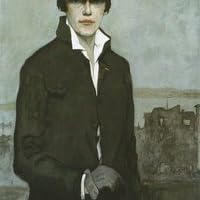
For half a century, the case of Isaiah Oggins, a 1920s New York intellectual brutally murdered in 1947 on Stalin's orders, remained hidden in the secret files of the KGB and the FBI — a footnote buried in the rubble of the Cold War. Then, in 1992, it surfaced briefly, when Boris Yeltsin handed over a deeply censored dossier to the White House. The Lost Spy at last reveals the truth: Oggins was one of the first Americans to spy for the Soviets. Based on six years of international sleuthing, The Lost Spy traces Oggins's rise in beguiling detail — a brilliant Columbia University graduate sent to run a safe house in Berlin and spy on the Romanovs in Paris and the Japanese in Manchuria — and his fall: death by poisoning in a KGB laboratory. As harrowing as Darkness at Noon and as tragic as Dr. Zhivago, The Lost Spy is one of the great nonfiction detective stories of our time.
The Lost Spy: An American in Stalin's Secret Service is a far more titillating title that what's between the covers.
This is the story of Isaiah Oggins, American/Russian Jew with Communist ideals and sympathies for the plight of oppressed workers. Very little is known about him, especially after he went underground overseas to work as a Communist spy. Oggins' wife is just as interesting and much of the book revolves around her story. It also spends a large number of pages on their sickly and crippled son Robin, a stamp collector and scholar who spent 40 years of his life studying medieval falconry...40 years of his life studying medieval falconry.
Everything about Oggins is/was/is hush-hush. He was a spy prior to WWII, he was a captive during the Cold War, and when the Americans showed interest in re-Patriating him, he was seen as too valuable and possibly damaging to the Soviet cause to be released. Like any spy, his operations were kept under wraps. When the USSR fell and their vast secret files were left open to the eyes of the world, some information was garnered. Then Russia went back to its old ways, closed the doors again and much spy-craft information from the period was once again hidden from view. No doubt certain governments obtained all the necessary info, but they're certainly not going to tip their hand for the likes of some random journalist looking to write a biography.
Perhaps the material is so lacking that nobody should've bothered attempting a book on the subject. Even as scant as the available material is, it still could've been handled better in more deft hands. For instance, there's a whole lotta flash backs and flash forwards goin' on here. Some heighten the tension and suspense, while some give away the ending and spoil what little thrill this story possesses. And there really is very little...
The Lost Spy will be of interest almost solely to those who delve deeper than than average joe into the world of underground intelligence, and even they'll be hard-pressed to find this ho-hum book more than mildly satisfying.
The immense amount of research that have gone into digging up this obscure case is almost unfathomable - the author deserves a heap of credit for that alone. The story he has to tell, despite the unfortunate but understandable lack of concrete detail in some places, is a fascinating one, at least for anyone interested in spy stories.
An excellent and highly detailed piece of research. The Soviet Union devoured most of its idealistic champions and directly or indirectly destroyed the lives of millions. The story of Isaiah Oggins is one tragedy in millions. Andrew Meier has done a great job not only piecing together the life of Oggins but also the feeling of the times in which he was living together with a wealth of information about those who were living in the same times and whose lives or actions touched on the unfolding terror that became Oggins life. Highly recommended for anyone wanting to get a feeling for what it was like to grow up in unique and revolutionary times when it still seemed there was everything to live and fight for. As Stalin said "One death is a tragedy; a million is a statistic" (just need to see the media to know how right he was on this, this book opens up the tragedy of one of the statistics.
After the Great War Cy Oggins became involved in radical politics, supporting the newly formed Soviet Union. He was an intellectual; a college professor, idealistic and hopeful that the new Russian Communist government would benefit humanity. He and his wife supported the cause with no reservations. They were tapped by the Soviets to gather information surreptitiously, under assumed identities in Paris, China and wherever their handlers ordered them to go. Cy eventually separated from his family and set out alone only to disappear from view. This author tracked the story faithfully for many years, like a hound dog. Cy eventually turned up in a Siberian prison, with a body and soul barely intact and his idealism surely shattered. Alas, the worker's paradise turned out to be run by a Stalin, a ruthless killer. Oggins did not survive his odyssey. I recommend this amazing mystery, which shall remain only partially solved, with no reservations.
I give this one 3 stars for the information and the incredible research that must have gone into unfolding this true story. The delivery is a little cold and I can easily see how it will lose a reader looking for entertainment. The the narrator's voice on the audio version didn't help as it added to the dryness of the presentation.
Meier tells the story of spy Cy Oggins who was murdered by the Soviets during the Stalin regime. Oggins was an intriguing character, and the author gives a lot of detail of the communist movement in the US during the 1920s and 30s.
How often does historical non-fiction keep a reader up at night? Andrew Meier accomplishes the impossible while sharing the discovery, painstaking and tedious research, analysis, and final telling of Isaiah “Cy” Oggins relationship with the Communist Party. Ideologues, Cy and his wife Nerma joined the Communist Party in the early 20th century and, in the late twenties, became part of the Soviet underground, run by Soviet spy agencies answering to a murderous tyrant, Josef Stalin. Meier’s efforts to uncover the story with help from Cy and Nerma’s son Robin is as exciting, sometimes boring, as their life was serving in the Communist underground in Germany, France, the United States, China, Japan, and Eastern Europe. The story is wide ranging, compelling, informative, and interesting. I enjoyed reading arguments about the “top two percent,” Communist talking points from the Soviet Union, sounding similar to anti-capitalist statements made today. The Lost Spy forces us to see the deep cultural roots of Soviet, now Russian, secrecy, distrust, paranoia, and spy craft that even now guide their efforts to undermine non-Russian governments. Meier was able to take advantage of a short period of openness that shed light on a brutal regime that murdered around 20 million Soviet citizens without any just cause. Just the paranoia of one tyrant served by many sycophants and many more just wanting to survive or take a step up the ladder. And don’t forget the many citizens of democracies that joined the cause, believing in a revolutionary paradise. Their reward was betrayal by the torchbearers of the revolution they embraced. We like to think that the "independent" actions of others or ourselves have little impact on our lives, regions, governments. But they do. A story of one spy reveals the cultural roots of the FBI, the impact of espionage on an unprepared nation, and the cultural roots of the anti-communist activities taken by Congress in the fifties.
Kafka sprang to mind when I read Andrew Meier's account of Cy Oggins' arrest by Soviet secret police in 1939 and his detention in Moscow's infamous Lubyanka prison before he was sent to a labor camp in the outer reaches of the gulag. Like Josef K. in The Trial, Oggins entered a nightmarish world, certain that the authorities would explain why he was being held and that they would realize they'd made a mistake.
How did a reserved and bookish American from small-town Connecticut end up in Stalin's totalitarian hell? In the remarkable piece of detective work that is The Lost Spy, Meier traces Oggins' journey from young communist idealist to spy in Stalin's service, a path that ultimately resulted in brutal betrayal.
This is a well-researched and intelligent dive into a history that, despite it being so recent, has been largely forgotten: the world of radicals with an all-consuming faith in the Soviet Union as the savior of the working-class and the terror the Soviet state unleashed on many of those true believers.
This was a highly entertaining book with three parallel stories. That of the seduction of a young leftist American by the Soviet Union, and his eventual decision to enter its clandestine service, the story of his arrest, imprisonment in the gulag and eventual execution, and the work of the author to reconstruct the tale from a few scraps given to the US by Yeltsin as he lobbied for aid and his relationship with the son of the subject of the book. I've long been interested, and strangely sympathetic given my own politics, for the idealists who thought Communism and the Soviet Union were the wave of the future and I have long been interested in the Soviet intelligence operations of the 1920s and 1930s, they took espionage to the next level. Indeed, just as the Red Orchestra ran defence contractors in Nazi Europe, the main character of the book served, for a time and unsuccessfully, as an arms broker for Manchuko. The painstaking research by the author, as well as his narrative style, are also excellent. I highly recommend this.
The book is a compelling and haunting exploration of espionage in the heart of the Cold War. Meier's research reveals the extraordinary life of Isiah Oggins. He is an American who, for reasons both personal and ideological, entered the shadowy world of Soviet espionage. The book navigates the complex landscape of international espionage. It is an insight into the intricate web of alliances and betrayals during a time when trust was a rare commodity. Meier's work offers a detailed account of Oggins' life but also delves into the broader context of American-Soviet relations during a pivotal period. This narrative serves as a poignant reminder of the sacrifices and moral dilemmas faced by individuals who dedicated their lives to a covert and perilous cause, shedding light on a lesser-known but critical chapter in Cold War history.
A detailed and well-researched piece about the communist movement and underground supporters and all the chaos that was the first half of the 1900s. But this isn’t really a story about Isaiah Oggins. You come away still not having any idea what actually did since largely unexplored author still has to speculate despite his research. But you’ll learn plenty about Oggins’ wife and the myriad people he came into contact with over the course of his life.
Also a word of caution if you go with the audiobook: the narrator is terrible. Very dry, and does not know how to pronounce any of the non-English names or words. I can’t specifically comment on his French attempts, but the Russian was atrocious and often just flat out incorrect.
I have listened (audio book) to another book by Andrew Meier, which I did enjoy. I think I opted for this book either b/c I was on a Russia kick or a WW 2 kick. Honestly, I am glad I did listen to the book. While this particular true spy story might not be well known anymore, it did have an important impact on USSR - US relations throughout the cold war. Clearly, history is made up of people and events. This book looks at how one person shaped events and the impact of those events on history. A good read (or listen) if you're interested in either a real life spy thriller fan, history of USSR, or the cold war more generally.
One of the few books I’ve started that is so bad, I couldn’t finish it; I got through about one-third and decided I’d rather have Covid again than read another word. AM is an itinerant pedlar of worn-out myths and cliches, unimaginative at his best. He seems to be a diligent researcher, but he’s no historian. I’d never heard of Cyrus Oggins before this, and, frankly, there’s nothing I’ve read thus far that motivates me to want to know any more. The way I see it, that’s a failure of the writer rather than of his subject. A “…luminous tale that will rewrite the history of Soviet intelligence in the West” this is not. Two big Thumbs Down, one for the book, one for the author.
More about the author's research than actual stories about the spy. American lefties recruited by the Comintern in the 1930's, the husband imprisoned in Stalin's purges and ultimately killed is the bones of a fascinating story. I'm glad to have read this book, but I would love to have learned more about what Cy and Nerma actually did in Paris or the nature of the import business Cy worked in when he was sent to Manchukuo. The author did a good job with what he was able to uncover.
While the subject matter is relatively interesting, the style of writing and the jumping around through history makes it a difficult read. I walked away from it a lot as evident in my start and finish dates. I’m not sure it’s a book I would recommend.
If the title character had read Dante's Inferno while attending Columbia University, one wonders if he took note that a frozen hell is the fate of traitors.
"The Lost Spy" is about a man whose life was destined to be erased from history. Only because the Soviet secret police files were briefly, partially, opened in the early nineties when the USSR dissolved, are we able to catch a glimpse of the strange tale of Cy Oggins.
Author Meier takes a cold case approach to the highly redacted files he gathers. One admires how he tracks down and traces every piece of old evidence, witnesses, testimony, and follows new clues to untangle the tissue of lies that made up the life of a spy.
Cy Oggins, born in 1898 in Connecticut, was the American son of Russian immigrants. Cy became radicalized at Columbia University and became a Communist. He married Nerman, a tiny, street fighting Communist organizer from Manhattan's Lower East Side.
Eventually, Cy and Nerma, taking orders from the USSR, became part of the Comintern's vast spy network called the "Red Orchestra." Cy and Nerma pop up in Berlin and Paris in the years between the wars and then Cy moves on to Japanese occupied Manchuria. Ironically, they have to pose as a non-political, bourgeois couple as they operate safe houses and spy on the exiled royal Romanovs.
In the late thirties, Cy is back in Russia, arrested by his former masters, and shipped to a Siberian slave labor camp for an eight year sentence.
Nerma is now the single parent of an only child, a son named Robin, who never renounces the system that has destroyed her husband, her son, and her own life.
Son Robin is Meier's reluctant co-investigator, who supplies a box of photos and documents that help fill in the details of his lost father. I felt the most sympathy for Robin, now a retired professor, who wants to know and yet doesn't want to know the story of his parents' life.
This book is quite a morality tale about good-intentioned people who will do any deed and cross any line for the sake of a grand cause.
This was a perfect book to pick up on a whim and listen to in the car. Had I read the book it would have taken longer, but the measured narration ensured I kept going through the parts that slowed down. That's not to say I didn't enjoy it, I just wasn't captivated at all times.
At its heart, this is story of a boy discovering his father's secret life and coming to terms both with the choice he made and the ramifications thereof. When taken through this lens, it is a heartbreaking tale made all the more so because it's true. Objectively it's also a look at a time, a movement, and an age that isn't so long past as to be irrelevant but still close enough to carry some baggage.
Throughout the book, I enjoyed the peek it afforded to me of a clandestine life in all it's inglorious reality. Oftentimes the shadow world is portrayed though the lens of Bond figures and treat lightly the anxieties, fears, and costs it imposes on its practitioners. Given the timing of events, it was also an interesting read on the political climate before the Soviet reds became the Reds and while the world was still coming to grips with Stalin.
I'm sure there's an audience which would enjoy this book more than I did, but I'm positive there are those who would like it less. The title is what reeled me in, the boy at the center kept me interested, and the story mostly colored between the lines up until the end. Had the whole book been as gripping as the last 30 pages I would definitely rate this higher.
Journalist Andrew Meier published a book entitled The Lost Spy: An American in Stalin’s Secret Service in 2008. I read the book on Kindle. This book is about the life and time of the American-born Isaiah ‘Cy’ Oggins, who worked in the secret service of the Soviet Union under Joseph Stalin in the United States, Europe, and Asia from 1928 until Oggins was arrested by the internal police of Stalinist Soviet Union known as the NKVD in 1939 (Meier 11). Oggins spent time in the Stalinist gulags in around the city of Norilsk in Siberia. In the summer of 1947, Oggins was executed by NKVD (271-272). Meier’s book is also a biography of Noyme Berman, known in the United States as Nerma. Nerma was the Russian American wife of Isaish ‘Cy’ Oggins (Meier 56-58). Nerma was constantly present in how her son told the story of his father’s life (Meier 19). The son of Isaish and Nerma, a retired professor of medieval studies, Robin Oggins, knew little of his parents' past, so Robin is learning the story of his parents' activities in the 1920s and 1930s along was Meier (Meier 13, 19). Meier’s book, The Lost Spy, is an excellent view of the life and times of Isaiah Oggins. Also, Meier provides an interesting insight into the worldview of some American communists in the early days of the Soviet Union. The book is also an interesting history of early Soviet espionage under Valdimar Lenin and Joseph Stalin.
Okay so my Russian is a little rusty and I had some trouble keeping all the 'skys and 'kovs straight, but this story was really well told and interesting. The author made it easy to understand how young revolutionaries of the 1920's could have gotten caught up in the communist movement and their ideals until it was too late to back out. They weren't selling state secrets or anything so treasonous. They just believe that capitalism (especially with current working conditions for laborers and children and with the arrival of the depression) was doomed and that communism would be the next great thing. Of course this was also before Stalin revealed his sadistic and egotistical methods and goals. The story of how it all went very wrong for not only this individual family but for many of their fellow revolutionaries was in a bit-by-bit fashion but it is presented in an engaging story. My only disappointment, although it certainly did not seem to be the author's fault, was that some (many?) Soviet records still are not available or no longer exist so not every question can be answered. Actually it is amazing how much of Cy Oggins' life could be pieced back together considering the aliases, passports, and travel involved. Maybe I can hire this guy to do my genealogy?!
The story of Cy Oggins, one of the first Soviet spies recruited in the United States. He operated before WWII, mostly in Europe, as a true (albeit misguided) believer that Communism would sweep the world, that it was truly a better and more equitable system of government, that is was truly of the people (as opposed to being run by a crazy dictator and only being concerned about power). It is at the same time the story of the communist party and Russian influence in the United States in the 1920s and 1930s. Very interesting, kind of an unknown corner of US history. Gives an insider view of Stalin that is just chilling. Also reminds us that every spy has family- parents, perhaps a wife and children, and all are impacted by the circumstances of life. Paints a nice picture of a different age, and touches in several interesting places: the Gulag during the purges, Paris in the 30s, New York City in the time of labor rioting, optimism of innocent and naive people being corrupted by Soviet Communism. Good, albeit esoteric, read.
Listened to the audiobook version, narrated by David Chandler, whose voice is an insistent Connecticut tenor and whose reading I found shouty, nasal, and full of weirdly accented words. Baritones are easier on my ear, I guess.
As for the book itself, there's a lot of early 20th century political history that the text assumes the reader knows. It's a strong biography that would have benefited from a little more historical context, especially concerning espionage and incipient Cold War operations, so as to better see where these people fit in. Also, the non-chronological structure is very confusing. Flipping back and forth in time makes it unclear why certain events happened.
Disability tag for both Oggins and his son and correct use of terms concerning mobility issues.
Also, there are several mentions of notable women working in espionage on various sides in various capacities and Meier makes an effort to give them credit where it's due.
This impeccably researched nonfiction who-, how-, and why-dunit starts with a bang: an American is picked up by the secret police in Moscow in 1938, and before you can ask yourself, "Who was he?" you're with the author, Andrew Meier, a resourceful journalist/detective, interviewing survivors and old spies. And then you're back in Moscow, in the recesses of the Lubyanka; and then you're in Connecticut, tracing the threads of the American's life... For anyone with an interest in the tortuous politics of the 1930's (and if I hadn't been fascinated by them before, my research for my own forthcoming book, HOTEL FLORIDA, would have made me so), this book is catnip. Only slightly marred by an absence of verifiable answers to some of the questions it raises (and the "might have done" connections that sometimes result from this lack), THE LOST SPY is an enthralling, narratively complex journey into the shadowy world of undercover agents in the the age of noir.
As a read, this gets three stars, but as a work of research and reporting, it gets a bonus star. The patience and doggedness that went into this book are remarkable. Meier was able to uncover a hell of lot about a man who went underground only to be disappeared by Stalin. Yet the complete story of Cy Oggins remains elusive, and his character and motivations never fully reveal themselves. Fortunately, Meier is restrained in his attempts to flesh out this nearly invisible man, mostly filling in the gaps with historical context and sketches of Oggins' comrades and contemporaries. While Meier has enough to know what happened to Oggins, he doesn't have enough to tell the whole story. That's not his fault, and he does an admirable job reconstructing a life that's been reduced to paperwork, photos, and a few childhood memories.
There is only a little common territory between this book and 'The Haunted Wood', since that novel was about U.S. citizens who were spying for the Soviets while in the U.S., here primarily the spying is on White Russians in Europe or Chinese in Manchuria (there the improbable cover for the spies is selling Fiat bombers to the Japanese puppet government).
There are a lot of brief segments that introduce more well-known historical figures who had contact with Cy Oggins, but the connection is so tenuous (or under documented) that I could easily miss it entirely if I wasn't fully paying attention to the audio.
This book was a recent selection for my book club because one of our members is related to people in the book. I enjoyed getting into the details of an era that we rarely talk about in the U.S. The protaganist is an idealist that continues to believe in the cause of communism even as his friends start to see Stalin's methods as unbearable. What perhaps was most interesting is how much we still do not know and how much is kept secret decades later. I was hungry for more detail, but I felt it was a well researched book.
Appearantly the guy was good enough at his job that he didn't leave a lot of records of himself. The author studdied the guy for six years before starting the book and I guess he didn't find much, because he kept writing that there was no record that Oggins participated in this or that historical event, but that he would have seen this or that if he did. However, all the historical description was good, and I enjoyed that. It just would have been better to have a protagonist to tie it together.
An interesting account and unraveling of the story of Cy Oggins, a first generation American, born in a mill town of Connecticut, who died in a gulag in on the barren plains in Siberia after being a spy for the Soviets. In between, his short life was fascinating and complex. The author's quest helped solve the mystery of what happened to his father for Oggin's 90+ year old son, a history professor. Well told.