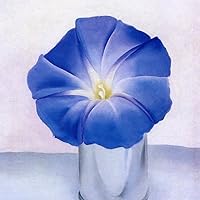
(I haven't finished this yet, but it will likely need to go back to the library before I do [I plan to buy a copy instead—plenty of cheap used copies out there!]. I've only read the first novel and part of the second, so I may revisit this review later once I've finished the entire trilogy. Still, I already know it's at least a four-star read.)
Jocelyn Brooke wrote this trilogy of semi-autobiographical novels in rapid succession following World War II, during which he served in the Royal Army Medical Corps, an experience which informs a section of the first novel, The Military Orchid. But that novel is less about war experience and more about seeking and collecting orchids—a passion which consumed Brooke since he was a child. It's a story of a sensitive outsider kid fascinated by botany—an interest that will never win a child any popularity contests—who grows into a sensitive young man still obsessed with flowers. A lot of Brooke's experiences with orchid hunting resonated with my own experiences as a birder. For example, the phenomenon of a nemesis flower (or bird) suddenly becoming ubiquitous once you've finally experienced an initial sighting. There was a lot of crossover like that between our respective hobbies that enriched my reading of the book.
The theme of the second novel, Mine of Serpents, is fireworks, and I haven't yet finished it. But it begins with Brooke relating the genesis and growth of his childhood interest in fireworks, an interest which I also shared as a young boy (in the state where I grew up fireworks were also illegal, making them all the more alluring). The titular Mine of Serpents is a particularly exciting firework that Brooke covets. Regrettably for Brooke, the First World War interfered with his ability to access these explosive treats, so he had to wait until after the war to have the most fun. But if that's a primary complaint of your wartime experience, then I'd say you're not doing too badly.
Brooke has said the autobiographical element of his writing is strongest in his recollections of childhood. There is a warm nostalgia to these passages that never grows too florid, tempered as it is by Brooke's occasional witty and wry observations and asides. As to style, Brooke makes no secret of his appreciation for Proust and this certainly shows, at least in spirit. There are also echoes of Denton Welch, and in fact, Brooke edited the original first edition of Welch's journals. I think anyone who has enjoyed Welch's writing would likely appreciate Brooke, who was a prolific though now underread writer.
Jocelyn Brooke, was an often cited 'unjustly neglected author' (Anthony Powell), who lived 1908-1966. At the time of his death, none of his work remained in print, which seems both sad and deeply unjust, as his writing is affectingly nostalgic and touching. This trilogy comprises three separate but loosely linked and multi-tiered volumes of literary memoir and a sensitive and often subtly funny account of childhood and adolescence.
The three volumes: The Military Orchid, A Mine of Serpents and The Goose Cathedral, explore the rural idyll of Brooke's First World War childhood on the Kent coast, his miserable experience at prep school and unexpected happiness at the eccentric Bedales School, through his undistinguished Oxford days to the surprising satisfaction of his army years in Italy. The memories are non-chronological but are woven into one another often through his lifelong twin obsessions with botany and fireworks. All of the author's painfully sensitive male consciousness is embedded in this sustaining continuum, and reveals how his life was enriched and fulfilled not through outward success but by the comfortable acceptance of his worldly limitations and his dedication to the pursuit of these passions.
This trilogy of novels is so enjoyable and beautifully written; a both poignant and witty literary collage of powerful memories. How grateful Jocelyn Brooke's readers will be for the revival of this unassuming masterpiece in the 1980s!
Tedious! There is a handful of compelling episodes, but they are very few and far between. Brooke is trying his best to be Proust, and he's just not. Book 3 was particularly rough, because it does not even have the nature writing of the first book. So I liked 0/2 books discussed in The Library of the Lost: In Search of Forgotten Authors (and "The Library of the Lost" was also pretty bad). Dismal! No more Dobson recommendations for me!