What do you think?
Rate this book


An inventive reimagining of the story of Jason and the Argonauts, this novel by renowned poet and classicist Robert Graves brings heroic figures of Hellenistic myth to life. Graves’ Jason is belligerent, energetic, and full of life, and the society Graves builds for him is outlandish and deeply invested in ancient cults.
Against this primitive, religious backdrop, the charismatic Jason assembles a crew and sets out to retrieve the sacred gold-trimmed fleece that is sacred to Zeus, and that has been stolen by worshippers of the Triple Goddess. Accompanying him is Hercules, a brave warrior known more for his brawn, and his astonishingly good luck, than his brains. Robert Graves builds a compelling world that sets Hellenistic magic and mystery in a surprisingly gritty, realistic setting, a fascinating read for fans of Greek mythology.
ABOUT THE AUTHORRobert Graves (1895-1985) was an English novelist, poet, and translator of Classical Greek and Roman literature, and one of the most prominent English writers of the 20th century. He was an extremely prolific writer, who published more than 140 novels and collections of poetry. In addition to novels and poetry, he published groundbreaking analysis of Greek mythology, as well as memoir. Graves is best known for his historical novels, which include I, Claudius, Claudius, the God, The Golden Fleece, King Jesus, and Count Belisarius.
Robert Graves served in combat in World War I and was gravely wounded at the Battle of the Somme. Following his recovery, he wrote several works of war poetry as well as a memoir of his time in combat, entitled Goodbye to All That. In 1934, Robert Graves was awarded the James Tait Black Memorial Prize for his historical novels dealing with the Roman Emperor Claudius.
389 pages, Kindle Edition
First published January 1, 1944

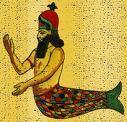
 Did I know that Poseidon was originally god of the forest? It does knell a distant bell.
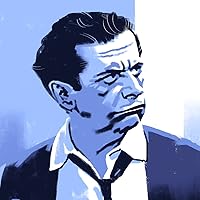
 I am not a fan of Carl Milles's Swedish Poseidon, he made the face trollish...
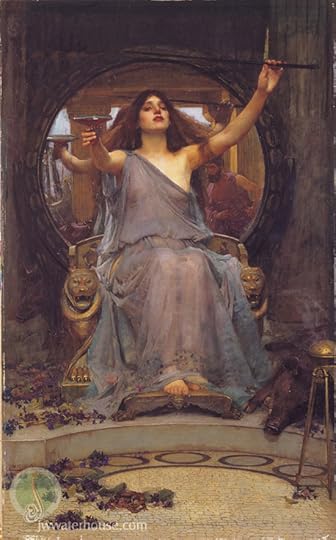 John William Waterhouse: Circe Offering the Cup to Ulysses - 1891
Minions Here
Minions There
Minions, Minions
Everywhere
Graves's version of The Golden Fleece is not a Disney-esque production, it is for those who crave a deeper rendition with ALL the relevant facts (and some of them not so relevant but fun all the same!) thrown in. It is Good to revisit the classics now and again.Then [Hercules] marched against Neleus, the baleful brother of Pelias, who lived at Sandy Pylos and had sent troops to the help of Augeas; he killed Neleus and all his sons, except the boy Nestor (who lived to take part in the siege of Troy), and did not even hesitate to attack the Priest of Hades, who entered the battle disguised as a skeleton in the hope of striking a superstitious dread in his heart. Hades had been the enemy of Hercules ever since Hercules had robbed him of Alcestis, the wife of Admetus; but Hercules, undismayed, threw the jaw-bone of a sow at him and wounded him in the side. In this battle fell the Argonaut Periclymenus… (437)But for all that, the book is engaging, and the fate of Jason (which strikes me as a prototype for that of Meriwether Lewis) is illustrated very symbolically, in a way I’m not likely to forget.