

What do you think?
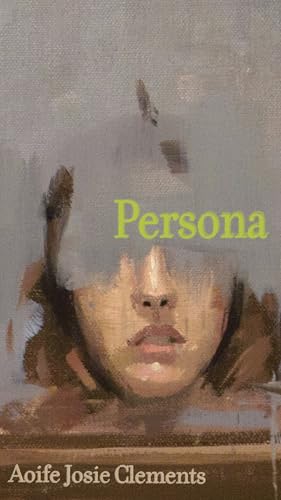
Persona
A feral shut-in discovers a disturbing internet porn video of what seems to be herself. A seance of coked-up artists summons unearthly forces in a studio apartment. The staircase of an exurban marketing company descends endlessly beneath the earth.
In Aoife Josie Clements’ electric, nightmarish, intricately layered novel, the impossibility of goodness crowds in upon two young trans women barely surviving on sex work and zero-hours contracts. Below the familiar evils of capitalism and the bottomless depths of internet culture, a darker horror awaits. What curse follows these women? What are they escaping? What are they running towards?
In Aoife Josie Clements’ electric, nightmarish, intricately layered novel, the impossibility of goodness crowds in upon two young trans women barely surviving on sex work and zero-hours contracts. Below the familiar evils of capitalism and the bottomless depths of internet culture, a darker horror awaits. What curse follows these women? What are they escaping? What are they running towards?
257 pages, Paperback
First published January 27, 2026
Ratings & Reviews
Friends & Following
Create a free account to discover what your friends think of this book!
Community Reviews
Displaying 1 - 30 of 173 reviews

April 1, 2026
This is a queer horror novel by a trans author with two trans protagonists published by a small press run by trans women - I came to support the cause (#protectthedolls), and stayed for the innovative potential of this actually spooky text. In the first part, we meet Annie, a trans women who hardly leaves her messy apartment and survives on filling out surveys for Chariot, a mysterious company. By disappearing in her own four walls, Annie hopes to escape the dangers of the outside world - but then, she finds an online porn video that seems to feature herself, although she has no recollection of participating in it. Is her sleepwalking to blame? The wine? The pills? Her mental state?
Enter Amy, the main protagonist of part 2. She is a trans woman who works as a cam girl and a helpline operator for, you guessed it, Chariot. While she has friends and a social life, she feels haunted by a ghostly alternate life - and when she encounters a man who is convinced she is someone else, she knows he can lead her to her doppelgaenger. The two women navigate a world of precarious income sources, sexual violence and degradation, discrimination and disposibility, while trying to investigate questions of identity under capitalism and heteronormative patriarchy ("the default persona", which points to everyone being held to a certain standard).
So yes, there are some issues I could now complain about, like the lengthy descriptive passages, the shaky pacing, and the overkill of ideas that aren't all fully developed. But hey: This is a horror novel that is actually surprising and horrifying, talking about trauma in disturbing and thus effective ways. The doppelgaenger motif also plays out unexpectedly, as it is employed to include ideas about self-hatred and fear, showing the oscillation between two parts that form a whole and the aim to remove oneself from psychological aspects that are uncomfortable, aspects that reside within one's own mind.
So this is fresh, challenging horror writing, and I applaud that.
Enter Amy, the main protagonist of part 2. She is a trans woman who works as a cam girl and a helpline operator for, you guessed it, Chariot. While she has friends and a social life, she feels haunted by a ghostly alternate life - and when she encounters a man who is convinced she is someone else, she knows he can lead her to her doppelgaenger. The two women navigate a world of precarious income sources, sexual violence and degradation, discrimination and disposibility, while trying to investigate questions of identity under capitalism and heteronormative patriarchy ("the default persona", which points to everyone being held to a certain standard).
So yes, there are some issues I could now complain about, like the lengthy descriptive passages, the shaky pacing, and the overkill of ideas that aren't all fully developed. But hey: This is a horror novel that is actually surprising and horrifying, talking about trauma in disturbing and thus effective ways. The doppelgaenger motif also plays out unexpectedly, as it is employed to include ideas about self-hatred and fear, showing the oscillation between two parts that form a whole and the aim to remove oneself from psychological aspects that are uncomfortable, aspects that reside within one's own mind.
So this is fresh, challenging horror writing, and I applaud that.

Review of advance copy received from Author
A new high water mark for literary horror, influenced by everything from Ingmar Bergman to Neon Genesis Evangelion and alive with the crawling menace of late capitalist anxieties. Clements' prose is clean and sophisticated, and her willingness to leave the reader alone with their fears and uncertainties cements this as an instant classic.

October 7, 2025
Review in the December 2025 issue of Booklist and on the blog: https://raforall.blogspot.com/2025/12...
Three Words That Describe This Book: disorienting, doppelgänger, nightmarish
More words-- thought provoking, hard truths, immersive terror, SF horror
Impressive Debut-- I am excited to see what else this author can do. The storylines of first Annie and then Amy-- telling the same story in part 1 and 2 but from Annie and then Amy's perspective was an awesome narrative choice. And then part 3, they come together-- it is so disorienting both because their names are similar and they look the same and they are in conversation back and forth..... what a great example of the writing itself adding to the readers disorientation. It ratchets up the unease and makes the entire story better.
And then they go on a road trip together to visit the company they have found out they both work for and.....it goes from disorienting to nightmarish and quite honestly existentially terrifying. This is when the book goes from a good horror story about 2 trans women who find out they look exactly the same and have mirror image apartments to a universally terrifying story.
It stays realistic even as it gets more nightmarish and delves into a bit of SF horror. So many stairs. I don't want to go into a stairwell anytime soon. Seriously.
The entire metaphor the doppelgänger as what it feels like to live as a transperson is not new-- the life before and after- but what Clements does with it is unique and new. Also, being trans in and of itself has nothing to do with the horror. It is just who these two women are. The horror is much much much bigger than them and their lives. I loved that as well.
The book is a horror story that critics late stage capitalism, especially how hard it hits young workers, the horror of lives rules by the internet, and how easy and horrific it is for women on the fringes of society to turn to sex work for money. Loneliness, depression, suicide are all here. Garbage piling up and lots of bugs as well. But the garbage and bugs are there to set the stage. They are not the horror.
This book is a solid 4.5. Like a lot of excellent debuts, it needed a bit more at the end. I loved that the ending was not tidy and that all the problems were not solved. But it needed just a bit stronger of a statement about the SF esque horror parts. Something to bring the terror out of the book. The last pages try to do that but I think it could have been more effective and stronger (I am trying very hard to not give anything away). If that final page was a little more direct and less detached (to mirror the directness and immersive present of the rest of the book) it would have been 5 stars for sure.
Overall-- a strong debut that will linger with readers long after turning the final page, every time they log into an internet chat room or even (as I said before) started walking down a long stairwell. *shivers*
Readalikes: There are many ways this book could lead readers to another title. Blake Crouch is an excellent readalike here. The Last to Leave the Room by Caitlin Starling, Coup de Grace by Sofia Ajram, and Tell Me I'm Worthless by Allison Rumfitt
Three Words That Describe This Book: disorienting, doppelgänger, nightmarish
More words-- thought provoking, hard truths, immersive terror, SF horror
Impressive Debut-- I am excited to see what else this author can do. The storylines of first Annie and then Amy-- telling the same story in part 1 and 2 but from Annie and then Amy's perspective was an awesome narrative choice. And then part 3, they come together-- it is so disorienting both because their names are similar and they look the same and they are in conversation back and forth..... what a great example of the writing itself adding to the readers disorientation. It ratchets up the unease and makes the entire story better.
And then they go on a road trip together to visit the company they have found out they both work for and.....it goes from disorienting to nightmarish and quite honestly existentially terrifying. This is when the book goes from a good horror story about 2 trans women who find out they look exactly the same and have mirror image apartments to a universally terrifying story.
It stays realistic even as it gets more nightmarish and delves into a bit of SF horror. So many stairs. I don't want to go into a stairwell anytime soon. Seriously.
The entire metaphor the doppelgänger as what it feels like to live as a transperson is not new-- the life before and after- but what Clements does with it is unique and new. Also, being trans in and of itself has nothing to do with the horror. It is just who these two women are. The horror is much much much bigger than them and their lives. I loved that as well.
The book is a horror story that critics late stage capitalism, especially how hard it hits young workers, the horror of lives rules by the internet, and how easy and horrific it is for women on the fringes of society to turn to sex work for money. Loneliness, depression, suicide are all here. Garbage piling up and lots of bugs as well. But the garbage and bugs are there to set the stage. They are not the horror.
This book is a solid 4.5. Like a lot of excellent debuts, it needed a bit more at the end. I loved that the ending was not tidy and that all the problems were not solved. But it needed just a bit stronger of a statement about the SF esque horror parts. Something to bring the terror out of the book. The last pages try to do that but I think it could have been more effective and stronger (I am trying very hard to not give anything away). If that final page was a little more direct and less detached (to mirror the directness and immersive present of the rest of the book) it would have been 5 stars for sure.
Overall-- a strong debut that will linger with readers long after turning the final page, every time they log into an internet chat room or even (as I said before) started walking down a long stairwell. *shivers*
Readalikes: There are many ways this book could lead readers to another title. Blake Crouch is an excellent readalike here. The Last to Leave the Room by Caitlin Starling, Coup de Grace by Sofia Ajram, and Tell Me I'm Worthless by Allison Rumfitt

September 25, 2025
Persona has a fascinating and unsettling core idea about identity, specifically, what makes a person themselves in an era where our bodies and images exist online in ways we can’t fully control. the novel begins with amy discovering what seems to be pornographic footage of herself, with no memory of ever filming it. later, we meet annie, who tells the same story of performing in porn online and who happens to look exactly like amy. when they finally meet, the question becomes less who is copying who and more: if we can be replicated, what makes us real?
this is where the book is strongest. the philosophical horror is real, and it spirals into that uncomfortable, almost dissociative territory where the self starts to feel unstable. the horror isn’t just in the events, but also in what it makes you think about afterwards. the existential crisis is the monster.
however, here’s where the book lost me. the writing often leans into a grimy, shabby atmosphere, and while i understand this is part of the horror, i personally found it overwhelming. the air feels heavy. it’s immersive, but in a way that made me want to step back from the page instead of lean in. for me, it sometimes crossed into murkiness, where i felt myself getting lost rather than drawn deeper.
the idea resonated. the experience did not. while i absolutely appreciate what the author is doing: the questions of selfhood, identity, capitalism, and how we are consumed, i didn’t find the actual reading journey satisfying. the horror works, but not in a way that felt enjoyable. it’s a book that will stick in my thoughts, but not one i loved living inside.
-------
to-read:
certainly a reasonable and realistic fear in our modern world, i'm scared
*thank you to LittlePuss Press for the ARC*
this is where the book is strongest. the philosophical horror is real, and it spirals into that uncomfortable, almost dissociative territory where the self starts to feel unstable. the horror isn’t just in the events, but also in what it makes you think about afterwards. the existential crisis is the monster.
however, here’s where the book lost me. the writing often leans into a grimy, shabby atmosphere, and while i understand this is part of the horror, i personally found it overwhelming. the air feels heavy. it’s immersive, but in a way that made me want to step back from the page instead of lean in. for me, it sometimes crossed into murkiness, where i felt myself getting lost rather than drawn deeper.
the idea resonated. the experience did not. while i absolutely appreciate what the author is doing: the questions of selfhood, identity, capitalism, and how we are consumed, i didn’t find the actual reading journey satisfying. the horror works, but not in a way that felt enjoyable. it’s a book that will stick in my thoughts, but not one i loved living inside.
-------
to-read:
certainly a reasonable and realistic fear in our modern world, i'm scared
*thank you to LittlePuss Press for the ARC*

July 27, 2025
A chilling, enthralling novel about two trans women with an uncanny connection. Their shared destiny brings them to the depths of their own hells, and another void beckons, too. Will their rage protect them or lead them blindly into dangers unknown? Clements’ prose is subtle as she crafts an intelligent, ungovernable spiral-down-the-drain story that stuns until its bitter end.

March 19, 2026
Much to like about this book, particularly the final third, which I described as “TGirl Ginger Snaps but with doppelgängers.” That said, a star came off for the first 2/3, which held compelling ideas that got muddled somewhere along the line. The book shaped up nicely, but I think could have used more editing for clarity and purpose in the beginning.

March 26, 2026
Um, incredible!?
So many shades of horror wrapping over this story of two trans women just trying to survive in their own ways.
Well, I'm gonna have to write about this on Tuesday.
So many shades of horror wrapping over this story of two trans women just trying to survive in their own ways.
Well, I'm gonna have to write about this on Tuesday.

May 23, 2026
Idk, I feel like the plot got away from the author. It needed a thorough editing

Want to Read
July 20, 2025One of the perks of running an indie bookstore is sometimes publishers will just stop in to say hey and drop off some swag. Big thank you to LittlePuss Press for providing me with this ARC.
Honestly this sounds like the most up-my-street kind of book I've encountered in a long time. From the Consortium website:
A trans woman discovers pornography of herself she has no memory of making, only to find herself led to an unimaginably deeper evil.
"The best book I've read in years." —Gretchen Felker-Martin, author of Manhunt
"An old pain made unreal and vivid in the sputtering, intermittent, blue-lit blight of now." —Andrew F. Sullivan, author of The Marigold
A feral shut-in discovers a disturbing internet porn video of what seems to be herself. A seance of coked-up artists summons unearthly forces in a studio apartment. The staircase of an exurban marketing company descends endlessly beneath the earth.
In Aoife Josie Clements’ electric, nightmarish, intricately layered novel, the impossibility of goodness crowds in upon two young trans women barely surviving on sex work and zero-hours contracts. Below the familiar evils of capitalism and the bottomless depths of internet culture, a darker horror awaits. What curse follows these women? What are they escaping? What are they running towards?
Honestly this sounds like the most up-my-street kind of book I've encountered in a long time. From the Consortium website:
A trans woman discovers pornography of herself she has no memory of making, only to find herself led to an unimaginably deeper evil.
"The best book I've read in years." —Gretchen Felker-Martin, author of Manhunt
"An old pain made unreal and vivid in the sputtering, intermittent, blue-lit blight of now." —Andrew F. Sullivan, author of The Marigold
A feral shut-in discovers a disturbing internet porn video of what seems to be herself. A seance of coked-up artists summons unearthly forces in a studio apartment. The staircase of an exurban marketing company descends endlessly beneath the earth.
In Aoife Josie Clements’ electric, nightmarish, intricately layered novel, the impossibility of goodness crowds in upon two young trans women barely surviving on sex work and zero-hours contracts. Below the familiar evils of capitalism and the bottomless depths of internet culture, a darker horror awaits. What curse follows these women? What are they escaping? What are they running towards?

May 4, 2026
4 ⭐️⭐️⭐️⭐️
WTF.
WTF.

May 9, 2026
A book that I could speak about endlessly, the blurring of reality that at the same time reinforces the existential nightmare of the everyday. A broken mind in a broken world written into a narrative that oozes with a level of raw commentary and experimental writing styles that I feel like only a gender non-conforming author would be able to write with honesty and flair. Someone who has pushed past a kind of reality that wasn't true to them to speak at the raw essence of society and identity in a way that is entirely both profound and original.

February 2, 2026
Hmm. I liked Amy’s sections better than Annie’s. Ending was interesting.

April 4, 2026
Like a Jane Schoenbrun adaptation of “Nevada” but metal.

February 3, 2026
BWAF SINISTER SELECTION
BWAF Score: 8/10
TL;DR: A filthy, funny, soul-sick spiral about a trans woman getting eaten alive by the gig economy, the internet’s Default Persona, and a company that wants your body on file, literally. It’s ambitious as hell, gross in the best ways, and weirdly tender when it counts. Read it if you like your horror smart, mean, and emotionally radioactive.
Aoife Josie Clements is a Calgary, Alberta born writer and multidisciplinary artist whose work sits at the intersection of trans survival, underground performance, and nasty little systems-horror. Alongside fiction, she makes music as Ravine Angel, a persona she’s described as emerging from open mics and noise gigs in Calgary in 2018, using that project to explore identity in increasingly explicit ways over the years, and she’s since been based in Vancouver, BC on the music side. She’s also active in trans-adjacent underground film and media circles with a role as an executive producer of the Castration Movie Anthology, and she has performed in that project as well, working alongside director Louise Weard. That collaboration extends into other public-facing work, including appearances described as co-producer/co-star in writing about Castration Movie. She additionally co-hosts a film-focused podcast (TRANS PANIC) with Weard, which fits the broader pattern here: Clements’ fiction feels like it’s coming from someone steeped in live-performance intensity, DIY media, and the exact kind of cultural sludge Persona is pissed off about.
Clements shows up swinging. Persona is a debut that reads like someone who’s been quietly sharpening knives for years and finally decided to start throwing them. It moves like an album that keeps changing genres mid-track without losing the hook. There’s the essayish cultural critique, the confessional grief-bile, the nightmare logic, the body-horror money shots. Somehow it all coheres into one big, buzzing indictment: of extraction, of shame, of the way “just survive” becomes a lifestyle until you forget you’re allowed to want more.
Here’s the anchor without spoiling the machinery. Annie is a young trans woman living in a shrinking little world, trying to make rent and stay invisible enough to not get hurt. She works for Chariot, a remote survey mill that pays pennies and asks increasingly fucked questions about war crimes and consumer preference like it’s all the same drop-down menu. Then the portal throws an error that feels like a curse: “NETWORK INSECURE. PLEASE SIGN IN FOR BODY SCAN.” Annie did this job specifically so strangers would not get access to her body, and now the job is basically saying: lol, actually, we need to look at you. What follows is a fracture. Annie’s sense of self, safety, and even basic reality starts slipping sideways, and she’s forced into contact with another version of her life and another version of herself, Amy, who is both a mirror and a warning. Together they try to figure out what Chariot actually is before it finishes whatever the hell it started.
The book weaponizes the everyday into cosmic dread. The “Default Persona” passages are nasty little sermons about online anonymity and how it becomes a mask you can’t take off, even when it’s poisoning you. And then Clements takes that social truth and makes it physical. The horror isn’t just “people are shitty online.” It’s “identity is a resource,” and somewhere a system is built to harvest it. That’s why the body scan scene hits like a panic attack. The interface is banal, the language is customer-service polite, and it keeps repeating a phrase that turns into a chant: “Reposition please.” Annie’s eyes get “thoroughly fucked,” the room fills with distortion, and the past comes up like bile. It’s sensory overload rendered with cruel precision.
Then, later, the book goes full Hell Factory. We get a vision of Chariot’s literal infrastructure: a tower surrounded by a trench of bodies, waste, heat, and recycling, with metallic arms selecting which bodies get to “go out” and which get dismantled for parts. It is revolting, hypnotic, and grimly funny in that “oh cool, capitalism is an eldritch organism” way. When the narrative starts talking about same-face boys used for labor and minerals, it’s not subtle, and thank Christ for that. Subtlety is overrated when the world is already screaming.
Persona is written like a fever diary that also has a theory degree. The prose can spool out in long, incantatory runs, then snap into clean, clinical UI language, then pivot into second-person “you” like it’s aiming a camera straight at your guilt. Clements uses repetition the way horror directors use a recurring sound cue: phrases come back slightly re-contextualized until they stop being words and start being pressure. Even the book’s design nods at unease, with a note about the fonts being “awkward” and “too loose,” hoping it left you “slightly uneasy.” Mission accomplished, you sickos.
The themes linger like cheap smoke in a hoodie. Identity here is both survival tool and commodity, constantly threatened by systems that demand you flatten yourself into something legible. Annie’s dissociation, her history of sleepwalking, her sense that she might not “exist” the way she thought she did, all of it gets expressed through horror machinery that is literally about bodies being processed, faces being standardized, and life being outsourced. The aftertaste is that lilac-green underpass light, the feeling of being watched by a screen that calls itself customer support.
Amongst transgressive queer horror, Persona feels like a big, nasty step forward: not just transgressive for shock, but transgressive because it refuses the polite lie that any of this is fine. By the time you’re watching someone sing under an overpass with a scavenged karaoke machine, half-begging, half-performing a self back into existence, you realize the book has dragged you somewhere real, and it did it with a grin and a mouth full of broken glass.
Excellent, weird, ambitious, and memorable, like getting your soul audited by a haunted HR portal and still crawling out saying, holy shit, I’m alive.
Read if you can handle body horror that is wet, industrial, and not interested in your lunch plans or you like books that mix cultural critique with nightmare logic.
Skip if you hate internet-voice essay segments and second-person accusation energy or you do not want gross-out imagery tied to sex, shame, and systems.
BWAF Score: 8/10
TL;DR: A filthy, funny, soul-sick spiral about a trans woman getting eaten alive by the gig economy, the internet’s Default Persona, and a company that wants your body on file, literally. It’s ambitious as hell, gross in the best ways, and weirdly tender when it counts. Read it if you like your horror smart, mean, and emotionally radioactive.
Aoife Josie Clements is a Calgary, Alberta born writer and multidisciplinary artist whose work sits at the intersection of trans survival, underground performance, and nasty little systems-horror. Alongside fiction, she makes music as Ravine Angel, a persona she’s described as emerging from open mics and noise gigs in Calgary in 2018, using that project to explore identity in increasingly explicit ways over the years, and she’s since been based in Vancouver, BC on the music side. She’s also active in trans-adjacent underground film and media circles with a role as an executive producer of the Castration Movie Anthology, and she has performed in that project as well, working alongside director Louise Weard. That collaboration extends into other public-facing work, including appearances described as co-producer/co-star in writing about Castration Movie. She additionally co-hosts a film-focused podcast (TRANS PANIC) with Weard, which fits the broader pattern here: Clements’ fiction feels like it’s coming from someone steeped in live-performance intensity, DIY media, and the exact kind of cultural sludge Persona is pissed off about.
Clements shows up swinging. Persona is a debut that reads like someone who’s been quietly sharpening knives for years and finally decided to start throwing them. It moves like an album that keeps changing genres mid-track without losing the hook. There’s the essayish cultural critique, the confessional grief-bile, the nightmare logic, the body-horror money shots. Somehow it all coheres into one big, buzzing indictment: of extraction, of shame, of the way “just survive” becomes a lifestyle until you forget you’re allowed to want more.
Here’s the anchor without spoiling the machinery. Annie is a young trans woman living in a shrinking little world, trying to make rent and stay invisible enough to not get hurt. She works for Chariot, a remote survey mill that pays pennies and asks increasingly fucked questions about war crimes and consumer preference like it’s all the same drop-down menu. Then the portal throws an error that feels like a curse: “NETWORK INSECURE. PLEASE SIGN IN FOR BODY SCAN.” Annie did this job specifically so strangers would not get access to her body, and now the job is basically saying: lol, actually, we need to look at you. What follows is a fracture. Annie’s sense of self, safety, and even basic reality starts slipping sideways, and she’s forced into contact with another version of her life and another version of herself, Amy, who is both a mirror and a warning. Together they try to figure out what Chariot actually is before it finishes whatever the hell it started.
The book weaponizes the everyday into cosmic dread. The “Default Persona” passages are nasty little sermons about online anonymity and how it becomes a mask you can’t take off, even when it’s poisoning you. And then Clements takes that social truth and makes it physical. The horror isn’t just “people are shitty online.” It’s “identity is a resource,” and somewhere a system is built to harvest it. That’s why the body scan scene hits like a panic attack. The interface is banal, the language is customer-service polite, and it keeps repeating a phrase that turns into a chant: “Reposition please.” Annie’s eyes get “thoroughly fucked,” the room fills with distortion, and the past comes up like bile. It’s sensory overload rendered with cruel precision.
Then, later, the book goes full Hell Factory. We get a vision of Chariot’s literal infrastructure: a tower surrounded by a trench of bodies, waste, heat, and recycling, with metallic arms selecting which bodies get to “go out” and which get dismantled for parts. It is revolting, hypnotic, and grimly funny in that “oh cool, capitalism is an eldritch organism” way. When the narrative starts talking about same-face boys used for labor and minerals, it’s not subtle, and thank Christ for that. Subtlety is overrated when the world is already screaming.
Persona is written like a fever diary that also has a theory degree. The prose can spool out in long, incantatory runs, then snap into clean, clinical UI language, then pivot into second-person “you” like it’s aiming a camera straight at your guilt. Clements uses repetition the way horror directors use a recurring sound cue: phrases come back slightly re-contextualized until they stop being words and start being pressure. Even the book’s design nods at unease, with a note about the fonts being “awkward” and “too loose,” hoping it left you “slightly uneasy.” Mission accomplished, you sickos.
The themes linger like cheap smoke in a hoodie. Identity here is both survival tool and commodity, constantly threatened by systems that demand you flatten yourself into something legible. Annie’s dissociation, her history of sleepwalking, her sense that she might not “exist” the way she thought she did, all of it gets expressed through horror machinery that is literally about bodies being processed, faces being standardized, and life being outsourced. The aftertaste is that lilac-green underpass light, the feeling of being watched by a screen that calls itself customer support.
Amongst transgressive queer horror, Persona feels like a big, nasty step forward: not just transgressive for shock, but transgressive because it refuses the polite lie that any of this is fine. By the time you’re watching someone sing under an overpass with a scavenged karaoke machine, half-begging, half-performing a self back into existence, you realize the book has dragged you somewhere real, and it did it with a grin and a mouth full of broken glass.
Excellent, weird, ambitious, and memorable, like getting your soul audited by a haunted HR portal and still crawling out saying, holy shit, I’m alive.
Read if you can handle body horror that is wet, industrial, and not interested in your lunch plans or you like books that mix cultural critique with nightmare logic.
Skip if you hate internet-voice essay segments and second-person accusation energy or you do not want gross-out imagery tied to sex, shame, and systems.

March 24, 2026
This starts with a shut-in named Annie, who spends her days answering surveys that pay very little. One day she finds an online porn video and the woman in the video looks exactly like her. She becomes obsessed with finding her doppelgänger. She goes outside at some point, bites a train conductor, and runs through the streets back to her filthy apartment. The second part in the novel follows Amy, who makes money doing online sex work and has a social life but is still mostly disconnected from her friends. She is especially awful to her friend Vivian. Amy watches the video of Annie biting the train conductor on a horror channel she likes to watch. Both parts 1 and 2 are told in first person, while part 3 is told in third person. In the third part Amy and Annie finally meet, make plans to live together, and go on a road trip. They stop to explore a company they both worked for.
I felt so uneasy while I read this book. There's a sense of dread throughout the entire novel. The way Amy and Annie's names sound so similar had me wondering if maybe one or both of them were fake, especially when they both question their lived experiences. There is also a lot of commentary about community, capitalism, the internet, misogyny, and transphobia. Readers who are fans of Alison Rumfitt and Gretchen-Felker Martin may like this book.
I felt so uneasy while I read this book. There's a sense of dread throughout the entire novel. The way Amy and Annie's names sound so similar had me wondering if maybe one or both of them were fake, especially when they both question their lived experiences. There is also a lot of commentary about community, capitalism, the internet, misogyny, and transphobia. Readers who are fans of Alison Rumfitt and Gretchen-Felker Martin may like this book.

January 11, 2026
3⭐️
Persona is a concept-driven exploration of identity, dissociation, and the performance of self in digital and physical spaces. The story itself is refreshing and takes a deep dive into personhood, gender, visibility, and fragmentation. At its best, the book is intellectually engaging and unsettling in deliberate ways.
Where the novel succeeds is in its ideas. I had really high hopes for this and about halfway through the story was meeting those expectations. But towards about 75% in, I felt disappointed.
Where it fell short for me was in execution. The narrative often felt emotionally distant, and the abstraction frequently overpowered the story itself. While I understood what the book was aiming to do, I felt like there was so much build up with not enough payoff at all.
Readers who prefer theory-forward, experimental fiction and are comfortable with discomfort and ambiguity will enjoy this, however, readers looking for emotional intimacy or narrative momentum may struggle.
Overall, Persona was okay- not the best and not the worst.
Disclosure: Thank you to Edelweiss, Little Puss Press, and the author for providing an advance copy of this book ahead of its release. This review is voluntary and reflects my honest opinion.
Persona is a concept-driven exploration of identity, dissociation, and the performance of self in digital and physical spaces. The story itself is refreshing and takes a deep dive into personhood, gender, visibility, and fragmentation. At its best, the book is intellectually engaging and unsettling in deliberate ways.
Where the novel succeeds is in its ideas. I had really high hopes for this and about halfway through the story was meeting those expectations. But towards about 75% in, I felt disappointed.
Where it fell short for me was in execution. The narrative often felt emotionally distant, and the abstraction frequently overpowered the story itself. While I understood what the book was aiming to do, I felt like there was so much build up with not enough payoff at all.
Readers who prefer theory-forward, experimental fiction and are comfortable with discomfort and ambiguity will enjoy this, however, readers looking for emotional intimacy or narrative momentum may struggle.
Overall, Persona was okay- not the best and not the worst.
Disclosure: Thank you to Edelweiss, Little Puss Press, and the author for providing an advance copy of this book ahead of its release. This review is voluntary and reflects my honest opinion.
June 28, 2026
The first part was my favorite. I was unsettled by Annie's descent into madness by her paranoia of the doppleganger and her self-imposed isolation.
And then part two started and it all just went downhill from there. The silence is suddenly thrown away by pages and pages, chapters and chapters of relentless noise. People rambling on about nothing substantial, going to karaoke and art exhibits while they talk about how shit their lives are, friend drama, boyfriend drama, an entire long-ass chapter where the author tries to shoehorn societal commentary about religion, gender, and [insert other hot modern topics], but really just makes these characters spew empty word salads at each other in a coked-up state. The mysteries of part one are explained way too easily in part two. Like, I knew Annie was going crazy from the paranoia, but part two cheapens the blow with its simplistic answers.
The end of part two is a Scooby-Doo ouija board session, and part three becomes an r/nosleep SCP reddit story. The story ends with something-something capitalism. Disappointing.
And then part two started and it all just went downhill from there. The silence is suddenly thrown away by pages and pages, chapters and chapters of relentless noise. People rambling on about nothing substantial, going to karaoke and art exhibits while they talk about how shit their lives are, friend drama, boyfriend drama, an entire long-ass chapter where the author tries to shoehorn societal commentary about religion, gender, and [insert other hot modern topics], but really just makes these characters spew empty word salads at each other in a coked-up state. The mysteries of part one are explained way too easily in part two. Like, I knew Annie was going crazy from the paranoia, but part two cheapens the blow with its simplistic answers.
The end of part two is a Scooby-Doo ouija board session, and part three becomes an r/nosleep SCP reddit story. The story ends with something-something capitalism. Disappointing.

June 1, 2026
3.5 stars, rounded up. The first 60-70% was a well-written and thought-provoking meditation on the intersection of anonymous Internet culture, social alienation, capitalism, and transness that steadily coalesces into a weird mystery, and I love weird mysteries. But then that just falls apart in the very last act, when the story abruptly switches genre, going from esoteric strangeness to a basic science fiction premise that explains everything way too neatly. I mean, I'm not good at writing endings/conclusions either, but I feel like the editor could have helped with that.

December 2, 2025
This book is split into 4 parts - part one as Annie’s POV, part two as Amy’s, part 3 together, and part 4… I struggled to get through part 1 as the imagery overwhelmed the plot for me. Part 2 brought some more plot, and I was interested in where their story would take me, but the wrap up was too fast, too confusing, and left too many unanswered questions. I wanted more about Chariot. And I wish the overarching commentary on society wasn’t so vague that I couldn’t follow.

March 5, 2026
I generally really liked this book. The writing, concept, and vibe are right up my alley. The main thing holding it back is that the last section, which is only short, felt very pointless. I didn't get anything extra out of that last section. But I really liked the rest of the book.
There were a few grammar/copying errors in my copy of the book. But it's from a small publishing house and it's a unique printing so 🤷
There were a few grammar/copying errors in my copy of the book. But it's from a small publishing house and it's a unique printing so 🤷

June 24, 2026
This felt like when you are being suffocated by everything in life, when you feel like you’re getting nowhere, and you worry that it’s all due to your own fuckups. Add in societal expectations of women and trans people, and you have a very isolating, but relatable, feeling of loneliness. I don’t know how else to explain it but stories like these scratch an itch in my brain, but also make me want to scratch myself because it seems to be gnawing on my insides. Gory, disgusting, and a good metaphor for never really fitting in..

Did Not Finish
September 11, 2026I was a firm believer of not wanting to DNF books because I see it as a challenge personally to finish a book regardless.
This one was a tough read… I made it to fifteen chapters but it was not for me. The synopsis grabbed me easily because I thought it was gonna be one of those weird books I like. This was still weird but the way this was written was not my favorite. Most of the time you have zero idea what even is going on or what happened before the thing that you’re reading that made it come to that point. I don’t know if the character is hallucinating or is this all just allegorical or actually literary happening. Don’t get me wrong I love a creative writing style but this one just boggled me and I could not handle it any longer.
So here you go my first DNF. This makes me feel relieved actually.
This one was a tough read… I made it to fifteen chapters but it was not for me. The synopsis grabbed me easily because I thought it was gonna be one of those weird books I like. This was still weird but the way this was written was not my favorite. Most of the time you have zero idea what even is going on or what happened before the thing that you’re reading that made it come to that point. I don’t know if the character is hallucinating or is this all just allegorical or actually literary happening. Don’t get me wrong I love a creative writing style but this one just boggled me and I could not handle it any longer.
So here you go my first DNF. This makes me feel relieved actually.
August 16, 2026
i love being creeped out and grossed out
January 31, 2026
When someone literally says “go fuck yourself”…
“He explained to me that while he’d never thought he’d meet someone like me, the work of keeping me together had become too much”. Ouch.
“He explained to me that while he’d never thought he’d meet someone like me, the work of keeping me together had become too much”. Ouch.
March 29, 2026
This book is a solid 4.5 but giving it a 5 because of how it made me want to go up to random people on the street, shake them and beg them to read this book.
As a horror buff, every so often I come across a book that catches me completely off guard, with themes that demand meditation, and horror that feels genuinely arresting. This is one of those books.
Deeply literary at its core, I've spent the past few days in a fugue thinking about character decisions, powerful lines, and overall what the horror aspects are telling.
Told in (mostly) three parts, the story first follows an agoraphobic 20 year old trans woman, Annie, who answers anonymous quizzes for money and spends a large part of her time on shady chat rooms. Her boyfriend just broke up with her and she deals with the fallout in complete isolation. Retreating deeper into herself Then, one evening, she discovered a porn video of what seems to be herself that completely shatters her worldview.
The second section follows a much more gregarious trans woman, Amy, who works both as an HR liaison and cams on the side. She becomes obsessed with the idea that she doesn't feel completely "whole" and soon discovers a video of someone who looks just like her in a "feral" context, making a scene at a train station. Her quest for wholeness becomes an obsession to meet this woman, while old nightmares come back to haunt her.
These first two sections were exacting, treated with excellent world building, dialogue, characterization, and plot. Then the engine loses a little steam by the third section, while still having excellent moments that ground this debut and cement its position as a 4.5 for me.
In the third section, they finally meet, and the sci-fi aspects hinted in section one take a new life, albeit in a lopsided way that begged further exploration, but overall felt satisfying enough for me.
People have mentioned how "disorienting" the book feels, which I feel largely comes from the first batch of chapters that make the reader worry about a chapter ending and not knowing where the beginning of the next chapter will start, which was an amazing technique that helped me understand Annie's worries, as if each chapter began with the anxiety she gets from sleepwalking. As more of the story is uncovered, a larger unease infects the page: the first two sections feel like they're told a little "wrong". Readers are looking for certain details as they learn more about the story, but may be confused or surprised by how they show up. I am a big fan.
Then there's the literary impulses that made this book feel like a true treasure: as most have mentioned, themes of "doppelganger" / double life were most obvious, but there are a ton more, such as the relationship that being trans has to being perceived, power and loss, dangers of men, self-destruction, trans people being really "seen" rather commodified and how modern capitalism churns out destruction of the self, community, and the world.
All of it felt so fruitful to explore, and close readings of pivotal scenes felt rewarded (e.g. Silas and Clara's philosophy rant, Vivian's last conversation with Amy, and Amy and Annie's first contact).
I especially loved the exorcism scene. No notes.
It's incredibly readable, it's a bit messy, it's fun, and it will have you staring at the wall on deep contemplation after you're done. Please read Persona.
As a horror buff, every so often I come across a book that catches me completely off guard, with themes that demand meditation, and horror that feels genuinely arresting. This is one of those books.
Deeply literary at its core, I've spent the past few days in a fugue thinking about character decisions, powerful lines, and overall what the horror aspects are telling.
Told in (mostly) three parts, the story first follows an agoraphobic 20 year old trans woman, Annie, who answers anonymous quizzes for money and spends a large part of her time on shady chat rooms. Her boyfriend just broke up with her and she deals with the fallout in complete isolation. Retreating deeper into herself Then, one evening, she discovered a porn video of what seems to be herself that completely shatters her worldview.
The second section follows a much more gregarious trans woman, Amy, who works both as an HR liaison and cams on the side. She becomes obsessed with the idea that she doesn't feel completely "whole" and soon discovers a video of someone who looks just like her in a "feral" context, making a scene at a train station. Her quest for wholeness becomes an obsession to meet this woman, while old nightmares come back to haunt her.
These first two sections were exacting, treated with excellent world building, dialogue, characterization, and plot. Then the engine loses a little steam by the third section, while still having excellent moments that ground this debut and cement its position as a 4.5 for me.
In the third section, they finally meet, and the sci-fi aspects hinted in section one take a new life, albeit in a lopsided way that begged further exploration, but overall felt satisfying enough for me.
People have mentioned how "disorienting" the book feels, which I feel largely comes from the first batch of chapters that make the reader worry about a chapter ending and not knowing where the beginning of the next chapter will start, which was an amazing technique that helped me understand Annie's worries, as if each chapter began with the anxiety she gets from sleepwalking. As more of the story is uncovered, a larger unease infects the page: the first two sections feel like they're told a little "wrong". Readers are looking for certain details as they learn more about the story, but may be confused or surprised by how they show up. I am a big fan.
Then there's the literary impulses that made this book feel like a true treasure: as most have mentioned, themes of "doppelganger" / double life were most obvious, but there are a ton more, such as the relationship that being trans has to being perceived, power and loss, dangers of men, self-destruction, trans people being really "seen" rather commodified and how modern capitalism churns out destruction of the self, community, and the world.
All of it felt so fruitful to explore, and close readings of pivotal scenes felt rewarded (e.g. Silas and Clara's philosophy rant, Vivian's last conversation with Amy, and Amy and Annie's first contact).
I especially loved the exorcism scene. No notes.
It's incredibly readable, it's a bit messy, it's fun, and it will have you staring at the wall on deep contemplation after you're done. Please read Persona.

March 31, 2026
It’s basically an f’d up version of parent trap

April 3, 2026
i actually really liked the first two parts of it, but i think both the final reveals of why they’re identical and the sudden pivot to a corporate backrooms style horror zoomed out too far from the rest of the story. the first two parts are character studies at a claustrophobic proximity and do a good job showing that annie and amy are mirror images that reflect the worst traits they try to hide, but once part three hit and they meet, it felt like the author was in a rush to get to setting up the capitalist critique with . i also think the fact that annie really ran under the radar, when i think that’s a really fascinating thing to explore. i think either there should’ve been a part between part one and two that started to set up the corporate capitalist horror more, or the book should’ve turned to talking about
April 28, 2025
Honestly, the setup here is one of those bone deep nightmares - what if one day you were minding your business and trying to survive, and you found porn of yourself online. The post capitalist hellscape here ends up becoming literal in an absolutely eerie escalation as the book goes on, and as Amy and Annie circle and eventually intersect with each other and try to figure out how this happens, there's something else waiting for them both. I actually really like that this doesn't try to say that everything's going to be ok in the end, that sometimes all that's waiting for you is a void you can choose to walk into or not, and the choosing not to might end up breaking you as well. Hell of a debut, and if she choosess to, I can't wait to see what else Ms. Clements has up her sleeve for us.

February 2, 2026
This book was out of my comfort zone but I was very intrigued. I connected a lot with Annie & Amy. Themes from their lives reflecting my own. The only gripe I have is with the description of Chariot headquarters, it was difficult for me to picture what I’m supposed to be envisioning. That is partially my fault. Overall I enjoyed this read. I love that this book was published by LittlePuss Press, an all trans woman ran publishing company. The shape of the book is slightly awkward, along with the spacing. It’s so cool how this was done intentionally and adds to the overall mood of the novel.
This entire review has been hidden because of spoilers.
April 11, 2026
this book is easy to devour but burns the whole way down, all the way through the twists and turns of gut. i entirely forgot i preordered it, so when it arrived in the mail, it showed up as an incongruous and offputting spectre from the unknown (fittingly so). it sticks in your brain like shrapnel.
Displaying 1 - 30 of 173 reviews