Jump to ratings and reviews
Rate this book

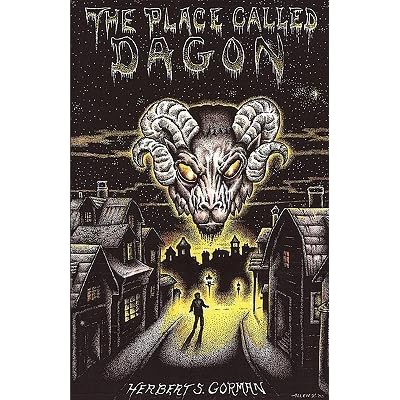
The Place Called Dagon

Rate this book
A strange romantic tale of a cult of evil descended from early witchcraft days. Mirroring an unusual element of New England society, it tells the story of a young man and girl caught in the toils of an ancient ritual. - Summary by Book Notes Illustrated, December/January 1927-1928

Audiobook

First published January 1, 1927

Loading...
Loading...

About the author

Herbert Sherman Gorman

33 books8 followers

Ratings & Reviews

What do you think?
Rate this book

Friends & Following

Create a free account to discover what your friends think of this book!

Community Reviews

5 stars
12 (14%)
4 stars
35 (43%)
3 stars
23 (28%)
2 stars
9 (11%)
1 star
2 (2%)
Displaying 1 - 21 of 21 reviews
Profile Image for Vicente Ribes.
961 reviews181 followers
April 7, 2025
Una entretenida novela lovecraftiana. Hacia siglos que tenía ganas de leerme esta novelita y la editorial críptica lo ha hecho posible a través de este libro. Se dice que esta oscura novela inspiróa a Lovecraft para escribir el horror de Dunwich y en ella aparece ya el nombre de Dagon que aparecerá posteriormente en la narrativa del maestro de Providence.
"Un lugar llamado Dagón" presenta a Daniel Dreeme, un joven médico que llega al pequeño pueblo de Marlborough, Massachusetts. Casi de inmediato descubre que hay horrores muy antiguos, casi atávicos, debajo de la superficie tranquila y apacible de la aldea. Circulan rumores inquietantes sobre la figura de Jeffrey Westcott, una especie de anticuario de misterios, cuya casona se encuentra atiborrada de grimorios. Dreeme descubrirá pronto que el pueblo está amenazado por misterios más allá de la comprensión humana.
Es una novela pre Lovecraft pero tiene todo el sabor de los clásicos del terror y un estilo bastante ágil y mnenos descriptivo que el de Lovecraft. La editorial críptica está publicando varios tesoros pero continúa siendo un secreto para la mayoría y hay que tener en cuenta que sus libros sólo suelen estar a la venta durante un mes. Sin duda una misteriosa editorial con muy buen gusto.
Profile Image for Miguel A. González.
35 reviews20 followers
April 10, 2024
Una historia clásica de brujas y pueblos perdidos en una Nueva Inglaterra encantada. Me ha parecido una combinación muy disfrutable.

Y la edición de críptica editorial un 10 de 10.
Profile Image for Heidi Ward.
348 reviews88 followers
May 4, 2012
This great little weird novel was recently rescued from obscurity by publishing house Lovecraft's Library. According to Lovecraft scholar S. T. Joshi, HPL mentions having read The Place Called Dagon in his letters (1928) and also in Supernatural Horror in Literature. Though he called it "purile" at the time, there is much academic speculation that TPCD may have influenced classics such as "The Dunwich Horror" and "Dreams in the Witch House," and perhaps fear of comparison even played a part in HPL's reluctance to release "The Case of Charles Dexter Ward." Conversely, it is almost certain Gorman had never heard of Lovecraft -- the name "Dagon" wasn't original to HPL's 1917 short story -- and just happened to stray into the weird for this one novel. (Gorman wrote several, though he is now mostly forgotten).

Despite its anomalous state, TPCD actually sits quite proudly in the weird tradition, somewhere between Blackwood and Lovecraft: in some ways it recalls Blackwood's classic tale "Ancient Sorceries," but instead of time-haunted Europe, is set instead in HPL's eldritch and inbred New England.

(Mild spoilers follow.)

Gorman's hero, a young doctor who has assumed a practice in an out-of-the-way Massachusetts valley, soon begins to suspect ancient and evil secrets persist beneath the hard, practical veneer of the town of Marlborough. Lo and behold, it seems the locals are in fact descended from survivors of the Salem witch-cult, and strange rites are being resurrected in the dark woods. The cast contains some pretty stock weird figures, including an arrogant arcane scholar, his disturbingly alluring wife, and a dour and malevolent preacher. Sometimes assisting the determined doctor in his search for the truth: Marlborough's now housebound former doctor -- a reticent (and mildly alcoholic) adviser on town matters; a beautiful and friendless orphan ingenue; and a stolid local farmer who is both kinder and cannier than he appears.

It's Gorman's rather modern writing which prevents TPCD from being "just" another forgettable pulp horror novel -- certainly, he's less long-winded than Blackwood and less purple than Lovecraft. His lyrical descriptions of atmosphere and landscape and keen insights into human motivation keep the tale interesting, and his candid take on female sexuality seems quite progressive for 1927. TPCD is a quick and enjoyable read, and deserving of being resurrected into the pantheon of the good weird. Four solid stars.

Profile Image for William Oarlock.
52 reviews2 followers
January 15, 2026
Atmospheric and sinister witchcraft/proto-folk horror and a favourite/influence on Lovecraft.

Had a fun time seeing this as a James Whale film with Melvyn Douglas as Dr. Daniel Dreeme, Gloria Stuart as Deborah Morton, Boris Karloff and Elsa Lanchester as Jeffrey and Martha Westcott with Ernest Thesiger as Rev. Burroughs (sardonically humming 'Rock of Ages'), Claude Rains as Walden Slater and of course Charles Laughton as Dr. Humphrey Lathrop.
Profile Image for Keith.
1,113 reviews14 followers
October 9, 2022


I read The Place Called Dagon because it is featured in The Literature of Lovecraft, Vol. 1 . This is a collection of strange stories that were admired by H.P. Lovecraft. In his literary essay Supernatural Horror in Literature, HPL wrote:
A less subtle and well-balanced but nevertheless highly effective creation is Herbert S. Gorman’s novel, The Place Called Dagon, which relates the dark history of a western Massachusetts backwater where the descendants of refugees from the Salem witchcraft still keep alive the morbid and degenerate horrors of the Black Sabbat.

I was impressed by The Place Called Dagon. Gorman takes his time setting up the sense of the small town of Marlborough and it’s unusual denizens before putting the plot into high gear. The New England region of the United States is filled with folklore, dark history, and taciturn people, and Gorman does an excellent job of building this into the atmosphere of the story.

Title: The Place Called Dagon
Author: Herbert S. Gorman
Dates: 1927
Genre: Fiction - Novel, Horror
Page count: 188 pages
Date(s) read: 10/8/22-10/9/22
Reading journal entry #278 in 2022

Link to the story: https://www.hippocampuspress.com/love...
Link to Lovecraft’s essay: https://www.hplovecraft.com/writings/...

Sources:
Lovecraft, H. P., & Joshi, S. T. (2012). The annotated supernatural horror in literature (second edition). Hippocampus Press. https://www.hplovecraft.com/writings/... (Original work published 1927)

Gorman, H.S. (2021). The place called Dagon In H.P. Lovecraft Historical Society (Ed.), The literature of Lovecraft, vol. 1.. (S. Branney, Narr.; A. Leman, Narr.) [Audiobook]. HPLHS. https://www.hplhs.org/lol.php (Original work published 1927)

Link to the image: https://www.goodreads.com/book/show/7...

The contents of The Literature of Lovecraft, Vol. 1 are:
"The Adventure of the German Student" by Washington Irving
"The Avenger of Perdóndaris" by Lord Dunsany
"The Bad Lands" by John Metcalfe
"The Black Stone" by Robert E. Howard
The Boats of the "Glen Carrig" by William Hope Hodgson
"Count Magnus" by M.R. James
"The Dead Valley" by Ralph Adams Cram
"The Death Mask" by Henrietta Everett
"The Fall of the House of Usher" by Edgar Allan Poe
"The Ghost of Fear" by H.G. Wells (also called “The Red Room”)
"The Ghostly Kiss" by Lafcadio Hearn
"The Horla" by Guy de Maupassant
"The House and the Brain" by Edward Bulwer-Lytton
"The House of Sounds" by Matthew Phipps Shiel
"Idle Days on the Yann" by Lord Dunsany
"Lot #249" by Arthur Conan Doyle
"The Man-Wolf" by Erckmann-Chatrian
"The Middle Toe of the Right Foot" by Ambrose Bierce
"The Minister's Black Veil" by Nathaniel Hawthorne
"The Monkey's Paw" by W.W. Jacobs
"One of Cleopatra's Nights" by Théophile Gautier
"The Phantom Rickshaw" by Rudyard Kipling
The Place Called Dagon by Herbert Gorman
"Seaton's Aunt" by Walter de la Mare
"The Shadows on the Wall" by Mary E. Wilkins
"A Shop in Go-By Street" by Lord Dunsany
"The Signal-Man" by Charles Dickens
"Skule Skerry" by John Buchan
"The Spider" by Hanns Heinz Ewers
"The Story of a Panic" by E.M. Forster
"The Strange Case of Dr. Jekyll and Mr. Hyde" by Robert Louis Stevenson
"The Tale of Satampra Zeiros" by Clark Ashton Smith
"The Tapestried Chamber" by Sir Walter Scott
"The Upper Berth" by F. Marion Crawford
"The Vampyre" by John Polidori
"The Venus of Ille" by Prosper Mérimée
"The Were Wolf" by Clemence Housman
"What Was It?" by Fitz-James O'Brien
"The White People" by Arthur Machen
"The White Wolf of the Hartz Mountains" by Frederick Marryat
"The Willows" by Algernon Blackwood
"The Yellow Sign" by Robert W. Chambers
"The Yellow Wallpaper" by Charlotte Perkins Gilman

Here is a list of the stories in the order in which they were written, with links to my reviews of them:
The Vampyre (1819) by John William Polidori
The Adventure of the German Student (1824) by Washington Irving
The Tapestried Chamber (1828) by Walter Scott
The Minister's Black Veil (1836) by Nathaniel Hawthorne
The Venus of Ille (1837) by by Prosper Mérimée
The White Wolf of the Hartz Mountains (1839) by Frederick Marryat
The Fall of the House of Usher (1839) by Edgar Allan Poe
What Was It? (1859) by by Fitz-James O'Brien
The House and the Brain (1859) by Edward Bulwer-Lytton
The Signal-Man (1866) by Charles Dickens
The Man-Wolf by Erckmann-Chatrian
The Ghostly Kiss (1880) by Lafcadio Hearn
One of Cleopatra's Nights (1882) by by Théophile Gautier
The Upper Berth (1886) by F. Marion Crawford
The Strange Case of Dr. Jekyll and Mr. Hyde (1886) by Robert Louis Stevenson
The Horla (1887) by Guy de Maupassant
The Phantom Rickshaw (1888) by Rudyard Kipling
”The Middle Toe of the Right Foot” (1891) by Ambrose Bierce
Lot #249 (1892) by Arthur Conan Doyle
The Yellow Wallpaper (1892) by Charlotte Perkins Gilman
The Ghost of Fear (1894) by H.G. Wells- also called The Red Room
The Yellow Sign (1895) by Robert W. Chambers
The Dead Valley (1895) by Ralph Adams Cram
The Were-Wolf (1896) by Clemence Housman
The Monkey's Paw (1902) by W.W. Jacobs
The Shadows on the Wall (1903) by Mary E. Wilkins
Count Magnus (1904) by M.R. James
The White People (1904) by Arthur Machen
The Willows (1907) by Algernon Blackwood
The Boats of the "Glen Carrig" (1907) by William Hope Hodgson
Idle Days on the Yann (1910) by Lord Dunsany
The Story of a Panic (1911) by E.M. Forster
The House of Sounds (1911) by Matthew Phipps Shiel
A Shop in Go-By Street (1912) by Lord Dunsany
The Avenger of Perdóndaris (1912) by Lord Dunsany
sThe Spider (1915) by Hanns Heinz Ewer
The Death Mask (1920) by H.D. Everett
The Bad Lands (1920) by John Metcalfe
Seaton's Aunt (1922) by Walter de la Mare
The Place Called Dagon (1927)
Skule Skerry (1928)
The Tale of Satampra Zeiros (1929)
The Black Stone (1931)
Profile Image for Ευθυμία Δεσποτάκη.
Author 31 books240 followers
June 24, 2025
~ Ένα βιβλίο με τίτλο που τραβάει το βλέμμα του μέσου εραστή της μυθολογίας Κθούλου

~ Αναφέρεται από τον ίδιο τον H.P. Lovecraft στον Υπερφυσικός τρόμος στη λογοτεχνία σαν μια καλοφτιαγμένη ιστορία τρόμου. Λογικά τον επηρέασε σε βαθμό που αν έχεις διαβάσει H.P.L. μια-δυο-τρεις-δεκατέσσερις φορές όπως εγώ, ξέρεις να πεις και πού φαίνεται η επιρροή αυτή (πχ, στην δημιουργία του Όμπεντ Μαρς ή του Γουίλμπουρ Γουέιτλι)

~ Πλοτ τουίστ, μπορεί να γράφτηκε το 1927 αλλά η σεξουαλική ένταση κόβεται με το μαχαίρι - κάτι μου λέει πως ο H.P.L. κάποιες σελίδες τις διάβασε πιο βιαστικά από τις υπόλοιπες... :P

~ Αργό, ναι, μπαρόκ, ναι, φλύαρο, ναι, κάπου διάβασα μια κριτική που έλεγε πως θα μπορούσε να πει τα ίδια πράγματα ακριβώς με το ένα τρίτο των λέξεων... κι ωστόσο η ατμόσφαιρα που χτίζουν όλες αυτές οι φλυαρίες είναι ό,τι πρέπει για τον λάτρη του κοσμικού τρόμου.

~ Unsettling fan fact: ο συγγραφέας, ο οποίος είναι γνωστός βιογράφος του James Joyce δεν έχει καν σελίδα στην αγγλόφωνη wikipedia. Μόνο στη σουηδική. Γύρευε γιατί. https://sv.wikipedia.org/wiki/Herbert...

~ Όποιος ενδιαφέρεται για το κείμενο, είναι ελεύθερο δικαιωμάτων και υπάρχει σε audiobook στο κανάλι Gates of Imagination στο youtube. Η αφήγηση είναι ένα τσικ πιο αργή απ' ό,τι θα 'θελα αλλά αξίζει τον κόπο (not AI generated, φυσικά).

~ Η απόλυτη αλήθεια είναι πως δεν θα το πρότεινα σε όλους, μόνο σε καλοψημένους κθουλιανούς (ου μην αλλά και εντελώς καμένους) γιατί, ε, κάτι η ηλικία, κάτι η αμερικανίλα, κάτι η λογοδιάρροια, κάτι που το μέρος το λένε Μάρλμπορο (τύπου "εσένα και το Μάρλμπορο να κόψω δεν μπορώ"), κάπου γίνεται γραφικό.
Profile Image for Boris Cesnik.
292 reviews3 followers
September 7, 2018
Dull and spiritless. It's a poorly written novel that would have worked better in a much thinner form as short story. There is no action, suspense or thrill. The quick events are so un-realistic and not believable that you need to read them again just to have an idea of what, how and why they happened.
The longer passages are just too pointless and serve no purpose.
The most interesting characters are dead on paper without any scope for rising up on the surface.
Herbert might have had something to tell about the witch hunting tradition in the region but it would have benefited the story to be narrated as a docu-essay rather than fiction.
Boring at the first degree.
Profile Image for Zoltán Szabó.
61 reviews
August 18, 2020
I started reading without knowing exactly what to expect from it, and found it to be a rather excellent early horror novel, the effects of which could be felt from Lovecraft's prose to basically any horror stories/movies which centerns on a small, isolated community full of dark, malevolent secrets.

-----------------------------------------------------------------------

Nem igazán tudtam, hogy mit várhatok tőle, de összességében egy egészen kiváló korai rémtörténetnek bizonyult, melynek hatása azóta is érezhető Lovecraften túl minden olyan horrortörténeten, amely kisebb, zárkózott közösségek köré építi a borzalmat.
591 reviews1 follower
November 27, 2024
2.5 stars, but I don't want recommendations for pulp. A bit slow moving, and has a lot of "protagonist listens while someone explaisn family history to him". Its mostly interesting as one of Lovecraft's influences - you can definitely see it echoed in stories like The Dreams in the Witch House, and others which refer to New England witches.
Profile Image for Sol.
740 reviews39 followers
Want to Read
November 11, 2024
"A less subtle and well-balanced but nevertheless highly effective creation is Herbert S. Gorman's novel, The Place Called Dagon, which relates the dark history of a western Massachusetts backwater where the descendants of refugees from the Salem witchcraft still keep alive the morbid and degenerate horrors of the Black Sabbat." -HPL, Supernatural Horror in Literature
Profile Image for Dylan Rock.
714 reviews8 followers
September 14, 2019
A excellent lost gem of cosmic horror with some occult leaning. A definite influence on the works of H.P Lovecraft such as The Dunwich Horror, The Shadow Over Innsmouth and Dreams in the Witch House just to name a few.
Profile Image for Jörg.
570 reviews3 followers
May 14, 2023
Sehr spannende Geschichte, für H. P. Lovecraft Fans ein Muss :-)
Profile Image for Roger O.
698 reviews7 followers
September 14, 2025
I would have ranked this higher because the story itself is some proto-lovecraftian fun, but there's a lot of antiquated xenophobia and racist language in here.
Profile Image for Sean O'Hara.
Author 26 books100 followers
June 6, 2010
H.P. Lovecraft's long essay "Supernatural Horror in Fiction" is a veritable treasure map for fans of 19th and early 20th Century tales of the macabre -- just about every author of significance, at least in English and French, with a few Germans tossed in, receives a cursory assessment from Lovecraft. As such, the essay makes a superb reading list for those interested in classic horror stories. There's just one problem -- many of the works are obscure and long out of print, leaving weird tale fans to hunt through used book stores and search through anthologies for stories that received just a single, intriguing sentence from Lovecraft. One such book is Herbert Gorman's A Place Called Dagon, which Lovecraft described as the story of an isolated, New England village populated by the descendents of escaped Salem witches. As S.T. Joshi comments in the afterword of the recent Hippocampus Press edition of the novel, "I am sure I am not the only person to have been intrigued when, many years ago, I first read H.P. Lovecrafts comments in Supernatural Horror in Fiction" about" it. No, indeed. With the title recalling Lovecraft's own story, "Dagon" and the plotline that seems straight out of several later tales, such as "The Dreams in the Witch House" and "The Strange Case of Charles Dexter Ward," no Lovecraft aficionado could resist seeking out the book.

But does the book live up to the expectations? Sadly, no. There is some Lovecraftian talk of Old Gods, but in the main the story is pure gothic, filled with familiar tropes -- the handsome young hero who is tempted by a femme fatale -- indeed, femme diabolique -- while his lady love (whom he's known less than two days) is held by an evil warlock who threatens to ravish her and sacrifice her to the devil (not necessarily in that order, of course). Anyone familiar with gothic fiction can easily point to a dozen similar plotlines, from the novels of Radcliff and "Monk" Lewis, all the way to the films of Bava and Corman, with a heavy dash of Nathaniel Hawthorne thrown in. Indeed, one can easily imagine how an American International Pictures version would be cast -- Boris Karloff, having difficulty moving about in his old age, would naturally get the part of the elderly Dr. Lathrop, while Vincent Price would, of course, play the evil Jeffrey Westcott, with Barbara Steel as his philosophically vampy wife. The hero and heroine, as per usual, wouldn't need to be played by anyone special -- probably Mark Damon as young Dr. Dreeme, and a beach-blanket bimbo from the AIP stable for the docile love-interest, who, after all, just needs to look hot but virginal while being menaced.

Yes, the novel is extremely formulaic and derivative, including one chapter where Gorman seems to've rewritten "Young Goodman Brown," changing just enough to fit it into his plot.

Then there's the insane repetition of the title in the last thirty pages.

"What is the place called Dagon?"

"The place called Dagon is where they perform their satanic rituals."

"Where is the place called Dagon?"

"The place called Dagon is in the swamp."

"Let us go to the place called Dagon."

"We shall go to the place called Dagon."

And they went to the place called Dagon. Then they reached the place called Dagon. And the satanists were at the place called Dagon, performing their satanic ceremonies in the place called Dagon.

Worse yet, the hero, Dr. Dreeme, is completely ineffectual -- and not like Indiana Jones, who, though Hitler could never've controlled the Ark, at least killed a bunch of Nazis on the way. No, Dreeme doesn't accomplish anything except winning the affections of the ridiculously insipid heroine. When the climax comes, his neighbor, who's had about five lines in the entire book, shows up with a gun and takes care of business all by himself, with Dreeme left to just drag his love from the satanic sacrifice. And once he carries her five feet, the neighbor takes her and carries her the rest of the way to safety.

The book does have some nice mood setting, but that's the best I can say of it -- and really, Lovecraft and King have done better at invoking the spookiness of New England woods. Sometimes, I suppose, these books sink into obscurity for a reason.
This entire review has been hidden because of spoilers.
Profile Image for Raquel.
184 reviews2 followers
May 31, 2024
Críptica Editorial, 306 páginas.
Lo reconozco, me esperaba bastante más de este libro.
La trama pintaba bien y la edición es preciosa (tanto portada como ilustraciones),pero se ha desinflado la cosa.
Tiene bastantes errores/erratas (lo cual, habiendo correctores nunca entenderé) pero, sobretodo, la historia apenas cuenta nada. Mucha palabra para lo poco que ocurre en la historia. No es sólo que se detenga a describir mucho las cosas, pues eso siempre está bien para crear atmósfera, sino que hay mucho texto para lo poco que se dice. Por no hablar de la "relación" entre los personajes de Dreeme y Deborah... dejémoslo aparte porque es prácticamente inexistente; pasando de conocerse a no interesarse y a estar de repente enamorados. No la he entendido.
Profile Image for Rubén Lorenzo.
Author 10 books14 followers
July 18, 2025
A pesar de que por momentos es muy descriptivo y abundan los párrafos interminables, esta inquietante novela me ha entretenido de principio a fin. Tenemos uno de esos pueblos de gente huraña de Nueva Inglaterra, un estudioso de lo arcano y un secreto siniestro detrás de todo.

Parece claro que esta novela influenció a Lovecraft, pero es una obra interesante en sí misma. La ambientación y esa exageración fruto de otra época me han llegado. Es verdad que el final es más bien típico, pero lo que importa es divertirse por el camino.

Lo recomiendo para los seguidores de las historias reposadas y con un punto siniestro que no llega a ser grotesco. La edición, con ilustraciones a color, tiene la excelente calidad de siempre en Críptica Editorial.
Profile Image for Joaquin del Villar.
451 reviews7 followers
April 15, 2024
Se trata de una interesante historia protagonizada por un joven médico rural en un pueblo de Nueva Inglaterra, cerca de donde se produjeron los hechos de Salem. Interesante es la confrontación con unos extraños brujos y sus seguidores, así como la rivalidad entre los dos personajes femeninos. A mi pesar le tengo que dar la razón a Lovecraft... en una historia interesante pero narrada de forma pueril: a los personajes o a la historia le faltan dobleces o algún giro en la narración, que es presentada de forma melodramática con "buenos y malos" demasiado fácilmente identificables. La escena culminante de la novela está estupendamente ambientada.
Profile Image for Quinta23.
54 reviews2 followers
March 29, 2024
Horror rural, heredero de las brujas de Salem, con el resurgir de una secta satánica y su aquelarre en un pueblo remoto y aislado de Nueva Inglaterra.

Con un arranque en un ambiente rural y lánguido, tras el primer cuarto de libro empieza a surgir lo inquietante y altamente plausible dado lo aislado del entorno y sus antecedentes, que una vez se desata aumenta a un ritmo que no te deja parar de leer. No hay elementos sobrenaturales, pero sí mucha perversidad y maldad humana.
Profile Image for Amanda.
439 reviews
April 3, 2016
That was better than I expected. Not by much, but readable. Huge liberties taken with the setting, beyond the lovecraftian monsters. But it included beautiful descriptions comparing Marlborough to a festering corpse.
Profile Image for Allison.
139 reviews1 follower
June 5, 2015
I liked reading an obscure Lovecraftian novel before that was a thing. It might even have influenced HP. But Gorman uses twenty sentences where one would do and I started skimming paragraphs.
Displaying 1 - 21 of 21 reviews