

What do you think?
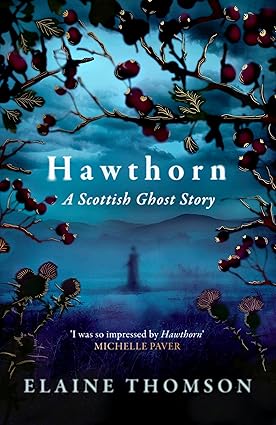
Hawthorn
Caithness, October 1871. The Ordnance Survey are charting Scotland's most remote north-easterly county, a bleak landscape of endless moorland and lonely crofts. When a strange vision leads cartographer Robert Sutherland out onto the moor, an accident leaves him inches from death. He is taken to Leask House, to recuperate under the care of Mrs Sinclair and her beautiful daughter Isabel.
At first, Robert thinks the dreadful visions that plague him at Leask House are the result of the laudanum he has been prescribed. But as events take ever stranger and more terrifying turns, Robert begins to wonder whether his presence at Leask House is really a coincidence at all.
Someone - or something - has summoned him here. And they don't intend for him to leave.
At first, Robert thinks the dreadful visions that plague him at Leask House are the result of the laudanum he has been prescribed. But as events take ever stranger and more terrifying turns, Robert begins to wonder whether his presence at Leask House is really a coincidence at all.
Someone - or something - has summoned him here. And they don't intend for him to leave.
265 pages, Kindle Edition
Published September 25, 2025
Ratings & Reviews
Friends & Following
Create a free account to discover what your friends think of this book!
Community Reviews
Displaying 1 - 30 of 68 reviews

November 18, 2025
May the Devil Take
These Wild Northern Lands...
HAWTHORN: A Scottish Ghost Story
by Elaine Thomson
4 stars. In 1861, Robert Sutherland, while incarcerated in an asylum, and knowing that he was not insane...
... was determined to write his own testimony of the events at Leask House in Wick Parrish, Caithness...
Sutherland was part of an expedition sent to map the British Isles for the Crown. Every river, bridge, tor, sheep cote, house, fence, farm, and mountain...
England and Ireland were already completed, but Scotland defied them all with its wild north places of mystery and secrets...
Secrets their instruments couldn't unmask...
One night, while sitting before the stove in their tent, one of the men saw an old woman watching them from the nearby dubh lochs...
They all had a laugh...
Mocking the man, they said it was probably that mythical old hag, the Cailleach (veiled one), one of the many local superstitions...
Samhain was a week away, and it was believed that the veil separating the living from the dead was at its thinnest...
Next morning...
While in the field, Sutherland fell into an icy bog, injured his ankle, and came down with a severe fever...
The local doctor arranged for him to stay at Leask House to convelesce...
However, rest would evade him there due to the strange family living in the house...
May the Devil take these wild Northern lands with their customs and folklore...
This was an excellent Victorian Gothic horror story with all the atmosphere and things that go bump in the night a reader could ask for. Like all good Victorian stories, there is a mystery that is solved at the end.
The first 50% was a slow but interesting burn. The second half is where things began to come together with everything explained nicely at the end. I see why many reviewers compared this novel to the writings of Michelle Paver.
Recommended for fans of Victorian Gothic horror!
These Wild Northern Lands...
HAWTHORN: A Scottish Ghost Story
by Elaine Thomson
4 stars. In 1861, Robert Sutherland, while incarcerated in an asylum, and knowing that he was not insane...
... was determined to write his own testimony of the events at Leask House in Wick Parrish, Caithness...
Sutherland was part of an expedition sent to map the British Isles for the Crown. Every river, bridge, tor, sheep cote, house, fence, farm, and mountain...
England and Ireland were already completed, but Scotland defied them all with its wild north places of mystery and secrets...
Secrets their instruments couldn't unmask...
One night, while sitting before the stove in their tent, one of the men saw an old woman watching them from the nearby dubh lochs...
They all had a laugh...
Mocking the man, they said it was probably that mythical old hag, the Cailleach (veiled one), one of the many local superstitions...
Samhain was a week away, and it was believed that the veil separating the living from the dead was at its thinnest...
Next morning...
While in the field, Sutherland fell into an icy bog, injured his ankle, and came down with a severe fever...
The local doctor arranged for him to stay at Leask House to convelesce...
However, rest would evade him there due to the strange family living in the house...
May the Devil take these wild Northern lands with their customs and folklore...
This was an excellent Victorian Gothic horror story with all the atmosphere and things that go bump in the night a reader could ask for. Like all good Victorian stories, there is a mystery that is solved at the end.
The first 50% was a slow but interesting burn. The second half is where things began to come together with everything explained nicely at the end. I see why many reviewers compared this novel to the writings of Michelle Paver.
Recommended for fans of Victorian Gothic horror!

November 11, 2025
This book is about as gothic as you can get and pulls out all the stops when it comes to the classic tropes. Except, perhaps, for the fact that the narrator is a young man rather than woman, but you've got the crumbling, isolated estate, villagers with superstitions and secrets, a once-noble family whose fortune has been squandered away, old timey medical practices and class systems, and, of course, a ghostly figure haunting the grounds and dark chambers of the manor house.
As the protagonist is a young man who is part of a scientific expedition in a remote area with a harsh climate, I couldn't help but be reminded of Dark Matter. This short novel, too, is presented as journal entries. Although I don't think it's quite as good as Paver's book, I think other fans of that work will find much to enjoy here. The writing is more than good, and the setting on the flows (bog) of the far north of Scotland is such an austere, beautiful, and treacherous landscape that it's perfect for this type of story.
I will say that some of the big revelations at the end of the story were evident quite early on, but there is a little touch of ambiguity in the closing sections of the book that added a nice bit of nuance to the otherwise foregone conclusions. It took me a little while to get into this one, but once I was hooked, I couldn't put it down. I would definitely recommend to fans of Victorian-set gothic novels and ghost stories.
As the protagonist is a young man who is part of a scientific expedition in a remote area with a harsh climate, I couldn't help but be reminded of Dark Matter. This short novel, too, is presented as journal entries. Although I don't think it's quite as good as Paver's book, I think other fans of that work will find much to enjoy here. The writing is more than good, and the setting on the flows (bog) of the far north of Scotland is such an austere, beautiful, and treacherous landscape that it's perfect for this type of story.
I will say that some of the big revelations at the end of the story were evident quite early on, but there is a little touch of ambiguity in the closing sections of the book that added a nice bit of nuance to the otherwise foregone conclusions. It took me a little while to get into this one, but once I was hooked, I couldn't put it down. I would definitely recommend to fans of Victorian-set gothic novels and ghost stories.

February 11, 2026
A ghost story set in Scotland, in its most northerly county Caithness. Thomson is writing a ghost story for each of the equinoxes, and this is the first. It is set around the Gaelic/Celtic feast of Samhain (31st October): now unfortunately renamed Halloween. This is the time of year when the veil between the worlds of the living and the dead is supposed to be at its thinnest allowing spirits to return briefly to the mortal world. I believe the second in the series is due out at midsummer. The subtitle of the novel is:
“The True Account of Robert Sutherland concerning the Haunting of Leask House in the County of Caithness”
Robert Sutherland is the narrator and you know things aren’t going to go particularly well for him when on the first page you discover that he is writing his account from an asylum in Inverness. This is classic gothic with all the tropes. Sutherland is working for the Ordnance Survey who are mapping the bleak moorlands and bogs of Caithness. He manages to fall in a bog and almost drown. Catching a fever he ends up at Leask House which is nearby where he is allowed to stay and recuperate. There is more going on than he realises and he starts to see and feel things. The occupants of Leask House are Mrs Sinclair and her daughter Isabel, plus assorted servants. There are secrets and mysteries.
It is ideal reading on a dark night in front of an open fire, possibly in a dark creaky house. It’s a good read.
“The True Account of Robert Sutherland concerning the Haunting of Leask House in the County of Caithness”
Robert Sutherland is the narrator and you know things aren’t going to go particularly well for him when on the first page you discover that he is writing his account from an asylum in Inverness. This is classic gothic with all the tropes. Sutherland is working for the Ordnance Survey who are mapping the bleak moorlands and bogs of Caithness. He manages to fall in a bog and almost drown. Catching a fever he ends up at Leask House which is nearby where he is allowed to stay and recuperate. There is more going on than he realises and he starts to see and feel things. The occupants of Leask House are Mrs Sinclair and her daughter Isabel, plus assorted servants. There are secrets and mysteries.
It is ideal reading on a dark night in front of an open fire, possibly in a dark creaky house. It’s a good read.

October 16, 2025
4⭐️
Slow burn, old skool, psychological ghost story written in the classic Victorian style, much like Susan Hill's The Woman in Black. Although predictable (I guessed the premise for the shenanigans pretty early on), it was atmospheric and very 'of the place'. I lived in Tain for a little while whilst my husband worked on designing oil rigs, so it was a pleasure to be back in that beautiful, if unsettling, landscape.
Slow burn, old skool, psychological ghost story written in the classic Victorian style, much like Susan Hill's The Woman in Black. Although predictable (I guessed the premise for the shenanigans pretty early on), it was atmospheric and very 'of the place'. I lived in Tain for a little while whilst my husband worked on designing oil rigs, so it was a pleasure to be back in that beautiful, if unsettling, landscape.
March 27, 2026
This novel is Gothic with a G. Not cozy semi-gothic fluff nor modern horror with an old fashion setting
Elaine Thomason did her best to keep the prose , character arcs and pacing to match the original 19th century British gothic story telling. It's on the level of writers like MR. James, Edward Bulwer-Lytton ,Edith Nesbit , etc.
She succeeded remarkably well to catch that Victorian 'vibe' .We have the dairy/confession trope. The bleak surrounding. ,class differences, ,hidden family secrets. And some slow burn romance to raise the stakes. I like the way the narrator's is doubting his experiences. Is it a fever dream , declining mental health or is it real ?
Truly impressive.
Elaine Thomason did her best to keep the prose , character arcs and pacing to match the original 19th century British gothic story telling. It's on the level of writers like MR. James, Edward Bulwer-Lytton ,Edith Nesbit , etc.
She succeeded remarkably well to catch that Victorian 'vibe' .We have the dairy/confession trope. The bleak surrounding. ,class differences, ,hidden family secrets. And some slow burn romance to raise the stakes. I like the way the narrator's is doubting his experiences. Is it a fever dream , declining mental health or is it real ?
Truly impressive.

January 10, 2026
Brilliant: set in the 19th century (my favourite) and a ghost story (my favourite). I loved the writing, the characters were so vivid and Leask House up there with some of the most iconic old/haunted/creepy houses. It was actually pretty spooky at times in the way that The Woman in Black (my favourite) is. I enjoyed the twists, reveals and the ending. I CANNOT wait for the next book in this quartet!

March 26, 2026
If you're a a fan of classic ghost stories done well, as I am, then I think you'll enjoy this, as I did. It has all the tropes we like in ghost stories, foggy moors, isolated churches, creaks and bumps in the night, but it doesn't feel hackneyed or overly melodramatic. It follows an Ordnance Survey group, who are mapping the more remote parts of Scotland. One of the group falls into a bog, catches a fever, and is sent to creepy Leask House to recuperate. And after that we're up and running. There are similarities to A Woman in Black, but it remains very much its own story and there's a great twist that I didn't see coming. All in all, very enjoyable and a great page turning read, particularly suited for when the nights drawn in.

September 9, 2025
thank you Little Brown Books for sending me an arc of this book. all opinions are my own.
// 𝕤𝕪𝕟𝕠𝕡𝕤𝕚𝕤: Robert Sutherland, now a patient of the Inverness District Asylum, writes his account of an ordnance study in the Scottish Highlands gone wrong. Returning to Caithness to map the mysterious terrain that was once walked by the mother he doesn’t remember and the father who has long since died, an accident leaves Robert incapacitated and forced to convalesce in the haunting Leask House. But plagued by nightmares and strange disturbances, Robert sets out to escape - but will he leave with his mind still intact?
// 𝕡𝕝𝕠𝕥, 𝕡𝕒𝕔𝕚𝕟𝕘 & 𝕨𝕣𝕚𝕥𝕚𝕟𝕘 𝕤𝕥𝕪𝕝𝕖: now THIS is a horror story! the suspense, the drama, the spooky apparitions - *chef’s kiss* i really enjoyed how encapsulating this book felt, like we were right there in Caithness with our hero, and how well the reveals were done (as someone who predicts the ending of 85% of the books i read, i honestly didn’t see this one coming)
// 𝕔𝕙𝕒𝕣𝕒𝕔𝕥𝕖𝕣𝕤: given the current political climate in scotland (and the whole of the uk) i appreciated that the main character in this story wasn’t ‘traditionally scottish’ yet felt an immense connection to the land and country - consistently reiterating that despite his darker complexion and ‘different’ features “scotland is for all”
will definitely be picking up more of this authors work!
// 𝕤𝕪𝕟𝕠𝕡𝕤𝕚𝕤: Robert Sutherland, now a patient of the Inverness District Asylum, writes his account of an ordnance study in the Scottish Highlands gone wrong. Returning to Caithness to map the mysterious terrain that was once walked by the mother he doesn’t remember and the father who has long since died, an accident leaves Robert incapacitated and forced to convalesce in the haunting Leask House. But plagued by nightmares and strange disturbances, Robert sets out to escape - but will he leave with his mind still intact?
// 𝕡𝕝𝕠𝕥, 𝕡𝕒𝕔𝕚𝕟𝕘 & 𝕨𝕣𝕚𝕥𝕚𝕟𝕘 𝕤𝕥𝕪𝕝𝕖: now THIS is a horror story! the suspense, the drama, the spooky apparitions - *chef’s kiss* i really enjoyed how encapsulating this book felt, like we were right there in Caithness with our hero, and how well the reveals were done (as someone who predicts the ending of 85% of the books i read, i honestly didn’t see this one coming)
// 𝕔𝕙𝕒𝕣𝕒𝕔𝕥𝕖𝕣𝕤: given the current political climate in scotland (and the whole of the uk) i appreciated that the main character in this story wasn’t ‘traditionally scottish’ yet felt an immense connection to the land and country - consistently reiterating that despite his darker complexion and ‘different’ features “scotland is for all”
will definitely be picking up more of this authors work!

August 1, 2025
not for me! i really wanted to like this. spooky Scottish old timey ghosts is right up my alley but i just wasnt a fan! i think the lack of chapter separation made reading feel like a bit of a slog. it felt similar in vibe to the woman in black and crimson peak, but ultimately a little boring for me.

October 31, 2025
Robert Sutherland is working for the Ordance Survey charting the remote north easterly of Scotland. After an accident Robert is sent to recover at Leask House in the company of Mrs Sinclair and her daughter Isobel. Whilst there things start to take an eerie turn for Robert. Is it the lauderman or is there really a ghost.
This is the first time for me reading a book by the author. The book is the first in a set of four set at the turning points of the year: Samahain, midwinter, midsummer and the spring equinox. This book is set in the period and including Halloween so perfect for this time of year.
The story certainly has a gothic feel to it. It has everything that I enjoy in the genre, a rambling old house, isolated setting, family secrets and a brooding atmosphere.
The story is a slow burn but plods on nicely until everything is revealed. The secrets I didn't guess which is always nice so I'm surprised with what is happening.
I didn't find the story scary but it takes a lot for me to be scared by a book but it certainly had a foreboding feel. The descriptions bring the story to life from the peat bogs and the surrounding area.
I really enjoyed this book and I would say its on par with The Woman in Black. I will certainly continue with the next three books.
This is the first time for me reading a book by the author. The book is the first in a set of four set at the turning points of the year: Samahain, midwinter, midsummer and the spring equinox. This book is set in the period and including Halloween so perfect for this time of year.
The story certainly has a gothic feel to it. It has everything that I enjoy in the genre, a rambling old house, isolated setting, family secrets and a brooding atmosphere.
The story is a slow burn but plods on nicely until everything is revealed. The secrets I didn't guess which is always nice so I'm surprised with what is happening.
I didn't find the story scary but it takes a lot for me to be scared by a book but it certainly had a foreboding feel. The descriptions bring the story to life from the peat bogs and the surrounding area.
I really enjoyed this book and I would say its on par with The Woman in Black. I will certainly continue with the next three books.

May 17, 2026
I’m always on board for a gothic ghost story, and this one was done really well. It’s atmospheric and written in a way that doesn’t exactly scare you, but keeps you constantly uneasy. Set in remote Northern Scotland, the story makes great use of the harsh landscape and nature to build that sense of fear and isolation. It also reminded me a lot of Victorian classics in terms of its themes, structure and overall mood. I’ll definitely be reading more from this author.

September 3, 2025
This is a perfect ghost story - a spooky setting, complicated characters and the supernatural just there, in the corner of your eye. I loved the concept of the haunting beginning with cartographers mapping the far north too. It is a totally compelling read and would be perfect for increasingly dark autumn nights. It really reminded me of the fantastic Dark Matter by Michelle Paver.

September 21, 2025
A cartographer recovering at a remote Caithness house soon learns his arrival was no accident and something won’t let him leave.
Although this does start slow, it did not feel like a chore as the writing was so atmospheric. I thought the setting was fantastic and I liked the inclusion of the Gaelic words.
By the end I was invested in all the characters and the story, I didn’t see the twists coming. I’m glad to have read this Scottish gothic tale.
Thank you NetGalley and Little, Brown Book Group UK for the ARC in exchange for an honest review.
Although this does start slow, it did not feel like a chore as the writing was so atmospheric. I thought the setting was fantastic and I liked the inclusion of the Gaelic words.
By the end I was invested in all the characters and the story, I didn’t see the twists coming. I’m glad to have read this Scottish gothic tale.
Thank you NetGalley and Little, Brown Book Group UK for the ARC in exchange for an honest review.

August 31, 2025
It is October 1871, and cartographer Robert Sutherland is with the Ordnance Survey as they chart Scotland’s most remote north-easterly country, an endless, desolate, and eerie moorland. When a haunting vision leads Robert out into the moor, he sustains an injury that leaves him incapacitated and on the brink of death. He is transported to an old house, under the care of Mrs Sinclair and her daughter Isabel, to recuperate, but as he languishes in the dilapidated home, strange occurrences make him question his sanity. Initially, he believes it is the laudanum he has been prescribed, but as he is enveloped in nightmares, hauntings, and visions, the vast Scottish highlands begin to close around him, and the house becomes increasingly stifling. Robert must discern what is reality, as he slowly descends into madness and begins to wonder whether his presence at Leask House is really a coincidence at all and whether he is trapped there for eternity. We discover unfolding events as Robert Sutherland recounts his experiences that led to his incarceration in Inverness District Asylum.
Hawthorn is a deeply atmospheric read, with an abundance of mysteries and an unreliable narrator that added to the tension of the story. It is an eerie Victorian Gothic tale perfect for autumnal nights.

June 11, 2025
This was a breath of fresh air in the world of ghost stories. Beautifully written in a Victorian gothic style, Hawthorn delivered hauntingly dark, gripping, and suspenseful read. Although the book begins slowly, I was absorbed by the bleakly atmospheric and eerie setting. Very well structured. I took away half a star, purely for the time I spent looking up various Scottish terminology.
I would award this 4.5 stars. Great read!.
I would award this 4.5 stars. Great read!.

August 8, 2026
I'm already a huge fan of Elaine Thomson's writing, including her Jem Flockhart crime novels. This exciting new shift into ghost stories doesn't disappoint - her evocation of atmosphere is second to none, and the story itself is utterly gripping. Scotland's Flow Country, the largest blanket bog in Europe, is uncanny at the best of times, and Thomson uses it to chilling effect in this story of Victorian cartographer Robert Sutherland who finds himself stranded in the area. This is the first in a quartet of ghost stories, and I can't wait for the other three!

September 25, 2026
Build an atmosphere by all means, but if it takes as long as it does here there is a risk the reader’s attention will wander and they will lose patience.
Generally, the best ghost stories are short stories or novellas. Thomson’s plot is suited to the short story format. Here, it seems incredibly drawn out.
Generally, the best ghost stories are short stories or novellas. Thomson’s plot is suited to the short story format. Here, it seems incredibly drawn out.

April 12, 2026
Very enjoyable atmospheric ghost story. I also really liked the descriptions of the Scottish nature. 4 stars.

May 31, 2026
Owes a debt to Dark Matter but doesn’t quite hit those heights. An intriguing if familiar setup is delivered with skill and helped along but some strong character work. Well read on audible.
June 1, 2026
I really liked this book but the ending felt a little rushed.

August 11, 2025
A hauntingly sad gothic novel set in remote Scotland. Hawthorn is a tragic tale that follows a man working for the Ordnance survey who is injured and has to stay at a local stately home while he recovers. Whilst there he experiences terrifying apparitions that will lead him to uncover secrets of the house, and his own past.
This novel does gothic horror very well. We have a character who is unable to trust what he’s seeing, who is feeling confused and disoriented. Who is being misled and dismissed by the people around him. We have an eerie home, with too few people rattling around, and family shame that can’t help but bubble to the surface. We have a bleak and haunting landscape, dangerous and with men seeking to map out and dredge up all its secrets. We have an area with folklore and supernatural beliefs that influence how some people react the main character, whilst others are dismissive.
This book is also very sad. Pain and suffering are abundant. Not just the residents of the home, but how it has spilled out into the local area. We see how the malicious actions a person commits can have ripples out, harming others in a wide radius.
This book was eerie, tense and tragic. It’s well written and I look forward to reading more from this author. I read an eARC of this book on NetGalley so thank you to the author and the publisher.
This novel does gothic horror very well. We have a character who is unable to trust what he’s seeing, who is feeling confused and disoriented. Who is being misled and dismissed by the people around him. We have an eerie home, with too few people rattling around, and family shame that can’t help but bubble to the surface. We have a bleak and haunting landscape, dangerous and with men seeking to map out and dredge up all its secrets. We have an area with folklore and supernatural beliefs that influence how some people react the main character, whilst others are dismissive.
This book is also very sad. Pain and suffering are abundant. Not just the residents of the home, but how it has spilled out into the local area. We see how the malicious actions a person commits can have ripples out, harming others in a wide radius.
This book was eerie, tense and tragic. It’s well written and I look forward to reading more from this author. I read an eARC of this book on NetGalley so thank you to the author and the publisher.

April 2, 2026
None of this happened before you came.
Being neither much of a fan of Victoria-set gothic tales - and I tell you, this I would consider an übergothic story! - nor honestly ghost stories which always wind up being more mystery tales than not in my experience (find out who killed me, OoOoOooOoo!), I was quite pleased with Elaine Thomson's brooding and mysterious "Hawthorn". If you have ever enjoyed the open Scottish lands as described, which are often painted for the reader in pain-stakingly minute detail, then you could easily follow along as our story takes us first from following a surveying mission acrosss harsh and unforgiving land on to a mysterious land-owner's estate.
Covered in mud, soaked to the skin, I was raving like a madman…
I should also note that I could especially sympathize with our protagonist Robert Sutherland, not because of his education or eventual familial discoveries, but because during a hike I, too, have "had a full baptism" in an unexpected bog pool (read: I am clumsy as hell) - which we learn again and again are called dubh lochs. Luckily for me, there were no spectral hands waiting to pull me even further into the muck, which I can attest is as dark and disgusting as advertised, noting I had to later just throw that pair of jeans in the garbage!
…that familiar smell was all around me – decay, mud and worms, dead flesh and rank water.
Do be prepared though for the usual "setting" for the time period should you pick up a copy. Again, we get naturally a great deal of this view courtesy of our surveying team, not all of whom are thrilled to be mucking about the constantly changing weather of Scotland and "its wild north a place of mystery and secrets". But then once Robert must seek medical care - or better said have it sought for him - we find the usual estate that's found in such tales in a state of severe degradation, the local villagers who naturally look upon any strangers or strange happenings with full distrust and superstitutions, and even family secrets across the board. The fact that once Robert arrives a ghost begins haunting the house and surrounding property doesn't help matters at all. And yes, you can be sure that there's a standing stone within view as well, even though naturally sane people would realize that the "stone, its obsidian darkness reflected in its black pool, was no more than a misshapen rock…" Och, aye, try and tell the locals that …
I saw her mouth open into a wide ‘O’ as if she was screaming, screaming for her life.
One thing that's also very prevalant that always shocks me in books of this era are both the savage caste systems - you know, where someone's grandfather's grandfather laid claim to a chunk of land so everyone else has to remain servile and lower class, living off the land that is scarcely fit for crops or other means of earning a living or even deciding who(m) you could marry or not ("how could I allow myself to love her when I came from such lowly stock?") - as well as the medical practices. We learn that psychology is just getting off the ground about this time - why, doctors (or alienists if you prefer) are even accepting that men can be hysterical ("I was not hysterical, and I would not be labelled as such.")! - but it still doesn't stop the local doctor from prescribing medications such as iron tonic, great quantities of laudanum (an alcoholic solution containing morphine, being prepared from opium ["where would we be without opium?"]) or even calomel. This latter being a mercury-containing powder that was used as a "purgative", that is, to treat STD's ("One night with Venus and a lifetime with mercury…") that left at least one of our players drooling great gobs of black spit everywhere!
You cannot trust what you see, or what you think you see.
Now, there's no telling how much any of these medications - oh dear, I forgot to mention the leeches! - come into play especially in terms of the countless nightmares and "visions" Robert must endure, but at least he makes a clear record of their use in this "journal" of his, which is intended to be a full account of his recent adventures as he awaits trial. No, I won't tell you why he's on trial (the fact itself is not much of a spoiler since the book starts with him explaining this) because that would spoil the hell out of things, and there are some very cool twists at the end that despite what other reviewers are saying I did not see coming at all!
…the account that follows of the eve of that night and of Samhain itself is as true as any word I have ever written…
There were,, however, issues though that I found less than exemplary. Again, the repetitious nature of the author's descriptives, including of the land and particularly the ghost, could have been tidied up. I also thought that Thomson missed a big opportunity to expand on a small passage within the book that had some eye-opening significance. During a tour of the house, we see that one of the previous Maisters had included small faces of illegimate children in the decorations ("amongst the frieze of plaster fruits, acorns, apples and vines, puckish faces peeped out."). I can't help but think after what we learn by the final page that this could have been tied into some of the bigger reveals as well. But perhaps not owing to the time gaps involved.
The face was ghostly, poisoned, the eyes lodged in dark hollows…
And finally, in what proves to be the big finale (though not the actual final), there is a fight scene that I found utterly preposterous. Yes, I realize poor Mr. Sunderland has been essentially in recovery for several weeks, but there is no way the surprise(d) opponents he faces could have put up much of a force at all had he simply reached out and clocked them a good knock. But then again, when you need a good reveal and vengeance sequence for your ghost story to work, I guess you make allowances. In conclusion then, again, this was a very entertaining book that despite my modest expectations, I wound up reading in one day. Well done!
Being neither much of a fan of Victoria-set gothic tales - and I tell you, this I would consider an übergothic story! - nor honestly ghost stories which always wind up being more mystery tales than not in my experience (find out who killed me, OoOoOooOoo!), I was quite pleased with Elaine Thomson's brooding and mysterious "Hawthorn". If you have ever enjoyed the open Scottish lands as described, which are often painted for the reader in pain-stakingly minute detail, then you could easily follow along as our story takes us first from following a surveying mission acrosss harsh and unforgiving land on to a mysterious land-owner's estate.
Covered in mud, soaked to the skin, I was raving like a madman…
I should also note that I could especially sympathize with our protagonist Robert Sutherland, not because of his education or eventual familial discoveries, but because during a hike I, too, have "had a full baptism" in an unexpected bog pool (read: I am clumsy as hell) - which we learn again and again are called dubh lochs. Luckily for me, there were no spectral hands waiting to pull me even further into the muck, which I can attest is as dark and disgusting as advertised, noting I had to later just throw that pair of jeans in the garbage!
…that familiar smell was all around me – decay, mud and worms, dead flesh and rank water.
Do be prepared though for the usual "setting" for the time period should you pick up a copy. Again, we get naturally a great deal of this view courtesy of our surveying team, not all of whom are thrilled to be mucking about the constantly changing weather of Scotland and "its wild north a place of mystery and secrets". But then once Robert must seek medical care - or better said have it sought for him - we find the usual estate that's found in such tales in a state of severe degradation, the local villagers who naturally look upon any strangers or strange happenings with full distrust and superstitutions, and even family secrets across the board. The fact that once Robert arrives a ghost begins haunting the house and surrounding property doesn't help matters at all. And yes, you can be sure that there's a standing stone within view as well, even though naturally sane people would realize that the "stone, its obsidian darkness reflected in its black pool, was no more than a misshapen rock…" Och, aye, try and tell the locals that …
I saw her mouth open into a wide ‘O’ as if she was screaming, screaming for her life.
One thing that's also very prevalant that always shocks me in books of this era are both the savage caste systems - you know, where someone's grandfather's grandfather laid claim to a chunk of land so everyone else has to remain servile and lower class, living off the land that is scarcely fit for crops or other means of earning a living or even deciding who(m) you could marry or not ("how could I allow myself to love her when I came from such lowly stock?") - as well as the medical practices. We learn that psychology is just getting off the ground about this time - why, doctors (or alienists if you prefer) are even accepting that men can be hysterical ("I was not hysterical, and I would not be labelled as such.")! - but it still doesn't stop the local doctor from prescribing medications such as iron tonic, great quantities of laudanum (an alcoholic solution containing morphine, being prepared from opium ["where would we be without opium?"]) or even calomel. This latter being a mercury-containing powder that was used as a "purgative", that is, to treat STD's ("One night with Venus and a lifetime with mercury…") that left at least one of our players drooling great gobs of black spit everywhere!
You cannot trust what you see, or what you think you see.
Now, there's no telling how much any of these medications - oh dear, I forgot to mention the leeches! - come into play especially in terms of the countless nightmares and "visions" Robert must endure, but at least he makes a clear record of their use in this "journal" of his, which is intended to be a full account of his recent adventures as he awaits trial. No, I won't tell you why he's on trial (the fact itself is not much of a spoiler since the book starts with him explaining this) because that would spoil the hell out of things, and there are some very cool twists at the end that despite what other reviewers are saying I did not see coming at all!
…the account that follows of the eve of that night and of Samhain itself is as true as any word I have ever written…
There were,, however, issues though that I found less than exemplary. Again, the repetitious nature of the author's descriptives, including of the land and particularly the ghost, could have been tidied up. I also thought that Thomson missed a big opportunity to expand on a small passage within the book that had some eye-opening significance. During a tour of the house, we see that one of the previous Maisters had included small faces of illegimate children in the decorations ("amongst the frieze of plaster fruits, acorns, apples and vines, puckish faces peeped out."). I can't help but think after what we learn by the final page that this could have been tied into some of the bigger reveals as well. But perhaps not owing to the time gaps involved.
The face was ghostly, poisoned, the eyes lodged in dark hollows…
And finally, in what proves to be the big finale (though not the actual final), there is a fight scene that I found utterly preposterous. Yes, I realize poor Mr. Sunderland has been essentially in recovery for several weeks, but there is no way the surprise(d) opponents he faces could have put up much of a force at all had he simply reached out and clocked them a good knock. But then again, when you need a good reveal and vengeance sequence for your ghost story to work, I guess you make allowances. In conclusion then, again, this was a very entertaining book that despite my modest expectations, I wound up reading in one day. Well done!
June 12, 2025
A wonderfully atmospheric read.
Thomson has written a gripping, dark, well paced Victorian gothic horror that I couldn't put down. The characters were excellently written and I loved that Sutherland was an unreliable narrator - this really added to the tension of the story.
Highly recommended.
Thomson has written a gripping, dark, well paced Victorian gothic horror that I couldn't put down. The characters were excellently written and I loved that Sutherland was an unreliable narrator - this really added to the tension of the story.
Highly recommended.
June 21, 2025
he field of Gothic horror has a new mistress.
"Hawthorn" opens in Inverness, 1871, where Robert Sutherland, geographer and cartographer, is writing his account of the events which led to his incarceration in Inverness District Asylum. In his own words, a haunting, an old house a series of events beyond his control all led to his downfall. As the narrative develops we learn that he and his team of Ordnance Survey surveyors were moving across the wilds of Caithness, charting the land for a new six-inch scale map. When he falls foul of the uneven ground, and badly injures his ankle, he is transported to an old house, under the care of an elderly woman and her daughter. But as he languishes in the house, things start to happen which make him question his sanity.
And so the reader, and Sutherland are slowly drawn deeper and deeper into a nightmare of visitations, hauntings and visions, as the house and the wild highlands of Scotland close around him. Readers who know this area will revel in the descriptive and captivating prose, and as we encounter dour highlanders, peaty bogs, and broken down mills, the reality of post-Clearances Highland is brough vividly to life. Sutherland's slow decline into madness is helped along by revelations, discoveries and mysteries, which make him question his entire life up til now. The cast includes an old, mysterious doctor, a dour miller and his daughter, and a benefactor who may not be what he seems. Each one, nicely painted against the wild canvas of Highland Scotland.
This book reads like some classic 19th-century Gothic tale. The language is perfect - cold and stark, and the epistolary nature of the narrative means we only see events unfold from Sutherland's point of view - how much are we to believe and how much is in his head?
The final few pages nicely offer some answers, but still leave the reader wondering...
Fans of ES Thomson will know her for her Jem Flockhart books - but this new venture in to gothic horror will undoubtedly garner a whole new audience. If you enjoy Susan Hill, Laura Purcell or Michelle Paver you'll love this. Heartily recommended.
"Hawthorn" opens in Inverness, 1871, where Robert Sutherland, geographer and cartographer, is writing his account of the events which led to his incarceration in Inverness District Asylum. In his own words, a haunting, an old house a series of events beyond his control all led to his downfall. As the narrative develops we learn that he and his team of Ordnance Survey surveyors were moving across the wilds of Caithness, charting the land for a new six-inch scale map. When he falls foul of the uneven ground, and badly injures his ankle, he is transported to an old house, under the care of an elderly woman and her daughter. But as he languishes in the house, things start to happen which make him question his sanity.
And so the reader, and Sutherland are slowly drawn deeper and deeper into a nightmare of visitations, hauntings and visions, as the house and the wild highlands of Scotland close around him. Readers who know this area will revel in the descriptive and captivating prose, and as we encounter dour highlanders, peaty bogs, and broken down mills, the reality of post-Clearances Highland is brough vividly to life. Sutherland's slow decline into madness is helped along by revelations, discoveries and mysteries, which make him question his entire life up til now. The cast includes an old, mysterious doctor, a dour miller and his daughter, and a benefactor who may not be what he seems. Each one, nicely painted against the wild canvas of Highland Scotland.
This book reads like some classic 19th-century Gothic tale. The language is perfect - cold and stark, and the epistolary nature of the narrative means we only see events unfold from Sutherland's point of view - how much are we to believe and how much is in his head?
The final few pages nicely offer some answers, but still leave the reader wondering...
Fans of ES Thomson will know her for her Jem Flockhart books - but this new venture in to gothic horror will undoubtedly garner a whole new audience. If you enjoy Susan Hill, Laura Purcell or Michelle Paver you'll love this. Heartily recommended.

April 10, 2026
Das Genre der "Gothic Novels" hat ein großes Problem: Es bietet nicht viel Raum für kreative Entfaltung. Das hat zur Folge, dass alle Bücher irgendwie ähnlich sind, und man hat das Gefühl, wenn man ein paar gelesen hat, dann kennt man alle.
So jedenfalls ist es mir mit "Hawthorn" ergangen. Es ist kein schlechtes Buch, vor allem kann Elaine Thompson wunderbar Landschaften beschreiben und eine besondere Atmosphäre, die es für einen Schauerroman braucht, erschaffen. Ich kann mir gut vorstellen, dass jemand, der noch nicht viele Schauerromane gelesen hat und mal in das Genre reinschnuppern möchte, an diesem Buch Gefallen finden wird, aber jemand, der wie ich schon mehrere gelesen hat, wird sich wahrscheinlich denken, dass man das ja so ähnlich schon kennt.
In der Regel folgen Schauerromane immer einem ähnlichen Muster und greifen auf dieselben Bausteine zurück: Zeitpunkt: Vergangenheit, gerne Jahrhundertwende oder ein bisschen vorher, Schauplatz: immer (Nord-)England und dort ein einsam gelegenes Herrenhaus, das in einer Moor- oder Heidelandschaft liegt, Charaktere: meistens eine adelige Familie, die verzweifelt ihren eigenen Niedergang verhindern will, ein paar Außenstehende, ein irrer Verwandter, der mit allen Mitteln vor der Öffentlichkeit versteckt werden muss, weitere Eigenschaften: (psychische oder körperliche) Krankheiten, Spukerscheinungen. Abgeschrieben wird meist bei "Jane Eyre" oder "Die schwarze Frau".
Um das mal zusammenzufassen: "Hawthorn" ist kein schlechtes Buch, aber ich habe mich stellenweise gelangweilt, weil bis auf die letzten zwanzig Seiten kaum was passiert. Der Spuk wiederholt sich mehrmals auf die gleiche Art und Weise (und wirkt in Büchern auch einfach nicht so wie im Film), was dann auch irgendwann langweilig wird; das Ende bzw. die Auflösung war für mich sehr vorhersehbar, weil ich schon viele "Gothic Novels" gelesen habe und hier auf altbekannte Klischees zurückgegriffen wird.
Vielleicht ist es für mich Zeit, mal was anderes zu lesen.
So jedenfalls ist es mir mit "Hawthorn" ergangen. Es ist kein schlechtes Buch, vor allem kann Elaine Thompson wunderbar Landschaften beschreiben und eine besondere Atmosphäre, die es für einen Schauerroman braucht, erschaffen. Ich kann mir gut vorstellen, dass jemand, der noch nicht viele Schauerromane gelesen hat und mal in das Genre reinschnuppern möchte, an diesem Buch Gefallen finden wird, aber jemand, der wie ich schon mehrere gelesen hat, wird sich wahrscheinlich denken, dass man das ja so ähnlich schon kennt.
In der Regel folgen Schauerromane immer einem ähnlichen Muster und greifen auf dieselben Bausteine zurück: Zeitpunkt: Vergangenheit, gerne Jahrhundertwende oder ein bisschen vorher, Schauplatz: immer (Nord-)England und dort ein einsam gelegenes Herrenhaus, das in einer Moor- oder Heidelandschaft liegt, Charaktere: meistens eine adelige Familie, die verzweifelt ihren eigenen Niedergang verhindern will, ein paar Außenstehende, ein irrer Verwandter, der mit allen Mitteln vor der Öffentlichkeit versteckt werden muss, weitere Eigenschaften: (psychische oder körperliche) Krankheiten, Spukerscheinungen. Abgeschrieben wird meist bei "Jane Eyre" oder "Die schwarze Frau".
Um das mal zusammenzufassen: "Hawthorn" ist kein schlechtes Buch, aber ich habe mich stellenweise gelangweilt, weil bis auf die letzten zwanzig Seiten kaum was passiert. Der Spuk wiederholt sich mehrmals auf die gleiche Art und Weise (und wirkt in Büchern auch einfach nicht so wie im Film), was dann auch irgendwann langweilig wird; das Ende bzw. die Auflösung war für mich sehr vorhersehbar, weil ich schon viele "Gothic Novels" gelesen habe und hier auf altbekannte Klischees zurückgegriffen wird.
Vielleicht ist es für mich Zeit, mal was anderes zu lesen.

July 14, 2026
Hawthorn is exactly the sort of book that makes you question what the hell that sound is and wonder whether you should start sleeping with the lights on. It is a wonderfully eerie ghost story that somehow manages to make even a sunny day feel like a stroll through the marshes of Leask House.
The novel follows Robert Sutherland, a cartographer who has the misfortune of having an accident and being packed off to Leask House to recover. Unfortunately for him, the house harbours its own dark secrets and the inhabitants seem to have enough issues to fill a full season of gothic drama. What unfolds is the equivalent of a one star trip advisor stay where the guest is tormented by an apparition that crawled straight out of The Ring.
The writing is so atmospheric that you can practically smell the damp moorland and feel the cold creeping up your spine. She captures that suffocating sense of isolation and dirt and grime so well that I genuinely felt like I needed a shower and possibly a priest on speed dial. I will not be visiting any Scottish marshes without a bottle of holy water.
The story twists and turns with a bleakness that feels like time itself is closing in. It has the uncanny vibes of The Woman in Black colliding with The Ring and producing its own creepy Scottish offspring. It’s unsettling, addictive and entirely its own thing. You are constantly left wondering whether the horrors are real or simply the result of Robert Sutherland’s new and questionable relationship with whiskey.
It is a proper old fashioned ghost story, the kind my Scottish cousin used to tell that left you wide awake and traumatised.The only way it could have been more Scottish is if a tartan haggis marched up to deliver the book while playing bagpipes and swigging whisky.
A deliciously creepy read and one of the best ghost stories I have picked up in ages. If you enjoy atmospheric hauntings, unsettling landscapes Hawthorn is absolutely worth your time.
The novel follows Robert Sutherland, a cartographer who has the misfortune of having an accident and being packed off to Leask House to recover. Unfortunately for him, the house harbours its own dark secrets and the inhabitants seem to have enough issues to fill a full season of gothic drama. What unfolds is the equivalent of a one star trip advisor stay where the guest is tormented by an apparition that crawled straight out of The Ring.
The writing is so atmospheric that you can practically smell the damp moorland and feel the cold creeping up your spine. She captures that suffocating sense of isolation and dirt and grime so well that I genuinely felt like I needed a shower and possibly a priest on speed dial. I will not be visiting any Scottish marshes without a bottle of holy water.
The story twists and turns with a bleakness that feels like time itself is closing in. It has the uncanny vibes of The Woman in Black colliding with The Ring and producing its own creepy Scottish offspring. It’s unsettling, addictive and entirely its own thing. You are constantly left wondering whether the horrors are real or simply the result of Robert Sutherland’s new and questionable relationship with whiskey.
It is a proper old fashioned ghost story, the kind my Scottish cousin used to tell that left you wide awake and traumatised.The only way it could have been more Scottish is if a tartan haggis marched up to deliver the book while playing bagpipes and swigging whisky.
A deliciously creepy read and one of the best ghost stories I have picked up in ages. If you enjoy atmospheric hauntings, unsettling landscapes Hawthorn is absolutely worth your time.

March 18, 2026
Review & Rating : 5⭐
A layered, supernatural horror story set in 19th century Scotland. It's laced with family secrets and drama, lies and folklore. All of it tied together by the well executed themes of justice, belonging and roots (family, culture, society).
Here the author mastered to perfection the concept of 'less is more', since the supernatural elements are not the only thing carrying the story. It slowly unveils its many layers as you go through it, the complex setup coming to a stunning culmination. All of it plays out with a cast of distinct and believable characters who are a pleasure to follow throughout the book.
I loved how the tension built up slowly as more and more creepy and disturbing details were added up, going a long way to enhance the setting of an isolated and crumbling estate in the middle of a sparsely populated Scottish moorland.
The environment fits the narrative and vice versa, creating an atmosphere of absolute despair, isolation and dread.
The story doesn't allow you to get bored by constantly facing you with new questions that need answer, but it also makes you dread looking for it in the seething depths of the Samhain eve as it approaches.
Not a single scene is repetitive, not a single trick overused. Every detail serves a narrative purpose, foreshadowing and setting up the end exceptionally well.
The ending is one of the best I've ever read in a horror novel, leaving not a single thread loose nor a single question unanswered.
All in all a perfect horror story. I love the author and how versatile she is, writing both outstanding victorian detective mysteries and horror stories. With her new book 'Saltwater' coming out in June, I'm more than convinced that this Ghostly Quartet series will become the best horror series of 21st century.
A layered, supernatural horror story set in 19th century Scotland. It's laced with family secrets and drama, lies and folklore. All of it tied together by the well executed themes of justice, belonging and roots (family, culture, society).
Here the author mastered to perfection the concept of 'less is more', since the supernatural elements are not the only thing carrying the story. It slowly unveils its many layers as you go through it, the complex setup coming to a stunning culmination. All of it plays out with a cast of distinct and believable characters who are a pleasure to follow throughout the book.
I loved how the tension built up slowly as more and more creepy and disturbing details were added up, going a long way to enhance the setting of an isolated and crumbling estate in the middle of a sparsely populated Scottish moorland.
The environment fits the narrative and vice versa, creating an atmosphere of absolute despair, isolation and dread.
The story doesn't allow you to get bored by constantly facing you with new questions that need answer, but it also makes you dread looking for it in the seething depths of the Samhain eve as it approaches.
Not a single scene is repetitive, not a single trick overused. Every detail serves a narrative purpose, foreshadowing and setting up the end exceptionally well.
The ending is one of the best I've ever read in a horror novel, leaving not a single thread loose nor a single question unanswered.
All in all a perfect horror story. I love the author and how versatile she is, writing both outstanding victorian detective mysteries and horror stories. With her new book 'Saltwater' coming out in June, I'm more than convinced that this Ghostly Quartet series will become the best horror series of 21st century.

July 26, 2026
A Wonderfully Atmospheric and Creeping Gothic Tale
Hawthorn: A Scottish Ghost Story by Elaine Thomson is an incredibly atmospheric, beautifully written slice of historical gothic fiction. Set against the bleak and unforgiving landscape of 1871 Caithness, the story follows cartographer Robert Sutherland as he tries to outrun his own growing unease—only to end up recovering from a near-fatal accident at the isolated Leask House.
What I Loved:
The Atmosphere: The sense of isolation, creeping damp, and shadows on the moorland is masterfully rendered. Thomson builds an unsettling, slow-burn tension where every creak of the floorboards carries weight.
Historical Grounding: The author weaves in the upcoming Gaelic festival of Samhain and the rich folklore of the Cailleach seamlessly, anchoring the supernatural elements in real local traditions.
The Writing: Elegant and evocative, the prose feels highly authentic to the 19th-century setting without ever dragging down the pacing.
Why It Missed the Fifth Star:
The novel takes a bit of time to find its feet in the beginning act, moving at a very deliberate, meditative speed. While the slow burn works perfectly to establish the dread, a few secondary characters felt like they could have been a bit more fleshed out before the final twists unfolded.
Final Verdict
If you are a fan of old-fashioned, unsettling ghost stories akin to Michelle Paver or Laura Purcell, this is an excellent choice. It is an ideal autumn read that delivers genuine spine-tingling moments. I will definitely be looking out for the next installment in this seasonal quartet.
Hawthorn: A Scottish Ghost Story by Elaine Thomson is an incredibly atmospheric, beautifully written slice of historical gothic fiction. Set against the bleak and unforgiving landscape of 1871 Caithness, the story follows cartographer Robert Sutherland as he tries to outrun his own growing unease—only to end up recovering from a near-fatal accident at the isolated Leask House.
What I Loved:
The Atmosphere: The sense of isolation, creeping damp, and shadows on the moorland is masterfully rendered. Thomson builds an unsettling, slow-burn tension where every creak of the floorboards carries weight.
Historical Grounding: The author weaves in the upcoming Gaelic festival of Samhain and the rich folklore of the Cailleach seamlessly, anchoring the supernatural elements in real local traditions.
The Writing: Elegant and evocative, the prose feels highly authentic to the 19th-century setting without ever dragging down the pacing.
Why It Missed the Fifth Star:
The novel takes a bit of time to find its feet in the beginning act, moving at a very deliberate, meditative speed. While the slow burn works perfectly to establish the dread, a few secondary characters felt like they could have been a bit more fleshed out before the final twists unfolded.
Final Verdict
If you are a fan of old-fashioned, unsettling ghost stories akin to Michelle Paver or Laura Purcell, this is an excellent choice. It is an ideal autumn read that delivers genuine spine-tingling moments. I will definitely be looking out for the next installment in this seasonal quartet.

July 8, 2026
I love a good ghost story. This tale is very much in the vein of the ghost novellas that Susan Hill writes. It has a late nineteenth century setting in the remote Scottish countryside, centered around the isolated manor of Leask House, and a first person narrator who may be unreliable. This is apparently the first in a quartet of ghost stories set in Scotland, each taking place in a different season. This one takes place in autumn over Samhain.
This is my first time reading Elaine Thomson. I enjoyed this novel. I though the characters were well done and the book was very atmospheric, with detailed and evocative descriptions of the unique Scottish landscape. At times there is too much detail, which slows down the pace, and the story does get a bit repetitive as Robert, the young male protagonist, has many similar spooky encounters with his ghost. It is not until right near the end, at the climax, that the action speeds up and there are several revelations.
The story is very much what you would expect from a period set ghost tale. It is perfect for people who love a good ghost story.
This is my first time reading Elaine Thomson. I enjoyed this novel. I though the characters were well done and the book was very atmospheric, with detailed and evocative descriptions of the unique Scottish landscape. At times there is too much detail, which slows down the pace, and the story does get a bit repetitive as Robert, the young male protagonist, has many similar spooky encounters with his ghost. It is not until right near the end, at the climax, that the action speeds up and there are several revelations.
The story is very much what you would expect from a period set ghost tale. It is perfect for people who love a good ghost story.

October 5, 2025
Hawthorn is a set in the north of Scotland, in 1871. A ghost story that doesn't frighten, yet is eerie and atmospheric, and will get under your skin.
Robert Sunderland is a cartographer: a member of a team working for Ordnance Survey, mapping a remote area in Scotland. An accident means he needs time and a space to recover, and he is taken in, begrudgingly, by the owner of a nearby mansion, Leask House.
A scientist and a rational man, Sunderland puts down his frequent nightmares and daytime sightings of ghostly apparitions by being caused by laudanum, which the local doctor has prescribed for him for pain.
Secrets abound in this remote mansion and surrounding area, and are revealed as the story goes on.
This is a good creepy gothic ghost story, that will keep you feeling slightly uneasy all the way through, until truth and answers are revealed.
Thanks to Net Galley for providing me with an ARC in exchange for an honest review.
Robert Sunderland is a cartographer: a member of a team working for Ordnance Survey, mapping a remote area in Scotland. An accident means he needs time and a space to recover, and he is taken in, begrudgingly, by the owner of a nearby mansion, Leask House.
A scientist and a rational man, Sunderland puts down his frequent nightmares and daytime sightings of ghostly apparitions by being caused by laudanum, which the local doctor has prescribed for him for pain.
Secrets abound in this remote mansion and surrounding area, and are revealed as the story goes on.
This is a good creepy gothic ghost story, that will keep you feeling slightly uneasy all the way through, until truth and answers are revealed.
Thanks to Net Galley for providing me with an ARC in exchange for an honest review.
Displaying 1 - 30 of 68 reviews