

What do you think?

Venetian Vespers
A masterful, enthralling new novel from the Booker Prize winner
Everything was a puzzle, everything a trap set to mystify and hinder me . . .
1899. As the new century approaches, struggling English writer Evelyn Dolman--a hack, by his own description -- marries Laura Rensselaer, daughter of an American oil tycoon. Evelyn anticipates that he and Laura will inherit a substantial fortune and lead a comfortable, settled life. But his hopes are dashed when a mysterious rift between Laura and her father, just before the patriarch’s death, leads to her disinheritance.
The unhappy newlyweds travel to Venice to celebrate the New Year at the Palazzo Dioscuri, ancestral home of the charming but treacherous Count Barbarigo. From their first moments at the palazzo, a series of seemingly otherworldly occurrences begin to accumulate. Evelyn’s already frayed nerves disintegrate could it be the mist blanketing the floating city, or is he losing his mind?
Venetian Vespers is a haunting, atmospheric noir with a surprise around every cobwebbed a fitting return by one of the most sophisticated stylists of our time.
Everything was a puzzle, everything a trap set to mystify and hinder me . . .
1899. As the new century approaches, struggling English writer Evelyn Dolman--a hack, by his own description -- marries Laura Rensselaer, daughter of an American oil tycoon. Evelyn anticipates that he and Laura will inherit a substantial fortune and lead a comfortable, settled life. But his hopes are dashed when a mysterious rift between Laura and her father, just before the patriarch’s death, leads to her disinheritance.
The unhappy newlyweds travel to Venice to celebrate the New Year at the Palazzo Dioscuri, ancestral home of the charming but treacherous Count Barbarigo. From their first moments at the palazzo, a series of seemingly otherworldly occurrences begin to accumulate. Evelyn’s already frayed nerves disintegrate could it be the mist blanketing the floating city, or is he losing his mind?
Venetian Vespers is a haunting, atmospheric noir with a surprise around every cobwebbed a fitting return by one of the most sophisticated stylists of our time.
320 pages, Hardcover
First published September 23, 2025
About the author
John Banville
150 books2,559 followersWilliam John Banville is an Irish novelist, short story writer, adapter of dramas and screenwriter. Though he has been described as "the heir to Proust, via Nabokov", Banville himself maintains that W.B. Yeats and Henry James are the two real influences on his work.
Banville has won the 1976 James Tait Black Memorial Prize, the 2003 International Nonino Prize, the 2005 Booker Prize, the 2011 Franz Kafka Prize, the 2013 Austrian State Prize for European Literature and the 2014 Prince of Asturias Award for Literature. He was elected a Fellow of the Royal Society of Literature in 2007. Italy made him a Cavaliere of the Ordine della Stella d'Italia (essentially a knighthood) in 2017. He is a former member of Aosdána, having voluntarily relinquished the financial stipend in 2001 to another, more impoverished, writer.
Banville was born and grew up in Wexford town in south-east Ireland. He published his first novel, Nightspawn, in 1971. A second, Birchwood, followed two years later. "The Revolutions Trilogy", published between 1976 and 1982, comprises three works, each named in reference to a renowned scientist: Doctor Copernicus, Kepler and The Newton Letter. His next work, Mefisto, had a mathematical theme. His 1989 novel The Book of Evidence, shortlisted for the Booker Prize and winner of that year's Guinness Peat Aviation award, heralded a second trilogy, three works which deal in common with the work of art. "The Frames Trilogy" is completed by Ghosts and Athena, both published during the 1990s. Banville's thirteenth novel, The Sea, won the Booker Prize in 2005. In addition, he publishes crime novels as Benjamin Black — most of these feature the character of Quirke, an Irish pathologist based in Dublin.
Banville is considered a contender for the Nobel Prize in Literature. He lives in Dublin.
Banville has won the 1976 James Tait Black Memorial Prize, the 2003 International Nonino Prize, the 2005 Booker Prize, the 2011 Franz Kafka Prize, the 2013 Austrian State Prize for European Literature and the 2014 Prince of Asturias Award for Literature. He was elected a Fellow of the Royal Society of Literature in 2007. Italy made him a Cavaliere of the Ordine della Stella d'Italia (essentially a knighthood) in 2017. He is a former member of Aosdána, having voluntarily relinquished the financial stipend in 2001 to another, more impoverished, writer.
Banville was born and grew up in Wexford town in south-east Ireland. He published his first novel, Nightspawn, in 1971. A second, Birchwood, followed two years later. "The Revolutions Trilogy", published between 1976 and 1982, comprises three works, each named in reference to a renowned scientist: Doctor Copernicus, Kepler and The Newton Letter. His next work, Mefisto, had a mathematical theme. His 1989 novel The Book of Evidence, shortlisted for the Booker Prize and winner of that year's Guinness Peat Aviation award, heralded a second trilogy, three works which deal in common with the work of art. "The Frames Trilogy" is completed by Ghosts and Athena, both published during the 1990s. Banville's thirteenth novel, The Sea, won the Booker Prize in 2005. In addition, he publishes crime novels as Benjamin Black — most of these feature the character of Quirke, an Irish pathologist based in Dublin.
Banville is considered a contender for the Nobel Prize in Literature. He lives in Dublin.
Ratings & Reviews
Friends & Following
Create a free account to discover what your friends think of this book!
Community Reviews
Displaying 1 - 30 of 606 reviews

May 30, 2026
Venetian Vespers… Once again John Banville is rich in words and juicy in style…
First of all the narrator talks about himself…
And then – of his prospective wife…
Notwithstanding mishaps, half a year after the wedding they go to Venice… A wintertime honeymoon… Their marriage is a strange one… And the very first day he encounters a man who remembers him since their schooldays… And he meets his sister…
A mysterious and slightly Gothic aura… And the tale possesses the end of the century atmosphere of decadence… The hero feels similar to a fly caught in a spiderweb… Venice is famous for its annually held carnivals…
Mankind is so fond of masquerading: one half pretends to tell the truth and the other half pretends to believe.
First of all the narrator talks about himself…
Dolman is the name, Evelyn Dolman. I am by trade a man of letters. You might have heard of me in my day, for I had a middling reputation in the period coming to be known, in our increasingly Frenchified age, as the fin de siècle, that is, the 1890s.
And then – of his prospective wife…
She had a reputation – no, not of that kind of reputation, of course. I mean she was spoken of frequently in the fashionable salons and the better clubs. Vivid, that was a word that was often applied to her. And vivid she was, vivid, yet at the same time as wilfully inscrutable as the heroine in a novel of high romance.
Notwithstanding mishaps, half a year after the wedding they go to Venice… A wintertime honeymoon… Their marriage is a strange one… And the very first day he encounters a man who remembers him since their schooldays… And he meets his sister…
Did I have even the most distant inkling that already I was lost? No; we blunder blindly, eager as infants, into our worst miscalculations, our most calamitous errors.
A mysterious and slightly Gothic aura… And the tale possesses the end of the century atmosphere of decadence… The hero feels similar to a fly caught in a spiderweb… Venice is famous for its annually held carnivals…
Then, when I had paused at a street stall to examine a display of Carnival masks, I became aware that a particular and definite presence had drawn up beside me. At first I did not want – I did not dare – to turn my head and see who it was. Whom did I expect it to be?
Mankind is so fond of masquerading: one half pretends to tell the truth and the other half pretends to believe.

November 28, 2025
It's an interesting experience reading a book in which an author so thoroughly despises his protagonist. Evelyn Dolman functions as a checklist of unpleasant traits: humorless, uptight, cranky, snobby, suspicious, pretentious, excruciatingly small-minded, judgmental of everything and everyone around him. Venice is a slum of grime and rot to him. People are insects. He lacks even the wit that could make his extreme misanthropy at least somewhat amusing. Really, it is beyond misanthropy; life itself appears worthy of disdain to the miserable Evelyn. He is a null, lacking even the ferocious self-loathing that somewhat enlivens Dostoevsky's anti-hero Underground Man.
Fortunately, he lives in a frequently amusing and always absorbing book. This was not a slog. Banville is a marvelous writer, and a sly and clever assassin as well, remorselessly setting up his protagonist. The prose is carefully calibrated, Jamesian, given to frequent flourishes of striking imagery but always anchored by its dry, deadpan tone; the narrative has an inevitability to it, a doom barely glimpsed, the sense that this is a trap that is waiting to be sprung; except for Evelyn himself, the characterization is layered, intriguing in its opacity, hinting at sinister depths. The attractive trio who are pulling his strings - deceptive twins who lead him on and, briefly, a wife who always appears to be silently laughing at him - fascinated me as much as they fascinate our tedious hero.
This is a gorgeously constructed trap built for a pompous little mouse.
Why write a book about a person you only want to humiliate and ruin? It is a strange decision. Banville does such a brilliant job at making Evelyn so completely worthless that I, like the author, rooted for his downfall. I sneered at his cluelessness, much like his wife. I wanted him mocked and tricked by the twins and all of the supporting cast, and he was, again and again. I was somehow put in the position of having a cruel and sadistic perspective on Evelyn. Banville expertly puppeteered me; I gloated ghoulishly, as intended. An odd and not very pleasing position to be put in. My inner empath insists I'm better than that. But alas, I wasn't.
Synopsis: while on his honeymoon, an asshole receives his just reward.
Fortunately, he lives in a frequently amusing and always absorbing book. This was not a slog. Banville is a marvelous writer, and a sly and clever assassin as well, remorselessly setting up his protagonist. The prose is carefully calibrated, Jamesian, given to frequent flourishes of striking imagery but always anchored by its dry, deadpan tone; the narrative has an inevitability to it, a doom barely glimpsed, the sense that this is a trap that is waiting to be sprung; except for Evelyn himself, the characterization is layered, intriguing in its opacity, hinting at sinister depths. The attractive trio who are pulling his strings - deceptive twins who lead him on and, briefly, a wife who always appears to be silently laughing at him - fascinated me as much as they fascinate our tedious hero.
This is a gorgeously constructed trap built for a pompous little mouse.
Why write a book about a person you only want to humiliate and ruin? It is a strange decision. Banville does such a brilliant job at making Evelyn so completely worthless that I, like the author, rooted for his downfall. I sneered at his cluelessness, much like his wife. I wanted him mocked and tricked by the twins and all of the supporting cast, and he was, again and again. I was somehow put in the position of having a cruel and sadistic perspective on Evelyn. Banville expertly puppeteered me; I gloated ghoulishly, as intended. An odd and not very pleasing position to be put in. My inner empath insists I'm better than that. But alas, I wasn't.
Synopsis: while on his honeymoon, an asshole receives his just reward.

December 29, 2025
Venetian Vespers by Booker Prize winning author John Banville, is quite a dark novel set in Venice at the turn of the 20th Century.
Evelyn Dolmann and his wife Laura have a marriage that is not made in heaven.
He's a pretentious and pompous Brit who imagines himself a writer in league with Conrad, Tolstoy, and Shakespeare (but has only published a series of travel guides).
Lovely Laura hails from a very wealthy American family. Daddy's an oil tycoon.
Just weeks after their wedding, however, her father dies in a horseriding accident — to which Laura is the only witness — and leaves her surprisingly disinherited.
Evelyn, sporting a rather large chip on his shoulder and seething with resentment over their abrupt change in finances, takes his bride abroad for an extended honeymoon in Venice to "calm her nerves."
Laura rents a suite of rooms at the Palazzo Dioscuri (crumbling, understaffed, and probably haunted) on the banks of the Grand Canal.
On their first night in Venice, Evelyn runs into a chap who claims to know him from their boarding school days, but whom Evelyn has no memory of. Nonetheless, he insists that Evelyn joins him and his sister for a nightcap.
One drink turns into many and when Evelyn awakens the next morning, he discovers that his wife has vanished without a trace.
From here, the mystery of Laura's disappearance plays out as labyrinthine as the alleyways and canals of Venice.
An intricate game of intrigue, subterfuge, and gaslighting ensues.
Evelyn suspects that he is a pawn being manipulated by someone, but he doesn’t know by whom or for what reason.
“Everything was a puzzle, everything a trap set to mystify and hinder me.”
The haunting and chilling atmosphere of both Venice and the Palazzo provide the perfect setting.
Adding to the sinister environ is a motley crew of characters: the ghostly presence of the palazzo's elusive staff; its owner, the flamboyant Count Barbarigo; as well as the dodgy brother and sister duo Evelyn befriends.
The bulk of this story of smoke and mirrors unravels over just a few days.
A web of mystery, malice, and manipulation that feels like a slow-burning fever dream is recounted by Evelyn, narrating from somewhere “at the equator” and an unspecified “long time” after his ill-fated honeymoon.
Banville's skillfully crafted gothic noir reminds me of Patricia Highsmith's The Talented Mr. Ripley.
And like Ripley, there's a terrific sense of tension that thrums through the pages of Venetian Vespers.
Strap in for one twisty tale.

March 22, 2026
Not what you think
Ah, Venice. An ancient and beautiful city. Flooded with art, churches, carnival, masks, music, restaurants, bars, and, of course, water. A maze of deep history, with mystery in the shadows.
And vespers: the quiet and reassuring service at the close of day. Almost onomatopoeic.
This is not that Venice. It’s this one:
“That pestilential town lodged in the fetid crotch of the Adriatic.”
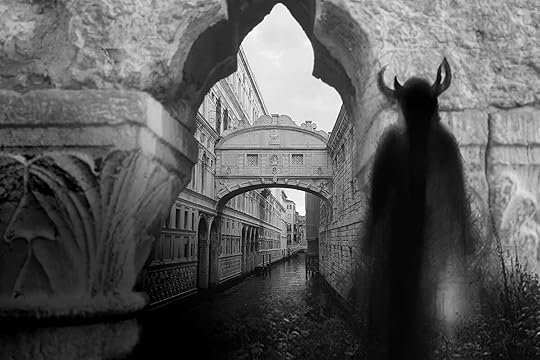
Image: Black and white image of The Ponte dei Sospir, with a shadowy figure in the foreground (Source)
Evelyn Dolman is a typical Banville protagonist, albeit set more than a century ago: an entitled, unapologetic, self-absorbed old man, who doesn’t treat women well, but is an oddly compelling raconteur on the page. He is looking back at his winter honeymoon in the 1890s, in that “fabricated, dreary, water-logged city”. But this is darker than Ian McEwan’s On Chesil Beach, which I reviewed HERE. Dolman is clearly an unreliable narrator, and his account is full of teasers about what’s to come, as well as pre-emptive justification of things he later tells us.
This novel is not quite one of Banville’s thrillers (initially published under the nom de plume, Benjamin Black), but it demonstrates his skill in that genre, and conjures something of the mood of Gothic mysteries of the time, such as Wilkie Collins’, The Woman in White.
Luck and paranoia
Dolman was a “Grub Street hack” with literary aspirations who somehow marries a US heiress. Her father gives them Rakes Manor. “Who chose whom?” Dolman ponders early on. The possibilities, reasons, and consequences are deliciously, darkly tangled.
After a long train journey, they arrive at the huge, dingy Palazzo Barbarigo, owned by a count he describes as playful, malevolent, and a charlatan - but is that hindsight?
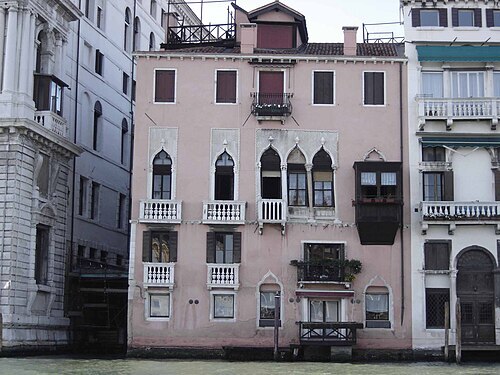
Image: The Palazzo Barbarigo Minotto on the Canal Grande in Venice (Source)
Laura is fluent in Italian. Her husband knows none:
“I chafed sorely in my imposed and impotent muteness.”
He feels as if he’s been put on a stage in a play where everyone else knows the plot and script.
Unsettling things happen. Individually inconsequential, but cumulatively alarming:
A face at a window.
A forgotten acquaintance from school.
A lavender cushion, lost - then found.
Fever from a splinter-induced infection.
Strange temptations.
Rape. A missing person. A telegram. A death.
Dolman starts to doubt his sanity and consider conspiracies and the supernatural.
Myriad little things seem worth noting, but turn out to be nothing at all. An armoury of Chekhov's guns, almost none of them fired. For instance, just the names: Dolman is a sad name, Rakes Manor feels like an omen, and Francesca Ransome should be a warning. But Freddie Fitzherbert, and Thomasina and Laura Rensselaer seem devoid of significance.
Like Dolman:
“I was left with more questions than I could ever hope to answer.”
Unlike Doman, I enjoy that.
Not for tourist brochures
• “Venice, that place of glancing lights, distorting reflections, looming shadows.”
• “The putrid jade-green waters of the Grand Canal.”
• “I was afraid of Venice, afraid of losing myself there, not only physically but spiritually also.”
• “Everything stank of stagnant water.”
• Entering St Mark’s Basilica, “The air within was heavy with an oppressive, sanctified hush, and the light coming in at the many small windows seemed soiled.”
• “St Mark’s struck me as a peculiar blend of the gloomy and the gaudy.”
• “No one in Venice is what they claim.”
• “Venice… was its own ghost.”
• “That maze of islets and sinister waterways.”
• “A noble family reduced to renting out rooms… Don’t you sometimes feel you’re present at an endless bankruptcy sale?”
• “The venality of the place makes folk such as my brother and I feel we’re the essence of respectability.”
• “It had snowed… It gave the city an aspect of devastation, as in the wake of a natural catastrophe, or some terrible, annihilating battle from which the warring armies had long since retreated in bloodied exhaustion.”
• “A triumphant sun came out and shone on the [snowy] city with a king of vengeful glitter.”
Other quotes
• “The smoky candle, the chief function of which… seemed not to be the shedding of light but only the casting of shadows.”
• “The light of dawn fingering the edges of the curtains.”
Ah, Venice. An ancient and beautiful city. Flooded with art, churches, carnival, masks, music, restaurants, bars, and, of course, water. A maze of deep history, with mystery in the shadows.
And vespers: the quiet and reassuring service at the close of day. Almost onomatopoeic.
This is not that Venice. It’s this one:
“That pestilential town lodged in the fetid crotch of the Adriatic.”
Image: Black and white image of The Ponte dei Sospir, with a shadowy figure in the foreground (Source)
Evelyn Dolman is a typical Banville protagonist, albeit set more than a century ago: an entitled, unapologetic, self-absorbed old man, who doesn’t treat women well, but is an oddly compelling raconteur on the page. He is looking back at his winter honeymoon in the 1890s, in that “fabricated, dreary, water-logged city”. But this is darker than Ian McEwan’s On Chesil Beach, which I reviewed HERE. Dolman is clearly an unreliable narrator, and his account is full of teasers about what’s to come, as well as pre-emptive justification of things he later tells us.
This novel is not quite one of Banville’s thrillers (initially published under the nom de plume, Benjamin Black), but it demonstrates his skill in that genre, and conjures something of the mood of Gothic mysteries of the time, such as Wilkie Collins’, The Woman in White.
Luck and paranoia
Dolman was a “Grub Street hack” with literary aspirations who somehow marries a US heiress. Her father gives them Rakes Manor. “Who chose whom?” Dolman ponders early on. The possibilities, reasons, and consequences are deliciously, darkly tangled.
After a long train journey, they arrive at the huge, dingy Palazzo Barbarigo, owned by a count he describes as playful, malevolent, and a charlatan - but is that hindsight?
Image: The Palazzo Barbarigo Minotto on the Canal Grande in Venice (Source)
Laura is fluent in Italian. Her husband knows none:
“I chafed sorely in my imposed and impotent muteness.”
He feels as if he’s been put on a stage in a play where everyone else knows the plot and script.
Unsettling things happen. Individually inconsequential, but cumulatively alarming:
A face at a window.
A forgotten acquaintance from school.
A lavender cushion, lost - then found.
Fever from a splinter-induced infection.
Strange temptations.
Rape. A missing person. A telegram. A death.
Dolman starts to doubt his sanity and consider conspiracies and the supernatural.
Myriad little things seem worth noting, but turn out to be nothing at all. An armoury of Chekhov's guns, almost none of them fired. For instance, just the names: Dolman is a sad name, Rakes Manor feels like an omen, and Francesca Ransome should be a warning. But Freddie Fitzherbert, and Thomasina and Laura Rensselaer seem devoid of significance.
Like Dolman:
“I was left with more questions than I could ever hope to answer.”
Unlike Doman, I enjoy that.
Not for tourist brochures
• “Venice, that place of glancing lights, distorting reflections, looming shadows.”
• “The putrid jade-green waters of the Grand Canal.”
• “I was afraid of Venice, afraid of losing myself there, not only physically but spiritually also.”
• “Everything stank of stagnant water.”
• Entering St Mark’s Basilica, “The air within was heavy with an oppressive, sanctified hush, and the light coming in at the many small windows seemed soiled.”
• “St Mark’s struck me as a peculiar blend of the gloomy and the gaudy.”
• “No one in Venice is what they claim.”
• “Venice… was its own ghost.”
• “That maze of islets and sinister waterways.”
• “A noble family reduced to renting out rooms… Don’t you sometimes feel you’re present at an endless bankruptcy sale?”
• “The venality of the place makes folk such as my brother and I feel we’re the essence of respectability.”
• “It had snowed… It gave the city an aspect of devastation, as in the wake of a natural catastrophe, or some terrible, annihilating battle from which the warring armies had long since retreated in bloodied exhaustion.”
• “A triumphant sun came out and shone on the [snowy] city with a king of vengeful glitter.”
Other quotes
• “The smoky candle, the chief function of which… seemed not to be the shedding of light but only the casting of shadows.”
• “The light of dawn fingering the edges of the curtains.”

October 11, 2025
Evelyn Dolman, a mediocre writer, has married Laura Rensellaer, an heiress. Since the marriage, Laura's father has died but the fortune has been left to her sister, Thomasina, and now Laura has booked a trip to Venice for a belated honeymoon, which Evelyn has had no part in arranging.
Laura's behaviour becomes increasingly distant as the days go on and by the time they arrive in Venice, relations between the two are strained to breaking point. Evelyn has had enough, heads out on their first night for a quick drink and very quickly finds himself being taken charge of by a curious but attractive brother and sister. What do they have in store for Evelyn and what is really going on?
If I hadn't known this book was written by John Banville, I would never have guessed. The characters are irritating, the "action" circuitous and I found Evelyn's constant breaking off to recap what had just happened, extremely annoying.
This novel could have easily been half the length because of the repetition, almost as if the reader was suffering from short term memory loss.
Ultimately, I found it dull and boring and even the twist at the end couldn't save it. This book really wasn't for me.
Thankyou to Netgalley and Faber & Faber for the advance review copy.
Laura's behaviour becomes increasingly distant as the days go on and by the time they arrive in Venice, relations between the two are strained to breaking point. Evelyn has had enough, heads out on their first night for a quick drink and very quickly finds himself being taken charge of by a curious but attractive brother and sister. What do they have in store for Evelyn and what is really going on?
If I hadn't known this book was written by John Banville, I would never have guessed. The characters are irritating, the "action" circuitous and I found Evelyn's constant breaking off to recap what had just happened, extremely annoying.
This novel could have easily been half the length because of the repetition, almost as if the reader was suffering from short term memory loss.
Ultimately, I found it dull and boring and even the twist at the end couldn't save it. This book really wasn't for me.
Thankyou to Netgalley and Faber & Faber for the advance review copy.

May 24, 2026
John Banville consigue que cada frase pertenezca a una conciencia singular, reconocible y completamente sostenida desde la primera a la última línea, adapta su narración a su propia percepción del mundo, melancólica e irónica, inteligente y profundamente sensorial, y su lenguaje es inseparable de esa mirada propia.
En "Nocturno de Venecia" añade además un toque de elegancia clásica que le da desde el principio un aire decimonónico, como si la ambientación veneciana dotara a su cadencia narrativa de una capa atmosférica y simbólica, que no esconde, sin embargo, una sensación de extrañeza íntima cada vez más inquietante, hasta que al final todo sea desvelado.
Con temáticas diría tradicionales, de identidad, deseo, e intereses, hay una enorme conciencia estilística integrada en la respiración del libro, sin excesos, a partir de pequeñas observaciones, para sostener esa atmósfera casi hipnótica de belleza decadente, que he leído fascinado hasta el final.
Parece elegante y clásica en la superficie, pero esconde una extraordinaria corriente de inquietud existencial mucho más profunda de lo que aparenta, da la sensación de que siempre hay algo turbio debajo de la superficie refinada.
Son dos partes. Una primera parte, de atmósfera, ha sido deliciosamente sobria y envolvente, con un punto inquietante y extraño. Y una segunda parte de intriga, donde esa extrañeza se convierte en un thriller elegante de ambientación casi teatral.
Sin duda, domina completamente su arte. Leerle es el placer puro de la gran literatura.
En "Nocturno de Venecia" añade además un toque de elegancia clásica que le da desde el principio un aire decimonónico, como si la ambientación veneciana dotara a su cadencia narrativa de una capa atmosférica y simbólica, que no esconde, sin embargo, una sensación de extrañeza íntima cada vez más inquietante, hasta que al final todo sea desvelado.
Con temáticas diría tradicionales, de identidad, deseo, e intereses, hay una enorme conciencia estilística integrada en la respiración del libro, sin excesos, a partir de pequeñas observaciones, para sostener esa atmósfera casi hipnótica de belleza decadente, que he leído fascinado hasta el final.
Parece elegante y clásica en la superficie, pero esconde una extraordinaria corriente de inquietud existencial mucho más profunda de lo que aparenta, da la sensación de que siempre hay algo turbio debajo de la superficie refinada.
Son dos partes. Una primera parte, de atmósfera, ha sido deliciosamente sobria y envolvente, con un punto inquietante y extraño. Y una segunda parte de intriga, donde esa extrañeza se convierte en un thriller elegante de ambientación casi teatral.
Sin duda, domina completamente su arte. Leerle es el placer puro de la gran literatura.

October 15, 2025
In 1899, English author Evelyn Dolman marries the wealthy American heiress Laura Rensselaer. Unfortunately, shortly thereafter Laura’s father dies in an accident and Evelyn learns that Laura has been disinherited. The couple is not completely impoverished. They still own a house in London and are rich enough to rent part of a huge palazzo in Venice, to which Laura insists they retreat. We learn everything that transpired from the point of view of Evelyn, who wants to set the record straight about a mysterious death that occurred in Venice that winter. It takes a long time for the reader to find out who dies.
The palazzo has a creepy air about it, and everyone in it seems a little off. Evelyn meets an old schoolmate who is drifting (or grifting) around Europe with his sister, and Evelyn becomes fixated on the beautiful sister. I had to feel sorry for Evelyn, even though he exhibited some serious character flaws. He had an appalling willingness to be conned and debauched. I found the language in this book delicious and the twists clever. There was a taste of the movies The Servant and Gaslight. Luke Thompson did an excellent job narrating the audiobook. I really enjoyed this book.
The palazzo has a creepy air about it, and everyone in it seems a little off. Evelyn meets an old schoolmate who is drifting (or grifting) around Europe with his sister, and Evelyn becomes fixated on the beautiful sister. I had to feel sorry for Evelyn, even though he exhibited some serious character flaws. He had an appalling willingness to be conned and debauched. I found the language in this book delicious and the twists clever. There was a taste of the movies The Servant and Gaslight. Luke Thompson did an excellent job narrating the audiobook. I really enjoyed this book.
October 19, 2025
John Banville is a literary legend and I was really looking forward to this book. It is a lush setting with atmospheric writing. The character development was flawless and the characters were insufferable which I normally don't mind. The unhappy marriage and a missing wife should have been very compelling but I honestly found it mundane in many parts. The glorious prose bumped it up to three stars which means I liked it but probably won't recommend even though I usually recommend three stars books.

October 3, 2025
In winter 1899, on the cusp of a new century, Evelyn Dolman and his wife, Laura, set off on a honeymoon to Venice, delayed for some months due to the unexpected death of Laura’s father, a superwealthy tycoon. Evelyn had been aware that his new bride and her father had some unresolved issue between them, but he is astonished to learn that the tycoon has left all his money to his other daughter. Laura still has a generous allowance, but Evelyn had anticipated fabulous wealth. ‘Generous’ is a major disappointment. Laura has been disappointing in other ways too – they have only had sex once, and that was long before they married. It’s doubtful if Evelyn still loves her – indeed, if he ever did. Telling his story in retrospect long afterwards, Evelyn foreshadows that the Venice trip will end with a woman dead and him embroiled in scandal, and his purpose now is to set the record straight…
Don’t for one moment feel sorry for him! If anyone earned a ticket to hell, it’s Evelyn. He takes unlikeability to new levels, and instead becomes deliciously horrid – another narcissistic self-justifier to add to Banville’s illustrious list. He is so convinced that he was the victim of this story that he doesn’t seem to realise he’s condemning himself with every word he speaks. Banville is brilliant at putting this kind of moral ambiguity into his characters, and here he muddies the waters still further by leaving the reader unsure of Evelyn’s reliability as narrator – there’s a distinct whiff of madness around him, but did that happen before the events in Venice or is it a consequence of them?
Banville writes like a dream, and his depiction of Venice is both vivid and funny. It’s winter, and therefore cold, wet, and grey. Forget beauty or romance – this Venice is a place of swampy miasmas, every building is dusty, decaying, crumbling, every inhabitant is sinister, be they Venetian or visitor. As Banville piles on the adjectives, Venice becomes a place of menace and mystery, and no one can be taken at face value. I felt strongly that Banville was playing with the swampy, fever-ridden Venice created in Mann’s Death in Venice, both in the depiction of the city and in the character of Evelyn, although his sexual obsessions are of a different nature. The palazzo that the honeymooners are staying in owes something, I felt, to Henry James and The Aspern Papers, along with the depiction of decayed aristocracy seeking money from gullible foreigners in return for allowing them to share in the faded glory of these once great buildings. Evelyn is a writer, one who wanted to shake the world, but is best known for a series of travel guides to lesser English towns. The list he gives of authors he wanted to surpass is revealing!
On their first night, Evelyn, frustrated by the lack of sex in the relationship, goes out and gets drunk, returns, and does something unforgivable that suddenly darkens the story and cements the reader’s dislike for him irrevocably, though he seems to feel he’s managing to justify himself. Next morning, he wakes up to find his wife has gone. From there on, the story takes on a kind of surreal air – Evelyn’s reaction to Laura’s disappearance is strange indeed. The night before he had met a man who claimed to have been at school with him, though Evelyn doesn’t remember him. This man, Frederick Fitzherbert, has a beautiful sister, Francesca, and Evelyn seems considerably more interested in her than in finding Laura. But are the Fitzherberts quite what they claim? Even Evelyn thinks they may be conning him in some way, but that doesn’t stop him from inviting them to come and stay in the palazzo. Meantime, he tells no one that Laura is missing, pretending she’s just popped out or has retreated to her room with a headache to explain her absence when anyone asks.
I don’t want to go any deeper into the story, to avoid spoilers. Despite the dark episode I referred to, the overall tone is of light entertainment, where the initial foreshadowing of a woman’s death and a scandal has the reader looking at every woman who appears and wondering – is it her? While some parts of it are rather more obvious to the reader than to self-deluded Evelyn, the mystery kept me intrigued throughout – Banville gives enough for us to have the pleasure of trying to work out what’s going on, but holds back just enough to allow room for some surprises. And yet – is all explained at the end? Evelyn would say so, but this reader felt that the version he gives may not be the truth, the whole truth and nothing but the truth…
I love these twisted, narcissistic narrators Banville does so brilliantly, I love his playful use of language and vocabulary, I love his exaggeratedly sinister and decaying depiction of Venice, and I love the way he is playing with previous Venetian literary classics. In short, I loved this book – wonderfully written and highly entertaining, but with enough darkness and depth to give it bite. I seem to have spent a lot of fictional time in Venice recently, and this trip is undoubtedly up there with the best.
NB This book was provided for review by the publisher, Faber and Faber via NetGalley.
www.fictionfanblog.wordpress.com
And I trust that my version of this desperate affair will be accepted at face value and not mistaken for the greenery-yallery ravings of some aesthetical absinthe-imbibing décadent of the kind whose vapourings used to be found splattered across the pages of such degenerate and now happily defunct journals as The Yellow Book and The Savoy. Oh, yes – see me rubbing my hands, see my vengeful grin. When one has been through hell, the burnt flesh burns on.
Don’t for one moment feel sorry for him! If anyone earned a ticket to hell, it’s Evelyn. He takes unlikeability to new levels, and instead becomes deliciously horrid – another narcissistic self-justifier to add to Banville’s illustrious list. He is so convinced that he was the victim of this story that he doesn’t seem to realise he’s condemning himself with every word he speaks. Banville is brilliant at putting this kind of moral ambiguity into his characters, and here he muddies the waters still further by leaving the reader unsure of Evelyn’s reliability as narrator – there’s a distinct whiff of madness around him, but did that happen before the events in Venice or is it a consequence of them?
Banville writes like a dream, and his depiction of Venice is both vivid and funny. It’s winter, and therefore cold, wet, and grey. Forget beauty or romance – this Venice is a place of swampy miasmas, every building is dusty, decaying, crumbling, every inhabitant is sinister, be they Venetian or visitor. As Banville piles on the adjectives, Venice becomes a place of menace and mystery, and no one can be taken at face value. I felt strongly that Banville was playing with the swampy, fever-ridden Venice created in Mann’s Death in Venice, both in the depiction of the city and in the character of Evelyn, although his sexual obsessions are of a different nature. The palazzo that the honeymooners are staying in owes something, I felt, to Henry James and The Aspern Papers, along with the depiction of decayed aristocracy seeking money from gullible foreigners in return for allowing them to share in the faded glory of these once great buildings. Evelyn is a writer, one who wanted to shake the world, but is best known for a series of travel guides to lesser English towns. The list he gives of authors he wanted to surpass is revealing!
On their first night, Evelyn, frustrated by the lack of sex in the relationship, goes out and gets drunk, returns, and does something unforgivable that suddenly darkens the story and cements the reader’s dislike for him irrevocably, though he seems to feel he’s managing to justify himself. Next morning, he wakes up to find his wife has gone. From there on, the story takes on a kind of surreal air – Evelyn’s reaction to Laura’s disappearance is strange indeed. The night before he had met a man who claimed to have been at school with him, though Evelyn doesn’t remember him. This man, Frederick Fitzherbert, has a beautiful sister, Francesca, and Evelyn seems considerably more interested in her than in finding Laura. But are the Fitzherberts quite what they claim? Even Evelyn thinks they may be conning him in some way, but that doesn’t stop him from inviting them to come and stay in the palazzo. Meantime, he tells no one that Laura is missing, pretending she’s just popped out or has retreated to her room with a headache to explain her absence when anyone asks.
I don’t want to go any deeper into the story, to avoid spoilers. Despite the dark episode I referred to, the overall tone is of light entertainment, where the initial foreshadowing of a woman’s death and a scandal has the reader looking at every woman who appears and wondering – is it her? While some parts of it are rather more obvious to the reader than to self-deluded Evelyn, the mystery kept me intrigued throughout – Banville gives enough for us to have the pleasure of trying to work out what’s going on, but holds back just enough to allow room for some surprises. And yet – is all explained at the end? Evelyn would say so, but this reader felt that the version he gives may not be the truth, the whole truth and nothing but the truth…
I love these twisted, narcissistic narrators Banville does so brilliantly, I love his playful use of language and vocabulary, I love his exaggeratedly sinister and decaying depiction of Venice, and I love the way he is playing with previous Venetian literary classics. In short, I loved this book – wonderfully written and highly entertaining, but with enough darkness and depth to give it bite. I seem to have spent a lot of fictional time in Venice recently, and this trip is undoubtedly up there with the best.
NB This book was provided for review by the publisher, Faber and Faber via NetGalley.
www.fictionfanblog.wordpress.com

September 24, 2025
Evelyn Dolman’s initial impression of Venice is not of a romantic city, but of a gloomy, cold and damp place hardly worthy of the title ‘La Serenissima’. For him, it’s a place of ‘glancing lights, distorting reflections, looming shadows’.
Venice was not his choice of location for their belated honeymoon but that of his wife Laura. Strangely, on arrival at their lodgings, the many-roomed but gently decaying Palazzo Dioscuri owned by the flamboyant but sinister Count Barbarigo, Laura seems to have no interest in exploring the city. Instead she urges Evelyn to go out on his own.
Arriving at the famous Cafe Florian he meets Freddie who says he went to the same school as Evelyn although, strangely, Evelyn has no memory of him. Freddie introduces Evelyn to his twin sister Francesca, known as Cesca, and Evelyn is instantly smitten by her beauty and wit. Harry and Cesca live a vagabond lifestyle, travelling from place to place and relying, Evelyn suspects, on the generosity of others to fund it. They persuade him to join them for a long series of nightcaps, introducing him to that powerful spirit, grappa.
The first six months of Evelyn and Laura’s marriage have not been a success. Laura rebuffs Evelyn’s sexual advances and in fact seems completely indifferent to him. It has become a source of increasing frustration which leads him in his drunken state to carry out an uncharacteristic act of violence. By the time he awakens the next morning, riven with guilt, Laura has disappeared without trace.
What follows sees Evelyn caught in a web of deceit, increasingly wondering if he can trust those around him or indeed trust in his own sanity. Unwilling to confess his actions prior to Laura’s disappearance, he attempts to hide her absence until the charade is unsustainable and he becomes the object of suspicion. Evelyn is a pompous figure, full of misplaced self-importance, but this hides a deep insecurity. We, the reader, sense fairly quickly that he is being manipulated, but to what end and by whom?
In the author’s hands, Venice is a place of damp, decay and menace in which no-one is quite what they seem. There’s a deliciously sinister atmosphere, with strange occurrences that might be supernatural or might be the work of human hands. There’s a pervasive sexuality to the story whether that’s the Count’s lascivious maid or Cesca’s teasing allure.
Venetian Vespers is an entertainingly sinister tale which effortlessly captures the style of the period in which it is set. Perfect for cold autumn nights.
Venice was not his choice of location for their belated honeymoon but that of his wife Laura. Strangely, on arrival at their lodgings, the many-roomed but gently decaying Palazzo Dioscuri owned by the flamboyant but sinister Count Barbarigo, Laura seems to have no interest in exploring the city. Instead she urges Evelyn to go out on his own.
Arriving at the famous Cafe Florian he meets Freddie who says he went to the same school as Evelyn although, strangely, Evelyn has no memory of him. Freddie introduces Evelyn to his twin sister Francesca, known as Cesca, and Evelyn is instantly smitten by her beauty and wit. Harry and Cesca live a vagabond lifestyle, travelling from place to place and relying, Evelyn suspects, on the generosity of others to fund it. They persuade him to join them for a long series of nightcaps, introducing him to that powerful spirit, grappa.
The first six months of Evelyn and Laura’s marriage have not been a success. Laura rebuffs Evelyn’s sexual advances and in fact seems completely indifferent to him. It has become a source of increasing frustration which leads him in his drunken state to carry out an uncharacteristic act of violence. By the time he awakens the next morning, riven with guilt, Laura has disappeared without trace.
What follows sees Evelyn caught in a web of deceit, increasingly wondering if he can trust those around him or indeed trust in his own sanity. Unwilling to confess his actions prior to Laura’s disappearance, he attempts to hide her absence until the charade is unsustainable and he becomes the object of suspicion. Evelyn is a pompous figure, full of misplaced self-importance, but this hides a deep insecurity. We, the reader, sense fairly quickly that he is being manipulated, but to what end and by whom?
In the author’s hands, Venice is a place of damp, decay and menace in which no-one is quite what they seem. There’s a deliciously sinister atmosphere, with strange occurrences that might be supernatural or might be the work of human hands. There’s a pervasive sexuality to the story whether that’s the Count’s lascivious maid or Cesca’s teasing allure.
Venetian Vespers is an entertainingly sinister tale which effortlessly captures the style of the period in which it is set. Perfect for cold autumn nights.

February 24, 2026
Set in Venice at the turn of the twentieth century, protagonist and narrator Evelyn Dolman marries Laura Rensselaer, daughter of an American oil tycoon. Dolman expects to inherit her father's fortune, but Laura is mysteriously disinherited after a rift with her father just before his death. The unhappy newlyweds travel to Venice for a belated honeymoon, staying at the Palazzo Dioscuri. Laura disappears after Dolman mistreats her after coming home drunk at 3am.
This book is an anti-romance. It portrays Venice in winter as a city of decay, mist, crumbling buildings, and menace. The writing is reminiscent of Henry James and the late Victorian age. It is a novel with an unreliable (and extremely unlikeable) narrator and a cast of despicable people. Dolman is pompous, insecure, and monstrous. The plot follows the mystery of his wife’s disappearance. I enjoyed parts of it, but I wanted more after putting up with nasty old Dolman for the entire book.
This book is an anti-romance. It portrays Venice in winter as a city of decay, mist, crumbling buildings, and menace. The writing is reminiscent of Henry James and the late Victorian age. It is a novel with an unreliable (and extremely unlikeable) narrator and a cast of despicable people. Dolman is pompous, insecure, and monstrous. The plot follows the mystery of his wife’s disappearance. I enjoyed parts of it, but I wanted more after putting up with nasty old Dolman for the entire book.
Read
June 9, 2026This was, for me, almost like a kind of wicked twist on DuMaurier's Rebecca -- you know something is up, everyone knows something is up, even the narrator knows, by the time he gets around to narrating the story, that something is (well, was) up -- but what exactly is it? But now imagine that the protagonist of Rebecca is actually a truly hateful person. A self-satisfied, petulant, entitled, selfish, snobby, abusive person. You might think you'd enjoy watching that person slowly spiral towards some promised doom, to see the doors to the trap closing, bit by bit by bit.
Ah, but what if the people doing the trapping are every bit as unlikeable as our horrible, spoiled, bratty protagonist? Is it as fun to watch the villain inevitably lose, when the winners are just as villainous?
I don't think any of this is a spoiler since the narrator himself makes it clear from the very start that he is describing some kind of slow-rolling but unstoppable catastrophe. A careful reader will be able to sense something close to the explanation, but I for one couldn't guess it in all the details.
Venice here is as poisonous and putrid, decadent and decaying, rotten and ruinous as in Death in Venice and it doesn't even need cholera to get there. People do it all on their own.
A GR friend read this recently -- it was only published a few months ago, I gather -- and their highly enthusiastic review, combined with my current attention to Venice, convinced me to read it (actually, I listened to it as an audiobook). My first Banville, and so I don't know how it compares to his other works. I'm definitely intrigued, and glad to have found it thanks to the ever-useful reviews on this increasingly corrupt site.
Ah, but what if the people doing the trapping are every bit as unlikeable as our horrible, spoiled, bratty protagonist? Is it as fun to watch the villain inevitably lose, when the winners are just as villainous?
I don't think any of this is a spoiler since the narrator himself makes it clear from the very start that he is describing some kind of slow-rolling but unstoppable catastrophe. A careful reader will be able to sense something close to the explanation, but I for one couldn't guess it in all the details.
Venice here is as poisonous and putrid, decadent and decaying, rotten and ruinous as in Death in Venice and it doesn't even need cholera to get there. People do it all on their own.
A GR friend read this recently -- it was only published a few months ago, I gather -- and their highly enthusiastic review, combined with my current attention to Venice, convinced me to read it (actually, I listened to it as an audiobook). My first Banville, and so I don't know how it compares to his other works. I'm definitely intrigued, and glad to have found it thanks to the ever-useful reviews on this increasingly corrupt site.

September 14, 2025
I was offered an advanced review copy of John Banville's Venetian Vespers. The book is set in 1899. It's protagonist is Evelyn Dolman. Evelyn has just married Laura Rensselaer, daughter of a wealthy American family. Together they travel from London to Venice, for their honeymoon. Right from the start the relationship does sound too good. And when they arrive in Venice, everything falls to pieces.
I am sorry to say that I did not enjoy this book. That is mainly because I totally hated Evelyn Dolman. Such a pathetic man. Even though the story is set in the late 1800s, and will probably depict the relationships between men and women as they were back then, I was totally disgusted by Evelyn.
PLEASE NOTE, SPOILERS BELOW
So Venetian Vespers was most definitely not for me. It did bring me one good thing though: Claudio Monteverdi's Vespro della Beata Vergine (Vespers for the Blessed Virgin), which is a beautiful piece of music.
I am sorry to say that I did not enjoy this book. That is mainly because I totally hated Evelyn Dolman. Such a pathetic man. Even though the story is set in the late 1800s, and will probably depict the relationships between men and women as they were back then, I was totally disgusted by Evelyn.
PLEASE NOTE, SPOILERS BELOW
So Venetian Vespers was most definitely not for me. It did bring me one good thing though: Claudio Monteverdi's Vespro della Beata Vergine (Vespers for the Blessed Virgin), which is a beautiful piece of music.

October 9, 2025
Hmmmm. Well... hmmmm.
I can't give Banville fewer than three stars. I just can't. Banville's writing is just too strong. And one doesn't necessarily go to a Banville novel for plot, but when a plot is teased and then barely seems important, it feels like a disappointment.
There are wonderful elements to this novel: a touch of mystery, a little of the eerie, some classic/Henry James-esque aspects, and even the fun of a nasty little narrator.
Yet it just doesn't really add up to anything for me. Other than a nice little novel. Maybe I should have saved it for a couple of cold, winter days with tea. Snow on the ground, blanket on lap.
I can't give Banville fewer than three stars. I just can't. Banville's writing is just too strong. And one doesn't necessarily go to a Banville novel for plot, but when a plot is teased and then barely seems important, it feels like a disappointment.
There are wonderful elements to this novel: a touch of mystery, a little of the eerie, some classic/Henry James-esque aspects, and even the fun of a nasty little narrator.
Yet it just doesn't really add up to anything for me. Other than a nice little novel. Maybe I should have saved it for a couple of cold, winter days with tea. Snow on the ground, blanket on lap.

December 24, 2025
I tried, DNF 40%. I have an idea of the big twist, but didn’t turn to the end to find out if I’m correct. If anyone makes it to the end and wants to message me, please do.
I don’t mind unlikeable characters in general, but boy oh boy, Evelyn our MC and first person narrator (ugh) is truly the pits. Big ego, boring, simple…by the time he rapes his wife I was done. My time is too precious to give any more to this person, even if they’re fictional.
I don’t mind unlikeable characters in general, but boy oh boy, Evelyn our MC and first person narrator (ugh) is truly the pits. Big ego, boring, simple…by the time he rapes his wife I was done. My time is too precious to give any more to this person, even if they’re fictional.
This entire review has been hidden because of spoilers.

June 27, 2025
The Book of Names; The Book of Twins
John Banville’s latest: set (mostly) in a wintry, sinister Venice in 1899, where the narrator, a hack writer called Evelyn Dolman is taking a honeymoon sojourn with his new wife, the American heiress, Laura Rensselaer.
The narrative is fantastical, nightmarish, bizarre; the city of Venice, ‘that pestilential town lodged in the fetid crotch of the Adriatic’. Gloom and mystery abound: ‘dusk, a deserted room, a scrap of black silk on a marble table, a darkening sea beyond’.
Dolman is a cipher, a pawn, all at sea in the presence of an indifferent wife, a born victim, imagining himself much more intelligent than he is. But don’t feel sorry for him. He is mean-minded, treacherous and violent – it’s hard to sympathise with what happens to him. Though, bad as Dolman is, most of the other participants are much, much worse.
He commits dreadful violence on his wife; she disappears; two Anglo-Irish rogues move into the Palazzo, rented by the newly-weds; the police become desultorily involved.
Much fun is played with the characters’ names throughout. Dolman means slow-witted or obtuse; Evelyn, one of those ambiguous English names, both masculine and feminine, emphasising the duality of his nature, active and passive. His wife, Laura, her name the heroine of Byron’s poem, ‘Beppo’. And of course there is a Beppo, the stereotypical Italian man servant of the Palazzo. And an Irish villain called Freddie! Of course, the reader recalls Freddie Montgomery, the amoral killer of ‘The Book of Evidence’. Then there is the rascally Count Barbarigo, owner of the Palazzo dei Dioscuri – a real Venetian noble family, but long extinct. The distinction between fiction and reality, hazy and imprecise.
The Palazzo dei Dioscuri, damp, labyrinthine, haunted, heralds another theme. The Dioscuri are Castor and Pollux, twins, not the Discobolos, the discus thrower, as the ignorant Dolman thinks. Twins are everywhere in the novel: the palazzo’s name, Freddie and Cesca FitzHerbert, Laura and Cesca look like twins, Laura’s sister’s name, Thomasina, means ‘twin’.
The plot is ingenious, a twisting, dark narrative, embodying a scam, the reader may sense throughout, but is still shocked when all is revealed, or so it seems, at the novel’s close.
John Banville’s latest: set (mostly) in a wintry, sinister Venice in 1899, where the narrator, a hack writer called Evelyn Dolman is taking a honeymoon sojourn with his new wife, the American heiress, Laura Rensselaer.
The narrative is fantastical, nightmarish, bizarre; the city of Venice, ‘that pestilential town lodged in the fetid crotch of the Adriatic’. Gloom and mystery abound: ‘dusk, a deserted room, a scrap of black silk on a marble table, a darkening sea beyond’.
Dolman is a cipher, a pawn, all at sea in the presence of an indifferent wife, a born victim, imagining himself much more intelligent than he is. But don’t feel sorry for him. He is mean-minded, treacherous and violent – it’s hard to sympathise with what happens to him. Though, bad as Dolman is, most of the other participants are much, much worse.
He commits dreadful violence on his wife; she disappears; two Anglo-Irish rogues move into the Palazzo, rented by the newly-weds; the police become desultorily involved.
Much fun is played with the characters’ names throughout. Dolman means slow-witted or obtuse; Evelyn, one of those ambiguous English names, both masculine and feminine, emphasising the duality of his nature, active and passive. His wife, Laura, her name the heroine of Byron’s poem, ‘Beppo’. And of course there is a Beppo, the stereotypical Italian man servant of the Palazzo. And an Irish villain called Freddie! Of course, the reader recalls Freddie Montgomery, the amoral killer of ‘The Book of Evidence’. Then there is the rascally Count Barbarigo, owner of the Palazzo dei Dioscuri – a real Venetian noble family, but long extinct. The distinction between fiction and reality, hazy and imprecise.
The Palazzo dei Dioscuri, damp, labyrinthine, haunted, heralds another theme. The Dioscuri are Castor and Pollux, twins, not the Discobolos, the discus thrower, as the ignorant Dolman thinks. Twins are everywhere in the novel: the palazzo’s name, Freddie and Cesca FitzHerbert, Laura and Cesca look like twins, Laura’s sister’s name, Thomasina, means ‘twin’.
The plot is ingenious, a twisting, dark narrative, embodying a scam, the reader may sense throughout, but is still shocked when all is revealed, or so it seems, at the novel’s close.

August 3, 2026
Hacía tiempo que no leía a Banville y qué maravilla rencontrarme con él con una novela así: llena de intriga, de pasiones humanas desmedidas, de prosa elaborada pero sencilla de leer y ambientada en una de esas ciudades (Venecia) cuya historia real e inventada acrecientan su aura de misterio.
Más allá de lo que Banville me hace sentir con sus libros, quiero resaltar la atmósfera que tiene la novela. Esa Venecia anclada en el tiempo, en un tiempo indeterminado; con sus canales, puentes y góndolas; con su humedad, su bruma y sus sombras invernales. Y es que esta historia de deseos, traiciones, apariencias y engaños, casi de fantasmas y terror gótico, no podría haber estado ambientada en ninguna otra ciudad, no ya de Italia, sino del mundo. Para mi fue el gran atractivo de la novela para comprarla y leerla y, tras su lectura, confirmo mis impresiones.
Además, la historia es obsesiva y obsesionante, donde nada es lo que parece y el misterio acapara toda la trama y envuelve las pasiones desatadas que los protagonistas, sobre todo su principal personaje y narrador, despliegan en Venecia. Si la literatura es algo para mi es esto: esta capacidad de narrar una historia y transportar al lector allí donde se desarrolla.
Más allá de lo que Banville me hace sentir con sus libros, quiero resaltar la atmósfera que tiene la novela. Esa Venecia anclada en el tiempo, en un tiempo indeterminado; con sus canales, puentes y góndolas; con su humedad, su bruma y sus sombras invernales. Y es que esta historia de deseos, traiciones, apariencias y engaños, casi de fantasmas y terror gótico, no podría haber estado ambientada en ninguna otra ciudad, no ya de Italia, sino del mundo. Para mi fue el gran atractivo de la novela para comprarla y leerla y, tras su lectura, confirmo mis impresiones.
Además, la historia es obsesiva y obsesionante, donde nada es lo que parece y el misterio acapara toda la trama y envuelve las pasiones desatadas que los protagonistas, sobre todo su principal personaje y narrador, despliegan en Venecia. Si la literatura es algo para mi es esto: esta capacidad de narrar una historia y transportar al lector allí donde se desarrolla.

April 7, 2026
This was my first John Banville and it was not at all what I expected. Knowing he had won the Booker Prize for The Sea, I thought he tended toward more “serious” literature, for some reason. Venetian Vespers was certainly not lacking in literary quality, but was far more entertaining than I thought it would be.
The voice of the fusty, misanthropic, and cynical writer Evelyn Dolman who narrates the story was what made the book for me, and Banville’s unique descriptions of fin de siècle Venice, as seen through Dolman’s eyes, create an atmosphere of menace instead of magic. The watery, labyrinthine environment becomes a reflection of the narrator’s muddled state as he tries to navigate strange events and the even stranger characters he encounters while wondering for several days where his new wife has wandered off to. His relationship with his bride, who has been recently disinherited from a large fortune, has been far from ideal, emotionally detached, and not like anything he could have imagined, and her mysterious disappearance creates many complications.
Dolman’s experience in Venice seems to awaken in him an alien sense of himself that behaves in ways he considers uncharacteristic, while he is simultaneously afflicted with a feeling that others may be manipulating him for their own purposes. All becomes clear in the end, completing a totally enjoyable ride.
The voice of the fusty, misanthropic, and cynical writer Evelyn Dolman who narrates the story was what made the book for me, and Banville’s unique descriptions of fin de siècle Venice, as seen through Dolman’s eyes, create an atmosphere of menace instead of magic. The watery, labyrinthine environment becomes a reflection of the narrator’s muddled state as he tries to navigate strange events and the even stranger characters he encounters while wondering for several days where his new wife has wandered off to. His relationship with his bride, who has been recently disinherited from a large fortune, has been far from ideal, emotionally detached, and not like anything he could have imagined, and her mysterious disappearance creates many complications.
Dolman’s experience in Venice seems to awaken in him an alien sense of himself that behaves in ways he considers uncharacteristic, while he is simultaneously afflicted with a feeling that others may be manipulating him for their own purposes. All becomes clear in the end, completing a totally enjoyable ride.

October 23, 2025
DNF at 36%. Florid overblown prose, nothing much has happened other than going to Venice. The ultimate nail in the DNF for me was the florid overblown description of him trying to maritally rape his wife, and then the next day in the space of a few audiobook minutes, he refers to the assault first as a ravishment, then sees it from his wife’s perspective and wonders how he could have so foully abused her, and yet for all he had debauched the creature who should have been dearest to him in the world, he felt a sense of vindication in proving himself and his potency.
What the actual F. No. Thank god this was a library audio borrow and I’d not spent money on this as I nearly did.
What the actual F. No. Thank god this was a library audio borrow and I’d not spent money on this as I nearly did.

August 20, 2025
I shall have to come clean and admit that this is the first John Banville book that I really have not enjoyed. The tone of the narrator is appropriate for the date set but kept reminding me of Dracula, the novel rather than the person, and could be quite convoluted at times. This is a mystery mainly sat in Venice.
I’m afraid that after about 50 pages I ended up skimming this novel and then reading the last 10 pages. Maybe this just wasn’t for me. Banville always writes very well but I just found that the narrator had a naivety and a sort of subtle whine of ‘poor me’ throughout. I didn’t really feel any sympathy for him. Maybe I was not supposed to.
I have read a lot of John Banville novels and can usually recommend them highly. I read an ARC provided by NetGalley and the publishers.
I’m afraid that after about 50 pages I ended up skimming this novel and then reading the last 10 pages. Maybe this just wasn’t for me. Banville always writes very well but I just found that the narrator had a naivety and a sort of subtle whine of ‘poor me’ throughout. I didn’t really feel any sympathy for him. Maybe I was not supposed to.
I have read a lot of John Banville novels and can usually recommend them highly. I read an ARC provided by NetGalley and the publishers.
November 23, 2025
A weak 3 stars…I don’t mind the oppressively gloomy, almost gothic tone, but the dull, wordy prose is hard to excuse, even if it’s perhaps intentional (the narrator is a grasping hack writer after all). The plot is thin for a 400+ page novel, and at the end the narrator is still struggling to make sense of it all…unfortunately, so is the reader. I’m sure Banville had fun writing this…who wouldn’t want to try their hand at a Wilkie Collins story as written (badly) by Henry James…but it isn’t much fun for the reader.

October 25, 2025
About all I can say abut this book is that it draws a wonderful picture of Venice, mostly in the darker descriptions of nighttime activities. The characters and plot were completely unbelievable! 3*

January 23, 2026
Ein meisterlicher Roman des Grandseigneurs der irischen Literatur, John Banville, atmosphärisch dicht, bedrohlich in der Stimmung und stilistisch gelungen.
Die Geschichte des Schriftstellers Evelyn Doman, der eine - vermeintliche - reiche Erbin geehelicht hat und nun mit ihr auf einer verspäteten Hochzeitsreise nach Venedig ist. Aber nichts ist, wie es scheint. Es häufen sich verwirrende Anzeichen, seine Frau verhält sich seltsam, er trifft Menschen, die vorgeben, ihn zu kennen, obwohl er sich nicht an sie erinnert. Immer tiefer gerät er in einen Strudel von Ereignissen, die er nicht versteht und nicht beeinflussen kann. Am Ende ist sein Leben völlig zerstört und er muss erkennen, dass er nur eine Schachfigur in einem Spiel war, das andere gespielt haben.
Es sind so viele vibes in diesem Roman - Thomas Mann, Gilbert Adair, Ian McEwan, Patricia Highsmith... die Liste könnte man endlos fortführen.
Ich habe es sehr genossen.
Die Übersetzung von Elke Link ist sehr zu loben, lediglich der deutsche Titel ist blödsinnig. Im Englischen heißt das Buch "Venetian Vespers", was auch eine Anspielung auf Monteverdi und seine Musik ist. Die geht im Deutschen so natürlich verloren.
Die Geschichte des Schriftstellers Evelyn Doman, der eine - vermeintliche - reiche Erbin geehelicht hat und nun mit ihr auf einer verspäteten Hochzeitsreise nach Venedig ist. Aber nichts ist, wie es scheint. Es häufen sich verwirrende Anzeichen, seine Frau verhält sich seltsam, er trifft Menschen, die vorgeben, ihn zu kennen, obwohl er sich nicht an sie erinnert. Immer tiefer gerät er in einen Strudel von Ereignissen, die er nicht versteht und nicht beeinflussen kann. Am Ende ist sein Leben völlig zerstört und er muss erkennen, dass er nur eine Schachfigur in einem Spiel war, das andere gespielt haben.
Es sind so viele vibes in diesem Roman - Thomas Mann, Gilbert Adair, Ian McEwan, Patricia Highsmith... die Liste könnte man endlos fortführen.
Ich habe es sehr genossen.
Die Übersetzung von Elke Link ist sehr zu loben, lediglich der deutsche Titel ist blödsinnig. Im Englischen heißt das Buch "Venetian Vespers", was auch eine Anspielung auf Monteverdi und seine Musik ist. Die geht im Deutschen so natürlich verloren.

December 23, 2025
Gawd, this was a slog to get through. The plot twist at the end was anything but surprising, but at least the pace picked up in those last few dozen pages.
This is not how I imagined my introduction to John Banville!
Addendum, 09-01-2026
I just remembered I did read a novel by John Banville before, Mrs Osmond. Had I remembered it before buying this book, I might not have read this one (as the former left me quite indifferent and it is set in the same era).
This is not how I imagined my introduction to John Banville!
Addendum, 09-01-2026
I just remembered I did read a novel by John Banville before, Mrs Osmond. Had I remembered it before buying this book, I might not have read this one (as the former left me quite indifferent and it is set in the same era).

December 1, 2025
This book would (and should) have been a fantastic short story. As a novel, it was bloated — I found myself skimming pages of beautiful but unnecessary prose. We get it: Venice in the winter is oppressive and creepy, and the narrator might be losing his mind. The whole book could be condensed to ~100 pages. The plot wasn’t exactly predictable, but it was certainly overwrought.
February 4, 2026
DNF ~40% and do not recommend. Honestly shocked more people don’t mention the rape scene in their reviews. Read with care.

February 21, 2026
"Venice, I feared, would be the ruin of me."
"Was there no one in Venice, I asked myself...who was simply himself, and not playing a self-appointed role?"
This was a very atmospheric cat and mouse story set in 1900's Venice. But....who is the cat and who is the mouse? With an unlikable and unreliable narrator, we learn from.the start that something is not quite right. Banville provides the perfect background for this dark twisty tale with the foggy canals and damp alleyways of Venice and the story was put together fantastically even though the writing would sometimes become long winded and drawn out.
"Was there no one in Venice, I asked myself...who was simply himself, and not playing a self-appointed role?"
This was a very atmospheric cat and mouse story set in 1900's Venice. But....who is the cat and who is the mouse? With an unlikable and unreliable narrator, we learn from.the start that something is not quite right. Banville provides the perfect background for this dark twisty tale with the foggy canals and damp alleyways of Venice and the story was put together fantastically even though the writing would sometimes become long winded and drawn out.

October 25, 2025
So far my experience of John Banville’s writing has been limited to Prague Nights, one of his mystery novels published under the pseudonym Benjamin Black. I’ve been meaning to try more of his books and when I saw this one, I was immediately drawn to it by the title and the beautiful cover (I love a Venetian setting).
Venetian Vespers is set at the turn of the 20th century and begins with writer Evelyn Dolman and his wife Laura on their way to Venice for a belated honeymoon – the reason for the delay is that Laura’s father died just after their marriage. Evelyn had been expecting Laura to inherit her father’s fortune, but due to some sort of conflict that Evelyn doesn’t fully understand, his father-in-law left everything to his other daughter instead. This is disappointing for Evelyn – but then, their whole marriage has been a disappointment so far and isn’t showing any signs of improving.
On their first night in Venice, Evelyn meets Frederick FitzHerbert, a man who claims to have been at school with him, although Evelyn can’t remember him at all. He doesn’t like to admit this, though, so falls into conversation with Freddie and is introduced to his beautiful sister, Francesca. Returning drunk to the palazzo near St Mark’s Square where he and Laura are staying, Evelyn behaves so badly towards his wife that when he wakes up in the morning she has disappeared. Despite feeling ashamed of himself, he makes no real attempt to find Laura, too distracted by thoughts of Francesca. But are Francesca and her brother really who they say they are and what do they want with Evelyn?
It’s obvious to the reader from early on that the FitzHerberts are con artists of some sort, but what we don’t know is what they’re hoping to achieve or why they’ve picked Evelyn as their target. We also don’t know what has happened to Laura, so there’s plenty of tension and mystery. However, the whole novel is narrated by Evelyn from a point in the future, which means there’s lots of foreshadowing and comments like “looking back, I can see” and “If I’d known then what I know now” and I found this a bit annoying. Also, all the foreshadowing and hinting meant I spent most of the book waiting for something dramatic to happen and when it eventually did, very late in the book, I felt slightly let down.
The book is beautifully written, though! Banville uses language appropriate to the period, with every word and phrase carefully chosen so that you could almost imagine it was written in an earlier time. It’s also extremely atmospheric. I love Venice but have only been there in the summer, in hot, sunny weather; Evelyn is there in the winter and the Venice he describes is a gloomy, sinister, forbidding place – “that place of glancing lights, distorting reflections, looming shadows”. It’s the perfect backdrop for the unpleasant, unlikeable characters (even our narrator is an awful person).
Although I couldn’t quite manage to love this book, I enjoyed it more than the other one I read by Banville and was captivated by the haunting portrayal of Venice and the tense, unsettling atmosphere. An ideal read for cold, dark evenings.
Venetian Vespers is set at the turn of the 20th century and begins with writer Evelyn Dolman and his wife Laura on their way to Venice for a belated honeymoon – the reason for the delay is that Laura’s father died just after their marriage. Evelyn had been expecting Laura to inherit her father’s fortune, but due to some sort of conflict that Evelyn doesn’t fully understand, his father-in-law left everything to his other daughter instead. This is disappointing for Evelyn – but then, their whole marriage has been a disappointment so far and isn’t showing any signs of improving.
On their first night in Venice, Evelyn meets Frederick FitzHerbert, a man who claims to have been at school with him, although Evelyn can’t remember him at all. He doesn’t like to admit this, though, so falls into conversation with Freddie and is introduced to his beautiful sister, Francesca. Returning drunk to the palazzo near St Mark’s Square where he and Laura are staying, Evelyn behaves so badly towards his wife that when he wakes up in the morning she has disappeared. Despite feeling ashamed of himself, he makes no real attempt to find Laura, too distracted by thoughts of Francesca. But are Francesca and her brother really who they say they are and what do they want with Evelyn?
It’s obvious to the reader from early on that the FitzHerberts are con artists of some sort, but what we don’t know is what they’re hoping to achieve or why they’ve picked Evelyn as their target. We also don’t know what has happened to Laura, so there’s plenty of tension and mystery. However, the whole novel is narrated by Evelyn from a point in the future, which means there’s lots of foreshadowing and comments like “looking back, I can see” and “If I’d known then what I know now” and I found this a bit annoying. Also, all the foreshadowing and hinting meant I spent most of the book waiting for something dramatic to happen and when it eventually did, very late in the book, I felt slightly let down.
The book is beautifully written, though! Banville uses language appropriate to the period, with every word and phrase carefully chosen so that you could almost imagine it was written in an earlier time. It’s also extremely atmospheric. I love Venice but have only been there in the summer, in hot, sunny weather; Evelyn is there in the winter and the Venice he describes is a gloomy, sinister, forbidding place – “that place of glancing lights, distorting reflections, looming shadows”. It’s the perfect backdrop for the unpleasant, unlikeable characters (even our narrator is an awful person).
Although I couldn’t quite manage to love this book, I enjoyed it more than the other one I read by Banville and was captivated by the haunting portrayal of Venice and the tense, unsettling atmosphere. An ideal read for cold, dark evenings.

October 27, 2025
I'm surprised by the number of reviews stating no interest in the story or that one is a fan of Banville's work, but finds this one the exception. Others didn't care for the main character or felt not a lot happened in the book, yet I found that to be part of this novel's charm.
I didn't know anything about the book or the author when I began reading this. Maybe that added to the enjoyment of this story. I particularly liked the overall feeling and the unexpected twists. There's something not quite right occurring all throughout the belated honeymoon and aftermath. The protagonist can't sort out what has happened, and he also can't draw attention to himself trying to sort it out. Like a number of people who may have perpetrated a misstep but aren't quite sure how culpable they are in the consequences, the protagonist has a feeling that many things aren't quite right, but is constantly working to explain away how these things prove the opposite. He gets better at suppressing the gut-feelings he's having that are warning him about the reality of his situation, and the more time that passes, his delusions of no impropriety taking place are reinforced. But, is he really convinced? Could things play out so simply and without him paying any sort of consequences for ignoring the alarm bells that have been going off for him all along?
The story was well-planned, developed, and explained--but definitely not at breakneck speed. If you're looking for something fast-paced or characters that charm you and make you feel for them, this isn't the book for you. I do enjoy a story that has obvious twists coming, but here they're not foreseeable, nor farfetched, nor do they come so far out of left field as to render the suspense moot and make the lead up to the reveal irrelevant or secondary to the surprise ending. I felt I was reading an intricately woven story where everything did add up in the end, though I never would have guessed how that was going to come about until it was revealed.
I enjoyed the writing and character development. Even if I wouldn't want to befriend a novel's protagonist, I appreciate a novel that shows the transparencies, complexities, and humanity of a character--no matter how flawed or unlikeable. Other reviewers mentioned reading this because of the location of the story. I feel like this could've taken place almost anywhere, though due to the time period and social class and opulence, Venice is a perfect setting. I certainly didn't anticipate all the twists, though I felt like they all added up and were believable in these circumstances. I'm bummed for those that got so far in and then deemed this novel as DNF--though I'm not suggesting people slog through books that are of absolutely no enjoyment to them. It's just that they got so close to the big reveal--and I do think the twists made this such a clever book. It may not be an edge-of-your-seat page-turner with a wild cliffhanger, but it still piqued and held my interest and I found the subtlety and pace of the story to be a perfect fit.
I didn't know anything about the book or the author when I began reading this. Maybe that added to the enjoyment of this story. I particularly liked the overall feeling and the unexpected twists. There's something not quite right occurring all throughout the belated honeymoon and aftermath. The protagonist can't sort out what has happened, and he also can't draw attention to himself trying to sort it out. Like a number of people who may have perpetrated a misstep but aren't quite sure how culpable they are in the consequences, the protagonist has a feeling that many things aren't quite right, but is constantly working to explain away how these things prove the opposite. He gets better at suppressing the gut-feelings he's having that are warning him about the reality of his situation, and the more time that passes, his delusions of no impropriety taking place are reinforced. But, is he really convinced? Could things play out so simply and without him paying any sort of consequences for ignoring the alarm bells that have been going off for him all along?
The story was well-planned, developed, and explained--but definitely not at breakneck speed. If you're looking for something fast-paced or characters that charm you and make you feel for them, this isn't the book for you. I do enjoy a story that has obvious twists coming, but here they're not foreseeable, nor farfetched, nor do they come so far out of left field as to render the suspense moot and make the lead up to the reveal irrelevant or secondary to the surprise ending. I felt I was reading an intricately woven story where everything did add up in the end, though I never would have guessed how that was going to come about until it was revealed.
I enjoyed the writing and character development. Even if I wouldn't want to befriend a novel's protagonist, I appreciate a novel that shows the transparencies, complexities, and humanity of a character--no matter how flawed or unlikeable. Other reviewers mentioned reading this because of the location of the story. I feel like this could've taken place almost anywhere, though due to the time period and social class and opulence, Venice is a perfect setting. I certainly didn't anticipate all the twists, though I felt like they all added up and were believable in these circumstances. I'm bummed for those that got so far in and then deemed this novel as DNF--though I'm not suggesting people slog through books that are of absolutely no enjoyment to them. It's just that they got so close to the big reveal--and I do think the twists made this such a clever book. It may not be an edge-of-your-seat page-turner with a wild cliffhanger, but it still piqued and held my interest and I found the subtlety and pace of the story to be a perfect fit.

January 14, 2026
John Banville is the best writer in the English language today. This novel really delves into the inner thoughts of an Englishman at the very end of the 19th century.
He encapsulates a stream of consciousness, preferably while also maintaining the rhythm of an engrossing story. If you really want to read something in beautiful English, read this book.
He encapsulates a stream of consciousness, preferably while also maintaining the rhythm of an engrossing story. If you really want to read something in beautiful English, read this book.
Displaying 1 - 30 of 606 reviews