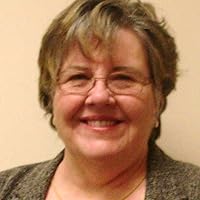
Plum Johnson is an award-winning author, artist and entrepreneur living in Toronto. She was the founder of KidsCanada Publishing Corp., publisher of KidsToronto, and co-founder of Help’s Here! resource magazine for seniors and caregivers.
Cdn. writer how fairy tales formed her view of romance and relationships. Always looking for "Prince Charming", she met a few, but often turned out a frog. Women read fairy tales, romance books, movies, etc. They say they know its just fiction, fantasy, but I think it often blurs over into reality. Despite social media, dating apps, for many younger women its easier retreating into book BFs than finding a strong men these days IRL. I think many women will relate to this story.
I'd thoroughly enjoyed They Left Us Everything so I grabbed this when it came available. Plum Johnson grew up in a post-war, ultra traditional household - overbearing, occasionally violent father, intellligent, peace-making mother, and four younger brothers. I must say that if I'd met this author in our youth we'd never have had anything to do with each other - completely different economic backgrounds and opportunities, and wildly different personalities; but some of our lived experiences have turned out to be so very similar we could get together now and shmooze over them. Which I guess we just did while I was reading her book - she poured out everything, and I soaked it all up. I stuck with it all, albeit with a few eye rolls over the ghosts, telepathy and psychic stuff, and am giving it 4 stars.
Book Review: The Trouble with Fairy Tales: A Memoir by Plum Johnson Rating: 4.5/5
Narrative Depth & Public Health Intersections Plum Johnson’s The Trouble with Fairy Tales is a piercing deconstruction of gendered socialization, framed through her lived experiences as a daughter, wife, mother, and artist. While primarily a memoir, the book inadvertently critiques public health paradigms by exposing how patriarchal narratives (e.g., happily ever after) contribute to women’s mental health burdens—from self-silencing in relationships to delayed self-actualization. Johnson’s account of midlife reinvention mirrors resilience frameworks in women’s health literature, particularly her discussion of creative expression as trauma processing.
However, the book occasionally universalizes middle-class experiences, overlooking systemic barriers (e.g., economic precarity, racialized stereotypes) that compound fairy tale disillusionment for marginalized women. A deeper intersectional analysis would have strengthened its societal relevance.
Emotional Resonance & Craft Reading Johnson’s memoir felt like dismantling my own childhood storybooks—equal parts liberating and unsettling. Her wry dissection of Prince Charming tropes (e.g., He rode in on a horse, but forgot the emotional saddlebags) triggered visceral nods, while passages on artistic rebirth (Painting myself back into my own canvas) brought tears. The chapter Bluebeard’s Closet, where Johnson confronts inherited relationship patterns, lingered with me for days as I reassessed familial scripts.
Yet the nonlinear structure, though intentionally reflective, sometimes disrupts narrative momentum. The abrupt pivot from humorous dating anecdotes (Chapter 3) to raw grief over lost opportunities (Chapter 4) risks tonal whiplash.
Constructive Criticism
Strengths: -Cultural Critique: Exposes fairy tales as public health hazards—social determinants of women’s self-worth. -Generational Bridge: Offers Gen X/ X/Boomer women a rare representation of unglamorous but triumphant aging.
Weaknesses: -Scope Limitations: Toronto-centric settings and heteronormative framing narrow its applicability. -Solution Gaps: While diagnosing fairy tale harms, it underdevelops actionable coping strategies.
How I would describe this book: - A Silent Spring for romantic idealism—Johnson sprays pesticide on the toxic myths choking women’s growth. - Eat Pray Love’s wiser, grittier Canadian cousin—no Bali sunsets, just hard-won selfhood. - Memoir as mirror: If you’ve ever dated a ‘frog’ expecting a prince, this book is your intervention.
Gratitude & Final Thoughts Thank you to Penguin Random House Canada and Edelweiss for the review copy. Johnson’s memoir transcends personal storytelling; it’s a case study in narrative therapy’s power. I’ll be recommending it to my public health mentees as a companion text to The Body Is Not an Apology for discussions on dismantling harmful social scripts.
Rating: 4.5/5 (Docked slightly for intersectional blind spots, but a vital contribution to feminist life-writing.)
I loved They Left us Everything, have read it a couple of times. I live in Oakville, not far from the house in the book, so felt kind of involved in the whole story. This book, not so much. I still found Plum's life interesting to read about but just didn't feel as connected as I did to the first book. Loved the cover though!
“Curiosity unleashes our creativity and takes us to the artist within, that unconstrained space inside our head, the infinite possibilities of our imagination. You never know where life can take you.” p.270 Appreciate this thought. Really enjoyed Plum Johnson’s first memoir, They Left Us Everything, and read it 3 times, which is exceptional. Also enjoyed hearing her talk about this book during interviews afterwards so I was looking forward eagerly to reading The Trouble With Fairy Tales. Alas, I found myself feeling very sad for her sadness. Her sense of humour, which was lovely in her first memoir, seems to have deserted her?
Bought this after having heard Plum Johnson interviewed at July 2026 Lakefield Literary Festival (along with Merilyn Simonds). Took to her (both of them) immediately, and am already enjoying The Trouble... just a chapter in.
I purchased this book, based on the title which lead me to believe there would be in-depth discussion regarding specific fairy tales and how the author’s life incorporated those fairy tales. This lasted for the first few chapters but begins to drop off following her marriage to PC.
Until I read this book, I had never considered the fact that creativity could be a curse as well as a blessing as the author struggles to utilize her talents and earn a living. She also struggles to maintain long-term satisfying relationships and makes many major mistakes over the years.
On a positive note, the descriptions are beautifully written and many of the stories are interesting. Unlike others, I was not bothered by the ghost stories or visits to a psychic .
My main purpose in reading memoirs is to learn from the experiences of others in hopes of gaining knowledge and insight into my own life. There was little that I could actually apply other than being grateful for the life I have lived.
If you enjoy coming of age stories regarding women in the 1960s through the current time period, you might find this to be interesting.
This entire review has been hidden because of spoilers.
Author of RBC Taylor Prize winner They Left Us Everything, about clearing out her parents’ home in Oakville, Plum Johnson is back with her second memoir The Trouble with Fairy Tales, where she looks back on her early years searching for love, framed within the structure of fairy tale characters, talking about her first husband, Prince Charming, and other men along the way including the Pied Piper, who led her on a wild goose chase through Europe, a troubling relationship with Bluebeard, and more, all the while looking for her purpose, in founding a parenting newspaper called Kids Toronto, in writing, creating art, and raising a family. It's funny, poignant and reflective, a book that will have you thinking about the meaning of your own life.
Toronto author Plum Johnson's second book is somewhat like the first as it takes normal storylines and comes at them from a unique and surprising angle. The first book made me think of all the things collected in thousands of homes by aging parents with the hope that some offspring would be thrilled to have them. This book talks about the men in the author's life and how she worked her way through the feelings each elicited and her own reactions to these men. I found the title of this book quite a wise choice but I was less enthused about the story line. Perhaps others who have experienced Plum's life events might be more excited about this book.
My mother would have enjoyed this memoir in her parallel role as minister's wife. Author Plum Johnson describes her young aspirations as an artist in the face of traditional stereotypical female roles of the 1960s and 1970s. After a marriage and having three children, the Plum Johnson recreates her life by following her artistic dreams. During one of her drama courses, after seeing artist Seymour Segals' hockey paintings and reading Hugh's philosophical and metaphysical analysis at hockey and the sport's similarities to sex in "The Art of Hockey", the author shares her interpretation as a presentation to her class.
It was a DNF for me, and I finish everything. I loved They Left Us Everything, and as an Oakville resident and friend-of-a-friend of the author I was really looking forward to this one. But to me, it read like a pretentious name dropping tale of someone who was so privileged that she was unaware of her privilege, and an almost Forest Gump tale of inserting herself as essential into history. I really wanted to love it, but I couldn’t.
A memoir. This was written so Johnson could put on paper her life, her troubles, to put her life into perspective, how people she knew guided her closer to fulfilling her dreams of being an artist and an author. At times I thought to call this a DNF but as I read, being close to my age, living west of Toronto, reading about familiarities, I began to read Johnson’s story through her eyes and heart.
Listened to the audio version and so glad I did. Plum is an extraordinary storyteller who has led a remarkable life. I admire her for being so ahead of the times and for sharing her vulnerabilities. I've read and heard of other women ahead of their time but Plum's story hits close to home because of her connection to both Oakville and Toronto.
They Left Us Everything is one of my favourite books. It could be because I grew up in Oakville and could visualize all the places she talked about. I enjoyed this book too, but couldn’t relate to it. There was some repetition in this book from her first one. I enjoyed reading about familiar places, but the carefree way she approached relationships was foreign to me.
3.5* A 🇨🇦Baby Boomer dropping Julie’s Mansion, Oakville/Lakeshore, St Clair West references is an easy pull. The fairy tale metaphors for chapters in Plum’s life were thought provoking. The creativity this woman has in every endeavour is incredible. This is the second book I’ve read of Plum’s and enjoyed both. Recommend to any female 🇨🇦 boomer.
Sadly I am DNF’ing this one. It’s just not living up to my expectations after They Left Us Everything. Too much treading of similar territory - just framed differently.
Thanks to the publisher and Edelweiss for granting me access to an early digital review copy.
I really loved this memoir!! I’ve always felt similar to Plum, thinking love is a fairy tale and you’ll meet a Prince Charming and he might have to change a bit but hey, it’ll happen… right?
I thought the book was well-written and I really enjoyed the humor. If you’re a fan of Susan Orlean, I think you’ll like this one.
Thank you Viking and Net Galley for an advanced copy of this book.
I wasn’t sure if this was going to be the book for me when I started it, but I’m so glad I stuck it through. This wasn’t an exciting read, but it was interesting and enlightening about the journey of womanhood. Great read!
I read Plum Johnson's first memoir, They Left Us Everything and enjoyed it so much I decided to read this one. I love her style of writing and it was so interesting to hear about her life. Hope she writes another book.
Considering the eternal "who am I ?" question in various stages of evolving through the lenses of fairy tales Plum weaves a grand tale. Touching on family entanglements , insecurities, and misunderstandings the author strikes that "me too" , chord.
DNF - my eyes keep glazing over. Maybe I’ll come back to this later, or try her first memoir instead. From the synopsis I thought it would hit right now but I’m finding it a bit slow-going to start. Will come back.
Plum is just the kind of kooky, put-up-with-no-shit person I would have loved to have as a friend. A delightful memoir -- wise and witty and utterly charming.
Read in almost a single sitting and enjoyed so thoroughly that I'm not even docking it a star for getting the name of The Bridge on the River Kwai wrong.
I read They Left Us Everything a number of years ago and loved it, so was eager to read this. I didn't connect to it as much but I love her writing style.