Роман Сіґрід Унсет, нобелівської лауреатки, присвячений героїні Єнні Вінґе — норвезькій емігрантці, яка вивчає мистецтво в Римі і належить до богемної тусовки, що досліджує стародавнє місто. У пошуках справжнього кохання, вона спочатку має залежні романтичні стосунки, а потім бореться за свою свободу. Водночас Єнні вимагає від соціуму розуміння її вчинків, живучи у місті, завжди відчуває спокусу комфорту провінції. Цей роман — глибоке психологічне дослідження соціального аутсайдерства жінки, яка постає проти узвичаєних соціальних традицій, тому текст також можна розглядати як художнє дослідження екзистенціалізму. Сіґрід Унсет порушує проблеми вільної любові, інцесту та визнання справжніх жіночих бажань. Сіґрід Унсет опублікувала психологічний роман «Єнні» у 1911 році, коли сама була ровесницею героїні, тож твір подекуди має автобіографічні риси. Українською мовою перекладено вперше
Sigrid Undset was a Norwegian novelist whose powerful, psychologically rich works made her one of the most significant literary figures of the 20th century. Best known for her medieval sagas Kristin Lavransdatter and The Master of Hestviken, she was awarded the Nobel Prize in Literature in 1928 for her vivid portrayals of life in the Middle Ages, written with remarkable historical detail and emotional depth.
Born in Denmark to Norwegian parents, Undset spent most of her life in Norway. After her father's early death, she had to forgo formal education and worked as a secretary while writing in her spare time. Her debut novel Fru Marta Oulie (1907) shocked readers with its opening confession of adultery and established her bold, realist style. In early works like ,i>Jenny (1911), she explored modern women's struggles with love, freedom, and morality, often critiquing romantic idealism and social expectations.
Though she gained recognition for her contemporary novels, Undset felt increasingly drawn to historical fiction. This shift led to her masterwork Kristin Lavransdatter, a trilogy published from 1920 to 1922, which follows the life of a woman in 14th-century Norway as she navigates love, faith, motherhood, and spiritual growth. With its intricate character development and deep moral themes, the trilogy brought her international acclaim and remains a cornerstone of Scandinavian literature.
In 1924, Undset converted to Roman Catholicism, a profound personal decision that shaped her later writing. Her tetralogy,i>The Master of Hestviken (1925–1927) centers on a man burdened by unconfessed guilt, offering a deeply spiritual and psychological portrait of sin and redemption. Her Catholic faith and concern with ethical questions became central to her work and public life.
A vocal critic of both communism and fascism, Undset fled Norway after the Nazi invasion in 1940. Her books were banned by the occupying regime, and she lived in exile in the United States during the war, advocating for Norway and the Allied cause. The loss of her son in the war deeply affected her, and although she returned home after the war, she published little in her final years.
Undset’s legacy rests not only on her historical novels but also on her fearless exploration of conscience, duty, and the human condition. Her characters—especially her women—are fully realized, flawed, and emotionally complex. Her writing combines psychological insight with stylistic clarity and spiritual depth, making her work enduringly relevant and widely read.
This was my third Norwegian writer in a row, after knut hamsun and Henrik Ibsen, but whereas they felt Scandinavian in nature, Sigrid Undset's novel 'Jenny' had more in common with E. M. Forster, Gustave Flaubert and even Thomas Hardy. I didn't really know what to expect, knowing little of both novel and writer (apart from her 1928 Nobel prize), and was taken aback by some gorgeous writing, that was lively, bright, and modernistic considering its age, before the narrative turned into a more sombre affair filled with a mournful sadness, but one that never over powered in the sentimental department.
The novel in essence, looks at the unflinchingly realistic depiction of a women struggling for independence and fulfillment in a male-dominated world. Jenny Winge is a talented young Norwegian painter who journeys to Paris, Florence and then Rome to seek inspiration. The story opens in Rome, where she and her friends spend their days pursuing their dreams, and their evenings socializing in the city's restaurants. Jenny, unlike her sexually liberal friends, vows to keep her virtue intact, that is until she meets fellow Norwegian Helge Gram. Putting aside the art and historical studies for a while, they spend much time in each others company, and eventually become lovers, with plans to marry in the coming months. The eternal city really captures a vibrancy in their coming together, like a holiday romance but one that will continue back on home soil. But this life is a world away from their native land. And it's not long before the cracks start to appear.
On returning home to Norway, Jenny meets Helge's parents, but the atmosphere in the Gram household is one full of jealousy and hate that weighs heavy on her shoulders. Helge's father Gert, a failed artist and womaniser takes an affectionate interest in Jenny, which she succumbs to in a confused and dissolutionate state. Is she love sick, or just sick? as her relationship with Helge slowly dissolves. Her plight is worsened when she discovers she is carrying Gert's child, and in a brooding mood, travels away, alone, where matters would only tragically go downhill, losing faith in herself and those trying to help her, leading to a finale that shocked, but still didn't surprise me. No happy ending here.
Undset's masterly depiction of Jenny's evolving emotions makes one realize that one is in the presence of an acute observer of the way not just lovers, but people generally behave, think about, and react to each other. Some may argue Jenny's actions of destroying her artistic ambition and herself could be deemed false or unrealistic, pushed too far, and too quickly. How can a confident young woman one minute, turn into a lost and frightened of life person the next. But who knows just how terrible she was suffering, the shame she burdened really knocked the stuffing out of her. The way she deals with her different surroundings and inner desires is realistic told, and the stream of consciousness plays a big role to show Jenny's uncertainty and conflicts, and the battle she seems to be fighting when it comes to love, a love not just for others but also herself.
The writing is direct and dramatic in a manner whereby mishap and misery are discussed openly, and the weighty issues Undset examines - unrequited love, betrayal, and mortality, are infused with a lingering melancholy. But it's not all misery, as when the sun fills Undset's heart, she writes some beautiful and idyllic parts to the story, conjuring up some wonderful imagery.
I was all set to give Jenny four stars, but thought no, as I found this to be a most fulfilling novel, and surprisingly fresh in terms of classic fiction, with some passages of writing that simply took my breath away. There is a strong sorrowful bleakness to it, but there were also moments of light, filled with warmth and comfort. Undset provided much psychological insight into the lives of her protagonists and an enviable skill to tell a capturing and realistic heartfelt story.
I didn't grow up with this book, nor was I familiar with it, but when I was doing my 70s reading project last year, a friend on here suggested it, assuming it was a 70s read.
This middle grades novel was originally published in 1966, then reprinted in the 70s, but, sadly, it's out-of-print now (though I was able to get an inexpensive copy through Thrift books and I see that Amazon has several copies available right now).
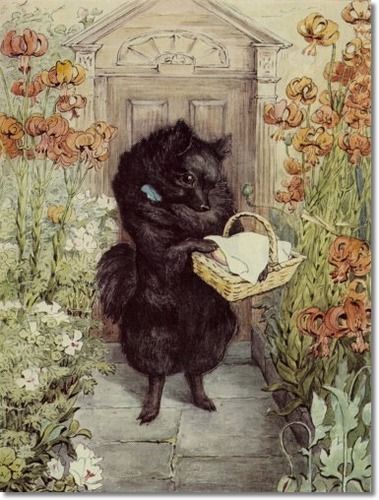
It didn't qualify for last year's project, but I've wondered about this precious chapter book with a little girl and a Schipperke pup on the cover.
Turns out the author, Gene Inyart Namovicz (née Betty Gene Inyart), was a proud owner of Schipperkes (skip-per-kees), a dog breed made famous by Beatrix Potter in one of my favorite short stories of hers, “The Tale of the Pie and the Patty-Pan.”
She was also a librarian and a mother of four, and I got tears in my eyes when I found her obituary online and read that she had always fancied herself a writer, but she wasn't sure that she had really made her mark, in that department. Apparently her “day job” as a librarian and the raising of four kids (and, of course, all of those dancing Schipperkes!) took so much of her time, she wondered about her creative work and if her writing had meant anything to anyone.
Well, I can't speak for anyone but my 12-year-old daughter and myself, but we can easily declare this book a complete delight. My youngest child is the harshest book critic (and food critic), at our house, and she didn't hesitate to give this story five stars. She told me that she felt as though she could read a few pages of it every day.
I felt exactly the same way. Jenny, published in the mid-1960s, isn't the least bit dated, and the story honors a precious time in history when children had freedom, safety, and no devices to distract them from the wholesome play and curiosity that growing human beings are meant to have.
My first Sigrid Undset, Jenny is the tale of a woman who is undone by her high moral standards and her desire for true love. At twenty-eight, Jenny is already at an advanced age for any unmarried woman of the time. She is a compassionate and caring person, but she holds her emotions at arm’s length in order to avoid any moral slip-up, primarily because she does not want to damage her chances with the “right man” when he finally comes . She wishes to be able to give herself to someone with complete trust and abandon, but consumed by that desire, she agrees to wed the wrong man.
Her friend, Cesca, states about herself, That is why I think sometimes I ought to go into a convent. When I am outside a trouble I seem to understand it all, but when I am mixed up in it myself I can’t see a thing. Perhaps this is true of all of us. It certainly would apply to most of the characters here...they do not see their own limitations or the solutions to their own problems clearly at all. Jenny, I think, is particularly unable to see either the flaws in her plan for her life or how to move forward after her mistake, which shatters them, has been made.
The way Jenny stumbles into her tragic course is so poignant. She is so unaware of her danger before she is consumed by it.
One day, I made a slight change in course. It seemed to me so difficult and harsh, living the life I thought was the most worthy – it was lonely, you know. So I veered away for a moment, wanting to be young and to play a little. And then I was caught in an undertow that carried me off, and I ended up in circumstances that I never for an instant imagined it would be possible for me to be anywhere near.
I was reminded of Edith Wharton while reading this novel. It deals with a smart woman who has both intelligence and skill, but who is tied to societal norms and expectations and finds happiness a rather elusive creature. It explores the nature of love and desire in ways that must have been a little shocking for its contemporary audience.
And, amid this confusion, we are offered some views that seemed undeniably true to me.
Shall I tell you something of what I know about love, little one? If I did not believe in it, I should not have the least particle of faith in men--or in myself. Do you believe that it is only women who think life meaningless, and find their hearts empty and frozen if they have nothing but their work to love or to depend upon? Do you believe there is a single soul living who has not moments of doubt in himself? You must have somebody in whose keeping you can give the best in you--your love and your trust.
I think this is true. Human beings who try to substitute work for love and family, often find themselves alone and sadder. Every heart yearns for a partner in life who will feed the soul. If you close yourself to pain you might also close yourself to joy. But what to do when you have opened up to the possibility of pain and find you have made a mistake in your choice?
This is a moving, well-composed story and one that I’m sure I will be thinking about for a while.
This is a heartbreaking story set in the distant past about a young Norwegian woman artist who is torn between her desire for self-development and her longing for true love. However, the values and principles behind the actions of the protagonist could well reflect the moral dilemma of many decent women of today with an educated mind. Is love or work more important?
Born to an unwholesome family where fatherly love is lacking, Jenny has always had to fend for herself while growing up. Her greatest attributes – independence, sense of responsibility, moral fortitude, diligence, compassion for the weak – could be her invincible armor against any adversity in life.
Just as she is set to go out and conquer the world, armed with artistic talent and an optimistic outlook on life, she trips up by making one small mistake – letting herself grow weak and be pampered by a short moment of tender love that she’s been long thirsting for – and she loses all control over her own fate.
During her fateful love affair and in the aftermath, her independence, sense of responsibility and moral principles drown her in an emotional ebb of guilt, remorse and shame and abandon her to carrying all blame on her shoulders. Her disinclination to hurt others sends her into a downward spiral, from which she never recovers. Her greatest attributes become her greatest curse. Her life is ironically ruined by her longing for true love.
Jenny said this to Gunnar, which sums up her life: “One day, I made a slight change in course. It seemed to me so difficult and harsh, living the life I thought was the most worthy – it was lonely, you know. So I veered away for a moment, wanting to be young and to play a little. And then I was caught in an undertow that carried me off, and I ended up in circumstances that I never for an instant imagined it would be possible for me to be anywhere near.”
The novel makes one wonder: can the female soul ever overcome the longing for true love? Are women in truth just like what Gunnar describes: “so strong and erect in her striving, and yet so frail and brittle.”?
Ne znam mnogo o Sigrid Unset, osim da je dobila Nobelovu nagradu negde između dva svetska rata i da je pisala istorijske romane. Uprkos očekivanju uobličenim skromnim znanjem o ovoj autorki, ispostavilo se da „Jeni” nije istorijski roman i da je radnja smeštena na početak dvadestog veka te je u savremerju sa trenutkom objavljivanja romana 1911. godine.
„Jeni” me je podsećala na Mopasanove romane i to iz više razloga: nedopadljivi likovi, ali koji su psihološki ubedljivi da postanu bliski, mučni porodični odnosi, životne dileme koje se razrešavaju čemernim antropološkim pesimizmom, hladan stil, melodramski raspleti, upečatljiva deskripcija, itd. Mada opet kod Unset postoje naznake religioznosti, ljubavi kao milosrđa, i drugih stvari koje ne mogu da zamislim kod Mopasana.
Glavna junakinja Jeni je talentovana slikarka, racionalno i snažno biće, predusetljivo i stožer za ljude oko sebe, reklo bi se jedno od onih ljudi koje nikada nisu imale detinjstvo već su od malena odgovorni i vođeni idejom da naši svesni izbori definišu život. Otputovavši u Italiju, gde boravi u društvu drugih slikara, Jeni naizgled ne propituje svoj život. Ima 28 godina, vreme kada se čine gluposti je prošlo, a Jeni nikad nije činila gluposti jer je ona oduvek znala svoj put i smatrala ga je najdostojnijim. A opet u jednom kratkom trenutku, možda zbog prejakog sunca, učinilo joj se da je put težak i ozbiljan a ponajviše usamljen. Poželela je da samo na trenutak da se prepusti. Ali kratkotrajne slabosti nisu nikako dobra stvar na duže staze, posebno ako se sa junakinjinom filozofijom „svako je kovač svoje sreće putem pravilnih izbora” ne slaže autorka (a ona ima svu moć jer drži u šaci pero), te naposletku nije stvar u tome što je ljubav slepa, mnogo je gore što je razum barem isto toliko ćorav.
Prevod (potpisan samo inicijalima) je u nekim delovima suv i končast kao prezrela boranija, iako se oseća da to nije bila namera prvobitnog teksta.
Some classics are classics for a reason. That being said, I don't understand why this book isn't more famous, at least in Sweden (it may very well be more famous in Norway). Perhaps it's the fatalistic touch, the melodrama, and the female main character that pose a problem - because I had never heard of it before I found it a flea market 3 or so years ago. Undset is of course überknown in Scandinavia for Kristin Lavransdatter (which shares some traits with Jenny), and I read that one at age 14, but I kind of wish I could have read this one earlier as well.
At the same time, it's very fitting to read it now. The book features Jenny, who is 28 (my age!), living temporarily in Rome, pursuing a career as an artist, and who struggles to *be* a person, to be social, to fall in love, etc. This is something as interesting as a book about a woman (hence a book about romance, we all know that), but about a woman who is unable to fall in love. And it's not a coming-of-age type of book, because she's already very much an adult. She has already come out of her shell, but that doesn't necessarily mean that everything will go smoothly from there.
I really, really enjoyed reading this. Undset is a fantastic author; no cardboard characters, no pointless passages, no misplaced lines or weird pacing, everything is really perfectly crafted and thought through. People talk a lot about ideas, but they never, ever sound cliché. People talk naturally, that is they interrupt themselves and each other, they don't finish their sentences, they ramble and lose track of what they were saying. In the dialogue, the only disruptive element for a modern reader is the old-fashioned danified Bokmål!. The humor - what little there is of it in a book of this serious a nature - is still funny today! Not everything in the book is actually featured on the pages; all of a sudden, a new chapter begins, and we understand immediately that some quite big events have taken place, but we are left to imagine them for ourselves. Also, perspectives change throughout the book and there's nothing confusing or unnatural about it.
Extra points, of course, for what was probably quite radical views on women and men and relation between the sexes expressed by various characters in the book (notably Gunnar).
I admit I am unable to understand a woman who blames herself for not having loved the men she had some relationships with. They are not actually loveable, the way they are portrayed. Jeny’ s sensibility remains totally inscrutable for me. Did she really want to become an artist or she wanted only to love a man and have a family or both? She could have had that! What did she want of life? What did she expect from herself?
It is clear that Jeny, a woman living at the beginning of the twentieth century, was trying to find a balance between her desire to have a family and children and her artistic inclinations, which was very difficult at the time. But still, I believe she could have found it, if she had loved and respected herself.
A poignant novel about a deeply confused woman and her overcomplicated relationships with everybody she had contacts with. She did not want to share anything even with her own mother or with her best friend. Although the book has psychological depth, I find it impossible to uncover the reasons behind the main character’s misery. Perhaps she never wanted to find happiness and fulfilment in life however weird that may sound. I see some discrepancy between the beginning of the story and its unfoldment and am feeling so confused myself now I have closed the last page. Is it my fault that I cannot put myself into Jeny’s shoes, which some of the mail characters in the book did? As a woman I cannot identify myself with Jenny.
Не знам как да тълкувам тази книга. Развълнува ме до известна степен, но все пак не мога да се отъждествя с главната героиня, защото изобщо не я разбирам. Какво иска и очаква от живота? За какво изобщо се обвинява? Толкава много мъже влюбени в нея, а тя не обича никого от тях. Случва се, не проумявам какво точно я пречупи. В началото на романа нямаше податки, че е психически толкава лабилна и объркана. Или у мен има нещо сбъркано, или този роман е прекалено песимистичен и сантиментален. Някои сравняват Сигрид Унсет с Томас Харди. Аз тук не видях дълбочината на “Тес от Д’Ъбървил, която нямаше избор, от самото начало беше обречена. Йени през цялото време имаше избор, но като че ли не желаеше да го види. Възможно е нещо от епохата да ми убягва или от норвежко-датската чувствителност.
It could have been written by Edith Wharton with tragedy of centeral woman characters, well controlled prose and social-psychological insight. It might lack a bit in beautiful phrases but that might be just translation, otherwise fans of Edith Wharton will enjoy seeing Sigrid Undset do to European art class of her time but wharton does to American luxurious class of hers.
I did not find this Undset novel set in her contemporary time as engaging as her seven novels of her Kristin Lavransdatter and The Master of Hestviken series set in the 13th and 14th Century. I will comment on the novel’s general issues, structure and style, hopefully, without revealing too many plot details.
The novel centers on the Norwegian artist Jenny and how she addresses such issues in her life as trying to be true to her painting career, what it means to be in love, how to deal with a tragic loss and when and who to love and/or engage in sex with. The novel follows Jenny from her time with fellow expatriate artists in Rome through Norway, Germany and back to Italy and Rome.
The manner in which the book’s issues were addressed was much more in the Zola realistic school than I anticipated. But rather than examining the harsh realities of the working and middle class, Undset examines the life issues among the artistic bohemian set whose members must be from the upper class as they always seemed to have sufficient money for living and travel.
Unlike with Kristin Lavransdatter, Jenny’s story and exploits never fully engaged me. I accepted Kristin L’s flaws because I understood her complex character with all its strengths and flaws. With Jenny, although she often talked about sex, love and art, I never quite understood her attitudes toward these subjects or why she chose to take certain actions. I tried to have sympathy for Jenny but her rationalization for some of her odd behavior choices really hindered my ability to maintain either empathy or sympathy for her. . The structure of the book also threw me off at the beginning. During the novel’s early section set among the artistic set in Rome, if the book’s title hadn’t been Jenny. I would have thought the central character was Helge, another young Norwegian in Rome. However, after a spell the novel does get around to presenting Jenny as the main character while relegating Helge to a supporting player. It probably didn’t help that I was having the same problem with identifying the central character while concurrently reading Charlotte Bronte’s Shirley, where the title character doesn’t even appear or is even mentioned in the first third of the book.
On the positive side, this novel, as usual with Undset, does have clear, lovely and descriptive writing. The writing was effective enough that I didn’t get bogged down even during some of the fairly head-scratching discussions on art or love. While my difficulty with relating to the characters and the structure make this a 3 star novel, I’ve moved it up to 4 stars because of the quality of Undset’s writing.
A- Excellent but devastatingly sad book. A young talented female artist is living in Italy, a wonderfully free life to focus on art, friendship, and fun. After a young man pursues her, she falls in love. However, love on vacation does not work out in real life. As her lover proves to be controlling, and familiar issues get in the way, she falls into a romance with a rather unusual choice. Love and heartbreak destroys her life, and this heartbreaking story is sad, gorgeously written, and will haunt the reader for a while after.
Vad hon är generös Jenny! Hon bjuder mig ner till Italiens varma vindar och tillbaka till ungdomens lättsamhet, faktiskt tar hon mig så långt som till sekelskiftet – före världskrigens ondska. Tillsammans med Jenny upplever jag känslopalettens alla färger från epifani till bedrövelse. Hon erbjuder mig sin hand och ibland tar jag den, ibland slår jag bort den. Jag känner livet i mig tillsammans med Jenny.
Boken om Jenny Winge är som en antik grekisk tragedi då den innehåller religiösa dogmer och redan på första sidan bocksång; det är den blivande fästmannen Helge Gram som gnolar ”Nej, på kvinnan blir man aldrig klok”. En stor del av stoffet utgörs av intressanta samtal om moral och läsaren är fri att hitta sin egen filosofi. Jennys ambitioner att ikläda sig madonnarollen är ett tecken på hybris, menar jag. Hon tror sig (inledningsvis) vara stark nog att klara sig ensam och stå emot sexualitetens kraft. I ett antikt drama är det förutbestämt hur det ska gå för tragedins hjälte; hon blir utsatt för nemesis och slutet är olyckligt. Eller är det egentligen det?
Jenny ledde, när den kom 1911, till den norske författarens genombrott. Knappt två decennier senare fick hon som tredje kvinna någonsin mottaga nobelpriset i litteratur. Sigrid Undset är starkt förknippad med sin medeltida trilogi Kristin Lavransdotter som verkligen är värd sitt goda rykte. Den här är minst lika läsvärd, menar jag. Prosan är fängslande och den psykologiska medvetenheten imponerande. Jenny har åldrats väl.
”.. hon gick här och var sjuk av kärlekstrånad. Hon skrattade. Det var just det hon var. Föremålet existerade tillsvidare inte – men kärleken den fanns där.”
Denna tragedi är indelad i tre akter som innehåller en man vardera och är tre trappsteg ner mot undergången. Första delen är lekande lätt och förhållandevis bekymmerslös. En ung Jenny har lämnat sin ensamstående mor och sina syskon i Norge för att med jämnåriga leva bohémliv i Rom. Tropen med gänget av unga, intellektuella, sökande, konstnärssjälar som förhåller sig till varandra i ett virrvarr av kärlek, rus och vänskap känns igen och skulle kunna vara föregångare till Samlade verk eller Trion. Jenny är på toppen av livet, hon är glad, har höga ideal och tilltro till sig själv som konstnär. Hon längtar efter kärlek men inte efter någon man. Men hennes väg nedåt börjar när hon plötsligt ger efter för lusten och kysser en man för första gången i sitt 28-åriga liv, den gnolande bocken Helge Gram.
Andra akten utvecklas till en psykologisk thriller. Trots att den här berättelsen lunkar på i ett behagligt långsamt tempo är den så rafflande att jag ibland kommer på mig med att hålla andan. När Jenny träffar sin svärmor bubblar det i mina ådror och pyser i locket. Jenny faller nu fritt, väl gestaltat med vilken man hon nu blir tillsammans med.
I tredje delen är ödeläggelsen ett faktum, inte ens den ”snälle killen” kan rädda henne. Inte lär hon få några vingar att flyga till himlen med heller. Drömmen om madonnan blir en mardröm.
Eller vad handlar den komplexa Jenny egentligen om?
Jag håller i en skatt från 1928 med förgyllt snitt i mina händer. I den finns ett något mindre glimrande förord av Fredrik Böök. Han hävdar att Jenny liksom alla andra kvinnor är bräckliga som liljeväxter, ”när den en gång blivit bruten är sagan slut”. Han liknar Jenny vid hermelinen som om den får en fläck på sin vita päls biter sig själv ihjäl. För göken Böök är Jenny en varning till kvinnor som vill leva i frihet och en hyllning till det konservativa äktenskapet. Tillåt mig skratta åt detta önsketänkande. Undset skriver: ”Mitt emot Jenny sutto två unga fruar. De voro kanske inte äldre än hon själv, bara medfarna av att tassa omkring i äktenskapet några år.” En liljeväxt skulle aldrig kunna föda ett barn. Både Bööken och hans åsikter är tack och lov begravda sedan länge.
I nyare utgåvor finns ett förord av Ebba Witt-Brattström. Hon hyllar inte bara Jenny utan också Gunnar Heggen. Gunnar är den snälle killen som är Jennys vän men i sista delen friar till henne för att med sin kärlek rädda henne från undergången. Han tror att han älskat henne hela tiden, men tillåt mig invända. Jag tror att han börjar älska Jenny när hon blir svag. Han ville inte ha henne som skicklig konstnär, stark och energisk med stor aptit och gott självförtroende. När hon gråter blir han kär i henne, eller i drömmen om. Gunnar vill även han äga Jenny för att kunna kokettera med sin manlighet.
För mig står det klart att Jenny är en saga om den falska dikotomin att en kvinna är antingen ren/oskuld/vit/älskad eller smutsig/sexuellt aktiv/svart/älskarinna: Hora-madonna-komplexet. Jenny är metafor för madonnan och hennes vän Fransiska (Cesca) Jahrman är horan. Detta patriarkala synsätt på kvinnan är vad som förgör Jenny. Diegesen om Jennys skolning in i heteronormen utgör en slags omvänd utvecklingsroman. I samma stund hon ger sin sexuella varelse utlopp förlorar hon fotfästet på piedestalen och den falska identiteten krackelerar, madonnan störtar.
Varje kvinna är en sammansatt individ och kan inte reduceras till varken den ena eller andra stereotypen, således finns det varken horor eller madonnor. Det betyder att Jennys död på ett teoretiskt plan inte behöver vara sorglig. Det är stereotypen madonnan som dör medan horan däremot lever vidare, lyckligt rent av. Ska man prompt läsa Jenny som en varning är det nog för drömmen om madonnan och risken med att underskatta sina lustar. Observera att detta också gäller män, som får sina liv raserade av att ge sig i kast med drömmen om madonnan.
Wow, denne likte jeg veldig godt! For å være skrevet i 1911, må jeg si Undset her leverer en særs moderne roman. «Jenny» tematiserer ekteskap, sorg og begjær på en ganske frittalende måte, så jeg kan forstå hvorfor denne ikke ble så godt tatt imot av konservative miljøer i Norge. Trist, fin og viktig historie! 4,5⭐️
Sigrid Undset riesce ad entrare nella profondità dell'animo femminile con un linguaggio semplice e pacato. Tramite Jenny, il personaggio principale, fa un ritratto di donna in cui molte si possono rispecchiare anche nei giorni odierni. Il libro è stato scritto nel 1911 ma i problemi, le preoccupazioni e i pensieri che affliggono Jenny non hanno età e sono intrinseci dell'animo femminile più sensibile. Jenny, pittrice norvegese, ha quasi trent'anni ed è una donna indipendente, forte, brillante, talentuosa e intelligente. Forte anche nei suoi valori morali, lo scopo della sua vita è quello di fare sempre la cosa giusta per non avere nulla di cui pentirsi o vergognarsi e di non far mai soffrire nessuno. È una persona buona di cuore, pura, sempre pronta ad aiutare e sostenere gli altri ma è anche una persona molto sola e severa nel giudicare se stessa. Stanca di essere sola, e rendendosi conto che soltanto il lavoro non può riempirle la vita, cerca di aprirsi all'amore per poter sperimentare l'ebbrezza dell'essere amati e dell'amare dando un senso alla propria vita. Ciò che cerca è l'amore vero, quell'affinità spirituale e intellettuale che dovrebbe unire due persone. Purtroppo le cose non vanno come aveva immaginato e quindi inizia un lavoro sempre più intenso e profondo d'introspezione per cercare di capire se stessa e ciò che vuole. È un libro che con un ritmo lento e rilassato ci fa entrare nelle profondità recondite dell'anima della protagonista; un'anima che lentamente si schiude per essere osservata e compresa dal lettore.
Jenny, c'est le récit d'une femme tiraillée entre sa soif de liberté et d'indépendance, la volonté de vivre de son art et l'envie de vivre une histoire d'amour et de se conformer à ce que la société attend d'elle.
J'ai trouvé ce roman très bien écrit, fluide, je me suis laissée happée par les sentiments ambivalents de Jenny. Après la lecture de la 4ème j'en attendais peut-être encore plus, on nous vend une histoire d'émancipation féminine et finalement sa vie tourne énormément autour des hommes. Mais on comprend aussi que, publié en 1911, ce roman a fait scandale en mettant en scène une femme qui tente de penser pour elle-même, qui ose faire ses propres choix et privilégier ce dont elle a vraiment envie : un scandale !
Sigrid Undset a reçu le prix Nobel de littérature. J'ai hâte d'en découvrir plus sur son œuvre.
This early novel by the Norwegian Nobel laureate is both sad and fascinating. Written in 1911, it reflects the social realist concerns of its time, portraying the ambitions and vulnerabilities of Jenny Winge, a young painter. The story unfolds in Rome and later in Norway, tracing her pursuit of independence and artistic fulfillment while confronting love, scandal, and the harsh judgments of society.
Undset’s unsparing realism makes Jenny’s fate deeply moving, and the novel endures as a striking portrait of women’s choices in the early 20th century. More than a century later, its themes of ambition, desire, and the cost of defying convention still resonate with remarkable force.
Åh men varför har ingen talat om för mig att den här boken finns! Jag är typ sur för att ingen stuckit den mig i handen, när jag gråtit och svurit efter mina misslyckade kärleksförsök, och kommit ur dem så stukad och på helt fel bana, från den jag stakat ut för mig i konst och skapande. Den och Alberte-serien, borde jag för det första ha läst som något slags förebyggande åtgärd, man kan ju försöka åtminstone, men också som ett plåster på såren, efteråt, för det är på en gång en lisa och fruktansvärt sorgligt, att det fortfarande är så svårt att både leva och skapa som kvinna. Jenny har ideal, hon vill vara god och sann och inte såra någon, men det detta ideal framför allt handlade om (i min läsning) är att vara sann mot sig själv. När hon väl föll för kärlekens iver, när någon kom och la sin kärlek i hennes knä och hon gav efter för att hon blev kär i kärleken och också ville få älska – när det hände och hon till slut insåg att hon ändå inte älskade, att hon lurat sig själv och lurat sin älskare, satan i gatan vad jag känner igen den smärtan. Och när hon går rakt i armarna på nästa, som också bedyrar henne sin kärlek men på ett annat sätt, så att hon tror att hon måste ge den till honom, för att hon känner medlidande med honom, och också en kort stund njuter av det för att sen inse att samma sak hände igen – den smärtan! Och inte målar hon då, inte sedan den första blinda förälskelsen, som dödades av vardagsliv och hennes svärmoders krav, och det fruktansvärda exempel som svärföräldrarna utgör, och det spel som hon tvingas spela för att älskaren, sonen, inte har ett uns karaktär i sin kropp, inte är det så konstigt. Fy fan. Och så går hon sen och tänker att det är hennes fel, och att hon inte förmår älska, när det bara handlar om tölpar som suger ut, som parasiterar henne för att få näring själva, det är så sorgligt! Jag har gråtit under läsningen, självklart helt subjektivt för det jag känt igen och känt egen sorg kring, men också för hennes skull, och det brukar jag inte göra särdeles ofta. Och slutet sen! Ve och förbannelse. Det här har varit en enastående läsupplevelse, och jag sticker den gärna i händerna på alla kvinnor som kämpar med att få kärlek och ett konstnärsliv att gå ihop, och även de män/partners som inte vill vara parasiter. Lyssnat (på cd i bilen främst, tills jag inte kunde hålla mig och har lyssnat inne på stereon också, medan jag virkat), och jag måste ge inläsningen en stor eloge också, Iréne Lind har gjort en enastående insats här, som passar ypperligt för boken, så pass att jag inte velat fortsätta läsningen i den fysiska boken, utan njuta av att få lyssna.
Having previously enjoyed Kristin Lavransdatter, I was interested to check out some of Undset's other works. Happily, I liked this early work of hers just as much.
This is an introspective and fairly bleak piece, but it paints an interesting picture of a woman in the early 20th century, trying to find her way through love and life. Jenny is a fascinating, if not entirely sympathetic, character and I quickly became immersed in her story.
I love the descriptive prose and Undset really used her words to great effect to bring the scenes to life. The portrayal of Rome is particularly well done and evocative.
I can highly recommend this book for those who don't insist on a truly happy-ever-after ending in their literary fiction.
Interesting first novel for one of my favorite authors. Takes dramatic, unexpected turns and character of Jenny blossoms, withers and ... won't spoil the ending.
En 1928, Sigrid Undset reçoit le prix Nobel de littérature, c'est la 3è femme a être reconnue par ses pairs. Publié en 1911, j'imagine sans peine ce que ce roman a du susciter d'opprobre et d'indignation à sa parution. Jenny. Qui est vraiment cette jeune femme de 29 ans toujours célibataire mais fière et pure ! je lui laisse la parole: "Je voulais vivre de telle sorte qu'il ne me faudrait jamais avoir honte d'aucun de mes actes ni comme être humain, ni comme artiste. Je voulais ne jamais commettre une action dont je ne fusse pas sûre qu'elle ne fût juste. Je voulais être honnête, énergique et bonne, n'être jamais cause de la douleur d'un autre. Et quelle a donc été ma faute initiale, celle qui a tout déclenché? Mon Dieu, j'avais soif d'amour, mais je n'aimais personne! "(p263) Jenny revendique le droit pour une femme de pouvoir vivre en harmonie avec celui qu'elle aime sans sacrifier son art. Un beau portrait de femme écrit par une très belle plume. L'écriture de Sigrid Undset est à l'image de la littérature de son époque, beaucoup de descriptions, décors, nature, de très beaux portraits des personnages, psychologiques et physiques. Après Vigdis la Farouche lu précédemment je compte bien continuer à explorer l'univers de cette grande dame de la littérature norvégienne.
I read the last few chapters of this book with my jaw on the floor. This is a novel that needs to be studied in lit classes, right alongside “The Awakening” by Kate Chopin. There’s so much to think about. “Jenny” is about a Norwegian painter living in Rome, and it’s a really vivid psychological picture of her inner unraveling. It’s beautifully written and is concerned with themes about love, ambition, womanhood, and virtue.
This is the fourth book I’ve read by Sigrid Undset now, and I think I prefer the Kristin Lavransdatter trilogy still, but I’m fascinated by the way she writes about women who can’t live up to their own high moral standards and eventually blame themselves for their downfalls. Definitely not happy books, but thought-provoking. I really think her work deserves to be studied in depth and I’m only scraping the surface as I read these books on my own.
Overraskende moderne og troverdige karakterer. Til tross for å være litt vel melodramatisk til tider så var dette en fantastisk bok om hvor komplisert og vanskelig livet til en moderne kvinne kan være. Moral, drømmer og virkelighet. Hva er det som egentlig er viktig for oss mennesker? Gleder meg til å lese mer av skarpe Undset.
This novel made me feel miserable, but I loved every minute of it. It felt so modern that I kept flipping back to the publication information to confirm that it really was written in 1911.
Sigrid Undset writes beautifully about human freedom and choices, competing desires, the impossibility of complete fulfillment from human relationships, and the tension between creative work and family life. Like other things I've read by Undset, this book is almost ridiculously dramatic, but Undset's writing is so gorgeous that once I just let myself enter the story and the minds of the characters (and abandoned all hope of a happy ending) I found it startling realistic and very moving. This is definitely one of the best books I've read this year.
My first Sigrid Undset. 💥 And what an unexpectedly thought-provoking, relevant and enraging read -- feminist for its time (with its observations on social reproduction, feminine labour and morality, that observation would become irrelevant, however, it does have to kill its heroine and does operate within the maternal framework).
First, boiling thoughts: Helge Gram can go f*** himself. The entire Gram family, in fact. Vile, vile, vile creatures. And entirely predictably so, perhaps not even realising their own malevolence. No - Helge and Grom simply take what they think is theirs.
The very last scenes...
“My glorious Jenny. How wonderfully beautiful you are. You are mine now, and everything will come right, will it not? Oh, I love you so.” - 🤮🤮🤮
And afterwards, having left, Helge wanders the streets, suddenly realising that throughout it all, Jenny never said a word: “He had dreamt of this meeting with her all these years. She, the queen of his dreams, had scarcely spoken to him, at first sitting quiet and cold and then suddenly throwing herself into his arms, wild, mad, without saying a word. It struck him now that she had said nothing—nothing at all to his words of love in the night. A strange, appalling woman, his Jenny. He realized suddenly that she had never been his.
Helge walked about in the quiet streets, up and down the Corso. He tried to think of her as she had been when they were engaged, to separate the dreams from the reality, but he could not form a clear picture of her, and he realized that he had never penetrated to the bottom of her soul. There had always been something about her he could not see, though he felt it was there.
He did not really know anything about her. Heggen might be with her now—why not? There had been another—she said so herself—who? How many more? What else that he did not know—but had always felt?...
And now—after this he could not leave her; he knew it—less than ever now. Yet he did not know her. Who was she, who had held him in a spell for three years—who had this power over him?
He turned on his way, hurrying back to her door, driven by fear and by rage.”
🤮🤮🤮🤮🤮🤮🤮🤮🤮🤮🤮
And even after she is buried, Gunnar is there, thinking how her secrets - and, therefore, she - is his. Despite his friendship, love (?) and affection, it circles back into ownership.
Jenny is a novel of disintegration. A quick turn -- and being carried away by the current. The desperate need for love -- how much we're told to abandon and forsake for it; how much we hope for it to be enough. And, most often, it is not. But, for the feminine (this is published in 1911), love has to be enough. For Jenny to claim that she is done with love, that is quite a grand refusal.
Gunnar's final thoughts - and he does have the final words of the novel:
And when I have lived long enough to be so full of longing as you were, perhaps I will do as you, and say to fate: Give me a few of the flowers; I will be satisfied with much less than I wanted in the beginning of life. But I will not die as you did, because you could not be content. I will remember you, and kiss your head and your golden hair and think: She could not live without being the best, and claiming the best as her right; and maybe I shall say: Heaven be praised that she chose death rather than living content.
Tonight I will go to Piazza San Pietro and listen to the wild music of the fountain that never stops, and dream my dream. For you, Jenny, are my dream, and I have never had any other.
Dream—oh, dream!
If your child had lived he would not have been what you dreamt when you held him in your arms. He might have done something good and great, or something bad and disgraceful, but he would never have accomplished what you dreamt he should do. No woman has given life to the child she dreamt of when she bore it—no artist has created the work he saw before him in the moment of his inspiration. And we live summer after summer, but not one is like the one we have been longing for when we stooped to gather the wet flowers in the spring showers. And no love is what lovers dreamed when they kissed for the first time.
If you and I had lived together we might have been happy or not, we might have done good or ill to one another, but I shall never know what our love would have been if you had been mine. The only thing I know is that it would never have been what I dreamt that night when I stood with you in the moonlight while the fountain was playing.
And yet I would not have missed that dream, and I would not miss the dream I am dreaming now.
Jenny, I would give my life if you could meet me on the cliff and be as you were then, and kiss me and love me for one day, one hour. Always I am thinking of what it might have been if you had lived and been mine, and it seems to me that a boundless joy has been wasted. Oh, you are dead, and your death has made me so poor. I have only my dream of you, but if I compare my poverty with others’ riches it is ever so much more glorious. Not to save my life would I cease to love you and dream of you and mourn you.
This entire review has been hidden because of spoilers.