Scenes from the Enlightenment: A Novel of Manners was published in 1939, toward the end of the Japanese colonial period in Korea, and depicts seemingly trivial events in the lives of the residents of a small town northeast of Pyongyang: a wedding between two local families, the arrival of box upon box of fascinating new Western products at the Japanese-run general store, a long-awaited athletics meet held at the local school. But in these events, and in the changing familial and social relationships that underpin them, we see a picture of a changing Korea on the cusp of modernity. When two boys decide to cut their hair in the Western fashion, the reader sees the conflict between tradition and modernity presented not in abstract terms, but in one of the myriad ways it affected the lives of those who lived through this time of change.
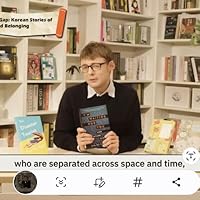
“Our pick for #KoreaBookClub with @barrypwelsh this week is 'Scenes From the Enlightenment' by Kim Namcheon, translated by Charles La Shure, a compelling family drama reflecting the changing society in early 20th century Korea. #김남천 #장편소설 #대하 #koreanliterature #한국문학”
Dalkey Archive Press have now published a number of Korean titles that otherwise might not have come to the attention of a Western readership, and I for one am grateful to them for enabling me to discover some truly interesting books. This one is no exception, and I enjoyed it very much. First published in 1939 it’s a portrait of life in a small village to the northeast of Pyongyang during the Japanese colonial period in the 1890s. The two main characters between them represent the old Korea and the new, and the tension between tradition and modernity. Bak Rigyun claims aristocratic ancestry, although he lives humbly enough now. Bak Seonggwon shares the same surname and claims the same ancestry but is a self-made man. Money has now started to be more important than lineage and social status. The transition to the news ways is exemplified in the two families. Korea was changing from a feudal, Confucian society to a modern capitalist one and everyone in the village has to adjust. The young men start cutting their hair. Fashion starts to change. Someone buys a bicycle. By these little events the reader can see the process of westernisation, and the subsequent upheaval and displacement. Kim Namcheon (1911-53) was a prominent colonial period author and in this novel he has captured the end of an era and the move towards modernity with a gently satirical touch but also with much empathy and insight. And although the setting is clearly Korea, there is nevertheless a universality to the dilemmas his characters face as the new world starts to encroach on the old. A fascinating snapshot of a bygone age.
Scenes from the Enlightenment (translated by Charles La Shure, review copy courtesy of Australian distributor Footprint Books) is another of the books from Dalkey Archive’s Library of Korean Literature, the penultimate unread title in my possession. Written in 1939, the novel is set almost thirty years earlier and tells the story of a wealthy family living in a small village near Pyeongyang. Bak Seonggwon is a relative newcomer to the village, but his hard work and skill in business has enabled him to carve out a loftier position for his family than expected, and Assistant Curator Bak (as he is soon called) is able to lead a fairly comfortable life.
However, much of the novel focuses not on Bak, but on his sons, and their relationships with women and each other. The eldest son, Hyeongjun, is married with children, but with his father still in the prime of life, there’s nothing much for him to do. Hyeongseon, the next son, is about to get married, and he just hopes his wife (when he eventually gets to see her) is attractive. Perhaps the main character of the novel, though, is the next oldest, Hyeonggeol. His marital affairs won’t be organised quite as easily – being the son of Bak senior’s concubine, he’s not quite as enticing a catch as his half-brothers, even in a society where money is starting to replace family as the main source of prestige.
If this all sounds a little like Victorian literature in the Korean countryside, you wouldn’t be far wrong. The sub-title for this English translation is ‘A Novel of Manners’, and despite the foreign customs, clothes and rituals, at times you could almost imagine yourself in Wessex or Barchester, particularly when the Bak boys are making their visits in the neighbourhood. Like any good Trollope novel, marriage is at the heart of the story, with the Assistant Curator keen to get his sons settled down appropriately, albeit at a much tenderer age than Anglophone readers might be used to.
Some of the writing is reminiscent of Victorian literature too, and La Shure does an excellent job of bringing across the unhurried tone and calm description of Kim’s corner of the Korean peninsula:
One warm day, late in the waning afternoon, while the green buds of the poplar trees were sprouting into light-green leaves, the grass below was pushing forth soft green shoots, and a single cluster of azaleas, which someone had secretly planted there, was blooming with pink blossoms, a lone white horse galloped out of Visiting Immortal Gate with a thunder of hooves, circled the field of Soujeon once, leaned toward the earth as it twisted through the poplar-lined path that led to the newly built road, and then galloped off toward Fealty Bridge, leaving a fine white dust in its wake. pp.81/2 (Dalkey Archive Press, 2014)
It’s a scene that could come straight from Hardy, with the writer taking a panoramic view of the countryside at the start of his chapter, before gradually focusing on the people whose actions he is to describe.
Where Scenes from the Enlightenment is rather different, though, is in the way that despite being a continuous story loosely based around the central Pak family, it is exactly what it says on the cover, a series of scenes. Part of the enjoyment of reading the book comes from the descriptions of a time and culture which has receded into the past (almost as much for the original Korean reader of the late 1930s as for their 21st-century Anglophone counterpart), and there is a sense that the plot supports these descriptions rather than the other way round. From the solemn wedding ceremony near the start of the novel (where the bride and groom only see each other when it’s time to enter the marital bed…) to the scenes at school, with the young men running around with long hair tied up in braids, Kim paints a vivid picture of the life of the time.
However, one of the main purposes of Scenes from the Enlightenment is to take snapshots of a time when all of this was set to change, with much of it soon to be condemned to the past. The choice of the time was deliberate, and as the novel progresses, the writer introduces more and more changes, intrusions from beyond what used to be called ‘the hermit kingdom’. When one of the men officiating at Hyeongseon’s wedding appears with a western-style cap and leather shoes, the locals can hardly suppress their giggles, but other western products which gradually make their way into the village, such as a bicycle and kerosene lamps, open their eyes to the advantages of modern living.
Progress is also made in cultural areas, with a new school promoting enlightened thought, which for many of the students (including the highly independent Hyeonggeol) involves cutting off their annoying braids, a symbol of emancipation if ever there was one. There is also the gradual spread of Christianity which, while mentioned early in the novel, gradually takes on more prominence towards the end of the book – even if the actual practice of the religion doesn’t really resemble what we would recognise:
They attended a Christian school, so they listened to the Scriptures being read as one might listen to old proverbs, and they sang hymns as one might learn simple songs. The stories told by shamans and the prayers offered by priests or pastors, they were all the same, just playthings to be mimicked for a joke and a laugh. (p.165)
Still, the new faith definitely has its adherents, and Hyeongseon’s subtle encouragement to his wife to gradually reveal more of her beliefs shows that Christianity is on the rise even in these far-flung provinces.
Of course, progress only goes so far, and at a rather slow pace, and in terms of the place of women in Korean society, not much happens in the novel to promote equality. Several of the scenes concern relationships, albeit mostly unrequited loves which have never been made public. Hyeongseon’s wife Bobu is disappointed when she sees her husband’s face for the first time, having hoped that it would be Hyeonggeol who would enter her room on her wedding night. Hyeonggeol himself is determined to avoid an arranged marriage, wanting to make his own decisions, with much of his affection turned towards the Gisaeng Buyong, a newcomer to the village.
However, the character who suffers most from her lowly position in a semi-feudal society is the beautiful Ssangne, a girl the Assistant Curator ‘bought’ from her destitute father. After being ordered to marry another of Pak’s servants (an older, rather unattractive man), she is then the object of affection of not one, but two of the sons of the house. With absolutely no choice in the matter, she begins to wonder how on earth she’s going to continue her life under the Assistant Curator’s roof.
If this were a Victorian novel, we’d have a pretty good idea how things would turn out. With Hardy, there would no doubt be a tragedy just around the corner (I’d put good money on a drowning…), while Trollope would manage to smooth these little issues over just in time to round off his two volumes. However, this is not V-Lit, and if you’re expecting everything to be nicely resolved, you’ll be slightly disappointed – but you shouldn’t be.
Scenes from the Enlightenment does what it does extremely well, and even if there is a little repetition at times (due, I’m sure to the original and not to La Shure, who has created an excellent English version of the novel), Kim’s work is one I’d recommend to those interested in Korean culture, or anyone who enjoys historical fiction of the gentler kind. This is another book lost amongst the homogeneous covers of the Library of Korean Literature series – even so, I hope some readers will take the plunge as it is a most enjoyable read:)
***** Review originally published over at Tony's Reading List
"He knew that the world still turned on pedigree and family connection, but he was certain that the day was not far off when all this would kneel before his wealth."
김 남천 (Kim Namcheon)'s novel 대하 was brought to us in English in 2014 as part of the wonderful Dalkey Archive The Library of Korean Literature, published in collaboration with the Literature Translation Institute of Korea. The English translation is by Charles La Shure who also provides an instructive introduction.
The original Korean title 대하 means, in the Chinese characters used (大 河) Great River, although (cue my usual pet peeve - why do translators take such liberties with titles?!) La Shure has chosen a more elaborate title in English inspired by a short story, unfortunately not included in this volume, that Kim Namcheon later wrote depicting events after the novel's end.
The novel is set close to 평양 (Pyeongyang), the present day capital of North Korea, but shouldn't be seen as a "North Korean" novel since it was written prior to the division of the country. Instead, the novel is set just after the Japanese annexation of Korea in 1910, although this barely features in the narrative even implicitly, perhaps unsurprisingly given that the book was written while Korea was still under Japanese occupation and hence subject to potential censorship.
Rather, 김 남천's concern is the changing culture of Korea at the time, in particular the collapsing feudal and Confucian system post the fall of the Joseon Dynasty, and the increasing influence of the ideas of the West, particularly the importance of money over status (see the opening quote) and the rise of Christianity, even the arrival socks. Indeed a young Methodist Priest tells his students to "offer detailed comparisons with the excellent lives of enlightened foreigners so that you may enlighten people".
The story is flagged from page 1 as being told via the contrasting fortunes of two from the same clan (i.e. very distant relatives), 박 리균 (Bak Ri-gyun) /i>"whose family had called this village home for five generations...even though they had not even a patch of land to their names, they went around calling themselves yangban aristocrats", and the successful moneylender 박 성권 (Bak Seonngwon) "no one knew whether one of his ancestors had been anything more than a petty official. Seeing that his family had no monuments to a filial son or a virtuous woman, he certainly didn't seem to have anything to boast of, not like Bak Rigyun's family did."
Although in practice the contrast between the poor scholarly family and rich moneylender is underdeveloped as a theme and instead the focus is more on the dynamics within 박 성권's family and the personal issues faced by 형걸 (Hyeonggeol), his son via his concubine rather than his wife, particularly his romantic relationships.
The novel provides fascinating insights into Korean culture of the time, for example when 박 성권 decides to give his sons names - 19 years after the eldest was born - previously having simply called them by nicknames such as "Big Boy" for the eldest, and just Third for the 3rd ("샛째" in Korean, which is indeed what we called our 3rd daughter before she was born and indeed after until she was named, albeit it took a few days in our case, not 19 years).
"The character for "Sun" (순) in his father's name [Bak Sunil 박 순일] contained the character for water in Sun, and the character for "Gwon" (권) in his own name contained the character for wood, so all he needed to do was think of a character with fire in it, After all, water bears wood and wood bears fire. After spending an entire day flipping through this book and that, he decided upon "Hyeong" (형), which means "bright' and thus contains the character for fire. He himself shared the second character of his name with his brothers so, according to custom, his sons would have to share the first characters of their names. The names he thus created were as follows: Hyeongjun, Hyeongseon, Hyeonggeol and Hyeongsik."
The main scholarly criticism of the novel has been that the author, who was active in the proletarian literary movement, rather ignores key social issues such as the plight of the lower classes and also, as mentioned, the impact of the Japanese occupation. This seems to me to rather miss the point, as novels aren't required to be comprehensive social commentaries, and if anything the author's insights are more powerful for being focused on one class and on personal issues. The relevance of the novel's original title becomes clear at the end of the novel, as 형걸 reflects on how his personal relationships are swept away in the flow of history:
"He thought that it might even be like the waters of the great Biryu River. The waters swirled in eddies for a long time, but eventually they would be swept away in the rapids. If there was a small rock in the water, the waters would smash into it, shedding bright beads as they were torn and parted, but once beyond the rock they would flow in their course to the Daedong River and on to the Yellow Sea."
However the historical insights from the novel don't. for this reader, compensate for the lack of any literary merit. The prose is rather flat, the analogies are overly flagged, the narrative style overly simple, and the story has too episodic a feel even though it was published not, as was common, as a serial in newspapers, but rather as a complete novel.
A disappointing book. The blurb claims it is about the transition from traditional to modern life in late 19th century Korea and the conflicts between the old and the new, but the story only treats one issue in a more than purely superficial way, namely that between traditional forced marriages and modern love marriages. And there is no sustained conflict between characters representing the old and the new, despite what look like made-to-order setups for it – competing branches of a local family, a pair of brothers of identical age born to different mothers, and so on. The writer seems unable to infuse energy into either the characters or the plot, and in the end only one character stands out as strongly drawn, the resilient servant girl Ssangne who is positioned as the shared love interest between the two brothers that could have been the backbone of the story but doesn’t really go anywhere. The book is worth reading as a period piece but there is not much it in that you will remember after a week or too. It is reported that Kim Namcheon, the author, was not only a novelist but a theorist of the novel, and that he consciously applied his ideas in this book, and in the end was not very happy with the results. He might have gone on to write more and better after Liberation, but unfortunately he “went north” after the division and died in a purge during the Korean War. 3 stars.
An enjoyable look at Korea circa 1900's. Gently paced, nothing much exciting happens as we are drawn into the world of a country town just starting to glimpse the new century that is upon it. Full of cool stuff to look up, food, customs, celebrations. Enjoyed learning about minutiae that has passed into distant memory for modern Korea. Characters themselves well drawn. Make a cup of tea and nibble some yakgwa and enjoy this bucolic delight.
Overall a good book to read on your free time. It was an easy read... and the plot is interesting enough, I particularly liked that we could both focused on each character and be given a glimpse of what they were like~ However the ending killed me, an open ending for me it's not acceptable, especially when you have so many things left unanswered ~