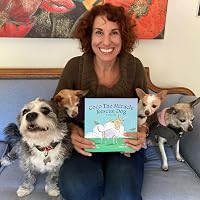
A searing and profound memoir of one woman’s journey through dissociative identity disorder and childhood sexual abuse—and how she found hope, healing, and recovery.
Sally Maslansky is living the perfect a beautiful home in Malibu, California, a successful Hollywood producer husband who adores her, and a recently adopted son she treasures. But when Sally begins to remember the trauma she endured as a child, her world begins to unravel.
In this gripping and provocative memoir, psychotherapist Maslansky shares how childhood sexual abuse led her to develop dissociative identity disorder (DID), and how, with the help of renowned therapist Daniel J. Siegel, she ultimately recovers. The book reveals the power of therapeutic bond to heal deep attachment wounds, the science of neuroplasticity in healing the traumatized mind, and our capacity as human beings to reconcile unspeakable experiences in order to grow, change, and live vibrant, loving, and joyful lives against all odds.
Together with Siegel, Maslansky slowly recovers her childhood memories and reconnects with the forgotten parts of herself—parts that she grows to admire, respect, honor, and love, because they literally saved her young mind from unimaginable horrors. In the book, Siegel describes Maslansky’s DID as a brilliant adaptation of the mind—a protective force that kept her mentally safe when the people she should have trusted most were the ones responsible for her abuse.
Whether you have struggled with DID yourself, love someone who has DID, or are simply looking to be inspired by the tenacity of the human spirit, this memoir offers a provocative glimpse into an often pathologized and misunderstood condition, and shows the profound and healing possibilities of therapy, human understanding, and the will to survive.
I did not expect the ending ESPECIALLY BECAUSE she clarified the quote about parents making sense of their story & childhood attachments. So beautiful. It made me think of my story.
DID has always fascinated me. How the brain works fascinates me. I was not expecting this book, I could not put it down!
It's repulsive how terrible some people can be and act towards children. I had the same feeling. Relief, her parents have passed. I like nonfiction cuz sometimes I can tell how a story will turn out & the news about the brother, no surprise.
Anyways such a heartbreaking yet courageous brave story Sally has to tell. Im happy she shared such vulnerability & I got to read it. Thank you Sally
What a jaw-dropping book. Sally's courage is profound as she describes the years of therapy she did with the amazing Dr. Daniel J. Siegel. Dissociative Identity Disorder can be difficult to understand but through her raw vulnerability of telling her story, I came to understand the meaning of different "states of mind" and how memory works to protect us. The care of her therapist was integral in her healing and her bravery to face the demons was inspiring. Bravo, Sally. xo
An epic narrative that will touch your heart with joy.
Gifted spiritual leader Henry Nouwen wrote "wounded healers" are the best medicine. Join Sally and Daniel on this wonderful healing odyssey. ironically her husband was producing excellent film adaptation of "The Odyessy" called "The Russia House" at the sa!e ti!e. All about broken people going through guided stages to find true health, joy and hope. Slainte
A beautiful story of strength and healing, from the worst ways a human can harm another. This is ultimately an inspiring read, and reminds me why I do the work I do as a therapist.
Thank you to New Harbinger Publications for the gifted copy of A Brilliant Adaptation: How Dissociative Identity Disorder and the Power of the Therapeutic Bond Saved Me by Sally Maslansky.
Okay… this one is heavy. Like, sit-with-it-after-you-finish kind of heavy. It’s not just a memoir, it feels like being let into someone’s mind while they’re actively trying to piece themselves back together, and that’s both incredible and honestly a little overwhelming. ⭐️⭐️⭐️⭐️
What really stuck with me is the idea that DID isn’t something “broken,” it’s something that protected her. That reframing completely shifted how I was thinking about everything. The way she talks about her different parts, not as something to erase but something to understand and eventually integrate, felt really powerful.
Also, the therapy itself being part of the story?? That was fascinating. You’re not just hearing what happened, you’re watching the healing happen in real time, which made it feel way more personal and real.
That said… it’s intense. There are moments that are hard to read, and the therapy sections can get a little confusing, especially when you’re trying to track what’s happening internally vs externally.
What I Loved • The reframing of DID as a survival mechanism, not just a disorder • The raw honesty, nothing feels sugarcoated • Getting to see the therapeutic relationship actually play out • The way healing is shown as slow, messy, and very real • How it humanizes something that’s usually misunderstood
What Didn’t Work for Me • Some therapy scenes were hard to follow at times • The emotional weight can be a lot, definitely not a casual read • Certain sections felt a bit repetitive as similar patterns were revisited • Not something you can binge, I had to take breaks
Overall, this felt like an important and deeply personal story about survival and healing. It’s not easy, but it’s meaningful, especially if you’re interested in trauma, psychology, or just how resilient people can be when everything should have broken them.
I’ve read several books written by Daniel J. Siegel, MD. Not noticing that he had only written the forward rather than being a co-author, of this book. Sally Maslansky, LMFT and former patient of Dr. Siegel is the author.
Not initially noticing things seems to be a theme of this review as I was very interested in what she described as “the therapeutic bond that saved me” but hadn’t paid attention to her initial diagnosis- Dissociative Identity Disorder. Thankfully, both instances led me to new learning! Like many professionals in my field, I know about DID, but haven’t treated a person affected by it. Having worked with children who experienced serious early trauma and abuse, I knew that our minds protect us when we are very young from events over which we have little to no control by dissociating or closing off overwhelmingly painful events to conscious recall and this in turn, can lead to Dissociative Identity Disorder. What I didn’t know is that DID can be successfully treated, integrating the fragmented parts of self so that in time a person has accurate recall of life’s traumatic events but without debilitating dissociation or pain on recall.
I am thankful for Sally’s courage in sharing her journey of many years with such candor as well as for an opportunity to in a sense, be an observer of her work with Dr. Siegel as it progressed.
NOTE: If you experienced childhood trauma you may be triggered by descriptions of the profound and repeated abuse Sally experienced from both of her parents. Although I didn’t have her experiences, I at one point felt a visceral sadness at one point in the narrative. I stopped and made a note of that and discussed it with my husband who happened to be at home. Being a therapist myself, I may discuss this in my own therapy.
From the very first pages, "A Brilliant Adaptation completely drew me in. Sally Maslansky, LMFT tells her story with such honesty and courage that I often had to pause, not because the writing was difficult, but because it touched places within me that I had not expected.
As someone who has experienced childhood abuse, this book brought forward my own implicit memories and the physical sensations that trauma can leave behind. Yet something remarkable happened while reading. The very words that surfaced those memories also seemed to soothe them. I do not think I have ever experienced that while reading a memoir.
As a professional psychologist, I was equally moved by the clinical aspects of the book. The therapeutic relationship between Sally and Dr. Dan Siegel is a beautiful example of what healing can look like when it is grounded in safety, attunement, patience, and compassion. I found myself learning as both a clinician and as a human being.
This book is not simply about dissociative identity disorder. It is about the extraordinary ways the mind protects us, the lasting impact of childhood trauma, and the profound healing that becomes possible through connection and a secure therapeutic bond.
Heartbreaking, beautifully written, and deeply hopeful, "A Brilliant Adaptation" is a book I will be recommending to colleagues, clients, and anyone who wants to better understand trauma, resilience, and healing. Thank you, Sally, for sharing your story with such courage and vulnerability. It is a gift that will stay with me for a long time.
Brilliant, indeed! Clear, succinct, startling, compelling, exquisitely cathartic for author and reader alike; Sally’s story of her journey back through her childhood is one of remarkable courage and persistence in seeking, confronting, revealing & ultimately triumphing over unimaginable evil. Sally has transformed her agonizing awareness of unspeakable experience into a powerful, humanity-affirming narrative, illuminated by her arrival at a level of understanding and empathy she now wields as a powerful force for good in guiding her clients down the path to wholeness, paying forward the gift her mentor, now colleague, Dr. Dan Siegel brought forth within her. So much more than mere clinical recitation; Sally has humanized her story into something universally cognizable, the realm of true literature. Congratulations my counselor and friend; brilliant, indeed!
Fascinating. Best explanation & description I have ever read about how it feels to have many “states” and how she interacted with them and, later, how they integrated. Also, the best explanation I’ve heard — in layman’s terms — why it’s now DID and not MPD.
I appreciate that she focused on how DID kept her as mentally healthy as possible and not how it made her a freak or basket case.
Some parts of the therapy sessions were a little confusing and hard to read, but I completely understand why she wrote it that way.
Many thanks to Booktrovert (NetGalley) and Harbinger Publications for a copy of the book in exchange for an honest review.
Sally Maslansky has a beautiful way of drawing the reader in and taking us along on her journey of self-understanding and healing through therapy. Her story is both courageous and remarkable, and has something we can all take away regarding trauma, mental health, and the importance of therapy. It's also very easy to read. Once I picked it up, I could not put it down.
This book was extra special for me because Sally was my therapist and helped me work through my own childhood trauma. To read about her journey and know that she is now helping others is truly remarkable. It proves that healing truly does have a ripple effect. A must-read for everyone!
What struck me most about this book was the courage it must have taken to write it. Sally Maslansky shares her recovery from dissociative identity disorder (DID) and severe childhood trauma with honesty, thoughtfulness, and hope. It's both heartbreaking and inspiring. I admire her willingness to tell such a deeply personal story in order to help others living with DID and the therapists who support them. This is a book that will stay with me for a long time.
I’m always fascinated to read other people’s accounts of having DID. This memoir is definitely hard to read because of the abuse she experienced, but it’s compelling nonetheless. There were elements that felt a little stiff, and some of the dialogue felt staged, but obviously Maslansky is an incredibly strong and brave woman to recount her story.
I didn't expect this book to move me the way it did. Maslansky's voice is assured and original, and A Brilliant Adaptation just keeps growing on you. A insightful, normalizing read, which I'll be passing along to others! Highly recommended to anyone struggling or supporting a loved one with DID.
Such a beautifully written and incredibly moving memoir. Although heartbreaking and difficult to read at times, I found it ultimately uplifting. Sally’s story is such a powerful reminder of the resilience of the human mind and our capacity to heal, even after unimaginable trauma. Truly inspiring.