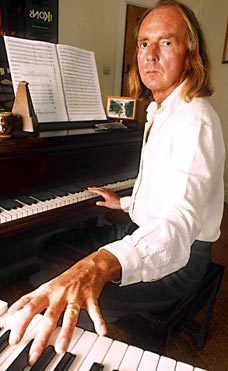
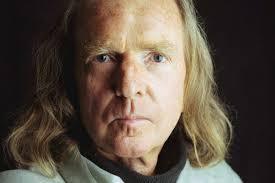
One of today's leading composers reflects on the relationship of music to the spiritual dilemmas of our time
In the 1960s, John Tavener's music appeared on the Beatles' Apple label. "The Protecting Veil"--one of the bestselling classical recordings of all time--made him a household name in the eighties, and his "Song for Athene" was heard worldwide when it was played at Princess Diana's funeral in 1997.
Yet behind this enormous success is a spiritual dimension, which became explicit after Tavener was received into the Russian Orthodox Church in 1977. With his wide intellectual curiosity and searching musical imagination it comes as no surprise that he possesses a profound and far-reaching musical "philosophy." The Music of Silence gives voice to this philosophy. Based on extensive conversations between the composer and his longtime friend Brian Keeble, it covers his early influences, his attitude and often controversial reactions to the music of his contemporaries, the sacred and religious underpinnings of his faith, as well as the technical aspects of composition.
Sir John Kenneth Tavener was an English composer, noted for his religious choral works. He first came to public attention with the performance of his Cantata The Whale which was subsequently recorded and released on the Beatles’ Apple Label. His output includes orchestral and chamber works, choral and vocal pieces and operas.
From the late 1970s his works were influenced by the mysticism and liturgical traditions of Orthodox Christianity, following his conversion the the Russian Orthodox Church in 1977.
Among his best known works are The Lamb (1982), The Protecting Veil (1988) and Song for Athene (1993), the latter piece was played at the funeral of Diana, Princess of Wales.
"Music was the first thing I was aware of. I cannot remember a time when there was no music in my life. The earliest influence upon me was the sound of the elements. I hated sight-reading, or being taught any of the grammar of music. From the age of three, I used to improvise. We had little concerts, my maternal grandfather and I: he would pretend to be an audience, he would clap, and I remember I made the sound of rain, the sound of wind, the sound of thunder — elemental sounds on the piano: God knows what they sounded like. So it was with improvisation that I started.
Then I was taught the piano".
He passed away on the last 12th of November 2013; but I will always be on time for a few thankful words.
At 3 years old,he had the sense of "ritual",thanks to his father. By the age of 6, he wrote "melodic lines".
Sir John Tavener was a passionate admirer of Mozart since the age of 12, when his godmother took him for a hearing of “The Magic flute". Mozart revealed “Paradise” to Tavener. He couldn’t find any other composer that could match “the perfection” of Mozart; though, he acknowledged recently that, Beethoven was comforting while he was recovering from illness, in Switzerland.
The British composer developed over the years a very unique kind of (especially choral) music. Drawing from his own studies of the Hindu, Islam and Buddhist traditions…but especially from his conversion to the Orthodox Church in 1977, Tavener's music became spiritual, divine.
You may say he’s found his divine state, now that he’s departed from the living. Let’s be silent, while “SHÛNIA”* plays on. Let us assume he’s returned to Nirvana.
"Those who sing, pray twice" Saint Augustine
*a composition of 2004; it's a Tibetan word; it means "Void";it relates to the "just stand still" state of Nirvana.
It's difficult to "review" a book like this. It's a series of interviews done with the composer, and so "reviewing" statements about his life's work is a fool's errand. But the interviewer asks erudite questions, and the composer answers thoughtfully. It's a must for anyone performing Tavener's work.
Tavener was not your average composer. A Greek Orthodox, he was a deeply spiritual man and believed that composition should only be a channeling of the Spirit (the way HE sees "the Spirit," or God). So he rails against Beethoven and Schoenberg, who he perceives to be composing "intellectually," and just for themselves. He's not even a fan of Bach's! But he loves Handel, praising his melodies and heart. Go figure.
Similarly, he says that music should go back to honoring the feminine, giving the example of the Greek Orthodox domes "shaped like breasts," and the honoring of Sophia in this tradition. But then he disses feminism as unrelated to the divine feminine and a spoiler of "the feminine." ICK.
In spite of these eccentricities, there are beautiful passages where he describes his compositional process and attempts to describe the effect and importance of God on his work. These passages are sincere and moving.
If you read this, you will not think of music the same way again. And that's a wonderful thing.