Jump to ratings and reviews
Rate this book

Les Rougon-Macquart #1

La fortuna de los Rougon

Rate this book
In the small Provençal town of Plassans, the day after the coup d'état from which the Second Empire was born, two teenagers, Miette and Silvère, join the insurgents. Their love story like the Republican uprising runs through the novel, but beyond them, it is also the birth of a family that is evoked: the Rougons at the same time as the Macquarts whose double lineage, legitimate and bastard, descends from Silvere's grandmother, Aunt Dide. And between Pierre Rougon and his half-brother Antoine Macquart, the fight will quickly begin.

The first novel in the long Rougon-Macquart series, La Fortune des Rougon, which Zola published in 1871, is indeed the novel of origins. At the moment when the imperial regime that the writer slays is established, it is here that the patient conquest of power and money begins, a slow family rise which must make us forget the sordid beginnings, in poverty and in crime.

“Your comedy is tragic,” wrote Hugo just after reading the book: “You have firm drawing, frank color, relief, truth, life. Continue these deep studies"

❇❇❇❇❇❇❇❇❇❇❇❇❇❇❇❇❇❇❇❇❇❇❇❇❇❇❇❇❇❇❇❇❇❇❇❇❇❇❇❇
Dans la petite ville provençale de Plassans, au lendemain du coup d’Etat d’où va naître le Second Empire, deux adolescents, Miette et Silvère, se mêlent aux insurgés. Leur histoire d’amour comme le soulèvement des républicains traversent le roman, mais au-delà d’eux, c’est aussi la naissance d’une famille qui se trouve évoquée : les Rougon en même temps que les Macquart dont la double lignée, légitime et bâtarde, descend de la grand-mère de Silvère, Tante Dide. Et entre Pierre Rougon et son demi-frère Antoine Macquart, la lutte rapidement va s’ouvrir.

Premier roman de la longue série des Rougon-Macquart, La Fortune des Rougon que Zola fait paraître en 1871 est bien le roman des origines. Au moment où s’installe le régime impérial que l’écrivain pourfend, c’est ici que commence la patiente conquête du pouvoir et de l’argent, une lente ascension familiale qui doit faire oublier les commencements sordides, dans la misère et dans le crime.

« Votre comédie est tragique », écrit Hugo juste après avoir lu le livre : « Vous avez le dessin ferme, la couleur franche, le relief, la vérité, la vie. Continuez ces études profondes. »

304 pages, Kindle Edition

First published January 1, 1871

564 people are currently reading
15844 people want to read

About the author

Émile Zola

2,721 books4,483 followers
Émile Zola was a prominent French novelist, journalist, and playwright widely regarded as a key figure in the development of literary naturalism. His work profoundly influenced both literature and society through its commitment to depicting reality with scientific objectivity and exploring the impact of environment and heredity on human behavior. Born and raised in France, Zola experienced early personal hardship following the death of his father, which deeply affected his understanding of social and economic struggles—a theme that would later permeate his writings.
Zola began his literary career working as a clerk for a publishing house, where he developed his skills and cultivated a passion for literature. His early novels, such as Thérèse Raquin, gained recognition for their intense psychological insight and frank depiction of human desires and moral conflicts. However, it was his monumental twenty-volume series, Les Rougon-Macquart, that established his lasting reputation. This cycle of novels offered a sweeping examination of life under the Second French Empire, portraying the lives of a family across generations and illustrating how hereditary traits and social conditions shape individuals’ destinies. The series embodies the naturalist commitment to exploring human behavior through a lens informed by emerging scientific thought.
Beyond his literary achievements, Zola was a committed social and political activist. His involvement in the Dreyfus Affair is one of the most notable examples of his dedication to justice. When Captain Alfred Dreyfus was wrongfully accused and convicted of treason, Zola published his famous open letter, J’Accuse…!, which condemned the French military and government for corruption and anti-Semitism. This act of courage led to his prosecution and temporary exile but played a crucial role in eventual justice for Dreyfus and exposed deep divisions in French society.
Zola’s personal life was marked by both stability and complexity. He married Éléonore-Alexandrine Meley, who managed much of his household affairs, and later had a long-term relationship with Jeanne Rozerot, with whom he fathered two children. Throughout his life, Zola remained an incredibly prolific writer, producing not only novels but also essays, plays, and critical works that investigated the intersections between literature, science, and society.
His legacy continues to resonate for its profound impact on literature and for his fearless commitment to social justice. Zola’s work remains essential reading for its rich narrative detail, social critique, and pioneering approach to the realistic portrayal of human life. His role in the Dreyfus Affair stands as a powerful example of the intellectual’s responsibility to speak truth to power.

Ratings & Reviews

What do you think?
Rate this book

Friends & Following

Create a free account to discover what your friends think of this book!

Community Reviews

5 stars
2,288 (27%)
4 stars
3,511 (42%)
3 stars
1,862 (22%)
2 stars
378 (4%)
1 star
146 (1%)
Displaying 1 - 30 of 695 reviews
Profile Image for Luís.
2,370 reviews1,358 followers
November 6, 2025
The first volume of the Rougon-Macquart cycle, published in 1871, La Fortune des Rougon, takes place in Plassans, an imaginary city inspired by Aix-en-Provence. This first volume introduces the entire work and lays the foundations for the cycle's characters' genealogy. On December 2, 1851, Napoleon III led a coup d'état, ending the Second Republic and establishing the Second Empire. The fortune of Rougon and his wife will be born from the coup.
Zola says, "The natural and social history of a family under the second empire." He takes us on a historical novel, a novel on local mores, and a beautiful romance novel with Silvère and Miette.
What did I think about it? A masterful pen, which spares no one, a very well-constructed book where the author takes the reader where he wishes, and for our great pleasure, a novel that I found impatiently every evening. If the political context was a bit scary initially, I quickly realized he was "going well." I was pleasantly surprised by the very romantic, lyrical passages about the lives of the two young people, Silvère and Miette. The landscape descriptions are grandiose. The customs described? Nothing very noble! Greed, desire for power and wealth, by all means, is ultimately very sordid, but does not put off the reader.
As you can see, I liked this reading, which confirms my desire to immerse myself in 19th-century literature.
Profile Image for El.
1,355 reviews491 followers
October 29, 2011
This work, which will comprise several episodes, is therefore, in my mind, the natural and social history of a family under the Second Empire. And the first episode, here called The Fortune of the Rougons, should scientifically be entitled The Origin.

Author's Preface (1871)
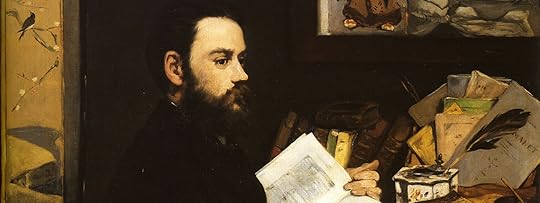
When I discovered that Emile Zola wrote a 20-book series about the fictional families of Rougon and Macquart, I became obsessed. I wanted to read them all. I wanted them all lined up on my shelf to look at after completing the run because that's the sort of sick bastard that I am. I didn't realize, however, that there would be difficulties in this plan. Stupid difficulties. Ones that should not exist under any circumstance.

Problem #1: This first book in the series was wicked hard to find. I thought I could just stroll on over to my local library, yank a copy off the shelf, and move on to the next at will. But the Carnegie Library system in Pittsburgh, for all of its other perks, failed to have the first book. None of the branches had it, so it's not like I could use the modern convenience of the ILL. I asked them to purchase a copy because, as I pointed out, they have so many of the other Rougon-Macquart books, wouldn't they want the first book for their collection? I never received a response so I'm assuming the answer was NO.

So we went on a mission, my boyfriend and I. We were hell-bent on finding a used copy of this book. (Note: Boyfriend may not have actually cared that much, other than he wanted to be able to put a smile on my face and get me to shut up about this damn Zola person, but that's probably beside the point. He participated in my insanity and that's all that matters.) Our Fall 2010 holiday was spent visiting every bookstore we could find between Pittsburgh and Baltimore/DC. We did Internet searches for bookstores that were hidden away in the middle of absolutely nowhere. We met so many bookstore cats and had so much bookstore-grime covering our hands, but we barely even noticed. We I had Zola-vision, and I was going to find this book if it was the last thing I did.

Okay, so I didn't find a copy. Sadly. Our holiday came and went and despite all the stores we visited, no one had a copy of this damn book. It didn't ruin our trip, but I was still pretty disappointed and I probably shook my fist at Zola's memory. Pfft, as if it's his fault his book is pretty much out-of-print.

Then, magically, for Christmas, there it was. My boyfriend had done what most people in the 21st-century do when they want something - he ordered it online for me. It's what's called a Print On Demand edition. I guess when you request it online, some little monkey somewhere poops it out for you, puts it in a package, and sends it on its merry little way. Thank you, monkey! (And Boyfriend, too!)


Problem #2: While doing some "research" about these books I discovered that, yes, there are 20 books in this series. But also there are opinions regarding in which order to read them. What? I was hoping to go through them all publication-order-chronologically-like because that's the kind of person I am (refer to sick bastard statement above).

You have the Publication Order (1871-1893), but then you have the Recommended Reading Order, and they differ greatly. They both begin and end with the same books, and there are a couple in the middle that are in the same place, but for the most part they're way different. I spent a lot of time thinking about this, agonizing over this, talking to people who do not care about this. I made a Pro/Con list, I may have even made a pie chart and a graph. And then someone smarter than myself pointed out that the Recommended Reading Order was suggested by none other than Zola himself, but apparently not until he wrote the Introduction for the final book in the series. Why would he hold on us that long? Pshaw on Zola!

Then someone else smarter than me pointed out that Zola's recommendation is also discussed in a biography written in the early 1900s, which basically has solidified my decision. (Which is sort of a shame because I have the second book by publication order, but not the second book by recommended order. I have a feeling our Fall 2011 holiday will be done almost identically as it was last year in hopes of finding Son Excellence Eugene Rougon. Sigh.)


As for the actual book:
It's pretty great. I can tell already that it's not going to be his best out of the whole bunch, but the excitement and anticipation I feel knowing I still have 19 more books to go is practically through the roof and totally enhanced my reading of this book. The Fortune of the Rougons was not Zola's first book in his literary career, so I can't say that it feels like a first book - but I can say that it feels a little unformed, a little dirty and raw around the edges. It could have used some pizazz in parts.

But I still love it.

The story begins in and ends in a similar manner, right down to the actual setting. When it began I was all giggly-schoolgirl about the foreshadowing of the scene , and when it ended in basically the same place under different circumstances I gave a little squeal. This Zola guy knew how to craft a book.

He did other stuff that really struck me, like the use of color symbolism. Perhaps he didn't mean for the colors to be symbolic per se, but that's how my brain works, and I'm reading symbolism all over these pages. I freaking love that.

Zola has already accomplished his goal of writing a natural and social history of the Rougon-Macquart families - I can see how he would want to keep writing about these guys, and I'm just the sort of idiot he would have been writing for because I also dig that sort of thing. (Another good example if you're into that sort of story is John Galsworthy's The Forsyte Saga. Juicy family drama, and a great read to boot. Go read it. Now.)

My only real complaint is the translation. I can be a real sick bastard about translations too, spending more time wondering which translation to read than I do actually reading a text. But in this case, since we had so much difficulty getting the damn book in the first place, I wasn't going to be all looky in the gift horse's mouth about it.

It was translated by Zola's buddy, E.A.V. Merton in 1898. In the Introduction Mr. Merton wrote: "But to convey M. Zola's meaning more accurately I have found it necessary to alter, on an average, at least one sentence out of every three. Thus, though I only claim to edit the volume, it is, to all intents and purposes, quite a new English version of M. Zola's work."

Why would he tell me that!? That ruins everything! (Almost.) Knowing in advance just how much of Zola's work was changed in this "edition" makes me feel a little gypped. It's disappointing. But again, it's all I got because apparently people just don't care about Zola anymore. Maybe someone will put out a new translation and I can re-read it and see just how much they differ.


Despite that, it's still a good story, and I still want to know more about these characters so you're damn certain I'll be reading all of the following 19 books. In Recommended Reading Order.

Because I'm a sick bastard.
Profile Image for Richard (on hiatus).
160 reviews213 followers
November 1, 2019
A while ago a friend recommended Germinal, the classic French novel by Emile Zola. It was amazing! ......... a gritty, powerful and incredibly tense novel set in a mining town in northern France.
Although a stand alone novel I realised that Germinal was part of a series featuring the Rougon - Macquart family. A series of 20 books written over 22 years, concerning a period of French history known as the Second Empire. A little Wikipedia-ing soon put this, the 1848 revolution, the Louis-Napoléon coup d’etat and the whole turbulent period into some context.
At the time it seemed like a interesting project to gradually work my way through the series (several of the ebooks are free on Amazon) Hence The Fortune Of The Rougons, the first book.
This novel is a little uneven (as is usual with the first book of a series) as Zola balances action, humour, politics and a love story ....... but he does successfully build the foundation of the ensuing masterwork.
We are introduced to Adélaide Fouque an enigmatic and lonely woman who marries her gardener Rougon and then, after he dies, has a long term relationship with Macquart a disreputable smuggler. The offspring of both relationships, legitimate and illegitimate, over several generations, are the subject of this book cycle.
Zola creates a wide cross section of French society in which the compelling storylines play out. He examines how external influences (eg poverty and politics) mould the nature of the characters and describes these books as ‘The Natural and Social History of a Family Under the Second Empire’
Like Dickens, Zola is quick to lampoon pompositity, vanity and ignorance but unlike Dickens the writing is naturalistic and the characters feel real, rather than caricatures.
In a way I’m glad I started with Germinal as it showed Zola’s writing at its classic best, but I also found this book to be really engrossing - exciting, moving and surprisingly funny! Certainly not a dry or difficult read.
Really looking forward to the next in the series.
Profile Image for J.L.   Sutton.
666 reviews1,247 followers
May 13, 2022
“For a moment he [Doctor Pascal] thought he could see, in a flash, the future of the Rougon-Macquart family, a pack of wild, satiated appetites in the midst of a blaze of gold and blood.”

Desire & sexuality in the work of Émile Zola | OUPblog

Émile Zola's The Fortune of the Rougons, the first of twenty novels in the Rougon-Macquart Series, is both an epic and an engaging family saga set against the backdrop of the Second Empire in 19th century France. The pivotal event is an 1851 coup d'état that put Napoleon III in power told from the perspective of a provincial backwater; it is also an event that is crucial to both the fortune and fortunes of these families.

Despite a large cast of characters, Zola brings them and the social and political conditions of the turbulent times to life. While it was interesting for me from the start, it really clicked about halfway through the novel and I knew I was hooked. I'm not sure I liked many of the characters, at least those characters that I'll continue to see in the series; however, they were believable and drew me into their world. Right now, the closest comparison I can make is to Stendhal's The Red and the Black, but there is more to go. I'm looking forward to more Zola and the next novel in this series. 4.5 stars
Profile Image for AiK.
726 reviews269 followers
March 23, 2023
Сильный роман в лучших традициях c глубокими психологическими портретами героев, чьи черты характера с точки зрения наследственности пытался проанализировать Золя. В книге за исключением юных, идеалистически одухотворенных и любящих Сильвера и Мьетты, нет положительных героев. Золя рисует нам глупое, тщеславное, ленивое, корыстолюбивое и беспринципное обывательское большинство, которое решает сложный вопрос, на чью сторону примкнуть, чтобы получить для себя наибольшую выгоду. Это большинство и губит молодую Республику, провозглашая Луи Наполеона императором. Это первый роман цикла из двадцати романов, который обязателен для прочтения, если Вы хотите понимать, кто кем приходится. Золя через историю одной сем��и пытается раскрыть историю всего французского общества.
Profile Image for Julie.
561 reviews310 followers
May 4, 2018
This is the first in Zola's 20-novel series on Les Rougon Macquart: a series which depicts L'Histoire naturelle et sociale d'une famille sous le Second Empire.

Inspired by Honoré de Balzac, and borrowing (very loosely) on Balzac's theme of painting the human tableaux in his Comédie Humaine, Zola wrote in La Différence entre Balzac et moi:

Balzac's ... work wants to be the mirror of contemporary society. My work ... will be something else entirely. The scope will be narrower. I don't want to describe a contemporary society, but a single family, showing how the race is modified by the environment. My big task is to be strictly naturalist.

Naturalism being a term which, in effect, he coined, and by starting this series, he gave eloquent voice to it. Influenced as much by Balzac as he was by Charles Darwin, Zola wished to write stories which showed the natural progression of heredity; and to depict socio-cultural evolution as he understood it by applying "scientific method" to his writing.

Those are the broad strokes for the painting of this series.

In more detail, he draws a family (thus far) so vile and repugnant; so disagreeable in every way; so intrinsically nasty, odious and objectionable; so loathsome and contemptible, that one is astounded that there are enough adjectives to describe them. But what a masterful painter he is! ... for he seems to have summoned up every odious characteristic, placed it into the milieu of this family, and set the fuse to blaze, without once leaving the reader feeling that it is over-the-top melodrama, or worse, caricatures of them. These people really do exist. We've all met them, in various guises, in sad and sorry situations in life.

The construction of this novel is what astounds me even more than the message, for it is deftly composed, sensitively rendered, and as precise as any scientist in observing the vagaries of human nature.

While this novel has engendered a lot of interesting thoughts, I seem to have neither the inclination nor the ability to translate them all into a full review at this time. It probably needs a few more novels into the series to elicit a more considered analysis. This seems to have been a very filling appetizer course ... but an appetizer no less.

Prediction: it is a series I will enjoy tremendously.

NB. Do yourself a favour, and find a good translation, or read it in French, with a dictionary if you have to.

I did read it in French because the only copy available to me in translation was by E. Merton. If I can offer any help at all it is to say: avoid Merton like the plague. Left to Merton, I would have come away thinking Zola was a melodramatic old dolt who should be relegated to the burn pile as wasted paper. I'm glad I made the effort to dig up an old French edition on gutenberg.org. -- though I will admit to taking forever to read this because I am not a great fan of e-readers, kindles, ... what have you. And for some strange reason, it was even more difficult reading Zola electronically than it is reading contemporary fiction. Maybe the medium really *is* the message!

[I was affected, deeply, by this storyline, and it continues to simmer, days after I finished reading it. If, in depicting [true, genetic] heredity as a defining force in a person's evolution, Zola also depicts how people become products of their environment -- albeit, paradoxically, all the while that they are shaping their environment. While there is much to be said of the forces that impact people's lives, from the pressures of society, there is an equally balanced argument that man has shaped society by which he is impacted: as the serpent swallows its tail, this story will play itself out into infinity. It will be interesting to follow Zola down this path to see if he ever arrives at a conclusion.

Certainly, it seems the family is doomed by its own greed and innate need for self-aggrandizement, just as it is defined from the bloodline of a simpleton, from which the family sprang. Again, paradoxically, it is the simpleton who offers the only bit of wisdom by the end of the novel, and who is redeemable from this lost "basket of deplorables". The innocents in the story die early deaths and it is the immoral, corrupt line that seemingly prospers.]
Profile Image for Blaine DeSantis.
1,083 reviews183 followers
July 26, 2021
It is daunting task, to both write and read a 20-volume series set during the 2nd Empire of France from 1850-1871. Yet, if Emile Zola is up to the task, I figured it was about time for me to start reading!
And this is Book 1 of the series and introduces us to the founding families upon which this story is told. What is interesting about this book is its focus on the rather lower class of life in the fictitious town of Plassan in the south of France. We meet Aunt Didi who is the mother of this clan, who had one child during her marriage and then two illegitimate children. There is strong dislike by oldest on Pierre Rougon and he plots to have his mother (Aunt Didi) sell her house and give him the proceeds. Meanwhile he has successfully schemed to get his half-sister married and his half-brother Antoine Macquart enlist in the army with promises of future assistance. Didi sells the house, Pierre gets the money and now the story gets very interesting. Pierre marries the daughter of an oil-trader and never hits as big as both of them so desire and it is their quest for fortune and prestige that moves the story along. After years Antoine is back in the picture and is making a nuisance of himself and eventually sides with the Republicans and oppose all that Pierre and his wife are plotting as they are supporters of what will become the Second Empire. There is scheming, plots, family foibles and some interesting characters in this book, as even Pierre's children have divided loyalties. And while it all must come to an end, the Rougon-Macquart saga is ready to set sail for another 19 books. Having read earlier works by Zola, I was impressed with his growth as a writer and the way the he begins a saga that will eventually entail over 300 different characters. Many in France criticized him during his lifetime, but I found the book easy to read, and filled with characters that peaked my interest, even though I did have to do some research into 19th Century French history - something I happily did as I look forward to following this families fortunes!
Profile Image for Helga.
1,386 reviews479 followers
February 14, 2022
How hard, indeed, it is to win fortune and honours!

The first novel in the twenty-volume series of Les Rougon-Macquart introduces us to the two branches of the Rougon and Macquart family and is set in the time of 1851 coup d'état and Napoleon III.
The head of this divers family is the mentally unstable Adelaide Fouque who marries the peasant Rougon and has a son by the name of Pierre. After her husband dies, she becomes the lover of the alcoholic, good-for-nothing smuggler Macquart and has a daughter, Ursule and a son, Antoine.

This is a story about greed, duplicity and cowardice as opposed to courage, empathy and sacrifice, studying the behaviour of a small group of people in the society, under specific circumstances.
Profile Image for Zahra.
255 reviews86 followers
May 12, 2021
اولین رمان مجموعه بیست کتابی روگن-ماکار، کتاب تلخیه. کتاب روایتگر سرکوب خونین قیام مردم جنوب فرانسه بعد از کودتا و به قدرت رسیدن ناپلئون سومه و داستان اجداد خاندان روگن و ماکار رو در این بستر تاریخی روایت میکنه. اکثر شخصیت ها پست، حقیر، طماع، حریص و خودخواهن جوری که نفس آدم از شدت جمع شدن تمام این خصایص در این حیوانات انسان نما میگیره! بهتره قبل از خوندن این کتاب یه دور خلاصه انقلاب فرانسه و جمهوری دوم و ناپلئون ها خونده بشه تا از گیج شدن زیاد جلوگیری بشه هرچند مقدمه هم توضیح خوبی داده
March 10, 2021
Αυτήν την ιστορία χίλιες φορές κι αν την διαβάσω δεν πρόκειται ποτέ να τη βαρεθώ. Ανήκει στον κύκλο των Ρουγκόν - Μακάρ, τα μέλη δηλαδή μιας οικογένειας από την πόλη Πλασσάν (μια επινοημένη πόλη την γαλλικού Νότου, που παραπέμπει στο Αιξ αν Προβάνς, εκεί δηλαδή που μεγάλωσε ο συγγραφέας). Μητέρα και των Ρουγκόν και των Μακάρ της ιστορίας είναι η Αντελαΐντ (ή θεία Ντιντ) , μια γυναίκα που, μέσα από τον επίσημο γάμο της και τον κατοπινό παράνομο δεσμό της, φέρνει στον κόσμο εκείνους τους ιδιόρρυθμους χαρακτήρες που θα αποτελέσουν τους προγόνους της Νανάς, της Ζερβαίζ από την “Ταβέρνα”, του Ζακ από το “Ανθρώπινο Κτήνος” κι όλων των άλλων ηρώων της εικοσαλογίας που θα εκτυλιχθεί στα χρόνια της Β΄ Αυτοκρατορίας του Ναπολέοντα του 3ου.

Είναι πολυπρόσωπο μυθιστόρημα αλλά δομημένο έτσι ώστε η γνωριμία με τους χαρακτήρες να γίνεται σταδιακά. Ανάμεσα σε ένα πραξικόπημα και μια εξέγερση που λαμβάνει χώρα σε αυτήν την απομακρυσμένη γαλλική επαρχία, σε μια πόλη που μοιάζει παγωμένη μέσα στο χρόνο, τα όνειρα για έναν καλύτερο κόσμο και η δίψα για χρήμα, κοινωνική ανέλιξη και εξουσία έρχονται αντιμέτωπα με την πεζή καθημερινότητα. Στην πραγματικότητα, ανάμεσα στους ονειροπόλους και τους αριβίστες υπάρχει εκείνο το πλήθος που αδιαφορεί για την εξέλιξη που θα πάρουν τα πράγματα, υπό την προϋπόθεση να μην διαταραχθεί η ησυχία της τακτοποιημένης ζωής τους. Αυτοί βρίσκονται στο περιθώριο της διήγησης, συνιστώντας τον χορό της αδιαφορίας και της μικρόνοιας.

Οι πιο αξιαγάπητοι ήρωες είναι δυο νέα παιδιά. Ο εγγονός της Νιντ, ο Σιλβέρ που προσπαθεί να γνωρίσει και να κατανοήσει τον κόσμο μέσα από τα σπαράγματα γνώσης που ξετρυπώνει στα παλιατζίδικα, βιβλία που δεν καταλαβαίνει πλήρως αλλά που αρκούν για να τον κάνουν να οραματίζεται μια καλύτερη ζωή για τον ίδιο και την κοινωνία. Και η Μιέτ ένα πλάσμα όλο αισθησιασμό και δυναμισμό, μια προσωποιημένη εκδοχή της ελευθερίας και της δημοκρατίας, μια δροσερή και τρυφερή απεικόνιση της νιότης. Κάνουν νυχτερινούς περιπάτους μέσα στη φύση, στα σπαρμένα χωράφια και στους ποταμούς, κρύβονται από το φως της μέρας και μεταμορφώνονται σε πλάσματα βγαλμένα από παραμύθι.

“Κάθε βράδυ σχεδίαζαν και μια νέα εξόρμηση. Η Μιέτ έφερνε το γούνινο παλτό της˙ κρύβονταν και οι δυο μέσα στο μακρύ ύφασμα, περνούσαν έξω από τους τοίχους και έφταναν ως τον κεντρικό δρόμο, τα μεγάλα λιβάδια, όπου ο αέρας φυσούσε δυνατά και τα έκανε να κυματίζουν, θυμίζοντας την ανοιχτή θάλασσα. Εκεί πέρα δεν αισθάνονταν καθόλου πνιγηρά και ξανάβρισκαν την παιδική ζωηράδα τους, μακριά από τη ζαλάδα που τους προκαλούσε η βλάστηση του Σαιν Μιτρ και που έκανε το κεφάλι τους να γυρίζει. Επί δύο ολόκληρα καλοκαίρια όργωναν την γύρω περιοχή. Σύντομα ήξεραν απέξω κάθε βράχο που προεξείχε και κάθε χλωρασιά˙ και δεν υπήρχε συστάδα δέντρων, φράχτης ή θάμνος που να μην έχει γίνει φίλος τους. Τα όνειρά τους είχαν γίνει πραγματικότητα: κυνηγιούνταν μέσα στα λιβάδια του Σαιν Κλαιρ, και η Μιετ έτρεχε τόσο καλά που ο Σιλβέρ έπρεπε να βάλει τα δυνατά του για να την πιάσει. Πήγαιναν επίσης να ψάξουν για φωλιές κίσσας˙ η Μιέτ γεμάτη πείσμα, θέλοντας να δείξει πως σκαρφάλωνε τα δέντρα στο Σαβανόζ, έδενε τη φούστα της με ένα κομμάτι σπάγκο και ανέβαινε στις ψηλότερες λεύκες˙ από κάτω ο Σιλβέρ έτρεμε, με τα χέρια τεντωμένα, έτοιμος να την πιάσει σε περίπτωση που γλιστρούσε ξαφνικά”.

Η σύγκρουση αυτών των πλασμάτων των φτιαγμένων για έρωτα και ευτυχία με έναν κόσμο στον οποίο το κακό, με την μορφή της κοινωνικής παρακμής και της ηθικής αποχαλίνωσης, έχει βαθιές ρίζες, είναι αναπόφευκτη.

Δεν είναι όμως όλοι φτιαγμένοι από την ίδια πάστα παρά την κοινή τους καταγωγή. Υπάρχουν δύο όψεις στον αντίποδα του λογοτεχνικού κόσμου που χτίζει ο συγγραφέας. Ο Αντουάν Μακάρ είναι φτωχός και τεμπέλης και το μόνο που θέλει είναι να παρασιτεί εις βάρος της γυναίκας και των παιδιών του. Ένας εκμεταλλευτής, ένας αργόσχολος που καταπιάνεται με την πολιτική, γιατί βλέπει στην δημοκρατία και τον σοσιαλισμό μια ευκαιρία για αρπαγή, που θα του εξασφαλίσει την καλοπέρασή του.

“Έβρισκε το φαγητό απαίσιο, αποκαλούσε την Ζερβαίζ ηλίθια, έλεγε στον Ζαν πως δεν θα γίνει ποτέ άνδρας. Βουτηγμένος στις δικές του εγωιστικές απολαύσεις, έτριβε τα χέρια του κάθε φορά που είχε φάει την καλύτερη μερίδα˙ ύστερα κάπνιζε την πίπα του, φυσώντας αργά τον καπνό του, ενώ τα δύο ταλαίπωρα παιδιά του, τσακισμένα από την κούραση, αποκοιμιόνταν με το κεφάλι πάνω στο τραπέζι. Έτσι περνούσε ο Μακάρ τις μέρες του μες στην τεμπελιά και τις απολαύσεις. Θεωρούσε απόλυτα φυσιολογικό το να κάθεται όλη μέρα σαν μοσχαναθρεμμένη κόρη, να απλώνει την αρίδα του στους πάγκους κάποιας ταβέρνας, ή να σουλατσάρει με την δροσούλα στην λεωφόρο Σωβέρ η στην Μέιλ. Έφτασε ως το σημείο να διηγείται τις ερωτικές του περιπέτειες μπροστά στον γιο του, ο οποίος τον άκουγε ενώ τα μάτια του βούρκωναν από την στέρηση. Τα παιδιά δεν αντιδρούσαν, γιατί έτσι είχαν μάθει, ακολουθώντας το παράδειγμα της μητέρας τους, η οποία φερόταν σαν ταπεινή υπηρέτρια του άνδρα της’.

Από την άλλη ο ετεροθαλής αδελφός του, ο Πιερ Ρουγκόν, που ανήκει στο συντηρητικό κομμάτι της κοινωνίας κινειτοποιείται από την ίδια ακριβώς επιθυμία, αλλά έχει στο πλευρό του ένα ατού, την παμπόνηρη γυναίκα του, την Φελισιτέ, η οποία πάνω από όλα θέλει το χρήμα, για να αγοράσει με αυτό εξουσία και κοινωνική αναγνώριση.

“Μια νέα δυναστεία για να εδραιωθεί χρειάζεται κάποια σύγκρουση. Το αίμα είναι καλό λίπασμα. Θα είναι πολύ ωραίο να συμπέσει η άνοδος του ονόματος των Ρουγκόν με μια αιματοχυσία, όπως έχει ξανασυμβεί και με πολλές άλλες επιφανείς οικογένειες”.

Από την γενιά του Αντουάν θα βγει η Ζερβαίζ της “Ταβέρνας” και η Νανά ενώ από τη γενιά του Πιερ, εκτός των άλλων, ο Σακάρ, ο κεντρικός ήρωας που συναντάμε στο “Χρήμα”. Στην πολιτική σκέψη που εκφράζει ο Ζολά μέσα από αυτό το έργο, κυριαρχεί το εξής: Κάποιες φορές όσα δεν πετυχαίνει η απευθείας σύγκρουση με μια κατάσταση ή ένα ιδεολογικό σύστημα, τα πετυχαίνει η υπόγεια και παρασκηνιακή υπονόμευση. Όσα δεν φαίνονται και όσα δεν ακούγονται, όσα εκτελούνται με χειρουργική ακρίβεια στο περιθώριο και στις υποσημειώσεις της ιστορίας. Κι εκεί έγκειται η μεγαλύτερη αξία του εγχειρήματος του Ζολά. Σηκώνει τα βαριά παραπετάσματα και επιτρέπει στον αναγνώστη να κατανοήσει καλύτερα τα στρώματα που συνιστούν τις κοινωνίες όπως τις γνωρίζουμε στον λεγόμενο “δυτικό κόσμο”.

Είναι κρίμα που δεν έχει κυκλοφορήσει ποτέ σε ελληνική μετάφραση αυτό το έργο. Θα είχε πολλά να πει σε έναν άνθρωπο της σύγχρονης εποχής.
Profile Image for MJ Nicholls.
2,274 reviews4,848 followers
April 27, 2021
The opening number in Zola’s 20-piece novel orchestra is a piece of sweeping bombast, plunging us into the thorny, vicious world of the provincial bourgeoisie with the grace of a gangster lowering a snitch into a pool of sharks. Introducing us to the rise of the Rougons (as per title), two scheming petite bourgeois social climbers desperate to vault themselves into the more expensive drawing rooms of Plassans by exploiting the oncoming workers’ revolt, and the fall of the Macquarts, represented here by a work-shy parasite who sponges off unsexy ladies, Zola opens his series with descriptive torrents, explosive melodrama, and snarling contempt. The novel is more a palate cleanser for the oncoming series, lurchy of plot and prolix of style, and lacks the moreish horror of Germinal or The Drinking Den.
Profile Image for Aurelia.
103 reviews128 followers
April 27, 2021
La Fortune des Rougons est le récit de l’ambition d’ascension sociale sur une trame de fond des grandes perturbations politiques d’une époque. L’ambition sans scrupule est combinée à un héritage morbide. Si l’époque moderne élève l’ambition et la méritocratie sur un piédestal, et en fait le fondement de l’ordre politique et social moderne, ce roman est un exercice qui vise à renverser cette image. L’homme réussi n’est pas souvent l’homme le plus talentueux ni le plus méritant, mais c’est certainement l’homme qui sait le plus exploiter les fissures qui brusquement s’ouvrent dans un système jadis très rigide. Loin d’être motivée par le désir d’accroitre la gloire de soi, l’ambition peut cacher la haine et la rancœur envers autrui, la volupté de les voir détruis.  


A  la veille du coup d’état menant la France au Second Empire, tout un pays est déchiré en une lutte de classes acharnée. La classe populaire rêve de l’égalité et de la justice, mais également d’un monde ou on ne travaille pas, vivant tranquillement dans sa paresse. L’aristocratie se réfugie dans la réaction, pour défendre ses privilèges hérités. La bourgeoisie, symbole de l’ambition moderne, se lie à qui se présente en allié, ouvrier ou marquis, l’essentiel est de se tailler une part du pouvoir. Indépendamment des idéologies et des idéaux beaux et naïfs, ce qui mobilise l’homme peut  être sa nature la plus vicieuse, sa jalousie des richesses des autres, la satisfaction qu’il trouve à voir les autres souffrir.


Zola présente une vision de la nature humaine très sombre et pessimiste. Des personnages qui sombrent dans les extrêmes de la lâcheté, la paresse, la jalousie et la haine. Il s’attarde sur la description des ces rouages intimes de la condition humaine, avec une grande virtuosité, malgré sa nature illogique, volatile. Le seul homme vertueux semble celui qui est indifférent à ce monde impermanent des gens consommés par leur vices. C’est l’homme absorbé dans une tache d’observation et de détachement, vivant sub specie aeternitatis.


Loin des justifications métaphysiques du comportement humain, Zola introduit la fatalité biologique et l’influence du milieu. Il exploite une science de l’hérédité à l’état embryonnaire au XIXéme siècle, dans un croisement curieux entre la littérature et la science. Ces personnages sont condamnés à un destin de destruction d’eux même et d’autrui, à cause de leur héritage et ces destins sont exposés sans exprimer la moindre sympathie pour eux, ni poser les questions de responsabilité ou de moralité. Comme si ceci n’a plus d’importance quand on est au fond des turbulences du flot de la vie, emporté par ses forces.

 
Profile Image for John.
1,680 reviews131 followers
July 10, 2021
Zola is a master craftsman and this first novel of a twenty volume series about the Les Rougon-Macquart family sets the scene for future stories. The series is set during the Second Empire and follows the life of the family in society. The first novel sets the scene with the family. Dide the nervous mother whose first husband dies and then she lives with a smuggler who she has two illegitimate children. The legitimate Pierre a lazy, greedy and thoroughly unscrupulous bastard who screws over his illegitimate brother and sisters. He also marries Felicite who is a match made in heaven.

They have three sons. Eugene who goes to Paris and becomes a political manipulator. Aristide a lazy man who thinks he is entitled. Finally, Pascal who becomes a Doctor and is surprisingly a good human being. The novel is set at a time of turmoil where idealistic Republicans want to create a just state.

The first story is set around the family and Silvere a nephew of the family and Miette his girlfriend. It does not end well for them. Zola believes in naturalism and the traits of a family were inherited and the family he creates is the means of putting his ideas to the readers.

The novel also describes the political manipulation by Pierre and his wife in creating a means for them to gain a fortune after 20 years of scrapping by as an oil dealer. The myth they create even though they are cowards and liars is breathtaking. Thanks to their son Eugene they pick the winning side in a revolution.

Zola’s use of imagery in his descriptions of the landscape, people and the town are wonderful. The section of Silvere and Miette courtship and innocent love set in a timber yard and later nearby meadows, river and countryside is captured beautifully.

I look forward to the next novel. I have already read a few and enjoyed them all.
This entire review has been hidden because of spoilers.
Profile Image for Gary Inbinder.
Author 13 books187 followers
August 11, 2021
This is the first novel in Zola’s Rougon-Macquart series. It’s recommended that readers begin with this book and follow a logical sequence, but that’s not the road I travelled. About 50 years ago, I picked up a copy of L’Assommoir at a local bookstore. I had seen the classic film adaptation, Gervaise, with Maria Schell, and was so intrigued by it I decided to read the novel. Zola’s writing made a deep impression on me; I admired his naturalistic method of characterization, meticulously detailed descriptions, strong narrative structure, intricate plotting and social consciousness. I read every Zola novel I could get my hands on. At that time, early 1970’s Chicago, the selection of Zola’s novels was limited, so I chose among those available that were of particular interest to me: Nana (as a follow-up to L’Assommoir); Germinal (late 19th century labor movement); La Débâcle (The Franco-Prussian War); La Bête Humaine (19th century railways and sexually obsessed murderers—don’t ask me to explain 😉).

I’ve returned to Zola following a hiatus of more than 40 years, having read L'Œuvre, La Curée, L’Argent, and now, at last, the novel I ought to have read first.

Zola’s preface sets forth his Naturalistic method of characterization, incorporating heredity and environment according to the scientific theories of his time. His approach to literature and history was influenced by the positivist philosophy of Saint-Simon, Comte and Taine, Darwin’s theory of evolution and perhaps, to a certain extent, Hegelian and Marxian historicism.
‘The great characteristic of the Rougon-Macquarts, the group or family which I propose to study, is their ravenous appetite, the great outburst of our age which rushes upon enjoyment. Physiologically the Rougon-Macquarts represent the slow succession of accidents pertaining to the nerves or the blood, which befall a race after the first organic lesion, and, according to environment, determine in each individual member of the race those feelings, desires and passions—briefly, all the natural and instinctive manifestations peculiar to humanity—whose outcome assumes the conventional name of virtue or vice.”

At their best, the characters’ “ravenous appetites” come forth in a positive manner, as joie de vivre, in creativity and productivity; at worst, the same appetites lead to avarice, gluttony, sexual promiscuity and, in morbid extremes descend into madness, addiction and crime. Environment plays a role as well as heredity. One member of the family, born and raised in relative comfort and security might succeed in business, politics or the professions, while a cousin with similar traits, born in poverty, might pursue a life of crime. On the other hand, those brought up in poverty can be honest and decent while those raised in comfort can be criminals. There’s determinism in Zola, but not without the operation of chance.

This edition contains a family tree, a good thing to have if you want to keep track of who in the extended family is doing what to whom and why. The Fortune of the Rougons is primarily concerned with the first three generations, Adélaïde Rougon, née Fouque, her husband Rougon, her lover Macquart, and their children and grandchildren. The Mouret line of cousins are also introduced. Silvère Mouret, the son of a respectable tradesman and Ursule Macquart, one of Adélaïde’s illegitimate children, plays an important role.

Zola’s overarching theme throughout the Rougon-Macquart series is concerned with the rise and fall of the Second Empire of Napoleon III compared to the fortunes and misfortunes of characters representing the upper, middle and lower classes. In the first novel, Adélaïde, a bourgeois, inherits her father’s land and his madness. She marries Rougon, a wily peasant gardener who jumps at the chance of marrying above his station and controlling the estate. Adélaïde is for the most part timid, kindly and very eccentric. She suffers from fits that might be cataleptic or epileptic; Zola never provides us with a definitive diagnosis. Despite her apparent timidity, she has a scandalous affair with Macquart, a notorious smuggler who is eventually killed by a gendarme. Thus, the legitimate Rougon line begins with an eccentric, possibly mad, middle-class woman and her crafty, social-climbing peasant husband and the illegitimate Marquarts come from the same woman and her violent, criminal lover.

History provides the background. France experiences three revolutions, 1789, 1830, and 1848, the decline and fall of the Bourbons, The Republic, The Consulate, The First Empire, The Bourbon/Orleans Restoration, The Second Republic, and The Second Empire. Decades of war and socio-economic upheaval. But along with much misery and suffering there is also progress and opportunity.

Most of this novel’s action takes place before, during and shortly after Louis Napoleon’s coup d’état of December, 1851. The scene is set in an around the fictional town of Plassans, a place based on Zola’s home town of Aix-en-Provence. The three classes, who are divided into three sections of the town, ostensibly choose sides. The bourgeoisie, including the Rougons, side with the Bonapartists; the workers and some layabouts like Macquart support the Republic, and the aristocracy tends to remain on the sidelines ready to come out on the side of the winners. Needless to say, there is much intrigue, scheming and last- minute switching of sides prior to the final outcome.

The novel isn’t all plotting and skullduggery. There’s a teenage romance between Silvère Mouret, an idealistic young workman who supports the Republic, and Miette, the daughter of a poacher sentenced to life imprisonment for killing a gendarme in a shootout. The star-crossed romance, with allusions to the myth of Pyramus and Thisbe, Shakespeare’s Romeo and Juliet, and perhaps Nicholas Poussin’s memento mori, Et in Arcadia Ego, involves the young lovers in an insurrection in support of the Republic that ends badly.

As for the Rougons, Zola sets the stage for the rest of his series:
“These wild, insatiate beasts, who had only just begun to satisfy their appetites, acclaimed the birth of the Empire and the rush for the spoils. The coup d’état, which had retrieved the fortune of the Bonapartes, had also laid the foundation for that of the Rougons.”
Profile Image for Nood-Lesse.
426 reviews324 followers
November 17, 2019
Vi sono certe situazioni dalle quali traggono vantaggio solo le persone senza scrupoli

Zola non era Maradona anche se ne ereditò la maglia numero 10. Zola era un minuzioso come Leroux non un esaltato come Hugo. Tanto per intenderci Hugo [*1] è Maradona (Sto facendo del mio meglio per disorientarvi, Maradona in effetti ha un fratello che si chiama Hugo e che nel 1987 ha giocato nell’Ascoli) Zola è Zola, e non è vero che ereditò la maglia di Hugo, indossò quella che era stata di Balzac. Zola non avevi i piedi, pardon, la penna di Balzac, ma aveva un progetto che espresse nell’introduzione all’opera che si apprestava a scrivere

Io voglio spiegare come una famiglia, un piccolo gruppo di persone, si comporta in una società, sviluppandosi per dar vita a dieci, venti individui che, a prima vista, sembrano profondamente diversi, ma che, analizzati, si rivelano intimamente connessi gli uni agli altri. Come in fisica la gravità, così l’eredità ha le sue leggi. Cercherò di scoprire e di seguire, tenendo conto della duplice azione dei temperamenti individuali e degli ambienti sociali, il filo che conduce con certezza matematica da un uomo ad un altro uomo. E quando terrò in mano tutti i fili, quando avrò studiato a fondo tutto un gruppo sociale, farò vedere questo gruppo in azione come forza motrice di un’epoca storica, lo raffigurerò in tutta la complessità dei suoi sforzi, analizzerò, nello stesso tempo, la somma delle volontà di ciascuno dei suoi membri l’impulso generale dell’insieme.

La fortuna dei Rougon è il primo libro di una saga che ne conterà venti. Inizia con la presentazione di due giovani innamorati, Miette e il suo trottolino amoroso [*2] Silvère. Diciamo che la prima parte è esasperante, nemmeno la canzone che troverete linkata in calce riesce ad eguagliarla. I toni cambiano quando viene presentata la stirpe dei Rougon-Macquart ed entrano in campo i più conosciuti difetti dell’indole umana. È peggiore la falsità o l’invidia? L’accidia o l’avidità? Mentre si cerca di dare una risposta ricompaiono Amedeo e Mietta e per ottanta pagine son deliri d’amore casto che sogna d’esser lascivo, d’amore osteggiato, d’amore rivoluzionario… sì perché esso va in scena mentre si fa la Storia e nel 1851 Napoleone III attua un colpo di stato che pone fine alla seconda repubblica causando migliaia di morti fra i resistenti. Quell’amore potrebbe non essere anche tragico? I personaggi di Balzac agognavano il denaro, ne volevano tanto e subito, erano disposti a delinquere. Quelli di Zola sperano nel fato riparatore, non accettano la condanna alla povertà, cercano con ostinazione di salire sul carro dei vincitori, confidano in una nuova ripartizione della ricchezza. Sia gli uni che gli altri, non vogliono saperne di sacrifici, impegno e attesa paziente.
Il progetto di Zola è ambizioso, ispirato dal darwinismo e dal determinismo. L’inizio del mio commento, volutamente confuso, stava a significare che Hugo è un fuoriclasse, Balzac un campione, Zola un buon giocatore. E Leroux? Ecco, lui è un raccattapalle.

[*1] Victor Hugo
[*2] https://www.youtube.com/watch?v=4XQbR...
Profile Image for Carlo Mascellani.
Author 15 books291 followers
May 10, 2021
Primo romanzo del ciclo Rougon Macquart, narra l'origine delle due famiglie e il loro continuo contrastarsi negli anni tra inizi e metà Ottocento, in quel tormentato periodo in cui la Francia visse l'epoca post napoleonica, i moti del 48, l'ascesa di Luigi Filippo e Napoleone III. E pochi narratori sono bravi quanto Zola a sapersi destreggiare in ogni situazione, parlando, con uguale bravura e comoetenza stilistica, d'amore, di conflitto, di politica. Splendido.
Profile Image for Jane.
820 reviews782 followers
July 18, 2018
I love Zola’s writing, I have meant to read more of his Rougon-Macquart series, but I hadn’t read anything for such a long time because I was wondering just how to set about it:

•I could carry on picking random books from the series as they could catch my eye.
•I could read them in the order they were written.
•I could read them in the author’s recommended reading order.

I inclined towards the latter, but I hesitated to pick up this first book; because I feared that it would be a complicated setting a lot of things up but not so interesting for its own sake kind of book.

When I found a group that was beginning to read the whole series, I knew that it was time for me to begin.

I found that my fears weren’t entirely unfounded: there were a lot of characters, there were many stories opening up, and I would have been lost quite early on had my book not had a family tree I could consult; and I’m still not entirely sure about the political history or all of the implications of the story I read.

That said though, I loved this book, I’m very glad that I read it. Zola’s writing about his characters and the world around them is so very vivid, and as I began to the roots and branches of this fictitious family tree I was intrigued by the possibilities it presented; for future stories and for what those stories might say.

The scene is set, and then this story begins with a pair of young lovers who will be caught up in republican protests. Silvère had planned to join the ranks, and he had brought the gun that had always hung on the wall in his grandmother’s home; Miette had thought that she would be left behind, but she was caught up too and found herself carrying the flag.

Then the story went back in time, recounting the recent history of Silvère’s family.

Adelaide Fouque was the descended from a family of a market gardeners. She was a simple soul, and after the death of her parents during the French Revolution she was wealthy and completely alone in the world. She was courted by a farm worker named Rougon, she married him, and she gave birth to a son, Pierre.

Rougon died not long after the birth of his son, and his wife fell in love with a smuggler and heavy drinker named Macquart. They had two children together: a boy named Antoine and a girl named Ursula. The three children grew up in a haphazard wild manner, and it wasn’t long before Pierre soon began to resent his illegitimate half-siblings and his weak minded mother.

Fortune seemed to favour him: Antoine was conscripted into the army, Ursula married and moved away, and when Macquart was killed and Adelaide retired to his cottage to mourn he saw a wonderful opportunity .

Pierre tricked his mother into signing over the family home to him, he sold it off, and he used the proceeds to set himself up in the world. He married Felicité, the daughter of a merchant, and a young woman who was every bit as socially ambitious as he was. They rose very little, but they managed to send their sons to good schools and then university, and they hoped and prayed that they would be successful and elevate their family..

The three boys are educated, but with no capital behind them, their options are limited. Pascal, the middle child, becomes a doctor, he does good work but the other two … well, they are rather too like their parents …

It seems that the ambitions of Pierre and Felicité will always be thwarted, but finally they have a piece of luck. Their son Eugène had moved to Paris, he was mixing with important people, and he passed information to his parents that would allow them to chose the right associates, express the correct views, and rise to the very top of society in Plassans.

Silvère came to Passans after the death of his mother, Ursula, and her husband, Mouret. He lived with his grandmother, Adelaide, now known to all as Aunt Dide; he was apprenticed as a wheelwright and he was introduced to Republican politics by his uncle, Antoine.

Antoine had returned from the army and he was the bitterest opponent of his half brother Pierre, who he claimed had cheated him of his inheritance.

When the clash of the republicans with the government came to its climax, the Rougons’ yellow drawing room had become the centre of political activity in Plassan as the great and good of the town rallied to support the status quo.

Could Pierre and Felicité achive their greatest ambition?

What would happen to Silvère and Miette?

How would the fallout affect Aunt Dide, Antoine, the three sons of the Rougons?

Those are the bare bones of the plot; a plot driven by character, by family relationships and by history. I was so impressed by the portrayal of those family relationships and of how, together with circumstance, they affect the formation of character and the making of decisions; sometimes for good but often, it seems, for bad.

I was impressed by the writing. The characters lived and breathed, and everything feel utterly real. I caught the author’s cynicism; I caught his passion for his subject; and sometimes I caught his anger. One thing that particularly impressed me was the way he could take a small incident and use it to say so much.

I was particularly taken with the story of the young lovers, and the writing about the natural world that ran through their story. That was something that I hadn’t found in Zola’s books before, and it balance the writing about the Rougons and the town beautifully.

There were times when I thought he spent too long with one side of the story; and there were characters I saw too much and others not enough. But maybe as I read on I will see the bigger picture better.

I found much to admire, I felt many emotions as I read; and, most of all, I was struck by how very well Zola laid the foundations for so many more books in this one.
Profile Image for Ilana (illi69).
630 reviews188 followers
May 13, 2019
Zola, basing himself on the works of thinkers of his time, including Charles Darwin and his Theory of Evolution, believed that heredity and environment were the two most important factors in determining the course of a person's life. He set out to demonstrate this theory in the 20-novel Rougon-Macquart series subtitled The Natural and social history of a family during the Second Empire, which examines the lives of five generations of the respectable (and legitimate) Rougon branch and of the dissolute (and illegitimate) Macquarts. As preparation for this huge undertaking, he first charted out an elaborate family tree as depicted below. La Fortune des Rougons , the first novel, establishes the origins of the two clans and presents a vast cast of characters, of which several will figure as leading protagonists in consecutive novels.


The story opens on the clandestine meeting of two virginal young lovers, Miette and Silvère, just outside the fictional Provençal town of Plassans. Relating their love story leading up to this night—the eve of the 1851 coup d'état—during which Napoleon III came into power, the events of the day forming the central motif of the novel. The two idealistic adolescents are about to join a vast gathering of republicans to storm Plassans and nearby towns along the way to Paris, on a doomed journey to oppose the coup. Plassans is also the hometown of Silvère's grandmother Adelaide Fouque, commonly known as Tante Dide, the matriarch of the Rougon-Macquart dynasty. She is an eccentric and a pariah who, after losing her husband, the late Rougon, who fathered her only legitimate child Pierre, then takes up with the notorious alcoholic and trafficker Macquart, a union from which two more illegitimate children are born.

We follow the progress of Pierre Rougon, while he takes his first steps as a young man to secure the family fortune by conning his mother out of her ancestral home and property and taking away his siblings' inheritance. Pierre Rougon and his wife Felicité see their limited fortune spent away on their children and floundering business, and all the while, Pierre's half-brother, Antoine Macquart continually harangues the Rougons for money as compensation for being cheated out of his legacy. Much like his father, Antoine is a profoundly lazy man who contrives to marry a hard-working woman and sponge off her and his children while claiming to have republican ideals. The Rougons, after decades of vain struggles, finally seize their opportunity on this night in 1851, putting in place a series of Machiavellian schemes involving Antoine, and putting the lives of men on the line to finally come into wealth and power, all the while playing power games among themselves to determine who will have the upper hand in this old feud. A fascinating read and a very promising start to a great literary saga. 4.5 stars
Profile Image for Greg.
560 reviews143 followers
August 22, 2021
A brilliant book, a masterful translation and a compelling story that will make you want to read more of Zola and the Rougon-Macquart cycle. What more can a reader ask for?

Brian Nelson's translation and essay puts the entire cycle of novels into context. Zola's narrative gives life to de Toqueville's observations about the differences between aristocracy—being born into social rank and status—and democracy/social equality with rank earned through economic, political or military power, in the second volume of Democracy in America. In this story, the reader can observe how the tensions between both created hybrids—aristocracy attained or lost through intrigue and manipulation—of each in middle 19th century France. Seeing how one part of the family rises and other stagnates and falls is also a compelling metaphor for today's ever-widening income and class gaps. Zola's observations are as much at home today as they were when he wrote this novel.

Be patient with the dream-like, poetic beginning. Zola brings it all together in a stunning, fast-paced conclusion. An excellent novel by a passionate writer treated with grace by a skilled translator. Let's hope that the other gaps in translation of some of the other novels of the cycle get a new breath of life.
Profile Image for Dagio_maya .
1,106 reviews350 followers
September 11, 2019
”Pascal fissava uno sguardo penetrante sulla demente, su suo padre, su suo zio; il distacco dello studioso aveva il sopravvento: studiava quella madre e quei figli con l’attenzione d’un naturalista che osserva le metamorfosi d’un insetto. E pensava a quella discendenza d’una famiglia, d’un ceppo da cui si dipartono rami diversi, e la cui linfa acre trasporta gli stessi germi fin nei ramoscelli più lontani, curvati in modo diverso a seconda che si trovino all’ombra o al sole. Per un istante, come alla luce d’un lampo, a Pascal sembrò di vedere il futuro dei Rougon-Macquart, come una muta di cani lanciati contro la preda e satollati, in uno sfavillio d’oro e di sangue.”


Pensare alle Leggi dell’ereditarietà (e a tutto il rigore del Positivismo in fatto di analisi ed osservazione scientifica) trasferite nell'ambito umanistico, di primo acchito fa pensare ad un mostruoso esperimento da cui non può essere partorita che una creatura abnorme.
In effetti, il naturalismo (verismo/realismo...) è stato spesso denigrato per quella dose considerata eccessiva di calcolo razionale su cui poggiano le basi i romanzi di questo genere.
Personalmente più leggo Zola (questo è il sesto libro) più mi convinco che non possa esistere una scrittura totalmente neutrale.
In questo primo romanzo del ciclo Rougon-Maquart, come negli altri che ho letto, ci sono pagine che non possono essere state scritte senza la partecipazione emotiva dell’autore.

Il progetto di Zola è quello di tendere un filo che conduce con certezza matematica da un uomo ad un altro uomo .
Sicuramente c’è uno studio approfondito dei caratteri-
Sappiamo, oggi, che si spostava in differenti ambienti sociali dove faceva attente osservazioni, frutto delle quali erano appunti classificati in ordinati schedari.

Con “La fortuna dei Rougon”, Zola ha inteso avviare la trasposizione delle leggi dell’ereditarietà nella forma romanzata. A questo tema si unisce la componente storica e sociale.
Il nucleo centrale della storia è collocato nelle giornate del 1851 in cui ebbe luogo il colpo di stato di Bonaparte.
La storia della famiglia protagonista parte da Plassans, cittadina immaginaria di circa diecimila abitanti nel sud della Francia così descritta:


"Tutto lo spirito della città, fatto di vigliaccheria, di egoismo, di abitudinarietà, di odio verso tutto il «di fuori» e di desiderio bigotto di una vita claustrale, era simboleggiato da quei giri di chiave dati alle porte ogni sera. Plassans, quando si era bene inchiavardata, diceva a se stessa. «Sono in casa mia», con la soddisfazione di un pio borghese che, libero da timori per la sua cassaforte, sicuro di non essere ridestato da alcun subbuglio, si accinge a recitare le preghiere e ad andare, tutto contento, a letto.
Non c’è nessuna città, credo, che si sia ostinata fino a tempi così recenti a rinserrarsi come una suora di clausura."


In questa chiusura, la popolazione di Plassant si regge s’una rigida divisione sociale che si riflette nella stessa urbanistica: dunque quartieri nobili, borghesi e popolo vivono perlopiù separati.

La capostipite del ciclo di Zola si chiama Adélaïde che, rimasta orfana a diciott’anni, dimostra subito di avere un temperamento eccentrico. Si sposa con un contadino capitato a Plassant come stagionale, un tale Rougon. Da lui ha un figlio ma rimasta vedova intraprende una relazione semi-clandestina con un noto e temuto contrabbandiere, Maquart da cui ha altri due figli.
Queste le radici genealogiche dell’albero immaginato da Zola.

Pagine che rendono l’idea di cosa l’autore voglia dimostrare raccontandoci come da genitori a figli si trasmetta il nervo degli stessi vizi.
Al tempo stesso, però, sono pagine intrise di passione.
Sono rimasta incantata da come abbia saputo raccontare l’amore tra due ragazzini e del passaggio dal gioco infantile alla passione d’amore. Due cuccioli abbandonati che uniscono le loro solitudini.

Mi sono emozionata nel leggere di Gervaise e “vedere” come il prototipo di ciò sarà ne “L’Assomoir” fosse già tutto scritto: le manine di bimba già rovinate dal lavoro di lavandaia e poi quel gusto di bere anisette a cui la madre la inizia fin da subito insegnandole non a combattere ma a nascondersi dietro un bicchiere quando la vita ti prende a schiaffi (e tuo marito pure…).

Come si intuisce dal titolo, il ramo dei Rougon si dà da fare per costruire la propria fortuna. L’ambizione, però, non è sano motore di crescita ma una cieca avidità che sporca le mani di sangue di persone dalla coscienza anestetizzata.

Un intrigo che, come dice Zola procede ” a colpi di spillo: tradimenti e colpi bassi. Tutto è concesso per salire la scala sociale.:


«Cosicché», riprese, «voi pensate che un’insurrezione è necessaria per assicurare la nostra fortuna?».
«È quello che penso», rispose Carnavant. E, con un sorriso leggermente ironico, aggiunse:
«Non si fonda una nuova dinastia che in mezzo a tumulti. Il sangue è un buon concime. Sarà una bella cosa se i Rougon, come certe famiglie illustri, potranno datare l’inizio della loro fortuna da un massacro».
Queste parole, accompagnate da un sogghigno, fecero correre a Félicité un brivido di freddo nella schiena. Ma essa era una calcolatrice, e la vista dei bei tendaggi di Peirotte, che guardava estatica ogni mattina, alimentava il suo coraggio.
Profile Image for Iris ☾ (iriis.dreamer).
485 reviews1,178 followers
February 14, 2023
Publicado en 1871, “La fortuna de los Rougon” es el primer volumen de la saga de los Rougon-Macquart, compuesta por un total de veinte libros del escritor francés, Émile Zola. Tras leer su novela autoconclusiva “Thérèse Raquin” el año pasado y quedar totalmente anonadada ante la espectacular prosa del autor, supe que tenía que aventurarme a descubrir esta serie que sé que me deparará grandes y dichosos momentos lectores. Dejadme que os cuente que encontraréis en él, un pequeño bocado de lo que os deparará este fabuloso primer encuentro.

La historia se sitúa en una pequeña ciudad ficticia llamada Plassans (Zola, se basó en Aix-en-Provence (Francia), donde vivió durante su infancia, para crearla), durante el famoso golpe de estado de Bonaparte en 1851. Estamos ante, tal y como el autor dice, una introducción básica a los orígenes de una familia y de todas sus respectivas generaciones, que le servirá como estudio antropológico y psicológico. Dotada de numerosos paralelismos y de un riguroso contexto histórico-social, la obra brilla por sus descripciones, por sus críticas, por la exquisita creación de personajes complejos y singulares y definitivamente, por la innegable excelente calidad narrativa que nos ofrece.

Podríamos decir que en este título tenemos dos tramas principales: por un lado nos ofrece una saga familiar que se desarrolla con tranquilidad y soltura, presentándonos a sus miembros paulatinamente, comenzando por Adélaïde Fouque, su marido Rougon del que queda viuda tras el nacimiento de su primer hijo, y su segunda pareja, Macquart, con el que tendrá otros dos hijos; por el otro, seremos partícipes de una historia romántica, protagonizada por dos jóvenes que representan la libertad, la revolución y el amor en su máximo esplendor, todo orquestado en un cuadro temporal que corresponde a los comienzos del Segundo Imperio Francés.

Si tenéis ocasión de leer este libro en su idioma original, debo recomendároslo, el estilo de Zola es tan bello e impecable que obviamente pierde valor en sus traducciones, pero también cabe destacar que en la edición que he leído hay innumerables notas y curiosidades a pie de página que brindan información y contexto extra de la obra al lector que no encontraremos en sus traducciones. Este libro guarda uno de los capítulos más especiales y hermosos que he tenido el placer de leer, con qué dulzura se expresa, qué calidez embarga el alma ante unos sentimientos tan puros y tiernos…
⠀⠀⠀⠀⠀⠀⠀⠀⠀
No quisiera parar jamás, podría estar horas hablándoos de este sublime escritor y me quedaría corta con los elogios que le dedicaría. Mientras, puedo seguir insistiendo en que lo leáis, en que le deis una oportunidad y que os dejéis sorprender. Leer a Zola es sinónimo de conocer el lado oscuro de las personas: la avaricia, el rencor, la venganza, la sed de poder, pero también nos muestra la otra cara de la moneda como son las emociones, sentimientos, amor, amistad y valores… es sinónimo de leer una joya de la literatura. Así pues, Émile, se coloca inevitablemente en los primeros puestos de mis autores favoritos.
Profile Image for David.
1,682 reviews
May 1, 2022
« Je suis prêt ! »

I am ready. Are you ready? Ready for a tale of two families, the beginning of twenty books on the Rougon-Macquart series. And this one begins with talk of rebellion in 1851 France. Nothing like the threat of war to divide families.

A little background. In February 1848 a worker’s revolution had overthrown the ruling aristocracy. In June, another revolt. In November Louis-Napoleon had been voted in as president of the second republic. By 1851 a coup d’état happens in Paris to establish the Second Republic. However we are in far away Plassans (a make believe town that is based on Zola’s home town of Aix-en-Provenance).

Zola gives us the sordid background of the two families but the bulk of it involves Pierre Rougon and his wife Félicité, and their children. Pierre, a bourgeois business man marries into a family of olive oil producers. Their one desire is to make it rich and of course, they back the Empire and Louis-Napoleon. There is a great line: “En moins de quinze jours, les Rougon furent plus royalistes que le roi.” (In less than 15 days, the Rougon were more royalist than the king).

On the other side is Antoine Macquart, son of Adelaide, who was once married to a Rougon (a much longer story). Antoine is a drunk and exists making and selling baskets. He tends to sympathize with the workers of the republic, although he is not fond of work and would rather have a free ride. Pierre and Antoine are step-brothers but opposites. It doesn’t take long to realize that Pierre wants to take control of the family’s fortune. And that always sets up family dynamics.

Enter in the love story Silvère and Miette. This was one of my favourite parts of the book and it easily recalls the old Greek tale Daphnis and Chloe as the two young love birds flirt with erotic love. It’s a beautiful tale but we all know a love story set during such turbulent times might be a disaster. “Ses amours naissantes étaient comme une aube fraîche dans laquelle se calmaient ses mauvaises fièvres” (their growing love was like a fresh dawn in that calamity of bad fevers).

More so because Silvère is the son of Antoine and he easily rallies behind the revolt that sweeps through the town of Passans in 1851. The Republic backed insurgents, decide to strike out and take the town. Our man Pierre, who is keen to make a name for himself, coupled with a wife that will stop at nothing, rally the troops, the town and a helpful bribe to “corner” the situation. Silvère and Miette take a different path.

This is my fourth book of the series and I have enjoyed Zola so far. However I have been reading them out of sequence but now correcting this by starting with book one. I was blown away by this one. The love interests, the intense scenes, the family rivalry, along with brewing the political issues of the day all pack a punch (and all in a opening book) and make for a damn good story.
Profile Image for Sergio.
1,343 reviews133 followers
January 5, 2025
“La Fortuna dei Rougon” romanzo pubblicato nel 1871 da Emile Zola [1840-1902] inaugura la serie dedicata dallo scrittore alla famiglia Macquart-Rougon e che occuperà una parte essenziale della sua opera narrativa quasi ininterrottamente fino al 1893. In questo primo romanzo lo scrittore ci introduce nella Francia alla vigilia del colpo di Stato di Luigi Napoleone Bonaparte, grazie al quale Pierre Rougon, commerciante di scarse qualità morali e caratteriali, abilmente guidato dalla mente astuta e subdola della moglie, animata da una irresistibile volontà di emergere socialmente, si ritroverà catapultato tra voltafaccia e tentennamenti in una posizione politica di vertice del suo paese tra lo stupore e l’incredulità dei concittadini che di lui non hanno la minima stima.
La parte centrale del romanzo è dedicata al romantico amore tra due giovanissimi, Silvére e Miette la cui difficile vita quotidiana viene riscattata da un sentimento di amicizia che sfocerà nel tempo in un amore tanto intenso quanto pudico che coinvolge e commuove.
Profile Image for Nikola Jankovic.
617 reviews150 followers
January 10, 2020
Uzbudljivo. Serija od 20 romana, deo koje je i Žerminal (nisam još siguran kako), i koja prati porodice Rugon i Makar kroz Drugo francusko carstvo. Vreme kad se 1851. godine nećak Napoleona Bonaparte (Napoleon III) proglasio za cara i preuzeo vlast putem državnog udara. Eh, ti Francuzi, nemoguće je ne obožavati njihovu istoriju 18. i 19. veka.

U tom trenutku kreće Uspon Rugonovih, sa ljubavnom pričom dva tinejdžera - ili, preciznije, najpre sa opisom poljane, drveća, groblja i istorije tog dela gradića. Nije nezanimljivo čitati o preseljenju groblja sa jedne lokacije na drugu, kako su kosti jedinom gradskom konjskom zapregom mesecima kroz centar varoši prevozili na novu lokacija, pa kako kosti zbog truckanja ispadaju na sve strane, ali ceo taj uvod ima skoro desetak strana, pa je malo preopširno. Ipak, Francuska ne bi bila to što jeste, da se ta dosada brzo ne transformiše u energičan opis hiljade pobunjenika i njihovo besno pevanje marseljeze u sav glas.

Ovo jeste malo zastareli način pripovedanja - imamo klasičnog sveznajućeg naratora, pa romantičnost i naivnost prve ljubavi, dosta jasnu razliku između dobra i zla (da, većina likova su podlaci)... Ali je dobro napisano. Umesto u Pariz ili Marsej, Zola priču lukavo postavlja u mali gradić Plasan, pa je sitničarenje malograđanskih duša bitan deo priče. Kad se uporedi sa Žerminalom, ovaj roman doduše zvuči pomalo naivno (pomislio sam da mu je ovo prvo delo - nije, napisao je pre toga 3 romana), ali je vrlo dobar uvod u seriju, otvara mnoge mogućnosti za dalje. A i ti Francuzi, ko ih ne bi voleo.
Profile Image for Rowena.
501 reviews2,771 followers
June 4, 2013
My first Zola book and an introduction to the Rougon and Macquart families. Such horrible people, for the most part. So much greed, sloth and ignorance. This should be a fun series!
Profile Image for Elena Sala.
496 reviews93 followers
May 16, 2023
THE FORTUNE OF THE ROUGONS (1871) is the first book of Zola's massive project: to write a fictional chronicle of his own society, a society characterized by rapid change, the expansion of capitalism and the emergence of mass society. Zola was fascinated with modernity.

Zola was enthusiastic about the ideas of scientific determinism which prevailed at the time he was writing. He thought that fiction could be an excellent vehicle for a great social history as well as a resource to demonstrate "scientifically " that human behavior is mostly determined by heredity and the environment. His 21 novel cycle, Les Rougons Macquart, published between 1871 and 1973 deals with the subject of heredity.

The Rougon Macquart are a family damaged by alcoholism and mental illness. Their weaknesses, naturally, will be inherited to future generations.

THE FORTUNE OF THE ROUGONS, the first in the series, deals with the prehistory, the origins of this family. It is a political novel, an anti-Imperial satire. It's a story of intrigues, treachery, murder and greed: the founding values of the Rougon fortune.

The novel is set on a fictitious town in Provence, during the authoritarian Second Empire. The story of the Rougon Macquart past starts with Adelaïde Fouque, who suffers from some kind of mental illness. Then, there are two main story lines. First, the story of Miette and Silvère, aged 13 and 17 respectively. They are idealistic, passionate, naive and they are in love. Silvère is Adelaïde's grandson, a simple boy, a reader of Rousseau whose head is filled with a muddle of ideas. They will both join the peasant's uprising against the coup d'etat staged by Louis Napoleon, the nephew of Emperor Napoleon.

Then there is the story of vicious and unprincipled Pierre and Felicité Rougon who use this coup to their own personal advantage. Their house will be used as a meeting place for the conservative bourgeois who support Louis Napoleon. Pierre will be rewarded for his services on behalf of Louis Napoleon with a lucrative position and the Legion of Honor. Miette and Silvère will not be so fortunate.

THE FORTUNE OF THE ROUGONS describes the brutal beginnings of the Imperial regime and the debased Rougon family, tarnished with disease, is the perfect representation of the corrupt French society of Napoleon III's Second Empire.
Profile Image for Nataša Bjelogrlić .
122 reviews30 followers
September 30, 2020
4.5 * Žao mi je što ovaj ciklus nisam imala priliku čitati otpočetka. Kao i mnogi sa Zolom se upoznajem preko Nane i Žerminala koji me fasciniraju te sad nakon što sam pročitala Uspon Rugonovih, prvi roman iz ciklusa Rugon - Makar stvara mi se jasnija slika Zolinog stvaralaštva. Očekivala sam ovde, da budem iskrena, taj veličanstveni zamah pomenutih romana, mada daleko od toga da sam razočarana ali ipak Uspon Rugonovih mi se čini kao zagrijavanje prije Žerminala, kulminacije ciklusa i piščevog životnog djela. Što se tiče ovog djela, čitanje mi je prošlo uz osmjeh. Prvo osmjeh zadovoljstva jer pisac majstorski ismijava provincijalsko oportunistički milje francuskog gradića u jednoj vanredno zanimljivoj istorijskoj epohi, drugo osmijeh prezira kad sve te likove uporedim sa vremenom današnjim, komparacije mi se prosto nameću, pa tu je i osmjeh ushićenja jer malo gdje se kao kod Zole može naći takva predstava pobjednika i poraženih i na kraju osmijeh tuge za sudbinama tih nekoliko pozitivnih likova. Na kraju, satisfakcija možda izostaje ali to je tek samo očekivana posljedica kad je tema razvoj jednog ovakvog porodičnog stabla, način na koji su Rugonovih došli do tog svog uspona, način na koji su se uspele mnoge porodice kroz istoriju, način na koji se uspinju i do dana današnjeg. I na kraju jedan mali podsjetnik.. zar ipak iza svakog uspješnog muškarca ne stoji jaka žena.. :) .
Profile Image for Duane Parker.
828 reviews499 followers
November 20, 2015
The Fortune of the Rougons is my first full length novel by Emile Zola. I chose to start with this one because it is the first in the 20 volume Rougon-Macquart series. This series will follow the lives of two branches of the same family and this novel introduces many of the characters that appear later in the series. This novel is not as highly regarded as many of his others, but I liked it very much and I didn't think I would going in. I am interested in French history, especially 18th and 19th century, and this novels backdrop was the coup d'etat of 1851, the beginning of the Second Empire, and the reign of Napoleon III.
This version of The Fortune of the Rougons was an 1898 translation by Vizetelly and by his own admission was highly edited from the original, and there was no other translation until Brian Nelson's in 2012. I find that almost unbeliveable. I will read this new translation just to compare. Nelson has also translated a few of Zola's other novels.

3.5 stars, read and reviewed Dec. 2013, revised Nov. 2015.
Profile Image for Roman Clodia.
2,895 reviews4,646 followers
March 11, 2018
Comme il avait relevé la fortune des Bonaparte, le coup d'État fondait la fortune des Rougon.

Having dipped into the Rougon-Macquart series via some of the 'big' books (Nana, La Bête humaine), I'd like to read the full series in order. This one, the first, is very much an origin or foundation story that traces the complicated Rougon-Macquart family and establishes many of the characters to be followed in the subsequent novels.

Set against the coup-d'état of Napoleon III in 1851, we have an innocent love-story between the Republicans Silvere and Miette, contrasted with the greed, political manipulations and bourgeoise hypocrisy of the Rougons.

This isn't, I must concede, the best of Zola though already we are witness to his psycho-geography (the L'aire Saint Mittre, for example, where the lush vegetation flourishes because it is fed by decaying bodies in soil from the old cemetery), and the establishment of the Rougon branch of the extended family is correlated to both the ushering in of the Second Empire, and the plants that are rooted in dead bodies.

There is some savage social comedy based around the yellow drawing-room of Pierre Rougon, and the tragedy as the defenders of the Republic are massacred. And Zola's prose is always absorbing and fluent, drawing us further. It's noticeable here that much of the story is 'told' rather than 'shown'.

So a solid start to the 20-book series and it's fun to have met already characters who we will get to know more deeply later such as Gervaise (L'Assommoir). I would say, though, that if you're new to Zola, it's best to go straight to one of the more famous books rather than starting here.
Displaying 1 - 30 of 695 reviews

Can't find what you're looking for?

Get help and learn more about the design.