Jump to ratings and reviews
Rate this book

Chromos

Rate this book
A controversial finalist for the National Book Award in 1990, Chromos is one of the true masterpieces of post-World War II fiction. Written in the 1940s but left unpublished until 1990, Chromos anticipated the fictional inventiveness of the writers who were to come along―Barth, Coover, Pynchon, Sorrentino, and Gaddis. On one level, Chromos is the American immigration novel par excellence. Its opening line “The moment one learns English, complications set in.” Or, as the novel illustrates, the moment one comes to America, the complications set in. The cast of characters in this book are immigrants from Spain who have one leg in Spanish culture and the other in the confusing, warped, unfriendly New World of New York City, attempting to meld the two worlds that just won’t fit together. While wildly comic and populated with some of the most bizarre characters, Chromos is also strangely apocalyptic, moving towards point zero and utter darkness.

348 pages, Hardcover

First published January 2, 1985

9 people are currently reading
1393 people want to read

About the author

Felipe Alfau

6 books36 followers
Felipe Alfau was an American Spanish novelist and poet. Like his contemporaries Luigi Pirandello and Flann O'Brien, Alfau is considered a forerunner of later postmodern writers such as Vladimir Nabokov, Thomas Pynchon, Donald Barthelme, and Gilbert Sorrentino.

http://web.archive.org/web/2007092909...

Ratings & Reviews

What do you think?
Rate this book

Friends & Following

Create a free account to discover what your friends think of this book!

Community Reviews

5 stars
63 (32%)
4 stars
72 (37%)
3 stars
42 (21%)
2 stars
12 (6%)
1 star
4 (2%)
Displaying 1 - 30 of 33 reviews
Profile Image for Vit Babenco.
1,787 reviews5,800 followers
October 18, 2021
It takes all kinds to make a book…
He was changeable and he was complicated and, in his manner of speaking, it would have been interesting to trace the wanderings of this complex variable over the subconscious plane and evaluate the integral of his real conclusions. To me, he was an absurd combination of a slightly daffy Irish-Moorish Don Quixote with sinister overtones of Beelzebub and the only Irishman I ever heard speak English with an Andalusian brogue.

With a character like this who needs Ulysses or Baron Munchausen… Or even Finnegan?
Chromos is a set of pictures in colour and colourful scenes: incredibly cheesy family saga – syrupy and inane; outings into music: “That is not a waltz, it is a dance macabre. People could not dance to that; only the dead could dance to it” and fiery dances: “The dancers were shadows and their shadows were shadows of shadows”; drinking bouts; intellectual routs; esoteric reflections on the nature of the space-time continuum and even a new-fangled law of geometry: “…a line is straight until it bends”.
And this law seems to be very universal and can be applied to anything…
Life goes straight until it bends.
Profile Image for Jim Fonseca.
1,163 reviews8,513 followers
March 31, 2018
A re-write of a review from a few years ago.

A fascinating, comic and complex book written by a Spanish immigrant in New York in the 1940’s but not published until 1990. First of all it’s a classic immigrant story of coming to America and learning American culture. But it's also a story of immigrants examining and re-learning their own culture in comparison to that of their new environment and how their perspectives shift as the immigrants learn English.

description

As Spanish immigrants from Spain, their first task is learning that Americans will always assume they are Latin Americans and will treat them as such with all the accompanying stereotypes. These immigrants are not wealthy and they take service jobs to get by. But back in Spain they were mainly upper class, educated folks – doctors, lawyers, musicians, dancers, writers and poets. (The author himself died indigent in New York in 1999.)

In the novel, one of the characters is a writer who reads his stories to the main character so we get three tragic short stories interspersed in the narrative. We are told these are stories that “could only be set in Spain.” Several times we hear about the importance of geographic nativity: that the place where people are brought up has a decided influence upon the rest of their lives.

We read of the kind of schizoid culture of Spain and maybe of all of humanity: the Germanic and the Moorish: Don Quixote and Sancho Panza. Does Europe really end at the Pyrenees as the French say? What of immigrants who, before they left Spain, had never been to Seville, heart of Spanish culture? And whether the immigrants know it or not, the Spain they know and love is changing while they are in New York, which is why so many of those immigrants who return find they can’t go home again: the fondly remembered culture has changed; cities have modernized; friends and family have left and died.

In the last third of the book we get a real taste of Spanish culture as all the characters gather in a bar for flamenco dancing accompanied by a classical guitarist in an orgy of food and drink. We get a discussion of Spanish culture through music, dance, food and wine and linguistic references to bullfighting.

One of the characters, apparently a mathematician and philosopher, gives us a surprisingly modern discourse (considering this book was written in 1948) on relativity, the time-space continuum and multi-dimensional existence. We learn surprisingly (I’m using that word a lot, I realize) little about our main character, a middle-aged man who wanders through the book, omniscient and pervasive but detached, a foil to introduce us to the others who carry the story.

We get a lot of local color of the Spanish immigrant community New York in the 1930’s and 1940’s – then centered in Brooklyn's Atlantic Avenue. The author mentions Cherry Street, Columbia Street and Hanover Square. For you New Yorkers, here is a web site that says that a Spanish “restaurant row” existed along Atlantic Avenue in the 1940’s between Furman and Henry streets. Two of the restaurants are still there today: Montero Bar and Grill and Long Island Restaurant. http://www.brooklynwaterfronthistory....

description

Some gems that I liked:

“No matter what he spoke about, and that was many things, he sounded as if he were talking of himself.”

“Things spoken too loudly to be believed and too softly to be understood.”

“…the reader may not notice the things which the writer has unconsciously left out but never fails to notice the things which the writer has not consciously put in.”

“A man may feel superior when he laughs with the minority at the majority, but he is happier when he laughs with the many at the few.”

Not always an easy book to follow, and it drags in places, but worth the read.

photo of Atlantic Avenue in 1940 from tapeshare.com
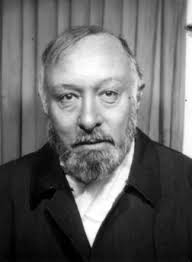
photo of the author from monoklkitap.com
Profile Image for MJ Nicholls.
2,277 reviews4,859 followers
August 26, 2014
I read Locos: A Comedy of Gestures over two and half years ago, so I have no idea how Alfau’s two fiction books dovetail. But Mike will. So watch his space, watch his face. I can assert that (as far as my memory of Locos extends, which isn’t very far, though I do recall reading portions on the fifth floor toilet at Napier U—strange how memory works) Chromos is the superior work. Despite its “anticipating the fictional inventiveness of Barth, Coover et al” the novel is quite straightforward to read: stories-within-stories is the form and the reader’s full commitment for the central frame tale (a ‘corny’ MS about the Sandoval family’s fortunes in America written by Garcia, one of the several ‘Americaniards’ in the main narrative) is required along with the tales within the narrator’s own streetside antics. The prose is a stunningly erudite mixture of stylistic, witty English with occasional Spanish flourishes, and consistently entertains with the intellectuals Dr de los Rios and The Moor, whose revelries at the El Telescopio hostel— along with the narrator’s fondness for inventing his own runaway narratives about his friends—explore the more peculiar aspect of the post-war Spanish immigration experience in New York. The Garcia sections satirise the sentimental mode of Spanish writing and the text is an astonishingly confident piece of work for a (then) underrepresented voice in American fiction (Chromos should have been published in the 1940s but was unearthed by Dalkey and published in 1990). Profound, hilarious, darkly comic, wildly inventive. Begging to be read.

Incomplete Glossary Notes to Complement the Incomplete Glossary Notes

antasala = anteroom
antipático = unpleasant (person)
banderilla = type of toreador
boina = beret
caballero = gentleman
chacolí = sparkling dry white wine
chavales = kids
chulo = handsome man
coleta = torero’s pigtail
diestro = another term for matador
estoque = sword used in slaying of the bull
frontón = court for playing ball games against a wall
heredad = estate
hidalgo = title of persons in Spanish nobility
manzanilla = Spanish term for camomile tea
muleta = the name of the stick that the red cloth hangs from in the final third of a bullfight
percebes = goose barnacles
porrón = decanter
shillelagh = wooden walking stick and club or cudgel
sicalipsis = sexual suggestiveness
suertes = parts of a bullfight
tauromachial = relating to bullfighting
zarzuela = a Spanish lyric-dramatic genre that alternates between spoken and sung scenes
Profile Image for Paul Dembina.
694 reviews164 followers
October 4, 2020
Another enjoyable book from Senor Alfau. Nothing much seems to happen, a bunch of expatriot Spanish blokes socialising and chatting (and drinking) in New York. But a most amiable tone.
Profile Image for Caroline.
913 reviews312 followers
September 2, 2014
‘And this is the stereochronic sense of life: to change, to retrace and to advance, to sidestep oneself and join one’s other past, present and future selves, and by undergoing this displacement along the axis of possibilities, to raise the curtain of man’s next state and let consciousness flood our total identity which remains invariant under all transformations. This is metanthropy.’

‘In Spain there is no aristocracy but only nobility, and there is a great difference, oh, yes!’

‘He remembered his delight when analyzing the general solutions of equations. The practical quadratic was a sonnet with two possible endings; the cubic was an ode to ingenuity and perhaps a monument to the controversial perfidy of an unscrupulous mathematician, its irreducible case a hint of irritating suggestiveness; the quartic, a drama in which three unknown victims are enlisted, two of them liquidated to zero only to be exhumed later to yield the solution with their identity; the quintic, the pillars of Hercules, a stimlulus to generalizations and conquests which far surpassed the original problems and a profound humanistic lesson which tells us that we should always question whether the solutions we seek to our problems really exist.’

‘LIke two confluent spirals, they circled and flowed along the increasing rattling of Lunariito’s castenets to a spot in the common center, face to face, as a wave comes to a crest. They froze a moment and then melted and boiled into the dance. It was a furious exhibition of bristling, eloquent, gesticulating motion, of proposition and answer, a complete argument with inevitable conclusions, but self-contained in the world of dancing where the subect was movement and the answer and resolution given in dancing terms.’

Alfau plays with time and death; they are the warp and woof of his narrative. Except there is no orderly movement of a shuttlecock narrator back and forth within a traditional or linear plot on a four-square loom. Time scatters scenes indiscriminately until one reaches the heart of the book, a philosophical density, a sort of black hole. It comes near the end of the novel, and in it Alfau discusses time as the fourth dimension that negates motion. And yet he then immediately starts the finest scene in the book, an 18 hour fiesta for the Spanish immigrants to New York City who we have been learning about for 275 pages. In this scene it is specifically motion, in the form of dance, that is the essence of living and the act of dying. The dance is accompanied by the moving fingers of the finest Spanish guitarist extant (Alfau studied music when he came to the US). It is watched by a jobless bullfighter, longing for the graceful motions of the different passes.

And, to follow the fabric metaphor, there are more stories woven into the ‘here and now’ of the main plot. They occur in the form of several hackneyed-but-not-quite-cliched tales that the young Spanish character Garcia is writing and reading to the narrator. These are set variously in America and Spain, and evoke the gradual decline of Spain that preoccupies Alfau. The old Spanish grandeur is personified in two older men among the Spanish in NYC, who represent the strains of Moor and Christian heritage, with the contributions each made to Spanish character.

This is a book that gets better as it goes along, with that final party scene knitting together the pieces that have been constructed bit by bit. One sees the glimmers of colors and textures repeated and given meaning by the final installment of the primary tale that Garcia has been telling intermittently, and by the old Moor’s ravings. The quotes I’ve chosen above are examples of his most dense writing, to give a sense of his experimentation with language. It is astounding that Alfau has this command of English, since he came to the United States at almost twenty years of age. (To assure you that it is indeed readable, there is much that is more traditional in Garcia’s tales.) This is a challenging read, especially what I’ve termed the 'black hole’ section (which is really about relativity), but worth it.
Profile Image for Kevin Adams.
482 reviews143 followers
April 20, 2021
Oh man. Did I love this book. Another one on the TBR pile for a while and I finally got around to it (my timing on GR is off, while great it did take me more than a day to read...haha).

I was sucked into every story. Didn’t want it to end. Incredibly cinematic. Beautiful writing and I’d like this to be placed on the “best NYC novels ever.” So defined I felt I was walking those same streets. Which I may have in my life. Deserves to be read!
Profile Image for Nathan "N.R." Gaddis.
1,342 reviews1,655 followers
Read
April 23, 2016
 photo alfausm2_zpsczndootc.jpg
Steven Moore (then, editor at DA) with Felipe Alfau and ms. of Chromos, 1991

[I know how much Photo Reviews can f*** with your feeds (especially on those rinky apps) but I love pics too and too I just wanna get me some back. 'sides, I love this photo]

So, yeah, a ms BURIED in a drawer for decades. Excavated by the inimitable team of Moore & Dalkey. But, thing is, I'm sure there are more and more of these ms's BURIED in drawers (just look in Theroux's for instance) but too there are so many of these which actually saw publication, became printed artifacts, which remain out of the purview of those dominated by NYC. I mean especially from the Southern half of America ; there are literally dozens of these Boom novels which still aren't read ;; I'm dazzled how many I've found and how NONE of them have that MFA whiff ;; nor that New Yorker whiff. But yet are of a piece with that Other Stream of the Northern half of America's literary output, I mean of the Gass-Gaddis-Coover-Barth-ETC (Faulkner is the common denominator as much as Joyce of course, etc etc usw) stream (which itself too, as much as I hype it, remains yet under=recognized as the significant contribution of the Northern half of America to World Literature (your Updikes=Roths=Bellows=Carvers=ETC shall pass ; but thank you indeed sure!)).


"The moment one learns English, complications set in."


That's right, I picked this up in the beautiful Dalkey hd. From back in those days when DA seemed to habitually produce the hd's. Then too I found a second copy in a thrift shop and gave it to someone who perhaps wasn't its best recipient. Still, I can't say much for myself, given how long it's taken me to get around to reading Our Alfau ;; but not as long as he had to wait for its publication.

And the final disconnected section of Review Text :: do read Locos: A Comedy of Gestures first. Or second. Whatever floats your boat. I mean, read the two together. I mean the characters connect the two ; Alfau's style, though, shifts along a major fault line between the two ;; I'd go so far as to say jovial in Locos and heavier, more "literary" in Chromos. But, yes, the two together.
Profile Image for Harry Collier IV.
190 reviews41 followers
Read
December 1, 2017
The moment one has to give stars complications set in...

What do you give a book that deserves no less than 5 stars and at the same time deserves no more than 3?
The writing is great. The storytelling through the first 250 pages is top notch. Then the magic just kind of fizzled out for me.
I read Locos a while ago and still vividly remember many of the characters, so it was a delight to read of their further adventures. This time most have moved to New York and find themselves astranged from their Spanish roots - trying to hold on to what makes them Spanish while at the same time come to terms with what will make them American.
Being an Ex-Pat myself, I wanted to like this book and I did. It presented so many of the things I have experienced and while reading it I kept thinking "Yeah, I've been there."
The problem starts when Garcia leaves the scene and The Moor starts going on about math and time. These were long and tedious pages that I just couldn't get into. It felt like Alfau had slammed on the breaks because he had more to say and wanted to find a way to say it. I think he understood another novel would not be coming and so tried to fit things into this one that would have been best left for a third installment.
I kept waiting for the story to get back on track and unfortunately it just never did.
I am glad I read it and I will definitely put it on my "To-Read Again" list. I have a feeling that the second time through, when I am a little older and a little wiser, may produce a more positive result.
For now I am not giving it any stars but rather letting the job of judging this book remain for my future self.
Profile Image for Tom Lichtenberg.
Author 82 books77 followers
July 22, 2012
Chromos, by Felipe Alfau, is a sort of inverted Arabian Nights. Fictional characters insist on telling stories to the narrator, who doesn’t want to hear them. The stories bleed into one another, each one at least as compelling as the one before. The characters are from an earlier novel by the same author, characters who had dreamed of becoming real, and now here they are, meeting him years later in New York, telling stories of their own. It is an extraordinary novel, as was its predecessor, Locos. A Spaniard, he wrote only in English. Astonishingly, though he had written this book in his forties he was nearly 90 when it was finally published. One resonant quote in this regard: "His attempts at extracting a living from writing in this country, battling the set ideas, preferences and patterns of the literary world, had left him as frustrated as a woodpecker in a petrified forest".

This is one of those books I keep wanting to copy sections out of and post them on Twitter or somewhere, or at least I wish there was a way to permanently stamp those great sentences into my brain.

Speaking of wishes, one of the stories in the novel is about a man who has the ability to skip over sections of his life to get to the point he wants to be. His impatience keep driving him on to use this gift, and so he lives a long life but only consciously lives a few bits of it. How many of us would be able to resist that temptation? I remember many late night shifts where I would have gladly traded the hour or two my sleepy commute took just to be already at home in bed!
Profile Image for Jonathan.
1,010 reviews1,230 followers
March 5, 2014
"The moment one learns English, complications set in. Try as one may, one cannot elude this conclusion, one must inevitably come back to it. This applies to all persons, including those born to the language and, at times, even more so to Latins, including Spaniards. It manifests itself in an awareness of implications and intricacies to which one had never given a thought; it afflicts one with that officiousness of philosophy which, having no business of its own, gets in everybody's way and, in the case of Latins, they lose that racial characteristic of taking things for granted and leaving them to their own devices without inquiring into causes, motives or ends, to meddle indiscreetly into reasons which are none of one's affair and to become not only self-conscious, but conscious of other things which never gave a damn for one's existence.


In the words of my friend Don Pedro, of whom more later, this could never happen to a Spaniard who speaks only Spanish. We are more direct but, according to him, when we enter the English-speaking world, we find the most elementary things questioned, growing in complexity without bounds; we experience, see or hear about problems which either did not exist for us or were disposed of in what he calls that brachistological fashion of which we are masters: nervous breakdowns, social equality, marital maladjustment and beholding Oedipus in an unfavorable light, friendships with those women intellectualoids whom Don Pedro has baptized perfect examples of feminine putritude, psycho-neuroses, and hallucinations, etc., leading one gently but forcibly from a happy world of reflexes of which one was never aware, to a world of analytical reasoning of which one is continuously aware, which closes in like a vise of missionary tenacity and culminates in such a collapse of the simple as questioning the meaning of meaning.


According to Don Pedro, a Spaniard speaking English is indeed a most incongruous phenomenon and the acquisition of this other language, far from increasing his understanding of life, if this were possible, only renders it hopelessly muddled and obscure. He finds himself encumbered with too much equipment for what had been, after all, a process as plain as living and while perhaps becoming glib and searching if oblique and indirect, in discussing culturesque fads and interrelated topics of doubtful value even in the English market, he gradually loses his capacity to see and think straight until he emerges with all other English-speaking persons in complete incapacity to understand the obvious. It is disconcerting.

Profile Image for Marcia Letaw.
Author 1 book39 followers
January 9, 2017
I discovered Chromos in a bookshop, not one of those great hulking used bookstores where the books are thrown about like leftover refuse, no this bookshop was a time traveler, a holdover from a bygone era where books are respected and cherished. As I was saying: I discovered Chromos hiding away in the Books Translated from Spanish section. It called out to me with its intriguing cover and the opening lines: "The moment one learns English, complications set in. Try as one may, one cannot elude this conclusion, one must inevitably come back to it." And so I took it home. For $8.95, I took home a hardback book in pristine condition in spite of having been published in 1990, and upon arriving home, I soon discovered that it was a first edition on acid free paper. Wow! Further inspection revealed that it had been improperly shelved, for Felipe Alfau who emigrated from Spain during WWI to New York City, wrote Chromos in English in 1948 and never bothered to publish it until 1990 when he was 88 years old! Having now completed reading this masterpiece, I have come to the same conclusion as others before me that this book was simply too far ahead of its time.
Profile Image for Thomas.
575 reviews99 followers
October 31, 2025
an early example of the john barth school of american post modernism written by a spaniard in english and containing a multitude of stories within stories that was left in a drawer for 50 years before being rediscovered by dalkey archive sounds very good in theory, but i didn't really connect with this as much as i expected. there are some fun characters and situations(including one brief but standout section near the end about a man obsessed with a female mannequin) but it never really grabbed me. you can't win em all when it comes to buried masterpieces i suppose.
Profile Image for may.
33 reviews32 followers
June 2, 2018
“In order to preserve the sequence of Garcia’s stories, I have sacrificed my own.”

Forget 4D chess, this is 4D snakes and ladders where every snake leads to a new board of story only to climb back into the one you left off reading.

Chromos extends the familiar framework from Locos, which feels more like the 1001 tales with an emphasis on character trickery, but this time we put Locos inside of Locos (inside of Locos, inside of Locos…(?)).

Within the broad subject of Spaniards in New York making it day to day and having strange encounters with one another, there is the tale of the downfall of a family back in Madrid, the tale of a man who gains unnatural powers and the various peeks into the lives of many other Spaniards struggling to fit in with the American way being neither American enough for the big city or Spanish enough on account of them leaving their homeland behind.

Alfau really does the story-story-nothing-but-story stuff well, but the dialogue in this book (as much as Alfau seems to not be too fussed about it – There’s a quote in there somewhere about dialogue acting as a cloak for uninspired stories) makes it stand out over its predecessor just that little bit more.

Unfortunately, around ¾ of the way in it somewhat overstays it’s welcome thanks to one section of the book that wasn’t to my taste. The prose tired me out but managed to pick itself up on the strength of the Sandoval family sections that follow it and then the grand finale.

I can see the comparisons to Pynchon being made in this book with some of the fabulist humour and divergences into specific topics that seem absurd and over the top, especially the various scenes we have with The Moor and possibly one of the greatest closing scenes from a book I’ve read (that eventually is book-ended by one more sub-tale and then the closing of the actual book).

I would recommend reading Locos first in a kind of Portrait of the Artist into Ulysses kind of way even though I preferred the structure of Chromos and the focus on a ‘main’ story overall. They’re both worth reading and I think most people will get a lot more from them than I did.
Highly recommended, if this sounds like your thing.
Profile Image for Monica.
335 reviews14 followers
June 16, 2011
Chromos is a story about a man telling a story about a man telling a story about..... well you get it. Much of the book is about a man who is writing a screen play and a story. The proposed translator is reading and being read said stories. Oh did I mention that, I think it was the translator, can actually read minds as well and you are privileged enough to hear the stories going on in others' heads? So it sounds like a decent enough idea for a book but the problems out weigh any of the brilliant ideas.

There was a quote (pg 177 my edition)stating that "Life is not a novel". Pg 103 also talks about how dialogue is best used sparingly. I wish authors took their own advice.

I believe I read somewhere (sorry citation has long been lost) that Chromos (American Literature was published many years after it was written. It seems that he wrote down ideas as they came into his head and was planning to go back and fix it all later. Alfau apparently forgot to go back and edit after 50 years or so of this book being abandoned. The story (if it can be called that) does not flow and does not have much of a story line. There are huge gaps and jumps in flow.

I do not necessarily consider myself an intelligent person but I am able to at least half way complete many New York Times crossword puzzles. I would rate my vocabulary at fair to moderate but, this book left me too often searching for my hefty thesaurus or googling many words. I do not believe that this was a translation issue.

Some say that this book is about acculturation to America. There is mention of that and also of Nationalism, a pride for immigrants' home county and who they were there. There are also touchings of religion and opposition for women's liberation. These themes were not fleshed out in my opinion due to the "modern" sense of the writing, skipping and jumping and not completing thoughts.

It is apparent through many passages that Alfau is capable of being an amazing writer. This book just was not for me.


Profile Image for Heronimo Gieronymus.
489 reviews150 followers
July 24, 2018
Pretty clear that Chromos is one of the great novels of the 20th century. Pretty goddamn dispiriting that it took fifty years to find a publisher (only to subsequently be shortlisted for the National Book Award). It is a profound and very funny unity of plurals; not so much a shaggy dog story and a shaggy paella of stories, with an explicitly ontological context. Indeed, a totally amazing discussion of geometry and physics (evidently the true passions of Mr. Alfau) leads one to ask: what else is geometry + physics + literature but the domain of ontology? A novels of layers, stories within stories, metetextual densities, and passingly espied premonitions / hijacked interiorities, Chromos is a fierce machine - an impossible Swiss watch of a novel. It is a story about Spanish immigrants in New York that actually takes place in the forever of an infinite that dwarfs everything finite (a man, men, nations, geologies). There is some Bergson in here. The one unmoving moment of the all of life revealed in the immanent. And so much robust hilarity. So much sly self-reflexive play. Commentators speak of its foresight in regards to the postmodern. The back cover invokes future American heroes Barth, Coover, Pynchon, Sorrentino, and Gaddis. I can see Barth and Coover in here, to be sure (I cannot really see Pynchon, certainly not Gaddis). There is also the very real shadow of arch-protopostmodernist Cervantes, Super Spaniard and father of us all. Nobody seems to mention Flann O'Brien, who was doing similar stuff (especially in At Swim-Two-Birds) and is more or less Alfau's contemporary (though the possibility that Alfau, from what we know about him, would have read O'Brien is probably not great). There are a number of voices here, and if they sing differently, they all nonetheless sing. This novel is its own expatriated microcommunity, even more than it could be said to represent one. This a very odd picture of the local universal. Alfau exists in defiance of good sense. Is there any kind of a writer for whom one should be more grateful?
Profile Image for Marc Nash.
Author 18 books470 followers
February 23, 2017
Too subtle for me I think. A book about exile, but so specific to the Spanish that i felt it struggled to broaden out into a universal experience of exile. And one of the streams of the book is a consciously melodramatic novel within a novel about old Spain, that was, well just melodramatic. Fiction aping bad fiction is little more than bad fiction, bad in the sense of being unengaging.

The passages I most enjoyed, on religion and on science, I think were meant to be satirical, poking fun at the intellectualism of the characters (in contrast to their emotional life and just being in the moment), but I actually responded warmly to the ideas as presented in the text because they engaged me.

Like I say, too subtile for moi
Profile Image for Donald.
Author 12 books36 followers
September 3, 2008
terrific, I simply vanished into the 3 or 4 narratives that moved through the book, like clouds in an August sky overhead while I was sitting in a comfy folding chair at the beach... at the beach, yes the beach, it took me months to read this, I wish I was still reading it, I wish it was going to be summer for another 3 months. Plot? No, not really... but who cares! Chromos was a pleasure to spend the summer with.
Profile Image for Robert Wechsler.
Author 10 books146 followers
tasted
November 1, 2016
I love the idea of having stories within a story, where it's not clear whether the overriding story is a frame or is framed by the internal stories. But unfortunately the Vintage edition prints the internal stories in a smaller typeface that I cannot read. I can't say whether the newer Dalkey edition does this, but I do wish there was an e-book version of this delightful novel.
Profile Image for Josh Friedlander.
833 reviews136 followers
September 28, 2025
Spanish immigrants ("Americaniards", their infelicitous portmanteau) in 1940s Manhattan. One is a (bad) writer, another a sort of crackpot philosopher-scientist, another a matador dismayed to discover that his career has been outlawed in the US by activists who "wish bulls to live dull lives". They drink and talk and loiter in the park, nostalgic yet disdainful toward their native land. "You Spaniards only talk about yourselves," an American tells them - not an unfair assessment.

It is a rambling, weird, bong-hit of a book, which I think was not for me but appreciated its baroque and at times bizarrely funny bits, such as: a widow dresses up her dead husband's body and sits him at his desk, allowing no-one to acknowledge his demise even as the body decays and crumbles (eventually the building is condemned and they forget to bring him when they leave); someone tells a dirty limerick and in lieu of the actual content we get a 12-page reimagining of it as melodrama, a tale about a man falling in love with a store mannequin, stealing it, and bringing it home to consummate his love; fortunes made and lost; incest and sadomasochism; honest beggars and lovelorn landladies. Just an untameable freakshow of a novel, which was (understandably!) unpublished for over four decades, until Flann O'Brien and Gilbert Sorrentino had carved out a space for this kind of thing.

I think that the Chromos of the title are colour stills, reflecting the imagist nature of this work - an attempt to capture the mixed feelings of economic migrants about their homeland. In Spanish, the narrator says, there is no need to explain Spanishness, and in English it is impossible. This book attempts to show why, a glorious and messy failure proving that thesis.
Profile Image for Robert Chapman.
49 reviews
June 8, 2020
I walked up steps to an apartment. After several hallways and doorways, I recognized it as a maze.
I have a fear of mazes. I kept walking (reading), and caught occasional glimpses of characters. Once,
an artistic and beautiful hallway - faded, forgotten - then emerged again the maze. When I finally stumbled back out into the real world and the warm sunlight, I alternated between dissolving terror and emergent joy. I could only repeat in my mind ...... "What the hell was that?"
57 reviews
April 9, 2023
"Look at me well, as I look at you in the hazy horizon, across the afternoon and the distance, because it is sad to part, perhaps forever, and not have looked at one another enough." What a beautiful and evocative statement. The book is filled with them. Ex pat Spanish community pondering what they lost and what they want to keep when living in America. Full of interesting characters, meandering story, still not sure of I totally understand the story. I look forward to reading it again.
Profile Image for Clara  Prizont.
163 reviews1 follower
December 13, 2020
The best of absurdist fiction. There seemed to be lots of important literary things I didn't understand but it lulled me into a fantastical trance where I was pulled from scene to scene, gaining my bearings at the same moment I realized I had lost them. Similar to my experience with the crying of lot 49 in that way
Profile Image for Charles Cohen.
1,026 reviews9 followers
March 2, 2022
I understand why this book is a classic. The way it uses the novel-within-the-novel, the way it conveys both a sense of nostalgia for Spain and the immigrant experience here. It's all done beautifully and movingly.

But it just didn't do it for me. So this rating is really more about me than Felipe Alfau's work.
Profile Image for wally.
3,639 reviews5 followers
January 17, 2016
there is an introduction titled "felipe alfau and the temptation to exist"...curious, given this trend i've noticed in recent and past reads, an idea i began calling 'the mark of zero'...shortened now to simply zero and i do not mean that spear-chucker in the white house. alas.

a good intro...providing a feel for the story...and i get a sense that the man, joseph coates, june, 1998, is not entirely sure of events in this story just as some reviewers here concluded. i dunno. i've read a number of stories whose reviews include conclusions from others that the story is unreadable...a conclusion that alfau claimed to hold about his stories, in his nineties and in a home. alas.

first line: the moment one learns english, complications set in.

coates describes all that happens between 23 and 345 disreputable chromos...stories.

pp 1-23 are easy enough to follow...an unnamed eye-narrator in new york, a spanish immigrant...knows two others who appear in these pages, his friend don pedro...also called don pedro guzman o'moore algoracid, also called a number of other names...the moor, don pedro el cruel, dr. jesucristo...he is likened to dracula, they enter a building and go down by elevator. our eye-narrator will write and the moor will keep watch.

the other, 3rd, in this 1-23, dr, de los rios...and initially in these first 23 pages, he isn't as fleshed out as the moor, though the two are likened to the two in cervantes's story, quixote and panza. the eye has known him since spain, he lectures, he is one of the leading neurologists in the world. through him, the eye met don pedro. the two are suggested to be timeless, seemed to have known each other for centuries. he limps. alas.

onward & upward
or...the moor made more of an impression. and so then we get another name of garcia telling tales to the unnamed narrator in the el telescopio cafe in new york...bout don mariano sandoval from jauja who moves his family to madrid, rosario and the two kids fernando ten and julieta five and 18-yr-old ledesma, who helps at the jewelry store and whose father provided a blessing. go.

then another story bout vizcaitia and little garcia where i'm at now. 36. not a problem. i like the comedic tone of the story, reminds me of cervantes, of many of the latin american stories i've read. so and so, daughter of an honest plumber from sheboygan.

update, 27 jul 14, sunday, 6:02 am
good story, reads like something written today, rather than almost...what? almost a hundred years ago? does it concern you that others could not make sense of this? should it concern us? would it help w/a character list prior to venturing forth? so, yeah, these chromos, stories, continue in the aforementioned pages, the stories contain fictional characters and are presented w/paragraph breaks...and the stories also include 'real' characters out and about in new york, recent immigrants, like the coello family, whose patriarch has died in his notario chair and the undertaker has set him up, stuffed-like, though he has begun to stink.

time place scene setting
the telling takes place in new york, though we also visit locations in spain and the time is...the past...could call it the time alfau was writing, the early 1900s, though there is nothing definitive to indicate time...unless i missed something. possible.
*el telescopio, cafe on cherry street, where garcia/narrator meet, at times w/others

characters

*unnamed narrator, eye-narrator
*garcia...known to the above, tells stories he has written
*don mariano sandoval, from juduja, moves to madrid, fictional...some of the sandoval characters appear in early and later stories
*his wife, rosario
*their two children fernando 10 and julieta 5
*18-yr-old ledesma, helps don mariano at the jewelry shop
*an assortment of unnamed 'real' characters...billiards players, bartenders, barmaids one named nescacha, kids
*don pedro the moor, also called other names see above...though i have it wrong above...don pedro calls the doctor dr. jesucristo
*dr. de los rios
*gorriti...fixture at a bar
*begona, ball player
*little garcia and another kid/fictional
*euscarra, married to begona
*lanky chapelo, 3 other men, 3 women
*senor senora olozaga (accent marks missing alas), senora is mariguita
*julio ramos, fictional
*paco serrano, fictional
*francisco serrano

update, 5 aug 14, tuesday...early morning
i'm not going to complete the character index...there's a bunch, but the above should suffice. along about page 200 or was it 250...there's this curious twist in the focus of this kaleidoscope...time...and music. time related to music related to national character...all very curious and thought-provoking. and so on and so forth and scoobie doobie doo.

all-in-all a good read, a fair read...probably one worth reading again, knowing now what to expect...see how all he lines converge. and probably be a good idea to check out his only other published work...locos? was it?


Profile Image for Mark Bellerophon.
31 reviews
April 12, 2016
While definitely a good postmodernist fiction book, but having the misfortune of being published in the nineties while having been written in the forties, "Chromos" cannot help but seem overshadowed by the better or more well-known postmodern fiction that was written and published between the forties and nineties. But this doesn't take away--or shouldn't--from "Chromos's" merit which it certainly has--and manages to be quite an entertaining read along the way. The synopsis at the back of this book will tell you all you really need to know about "Chromos" before reading it (if you decide to do so) but I will add that if you enjoy frame tales and metafiction as well as have an appreciation for or interest in Spaniards (in America) and their particular style of story-telling, you will not be disappointed. Not unlike the "Quixote," Chromos also seems to be a commentary on literature and society--although with a postmodernist twist--and, in addition, language and science, which discoveries in the latter two, at the time, were making waves and having ripple effects on the other fields around them--hence "Chromos."
Profile Image for Jessica.
213 reviews36 followers
December 9, 2007
This was one strange book. Not really much of a plot, but that was half the point.

I'm just not very big into postmodern writing, and I'm trying to figure out why this is on the banned books list...
24 reviews7 followers
August 9, 2011
I found the Garcia narratives to be pretty banal (as intended, i guess), but the last 150 pages were excellent. Party scenes were terrific, reminded me of the Recognitions - enjoyed the mathematical side of Don Pedro as well.
Profile Image for Pete Camp.
250 reviews9 followers
February 4, 2018
Masterfully written. Alfau was the predecessor to Gaddis and Pynchon. Although this novel was written in 1948 and left unpublished until 1990, his style in present in both authors works. Exceptionally good read.
Displaying 1 - 30 of 33 reviews

Can't find what you're looking for?

Get help and learn more about the design.