

What do you think?
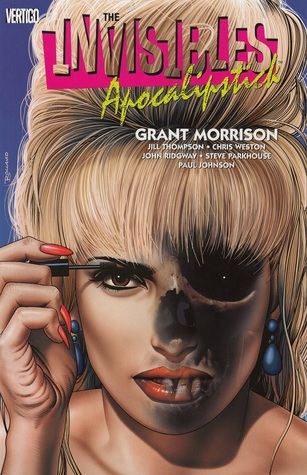
The Invisibles #2
The Invisibles, Vol. 2: Apocalipstick
What if they gave a war and nobody saw?
What if you suddenly found out it was happening all around you? Would you join up, pick sides, take up arms? Would you kill? Or would you try to run, try to hide, try to deny the whole thing?
A silent war has raged for millennia, shaping the world as wee know it, and jack Frost — the newest member of the anarchist revolutionary society known as the Invisibles — has just found out how high the stakes are and what the enemy agents of the Ultimate Conspiracy are cable of.
And he doesn't like it one bit.
The initiation into an unseen conflict as old as the universe and as fresh as tomorrow's headlines continues here where THE INVISIBLES: SAY YOU WANT A REVOLUTION left off.
THE INVISIBLES exposes the intertwining tendrils of an unstoppable Apocalyptic Conspiracy.
Meet Jim Crow, master of Voodoo triphop, and enter the outrageous world of Brazil's transvestite sorcerers as the sordid, glittering past of Lord Fanny unfolds.
Learn the secrets of life, death, magic and the Beyond with THE INVISIBLES.
What if you suddenly found out it was happening all around you? Would you join up, pick sides, take up arms? Would you kill? Or would you try to run, try to hide, try to deny the whole thing?
A silent war has raged for millennia, shaping the world as wee know it, and jack Frost — the newest member of the anarchist revolutionary society known as the Invisibles — has just found out how high the stakes are and what the enemy agents of the Ultimate Conspiracy are cable of.
And he doesn't like it one bit.
The initiation into an unseen conflict as old as the universe and as fresh as tomorrow's headlines continues here where THE INVISIBLES: SAY YOU WANT A REVOLUTION left off.
THE INVISIBLES exposes the intertwining tendrils of an unstoppable Apocalyptic Conspiracy.
Meet Jim Crow, master of Voodoo triphop, and enter the outrageous world of Brazil's transvestite sorcerers as the sordid, glittering past of Lord Fanny unfolds.
Learn the secrets of life, death, magic and the Beyond with THE INVISIBLES.
208 pages, Paperback
First published January 1, 1996
About the author
Grant Morrison
1,813 books4,676 followersGrant Morrison has been working with DC Comics for twenty five years, after beginning his American comics career with acclaimed runs on ANIMAL MAN and DOOM PATROL. Since then he has written such best-selling series as JLA, BATMAN and New X-Men, as well as such creator-owned works as THE INVISIBLES, SEAGUY, THE FILTH, WE3 and JOE THE BARBARIAN. In addition to expanding the DC Universe through titles ranging from the Eisner Award-winning SEVEN SOLDIERS and ALL-STAR SUPERMAN to the reality-shattering epic of FINAL CRISIS, he has also reinvented the worlds of the Dark Knight Detective in BATMAN AND ROBIN and BATMAN, INCORPORATED and the Man of Steel in The New 52 ACTION COMICS.
In his secret identity, Morrison is a "counterculture" spokesperson, a musician, an award-winning playwright and a chaos magician. He is also the author of the New York Times bestseller Supergods, a groundbreaking psycho-historic mapping of the superhero as a cultural organism. He divides his time between their homes in Los Angeles and Scotland.
In his secret identity, Morrison is a "counterculture" spokesperson, a musician, an award-winning playwright and a chaos magician. He is also the author of the New York Times bestseller Supergods, a groundbreaking psycho-historic mapping of the superhero as a cultural organism. He divides his time between their homes in Los Angeles and Scotland.
Ratings & Reviews
Friends & Following
Create a free account to discover what your friends think of this book!
Community Reviews
Displaying 1 - 30 of 158 reviews

July 25, 2008
21st century homophobia/heterosexism takes on really weird and subtle forms; Lord Fanny is transgendered, but NOT by choice. She was also forced to be a witch, or die trying. She is a whore, a chicken hawk and does too many drugs.
So what is Grant Morrison trying to say? That a queer is not only always a freak, but a stereotypical freak at that? She seems to be treated better by the villain than the so-called chosen one and hero (Dane McGowan- how original!).
Morrison takes a lot of liberties with the subject of Vodou. I'm not one to scream "cultural appropriation" every chance I get, but the representation of the Ghede is pretty offensive, and the altar is obviously a total rip off of the cheesiest kind of New Orleans tourism that I have ever seen.
With the subject matter, you'd think I'd really like this series. Most of the reviews show that people love this story. But it just goes to show that the only kinds of alternative sexuality as well as alternative spirituality is only accepted by straight people if it is so crazy that it amuses their need for the bizarre.
So what is Grant Morrison trying to say? That a queer is not only always a freak, but a stereotypical freak at that? She seems to be treated better by the villain than the so-called chosen one and hero (Dane McGowan- how original!).
Morrison takes a lot of liberties with the subject of Vodou. I'm not one to scream "cultural appropriation" every chance I get, but the representation of the Ghede is pretty offensive, and the altar is obviously a total rip off of the cheesiest kind of New Orleans tourism that I have ever seen.
With the subject matter, you'd think I'd really like this series. Most of the reviews show that people love this story. But it just goes to show that the only kinds of alternative sexuality as well as alternative spirituality is only accepted by straight people if it is so crazy that it amuses their need for the bizarre.

November 27, 2012
My Invisibles re-read continues. The second volume moves the focus to Lord Fanny, who I'm pretty sure was the first trans main character I came across as a teenager. The reader learns how she became a witch, while Dane flees the Invisibles and King Mob consults an old friend. Although the plot is very compelling, the most haunting sequences are side interludes following employees of the evil conspiracy. I think each of these is an entire issue, one following a domestic servant and the other a guard.
The Tory antagonists have aged depressingly well. The Invisibles was written towards the end of the Thatcher and Major era; its politics feel remarkably contemporary after years of austerity under Cameron, May, and Johnson. Once again, Britain is a bleak and fatalistic country ground down by wealth inequality, aristocratic privilege, and incompetent Conservative governments. Also pandemic and Brexit, these days. The discussion of Princess Diana is a blast from the past, though:
The Invisibles, Vol. 2: Apocalipstick introduces lots more magical weirdness and Jim Crow, rapper and voodoo priest. It continues to be remarkably well-paced and exciting for a narrative so dense with references and allusions. The art is vivid and atmospheric, especially during Lord Fanny's flashbacks. This series is really rewarding to re-read.
The Tory antagonists have aged depressingly well. The Invisibles was written towards the end of the Thatcher and Major era; its politics feel remarkably contemporary after years of austerity under Cameron, May, and Johnson. Once again, Britain is a bleak and fatalistic country ground down by wealth inequality, aristocratic privilege, and incompetent Conservative governments. Also pandemic and Brexit, these days. The discussion of Princess Diana is a blast from the past, though:
"She was supposed to represent the mythical Diana, you see, the moon goddess, the virgin huntress, but the very concept seemed beyond her comprehension. Her firstborn was to have been the moon-child, the incarnate shadow-king of a new England, the terrible messiah of the dark millennium."
"A privilege for any woman, Miles!"
The Invisibles, Vol. 2: Apocalipstick introduces lots more magical weirdness and Jim Crow, rapper and voodoo priest. It continues to be remarkably well-paced and exciting for a narrative so dense with references and allusions. The art is vivid and atmospheric, especially during Lord Fanny's flashbacks. This series is really rewarding to re-read.
March 24, 2023
I found the first volume of The Invisibles only mildly weird. I'd heard a lot of it beforehand and perhaps hyped myself up a bit too much and as such came out of it as a little bit disappointed.
This second volume, though? Getting good now. This is a bit more like it. Half-star for that.
There's some bits here that might have been written differently had this been done in the modern day, when we know of things a little more than back then, but that doesn't bother me so much. I'm starting to get a feel at the characters, heroes and villains alike, and almost figuring out whom to root for. Even the main character, the rat-bastard he is. Under most other circumstances an anarchistic kid like him would come across as obnoxious, except the people on the other side really do seem to deserve all of that shit.
Here's hoping it continues to get better.
This second volume, though? Getting good now. This is a bit more like it. Half-star for that.
There's some bits here that might have been written differently had this been done in the modern day, when we know of things a little more than back then, but that doesn't bother me so much. I'm starting to get a feel at the characters, heroes and villains alike, and almost figuring out whom to root for. Even the main character, the rat-bastard he is. Under most other circumstances an anarchistic kid like him would come across as obnoxious, except the people on the other side really do seem to deserve all of that shit.
Here's hoping it continues to get better.

May 24, 2012
When Morrison is good, he's really good.
When he's funny, it's funny. When he speaks of truths, you know that they are true.
And when he's incomprehensible, he's totally incomprehensible.
Like almost all of Morrison's work, this volume spans that entire gamut.
When he's funny, it's funny. When he speaks of truths, you know that they are true.
And when he's incomprehensible, he's totally incomprehensible.
Like almost all of Morrison's work, this volume spans that entire gamut.

September 25, 2021
El segundo tomo recopilatorio de “Los Invisibles” rompe un poco la narración de la trama general, pero no por ello deja de ser igual de divertido y transgresor. La mayoría de los números aquí recopilados cuentan historias particulares y conexas, que van explicando parte del universo extraño donde se desarrolla la obra y tienen una vertiente violenta, extraña y muy rompedora. Pero no es solo eso. Dentro de esa pátina de autodestrucción hay algo reconociblemente humano, sucio y decadente. Ese “pecado” de sociedad en el que vivimos y en el que Morrison sabe poner el dedo en la llaga.
Especialmente dura y conmovedora es la historia de uno de los agentes de seguridad privada que se enfrenta a Los Invisibles. Una buena persona que le tocó vivir una vida de mierda... Es un guion brillante, bien narrado y con un destino cruel. Pero no es solo esa historia. En este tomo podremos encontrar ideas totalmente locas pero genialmente reflexivas.
Solo al final retomaremos la trama original y conoceremos, entre otros los orígenes de uno de los personajes más importantes de “Los Invisibles”, Lord Fany, y el destino que parece tener entre sus manos el odioso Dane McGowan - Jack Frost.
Especialmente dura y conmovedora es la historia de uno de los agentes de seguridad privada que se enfrenta a Los Invisibles. Una buena persona que le tocó vivir una vida de mierda... Es un guion brillante, bien narrado y con un destino cruel. Pero no es solo esa historia. En este tomo podremos encontrar ideas totalmente locas pero genialmente reflexivas.
Solo al final retomaremos la trama original y conoceremos, entre otros los orígenes de uno de los personajes más importantes de “Los Invisibles”, Lord Fany, y el destino que parece tener entre sus manos el odioso Dane McGowan - Jack Frost.

December 5, 2018
This series is so twisted and strange. I certainly wouldn't fault anyone for not liking it, but I love it. It has all of the things that I love about things like Hellblazer and the Alan Moore run of Swamp Thing all rolled into one. This volume plays with concepts like time and death, and delves into the question of "hey, don't faceless lackeys that the hero guns down by the dozens have lives and families too?".

July 18, 2016
We see very little of Dane McGowan here than the previous volume, and that's because Fanny the transvestite is the star. If you're close minded when it comes to gender bending or homosexuality, you'd better skip this book, because it gets pretty intense. I think it was ambitious of Grant Morrison, especially back in the 90s, to write about a character like Fanny in an honest and sympathetic light. Her story, apart from the ancient Aztec witchcraft, is not unusual from what I've heard about poor Brazilians. And I get the impression Morrison researched this character before writing her.
Fanny aside, the narrative was hard to follow sometimes. It seems to latch onto a character, dig into his or her brain, and extract their memories in random order and spray them onto the present scene. Or sometimes scenes like these were jumbled together following multiple plots. It usually made sense in the end, but in the middle it can be dizzying.
But generally the story was captivating, exciting, and crazy and trippy as fuck because it's Morrison.

March 21, 2014
I really liked the first Invisibles book. It followed a troubled kid called Dane as he became a part of a resistance cell called the Invisibles who were waging a secret war against the oppressive powers of the world – awesome! It wasn’t a straightforward read but you could follow it as it was basically told from Dane’s perspective who, like the audience, knew nothing about the Invisibles and was experiencing it all for the first time. It had tons of imagination and inspiring stuff which clearly influenced the Wachowskis as a lot of that book made it into the first Matrix movie. The second Invisibles book also has lots of imagination too but it’s a less clear and more fragmented story – not as good as the first volume but still ok.
The stories include a new character, a vodou witch called Jim Crow, who messes with businessmen who slum via VR headsets in the bodies of gang members (that old chestnut!); a monster from the mirror realm who eats people the Conspiracy offers up; the life story of a soldier King Mob thoughtlessly kills; and the origins of Lord Fanny, the transvestite shaman (she-man, geddit?) of the Invisibles.
Grant Morrison is generally known as the whacky/druggy/psychedelic writer of bizarre comics which isn’t totally fair as a lot of his work is understandable, it’s just that he’s incredibly ambitious and sometimes loses readers who aren’t willing to meet him halfway. But some of his work features completely random stories and Apocalipstick is one of those books. I don’t know how Jim Crow’s story fitted in to Dane’s leaving the Invisibles – it was visually spectacular to see the insect monsters/N’Orleans icons of vodou magic come to life, but I had no clue what was going on!
The mirror monster story was a bit better – at least I could follow what was happening! Told from the perspective of a servant in this rich guy’s castle, a monster comes out of the mirror every night and eats a human offering prepared by the servant. The rich guy thinks nothing of it but the servant eventually starts wigging out especially when one of the offerings turns out to be his estranged punk daughter. It’s a bit long-winded as the point is for the Conspiracy to find out the Invisibles’ location – something that could’ve been in a much shorter way - but it’s an entertaining horror comic.
In keeping with the sharp turns this comic takes, we’re shown the life story of a nameless guard who’s killed by King Mob at the start of the book (kind of like in the first Austin Powers movie). His miserable life plays out in stages, jumping backwards and forwards in a cut-up beat style. I really liked seeing Steve Parkhouse’s art (he’s an artist I remember seeing way back in the 2000AD days but rarely see anymore) but what a downer of an issue!
The rest of the book – about half! – is the origin story of Lord Fanny, the transvestite shaman of the Invisibles. I understand that Morrison’s fascinated with transvestites and how they symbolically represent two halves of a whole and all this other stuff – but wow, was this a boring story to read! Lord Fanny is born into an Aztec witch cult that despises boys and wants to turn them into girls or something. It was all very Angela Carter-esque but it just dragged on and on and, to be honest, Lord Fanny’s fine as a supporting character but not as the main one. Her story was completely and utterly boring and made it a slog to get through. The whole magic/transgender thing just didn’t interest me at all – it’s interesting in itself but not as narrative.
Apocalipstick (great title by the way!) is a very dark book. Death and suffering permeate the book completely and made it a very depressing read. Parts of it were compelling and some were entertaining in a kooky imaginative sense, and I loved the artwork throughout, but it didn’t quite gel as a complete volume for me and the biggest part of the book just didn’t grab me at all. It hasn’t put me off the series though, it’s just a bit of a let-down after the brilliant first book.
The stories include a new character, a vodou witch called Jim Crow, who messes with businessmen who slum via VR headsets in the bodies of gang members (that old chestnut!); a monster from the mirror realm who eats people the Conspiracy offers up; the life story of a soldier King Mob thoughtlessly kills; and the origins of Lord Fanny, the transvestite shaman (she-man, geddit?) of the Invisibles.
Grant Morrison is generally known as the whacky/druggy/psychedelic writer of bizarre comics which isn’t totally fair as a lot of his work is understandable, it’s just that he’s incredibly ambitious and sometimes loses readers who aren’t willing to meet him halfway. But some of his work features completely random stories and Apocalipstick is one of those books. I don’t know how Jim Crow’s story fitted in to Dane’s leaving the Invisibles – it was visually spectacular to see the insect monsters/N’Orleans icons of vodou magic come to life, but I had no clue what was going on!
The mirror monster story was a bit better – at least I could follow what was happening! Told from the perspective of a servant in this rich guy’s castle, a monster comes out of the mirror every night and eats a human offering prepared by the servant. The rich guy thinks nothing of it but the servant eventually starts wigging out especially when one of the offerings turns out to be his estranged punk daughter. It’s a bit long-winded as the point is for the Conspiracy to find out the Invisibles’ location – something that could’ve been in a much shorter way - but it’s an entertaining horror comic.
In keeping with the sharp turns this comic takes, we’re shown the life story of a nameless guard who’s killed by King Mob at the start of the book (kind of like in the first Austin Powers movie). His miserable life plays out in stages, jumping backwards and forwards in a cut-up beat style. I really liked seeing Steve Parkhouse’s art (he’s an artist I remember seeing way back in the 2000AD days but rarely see anymore) but what a downer of an issue!
The rest of the book – about half! – is the origin story of Lord Fanny, the transvestite shaman of the Invisibles. I understand that Morrison’s fascinated with transvestites and how they symbolically represent two halves of a whole and all this other stuff – but wow, was this a boring story to read! Lord Fanny is born into an Aztec witch cult that despises boys and wants to turn them into girls or something. It was all very Angela Carter-esque but it just dragged on and on and, to be honest, Lord Fanny’s fine as a supporting character but not as the main one. Her story was completely and utterly boring and made it a slog to get through. The whole magic/transgender thing just didn’t interest me at all – it’s interesting in itself but not as narrative.
Apocalipstick (great title by the way!) is a very dark book. Death and suffering permeate the book completely and made it a very depressing read. Parts of it were compelling and some were entertaining in a kooky imaginative sense, and I loved the artwork throughout, but it didn’t quite gel as a complete volume for me and the biggest part of the book just didn’t grab me at all. It hasn’t put me off the series though, it’s just a bit of a let-down after the brilliant first book.

February 26, 2012
A notch or two up from the first graphic novel in the series. There's a nice time warp back and forth with the TV Franny character focused on a western view of Aztec Mythology. Dane/Jack Frost comes to terms with who he and begins the process of the dealing with the Archon threat to his world. Overall, I found the story line here to be a lot tighter. A security guard bloke and Franny have some of the best scenes in this volume. This is considered one of the classics and was said to have shaken up a stagnant period for comics/graphic novels. BBC started a TV series but it never saw the light of day. This series may have very well influenced movies like THE MATRIX and other such types.
ARTWORK: B; STORY/PLOTTING: B plus; CHARACTERS/DIALOGUE: A minus; THEMES/INNOVATION: B plus to A minus; WHEN READ: February to March ; OVERALL GRADE: B plus.
ARTWORK: B; STORY/PLOTTING: B plus; CHARACTERS/DIALOGUE: A minus; THEMES/INNOVATION: B plus to A minus; WHEN READ: February to March ; OVERALL GRADE: B plus.

April 17, 2025
Enjoyable but pacing was a little strange as it was pretty much unrelated stories. I've been told this is because of how the issues were sorted into volumes, but still felt strange.

November 1, 2020
Segundo tomo de Los Invisibles en la edición de Biblioteca Morrison de ECC, que ojo, no se corresponde exactamente con el volumen que aquí aparece, pero bueno, se parece. Si en el primer tomo Morrison nos había lanzado en medio de un mundo un tanto desconcertante y muy morrisoniano, en este segundo tomo vamos conociendo a los miembros de este extraño equipo, centrándonos sobre todo en Lord Fanny y el propio King Mob. Después de los acontecimientos del molino y enfrentarse contra los demonios dirigidos por el tal Orlando, Jack Frost (o Dave McGowan) huyó del equipo, de modo que tanto el grupo de King Mob como sus enemigos compiten por localizarlo, en una carrera que les llenará a chocar de frente.
En un primer arco, la historia se centra en Lord Fanny, de quien conocemos su pasado como heredera de un gran linaje de brujas mejicanas asentadas en Brasil y su relación con la diosa azteca Ixpapalotl, la Mariposa de Obsidiana. Y por otro lado, en el siguiente arco, podemos conocer a Gideon Stargrave, un alter ego de King Mob (o no), que resulta ser una especie de agente secreto británico en un mundo pop y extraño. Y mientras Fanny y Mob tienen que hacer frente a un Arconte, Robin y Boy tienen que encontrar a Jack, que parece escapar de sí mismo y de todo lo que ha descubierto sobre la realidad que el mundo esconde... pero que puede estar corriendo de cabeza a una trampa que acabe con los Invisibles.
Si Animal Man es una auténtica joya y La Patrulla Condenada una especie de delicia delirante, lo cierto es que Los Invisibles es una auténtica obra de culto, y probablemente la más personal de Morrison, completamente identificable con el personaje de King Mob (su otro alter ego se llama Kirk Morrison, tampoco es que el autor fuera especialmente discreto con este tema), y sin llegar al surrealismo artístico que impregna La Patrulla Condenada, Los Invisibles se convierte en una obra conceptual y de ciencia ficción/magia, completamente repleta de imágenes literarias tan afiladas que parecen cortar.
Yo lo considero imprescindible... pero creo que es muy personal...
En un primer arco, la historia se centra en Lord Fanny, de quien conocemos su pasado como heredera de un gran linaje de brujas mejicanas asentadas en Brasil y su relación con la diosa azteca Ixpapalotl, la Mariposa de Obsidiana. Y por otro lado, en el siguiente arco, podemos conocer a Gideon Stargrave, un alter ego de King Mob (o no), que resulta ser una especie de agente secreto británico en un mundo pop y extraño. Y mientras Fanny y Mob tienen que hacer frente a un Arconte, Robin y Boy tienen que encontrar a Jack, que parece escapar de sí mismo y de todo lo que ha descubierto sobre la realidad que el mundo esconde... pero que puede estar corriendo de cabeza a una trampa que acabe con los Invisibles.
Si Animal Man es una auténtica joya y La Patrulla Condenada una especie de delicia delirante, lo cierto es que Los Invisibles es una auténtica obra de culto, y probablemente la más personal de Morrison, completamente identificable con el personaje de King Mob (su otro alter ego se llama Kirk Morrison, tampoco es que el autor fuera especialmente discreto con este tema), y sin llegar al surrealismo artístico que impregna La Patrulla Condenada, Los Invisibles se convierte en una obra conceptual y de ciencia ficción/magia, completamente repleta de imágenes literarias tan afiladas que parecen cortar.
Yo lo considero imprescindible... pero creo que es muy personal...

January 5, 2025
The opening arc to Grant Morrison's Invisibles series introduced a world within a world where a secret organization known as the Invisibles battle the Outer Church, who seek to subdue and oppress the population with their vision of conformity and unity. Dane McGowan is brought into the fold as the audience surrogate, learning of the true nature of the world with the teachings of Tom O'Bedlam. Joining King Mob's Invisibles cell as a new fifth member, Dane is dubbed with the codename "Jack Frost". But their first mission (in the "Arcadia" arc) goes awry quickly, and Jack Frost leaves the Invisibles.
"Apolcalipstick" picks up from the opening arc with a series of shorter stories to further flesh out the cast of the Invisibles. A significant portion of this volume fills in the tragic backstory of Lord Fanny, a Brazilian transwoman who works for King Mob's cell. A significant antagonist for the series, Sir Miles Delacourt, is introduced as a high-ranking member of the Outer Church and other critical institutions in England. Concluding with the current whereabouts of Jack Frost and his impending return to the Invisibles, "Apocalipstick" is a critical world-building volume that serves to further elaborate on the mysteries of Barbelith, the Outer Church and the many esoteric aspects of the series.
Invisibles #9, "Things Fall Apart" - The direct aftermath of Orlando's attack on King Mob's cell, Jack Frost departs from the team forcefully. But before King Mob and company can pursue Jack, a "Myrmidon" unit dispatched by the Outer Church gets in the way. Jack escapes their clutches and heads to London injured, while the rest of the Invisibles are forced to regroup.
Invisibles #10, "Season of Ghouls" - Introducing Jim Crow, a Haitian Voodoo practitioner and member of the Invisibles, he is tasked with saving the local minority population from a cruel form of subjugation instilled by the white-heavy institutions. This issue is basically taking a shot at the crack epidemic that primarily impacted black neighborhoods in the US, but adding in a psychedelic twist that fits the aesthetic of the series well.
Invisibles #11, "Royal Monsters" - Introducing Sir Miles Delacourt and his cohort of Outer Church operatives, the group is depicted as obscenely cruel with their propensity to hunt homeless people for sport. The story is largely told from the perspective of a lower ranking employee in the service of Sir Miles who seems to be communing with the Moonchild, a abhorrent entity that the Outer Church has dubbed as the future King of England.
Invisibles #12, "Best Man Fall" - Told entirely from the perspective of a soldier/henchman in the service of the Outer Church, this story fluctuates back-and-forth in chronology. Bobby's life is told through a series of small vignettes, all establishing why he goes on to build on his career in the military and eventually joining the service of Mr. Gelt. Bobby is one of the many killed during King Mob's assault on the Harmony House, an event that was depicted in the very first issue of the series. I personally think this is one of the most ambitious and fulfilling issues in the entire series, and exhibit A as to why Morrison remains one of the greatest auteur writers in the landscape of mainstream western comics.
Invisibles #13-15, "She-Man" - Lord Fanny's history is elaborated on, starting from her youth as presenting as male in Brazil to her eventual recruitment to King Mob's cell. An early and rather different depiction of gender identity issues in the world of mainstream comics, this arc remains a vital part towards understanding who the Invisibles are. One could say that portions of this arc are a little dated, particularly with a more reasoned understanding of trans issues today, but Morrison isn't overtly off base in a way I would consider offensive by any means. Lord Fanny's transition is rather abnormal compared to reality, but it does feel very suited for the core themes of skewed reality that the series has delivered thus far.
Invisibles #16, "London" - We follow Jack Frost's return to London following "Arcadia", and he's approached by Sir Miles with an offer to join the Outer Church. What ensues is a psychic awakening for Jack, leading to him fending off Sir Miles in an extravagantly illustrated psychic duel.
This arc features the artwork of Jill Thompson (#9, 13-15), Chris Weston (#10), John Ridgway (#11), Steve Parkhouse (#12) and Paul Johnson (#16). Despite the frequent artist shifts, the series maintains a mostly homogenous appearance that I'd argue is more or less what one would consider the Vertigo house style during the '90s. It's not something particularly appealing, but functional for the purposes of the story. Weston's and Ridgway's artwork for issues #10-11 are perhaps the strongest for the series yet, as both deliver some great horror scenes with their individual issues.
"Apolcalipstick" picks up from the opening arc with a series of shorter stories to further flesh out the cast of the Invisibles. A significant portion of this volume fills in the tragic backstory of Lord Fanny, a Brazilian transwoman who works for King Mob's cell. A significant antagonist for the series, Sir Miles Delacourt, is introduced as a high-ranking member of the Outer Church and other critical institutions in England. Concluding with the current whereabouts of Jack Frost and his impending return to the Invisibles, "Apocalipstick" is a critical world-building volume that serves to further elaborate on the mysteries of Barbelith, the Outer Church and the many esoteric aspects of the series.
Invisibles #9, "Things Fall Apart" - The direct aftermath of Orlando's attack on King Mob's cell, Jack Frost departs from the team forcefully. But before King Mob and company can pursue Jack, a "Myrmidon" unit dispatched by the Outer Church gets in the way. Jack escapes their clutches and heads to London injured, while the rest of the Invisibles are forced to regroup.
Invisibles #10, "Season of Ghouls" - Introducing Jim Crow, a Haitian Voodoo practitioner and member of the Invisibles, he is tasked with saving the local minority population from a cruel form of subjugation instilled by the white-heavy institutions. This issue is basically taking a shot at the crack epidemic that primarily impacted black neighborhoods in the US, but adding in a psychedelic twist that fits the aesthetic of the series well.
Invisibles #11, "Royal Monsters" - Introducing Sir Miles Delacourt and his cohort of Outer Church operatives, the group is depicted as obscenely cruel with their propensity to hunt homeless people for sport. The story is largely told from the perspective of a lower ranking employee in the service of Sir Miles who seems to be communing with the Moonchild, a abhorrent entity that the Outer Church has dubbed as the future King of England.
Invisibles #12, "Best Man Fall" - Told entirely from the perspective of a soldier/henchman in the service of the Outer Church, this story fluctuates back-and-forth in chronology. Bobby's life is told through a series of small vignettes, all establishing why he goes on to build on his career in the military and eventually joining the service of Mr. Gelt. Bobby is one of the many killed during King Mob's assault on the Harmony House, an event that was depicted in the very first issue of the series. I personally think this is one of the most ambitious and fulfilling issues in the entire series, and exhibit A as to why Morrison remains one of the greatest auteur writers in the landscape of mainstream western comics.
Invisibles #13-15, "She-Man" - Lord Fanny's history is elaborated on, starting from her youth as presenting as male in Brazil to her eventual recruitment to King Mob's cell. An early and rather different depiction of gender identity issues in the world of mainstream comics, this arc remains a vital part towards understanding who the Invisibles are. One could say that portions of this arc are a little dated, particularly with a more reasoned understanding of trans issues today, but Morrison isn't overtly off base in a way I would consider offensive by any means. Lord Fanny's transition is rather abnormal compared to reality, but it does feel very suited for the core themes of skewed reality that the series has delivered thus far.
Invisibles #16, "London" - We follow Jack Frost's return to London following "Arcadia", and he's approached by Sir Miles with an offer to join the Outer Church. What ensues is a psychic awakening for Jack, leading to him fending off Sir Miles in an extravagantly illustrated psychic duel.
This arc features the artwork of Jill Thompson (#9, 13-15), Chris Weston (#10), John Ridgway (#11), Steve Parkhouse (#12) and Paul Johnson (#16). Despite the frequent artist shifts, the series maintains a mostly homogenous appearance that I'd argue is more or less what one would consider the Vertigo house style during the '90s. It's not something particularly appealing, but functional for the purposes of the story. Weston's and Ridgway's artwork for issues #10-11 are perhaps the strongest for the series yet, as both deliver some great horror scenes with their individual issues.

May 10, 2026
Прочитала другий том, можу сказати що безумства та екшену в ньому стає тільки більше. Комікс рясніє посиланнями на різні культурні явища, на містичні та окультні практики, на міфічних богів, він сповнений теоріями змов. Все вловити та збагнути неможливо.
Другий том сюжетно продовжує перший. Невидимі намагаються обігнати злі сили і першими знайти свого нового учасника, який не хоче бути знайденим. Паралельно ще відбиваються від нескінченних нападів та уникають психокінетичних пасток.
Персонажі Невидимих окреме задоволення. Вони складні, епатажні, нетривіальні. Наприклад, трансгендерна жінка, володіюча силами вуду або занудний учитель наділений неймовірними кінетичними здібностями.
Якщо коротко описати ідею коміксу, то це битва. Девять тисяч років тому «Господь» створив всесвіт, а три тисячі років по тому «руйнівний дух» намагався покинути всесвіт і зʼясував шо це клітка, створена для нього. Саме з тих пір і ведеться нескінченна битва добра та зла.
Комікс показує лише крихітну частинку битви. Того що очами не побачити, того що приховано і якщо не знаєш де шукати не знайдеш. А ще він квінтесенція хаосу, який можна розплутати частково або повністю, якщо бути уважним та достатньо ерудованим.
Другий том сюжетно продовжує перший. Невидимі намагаються обігнати злі сили і першими знайти свого нового учасника, який не хоче бути знайденим. Паралельно ще відбиваються від нескінченних нападів та уникають психокінетичних пасток.
Персонажі Невидимих окреме задоволення. Вони складні, епатажні, нетривіальні. Наприклад, трансгендерна жінка, володіюча силами вуду або занудний учитель наділений неймовірними кінетичними здібностями.
Якщо коротко описати ідею коміксу, то це битва. Девять тисяч років тому «Господь» створив всесвіт, а три тисячі років по тому «руйнівний дух» намагався покинути всесвіт і зʼясував шо це клітка, створена для нього. Саме з тих пір і ведеться нескінченна битва добра та зла.
Комікс показує лише крихітну частинку битви. Того що очами не побачити, того що приховано і якщо не знаєш де шукати не знайдеш. А ще він квінтесенція хаосу, який можна розплутати частково або повністю, якщо бути уважним та достатньо ерудованим.

April 2, 2019
It's certainly better than volume 1, that's for sure.
I can't stand Jack. He's rude, homophobic, annoying and entitled. Surely I hope there's a lot of growth coming for this boy, but the lack of Jack (hah) feels like a breath of fresh air.
Yes:
- Some character backgrounds, some history of it all.
- Lord Fanny is fun
No:
- I still don't get who they're fighting besides "THE MAN" and I'm not even quite sure why they'd be doing that because tbh the world seems perfectly fine just as.
- My God, Jack is a nasty homophobic asshole
- What in the fuck is going on?
I can't stand Jack. He's rude, homophobic, annoying and entitled. Surely I hope there's a lot of growth coming for this boy, but the lack of Jack (hah) feels like a breath of fresh air.
Yes:
- Some character backgrounds, some history of it all.
- Lord Fanny is fun
No:
- I still don't get who they're fighting besides "THE MAN" and I'm not even quite sure why they'd be doing that because tbh the world seems perfectly fine just as.
- My God, Jack is a nasty homophobic asshole
- What in the fuck is going on?
July 26, 2026
I really enjoyed this volume, mostly because of how well it handles its characters. Issue #12, focusing on the boy named Bobby, really stuck out to me as a major highlight. I also loved the slow build-up of Lord Fanny’s backstory it was fascinating. But the absolute best part is how it all wraps up in issue #16. Tom’s final message to Dane just being the word 'disobedience' is such a brilliant way to end the volume, perfectly cementing Dane’s true role. A genuinely great read.

November 2, 2018
Aaaaaand, we're done. Some things do not age well, and this series is definitely one of them. (As a fairly minor quibble in the grand scheme, how hard was it for Morrison or an editor to use a Portuguese dictionary to look up the word "witch" instead of being completely lazy and just using the Spanish word? Ugh.) Did not finish.

March 29, 2011
This is definitely a step up from The Invisibles Vol. 1: Say You Want a Revolution (though that wouldn't be hard) and we begin to see the structure of the basic conflict, though it's still at the level of glimpses round the edge rather than a full clear view. So (I think) we know that a horrifying monster, which we see only fragments of - very effectively - is the candidate to become Rex Mundi as part of a rather murky plot to turn the world over to, basically, it seems, the devil.
I have only two real complaints here, and they're both aspects of the same problem, i.e. cliched thinking. So Central American religion = good, Western religions (including the pagan ones) = bad. And likewise, somewhat tediously, the bad guys at the heart of the conspiracy turn out to be upper-class Englishmen. I mean, what a surprise. It's all very well to be right on, but it would be more interesting, wouldn't it, if things weren't so, well, obvious?
But nonetheless, this is a fine book, tightly constructed, and with a very nice trick for integrating a character's back-story within the story without disrupting the flow of events in the present. And Jack Frost is hardly in it at all, which must be good (though when he is, he's bloody irritating). Oh yes, and it turns out that alien abduction is a good thing. Think about it.
I have only two real complaints here, and they're both aspects of the same problem, i.e. cliched thinking. So Central American religion = good, Western religions (including the pagan ones) = bad. And likewise, somewhat tediously, the bad guys at the heart of the conspiracy turn out to be upper-class Englishmen. I mean, what a surprise. It's all very well to be right on, but it would be more interesting, wouldn't it, if things weren't so, well, obvious?
But nonetheless, this is a fine book, tightly constructed, and with a very nice trick for integrating a character's back-story within the story without disrupting the flow of events in the present. And Jack Frost is hardly in it at all, which must be good (though when he is, he's bloody irritating). Oh yes, and it turns out that alien abduction is a good thing. Think about it.

May 19, 2012
I quite enjoyed this volume overall. The twisting of time in the tale of Lord Fanny was rather fascinating to me, and eventually began to make sense. It tied in beautifully with the tale of 'what turns someone evil' if you will. I found the attention paid to class issues rather interesting, as I've been reading rather extensively about the Mod movement and how it was essentially built out of class distinctions.
The Invisibles, as a whole, is proving to be a quite titillating read. I'd be interested in reading it through with the annotations from the early usenet groups, but at this point I feel that would be cheating a wee bit. I'd prefer to be surprised this time around, and in future rereads (which I feel may inevitably happen) see it with the fresh eyes of those who have obsessively read it.
I'd also be quite interested in seeing whether or not anyone has put together a reading list for the comics based upon all the books that Grant Morrison referenced in the letter columns and the intro portions of some issues. The Monster of Glamis reference alone makes me want to keep reading. :)
The Invisibles, as a whole, is proving to be a quite titillating read. I'd be interested in reading it through with the annotations from the early usenet groups, but at this point I feel that would be cheating a wee bit. I'd prefer to be surprised this time around, and in future rereads (which I feel may inevitably happen) see it with the fresh eyes of those who have obsessively read it.
I'd also be quite interested in seeing whether or not anyone has put together a reading list for the comics based upon all the books that Grant Morrison referenced in the letter columns and the intro portions of some issues. The Monster of Glamis reference alone makes me want to keep reading. :)

September 12, 2007
The Invisibles, Grant Morrison's brilliant series of magickal underground tales, exposes the naked spirituality of good and evil through gut-wrenching, psychedelic violence. Apocalipstick, the collected issues from midway through volume 1, tracks the career of new kid Jack Frost after he runs away from his wary pals in the Invisibles to come to terms with his power and his adulthood. Along the way we see humans hunted for sport, interdimensional monsters that would make H.P. Lovecraft puke, and a leisurely look at Lord Fanny's childhood. The penciling, always appropriate to Morrison's moods, ranges from brutal scratchings to startling clear drawings. While it's probably true that comics, like literature generally, can't be truly subversive any more, Apocalipstick shows how it could be done.

April 24, 2010
Man, Grant Morrison is so crazy.
I don't know what to say about this one. The Invisibles is too weird for me to recommend it to my friends, because it's hard to say if someone will like it.
Anyway: this colletion. The Jim Crow storyline wasn't my favorite. It takes the "crack cocaine in the inner city" conspiracy (not my favorite conspiracy theory) and adds voodoo. The rest of the stories are really good. Fanny's origin is really entertaining. There's also two stand alone issues. They both focus on what happens to the bit players/background characters that you don't think twice about. The one about the soldier is especially poignant.
I don't know what to say about this one. The Invisibles is too weird for me to recommend it to my friends, because it's hard to say if someone will like it.
Anyway: this colletion. The Jim Crow storyline wasn't my favorite. It takes the "crack cocaine in the inner city" conspiracy (not my favorite conspiracy theory) and adds voodoo. The rest of the stories are really good. Fanny's origin is really entertaining. There's also two stand alone issues. They both focus on what happens to the bit players/background characters that you don't think twice about. The one about the soldier is especially poignant.

December 3, 2012
An improvement over the first volume, but there are still issues with characterization. Dane/Jack is still barely more than an outline of a character. And the way Morrison handles Fanny is uncomfortably problematic, more often than not. There is some good storytelling in here, in the one-off stories. Still no idea where this is going, and wondering if Morrison had any idea when he was writing it.

December 17, 2009
Good follow-up to the Vol. 1. Looking forward to the next.

January 24, 2012
Lord Fanny's origin story is, I believe, my favorite Invisibles story arc.
Re-read Jan. 2012.
Re-read Jan. 2012.

April 2, 2015
Whoaw.... so much better than the first volume. YES !

May 1, 2020
This isn't a major departure from the preceding volume, but it is a clear improvement. Teenage protagonist Dane McGowan is less whiny and annoying (and we see less of him), and there's generally less pulpy cheesiness. The art's also less ugly, though still nothing special, with three exceptions: John Ridgway's wonderfully dark, gothic art in issue #11 (chapter 3), Chris Weston's Swamp Thing-esque horror style in issue #10 (chapter 2), and Paul Johnson's trippy flashback sequence in the middle of issue #16 (chapter 8). The plot remains compelling, though this volume's generally less heady and philosophical than the first. As before, there remains a general lack of emotional resonance, with one shining exception: issue #12 (chapter 4). This issue, titled "Bestman Fall", is The Invisibles's only moment of sustained brilliance so far, standing a head and shoulders above everything else in the 16 issues that I've read. It's a self-contained issue that's powerful, masterfully crafted, grounded and very human – suggesting that perhaps Morrison's at his best when he dials back the weirdness. In any case, this volume is worth reading for this issue alone, and the issue's quality gives me hope for the rest of the series.

February 27, 2020
The second volume of the Invisibles kicks the series to a new level. The three one shots that expands the world. These were all really great stories and a nice breath of fresh air from Dane's constant moaning and initiation into the Invisibles.
Especially the She-man arc was absolutely incredible and really shows off Morrison's insane ability to mix the occult, themes and his own chaos magic into a crazy concoction of meta physical ideas and religious teachings.
The introduction to Jim Crow was also really, really good and got me excited to see more weird magic from the other Invisibles members and cells.
I'm not a big fan of Jill Thompson, and overall I haven't been loving the artwork, despite the character designs being brilliant, but the covers blow me away almost every time. Especially the final issue "London" has one of my all time favourite covers.
Dane's role in the story is also slowly but surely fleshed out as we see the hidden/forgotten teachings of Tom start to reach the surface of Dane's mind. I'd have thought at first that this was a way more obvious good vs evil story, but it seems to be shaping up to be Dane vs the world, or maybe even the Universe.
I can't and I won't get off of Mr Morrison's wild ride. I can feel my DNA changing as I get further into this story, and I can feel the crazy genius of Morrison unfolding in front of me.
Especially the She-man arc was absolutely incredible and really shows off Morrison's insane ability to mix the occult, themes and his own chaos magic into a crazy concoction of meta physical ideas and religious teachings.
The introduction to Jim Crow was also really, really good and got me excited to see more weird magic from the other Invisibles members and cells.
I'm not a big fan of Jill Thompson, and overall I haven't been loving the artwork, despite the character designs being brilliant, but the covers blow me away almost every time. Especially the final issue "London" has one of my all time favourite covers.
Dane's role in the story is also slowly but surely fleshed out as we see the hidden/forgotten teachings of Tom start to reach the surface of Dane's mind. I'd have thought at first that this was a way more obvious good vs evil story, but it seems to be shaping up to be Dane vs the world, or maybe even the Universe.
I can't and I won't get off of Mr Morrison's wild ride. I can feel my DNA changing as I get further into this story, and I can feel the crazy genius of Morrison unfolding in front of me.

September 28, 2018
This is the second volume in The Invisibles graphic novel series.
Jack Frost abandons The Invisibles in the windmill, which was good for him because they have been tracked there and will almost certainly be killed. Actually, so will Jack, because he has taken off in King Mob's car, which is booby-trapped. How will they get out it? Read on...
In other stories, there's the father who betrays his evil master to save his own daughter. And then the daughter betrays him. There's a recurring theme of powerful men committing horrible atrocities. Sometimes they win, sometimes they lose. In one Hoodoo/Voodoo story, they lose horribly and grotesquely.
Fanny's (one of The Invisibles) origin story is meant to make us feel horrified. A boy who was raised as a girl because only girls can be sorcerers, and then sent to Mexico at age 12 to essentially have it cut off and hope that a god will accept her as one. And the parade of men who have taken advantage of her ever since.
This is heavy stuff. It's terribly violent. It's a fascinating, riveting read, but you must be a certain type (like me) who can stomach this sort of thing.
Jack Frost abandons The Invisibles in the windmill, which was good for him because they have been tracked there and will almost certainly be killed. Actually, so will Jack, because he has taken off in King Mob's car, which is booby-trapped. How will they get out it? Read on...
In other stories, there's the father who betrays his evil master to save his own daughter. And then the daughter betrays him. There's a recurring theme of powerful men committing horrible atrocities. Sometimes they win, sometimes they lose. In one Hoodoo/Voodoo story, they lose horribly and grotesquely.
Fanny's (one of The Invisibles) origin story is meant to make us feel horrified. A boy who was raised as a girl because only girls can be sorcerers, and then sent to Mexico at age 12 to essentially have it cut off and hope that a god will accept her as one. And the parade of men who have taken advantage of her ever since.
This is heavy stuff. It's terribly violent. It's a fascinating, riveting read, but you must be a certain type (like me) who can stomach this sort of thing.

March 8, 2021
Compared to Say You Want a Revolution, Apocalipstick is a far more cohesive volume, centering mostly on Lord Fanny's character. That Morrison has come out as trans nonbinary makes the problematic elements of this volume more palpable to me, but Morrison's decision to have Lord Fanny's transition imposed upon her is troubling--as is the general disregard Lord Fanny's teammates show towards her regarding her pronouns. I can see this volume trigging trans readers, as Morrison captures the sentiments held by the dominant culture during the early 1990s without explicitly critiquing these elements. The depiction of Jim Crowe, a rapper hero with power rooted in Voudun, also is troublesome, never quite transcending the realm of stereotype. Few characters exist in mainstream comics like these two characters, but Morrison's missteps prevents this from being a five-star recommendation. I would be interested, however, to see a Latinx transwoman adapt Lord Fanny for a modern context and/or a Black American author to revise Jim Crowe.
November 24, 2024
Already by volume 2, this series gets spectacularly good.
The first issue in the collection wraps things up from volume 1, before separating main character Jack Frost from the rest of the group. The three subsequent issues are standalone stories, real highlights of the series. Issue #12 in particular is a poignant and moving story that recontextualizes what we saw in the first issue.
The real story of this collection follows Lord Fanny, a transgender member of the team, whose story is told in full. Here is Morrison's first real grappling with gender in the Invisibles. This story is transgressive, and feels decades ahead of it's time.
It's in this issue that the imaginative structure of this series comes into it's own, as we movie fluidly through time and perspective. There is nothing quite like it. The pages are so densely packed with interesting concepts, with a level of attention to detail that puts other comic books to shame.
The first issue in the collection wraps things up from volume 1, before separating main character Jack Frost from the rest of the group. The three subsequent issues are standalone stories, real highlights of the series. Issue #12 in particular is a poignant and moving story that recontextualizes what we saw in the first issue.
The real story of this collection follows Lord Fanny, a transgender member of the team, whose story is told in full. Here is Morrison's first real grappling with gender in the Invisibles. This story is transgressive, and feels decades ahead of it's time.
It's in this issue that the imaginative structure of this series comes into it's own, as we movie fluidly through time and perspective. There is nothing quite like it. The pages are so densely packed with interesting concepts, with a level of attention to detail that puts other comic books to shame.

April 5, 2018
Three of eight issues in this book are devoted to Lord Fanny's "origin," and it's pretty compelling - a boy born into a line of female shamans, so of course he becomes a transvestite shaman! Morrison weaves the origin into a tale of Fanny being seduced by an agent of the enemy, leading to King Mob's capture and torture (more on that in the next book). Jill Thompson handles all three chapters, plus an epilogue to the first book. Weston, Ridgway, Parkhouse and Johnson each handle one chapter apiece, with the introduction of Jim Crow, a peek behind the Royal Family and their role in the conspiracy, the life story of a conspiracy footsoldier shot and killed in Invisibles #1, and a solo spotlight on Jack Frost.
It's all very interesting and compelling, and Morrison keeps the storyline focused throughout the book. This series remains some of his best work, I think.
It's all very interesting and compelling, and Morrison keeps the storyline focused throughout the book. This series remains some of his best work, I think.
Displaying 1 - 30 of 158 reviews