Teenage manga artist Kanna Tezuka’s series about a high school for Buddhist statues is facing cancelation! Meanwhile, the manga course that’s given her so much free time to draw at school is under threat from a principal taken with the next big light novels! Their teacher’s solution to this existential crisis is an inspiring field trip, but will it be enough to get these dogs to start drawing at last?!
A sharp-witted satire of the manga world from the creator of I Am Here! and Missions of Love !
She made her debut in September 2003 in the monthly manga magazine Nakayoshi with her story, Tenshi no Tamago ("Angel's Egg", no relation to the anime movie of the same name). Gokkun! Pūcho is considered her best representative work. Tokyopop has licenced it under the title Pixie Pop. All of her works are published by Kodansha, and they are enjoyed mainly by preteen and teen girls. None of her series have yet become anime.
15-year old Kanna has already made her first debut as a mangaka and has just signed up for her school's new mangaka course. She prefers the world of manga and thus leads a very anti-social life - her main motivation for joining the course is to have a legitimate reason to work on her manga while at school. Unfortunately, she is joined by three boys who have scarcely ever held a pen in hands but who are dead set on becoming mangaka. When they realise that Kanna has already made her debut, they decide to make her their teacher.
I'd say Manga Dogs is an ok manga and will highly depend on whose hands it falls into. This is comedy and parody pure - there's not an ounce of seriousness to it. And that's perfectly fine if you know what you're getting into. But the premise and Tōyama's other works can easily make you expect some form of romance going down here (note: there's zero romance in this manga).
This series consists of very short chapters, all of them presenting typical aspects of manga fans and creators in a humorous and often over the top manner. A lot of the jokes were indeed funny and I think avid manga readers can relate to it. I think my personal favourite episode must have been when the three boys unknowingly found themselves in a BL aisle and Kanna desperately tried to get them out to, in a sense, preserve their innocence (note: she didn't succeed).
I think the main drawback of Manga Dogs is that it relies on humour entirely. Kanna and the three boys are rather precious characters but there is zero growth for them or the plot. By the end of the story, the boys still haven't really learnt a thing about drawing manga and Kanna's career doesn't progress (note: she's always ranked last or second last). It's all good fun but the lack of plot makes it a very slow read - there are only three quite thin volumes and it feels like forever to get through them.
What's not a drawback is the art - it's Tōyama's at her best; very nicely drown characters, super cute expressions and hilarious chibis. While I don't think his manga is for everyone, it can be quite fun if you know what you are getting into.
There is only one character in this manga with any real characterization -- Kanna Tezuka. She has almost no self esteem. The other characters are stupid, lazy, annoying, etc. How am I supposed to enjoy this?
Occasionally, the art is good, but a lot of it isn't.
It is with absolute horror that I checked my list of manga and found that I have 15 volumes of "Missions of Love" by the same author.
This is a cute and harmless series overall, but I wish there had been some romantic fluff mixed in there. I get it, though: this was primarily a gag manga. At least I found it entertaining across its three volumes.
The best volume so far, and that’s saying something about the series as a whole…. All in all, an ok series. I wouldn’t recommend this to anyone, but now when I pass by it in the library at least I can say I’ve read it!
It felt really rushed to finish. Im annoyed non of the others really did anything but annoy the main character. Idk I gave it three stars until this one.
Komödie | 194 Seiten | 7,00 € Die angedeutete Spannung zum Ende von Band 2 hat die Mangaka direkt im ersten Kapitel im Keim erstickt. Erst im letzten Drittel bekommt die Geschichte eine klare Richtung und die drei treudoofen Trottel fangen endlich mit dem Zeichnen an. Genau solche Momente hätte ich mir so viel häufiger gewünscht. Die Zeichnungen haben mir hier sehr viel Spaß gemacht. Für diese Trilogie war es ein schöner Abschluss mit offenem Ende. Story: 2/5 | Charaktere: 3/5 | Zeichenstil: 4,5/5
Fazit zur Trilogie: Storytechnisch wurde ich von dieser Reihe leider enttäuscht. Die drei Jungs aus Kannas Kurs haben ziemliche Ausschweifungen in der Geschichte mit sich gebracht. Vom Charakter her waren sie ziemlich niedlich und total super gezeichnet. Besonders die Bauchmuskeln unseres „Blödprinzen“ haben sehr viel Freude bereitet. GDGD-Dogs ist wieder ein gelungenes Zeichenwerk von Ema Toyama, das mit seiner Geschichte nicht überzeugen konnte. (Ihre guten Zeichnungen bringen dieser Reihe genug Punkte, um eine 4 von 5 Bewertung zu erhalten!)
Well. I got to the end of this volume and thought, “Well that was a manga that I’ve read.” Manga Dogs isn’t a bad series overall, but there’s just something about it that I’m just not getting. And I don’t know if I want to go pick Toyama’s other series, Missions of Love (which I have glanced at in the bookstore and then put down because the description wasn’t clicking with me).
I really think it’s a matter of premise versus the actual execution. I am here for manga satire, and poking fun at shojo manga tropes, and the whole idea of what manga writers go through. (One of my favorite parts whenever I’m reading Arina Tanemura’s manga is her Pencil de Shakin columns, which is her wacky fun life with her and her assistants.) And Manga Dogs does hit on that (to a certain extent that the implication of the ending is that you’ve been reading the manga suggested to Kanna at the end this whole time), from Kanna’s perspective but the titular characters. I’m sorry, I just really don’t like the trio. They’re funny at times, and them realizing some of the other aspects of being a manga-ka or just in the otaku world are humorous, but as I said in the last volume, the horse is not just dead, it’s glue. I get it, they’re clueless. And the fact that they don’t learn anything until the very last chapter of this volume underscores how flimsy this is written. I like comedic gag manga—most of what I have is the four panel series like Azumanga Daioh and Lucky Star—but those series give their characters development and you see them grow throughout. This is just the same three chapters written over and over again—Kanna has a manga problem, the boys try to help. Wackiness ensues.
Manga Dogs isn’t so bad that I’m not going to say to avoid it at all costs, but there’s a lot better manga out there about manga and otaku, and while they’re not a gag series, they’re funny and interesting with really good characters. (Read Genshiken. And then read Genshiken Season 2 because I really love the second series so far.) If you need something light to pass the time, and you don’t mind wacky fun gag manga, sure go ahead, but there’s better series out there to definitely check out.
Manga Dogs reaches its final volume, and to be honest, it’s a relief. Its characters weren’t likable, and the humor never was that clever. I’m actually surprised it lasted three volumes. Considering how pointless the storylines were, Manga Dogs really had to be put out of its misery.
The Review
The appearance of the new editor-in-chief at the end of Volume 2 made it seem like the story was heading in a new, strong direction. Sadly, it winds up much like the kidnapping arc. The threats breathed by the editor turn out to be nothing at all, and the arc wraps up within the first chapter of Volume 3 without any real consequences for Kanna.
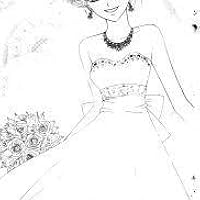
The manga then returns to its usual course of standalone chapters with Kanna’s three dogs blowing all sorts of hot air while avoiding anything remotely connected to drawing. Chapter 30 is unusual in that we see a happy, dressed up Kanna, but for the most part, she’s the same snark and sarcasm she’s always been. As in Volume 2, she doesn’t seem to enjoy being a mangaka, and even turns an invitation to a magazine publisher’s party into something to be depressed about. Toyama-sensei tries to liven things up by making Shota’s sister, Kanna’s editor, and the school principal wackier, but for the most part, it’s the same tired themes we’ve seen over and over.
The final arc feels a bit random. It begins with a kind of manga history lesson and ends with Kanna’s class actually creating manga together. While a Japanese audience might appreciate reading about past mangaka, most references will probably go over the heads of Western readers. The story then awkwardly segues to the impending cancellation of the manga class and the students’ last-ditch effort to prove themselves. Kanna’s heroic leadership over their joint collaboration seems really forced considering the boys are shiftless as they ever were. Perhaps it’s meant to be inspiring, but when the boys start doing their usual whining about work, I’m ready to pull the plug on the class.
Extras include the opening illustration and table of contents printed in color; translation notes; short bonus manga; and author afterword.
I will admit to being a little disappointed about the lack of romance in this series. I wanted more, but I’m not surprised. There were possibilities, but no real hints.
This is mostly comedy, and it’s good comedy. The group deal with possible cancelation of both Kanna’s manga and their class, they have a contest, they have a school festival, they help a potential student (badly), the boys try to motivate Kanna. A lot of hilarity, with the boys being absolutely useless, pretty much.
There wasn’t really an ongoing plot line here for there to be a conclusion, but I think it ends pretty well nonetheless. The artwork is gorgeous, of course. The characters are hilarious, and I did enjoy all of them. And really, you’re reading this for the comedy, the parody of being a mangaka (or trying to), because that’s what this is about, and it’s done really well.
Overall a very enjoyable series by Toyama. I hope more of her series are picked up, and continue to enjoy Missions of Love.
This was the final issue of the series of Manga Dogs. It ended on a good note. Our three main male characters are finally forced to actually start making manga instead of sitting around talking about it and dreaming of it. The main female character's manga series comes to an end and she begins a new one.
All in all it was a good end to this series. Check it out!
This entire review has been hidden because of spoilers.