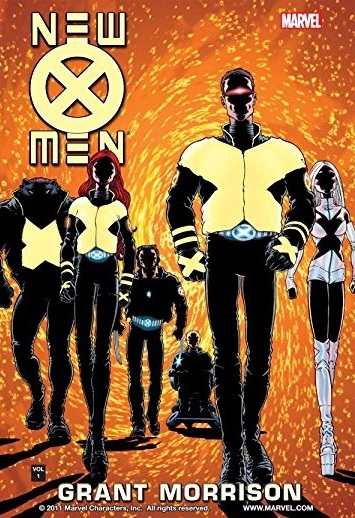
Sixteen million mutants dead...and that was just the beginning. In one bold stroke, writer Grant Morrison (The Invisibles, JLA, Fantastic Four: 1234) propelled the X-Men into the 21st century - masterminding a challenging new direction for Marvel's mutant heroes that began with the destruction of Genosha and never let up.
Regarded as the most innovative thinker of the current comic-book renaissance, Morrison proceeded to turn the mutant-hero genre on its ear. Gone were the gaudy spandex costumes - replaced by slick, black leather and an attitude to match. Now, his entire Eisner Award-nominated run on New X-Men is collected in one Omnibus.
Grant Morrison has been working with DC Comics for twenty five years, after beginning their American comics career with acclaimed runs on ANIMAL MAN and DOOM PATROL. Since then they have written such best-selling series as JLA, BATMAN and New X-Men, as well as such creator-owned works as THE INVISIBLES, SEAGUY, THE FILTH, WE3 and JOE THE BARBARIAN. In addition to expanding the DC Universe through titles ranging from the Eisner Award-winning SEVEN SOLDIERS and ALL-STAR SUPERMAN to the reality-shattering epic of FINAL CRISIS, they have also reinvented the worlds of the Dark Knight Detective in BATMAN AND ROBIN and BATMAN, INCORPORATED and the Man of Steel in The New 52 ACTION COMICS.
In their secret identity, Morrison is a "counterculture" spokesperson, a musician, an award-winning playwright and a chaos magician. They are also the author of the New York Times bestseller Supergods, a groundbreaking psycho-historic mapping of the superhero as a cultural organism. They divide their time between their homes in Los Angeles and Scotland.
Reliably seen as one of the greatest X-Men runs ever created - from out of nowhere Grant Morrison, Frank Quitely etc. turned the X-Men world on its head; they scrapped the uniforms, took the X-Men public, made Emma Frost a mainstream X-Man, brought in 100s of mutant students, re-imagined Genosha and much much more! But... a small but, but there's a little buzzing in my head that marvelled at the concepts of this run, but just wish the stories were more coherent and thought out... like the almost perfect Brian Michael Bendis run on the Avengers. Still a must-read, not just for X-Men or Marvel or Graphic Novel fans, but for every reader out there! A 9 out of 12, very firm Four Star read for me :) 2018 read; 2015 read; 2013 read
This is a great way to read all of Grant Morrison's New X-Men work in one sitting. Granted, it is a bit heavy, but that is to be expected out of a over-sized hardcover collecting 33 issues with heavy stock paper. As with his other work, Morrison manages to secure the best artist collaborators available. He works here with Frank Quitely, Ethan Van Sciver, Chris Bachalo and Marc Silvestri. With the trim being oversized, their art looks doubly good as well.
The X-Men were in a weird place when Morrison and artist Frank Quitely were given the reigns. To the general public, the X-Men were more popular than ever, due to the success of:
But in comics? The X-Men had become a victim of their own success. Claremont’s 17 year run cast a shadow so large that even the writer himself couldn’t crawl out from under it during a brief return. Editorial interference, endless crossovers and increasingly insular stories drove away fans and kept new fans turned on to the franchise from the film from hopping on.
This was actually the direct cause for Marvel’s then-EIC to be removed from his position – lack of being able to capitalize on a successful movie and get the company out of bankruptcy – and left Morrrison in a similar position that lead to Claremont’s initial success – anything goes.
And what Morrison did with this is nothing short of outstanding.
The X-Men were rebranded from superheroes back into outcasts, ditching their trademark costumes for the black leather look and shifting their focus from saving the world to keeping mutants safe from the world. Xavier’s school was no longer home to just or 6 or 7 mutants. It was now Marvel’s version of Hogwarts, overflowing with a true variety of mutants, full of big personalities and amazing abilities.
As a lifelong X-Men fan, what I love most about this story is just how… X-Meny the whole thing is. Morrison really gets the cyclical nature of the X-Men and he comments on this by taking every single X-Men trope and completely reinvents it. Wolverine gets a new teenage sidekick, but this one’s spunkiness hides real pain. The team once again faces the threat of a dystopian future they could have prevented. You get a traitor. You get aliens. You get a reformed villain. You get a character too cool for his own good. You get a psychic affair. More layers to Wolverine’s past. More Phoenix. More mutant’s rights.
But Morrison presents all this in a fairly straight forward narrative. The commentary is a bonus for long time fans, while the story itself is perfect for new readers. I don’t know how he pulled it off so well.
Morrison also does wonders with Cyclops, a character that lazier writers all too often reduce to a boring dadjoke in order to prop up Wolverine. Right on the first few pages, Cyclops is forced to make an executive decision and euthanatize a poor mutant suffering terribly from injury. He is continually forced to make these tough decisions as his personal life falls apart around him while trying to reconcile the person his teammates need him to be versus the person he’s actually become. Reading this, it’s easy to see why someone like Wolverine would be taking orders from Cyclops.
Grant Morrison’s work on the “New X-Men” series is so phenomenal, hindered slightly by inconsistent art brought about by its monthly schedule. Quitely isn't a monthly guy and the fill ins range from good but not Quitely good to flat out terrible. Still, Morrison's story is strong enough to overcome sometimes spotty art.
Grant Morrison's X-Men remains one of the definitive runs, so it's great to have it all in a single collection.
E is for Extinction (#114-116). Morrison's debut on the New X-Men turns out to be one of his weaker arcs. Oh, there's delightful storytelling here, great characterization, and the wonderful intro of Emma to the main team (and the similarly wonderful introduction of Casandra Nova, though she doesn't really come into her own until later arcs). And of course we get the rather shocking destruction of Genosha, so critical in the Magneto Rex era, just tossed away now. But, this story also feels a bit too plot-driven, not really giving Morrison's SF concepts and superb characters enough chance to shine [4/5].
The Man from Room X (Annual '01). I hate, hate, hate the sideways art in this issue. It was hard to read in the comics, harder to read in the trades, and even harder to read in the Omnibus. There's just no point. As for the intro of Xorn: that's intriguing, although at some point one must go back and ask how much of this story is a lie (and how much has been retconned by less competent authors) [3/5].
Danger Rooms (#117). This is mostly the ramp-up of the Cassandra Nova story, and it's shocking (while also nicely highlighting some of the new kids at the institute) [5/5]. Germ-Free Generation (#118-120). Morrison's best arc to date. The idea of the U-Man stealing body parts from mutants is entirely cringeworthy, while it really feels like some of our main characters are in serious danger in a very tense action sequence. All around, delightful for both the world development and the plotting [5+/5].
Silence (#121). One of the 'Nuff Said stories. Perhaps, Morrison does better than most, and there's a great revelation about Cassandra Nova in this story, but as with most of these 'Nuff Said stories, a regular story with dialogue would have been better [4/5].
Imperial (#122-126). Morrison closes out his first year by concluding the story of Cassandra Nova on the galactic scale. He makes great use of the Shi'ar and the Imperial Guard, and really uses them to portray the dangerous scope of Nova. We also get more great characterization (including a fun buddy romp with Scott and Xorn). However the best thing may be how Morrison opens up the scope of the school, giving some of the new students, the Cuckoos, a real focus in the story [5/5].
Living & Dying (#127). A story about Xorn. He really seems to care about other mutants as his persecuted people! This story is small scale, with some emotional impact [4/5].
New Worlds (#128-130). A very innovative story, introducing Fantomex and the whole idea of the Weapon Plus program creating lots of killers. Both the new character and the new look at Weapon X are terrific, though the story itself drags a bit as everyone fights a zombie horde. This is also the story that pushes hard on the idea of X-Men: X-Corps, which means that we lose most of our regular characters for this storyline [4/5].
Some Angels Falling (#131). A love story in two parts. On the one hand we get Beak and Angel, who continue to be well-developed new New Mutants. And on the other hand we get the story that really kindles the Scott & Emma romance and makes it totally believable, as they engage in some telepathic therapy. I think this story made me love Emma too [5+/5]
Ambient Magnetic Fields (#132). Great continuity in returning to Genosha and a beautiful look at the last words of its citizens. (And wow, is that the little remembered Neal Shaara Thunderbird? Morrison is certainly touring the world of X-Men) [5/5].
X-Corps Finale (#133). And what an oddly scattered finale to this oddly scattered set of stories. It's a coda to "Imperial" and also to "New Worlds", as Lilandra and Fantomex both make their returns ... and an intro to another new New Mutant. It's all good enough if unfocused [4/5].
Riot at Xavier's (#134-138). In his second year, Morrison tried to expand the scope of the X-Men. His work with the X-Corps in the previous arc wasn't entirely successful, because they were just too scattered, but his depiction here of the new students at Xavier's is magnificent. That's in large part thanks to Quintin Quire, one of the best characters to originate in the New X-Men, who first appears here as a young rebel without a cause. But, the Specials, the Cuckoos, and Quintin's gang all get great attention here, any many would recur for years afterward (though the Cuckoos and Glob Herman are the only other two to make a real impact). Beyond all that, this is a great story about the conservative old fighting the rebellious young that feels like it really goes to the core of what the X-Men are about [5/5].
Shattered (#139). A spectacular look at who Emma and Jean are (and who Scott is, following his recent "death"). This is a beautiful character piece, and another example of how Grant did such a great job writing Emma [5+/5].
Murder at the Mansion (#140-141). Bringing Bishop and Sage in for a mystery is a lot of fun, and it's a mystery with some good twists and turns. It gets a little weird at times, and I find the mutant baby-eggs really squicky, but I guess that's Morrison doing a good job of making the mutants ... strange [5/5]
Assault on Weapon Plus (#142-145). A good continuation of the Fantomex/Weapon Plus story from New X-Men, Volume 3: New Worlds, and it's exciting to see both the plots against mutantkind and the idea of Logan finally learning his origins, but it's a bit slow at times and ends on an abrupt non-ending [4/5].
Planet X (#146-150). [spoilers] Could Xorn have possibly been Magneto? That's the question you have to ask yourself at the end of Morrison's run, even when you read through it all knowing that's the end game. It's a hard sell that you can just barely imagine when you consider how Xorn does (or doesn't) use his powers, but otherwise it seems ... unlikely. Really: you gotta squint to believe the twist.[/spoilers]
Nonetheless, this is a splendid end to Morrison's run. After the sudden by inevitable betrayal, we get the final Magneto story. Yes, perhaps he's lost the nuance of the Claremont years, but he's just seen his entire country of 16 million mutants killed. That is ... believable. And we also get a rather magnificent last Jean Grey and Wolverine story, as they're about to fall into the sun. And Morrison so nicely brings together the young rejects of Xavier's school into a new Brotherhood ... that doesn't end like you'd expect.
A really great` tying together of so many elements from Morrison's run, plus a sufficiently apocalyptic finale. (Too bad the idiots at Marvel ruined some of the major plot points before even a month had gone by.) [5/5].
Here Comes Tomorrow (#151-154). The first time I read this, I found it confusing and opaque. However, read with more care, it's a refreshing take on X-Men futures and a really a nice coda to Morrison's run that reveals some of its hidden plots. We get great explanations and great endings.
Perhaps more notably it's a great setup for what was a tremendous run of X-Men following on Morrison, all the way up to Secret Wars (when things got wonky). The way that Emma and Scott come together is particularly moving.
I was introduced to this series by a Goodreads member. I am so glad I read it. Can't wait to read more.
On the contrary to my presumption, this book had thoughtful insinuations. I do feel like I am missing some pieces, but all in all, I was able to follow the story quite well. There is a barrage of characters and a monumental setting that is on a cosmic level. I have seen the movie from this franchise that has incorporated some of the scenes illustrated in this book. Yet there are so many that I don't remember were ever included. Pictures speak a thousand words. I felt that when Jean witnessed a happening between twins in the womb. Her dedication to saving Charles and the mutants was central.
The dialogues are witty, cracking me up on many counts. Especially the exchange between Cyclops, Wolverine, and Ugly John (oops). Action scenes are graphic and thrilling. Raging war is embellished with Sentinel and mutants. I hate Cassandra. I did particularly drool over the technology that tapped into everyone's mind and space travel that are so nonchalantly a part of this futuristic storyline. I now long to own a paperback version of this visually stimulating book. Soon.
Morrison acostumbra a tomar una serie como si acabara de crearla y suele dejarla como si nadie fuera nunca a continuar con ella después. Esto puede ser frustrante para los lectores fieles, pero dota de unidad a sus historias y las hace más legibles como obra independiente (Lo que creo que facilita la lectura a los lectores ocasionales)
En conjunto, me parece una montaña rusa con momentos brillantes (Como el arco inicial o el motín en la escuela) y otros bastante más flojos (Especialmente ese final totalmente incoherente con el resto o el epílogo que no aporta gran cosa) En mi opinión, tiene grandes personajes e ideas, pero falla a veces en el desarrollo, con resoluciones forzadas y repentinas.
Overly overrated, had some good ideas but I found the execution a bit lackluster and also confusing. Got whiplashed plenty of times over story skipping ahead or not giving enough time for a story to have emotional gravitas. Also didn't much care for all the new characters, and the melodrama of Scott Jean were centerpiece here which is tiring since the 60's X-Men tbh. The final story was also WTF and I face-palmed hardcore at it. In the end I found it really skippable, and don't get why it renewed interest in X-Men aside from the new more "casual" outfits they wear.
As usual with Morrison's work, New X-Men was remarkably uneven. The Omnibus version contains Morrison's entire run on the series with several notable story lines including a shocking start as the inhabitants of the mutant nation of Genosha are slaughtered to the tune of sixteen million. The event sets up all the twists and turns that follow, and while some aspects of the run seem very well-thought out (the Phoenix and U-Man aspects), other parts seem like inventions of the moment with huge and gaping plot holes (the return of Magneto).
Morrison continues to be a pretty decent plotter, but a pretty terrible writer. Most of his stuff reads like a failed physics student on LSD with a smattering of psychology wanting to write something that sounds dazzlingly over the heads of the common man. I don't mind invention and the bending of scientific laws - I'm reading comics for Pete's sake! - but what I do find problematic is the lack of internal logical consistency. For example, when Cyclops and Wolverine break into the weapon plus program center known as The World, they find a self-contained microcosm where scientists can speed up time and therefore speed the evolution of new man-machine hybrids in the pursuit of superman-like weapons that can confront the mutant menace and save mankind. Cool. I like it. Seems like a great, imaginative idea. When they arrive, time in The World is on pause. They then proceed into the world, walking around all the paused objects and then find that someone starts time up again forcing them to deal with the chaos that was unfolding in The World when said world was paused. But if The World is a self-contained microcosm with it's own flow of time, why aren't the X-Men subject to its laws when they waltz through the containment field? It doesn't work like that. It wouldn't work like that, and it just seems like incredibly lazy writing to me to pass it off as such with zero explanation. Again, I'm totally fine with accepting the fact that people can fly in direct contradiction to Newton's laws and that people can shoot beams out of their eyes with apparently no cost to pay in direct contradiction to the law of conservation of energy - just don't explain it. I suspended my disbelief already when I picked up your book. But if you're going to explain your whacky rules to make them appear logical, then they need to be consistent with the logic you've laid out. Something about the flippant way Morrison writes drives the scientist in me absolutely nuts to the point of distraction.
Also, no explanation is given for Thunderbird's return from the dead, which, as a non-X-Men person, I totally wouldn't have even known anything about, except for the fact that in the panel he appears, Professor X exclaims, "I thought you were dead!" to which Thunderbird replies, "Well, you were wrong." End of conversation. Done. No big deal.
Apart from these failures, there are enormous gaping plot holes with the Xorn-Magneto story line, which was meant to be a slow burn culmination at the peak of the series and seriously felt like last minute shenanigans to me. In spite of interview statements to the contrary, I don't fully believe that Morrison knew Xorn was Magneto from the first time he appeared in New X-Men. Also, Morrison has Magneto state that everything the X-Men have gone through from the start of New X-Men was conceived of as a strategy by Magneto after the incident at Genosha, then never bothers to explain how all the pieces fit together (because they don't.) He reverses course in the very next (and final) storyline and has at least the U-Men and the Kick drug phenomenon being engineered instead by a sentient RNA organism trying to manipulate the evolution of life on Earth since 5 billion years ago in a super slow burn that makes the patience of Magneto look like that of a newborn puppy attempting to hold a stay for more than .3234 seconds while treats are dangled in front of its nose. In short, he retcons himself within a single year.
What I will give to Morrison is some pretty solid individual and ensemble character work throughout the entire run. The changes and internal turmoil of Scott Summers, the self-doubt of Professor X and the nobility of Beast come together in some very nice character development that makes them feel more alive than at any other time I've bothered with the series. He also does well in transitioning the older X-Men to the role of teachers and introducing a whole new crop of interesting young mutants - especially the Stepford Cuckoos, who were probably my favorite character(s) in the series. The Jean-Scott-Logan-Emma tension is well-done as well and I actually liked the multiversal Phoenix tie-in toward the conclusion, in spite of Morrison's tendency to incomprehensibility when dealing with the multiverse in almost all comic labels.
In short, the series has its moments, and those moments make it worth suffering through Morrison's crappy dialogue writing. I'm pretty sure however that this'll be the last Morrison book I read and I'm very eager to see what Joss Whedon does to pick up the pieces in Astonishing X-Men.
A weird looking woman that looks a lot like professor Xavier kills 16 million mutants. After some fighting the X-Men manage to take her to their headquarters, but she escapes and she goes to a machine called Cerebra, through which she can kill every mutant, at the last minute she gets seemingly killed by Emma Frost and Professor Xavier. While all these things are happening, Cyclops and Jean Gray are having marital problems and Dr McCoy (Beast) discovers than mutants can have secondary mutations. After the big genocide, professor Xavier for the first time publicly reveals that he's a mutant. After that many new students come to Xavier's school and people are rioting against mutants. It's revealed that the woman who killed all these mutants was Xavier's sister and she has taken over his body. With the powers of his brain she makes a young student beat Beast almost to death in a very dramatic and painful scene. The X-Men have no idea about Xavier's sister and they have to face a guy who steals the mutant genes from mutants to turn humans into mutants. He kidnaps Cyclops and Emma Frost to kill them and take their mutant parts. In the process his men break Emma's nose, so when she frees herself she kills him. After they all learn about Xavier's sister, Emma and Jean go into her old body's mind so see why she hates him and they realise that he tried to kill her while they were in the womb. Very soon after that some weird looking aliens attack Xavier's school, while they have abducted Cyclops and Xorn in their spacecraft. They escape and the aliens understand that they've been manipulated from Xavier's sister and they leave. At the same time, she has come up with all sorts of side schemes to destroy the mutants. Thankfully, the X-Men, eventually are able to defeat her. This is pretty much the summary of the first two main arcs of the series. I think that it would be very boring if I wrote a huge summary of the entire omnibus, so I'll stop here. This was the first purely X-Men run I've read, so while I was familiar with the characters, I didn't really know much about them. I have mixed feelings about this run. The beginning and the middle where great, but I didn't like the ending and the big plot twist. The ending feels to me like Grant Morrison had introduced too many ideas and he didn't know how to explain and conclude things properly, so he decided to resolve things in the way he did. Other than that I really liked the biggest part of this run. It's very well written by Grant Morrison (although not as well thought out). The whole run is filled with a lot of action which makes it fun and although all this action could lead someone to believe that there's nothing more to it than violence and fighting, it's certainly not like that. There are also many issues without much action, that go deeper into the characters and the ideas Grant Morrison introduces. The run also has a lot of great humor and I really like how dark it gets some times. Other than the main story there are also many side plots. These are mostly about students in Xavier's school, since they are a very big part of this run. There's a lot of teenage drama and romance and relationship drama in general, throughout this run and that's something that I found very enjoyable. What surprised me while reading this is how great some of the characters are. I already liked Wolverine from reading Weapon X and Chris Claremont and Frank Miller's mini series, but I had never read some of the other characters. I especially loved Emma Frost, Beast, Cyclops and Jean Gray. Grant Morrison is amazing at writing telepathic characters like Jean Grey, Emma Frost and professor X. Furthermore, something else that I liked in this run is Beast's story and how he deals with turning more and more into a "monster". This part of the run was amazingly written and very emotional. I feel like it presents being mutant like being homosexual. The mutants, like people with different sexual preferences, aren't accepted by the society and their families. Also, they go through denial, as they struggle to accept who they really are. Another very interesting thing is to see how the teenagers at the school have different ideas and ideologies than the teachers. This leads in some great moments and it really makes you think about the ideologies of the "old" X-Men. This run has some truly great (and kinda bizarre) moments, like when Jeane finds Cyclops and Emma cheating on her on Emma's head and then she tortures her with her own memories. Another great moment is when Jean puts Xavier's thoughts in her mind in order to save him and she starts loosing memories. The way that's written is absolutely amazing. You can truly feel her pain and it's heartbreaking. Furthermore, another moment than I loved is when Logan and Scott (Cyclops) talk in a mutant strip club. We can really see in this moment the true friendship these two have. About the artwork, the first three issues are wonderfully drawn by Frank Quietly who doesn't really changes his style, but that's ok because I love it. Also the X-Men have new costumes that look very cool. The artwork in the next few issues is done by different artists and while it's not as great as Frank's artwork, it's still alright. After these issues the next again have artwork by Frank and it's amazing, especially in the issue where Emma and Jean go in Xavier's sister's brain. This issue has almost no dialogue so the story is told entirely through Frank's beautiful artwork. The artwork in the next issue, like in many more later in the run, is from Ethan Van Sciver and while he seems like an annoying person, his artwork is actually quite good. The artwork in the next few issues is done by different artists and it's not bad, but it's forgettable. Generally many different artists work in the comic so I won't be talking individually about the artwork in each issue, instead I'm gonna talk about artwork only when it's especially good or bad (and I'm not gonna mention again and again how great the issues drawn by Frank Quietly are). One of the following issues is drawn by Bill Sienkiewicz which is one of my favorite artists, but I have to say that although his artwork here is great, it's not as good as I would expect it to be. The next issue (like many more later) is drawn by Phil Jimenez and his artwork is very detailed and beautiful, as always, but I believe that the best collaboration between him and Morrison is the issues they did together for The Invisibles. Although, I love the way Phil draws Xavier, Beast and Jean, especially in some of the later issues. Later in the series a 4 issue long story arc is drawn by Chris Bachalo. I have very mixed feelings about his artwork. It's definitely not my cup of tea and I certainly hate the way he draws Wolverine, but he's truly great at drawing action and he does some very interesting stuff with panel layouts. The last story arc in this run is drawn by Marc Silvestri and while I'm not a big fan of his artwork, I think that it fits very well with the futuristic story that's filled with action. Overall, I think that this was a very nice run and certainly a great introduction (for me) to the X-Men. I didn't like every part of it and I certainly didn't enjoy the ending, but it introduces some very interesting ideas and it's quite fun. I think that I'd recommended it to an X-Men fan and a Grant Morrison fan, although I don't think it's one of his most characteristic works.
As a child in the early 1990s, the X-Men were the epitome of cool under Jim Lee’s dynamic and edgy stewardship. But as the decade progressed, the series became stagnant, clinging to its past glory and alienating younger fans like myself. By the early 2000s, Marvel, struggling with low sales and bankruptcy, embraced creative freedom to revive its flagship titles, leading to ground-breaking runs like Grant Morrison’s 'New X-Men'.
Morrison’s take reimagines the X-Men for a contemporary world, bringing them back to their roots as “the world’s strangest teenagers” by restoring the Xavier Institute as a school. This fresh perspective resonates even today, influencing X-Men lore despite some fans’ complaints about later retcons. While certain elements Morrison introduced may seem polarising or absurd, the overall impact of this run on the franchise is second only to Chris Claremont’s legendary era.
The story starts strong with compelling sci-fi and human drama but falters toward the end with a confusing and anticlimactic conclusion—perhaps due to Morrison’s abrupt departure. The inconsistent artwork also detracts from the experience, oscillating between excellent and subpar.
For newcomers, 'New X-Men' is a mixed starting point. The narrative assumes some familiarity with the characters, making it more rewarding for those already acquainted with X-Men continuity. While Joss Whedon’s 'Astonishing X-Men' may be more accessible, this omnibus remains essential reading for its bold reinvention and its status as one of the franchise’s finest modern contributions.
Despite its flaws, 'New X-Men' is a remarkable achievement—ambitious, daring, and quintessentially Grant Morrison. It’s not perfect, but it’s easily the best X-Men story since Claremont’s heyday. Highly recommended.
This is a collection of a 42-issue run, centering around humanity realizing they will soon be extinct thanks to mutant population growth. New forms of life are created by surgically implanting mutant genes into regular humans, and the X-Men are in the middle of it, trying to get everyone to play nice. Does the average homo sapien stand a chance in the future? Is a post-human world an inevitable one? Even in our "real" world, considering advances in mapping the human genome, cloning, and other scientific breakthroughs, these questions aren't merely fictional ones for much longer.
Typical Grant Morrison in terms of providing a metric ton of cool ideas - particularly regarding post-humanism and the fate of what we are currently considering human beings. However, in a not-so-typical Grant Morrison way, this is an extremely uneven read, and I found myself saying "this is kinda bad" for the first time ever in a Morrison book. I understand that a lot of it is a commentary about how boring and stale the X-Men franchise is, but if you're going to be intentionally bad to make a point, it should still, I dunno, be a little more interesting. And then there was an arc that was essentially a mutant version of Saved by the Bell. Weird. However, when everything connected, man did it ever connect.
The artwork ranges from flat out amazing to embarrassingly bad, but any run that includes Frank Quitely, Marc Silvestri, Ethan Van Sciver, Phil Jimenez, and jaw-dropping stuff from Chris Bachalo should be considered a plus.
This is the weakest thing I've read from Morrison, and it's still better than almost anything the capes and heroes companies are making these days. Thought provoking, yet maddeningly inconsistent.
This is in my view the single best X-men Omnibus. There are others good X-men stories out there but the Grant Morrison run has just something special and to get all of it collected in a single book is just wonderful. More things happen in any 4 issues contained in that Omnibus than in any 10 comic issue published today. On top of this there is no crossover, this book is wholly self contained which is something in the world of Marvel X-Men crossover that is almost impossible to follow. It starts with a kick with " E for Extinction" and ends with a bang with "Here comes tomorrow". The art is great but non constant as many artists are involved. Close to half of the issues are drawn by Frank Quitely and 4 more by Bachalo, those are by far my favorites. The last 4 issues are drawn by Marc Silvestri and they work well too due to the futurist setting ( the Stepford cuckoos drawn as seers is pure genius). There are a couple of weak art issues in the middle but they are in the minority. The one caveat which you have to be aware of is that this is a huge book at over 1100 pages, you can not easily carry it around, it needs to be read flat on a table. That being said the binding is sewed and shows no sign of damage after several reads of the whole book which is a testament to a great production value. If you like the X-Men and don't know what to read there is no doubt in my mind this is the book to pick.
A stellar run and one of the best works by Grant Morrison, which, nonetheless, I still feel like it didn't live up to its full potential. Mostly due to a bit haphazard storytelling and sort of a botched ending, if you count the last four issues. Still, a great and highly recommended book.
Pročitao sam ovaj Morisonov run na XMenima verovatno treći ili četvrti put za poslednjih 20 i kusur godina, i dalje mislim da je ovo nešto najbolje što je on ikada pisao. Razumite me, ja sam verovatno najveći fan XMena u ovom delu sveta i pročitao sam sve ikada što je izašlo (a kad kažem XMen mislim i na povezane serijale - New Mutants, XForce, Excalibur, Generation X, štagod). Ovim se stavlja tačka na 90e, koje su komercijalno bile najuspešnije za ovaj serijal i celu franšizu, ali koji se zbog toga vrteo u krug čitavih deset godina, pokušavajući da ponovi uspeh XMena broj 1 i XForce broj 1 koji su 1991. godine bili prodati zajedno u verovatno više od 10 miliona (MILIONA!!!!!) primeraka. Morison (uz pomoć nekih od najboljih crtača iz tog perioda - Frenka Kvajtlija, Igora Kordeja, Itana VanSkajvera, Fila Himeneza...) pravi drastičan rez od 90ih, a opet piše kao veliki ljubitelj serijala, likova i zapleta, uvodi nekoliko novih veoma smelih koncepata (Weapon X nije Vepn Eks, već Vepn 10, recimo) i što je najvažnije, pravi od ovoga jednu neverovatno cool priču koja pogadja zajtgajst kraja XXog i početka XXI veka. Čak i ako nemate neko veliko predznanje o XMenima, treba da pročitate ovo - Morison u naponu snage, vrcav, bezobrazan, pametan, sa odličnim over-the-top SF konceptima. A i od Sajklopsa je napravio meni omiljenog XMen lika (sorry, Wolverine).
A run that comes together beautifully. I have a few issues with it (mostly with some character choices made near the end of their run) but overall I adore this run.
Usually I am the kind of person that avoids superhero material. Aside from Watchmen, Batman, and V for Vendetta I find myself bored when I'm presented with gimmicky heroes with some substance but seem set up to endure 'who's your favorite' polls on Reddit. With Endgame blowing up and the millionth Spider-Man: Spin Off Rework Adaptation Reawakening Resurrection 2: Electric Boogaloo happening, its easy to get tired of heroes using their tools to create a better world for those who cannot.
X-Men however has always drawn me to the idea of what the best superheroes are though: creatively unfortunate souls cursed with a marginalized identity. Not only do I love the closure I've received from X-Men as a politically cynical, protest-attending bisexual, but also as a writer. The curse of Marvel's mutants is compelling to all who look for a voice, instead of the hyper-masculine military industrial complex stories of staple Marvel teams like the Avengers. Don't get me wrong, those stories can be fun too, but I'm a connoisseur of the tortured across storytelling media.
Morrison is a creative mad genius of weird counterculture stories, and in his manifesto at the end of the story he was very explicit about the X-Men losing their costumes. Quietly's art style draws them away from the norms of their costumes too to create a more contemporary X-story, and Morrison's writing takes the reins to create something familiar yet new, on top of being socially relevant and just plain fun. The stories entail micro-sentinels, defusing a misunderstanding with an alien race, and end with squall with Magneto. But a lot of the stories feature undertones of moral grey that are almost too believable in otherwise fantastical sci-fi cheese. Morrison writes rabidly capitalistic U-Men looking to become mutants to sell books and unethical science, students high on drugs and propaganda overturning Xavier's school, and the complexities of the almost relationships that Emma, a celibate Scott, Jean, and Logan have with each other. The characters and the plots are familiar, but Morrison acts them out so well and makes their stories shine with the trippy counterculture flair found in his stories.
The weirdness remains both good and bad throughout the omnibus. Sentient spaceships, morphing love interests, alien empires, scottish whales and story resolution from psychic warfare saturate the story, and never in a bad way. Instead of Uncanny this collection could have also been called the Unconventional X-Men. The main cast retain their charm from other stories, but the students and the littler parts of their stories are what I found to be the most interesting challenges of the X-Men. Beast and Charles consoling Beak for impregnating Angel because he used a condom to save his friend made of gas is the most interesting story here. That story is connected to the intrigue of the detective-murder mystery subplot that exposes the alliances of all the characters' doubts about each other, adult teachers and teenage students alike. That being said, the next paragraph contains criticism and spoilers.
While I liked the ending involving Scott getting over Jean by being with Emma, the journey getting there was a trip I almost got dizzy reading. Fantomex acts as a expository Weapon-X guide during the entire omnibus, and I wasn't ever thrilled he showed up, just kinda indifferent. (Although watching him blow out Toad's kneecaps was pretty entertaining). His story sets off an apocalyptic and rather predictable chain of events ending with Phoenix being used to defeat Magneto but losing Jean in the process.
But after that happens the story goes off the fucking rails. We're presented with a 150-year time skip into dystopian bizzaro future. In the last storyline, Beast tries to own the world with Jean's power while Logan and the newest mutants try to stop him. I felt that Morrison just tried to shove as much weird X-Men shit into a storyline as he could, embodied by Nightcrawler clones that see through Cyclops' laser eyes. The point of the story is a transcendent Jean rearranging the universe to make sure Scott gets with Emma. I enjoyed the resolution but Here Comes Tomorrow feels like a rushed, drug-induced What If story. Its still fun and entertaining but it felt really disjointed from the rest of an otherwise amazing collection.
If you want to stray off the beaten path of superhero stories but still want some of the fun where you can turn your brain off, I recommend this collection, or really any Morrison read.
an interesting turning point in the work of Grant Morrison in that it feels like a successful attempt to channel the popular zeitgeist to the expense of many of their more heartfelt instincts...at this point their experiences with longer runs on established titles is limited to a guy no one cared about, a team no one cared about, and the JLA. their overhaul of the latter and its run thrived on taking the conventions of the original stories to their breaking point; hypercompressed good vs evil shit in which the cyclical nature of superheroes worked to their advantage
in contrast, the X-Men are a tragic melodrama that can never reach the series finale...Morrison's overhaul emphasizes a punk militant "cool" and challenges the title's conflicting ideologies, introduces many compelling and fun concepts, and emphasizes the melodrama at its center...but it never successfully finds an alchemy between these three prongs of the formula, muchless between its overarching plotlines, and most notably it sits too at odds with the cyclical nature of the universe...promising evolution and change but unable to meaningfully cope with a return to the status quo, flailing like Magneto as he's cynically deployed to be laughed at by Morrison's new generation
the final portion feels more hail mary than mission statement..one last attempt to befuddle the audience via promised fatalism and rejection of premise...but it's not deftly woven into the quilt like the Damian issue of Batman, it doesn't evoke the same earned existential dread that run leans into because the rest of the title never reckons with these constraints meaningfully...New X-Men reads in its entirety like a necessary failure to build toward more spiritually open long-form work, a writer unwilling at this point to relinquish control to the next artist and not quite skillful enough to have their cake and eat it through sheer metatext...at least not yet
Grant Morrison's well regarded 42 issue run of X-Men in the early 00's is collected in its entirety in this massive tome. I'd been out of comics at the time and have only now gotten a chance to read it. While the Morrison run had a few good points...Emma Frost and her Cuckoos, Jean Grey's fate, and the introduction of Quentin Quire (who Jason Aaron now handles far better than he was handled in this book)...ultimately I found that the writing seemed to be trying too hard to be different, and dare I say...edgy at times. It was also full of confusing writing and terribly paced moments, and one big head scratcher of a twist that pops up near the end. Honestly...the twist is terrible and it leads to a villain being uncharacteristically over-the-top evil in a way that doesn't make a whole lot of sense.
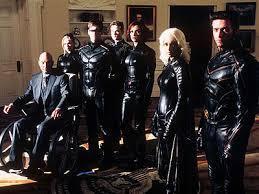
Also, seeing as this was published shortly after the first movie came out, the characters all wear black leather jackets and field gear, commenting that bright colored superhero gear is lame. Of course, this book also features Emma Frost wearing an outfit that had to have been sponsored by 3M due to the amount of sticky tape needed to keep it attached to her body. Very strange to shoot for realistic costumes while at the same time featuring a hilariously implausible outfit on her.
So why'd I give the book 3 stars? Well, as a stand alone story it isn't that bad, and most of the dumber plot points were retconned the moment Morrison left for other titles. The art was consistently decent throughout, with the high points being the issues handled by Chris Bachalo and Marc Silvestri. As an X book I should probably give it 2 stars, but meh...it at least entertained me for the most part.
UPDATE: I've changed my mind. 2 stars it is, mostly because of how terrible it gets towards the end.
Morrison's twisty, high concept and socially aware sci-fi writing brims with out there ideas and left-field turns, unspooling as one long story that stands above any X-Men film I've seen.
Unfortunately the middle of the run is let down by some seriously dodgy artwork. In Quiteley's issues the human faces often look like lumpy elderly people -- not apropos for poor Jean Grey, but this is at least countered by the otherwise great composition of set-pieces. In Kordey's issues everything looks hideous. In a medium so dependent on its visual storytelling, this is at times an ugly comic for me to look at, unlike Morrison's other works.
The strength of Morrison's writing alone places this in the high echelon of X-Men runs. For me it peaks with Morrison's definitive (and controversial) take on the X-Men's nemesis Magneto. Magneto is worshipped in absentia as a legendary freedom fighter that the man himself could inevitably never live up to. Upon return he is revealed to be unpleasant, brutal and comparatively uncharismatic to his legion of supporters. The cosy freedom fighter image built up by real life fans of the comic was a lie that required sweeping Magneto's countless massacres under the rug. Morrison is never afraid to put their own stamp on characters in the service of fresh storytelling informed by their own close reading and here presents the point that the struggle for equality should never be tethered to the images of tyrants.
Grant Morrison did the job he intended to do well. He pulled the Marvel Mutants into the 21st Century and simultaneously gave them a fresh start without having to wipe away decades of continuity. The characters feel like real people who are jaded after going through crisis after crisis. And his work with Emma Frost (sexed up artwork aside) made the whole run super interesting.
On the other hand, his pacing was a little all over the place. He doesn't seed in the long game nearly as well as Claremont. Certain aspects seem to be there just to provoke (there is literally a subplot where Beast says he's gay just provoke his ex). And the climax of his run hinges on treating Magneto as both a patient, manipulative mastermind and an over the top relic of a by gone era.
But all in all this had a cinematic scope that kept the pages turning, and it can't be overstated how much influence this has had over the last 20 years of X-Men comics.
This should have been renamed "Abominable X-Men", because it was.
The perfect combination of gross, turd-like illustrations and pseudo-clever Grant "wank-a-thon" Morrison writing. Cat-Beast? White Queen banging Cyke? Seemingly drug-induced story telling that seems as though it's edgy, but is really just awful? This has all that and...that's actually about it.
This run really pushed the X-men in the wrong direction.
context is very important for books, and at the time this was made, the X-Men movies were alive and well, and they got the weirdest, yet arguably most popular writer, at the time, to pen the new series, lofted as an onboarding ramp for new audiences. mind you, I'm reading nearly 20 years after its completion and with limited knowledge of the characters and universe, but maybe, just maybe this is why it was perfect for me.
Upon a second read, I can certify this as gold. Readable, gold
This is the third time I've read the whole series, and it's still wonderful. Morrison does something really special with this, and even re-reading, the twists are still exciting. If you're a fan of the X books, this is one for everyone, I think, to read, probably twice. In my opinion, it's the best arc ever in X books.
One thing that struck me this time around, and this is where the spoilers come in... . . . . . . . . . . . The book starts out with some really bold new directions that I don't think we've seen in the X books before. Cassandra Nova is a wholly new evolution, something like the next next step, so what happens when mutants aren't the highest evolutionary form? And along those lines, there are just so many new characters with useless mutations, like the guy who has three faces and they all look like a pig. It's nice to see some mutants who don't look like part of their mutation is being born already having plastic surgery. And then, of course, the secondary mutations, which are fascinating. Emma's is cool! She's a living diamond. Hank's sucks. He's almost evolving backwards.
But after all of the cool new things, the last three arcs almost seem to fall back into X cliches. We get one about Weapon X, one about how we all thought Magneto was dead but then he comes back and he was the main villain all along, and close with a jump to the future where Wolvie's still alive and the Phoenix force (Phoenix is back! Add that to the list) resets the timeline.
On the other hand, Morrison seems aware of the cliches. He upends the Weapon X thing, and even after Wolverine reads files about his past, that's kept from the readers in a fun-but-frustrating bait and switch. Magneto mocks anyone for believing that there could be a mutant with a star for a head. And Sublime, not Magneto, is really the big bad all along, which the time jump forward shows in great detail. Emma refers to Scott's loss of Jean (again again) as "reruns of his grief" (I think that's the quote). And the whole thing turns into something like a "Hey kids, stay off the drugs since you don't really know what's in them" message.
So where's the line between cliche and subversion of cliche? Honestly, I'm not sure. But I do know that I'll re-read this run again in a few years.
X-Meni sú aktuálne v kurze. Po udalostiach v rámci House of X sa vďaka Jonathanovi Hickmanovi dostali mutanti opäť na vrchol. Veľmi plodné obdobie ale zažívali aj v ére, keď ich mal pod palcom Grant Morrison. A dosť často sa v udalostiach House of X spomínajú momenty práve z jeho runu.
New X-Meni nie sú v našich končinách úplne neznámym úkazom. Prvý arc vyšiel s podtitulom G ako Genocída a pojednával o katastrofe, ktorá postihla mutantov na ostrove Genosha. Nasledoval druhý príbeh s podtitulom Impérium, v ktorom zase sledujeme súboj X-Menov s Cassandrou Nova a viac-menej aj s ríšou Shi’ar. Tu sa však vydávanie v češtine skončilo a fanúšik tohto tímu musel siahnuť po alternatíve. A s prehľadom najlepšou možnosťou, ako pokračovať, je kúpiť si omnibus, ktorý pokrýva kompletnú éru Granta Morrisona.
Morrison svoj príbeh rozbehol doslova apokalypticky. Ako som už spomínal, mutantov stretla katastrofa obrovských rozmerov a mŕtvi sa počítali v miliónoch. Konfrontácia s ríšou Shi’ar zase ukázala, že na kozmickej škále sú X-Meni relatívne slabí, avšak o to húževnatejší. Máme možnosť sledovať osvedčené ťažké kalibre ako Wolverine, Beast, Charles Xavier, Jean Grey, Cyclops alebo Emma Frost. Veľmi príjemným spestrením sú študenti, ktorí sú v Morrisonových rukách veľmi nevyspytateľní a často vedia prekvapiť. Jasnou demonštráciou toho je príbeh venujúci sa vzbure v inštitúte pre nadanú mládež. Dosť výrazný priestor dostane aj Fantomex, ktorý si v zošite #128 odbije svoj debut. Aj vďaka nemu sa dostaneme na stopu projektu Weapon Plus a tu si, samozrejme, najviac užijeme Wolverina. V záverečnej tretine už si Morrison trochu ulieta a niektoré zvraty sú trochu pritiahnuté za vlasy. Napriek tomu sa aj záver, ktorý má opäť číro apokalyptické črty, čítal dobre a mal množstvo zaujímavých momentov.
Vizuálne je táto séria nádhera. Na kresbe sa spolupodieľalo množstvo umelcov. Za všetkých spomeniem napríklad mená ako Frank Quitely, Chris Bachalo, Marc Silvestri alebo Leinil Francis Yu. Ak si chcete X-Menov užiť a prečítať si zaujímavý, koncepčne zvládnutý príbeh, New X-Meni sú určite správna voľba. A omnibusové vydanie je tou najlepšou voľbou.
(Zero spoiler review) If these are the new X-Men, can I have the old ones back, please, cause I don't like or empathize with any of them. They may be wearing the skin suits of characters I know and love, but I can see this this devious ruse Morrison has concocted. Maybe I'm homo superior myself. Or maybe I just have a low tolerance for shit writing. Speaking of a low tolerance for things, If I wasn't done with Grant Morrison and his absurd schtick, I'm well and truly done with it now. his incessant need to absurdify everything he comes into contact with more than eradicates whatever talent he may have. Too bad he can't be normal for five minutes, you might get some good work out of him. Like if you asked Grant to make you a plain old peanut butter sandwich, you would get it and it would have pineapple on it for some reason. And your napkin would be a periodic table of the elements written in Arabic, and a hamster would be placed across from you to watch you whilst you ate it. I'm done. The art was occasionally excellent, occasionally ok and occasionally worse. The colours were mostly horrific, with the opening arc being some of the most hideous, muddy slop I've seen this side of a landslide. It eventually improved, but this computerized, garish paste they feel the need to smother over some excellent line art frequently ruins everything underneath. But no amount of improved colouring could paint over whatever Morrison was on when he penned this. I repeat again, if these are the New X-Men, then give me the old ones everyday of the fucking week and twice on Sunday. 2/5