Three women who have fled the French Revolution try to make new lives for themselves in Germany. Their experiences, difficulties, and choices illustrate the sentimental tradition, Enlightenment ideas, and epistolary fiction.
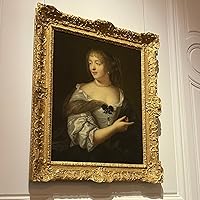
Born near Utrecht, The Netherlands as Isabella Agneta Elisabeth van Tuyll van Serooskerken. In the Netherlands she is also known as Belle van Zuylen or Belle de Zuylen. Her parents gave her a much better education than was usual for a girl in that time. She married Charles-Emmanuel de Charrière de Penthaz in 1771 and lived the latter half of her life in Switzerland. She is now best known for her letters although she also wrote novels, pamphlets, music and plays.
Un livre dont émane une très grande intelligence. Un livre qui fait réfléchir, mais qui fait aussi souvent rire (les personnages sont juste adorables!). Isabelle de Charrière cache à peine dans ce livre sous couverture de la fiction maints questionnements concernant les idées reçues, les préjugés, les "vérités" considérées comme acquises, etc. Dans un contexte post-révolutionnaire, la certitude n'existe plus. Il n'y a que remise en question, il faut tout repenser, tout le temps. Ceci est aussi reflété sur le plan formel: mélange de genres curieux, ainsi que remise en question des caractéristiques associées traditionnellement à tel ou tel genre, repoussant à tout instant les limites du possible, ou de ce qui est présumé (devoir) être possible ou impossible. Commentaire littéraire, philosophique, social(iste), féministe, ... Un livre versatile et moderne par son contenu, même si le style m'a parfois un peu dérangé en ce qu'il paraît manquer un peu en fluidité à certains moments. Ce n'est qu'un infime détail qui disparaît devant la richesse de ce livre. Très bonne lecture!
A nice, lighthearted read, but in typical de Charrière fashion, one can't help but feel that the characters are abandoned at the end with no true conclusion in terms of plot.
Part I of this book follows the arrival of 2 French women in Altendorf, Germany. Emilie, an orphan with much reduced means, and Constance, a rich widow, have both been driven into exile by the French Revolution. Emilie's one remaining asset is her devoted chambermaid, Joséphine, the third woman of the title. Emilie's rigid moral views are put to the test by what she discovers about Joséphine and Constance: Joséphine turns out to have already had many lovers, including married men. Constance has no intention of parting with her vast fortune, although she is aware that it is based on the slave trade, on the grounds that she knows better than other people how to use money to further good causes. Eventually Emilie marries the young baron von Altendorf, and prevails on the servant who has impregnated Joséphine to marry her. Although the main plot is very predictable, this first half of the novel reads well and the author's views on morality are cleverly illustrated by the evolution of Emilie. Unfortunately, Part II gets drearier and drearier. Most of it is taken up by letters written by Constance to an abbott who shares her interest in the destinies of Emilie, Théobald, Joséphine and Henri. However, the last 30 pages or so read more like notes than like an ending to the story of the characters we've come to know. Théobald sets up in a pioneering scheme to educate the brightest kids among his subjects, and Charrière goes into the familiar debate about nature versus culture. While Isabelle de Charrière is definitely an interesting feminine figure of the Enlightenment, this unfinished novel cannot have great appeal for the general reader.