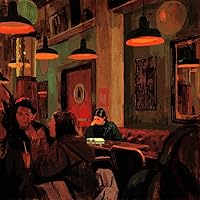
Este libro, que reúne cuatro relatos inquietantes y perfectos, es uno de los mejores logros del gran escritor mexicano Sergio Pitol. El autor sitúa a sus personajes en escenarios imposibles que de pronto se vuelven cotidianos. O en escenarios perfectamente familiares que, de repente, a saber por qué clase de iluminación interior, se convierten en remotos e inasibles. Venecia, castamente desflorada, se transforma en un intermitente surtidor de luces. Sus reflejos parecen entregarnos una simple noche de amor que comprende las historias todas del Universo. En Samarcanda asistimos a una invasión de cigüeñas dentadas, a una truculenta orgía, a un rito de iniciación que nos acerca a la locura, a los recuerdos que el autor guarda de algunas conversaciones con su amigo Torres en un mortecino cafetucho de Varsovia. "Vals de Mefisto" manifiesta en todo momento el placer de narrar. Contar historias como en "Las mil y una noches", engarzar una anécdota con otra, contar, narrar, relatar. Por un momento eso parecía ser todo. Pero, de pronto, un registro se modifica y la narración se carga de una gravedad inesperada. La ruta parece bifurcarse. ¿Se ha perdido el camino? Ahí empieza el verdadero relato.
Sergio Pitol Demeneghi was a prominent Mexican writer and diplomat. In 2005 he received the Cervantes Prize, the most prestigious literary award in the Spanish-speaking world.
Pitol studied law and literature and served in the Mexican foreign service at Rome, Belgrade, Warsaw, Paris, Beijing, Moscow, Budapest and Barcelona. He started publishing novels in the late 1960s.
It is my first introduction to Sergio Pitol, a Mexican writer and a diplomat. He deserves to be better known in Europe. The book contains 14 short stories by him written in the period from 1957 to 1994. I found these short stories visceral, exquisitely composed, but relatively challenging. One needs to work to appreciate him. But after some initial effort, I’ve enjoyed this collection, especially the last few stories. He is at his best when he introduces two, or sometimes even 3 layers of the narrative. He is more interested in the creative process rather than the plot. So he often introduces a writer who writes the story at the same time we read it. I found it a brilliant framing device giving an additional depth to the text. He calls it listening “to the voices through the voices”. In the last story of this collection, “The dark twin”, Pitol’s protagonist summarises his literary credo:
“A novelist is someone who hears voices through the voices. He crawls into bed, and suddenly those voices force him to get up, to look for a sheet of paper and write three or four lines, or just a couple of adjectives or the name of a plant. These features, and a few others, cause his life to bear a striking resemblance to that of a deranged, which doesn’t bother him at least; on the contrary, he thanks his muses for having transmitted these voices to him without which he would feel lost. With them he goes about drawing the map of his life. He knows that when he is no longer able do it, death will come for him, not the final death but leaving death, silence, hibernation, paralysis, which is infinitely worse.”
Contrary to any rules, I would recommend to start reading this book from this last story. It is the one of the best in the collection and it gives a very good idea about his writing style. I think, it would help you to decide if you want to read the whole book. I am looking forward to reading more by him starting with The Art of Flight.
Nada me había preparado para tan grata sorpresa. Para mí Pitol era ese escritor tan adorado por Vila-Matas, tanto es así que, replicando la aparición de Fitzgerald en la novela de Hemingway, lo asoma en ciertas escenas de París no se acaba nunca, su reescritua personal del París era una fiesta.
¿Qué esperaba de Pitol? Suponía que algo sobrio, incluso minimalista, y de una ironía tan soterrada que ni molesta ni agrada. Me equivoqué. Pero es por este tipo de equivocaciones que nos atrevemos con las opciones desconocidas. Pitol es un narrador que escribe como si fuese un novelista europeo escondido en los anaqueles de la biblioteca de Babel. Su prosa es elegante y estilizada, muy bien medida para no degradar en la floritura y el amaneramiento. Percibo en su escritura ecos de Henry James y como reutiliza recursos de Borges. Obvio: ambos son dos escritores americanos que quisieron ser ingleses.
Pitol propone una variedad de escenarios y también de estilos. Algunos de sus relatos recurren a claves de novela de viajeros, otros detallan el argumento libros inexistentes o exploran varias bifurcaciones narrativas de una misma situación. Y transcurren en un marco geográfico que abarca de Samarcanda a México. Sólo son cuatro piezas y el volumen no ocupa más de 120 páginas. Una obra pequeña en extensión y grande en dimensión. Su lectura es deliciosa. Tiene misterio e ironía, su prosa es envolvente, fluye amena y su capacidad para maravillar parece ilimitada. De lo más satisfactorio que he podido leer este 2017. En vez de dejarse engañar por la publicidad que nos vende a Gaddis como el escritor definitivo, más nos vale seguir explorando a estos grandes escritores en nuestra propia lengua.
This is an extraordinary collection. As I read I felt like I was in the presence of a unique and creative and perceptive and restless mind. The stories challenged me. Frequently I found myself wondering what I was missing. But I just lived with that feeling, because it never got in the way of another feeling, the feeling of being given a gift, the gift of a new way of seeing, a new way of perceiving the world, a new way of thinking about language and its intentions. Of being in the company of a very unusual person, someone with unique perspectives. One thing I never felt was that Pitol was trying to make things easy for me. I needed to be an equal partner. I needed to pay attention. I was deeply rewarded.
The stories in Mephisto’s Waltz are dark, some morbid, some bizarre. Many are stories within stories, entering further into a character’s perspective or just traveling from one topic to another. It was strange to read Asians referred to as Oriental and I think they could have been painted less broadly. I appreciated that the stories were not simply WWII tales, especially considering when they were written, although references to world events made me curious enough for more details about how geopolitics impacted the characters. I liked the way that the stories unfolded from seemingly mundane or random events, all while exploring dreams, time, health, love, and travel. Loved: The Panther, Body Present, Warsaw Bound, Mephisto’s Waltz, The Dark Twin; Liked: Victorio Ferri Tells a Tale, Westward Bound, The Return, The Wedding Encounter, Bukhara Nocturne; Meh: Like the Gods, Icarus, Tia Clara’s Devices; Need to Reread: Cemetery of Thrushes
Mephisto's Waltz: Selected Short Stories by Sergio Pitol
A book of short stories by the well renowned Mexican writer and diplomat, Sergio Pitol. The stories take place throughout Europe and Asia reflecting the influence of his work and travels. Theses are tales written in a unique manner which reveal the influence of Borges and foretell the career of WG Sebald. These stories require a slow and patient reading given the hidden layers one could easily miss.
The Panther, addresses childhood fears that visit in the night and re-appear in the narrator’s life 20 years later: “the irrational that courses through our being at times adopts a gallop so frenzied that we cravenly seek refuge in that stale set of rules with which we attempt to halt the flight of our deepest instincts.”
A favorite for me was, Westward Bound, about a Mexican businessman who is shepherded on official business-oriented tours. Bored and longing to return to the western world he knows he is talked into a long train ride, the Trans-Siberian route. He takes with him a book “irrationally” purchased at a second hand bookstore in Peking entitled, The Priest and His Disciples by Hyakuzo Kurata , “ he read two pages of the book, which left him fatigued, unable to penetrate that labyrinthine dialogue about death…all men are sinners…they’re all bad. The price of sin is death”. He quickly immerses himself in this tale and the protagonist, a searcher, eventually inhabits a spectral aura and ghostlike he is not heard from again.” A strange Borgesian tale.
The Wedding Encounter, takes place in Barcelona where a writer struggles with his own distractions as he tries to construct a short story. He consults notebooks he carries with him, searching for threads to the story he attempts to write.
This theme continues in, Cemetery of Thrushes, while consulting notes in his notebook he conjures a tale from dreams and childhood memories. The writer observes how his story is constructed: “there is a moment when he feels that his narrator runs the risk of wallowing in trivialities for hours, in memories that contributed nothing to the development of the anecdote, and that did not in itself create any meaning”. Midway through the story he offers three distinct possibilities for the story’s direction and near the end concludes by citing the diary of the Italian writer Pavese who “equated dreams with the return to infancy, since in literature both elements are but an attempt to evade environmental circumstances…to deny reality”.
The internal self-reflecting dialogue of the writer as he composes the stories is one of the layers that is unique and of possible interest to any reader who also happens to write and create. This book is thus different and of a deeper and satisfactory experience. ( )
Estos cuentos de Sergio Pitol funcionan. Comienzan amenazadores. Al inicio, dan la impresión de que son como esos cuentos incomprensibles que exigen una atención desmesurada que no merecen. Pero, al avanzar, es calmante percatarse de que Pitol tiene mucho cuidado cuando teje sus narraciones. Al cabo, termina entregando relatos que tienen cierto encanto.
A mi gusto, el gran problema de estos cuentos es su autorreferencialidad: son escritos sobre escritores, cultura sobre cultura, intelectualidad sobre intelectualidad, y eso siempre es pedantesco. Es como hablar con un narcisista que está incapacitado para quitarse la mirada de su ombligo. Resultan muy molestas estas producciones porque acaban siendo auto-alabanzas. Todo el tiempo insinúan lo exquisito que es su arte, como si no fuera suficiente el inmerecido prestigio que tiene la élite cultural. Lo peor de este regodeo no es el aplauso que se dan a sí mismos. Lo peor es la desproporcionada cantidad de referencias a otras obras culturales. Después de todo, esto es pura autocomplacencia, solipsismo intelectual, ensimismamiento ocioso. La cantidad de referencias literarias, operísticas, pictóricas, arquitectónicas en el libro de Pitol es vomitiva.
Además del elitismo cultural que rebosa en estas ficciones, Pitol desborda su libro con un pomposo eurocentrismo que ningún escritor europeo de esos años se atrevería a usar. La elegancia de Venecia, las acaudaladas rues de París, los conciertos sinfónicos en escenarios perfumados y una tendencia a exotizar lo que equivocadamente sigue llamando "el Oriente": todo esto prefiero leerlo en escritores del siglo XIX.
Más allá de la gran habilidad de Pitol para hacer entramados decentes y, a ratos, disfrutables, no considero que estos cuentos sean memorables.
This is a translation, but I assume the incessant run-on sentences are part of the original. I like Dickens, but these sentences were so beyond "long run-on sentences" that it would require a roll of Kraft paper to diagram them. So long and complex with modifier on modifer on propositional phrase on subordinate clause (etc) that by the bottom of a page I lost the subject of the sentence and could not find it back. So I lost interest in that story and moved on to the next. Same thing. So I gave up. I am an intelligent reader, but if I cannot understand anything about the story, that does not make it profound or amazing. It makes it terrible to read. Sorry, but this Librarything Early Review was not worth my pain.
I had never heard of Sergio Pitol, a renown Mexican author, before getting this book. This isn't a huge surprise, though, because his work really hadn't been translated into English until just before his death in 2018. This collection of short stories were selected by Pitol as some of his favorites from across his career (they are arranged chronologically by publication date, ranging from 1957-1994). The stories are challenging and engrossing and difficult to describe. Pitol was a fiction writer throughout his life, but professionally he was also a diplomat (he spoke seven languages and lived all over the world, eventually serving as Mexico's ambassador to Czechoslovakia in the 1980s), and a translator. His stories are frequently about Mexican diplomats or businessmen or writers living abroad. Often the stories are about the process of writing. The narrator may start by remembering an incident from his past, then veers to a work in progress and tries on different ways to start the story, then veers again. In almost all the cases, we are dropped into the story with a series of sentences that barely hold together, with clauses and diversions that necessitate visiting the start of the sentence again once you've finally come to the end of it. That sounds bad, but it is actually amazing! Once you get into the stories a bit, it all comes together, and the mix of memoir and fiction, and Pitol's ability to pull the reader close at the same time that he pushes you away, make for some very unusual and compelling stories.
Quien acuse a Pitol de ser un aburguesado euro-céntrico sabelotodo, está hablando con toda la verdad, y aún así, nadie le puede quitar que es uno de los mejores escritores que ha parido el siglo XX en México y de quien cada vez me arrepiento más de no haberlo conocido antes.
El Vals de Mefisto, publicado anteriormente como Nocturno en Bujara, es un libro de cuatro cuentos donde Pitol ya no se centra en contar una historia, sino en jugar, jugar y jugar con el tiempo, con los personajes, con su cultura y su intelecto. La mayoría de estos cuentos culminan en nada, pero el viaje de ellos es una muestra de acervo sobre música, literatura, geografía, etc. Donde personajes un tanto aburguesados, unos más que otros, se despliegan en sus recuerdos, se desdoblan en meta-literaturas, se ensimisman en sus experiencias y se retraen en sus disertaciones; todo para llevarnos a viajes caleidoscópicos, asimétricos, insólitos, que culminan en lo anodino de la vida.
Pitol es un mamón, es verdad, pero ¿Por qué otra razón leerías a Pitol si no es por ser mamón? A consideración personal, uno lee a Sergio porque es como encontrarse con un amigo culto que te cuenta las cosas más impresionantes de su vida con un método narrativo tan enrevesado que tienes que pedirle que repita todo nuevamente, mientras, te tomas un café con él. Así de simple.
Pitol es un maestro de la elocuencia, de tejer la narración sobre la narración, y esta antología versa sobre esa maestría. Qué pasa cuando Pitol ha leído a Borges y a Cortázar, y cuando se encuentra en este nexo donde puede ver todas las realidades, todas las oportunidades. Prosa espesa, lírica (especialmente significativo porque Nocturno de Bujara menciona Las mil y una noches), llena de referencias que suavemente te dirigen hacia los detalles. Algunos verán un juego narrativo sobre la memoria y las obsesiones que nos inventamos para no aburrirnos.
El cuento del vals y "Nocturno de Bujara" destacan por esa atmósfera de sueño lúcido que manejan. La música de Liszt parece una presencia que nos muestra la fragilidad humana en medio de una puesta en escena de gente muy culta y muy rota. Disfruto cómo Pitol disecciona las máscaras sociales con una ironía que se siente muy honesta y muy divertida.
El libro está chido para leerlo con calma y dejar que las imágenes se asienten. Es un ejercicio de apreciación de lo asimétrico y la ridiculez. Me gustaron los cuervos de "Nocturno". Guardé una cita de Jan Kott. Quizás un poco sofisticado para mi gusto y, como lector novato de Pitol, me sentí invitado a perseguir esta noción de autoficción. Habrá reseñas más competentes que la mía. Yo, como me pasó con El arte de la fuga, sentí ganas de escribir después de leerlo.
Pitol es de nuevo mi revelación del año. Gracias de nuevo a Alex por la recomendación. Top prosistas de mi vida. Un gran narrador no es un gran historiador. Un gran narrador es aquel que te hace creer que hay una historia ahí donde solo hay eventos, acontecimientos, resonancias, cosas que casi por pura coincidencia pueden ser reunidas por las palabras de nuevo. Enorme.
Sublime, Pitol. Escondido debajo de algún tipo de imprenta invisible debe estar el verdadero título de este libro: Cómo leer un cuento de verdad y en el proceso, por qué no, aprender, también, cómo escribirlo.
Unenäolisus ja sümbolism ikka ei köida, esseistika ja romaani elementide segamine on vaimustav. Lause liiga lainetav mu maitse jaoks. Kohatine iroonia on mõnus, aga seda võiks rohkem olla.
Me gusta cuando nomas te llevan y te llevan y te llevan. El último cuento… man, don’t talk to me about being young and in Warsaw porque me pongo ropa que tal vez, y solo tal vez, no me toca
What an odd, wonderful, utterly gripping collection. I devoured it quickly and greedily, and this feels like a very supple and artful translation. Definitely gonna have to check out more Pitol.
Maravilloso libro de cuentos de Pitol, los últimos que escribió y que más placer le produjeron. En ellos convergen las líneas temáticas y estilísticas que el autor venía trabajando desde sus inicios como escritor, y alcanzan aquí su voz definitiva. Abundan la reflexión metaliteraria, la discusión sobre el proceso creativo y las referencias a la música, la otra gran pasión de Pitol. Estos relatos, en su mayoría siniestros pero con ligeras notas de humor, son perfectos para adentrarse en el universo pitoliano.
Escritor mexicano que desconocía pero que descubrí y adquirí gracias a Neige Sinno en el libro citado arriba. Cuatro buenos cuentos, plagados de referencias musicales y literarias, de lugares lejanos y personajes que cuentan y son contados, es magistral. Fragmento: “Era ésa la manera en que su mujer interpretaba el Vals, comenzando con una languidez sombría, una desgana enorme para en cierto momento afianzarse, hacer sentir la individualidad del ejecutante y revelar un trasfondo equívoco que le hacía comprender que "ella sabía", que estaba enterada de todo, de la causa de su enfermedad, pero que de cualquier manera era superior a él por el mero hecho de no amarlo, por no preocuparse siquiera ya en fingir, y que a fin de cuentas se reía porque pasara lo que pasara ya ella había vivido la experiencia que le era necesaria y de la que él siempre estaría ausente, en la que ni entonces, ni ahora, ni nunca podría alcanzarla.”